Background

Schönsteinhöhle: A Franconian Switzerland Gem

Explore the depths of Franconian Switzerland at Schönsteinhöhle, a captivating karst cave offering a glimpse into the region's geological past and adventurous exploration.

4.8

The Schönsteinhöhle, near Neudorf in Wiesenttal, is a captivating karst cave in the heart of Franconian Switzerland. This natural wonder, freely accessible from May to September, invites exploration of its intricate passages and unique geological formations. While much of its former sinter beauty has been lost to time and souvenir hunters, the cave still offers a fascinating glimpse into the region's geological past. Remember to bring a torch and sturdy footwear, and be aware of the potential for slippery conditions. The cave's history is intertwined with both scientific discovery and occasional mishaps, adding to its allure. Explore the nearby Brunnsteinhöhle, easily accessible year-round, for a complementary caving experience. The Schönsteinhöhle promises an unforgettable adventure for those seeking to delve into the depths of Franconian Switzerland's natural wonders.

A brief summary to Schönsteinhöhle

  • Wiesenttal, 91346, DE

Local tips

  • Bring a strong torch: The cave is unlit, and a reliable light source is essential for navigating the passages safely.
  • Wear sturdy footwear: The cave floor can be uneven and slippery, so wear shoes with good grip.
  • Explore the Brunnsteinhöhle: Located nearby, this cave offers a complementary caving experience and is accessible year-round.
widget icon

Getting There

  • Driving

    From Wiesenttal, follow signs towards Neudorf. After the second left-hand bend, there is a turn-off to the car park on the right. From the Schönsteinhöhle car park, it is a 10-minute walk to the caves.

  • Walking

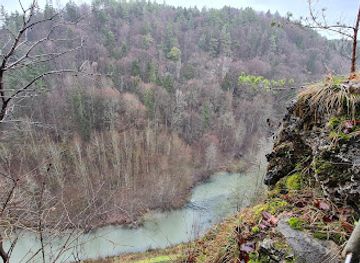
    From Wiesenttal, follow well-marked hiking trails towards Neudorf and the Schönsteinhöhle. The hike is approximately 5 km and takes about 1.5 hours. The path that branches off to the right halfway in the Lange Tal is more scenic. It offers views of the Wiesenttal valley, and you reach the caves from the other side. The caves can be reached in half an hour on both paths.

  • Public Transport

    Take a train to Forchheim (Bavaria). From Forchheim, take a local bus towards Wiesenttal. From Wiesenttal, follow well-marked hiking trails towards Neudorf and the Schönsteinhöhle. The hike is approximately 5 km and takes about 1.5 hours.

Unlock the Best of Schönsteinhöhle

Buy tickets

    No tickets available

Book tours with entry

    No tours available

Book tours without entry

    No tours available

Discover more about Schönsteinhöhle

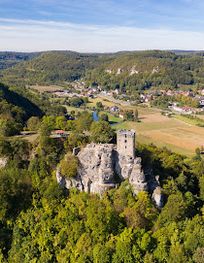
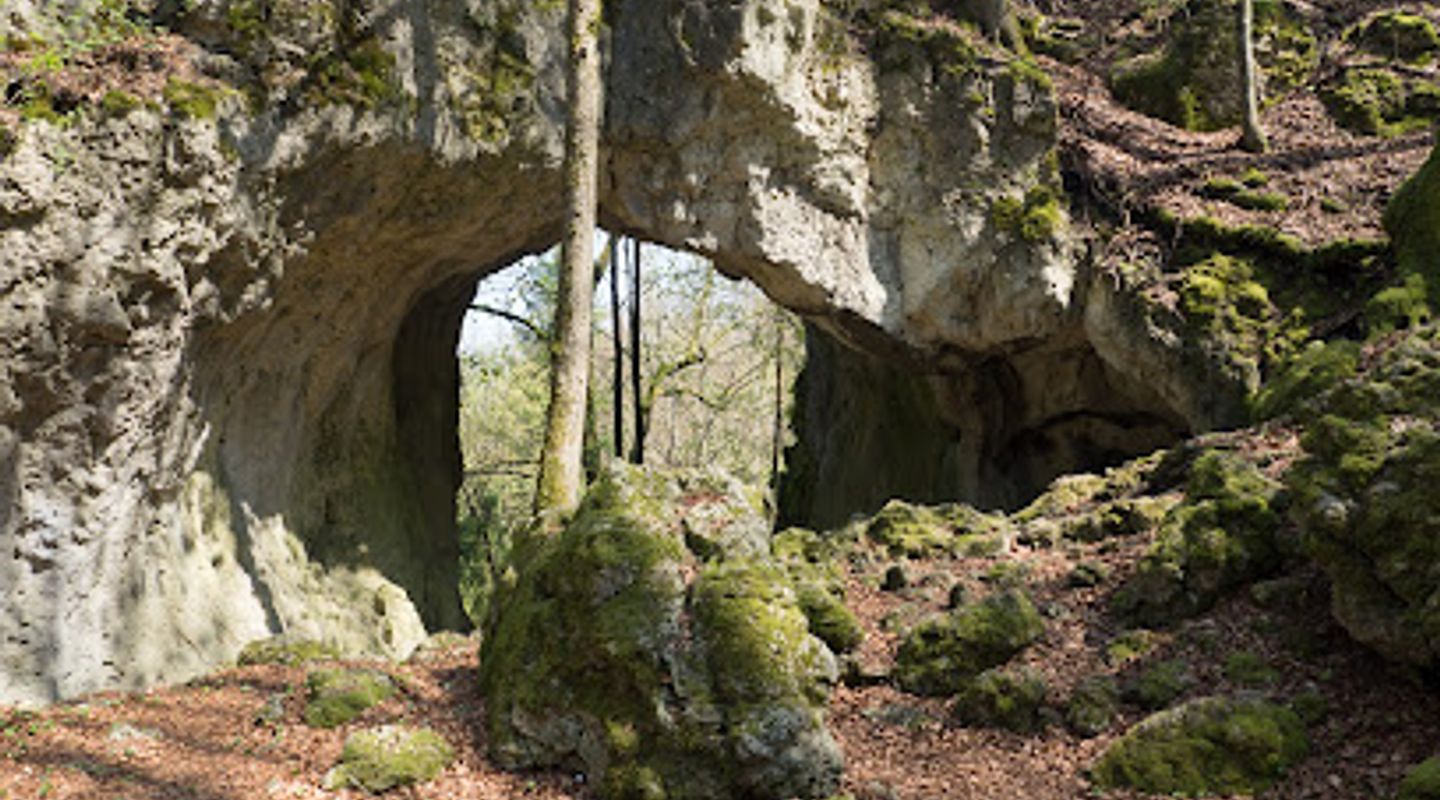
Schönsteinhöhle, nestled near Neudorf, a district of Wiesenttal in Upper Franconia, Bavaria, is a natural karst cave that beckons adventurers and nature enthusiasts alike. Located in the picturesque Franconian Switzerland region, this cave offers a unique opportunity to explore the subterranean wonders of Germany. The Schönsteinhöhle is a dolomite cave with a rich history. Its walls and floors are partially covered in sinter, a mineral deposit formed over time by flowing water. Historical accounts describe the cave's former splendor, with speleologist Neischl reporting sinter pearls, enormous stalactites (some broken), and delicate stalagmites in 1904. Sadly, much of this ornamentation was plundered in the 20th century, with some stalactites even being taken to decorate the nearby Binghöhle. However, the cave's rear sections still boast heavily sintered walls and passages, and watermarks can be seen in the Salzburg gorges. The cave system has a total passage length of around 600 meters and a height difference of 19 meters. It is classified as a combined crevice, shaft, tiered, and stalactite cave due to its three shafts and smaller level. The arrangement of the crevices, perpendicular to each other in the main crevice directions (north-northwest to south-southeast and north-northeast to south-southwest), is a striking feature of the cave system. This crevice arrangement is mirrored in the valley formation of Franconian Switzerland. The Schönsteinhöhle is connected to the Brunnsteinhöhle, making it a passage cave. However, the connecting passage has been blocked off with an iron bar in the Brunnsteinhöhle, preventing passage. The Brunnsteinhöhle entrance is located approximately 30 meters southwest of the Schönsteinhöhle. The cave's north-facing, low entrance leads to a vestibule and then to the main cave, which is approximately 13 meters wide and 17 meters long. An opening in the cave ceiling can be found at the hall's end. The Schönsteinhöhle is freely accessible from May to the end of September. During the winter months, an iron door is used to protect bats. Unfamiliar visitors can easily become lost in the cave's complex system. In the 1950s, the cave made headlines when tourists had to spend several days inside. The cave also contains several deep shafts, which have resulted in accidents. As a result, the cave should only be explored with experienced guides and appropriate equipment. The Brunnsteinhöhle is open all year. Dynamic ventilation occurs in the passage secured by an iron door, which is closed in the winter. When outside temperatures are high or low, a noticeable draft can be felt in this passage. This is due to caves with entrances at different elevations. Depending on the outside temperature, the nearly constant temperature of the cave air moves up or down inside the cave. As a result, warmer cave air flows out through the higher entrance in the winter and warmer outside air flows in during the summer. The opposite is true at the lower entrance. The Schönsteinhöhle has been explored and studied by numerous speleologists throughout history. Johann Christian Rosenmüller, Johann Friedrich Esper, and August Goldfuß explored it in 1774. Major Adalbert Neischl, Josef Reger, Friedrich Schöndorf, and Walter von Knebel discovered and surveyed additional sections in 1903. Robert Oedl and other Salzburg speleologists explored and surveyed the cave in 1922. The Franconian Alb Association's plans to open the cave as a show cave failed in 1923. Herbert W. Franke and Willi Zaunik discovered the connection between the Brunnstein Cave and the Schönstein Cave in 1952. The Schönsteinhöhle's location in Franconian Switzerland makes it an ideal destination for outdoor enthusiasts. The region is known for its picturesque valleys, dramatic rock formations, and numerous hiking trails. Visitors can combine a cave exploration with a hike through the surrounding landscape, taking in the natural beauty of the area. Other nearby attractions include the Burgruine Neideck, a castle ruin offering panoramic views of the Wiesenttal valley, and the Binghöhle, another show cave with stunning crystalline sinter formations. While exploring the Schönsteinhöhle, it's important to be aware of the potential dangers. The cave's complex system of passages and shafts can be disorienting, and the terrain can be slippery and uneven. Visitors should always wear sturdy footwear, bring a reliable light source, and consider exploring the cave with an experienced guide. It is also important to respect the cave's fragile environment and avoid touching or damaging any of the formations. The Schönsteinhöhle is more than just a cave; it's a window into the geological history of Franconian Switzerland and a testament to the power of nature. Whether you're a seasoned caver or a curious traveler, a visit to this natural wonder is sure to be an unforgettable experience.

Popular Experiences near Schönsteinhöhle

Popular Hotels near Schönsteinhöhle

Select Currency