Background

Theresienturm: A Silent Witness to Heilbronn's Past

Explore the Theresienturm in Heilbronn: A historic WWII air-raid shelter turned monument, offering guided tours and a glimpse into the city's resilient past and wartime experiences.

4.4

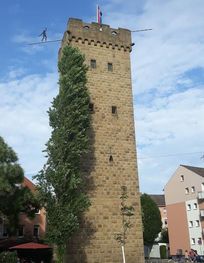
The Theresienturm, originally named General-Wever-Turm, stands as a stark reminder of Heilbronn's wartime experiences. Constructed in 1940, this imposing air-raid shelter on the Theresienwiese provided refuge during the intense bombings of World War II. Its robust concrete structure remarkably withstood the attacks, offering a safe haven for countless civilians. After the war, it served briefly as emergency accommodation for those displaced by the conflict. Today, the Theresienturm is a protected historical monument, offering guided tours that delve into its fascinating and poignant history, providing insights into Heilbronn's resilience and the impact of war on its people. The tower's transformation from a military installation to a civilian shelter and, finally, a historical landmark underscores its enduring significance in the city's collective memory. A visit offers a unique perspective on Heilbronn's past, making it a compelling destination for history enthusiasts and those seeking a deeper understanding of the city's heritage.

A brief summary to Theresienturm

Local tips

  • Book your guided tour in advance through the Heilbronn Tourist Information to ensure availability, especially during peak season.
  • Wear comfortable shoes as the tour involves walking and exploring the interior of the tower.
  • Check the weather forecast before your visit, as the Theresienwiese is an open area and the tour may be affected by inclement weather.
widget icon

Getting There

  • Public Transport

    From Heilbronn Hauptbahnhof (main train station), take any of the city bus lines (e.g., lines 1, 10, 12) heading towards the city center. Get off at the Theresienstraße stop, which is directly in front of the Theresienwiese. From there, the tower is a short walk across the open space. A single HNV ticket costs approximately €2.60.

  • Walking

    From Heilbronn city center (e.g., Marktplatz), walk south along Kaiserstraße, then turn left onto Sülmerstraße. Continue onto Theresienstraße. The Theresienturm will be visible on the right-hand side, across the Theresienwiese. The walk is approximately 15-20 minutes.

  • Taxi/Ride-Share

    A taxi or ride-share from Heilbronn Hauptbahnhof or the city center to the Theresienturm will take approximately 5-10 minutes, depending on traffic. The estimated fare is between €10-€15.

  • Driving

    If driving, navigate to Theresienstraße 44, 74072 Heilbronn. Parking is available at the Theresienwiese parking lot directly adjacent to the tower. Parking fees vary, but expect to pay around €1-€2 per hour.

Unlock the Best of Theresienturm

Buy tickets

    No tickets available

Book tours with entry

    No tours available

Book tours without entry

    No tours available

Discover more about Theresienturm

The Theresienturm, a towering concrete structure on the Theresienwiese in Heilbronn, stands as a powerful testament to the city's experiences during World War II. Originally named General-Wever-Turm after Walther Wever, the former Chief of the General Staff of the Luftwaffe, the high-rise bunker was constructed in 1940 to provide air-raid shelter for the local population. Its imposing presence serves as a stark reminder of a tumultuous period in Heilbronn's history. As war loomed, the construction of private residences was prohibited, and efforts were directed toward creating public and private shelters. Although Heilbronn was not initially considered a high-risk area, the construction of the Theresienturm, along with a few other bunkers, was commissioned by the Reich Air Ministry. Built by Dyckerhoff & Widmann, the tower was intended for military purposes, though it appears it never housed weaponry. Instead, shortly after its completion, the city of Heilbronn received permission to use it as a shelter for workers from the nearby municipal slaughterhouse, provided they maintained the installed diesel generator. Throughout the war, the Theresienturm was manned by military personnel, including anti-aircraft units and SS troops. It withstood numerous air raids on Heilbronn with minimal damage, offering refuge to countless civilians seeking protection from the relentless bombing. The tower's solid construction proved to be a lifesaver for many. In the aftermath of the war, the Theresienturm briefly served as emergency accommodation for those who had lost their homes in the bombings. Later, it became a makeshift hostel known as the "Bunker-Hotel Heilbronn," providing lodging for impoverished travelers. In 1947, it is estimated that around 1,000 people per month stayed there. However, this use was discontinued in 1948. In 1951, the access ramp to the tower was demolished, leaving it accessible only by ladders or scaffolding. From the 1960s to the late 1980s, a large illuminated advertisement for the MAN company adorned the tower, leading to its occasional nickname, the MAN-Turm. In the 1990s, the Theresienturm was designated a protected historical monument, recognizing its significance in Heilbronn's history. In 2016, it was officially renamed Theresienturm, reflecting its location on the Theresienwiese. In 2019, thanks to the Heilbronn Bürgerstiftung (civic foundation), a new entrance structure was built, making the tower accessible to the public once again. Today, the Theresienturm offers guided tours that provide visitors with a glimpse into its past. These tours delve into the tower's construction, its role as an air-raid shelter, its post-war use, and its significance as a historical landmark. Visitors can explore the tower's interior, gaining a sense of what it was like to seek refuge within its walls during the war. The Theresienturm stands as a symbol of Heilbronn's resilience and the impact of war on its people. It serves as a reminder of the importance of preserving historical sites and learning from the past. A visit to the Theresienturm offers a unique and thought-provoking experience, providing insights into Heilbronn's heritage and the human spirit's ability to endure even in the face of adversity. The Theresienturm is located on Theresienwiese, a large open space that also hosts events and fairs. The area is easily accessible by public transportation and is a short distance from Heilbronn's city center. The tower is open for guided tours, which can be booked through the Heilbronn Tourist Information Center. These tours typically last about 90 minutes and provide a comprehensive overview of the tower's history and significance. Visiting the Theresienturm is an opportunity to reflect on the past and appreciate the importance of peace and understanding. It is a place where history comes alive, offering a tangible connection to the events that shaped Heilbronn and the world. The Theresienturm is more than just a concrete structure; it is a repository of stories, memories, and lessons that continue to resonate today. The Theresienturm is a unique historical site that offers a glimpse into Heilbronn's wartime past. Its transformation from a military installation to a civilian shelter and, finally, a historical landmark underscores its enduring significance in the city's collective memory. A visit offers a unique perspective on Heilbronn's past, making it a compelling destination for history enthusiasts and those seeking a deeper understanding of the city's heritage. As you approach the Theresienturm, consider the countless individuals who sought refuge within its walls, the families who huddled together in fear, and the resilience of a community determined to survive. The Theresienturm stands as a silent witness to their stories, a reminder of the human cost of war, and a symbol of hope for a more peaceful future.

Popular Experiences near Theresienturm

Popular Hotels near Theresienturm

Select Currency