Kirchenruine Heilig Grab, Spessart Travel Guide
Explore the haunting beauty of Aschaffenburg's Kirchenruine Heilig Grab, a historic church ruin nestled in the serene Schöntal park, offering a glimpse into the city's rich past.
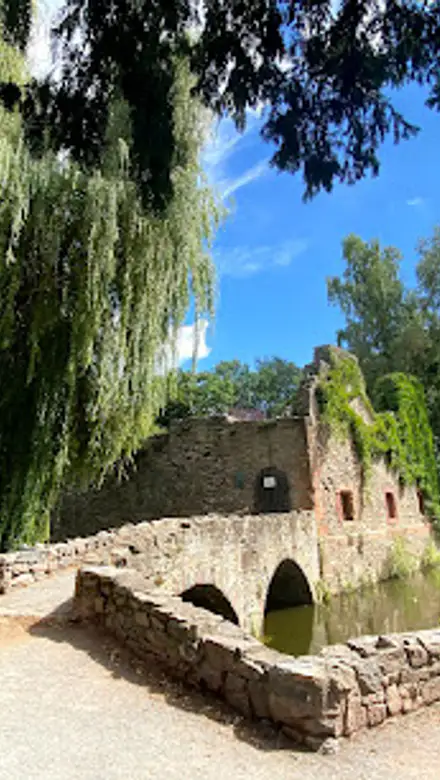
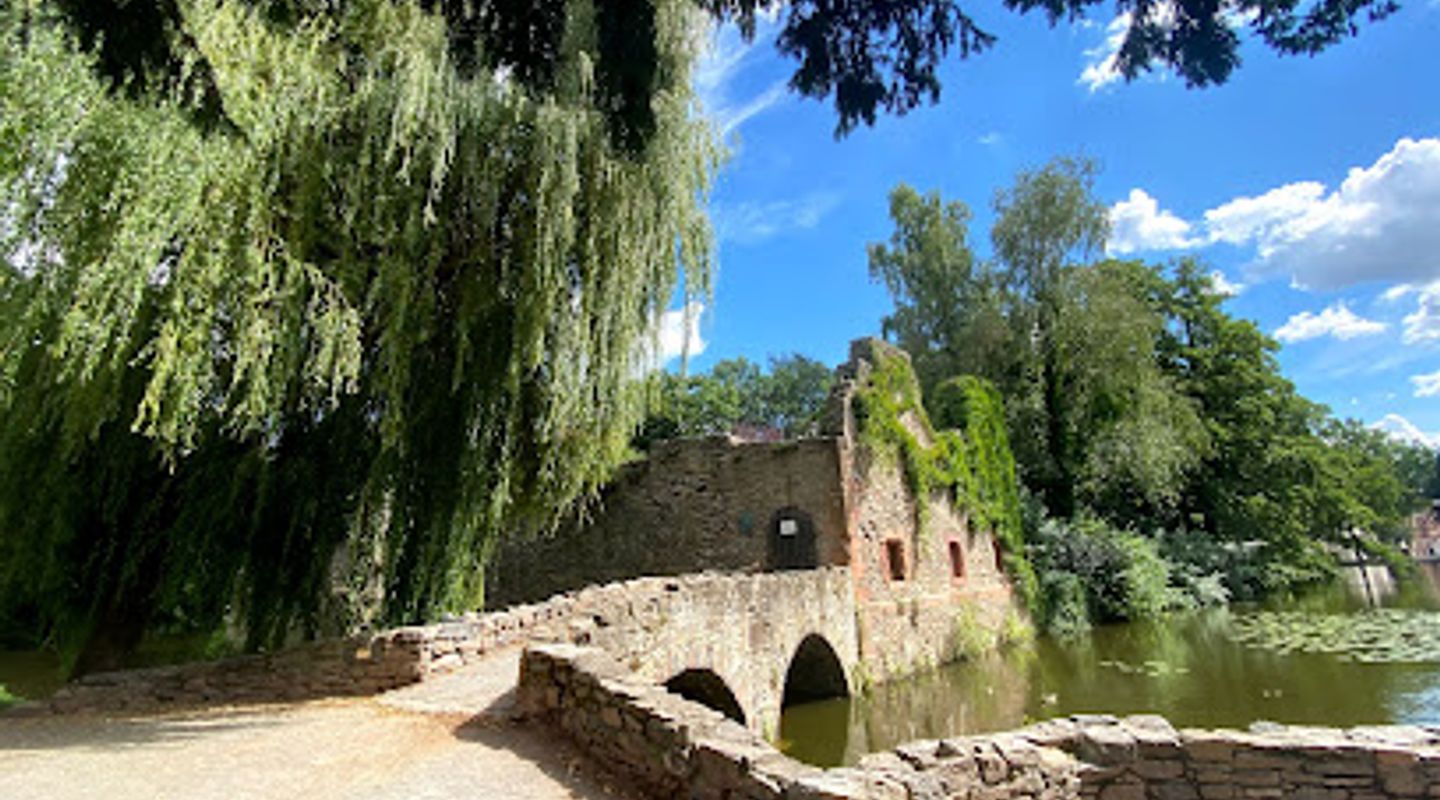
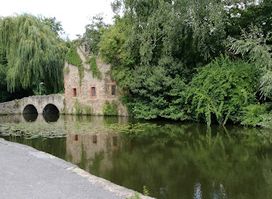
The Kirchenruine Heilig Grab, or Holy Sepulchre Church Ruin, in Aschaffenburg, is a captivating historical landmark. Built between 1543 and 1545, the church was part of a Beguine convent established by Archbishop Albrecht von Brandenburg. Tragically, it was destroyed by fire in 1552 during the Second Margrave War. Today, the ruins stand as a romantic reminder of the past, integrated into the Schöntal park's landscape. Visitors can explore the remaining walls and imagine the church's former grandeur. The site offers a peaceful escape and a glimpse into Aschaffenburg's rich history, making it a worthwhile stop for history enthusiasts and casual tourists alike. The surrounding Schöntal park provides a beautiful setting for a leisurely stroll, enhancing the overall experience. The Kühruhgraben river flows nearby, adding to the area's natural charm.
A brief summary to Kirchenruine Heilig Grab
- Hinter d. Eich 5, Aschaffenburg, Innenstadt, 63739, DE
- Click to display

Know before you go
Hi, I'm Eve. Here are a few practical things to know before exploring Kirchenruine Heilig Grab.
- Combine your visit with a stroll through the Schöntal park to fully appreciate the romantic setting and enjoy the natural beauty surrounding the ruins.
- Check local event listings, as the Schöntal park sometimes hosts concerts or festivals, enhancing your visit with cultural experiences.
- Visit nearby attractions like Schloss Johannisburg and the Pompejanum to delve deeper into Aschaffenburg's rich history and architecture.
Do you manage this location?
Take control to get all the benefits, like improved information, better appearance, and stronger visibility across AI-powered discovery. Learn more about listing your business on Evendo
Activate your presenceOther nearby places you may find interesting
The closest places of the same kind, if this one is not quite what you had in mind.
Explore Kirchenruine Heilig Grab on the Map
A handpicked selection of must-see spots near Kirchenruine Heilig Grab, mapped for you.
Getting There
-
Walking
From the Aschaffenburg city center, the Kirchenruine Heilig Grab is easily accessible by foot. Starting from Schloss Johannisburg, walk south towards the city moat (Stadtgraben). Cross the moat via the bridge near the Stadthalle. Continue straight into the Schöntal park. The Kirchenruine will be visible within the park, approximately a 5-10 minute walk from the entrance. The path is well-maintained and relatively flat.
-
Public Transport
If arriving by public transport, take bus lines 1, 2, 4, 6, 41 or 42 to the 'Theaterplatz' bus stop. From there, walk east along the Stadtgraben, then enter the Schöntal park. The Kirchenruine is a short walk into the park. A single bus fare within Aschaffenburg is approximately €2.30.
-
Taxi/Ride-Share
A taxi or ride-share from Aschaffenburg Hauptbahnhof (main train station) to the Kirchenruine Heilig Grab will take approximately 5-10 minutes, depending on traffic. Expect to pay around €8-€12. Ask the driver to drop you off at the entrance to Schöntal park near the Stadtgraben.
Discover more about Kirchenruine Heilig Grab
More to explore near Kirchenruine Heilig Grab













Your all‑in‑one travel companion app
Explore expert travel guides, compare and book tours, experiences, hotels, and more—all from the palm of your hand. Download now for seamless trip planning wherever your wanderlust takes you.


Explore More of Spessart
Looking beyond Kirchenruine Heilig Grab? Discover Spessart for broader travel guides, local hot-spots, and regional highlights.
Explore Spessart
Explore the enchanting Alter Marktplatz (Schnatterloch) in Miltenberg, a historical hub filled with culture, cuisine, and captivating architecture.
Discover Schöntal in Aschaffenburg: A historic park with a medieval abbey ruin, Bavaria's largest magnolia grove, and the Hofgarten Kabarett, offering a blend of nature and culture.