

Free Thuringia Travel Guide & Mobile App
Explore Thuringia with free travel guides. Discover regional history, expert tips, proposed trips, and audio guides on web or mobile app.


Explore Thuringia for medieval Erfurt, Weimar's cultural heritage, the Wartburg, forest trails, historic towns and hearty regional cuisine.
Read more about Thuringia
When is the best time to visit Thuringia?
Best: June–August · 22–24°C| Month | High (°C) | Rainfall (mm) |
|---|---|---|
| January | 4 | 45 |
| February | 4 | 40 |
| March | 9 | 45 |
| April | 14 | 40 |
| May | 19 | 50 |
| June (best) | 22 | 60 |
| July (best) | 24 | 65 |
| August (best) | 23 | 60 |
| September | 19 | 50 |
| October | 14 | 40 |
| November | 8 | 50 |
| December | 4 | 50 |
Getting to and around Thuringia
How to get there
Transportation
Top city travel guides in Thuringia
The cities of Thuringia, and the easiest places to base yourself.
-

-


Swipe for more cities
Destinations in Thuringia
Resorts, valleys and scenic spots worth a trip of their own.
-

-

-

-

-


Swipe for more destinations
Best attractions in Thuringia
Thuringia's attractions range from dense urban heritage to extensive woodland and river landscapes. Erfurt combines a medieval centre with the cathedral and Severikirche ensemble, the Krämerbrücke and the Jewish-Medieval Heritage sites around the Old Synagogue. Weimar's museums, former residences and parks explore German Classicism, music, theatre and the early Bauhaus. Eisenach offers the Wartburg and museums associated with Bach and Luther, while Gotha's palace and Jena's scientific and literary collections add different perspectives on regional history. Outside the cities, the Rennsteig provides walking across the Thuringian Forest, with viewpoints and winter sports facilities around towns such as Oberhof. Hainich National Park protects ancient beech woodland and has a raised canopy walkway, while the Saale and Unstrut valleys offer cycling, river scenery, vineyards and hilltop castles. Families can find caves, animal parks and interactive museums, although individual opening arrangements vary by season. The attraction landscape is strongest when cultural visits are combined with short countryside excursions rather than treated as separate types of holiday.
-
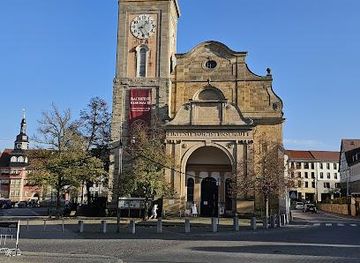
Evangelical church
St George's Church
Explore the historic St. George's Church in Eisenach, where architectural beauty meets rich spiritual and cultural heritage.
Best landmarks in Thuringia
The Wartburg above Eisenach is Thuringia's most recognisable historic landmark, a medieval castle associated with Saint Elisabeth, Martin Luther and centuries of German cultural history. In Erfurt, the Krämerbrücke is an unusual surviving bridge lined continuously with buildings, while the cathedral and Severikirche create a defining silhouette over the old city. The Old Synagogue, mikveh and Stone House form part of the Jewish-Medieval Heritage of Erfurt, whose significance lies in the preserved evidence of a medieval Jewish community. Weimar's landmarks include Goethe's and Schiller's former homes, the Ducal Vault and the buildings connected with the city's Classical and Bauhaus histories. In the countryside, the Rennsteig is a geographical and cultural marker of the Thuringian Forest, and the Hainich canopy route gives a distinctive perspective on protected beech woodland. The Goethe Tower near Jena, the hilltop castles along the Saale valley and the historic palace complex of Friedenstein in Gotha extend the landmark landscape beyond the best-known cities.
-
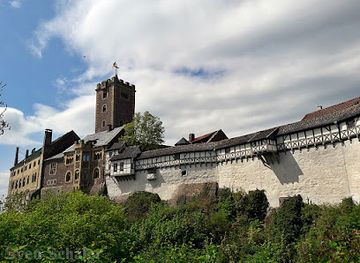
Castle
Wartburg
Discover the rich history and breathtaking views at Wartburg Castle, a UNESCO World Heritage Site in Eisenach, Germany.
-
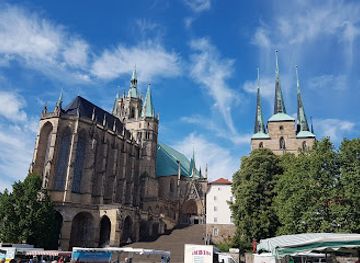
Tourist attraction
Domplatz
Explore Erfurt's Domplatz - A historical landmark and vibrant square brimming with culture, stunning architecture, and local events.
-
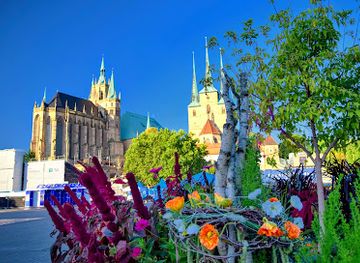
Catholic cathedral
Erfurt Cathedral
Discover the architectural beauty and historical significance of Erfurt Cathedral, a stunning Gothic masterpiece in the heart of Germany's historic city.
-
National park
Hainich National Park
Discover the enchanting landscapes and rich biodiversity of Hainich National Park, a UNESCO World Heritage site that invites exploration and adventure.
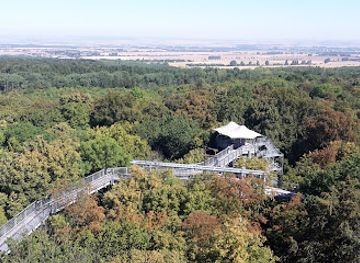
Explore Thuringia on the map
Plan your trip on one map. See where the top cities, national parks and sights are, and book hotels and experiences in a few clicks.
Best hotels in Thuringia
Best restaurants in Thuringia
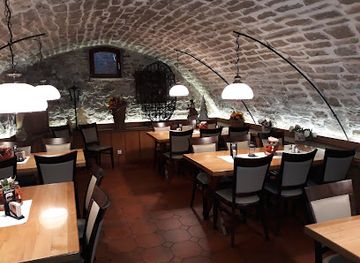
Thuringian cooking is substantial, regionally recognisable and often rooted in ingredients suited to a cool inland climate. Thüringer Rostbratwurst is the best-known speciality, traditionally grilled and served simply, while Thüringer Klöße are potato dumplings commonly accompanying roast meat and gravy. Menus may also feature roulades, soups, seasonal game, freshwater fish, asparagus in spring and onion-based dishes. In Erfurt, Weimar, Jena and Eisenach, restaurants range from traditional inns and brewery-style dining rooms to contemporary kitchens, cafés and international options. Rural Gasthäuser remain useful places to encounter local cooking, although menus and opening patterns can be seasonal. Bakers are important throughout the state, offering breads, rolls, sheet cakes and regional pastries for an inexpensive breakfast or picnic. Beer is widely available, and local drinks sit alongside Germany's broader wine and craft-beverage culture; the Saale-Unstrut area to the north-east has a distinct viticultural tradition. Farmers' markets and food stalls provide another way to sample produce without turning the region's cuisine into a formal tasting itinerary.
-
German
Haus zum Naumburgischen Keller
Experience authentic German and Thuringian cuisine at Haus zum Naumburgischen Keller, complete with an inviting beer garden in Erfurt's historic Altstadt.
-
German
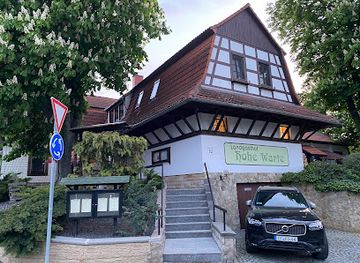
Restaurant Hohe Warte
Discover authentic German cuisine at Restaurant Hohe Warte, where tradition meets taste in a cozy inn setting.
Best bars in Thuringia
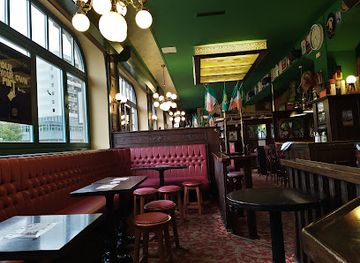
Evening life in Thuringia is concentrated in Erfurt, Weimar and Jena, with a smaller but meaningful scene in Eisenach, Gotha, Gera and Meiningen. Erfurt offers traditional pubs, modern bars, beer gardens and cultural venues around the old centre, while Weimar's audiences support literary events, theatre, concert halls and intimate evening establishments. Jena's university population contributes a later, more informal pattern of bars, live music and clubs. Outside these cities, nightlife generally centres on village inns, hotel bars, breweries, seasonal festivals and occasional performances rather than a large club circuit. Meiningen's theatre tradition gives the town a strong performing-arts dimension, while the Thuringian Forest is more suited to an early dinner after walking or winter sport. Check current programmes and transport home in advance, particularly in smaller towns where services become limited late at night.
-
Irish pub
Dubliner Irish Pub
Discover the lively ambiance and authentic Irish experience at Dubliner Irish Pub in Erfurt, where great food and drinks await every visitor.
-
Gastropub
Altstadtkneipe Noah
Discover the heart of Erfurt at Altstadtkneipe Noah, where authentic Thuringian cuisine and a lively gastropub atmosphere await.
-
Irish pub
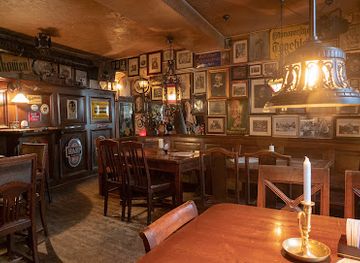
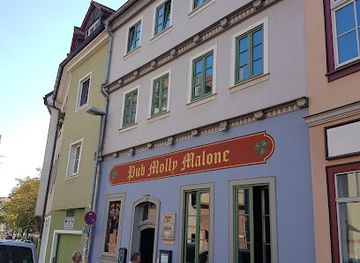
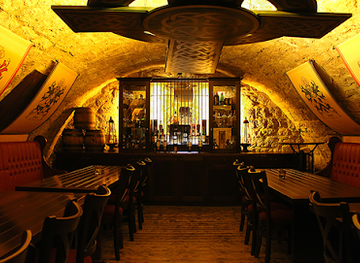
Molly Malone Irish Pub
Discover the spirit of Ireland at Molly Malone Irish Pub in the heart of Erfurt, where good food, drinks, and a vibrant atmosphere await you.
-
Irish pub
Patricks Irish Pub - Erfurt
Delve into the heart of Irish culture at Patricks Irish Pub, offering authentic cuisine, lively sports, and a warm atmosphere right in Erfurt.
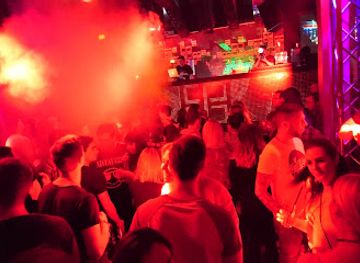
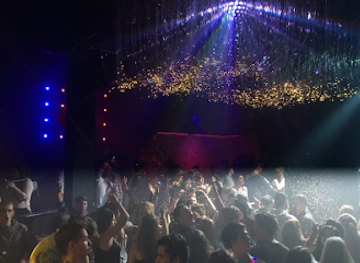
Best nightclubs in Thuringia
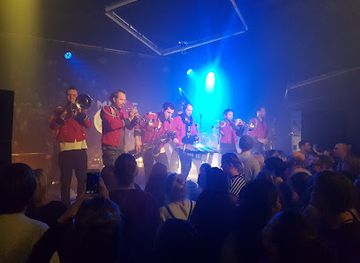
Evening life in Thuringia is concentrated in Erfurt, Weimar and Jena, with a smaller but meaningful scene in Eisenach, Gotha, Gera and Meiningen. Erfurt offers traditional pubs, modern bars, beer gardens and cultural venues around the old centre, while Weimar's audiences support literary events, theatre, concert halls and intimate evening establishments. Jena's university population contributes a later, more informal pattern of bars, live music and clubs. Outside these cities, nightlife generally centres on village inns, hotel bars, breweries, seasonal festivals and occasional performances rather than a large club circuit. Meiningen's theatre tradition gives the town a strong performing-arts dimension, while the Thuringian Forest is more suited to an early dinner after walking or winter sport. Check current programmes and transport home in advance, particularly in smaller towns where services become limited late at night.
-
Night club
Kalif Storch - Erfurt
Discover the vibrant nightlife and cultural heartbeat of Erfurt at Kalif Storch, where music and dance come together for an unforgettable experience.
-
Night club
Cosmopolar - Erfurt
Experience the electrifying nightlife at Cosmopolar in Erfurt, a premier destination for dancing, drinks, and unforgettable memories.
-
Disco club
Time Club
Unleash your inner party animal at Time Club, Bad Blankenburg's premier disco club, where the music never stops and the nights are unforgettable.
-
Bar
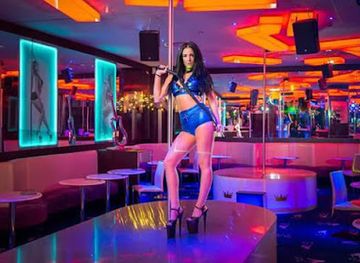
DELUXE DANCECLUB
Deluxe Danceclub: Immerse yourself in Erfurt's vibrant nightlife with captivating performances and an exciting atmosphere for adults.
Best shops in Thuringia
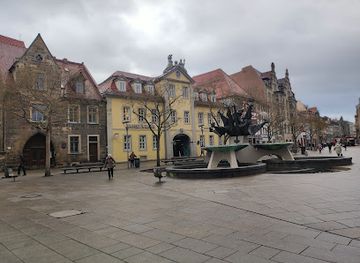
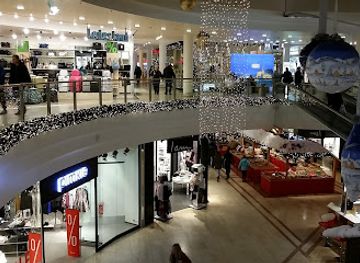
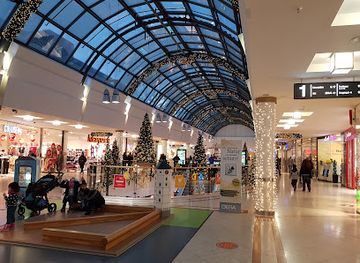
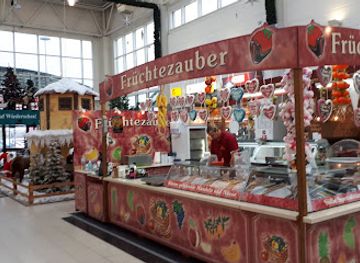
Shopping in Thuringia is strongest in the historic centres of Erfurt, Weimar, Jena, Eisenach and Gotha, where restored high streets combine national retailers with bookshops, galleries, cafés and independent businesses. Erfurt's old town is particularly useful for regional food products, crafts and practical shopping, while Weimar has a stronger literary, artistic and design-oriented character. Market squares and weekly markets provide seasonal fruit, vegetables, flowers, baked goods and locally made products, though schedules vary between towns. Look for Thüringer specialities such as mustard, preserves, confectionery and smoked or cured foods, bearing in mind that food souvenirs may have travel restrictions. Pottery, textiles, woodwork, books and contemporary craft are more meaningful purchases than generic souvenirs, and museum shops often reflect local cultural collections. Around the Thuringian Forest, small specialist shops may stock walking equipment and handmade goods, but rural retail is dispersed and usually closes earlier than city shops. Larger shopping centres exist in the principal urban areas, while Sundays are generally not normal shopping days in Germany.
-
Shopping mall
ANGER 1 Erfurt
Experience the ultimate shopping destination in Erfurt at ANGER 1, featuring a diverse range of stores, dining options, and entertainment.
-
Shopping mall
Thüringen Park Erfurt
Explore Thüringen Park Erfurt, a dynamic shopping mall with diverse stores, delectable dining, and engaging events for an unforgettable experience.
-
Shopping mall
Gera Arcaden
Explore Gera Arcaden, a dynamic shopping mall in Gera, Germany, offering a blend of retail, dining, and local culture for an unforgettable experience.
-
Shopping mall
T.E.C. Erfurt
Explore T.E.C. Erfurt, a shopping haven in Germany offering diverse stores and delightful dining experiences for every tourist.
Get your free copy of our complete guide to Thuringia, delivered straight to you.
Everything on this page, from attractions and restaurants to essentials and local phrases, in one PDF you can read offline, print or share.
Already have an account? Sign in
Your Thuringia guide is ready.
We'll send it to · Not you? Sign out

Getting your guide ready…
We are putting together a fresh copy of the Thuringia guide. This can take up to a minute.
This can take a few moments. If your browser asks, choose Allow so the download can start. You'll find the guide in your Downloads folder.
Nothing happened? Download it again
Sorry, the guide is taking longer than usual. Please try again in a minute, or get it by email instead.
Thuringia essentials
Currency and Payment
Safety
Emergency Situations
Do's and Don'ts
Local Tips
From Eve
Local phrases worth knowing
You don't need to get them perfect. A few words go a long way, and locals appreciate the effort.
Basics
| English | Local | Say it |
|---|---|---|
| Hello | Hallo | [Hah-loh] |
| Goodbye | Auf Wiedersehen | [Owf Vee-der-zay-en] |
| Yes | Ja | [Yah] |
| No | Nein | [Nyn] |
| Please/You're welcome | Bitte | [Bi-tuh] |
| Thank you | Danke | [Dahn-kuh] |
| Excuse me/Sorry | Entschuldigung | [Ent-shool-dee-goong] |
| How are you? | Wie geht's? | [Vee gate's?] |
| Fine. And you? | Gut. Und dir? | [Goot. Oond deer?] |
| Do you speak English? | Sprechen Sie Englisch? | [Shprekh-en Zee Eng-lish?] |
| I don't understand | Ich verstehe nicht | [Ish fer-shtay-uh nikht] |
Eating & Drinking
| English | Local | Say it |
|---|---|---|
| I'd like to see the menu, please | Ich hätte gerne die Speisekarte, bitte | [Ish het-teh gair-nuh dee Shpy-zeh-kar-tuh, bi-tuh] |
| I don't eat meat | Ich esse kein Fleisch | [Ish es-seh kine Flysh] |
| Cheers! | Prost! | [Prohst!] |
| I would like to pay, please | Ich möchte bezahlen, bitte | [Ish merkh-tuh beh-tsah-len, bi-tuh] |
Emergencies
| English | Local | Say it |
|---|---|---|
| Help! | Hilfe! | [Hil-feh!] |
| Go away! | Geh weg! | [Gay vehg!] |
| Call the Police! | Rufen Sie die Polizei! | [Roo-fen Zee dee Poh-lee-tsai!] |
| Call a doctor! | Rufen Sie einen Arzt! | [Roo-fen Zee eye-nen Artst!] |
| I'm lost | Ich bin verloren | [Ish bin fer-lo-ren] |
| I'm ill | Ich bin krank | [Ish bin krank] |
Shopping
| English | Local | Say it |
|---|---|---|
| I'd like to buy... | Ich möchte ... kaufen | [Ish merkh-tuh ... kau-fen] |
| I'm just looking | Ich schaue nur | [Ish shau-eh noor] |
| How much is it? | Wie viel kostet es? | [Vee feel kost-et es?] |
| That's too expensive | Das ist zu teuer | [Dahs ist tsu toy-er] |
| Can you lower the price? | Können Sie den Preis senken? | [Kurn-en Zee den Pryce zen-ken] |
Time & Numbers
| English | Local | Say it |
|---|---|---|
| What time is it? | Wie spät ist es? | [Vee shpayt ist es?] |
| It's one o'clock | Es ist ein Uhr | [Es ist ine Oor] |
| Half past (10) | Halb (10) | [Hahlb (10)] |
| Morning | Morgen | [Mor-gen] |
| Afternoon | Nachmittag | [Nahkh-mit-tahg] |
| Evening | Abend | [Ah-bend] |
| Yesterday | Gestern | [Ges-tern] |
| Today | Heute | [Hoy-teh] |
| Tomorrow | Morgen | [Mor-gen] |
| 1 | Eins | [Eyns] |
| 2 | Zwei | [Tsvy] |
| 3 | Drei | [Dry] |
| 4 | Vier | [Feer] |
| 5 | Fünf | [Fuenf] |
| 6 | Sechs | [Zex] |
| 7 | Sieben | [Zee-ben] |
| 8 | Acht | [Akh-t] |
| 9 | Neun | [Noyn] |
| 10 | Zehn | [Tsayn] |
Transport & Directions
| English | Local | Say it |
|---|---|---|
| Where's a/the...? | Wo ist ein/das ...? | [Vo ist ine/dahs ...?] |
| What's the address? | Wie ist die Adresse? | [Vee ist dee Ah-dres-seh?] |
| Can you show me (on the map)? | Können Sie mir (auf der Karte) zeigen? | [Kurn-en Zee meer (owf dare Kahr-teh) tsai-gen?] |
| When's the next (bus)? | Wann kommt der nächste (Bus)? | [Vahn komt dare nay-shteh (Boos)?] |
| A ticket (to ....) | Ein Ticket (nach ....) | [Ine Ti-ket (nahkh ....)] |
History of Thuringia
Early Settlement and the Thuringian Kingdom
The region has been inhabited since prehistoric times, with archaeological evidence of farming communities, hilltop settlements and long-distance exchange. In late antiquity, the Thuringians formed a kingdom that occupied much of central Germany before Frankish expansion in the sixth century. The name survived political change and continued to designate the broad central German landscape. Roman influence was strongest at the empire's eastern frontier rather than throughout modern Thuringia, while later Christianisation and Frankish administration reshaped settlement and authority.
Medieval Landgrave Power and the Wartburg
During the High Middle Ages, the Ludovingian landgraves built a powerful court centred on towns including Eisenach and the Wartburg. The castle became associated with courtly culture and the Sängerkrieg tradition of medieval minstrels. Saint Elisabeth of Thuringia also lived at the Wartburg in the thirteenth century, giving the site a lasting religious and charitable association. After the Ludovingians died out, the Wettin dynasty gained control of much of the region, beginning centuries of dynastic division and princely rivalry.
Reformation and the Wartburg Bible
Thuringia was an important setting for the Reformation. Martin Luther studied at the University of Erfurt and later spent 1521–22 at the Wartburg under the protection of Frederick the Wise, translating the New Testament into German. His work helped establish a widely influential written form of the language and made the castle a major site in Protestant history. Reformation-era change also affected monasteries, churches, education and political relationships between local princes and the Holy Roman Empire.
Weimar Classicism and the Enlightenment
The small court of Saxe-Weimar became an unusually influential cultural centre in the late eighteenth and early nineteenth centuries. Johann Wolfgang von Goethe settled in Weimar, and Friedrich Schiller joined him in a celebrated literary partnership; musicians, philosophers and artists also contributed to the city's intellectual life. Their homes, collections, archives and associated buildings remain central to Weimar's identity. This period gave the city an international cultural reputation that still shapes museums, theatre and heritage interpretation across Thuringia.
Industrialisation, Railways and the German Confederation
Although Thuringia remained strongly rural, the nineteenth century brought railways, factories, mining, porcelain production, mechanical engineering and expanding urban markets. Rail connections linked Erfurt, Weimar, Gotha, Jena and other centres to the wider German network. Political fragmentation persisted through numerous Ernestine duchies and principalities until their reorganisation after the First World War. Industrial growth also supported scientific and educational institutions, especially in Jena, where glass, optics and precision manufacturing became important regional strengths.
Bauhaus in Weimar and Modern Design
The Bauhaus was founded in Weimar in 1919 by Walter Gropius, combining artistic training with architecture, craft and industrial design. Political pressure led to its move to Dessau in 1925, but its Thuringian beginnings remain fundamental to the movement's history. Weimar's Bauhaus Museum and related sites explain how the school challenged established boundaries between fine art and practical design. The legacy is visible in international design education as well as in the modern cultural identity of the city.
Division, GDR Rule and Reunification
After 1945, Thuringia became part of the Soviet occupation zone and, from 1949, the German Democratic Republic. The inner German border cut through the western part of the region, separating communities and restricting movement until the peaceful revolution of 1989. Industrial production, uranium mining in parts of the wider region and state economic planning left lasting environmental and social effects. Thuringia was re-established as a federal state in 1990, and the restoration of historic centres, museums and border landscapes has since become a major part of its contemporary identity.
Thuringia in Photos
Browse through our photo collection highlighting the charm and character of the destination.
Neighbouring regions of Thuringia
The closest regions to Thuringia, if you have time for more than one.
-

-

-

-

-


Swipe for more regions
Explore more

Explore more of Germany
Experience Germany: where history meets innovation, and urban energy blends with natural beauty. Discover diverse cultures, delicious cuisine, and stunning landscapes.
Explore Germany