

L'Ancresse Bay, Guernsey Travel Guide
Discover L'Ancresse Bay in Guernsey, a beautiful coastal retreat with sandy beaches, clear waters, and rich history. Perfect for families, nature lovers, and history enthusiasts.
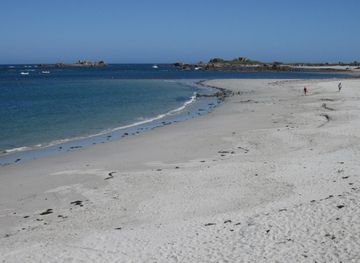
L'Ancresse Bay is a stunning coastal haven located on the northern coast of Guernsey. This picturesque bay is known for its beautiful sandy beaches, clear blue waters, and rugged coastal scenery. It's a perfect spot for beach lovers and nature enthusiasts alike. The bay is surrounded by grassy dunes and rocky outcrops, providing a natural playground for visitors. You can take a leisurely walk along the coastline, explore the rock pools, or simply relax on the soft sand. The area is also popular for swimming and picnicking, making it a great family-friendly destination. History buffs will appreciate the nearby historical sites, including ancient burial mounds and World War II fortifications. The bay is steeped in history, offering a glimpse into the island's past. Whether you're looking for adventure or relaxation, L'Ancresse Bay has something for everyone.

Know before you go
Hi, I'm Eve. Here are a few practical things to know before exploring L'Ancresse Bay.
- Bring a picnic to enjoy on the beach; there are no major food outlets nearby.
- Wear comfortable walking shoes if you plan to explore the rocky areas and coastal paths.
- Check the tide times before visiting, as the beach can change dramatically with the tide.
- Visit the nearby historical sites for a deeper understanding of the area's history.
- Don't forget your sunscreen and a hat, as shade can be limited on the beach.
Explore L'Ancresse Bay: Things to Do, Places to Eat, Hotels & More
Handpicked recommendations for top attractions, local dining, accommodations, and more

Best attractions in L'Ancresse Bay
Top-rated picks
Best Attractions
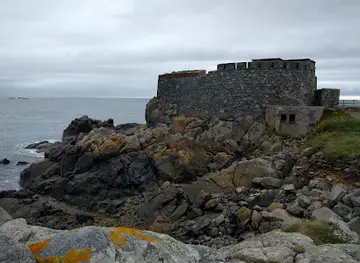
Fort Doyle
Explore the historic Fort Doyle in Guernsey, where stunning coastal views and rich military history await every visitor.

Fort Pembroke
Explore the historic Fort Pembroke in Guernsey, a stunning fortress that offers breathtaking views and a glimpse into the island's rich military history.

Best landmarks in L'Ancresse Bay
Top-rated picks
Best Landmarks

Beaucette Marina
Discover the tranquil beauty of Beaucette Marina in the Channel Islands, where adventure and serenity meet on the sparkling waters.

Fort Le Marchant
Explore Fort Le Marchant, a historic fortress in Guernsey offering breathtaking views and a glimpse into the island's military past.

The Beach House
Discover The Beach House in Guernsey, where stunning coastal views meet exquisite local cuisine for a dining experience you won't forget.

La Varde Dolmen
Explore La Varde Dolmen in Guernsey - an ancient burial site that offers a glimpse into the island's fascinating prehistoric past amidst stunning landscapes.

Best restaurants in L'Ancresse Bay
Top-rated picks
Best Restaurants

Saltwater Restaurant - Beaucette Marina
Discover exquisite seafood dining at Saltwater Restaurant in Beaucette Marina, Guernsey – where fresh flavors meet stunning coastal views.

The Beach House
Experience exquisite dining with breathtaking coastal views at The Beach House in Guernsey.


Best shops in L'Ancresse Bay
Top-rated picks
Best Shops

Earlswood Garden Centre & Café
Discover the beauty of plants, enjoy homemade delights, and find unique gifts at Earlswood Garden Centre & Café in Guernsey.

Keyprice
Explore Keyprice, the quintessential general store in Guernsey, offering local goods and a warm shopping experience for tourists.

L'Ancresse Kiosk
Experience the perfect blend of coffee culture and stunning coastal views at L'Ancresse Kiosk in Guernsey.

L'Ancresse Bay Guernsey CI
Discover the breathtaking underwater world of L'Ancresse Bay, Guernsey's top destination for scuba diving and marine adventures.

Explore L'Ancresse Bay on the Map
A handpicked selection of must-see spots in L'Ancresse Bay, mapped for you.
L'Ancresse Bay Essentials
-
L'Ancresse Bay is located on the northern coast of Guernsey, one of the Channel Islands. The nearest airport is Guernsey Airport (GCI), situated about 10 kilometers from L'Ancresse Bay. Direct flights to Guernsey are available from several UK cities, including London, Manchester, and Southampton, as well as from Jersey. Upon arrival at the airport, you can take a taxi or use public transportation to reach L'Ancresse Bay. Alternatively, you can travel by ferry from the UK or France to St. Peter Port, Guernsey's main harbor, and then take a taxi or bus to L'Ancresse Bay.
-
Getting around L'Ancresse Bay and the rest of Guernsey is relatively straightforward. The island has a well-connected bus network, with regular services to and from various parts of the island, making it easy to reach L'Ancresse Bay. Taxis are also readily available and are a convenient option for those preferring private transportation. For more flexibility, you can rent a car or a bicycle to explore the scenic routes at your own pace. Walking is also a pleasant way to discover the bay and its surroundings, as many attractions are within a reasonable distance.
-
The official currency in Guernsey is the Guernsey Pound (GGP), which is on par with the British Pound Sterling (GBP). Both currencies are accepted on the island, although Guernsey notes and coins are not accepted in the UK. Credit and debit cards are widely accepted in hotels, restaurants, and shops. ATMs are available throughout the island, including near L'Ancresse Bay, where you can withdraw cash as needed. It is advisable to carry some cash for smaller establishments or activities such as local markets.
-
L'Ancresse Bay and Guernsey, in general, are considered very safe for tourists. Crime rates are low, and violent crime is rare. However, it is always wise to take standard precautions, such as not leaving personal belongings unattended and being cautious after dark in less populated areas. There are no specific high-crime areas targeting tourists in L'Ancresse Bay. Always stay aware of your surroundings and follow local advice for a secure and enjoyable visit.
-
In case of emergency, dial 999 for immediate assistance from police, fire, or medical services. Guernsey has well-equipped medical facilities, including the Princess Elizabeth Hospital located in St. Martin, about 8 kilometers from L'Ancresse Bay. It is recommended to have travel insurance that covers medical emergencies. Pharmacies are available in St. Peter Port and around the island for minor health issues and over-the-counter medications.
-
Fashion: Do dress comfortably and practically, especially if you plan to walk or cycle around the bay. Casual clothing is generally acceptable, but avoid overly revealing outfits. Religion: Do respect local religious practices and places of worship. Although Guernsey is predominantly Christian, visitors should be mindful of appropriate behavior in religious sites. Public Transport: Do use public buses for an economical way to explore the island. Don’t eat or drink on public transport as it is considered impolite. Greetings: Do greet locals with a friendly 'Hello' or 'Good morning/afternoon.' A handshake is also common in more formal settings. Eating & Drinking: Do try local specialties like Guernsey Gâche and fresh seafood. Don’t rush through meals; dining is often a leisurely affair. Accepting invitations to eat with locals is a great way to experience Guernsey hospitality.
-
To experience L'Ancresse Bay like a local, consider visiting during early morning or late afternoon when the bay is less crowded. Bring a picnic and enjoy it on the grassy areas near the beach. Engage with locals by visiting the nearby parish of Vale, where you can shop at local markets and experience the community vibe. Don’t miss the chance to explore the historic fortifications around the bay, such as Fort Doyle and the German fortifications from WWII. For a unique experience, take part in local events and festivals that often take place during the summer months.
When is the best time to visit L'Ancresse Bay?
Useful Local Phrases for L'Ancresse Bay
You don't need to speak the language perfectly. Even learning a few simple words can make conversations warmer—and locals usually appreciate the effort.
— Eve

Here are the phrases I use most often in L'Ancresse Bay. Try a few—you'll be surprised how far they go! 😊
❤️
-
- HelloBonjour
[bon-zhoor] - GoodbyeAu revoir
[oh re-vwar] - YesOui
[wee] - NoNon
[nohn] - Please/You're welcomeS'il vous plaît/De rien
[seel voo pleh/duh ryen] - Thank youMerci
[mehr-see] - Excuse me/SorryExcusez-moi/Désolé
[ex-koo-zay mwah/deh-zoh-lay] - How are you?Comment ça va?
[koh-mohn sah vah?] - Fine. And you?Bien. Et toi?
[byen. eh twah?] - Do you speak English?Parlez-vous anglais?
[par-leh voo ahn-glay] - I don't understandJe ne comprends pas
[zhuh nuh kohm-prahnd pah]
- HelloBonjour
-
- I'd like to see the menu, pleaseJe voudrais voir la carte, s'il vous plaît
[zhuh voo-dray vwahr lah kart, seel voo pleh] - I don't eat meatJe ne mange pas de viande
[zhuh nuh mahnj pah duh vyand] - Cheers!Santé!
[sahn-tay] - I would like to pay, pleaseJe voudrais payer, s'il vous plaît
[zhuh voo-dray pay-ay, seel voo pleh]
- I'd like to see the menu, pleaseJe voudrais voir la carte, s'il vous plaît
-
- Help!À l'aide!
[ah leyd] - Go away!Allez-vous-en!
[ah-lay-vooz ahn] - Call the Police!Appelez la police!
[ah-peh-lay lah poh-lees] - Call a doctor!Appelez un médecin!
[ah-peh-lay uh meh-deh-sahn] - I'm lostJe suis perdu
[zhuh swee pair-doo] - I'm illJe suis malade
[zhuh swee mah-lahd]
- Help!À l'aide!
-
- I'd like to buy...Je voudrais acheter...
[zhuh voo-dray zah-shtay...] - I'm just lookingJe regarde juste
[zhuh ruh-gard zhust] - How much is it?Combien ça coûte?
[kohm-byen sah koot] - That's too expensiveC'est trop cher
[say tro shair] - Can you lower the price?Pouvez-vous baisser le prix?
[poo-vez voo bay-say luh pree]
- I'd like to buy...Je voudrais acheter...
-
- What time is it?Quelle heure est-il?
[kehl ur eh-teel] - It's one o'clockIl est une heure
[eel ehz oon ur] - Half past (10)Dix heures et demie
[dees urz ay duh-mee] - MorningMatin
[mah-tan] - AfternoonAprès-midi
[ah-pray mee-dee] - EveningSoir
[swahr] - YesterdayHier
[yehr] - TodayAujourd'hui
[oh-zhoor dewee] - TomorrowDemain
[duh-mahn] - 1Un
[uhn] - 2Deux
[duh] - 3Trois
[twah] - 4Quatre
[kat-ruh] - 5Cinq
[sank] - 6Six
[sees] - 7Sept
[sept] - 8Huit
[wheat] - 9Neuf
[nuf] - 10Dix
[dees]
- What time is it?Quelle heure est-il?
-
- Where's a/the...?Où est...?
[oo eh...] - What's the address?Quelle est l'adresse?
[kehl eh lah-dress] - Can you show me (on the map)?Pouvez-vous me montrer (sur la carte)?
[poo-vez voo muh mohn-tray (soor lah kart)] - When's the next (bus)?Quand est le prochain (bus)?
[kahn eh luh proh-shahn (bus)] - A ticket (to ....)Un billet (pour ....)
[uhn bee-yay (poor)]
- Where's a/the...?Où est...?
History of L'Ancresse Bay
-
Archaeological evidence suggests that L'Ancresse Bay has been inhabited since prehistoric times. Numerous Neolithic artifacts, including flint tools and pottery shards, have been unearthed in the area. The dolmens, or ancient stone tombs, are some of the most striking remnants of this era. These megalithic structures offer a glimpse into the early human settlements that once thrived here.
-
During the Roman occupation of the Channel Islands, L'Ancresse Bay served as an important site for maritime activities. Evidence of Roman presence includes the discovery of coins and pottery fragments. The Romans likely used the bay as a strategic point for trade and military purposes, taking advantage of its natural harbor.
-
In the medieval period, L'Ancresse Bay was fortified to protect against potential invasions. The most notable structure from this era is the Vale Castle, which overlooks the bay. Originally built in the late 10th century, the castle has been expanded and modified over the centuries. Its strategic location provided a vantage point to monitor the surrounding waters and defend the island.
-
During the Napoleonic Wars in the early 19th century, L'Ancresse Bay saw significant military activity. Coastal fortifications were strengthened to defend against potential French invasions. The L'Ancresse Common, an expansive area adjacent to the bay, was used as a training ground for Guernsey militia. Many of the defensive structures from this period, such as the loop-holed towers, still stand today.
-
L'Ancresse Bay played a crucial role during the German occupation of Guernsey in World War II. The occupying forces constructed numerous bunkers, gun emplacements, and other fortifications along the coast. These structures were part of the Atlantic Wall, a series of defenses built by Nazi Germany to repel Allied invasions. Today, visitors can explore these remnants and gain insight into the island's wartime history.
-
After World War II, L'Ancresse Bay underwent significant changes as the island adapted to peacetime. The area became a popular site for recreation and tourism, with the establishment of facilities such as the L'Ancresse Golf Course. Conservation efforts have also been implemented to preserve the natural beauty and historical significance of the bay, making it a cherished destination for both locals and visitors.
Cities in L'Ancresse Bay
Browse our curated selection of top destinations, scenic points, and must-visit spots in the area.

Neighbouring destination travel guides
Browse our curated selection of top destinations, scenic points, and must-visit spots in the area.




Your all‑in‑one travel companion app
Explore expert travel guides, compare and book tours, experiences, hotels, and more—all from the palm of your hand. Download now for seamless trip planning wherever your wanderlust takes you.


Explore More of Guernsey

Looking beyond L'Ancresse Bay? Discover Guernsey for broader travel guides, local hot-spots, and regional highlights.
Explore GuernseyL'Ancresse Bay in Photos
Browse through our photo collection highlighting the charm and character of the destination.


L'Ancresse Bay: Guernsey's Coastal Gem
L'Ancresse Bay is a stunning coastal haven located on the northern coast of Guernsey. This picturesque bay is known for its beautiful sandy beaches, clear blue waters, and rugged coastal scenery. It's a perfect spot for beach lovers and nature enthusiasts alike. The bay is surrounded by grassy dunes and rocky outcrops, providing a natural playground for visitors. You can take a leisurely walk along the coastline, explore the rock pools, or simply relax on the soft sand. The area is also popular for swimming and picnicking, making it a great family-friendly destination. History buffs will appreciate the nearby historical sites, including ancient burial mounds and World War II fortifications. The bay is steeped in history, offering a glimpse into the island's past. Whether you're looking for adventure or relaxation, L'Ancresse Bay has something for everyone.