

Perelle Bay Travel Guide - Free Web & App
Your ultimate guide to Perelle Bay. Discover top landmarks, proposed trips, and local tips. Free on the web or via the Evendo companion app.


Perelle Bay, Guernsey, offers a tidal beach, granite coast, sea views and quiet walks, with island history, rural lanes and coastal wildlife close at hand.
Coastline and Tides
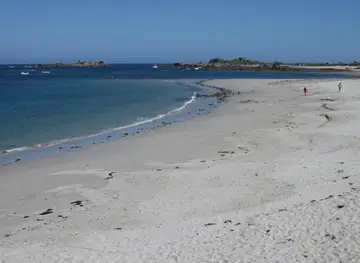
Perelle Bay occupies a broad inlet on Guernsey’s western coast, where a gently curving shore meets granite outcrops, low cliffs and the open waters of the Atlantic. At low tide, the bay reveals a wide sweep of sand and rock, while the rising sea transforms its character into a more enclosed coastal landscape. The changing tide is central to the experience: beach access, walking conditions and views across the bay all vary considerably through the day.Read more about Perelle Bay
Rural Guernsey
Exploring the Wider Coast
When is the best time to visit Perelle Bay?
Best: June–August · 11°C| Month | High (°C) | Rainfall (mm) |
|---|---|---|
| January | 11 | 81 |
| February | 11 | 71 |
| March | 11 | 61 |
| April | 11 | 51 |
| May | 11 | 41 |
| June (best) | 11 | 31 |
| July (best) | 11 | 21 |
| August (best) | 11 | 21 |
| September | 11 | 31 |
| October | 11 | 41 |
| November | 11 | 51 |
| December | 11 | 61 |
Getting to and around Perelle Bay
How to get there
Transportation
Best landmarks in Perelle Bay
Perelle Bay itself is the defining natural landmark: a western Guernsey inlet shaped by granite geology, tidal movement and Atlantic exposure. Its sandy foreshore and rocky margins form a shifting coastal scene, while the surrounding fields and lanes illustrate the close relationship between Guernsey’s farmland and shore. The nearby defensive landscape adds an important man-made layer. At Rocquaine Bay, outside Perelle Bay, Fort Grey is an easily recognised circular Martello tower whose position reflects the strategic value of Guernsey’s coastline; it now houses the Shipwreck Museum. Along the wider western and south-western shore, coastal walls, rocky headlands and surviving military structures recall both earlier maritime defence and the German occupation of the Channel Islands. These features are best understood as parts of a connected coastal landscape rather than as monuments confined to Perelle alone.
-
Museum
Castle Cornet
Explore the rich maritime history and stunning views at Castle Cornet, Guernsey's iconic fortress and museum.
-
War museum
German Occupation Museum
Discover the poignant history of Guernsey during World War II at the German Occupation Museum, where personal stories and artifacts bring the past to life.
-
Island
Guernsey
Explore the stunning landscapes, rich history, and vibrant culture of Guernsey, an idyllic island retreat in the heart of the English Channel.
-
Historical place museum
German Underground Hospital
Discover the fascinating history of the German Underground Hospital in Guernsey, a unique wartime museum that offers a glimpse into the past.


Explore Perelle Bay on the map
Plan your trip on one map. See where the top attractions, landmarks, restaurants and hotels are, and book hotels and experiences in a few clicks.
Best hotels in Perelle Bay
Best restaurants in Perelle Bay
Perelle Bay itself has limited immediate dining infrastructure, so visitors should not expect a concentrated restaurant or café scene beside the shore. Meals are more readily found in Guernsey’s larger settlements and village centres, where pubs, cafés, bakeries and restaurants reflect the island’s maritime and agricultural setting. Local menus may feature Channel Island dairy products, seasonal produce, seafood and familiar British or European cooking, although availability varies between businesses. Picnic supplies can be collected before travelling into the western parishes, particularly for visitors planning a longer coastal walk. Traditional pubs and informal eateries elsewhere on the island provide a useful complement to the bay’s quiet landscape, while farm shops and independent food businesses may offer regional products when open. Checking current opening arrangements is important outside the busier visitor season.
-
Restaurant
Crabby Jack's
Discover exquisite coastal dining at Crabby Jack's in Guernsey—fresh seafood with stunning views awaits you.
-
Brasserie
Christies Brasserie
Experience exquisite local cuisine at Christies Brasserie in Guernsey - where every meal tells a story.
-
Restaurant
Octopus Restaurant
Experience exceptional seafood dining at Octopus Restaurant in St. Peter Port, Guernsey – where breathtaking views meet exquisite flavors.
-
Seafood
Le Nautique Restaurant
Experience exquisite seafood dining at Le Nautique Restaurant in St. Peter Port - where fresh flavors meet stunning harbor views.


Best bars in Perelle Bay
Perelle Bay has no recognised nightlife district and is generally experienced as a quiet coastal location rather than an evening entertainment centre. After sunset, the atmosphere is shaped by rural lanes, open sea and low-density settlement, with evening walks requiring care because paths and roads may be poorly lit. For a drink or a more sociable evening, visitors normally travel to established pubs, hotel bars and restaurants in Guernsey’s villages or in St Peter Port, the island’s main town. Traditional pubs offer the most characteristic local setting, while larger venues and cultural events are concentrated away from the bay and may be seasonal. Visitors should arrange their return transport in advance, since rural bus services and late-evening options may be limited.
-
Gastropub
The Rockmount - Randalls
Discover the culinary delights of The Rockmount - Randalls, a premier gastropub on Guernsey's stunning Côbo Coast, blending local flavors and breathtaking views.
-
Restaurant
Ship & Crown
Discover the vibrant culinary scene at Ship & Crown, where stunning coastal views meet exceptional dining in the heart of Guernsey.
-
Restaurant
The Beach House
Experience exceptional dining at The Beach House, Guernsey, where stunning views meet local flavors for an unforgettable meal by the sea.
-
Grill
The Doghouse
Discover the vibrant atmosphere of The Doghouse, Guernsey's premier gastropub for grilled delights, live music, and unforgettable experiences.


Best nightclubs in Perelle Bay
Perelle Bay has no recognised nightlife district and is generally experienced as a quiet coastal location rather than an evening entertainment centre. After sunset, the atmosphere is shaped by rural lanes, open sea and low-density settlement, with evening walks requiring care because paths and roads may be poorly lit. For a drink or a more sociable evening, visitors normally travel to established pubs, hotel bars and restaurants in Guernsey’s villages or in St Peter Port, the island’s main town. Traditional pubs offer the most characteristic local setting, while larger venues and cultural events are concentrated away from the bay and may be seasonal. Visitors should arrange their return transport in advance, since rural bus services and late-evening options may be limited.
-
Cocktail bar
Amigos
Discover the vibrant nightlife at Amigos, Guernsey's premier cocktail bar offering a stylish ambiance and expertly crafted drinks.
-
Pub
Harbour Lights
Experience the perfect blend of local charm and stunning seaside views at Harbour Lights, a premier pub in St. Peter Port.
-
Bar
PingQuay
Discover the lively atmosphere and stunning waterfront views at PingQuay, the perfect bar for tourists in Guernsey.
-
Pub
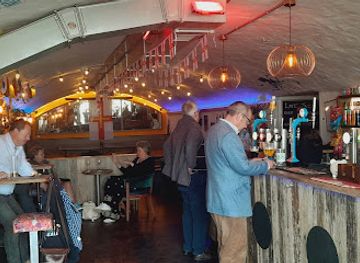
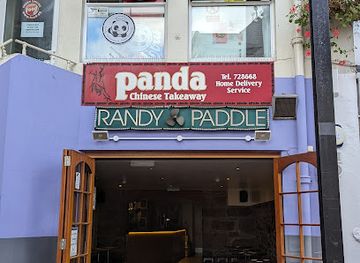
Randy Paddle
Experience the vibrant nightlife of Guernsey at Randy Paddle, a lively pub offering local flavors and a friendly atmosphere.


Best shops in Perelle Bay
Shopping at Perelle Bay is limited to the experience of the landscape rather than a local retail centre. Visitors should obtain food, drink, walking supplies and any specialist equipment in a larger Guernsey settlement before travelling to the western coast. Across the island, independent shops, farm shops and food producers may offer Guernsey dairy products, seasonal produce, preserves, baked goods and locally made gifts, while St Peter Port has the broadest concentration of general retail, crafts and galleries. Small village shops can be useful but have limited ranges and opening patterns, particularly outside peak visitor periods. Regional products and handmade goods provide a more meaningful souvenir than collecting natural material from the shore; shells, stones, plants and marine life should be left in place.
-
Supermarket
Alliance
Discover the vibrant flavors and essentials of Guernsey at Alliance supermarket, your local shopping haven.
-
Supermarket
Waitrose & Partners
Experience the fresh flavors of Guernsey at Waitrose & Partners – your destination for quality groceries and gourmet delights.
-
Cafe
Petit Bot Tearooms
Discover the charm of Petit Bot Tearooms, where delightful treats meet stunning coastal views in the heart of Guernsey.
-
Garden center
Earlswood Garden Centre & Café
Discover the beauty of nature and indulge in delightful treats at Earlswood Garden Centre & Café in Guernsey.


Get your free copy of our complete guide to Perelle Bay, delivered straight to you.
Everything on this page, from attractions and restaurants to essentials and local phrases, in one PDF you can read offline, print or share.
Already have an account? Sign in
Your Perelle Bay guide is ready.
We'll send it to · Not you? Sign out

Getting your guide ready…
We are putting together a fresh copy of the Perelle Bay guide. This can take up to a minute.
This can take a few moments. If your browser asks, choose Allow so the download can start. You'll find the guide in your Downloads folder.
Nothing happened? Download it again
Sorry, the guide is taking longer than usual. Please try again in a minute, or get it by email instead.
Perelle Bay essentials
Currency and Payment
Safety
Emergency Situations
Do's and Don'ts
Local Tips
From Eve
Local phrases worth knowing
You don't need to get them perfect. A few words go a long way, and locals appreciate the effort.
Basics
| English | Local | Say it |
|---|---|---|
| Hello | Salut | [sa-loo] |
| Goodbye | Au revoir | [oh ruh-vwahr] |
| Yes | Oui | [wee] |
| No | Non | [nohn] |
| Please/You're welcome | S'il vous plaît | [seel voo pleh] |
| Thank you | Merci | [mehr-see] |
| Excuse me/Sorry | Excusez-moi | [ex-kew-zay mwah] |
| How are you? | Comment ça va? | [koh-mohn sa vah] |
| Fine. And you? | Bien. Et toi? | [byen. ay twah] |
| Do you speak English? | Parlez-vous anglais? | [par-lay voo ahn-glay] |
| I don't understand | Je ne comprends pas | [zhuh nuh kohm-prahnd pah] |
Eating & Drinking
| English | Local | Say it |
|---|---|---|
| I'd like to see the menu, please | Je voudrais voir le menu, s'il vous plaît | [zhuh voo-dray vwahr luh muh-nyoo seel voo pleh] |
| I don't eat meat | Je ne mange pas de viande | [zhuh nuh mahnj pah duh vee-ahnd] |
| Cheers! | Santé! | [sahn-tay] |
| I would like to pay, please | Je voudrais payer, s'il vous plaît | [zhuh voo-dray pay-yay seel voo pleh] |
Emergencies
| English | Local | Say it |
|---|---|---|
| Help! | À l'aide! | [ah layd] |
| Go away! | Allez-vous en! | [ah-lay voo ahn] |
| Call the Police! | Appelez la police! | [ah-pay-lay lah pee-lees] |
| Call a doctor! | Appelez un médecin! | [ah-pay-lay ahn mayd-sahn] |
| I'm lost | Je suis perdu | [zhuh swee pair-doo] |
| I'm ill | Je suis malade | [zhuh swee mah-lahd] |
Shopping
| English | Local | Say it |
|---|---|---|
| I'd like to buy... | Je voudrais acheter... | [zhuh voo-dray ah-shey-tay] |
| I'm just looking | Je regarde juste | [zhuh ruh-gard jwust] |
| How much is it? | Combien ça coûte? | [kohm-byen sah koot] |
| That's too expensive | C'est trop cher | [say troh shair] |
| Can you lower the price? | Pouvez-vous baisser le prix? | [poo-veh voo beh-say luh pree] |
Time & Numbers
| English | Local | Say it |
|---|---|---|
| What time is it? | Quelle heure est-il? | [kell er ay teel] |
| It's one o'clock | Il est une heure | [eel ay tewn er] |
| Half past (10) | Dix heures et demie | [dees er ay duh-mee] |
| Morning | Matin | [mah-tan] |
| Afternoon | Après-midi | [ah-pray mee-dee] |
| Evening | Soir | [swahr] |
| Yesterday | Hier | [yehr] |
| Today | Aujourd'hui | [oh-zhoor dewee] |
| Tomorrow | Demain | [duh-mahn] |
| 1 | Un | [uhn] |
| 2 | Deux | [duh] |
| 3 | Trois | [twa] |
| 4 | Quatre | [ka-truh] |
| 5 | Cinq | [sank] |
| 6 | Six | [sees] |
| 7 | Sept | [sept] |
| 8 | Huit | [wheat] |
| 9 | Neuf | [nuf] |
| 10 | Dix | [dees] |
Transport & Directions
| English | Local | Say it |
|---|---|---|
| Where's a/the...? | Où est le/la...? | [oo ay luh/lah] |
| What's the address? | Quelle est l'adresse? | [kell ay la-dress] |
| Can you show me (on the map)? | Pouvez-vous me montrer (sur la carte)? | [poo-veh voo muh mohn-tray (soor lah kart)] |
| When's the next (bus)? | Quand est le prochain (bus)? | [kahn ay luh proh-shahn (bus)] |
| A ticket (to ....) | Un billet (pour ....) | [uhn bee-yay (poor)] |
History of Perelle Bay
Granite Coast and Tidal Landscape
Perelle Bay’s physical character is rooted in Guernsey’s ancient granite geology, which forms much of the island’s western and southern coastline. Weathering, wave action and changing sea levels have shaped the bay’s rocky margins, intertidal platforms and sandy foreshore over long geological timescales. The result is a coast whose appearance alters markedly with the tide: exposed rock and sand at low water give way to a more continuous sea at high water. These natural conditions influenced how people used the shore, directing access towards suitable landing places while exposing the risks of rocks, currents and changing coastal weather.
Agricultural Parish and Coastal Livelihoods
Perelle developed within Guernsey’s wider landscape of small fields, lanes and dispersed rural settlement rather than as a densely built harbour town. Farming shaped the land behind the bay, with hedgerows and enclosed plots forming the familiar island countryside. Coastal communities also depended historically on the sea for fishing, small-scale transport and the gathering of marine resources, although Perelle remained a modest landing place rather than one of Guernsey’s principal commercial ports. The relationship between cultivated land and the shore remains visible in the transition from rural lanes and fields to the open bay.
Defending Guernsey’s Western Coast
Guernsey’s exposed coastline has long been valued for defence as well as for access to the sea. During the German occupation of the Channel Islands from 1940 to 1945, the island became part of the Atlantic Wall, with coastal positions, observation posts and military infrastructure added to existing defensive works. The most conspicuous nearby survivor is Fort Grey at Rocquaine Bay, outside Perelle Bay itself. Earlier fortifications and later occupation structures together give the south-western coast a layered military history, connecting its scenery with the strategic importance of the Channel Islands.
Coastal Heritage and Modern Recreation
In the modern era, Perelle Bay’s importance has been primarily scenic and recreational. Improved roads, Guernsey’s island-wide bus network and a developed culture of coastal walking made the bay more accessible to residents and visitors, while its rural setting limited large-scale resort development. Today, the shoreline is valued for quiet recreation, landscape appreciation and contact with Guernsey’s intertidal environment. Responsible access is important because tides, exposed rocks, nesting wildlife and the fragility of coastal habitats continue to shape how the bay can be enjoyed.
Perelle Bay in Photos
Browse through our photo collection highlighting the charm and character of the destination.
Cities in Perelle Bay
The towns and cities of Perelle Bay, and the easiest places to base yourself.
-

-

-

-

-

-


Swipe for more cities
Neighbouring destination travel guides
The closest destinations to Perelle Bay, if you have time for more than one.
-
-

-

-

-


Swipe for more destinations
Explore more

Explore more of St. Pierre du Bois
Discover the serene beauty and historical charm of St. Pierre du Bois in Guernsey, where rolling hills, coastal views, and cultural treasures await.
Explore St. Pierre du Bois
Explore more of Guernsey
Discover Guernsey, where French and British cultures blend seamlessly amidst stunning coastal scenery, rich history, and delectable cuisine in the charming Channel Islands.
Explore Guernsey