

Free Bafatá Region Travel Guide & Mobile App
Explore Bafatá Region with free travel guides. Discover regional history, expert tips, proposed trips, and audio guides on web or mobile app.


Explore Bafatá Region in Guinea-Bissau for Geba River landscapes, Mandinka heritage, rural markets and the birthplace of Amílcar Cabral.
Read more about Bafatá Region
When is the best time to visit Bafatá Region?
Best: December–February · 28–30°C| Month | High (°C) | Rainfall (mm) |
|---|---|---|
| January (best) | 28 | 0 |
| February (best) | 30 | 1 |
| March | 32 | 2 |
| April | 33 | 4 |
| May | 34 | 30 |
| June | 32 | 150 |
| July | 30 | 280 |
| August | 30 | 400 |
| September | 30 | 350 |
| October | 31 | 200 |
| November | 30 | 50 |
| December (best) | 29 | 1 |
Getting to and around Bafatá Region
How to get there
Transportation
Top city travel guides in Bafatá Region
The cities of Bafatá Region, and the easiest places to base yourself.

Swipe for more cities
Destinations in Bafatá Region
Resorts, valleys and scenic spots worth a trip of their own.

Swipe for more destinations
Best attractions in Bafatá Region
Bafatá Region’s attractions are primarily historical, cultural and landscape-based rather than built around large commercial visitor facilities. In Bafatá city, visitors can explore older streets, colonial-era remnants, the market and the Geba River waterfront, where the relationship between inland trade, fishing and daily transport is still apparent. Sites associated with Amílcar Cabral provide an important introduction to Guinea-Bissau’s independence movement. Outside the regional capital, the appeal lies in the changing countryside: rice-growing areas, seasonal wetlands, cashew orchards, savannah and village markets reveal the agricultural foundations of local life. Bambadinca, Contuboel, Galomaro and Xitole are useful points of contact for understanding the wider region, although facilities are limited and visits require preparation. Birdwatching and nature observation are possible around wetlands and river corridors, but specialist guiding and reliable transport should be arranged rather than assumed. The most rewarding experiences often come from combining a historical visit in Bafatá with a carefully planned rural journey, allowing time for local introductions and changing road conditions.
-
 River
RiverRio de Canjambari
Discover the tranquil beauty of Rio de Canjambari, a hidden river gem in Guinea-Bissau, perfect for relaxation and outdoor adventures.
Best landmarks in Bafatá Region
The most recognisable landmark in Bafatá Region is the historic urban fabric of Bafatá itself, where older Portuguese administrative and commercial buildings stand alongside market streets and later neighbourhoods. Their weathered appearance reflects the city’s long role as an inland centre rather than a preserved colonial museum. The Geba River is another defining landmark: its broad channel and waterfront connect Bafatá physically and historically to trade, fishing and movement through eastern Guinea-Bissau. The house and memorial associations linked with Amílcar Cabral are significant national-history landmarks because the independence leader was born in Bafatá in 1924. Outside the city, the region’s landmarks are less monumental but no less important locally, including village mosques, market spaces, bridges, cultivated floodplains and broad savannah horizons. These places are working environments rather than curated monuments, so access, photography and interpretation should be approached with local guidance. Together they express the region’s combination of river geography, Islamic and Mandinka heritage, colonial history and post-independence memory.
-
Restaurant
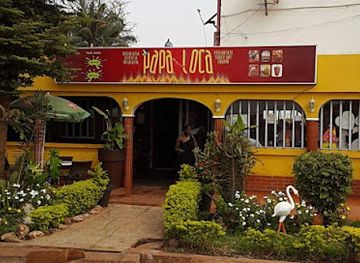
Restaurante Papa Loca
Experience the authentic flavors of Guinea-Bissau at Restaurante Papa Loca, a must-visit culinary destination in Bissau.
-
Hotel
Ponta Anchaca
Experience the tranquility and beauty of Ponta Anchaca, a hidden paradise in Guinea-Bissau's Bijagos Archipelago, perfect for relaxation and adventure.
-
Cultural center
Centro Cultural Franco-Bissau-Guineense
Experience the vibrant culture of Guinea-Bissau at the Centro Cultural Franco-Bissau-Guineense, a hub for art, music, and heritage in Bissau.
-
Motel
Hôtel Malaika
Discover the comfort of Hôtel Malaika in Bissau, Guinea-Bissau – a cozy motel perfect for cultural exploration and relaxation.

Explore Bafatá Region on the map
Plan your trip on one map. See where the top cities, national parks and sights are, and book hotels and experiences in a few clicks.
Best hotels in Bafatá Region
Best restaurants in Bafatá Region
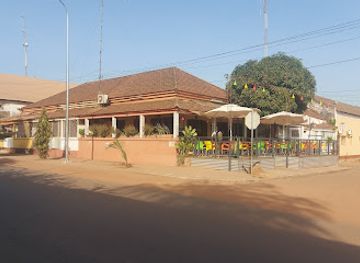
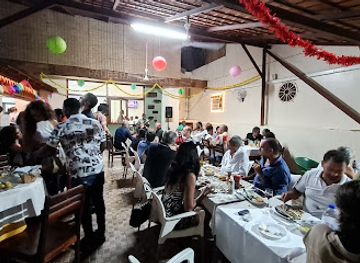
Dining in Bafatá Region is straightforward and closely connected to local agriculture, river life and household cooking. Rice is the central staple, commonly served with fish, chicken, vegetables or sauces based on groundnuts, onions and palm oil. Fresh or dried fish may feature more often near the Geba and in market cooking, while grilled chicken and rice dishes are practical options in town. Seasonal mangoes, cashews and other produce appear in markets and roadside stalls, though availability varies. Small local eateries and informal food stalls provide the most accessible meals, while modest guesthouse kitchens may offer advance-arranged dishes. Visitors should not expect a large restaurant sector outside Bafatá, and menus can be limited when supplies are irregular. Bottled water is the safer choice for travellers, and it is sensible to introduce unfamiliar foods gradually. The region’s food culture is best understood through markets, shared meals and locally prepared rice dishes rather than through a formal fine-dining scene.
-
Restaurant
Restaurante Papa Loca
Experience authentic Guinea-Bissauan cuisine at Restaurante Papa Loca in Bissau—where flavor meets culture.
-
Italian
O Bistro
Experience authentic Italian flavors at O Bistro in Bissau – a delightful fusion of Italian cuisine and local charm.
-
Restaurant
A Padeira Africana
Savor authentic African cuisine at A Padeira Africana in Bissau—where tradition meets flavor in every bite.
-
Restaurant
Restaurante Oásis
Experience the authentic flavors of Guinea-Bissau at Restaurante Oásis – where every meal tells a story.


Best bars in Bafatá Region
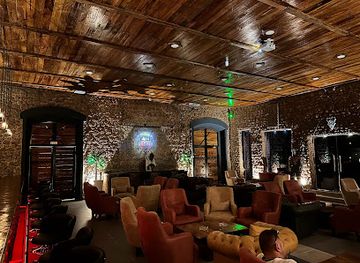
Bafatá Region has a restrained evening scene, centred on local bars, cafés, guesthouse compounds and informal social spaces rather than dedicated nightclubs. In Bafatá, evenings may bring conversation, music and drinks around central streets, but opening arrangements and atmosphere vary, and activity usually winds down earlier than in Guinea-Bissau’s capital. Palm wine and locally available beer may be encountered alongside soft drinks, while the availability of imported spirits is less dependable. In smaller towns such as Bambadinca, Contuboel, Galomaro and Xitole, nightlife is mostly community-based and seasonal, with little reason to expect a formal entertainment district. Visitors should dress respectfully, keep valuables discreet and avoid walking unfamiliar roads late at night. The region’s evening character is better experienced through a meal, a market-area conversation or locally arranged music than through a search for large clubs.
-
Restaurant
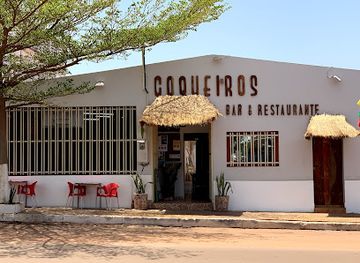
Coqueiros Bissau
Discover the authentic tastes of Guinea-Bissau at Coqueiros Bissau, a vibrant restaurant offering a delightful blend of local and international cuisine.
-
Bar
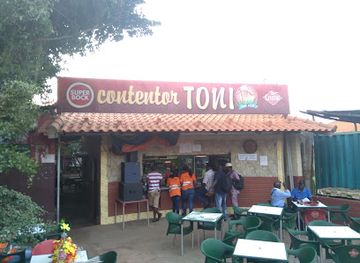
Contentor Di Tony
Discover the lively atmosphere of Contentor Di Tony, a bar in Bissau, where local culture and vibrant nightlife come together.
-
Restaurant
Contentor do Zema-Bar Metro Lavapies
Discover the authentic tastes of Guinea-Bissau at Contentor do Zema-Bar Metro Lavapies, where local cuisine meets a welcoming atmosphere.
-
Restaurant
Restaurante Bar Samaritana
Experience the flavors of Guinea-Bissau at Restaurante Bar Samaritana, where local cuisine meets warm hospitality in a charming setting.

Best nightclubs in Bafatá Region
Bafatá Region has a restrained evening scene, centred on local bars, cafés, guesthouse compounds and informal social spaces rather than dedicated nightclubs. In Bafatá, evenings may bring conversation, music and drinks around central streets, but opening arrangements and atmosphere vary, and activity usually winds down earlier than in Guinea-Bissau’s capital. Palm wine and locally available beer may be encountered alongside soft drinks, while the availability of imported spirits is less dependable. In smaller towns such as Bambadinca, Contuboel, Galomaro and Xitole, nightlife is mostly community-based and seasonal, with little reason to expect a formal entertainment district. Visitors should dress respectfully, keep valuables discreet and avoid walking unfamiliar roads late at night. The region’s evening character is better experienced through a meal, a market-area conversation or locally arranged music than through a search for large clubs.
-
Disco club
Bambu
Experience the vibrant nightlife of Bissau at Bambu, a disco club where music, dancing, and fun come together in the heart of Guinea-Bissau.
-
Live music bar
Kings Club
Immerse yourself in the lively ambiance of Kings Club, the premier live music bar in Bissau, Guinea-Bissau, where local culture and rhythm come alive.
-
Lounge
Antika Bissau
Discover Antika Bissau: A stylish lounge offering exquisite drinks and vibrant local culture in the heart of Guinea-Bissau.
-
Night club
Discoteca TABANKA
Immerse yourself in the lively atmosphere of Discoteca TABANKA, Bissau's top night club for an unforgettable night out.

Best shops in Bafatá Region
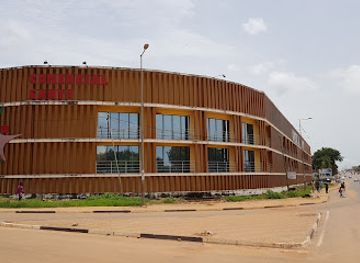
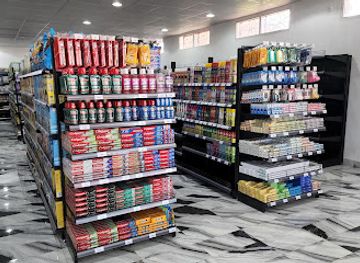
Shopping in Bafatá Region is concentrated in local markets and small independent stalls rather than formal retail centres. Bafatá’s market is the principal place to see rice, groundnuts, vegetables, dried fish, household goods and seasonal fruit, while smaller settlements have periodic markets serving surrounding villages. Cashews are an important regional product and may be available in raw or processed form, although packaging and quality vary; buy food products from clean, reputable sellers and check any export restrictions before travelling onward. Visitors may also find woven mats, baskets, simple textiles and locally made household items, but supply is irregular and not every item is produced locally. Small shops stock practical goods rather than a broad range of souvenirs. Bargaining may be customary in some informal settings, but it should remain courteous and proportionate. Carry cash in small CFA franc denominations, as card facilities and formal receipts are uncommon outside the largest businesses.
-
Supermarket
Santy Comercial
Discover the vibrant local shopping experience at Santy Comercial in Bissau, Guinea-Bissau, where culture meets convenience.
-
Electronics store
Loja Americana
Explore a wide range of electronics at Loja Americana, the go-to electronics store in Bissau, Guinea-Bissau.
-
Shopping mall
Supermercado Darling Antula
Experience shopping and local culture at Supermercado Darling Antula, a vibrant mall in Bissau offering a variety of products and cuisines.
-
Shopping mall
Supermercado Darling Quelélé
Discover the essence of Guinea-Bissau at Supermercado Darling Quelélé, a vibrant shopping destination filled with local flavors and friendly faces.

Get your free copy of our complete guide to Bafatá Region, delivered straight to you.
Everything on this page, from attractions and restaurants to essentials and local phrases, in one PDF you can read offline, print or share.
Already have an account? Sign in
Your Bafatá Region guide is ready.
We'll send it to · Not you? Sign out

Getting your guide ready…
We are putting together a fresh copy of the Bafatá Region guide. This can take up to a minute.
This can take a few moments. If your browser asks, choose Allow so the download can start. You'll find the guide in your Downloads folder.
Nothing happened? Download it again
Sorry, the guide is taking longer than usual. Please try again in a minute, or get it by email instead.
Bafatá Region essentials
Currency and Payment
Safety
Emergency Situations
Do's and Don'ts
Local Tips
From Eve
Local phrases worth knowing
You don't need to get them perfect. A few words go a long way, and locals appreciate the effort.
Basics
| English | Local | Say it |
|---|---|---|
| Hello | Olá | [oh-lah] |
| Goodbye | Adeus | [ah-deh-oos] |
| Yes | Sim | [seem] |
| No | Não | [now] |
| Please/You're welcome | Por favor | [poor fah-vor] |
| Thank you | Obrigado | [oh-bree-gah-doo] |
| Excuse me/Sorry | Desculpe | [deh-skool-peh] |
| How are you? | Como está? | [koh-moo es-tah] |
| Fine. And you? | Bem. E você? | [behm. eh voh-seh] |
| Do you speak English? | Você fala inglês? | [voh-seh fah-lah een-glez] |
| I don't understand | Eu não entendo | [eh-ooh now en-ten-doo] |
Eating & Drinking
| English | Local | Say it |
|---|---|---|
| I'd like to see the menu, please | Gostaria de ver o menu, por favor | [goh-stah-ree-ah jeh veh-ree oh meh-noo, poor fah-vor] |
| I don't eat meat | Eu não como carne | [eh-ooh now koh-moo kar-nee] |
| Cheers! | Saúde! | [sah-oo-deh] |
| I would like to pay, please | Gostaria de pagar, por favor | [goh-stah-ree-ah jeh pah-gar, poor fah-vor] |
Emergencies
| English | Local | Say it |
|---|---|---|
| Help! | Socorro! | [soh-koh-roh] |
| Go away! | Vá embora! | [vah em-boh-rah] |
| Call the Police! | Chame a polícia! | [shah-meh ah poh-lee-see-ah] |
| Call a doctor! | Chame um médico! | [shah-meh oom meh-dee-koh] |
| I'm lost | Estou perdido | [eh-stoh peh-dee-doh] |
| I'm ill | Estou doente | [eh-stoh do-ehn-chee] |
Shopping
| English | Local | Say it |
|---|---|---|
| I'd like to buy... | Gostaria de comprar... | [goh-stah-ree-ah jeh kohm-prah] |
| I'm just looking | Estou apenas a olhar | [eh-stoh ah-peh-nahz ah oh-lahr] |
| How much is it? | Quanto custa? | [kwahn-toh koos-tah] |
| That's too expensive | Isso é muito caro | [ee-soh eh muhn-toh kah-roh] |
| Can you lower the price? | Você pode baixar o preço? | [voh-seh poh-jee bye-shar oh preh-soh] |
Time & Numbers
| English | Local | Say it |
|---|---|---|
| What time is it? | Que horas são? | [keh oh-ras sah-ooh] |
| It's one o'clock | É uma hora | [eh oo-mah oh-rah] |
| Half past (10) | Dez e meia | [dehz eh meh-yah] |
| Morning | Manhã | [mahn-yah] |
| Afternoon | Tarde | [tahr-deh] |
| Evening | Noite | [noy-teh] |
| Yesterday | Ontem | [on-tem] |
| Today | Hoje | [oh-zhee] |
| Tomorrow | Amanhã | [ah-mahn-yah] |
| 1 | Um | [oom] |
| 2 | Dois | [doyz] |
| 3 | Três | [trehz] |
| 4 | Quatro | [kwah-troh] |
| 5 | Cinco | [seen-koh] |
| 6 | Seis | [says] |
| 7 | Sete | [seh-teh] |
| 8 | Oito | [oy-toh] |
| 9 | Nove | [noh-veh] |
| 10 | Dez | [dehz] |
Transport & Directions
| English | Local | Say it |
|---|---|---|
| Where's a/the...? | Onde fica...? | [on-deh fee-kah] |
| What's the address? | Qual é o endereço? | [kwahl eh oo en-deh-reh-soo] |
| Can you show me (on the map)? | Você pode me mostrar (no mapa)? | [voh-seh poh-jee mee mohs-trar (noh mah-pah)] |
| When's the next (bus)? | Quando é o próximo (ônibus)? | [kwahn-doh eh oo proh-see-moh (oh-nee-boos)] |
| A ticket (to ....) | Um bilhete (para....) | [oom bee-lyeh-tay (pah-rah....)] |
History of Bafatá Region
Mandinka Networks and the Kingdom of Kaabu
Before European colonial rule, eastern Guinea-Bissau formed part of a wider Mandinka cultural and commercial world associated with Kaabu, a polity that developed from the influence of the Mali Empire. Trade, political authority and religious connections linked inland settlements with areas now belonging to Senegal and Guinea. The region was not a single uniform society: Mandinka communities, Fula groups and other peoples maintained their own institutions and relationships. This long history remains visible in local languages, family traditions, Islamic scholarship and the importance of market towns such as Bafatá.
Portuguese Expansion and Inland Trade
Portuguese influence in Guinea-Bissau began along the coast but gradually extended inland through military campaigns, treaties, trading relationships and colonial administration. Bafatá developed as an important interior centre connected to the Geba River and to routes carrying agricultural produce, livestock and imported goods. Colonial authority remained uneven, particularly away from administrative towns, and relied heavily on local intermediaries. The resulting urban landscape combined Portuguese offices and commercial buildings with African markets, neighbourhoods and established systems of land use.
Groundnuts, Rice and the Colonial Economy
During the nineteenth and twentieth centuries, the Portuguese colonial economy increasingly promoted export agriculture, especially groundnuts, alongside rice cultivation and local food production. The Geba basin and surrounding plains supported farming, although seasonal flooding and variable rainfall affected yields. Bafatá’s position on inland routes helped it function as a collecting and trading centre. Colonial development brought roads and administrative infrastructure but did not create broadly shared prosperity; labour demands, taxation and unequal access to services contributed to dissatisfaction with Portuguese rule.
Amílcar Cabral and Bafatá
Amílcar Cabral, one of Africa’s most influential anti-colonial thinkers and the founder of the African Party for the Independence of Guinea and Cape Verde, was born in Bafatá in 1924. Trained as an agronomist, he combined political organisation with close attention to rural society, agriculture and culture. Although his political work extended far beyond the region, his connection with Bafatá gives the city a central place in Guinea-Bissau’s national memory. Sites associated with his early life are important points of historical interest.
The War for Independence, 1963–1974
The armed struggle against Portuguese rule began in 1963 and gradually transformed Guinea-Bissau’s countryside. The PAIGC established influence in many rural areas, while Portuguese forces attempted to retain control of towns, roads and strategic positions. Eastern Guinea-Bissau was affected by military movement, political mobilisation and disruption to agriculture, although the intensity varied from district to district. Independence was declared in 1973 and recognised by Portugal in 1974, after the Portuguese Revolution ended the colonial war.
Independence and Post-Colonial Change
After independence, Bafatá Region inherited weak transport links, limited public services and an economy still heavily dependent on small-scale agriculture. Bafatá remained an important inland administrative and commercial centre, while smaller towns continued to depend on periodic markets and road connections. Rice, groundnuts, cashews, livestock and seasonal trade shaped local livelihoods. Political instability at national level, including the 1998–1999 civil war, affected movement, state services and investment across Guinea-Bissau, with long-term consequences for regional development.
Contemporary Rural and Environmental Pressures
In recent decades, Bafatá Region has faced the combined pressures of unreliable infrastructure, changing agricultural conditions and limited employment outside farming and trade. Cashew production has become increasingly important in Guinea-Bissau’s rural economy, alongside rice, groundnuts and subsistence crops. Seasonal flooding, road deterioration and access to healthcare remain practical concerns. At the same time, the region’s savannahs, wetlands and river corridors retain ecological value, making responsible local planning important as communities seek improved livelihoods without losing productive landscapes.
Bafatá Region in Photos
Browse through our photo collection highlighting the charm and character of the destination.
Neighbouring regions of Bafatá Region
The closest regions to Bafatá Region, if you have time for more than one.
-

-

-

-

-


Swipe for more regions
Explore more

Explore more of Guinea-Bissau
Discover Guinea-Bissau: An untouched paradise with pristine beaches, rich wildlife, and vibrant culture waiting to be explored in the heart of West Africa.
Explore Guinea-Bissau