

Free Upper Demerara-Berbice Travel Guide & Mobile App
Explore Upper Demerara-Berbice with free travel guides. Discover regional history, expert tips, proposed trips, and audio guides on web or mobile app.


Explore Upper Demerara-Berbice in Guyana for Linden's bauxite heritage, forest rivers, quarry lakes and wildlife-oriented journeys inland.
Read more about Upper Demerara-Berbice
When is the best time to visit Upper Demerara-Berbice?
Best: December–February · 31°C| Month | High (°C) | Rainfall (mm) |
|---|---|---|
| January (best) | 31 | 90 |
| February (best) | 31 | 80 |
| March | 31 | 100 |
| April | 32 | 110 |
| May | 32 | 130 |
| June | 32 | 150 |
| July | 31 | 140 |
| August | 31 | 130 |
| September | 32 | 120 |
| October | 32 | 110 |
| November | 31 | 100 |
| December (best) | 31 | 90 |
Getting to and around Upper Demerara-Berbice
How to get there
Transportation
Top city travel guides in Upper Demerara-Berbice
The cities of Upper Demerara-Berbice, and the easiest places to base yourself.
-

-
-

-

-
-


Swipe for more cities
Destinations in Upper Demerara-Berbice
Resorts, valleys and scenic spots worth a trip of their own.
-

-


Swipe for more destinations
Best attractions in Upper Demerara-Berbice
Upper Demerara-Berbice offers a compact but varied mix of industrial heritage, inland waterways and tropical forest. Linden is the starting point for the Linden Museum of Socio-Cultural Heritage, which presents local history and the social world created by bauxite mining. Around the town, former quarry lakes and mine landscapes provide opportunities for carefully organised visits, photography and recreation, although access, safety and water conditions should be checked locally. The Demerara River remains central to the region's geography and can be explored through boat trips or riverside excursions. Farther south, the road towards Ituni leads into a more heavily forested environment, while Rockstone is associated with fishing, birdwatching, lakes and wildlife-oriented journeys. The attractions are less about a dense collection of formal visitor facilities than about understanding how mining, waterways and forest fit together. Visitors interested in nature should arrange guides and transport in advance, particularly for remote sites, and should expect basic infrastructure. Cultural experiences, local food and conversations about Linden's industrial past can be as important as the landscape itself.
-
Tourist attraction
Blue Lake Linden
Explore the stunning Blue Lake Linden in Guyana, a serene natural attraction perfect for relaxation, photography, and appreciating nature's beauty.
-
Tourist attraction
Baracara Falls
Experience the breathtaking beauty of Baracara Falls, a stunning natural wonder in Guyana, perfect for nature lovers and adventure seekers alike.
-
Tourist attraction
Linden Sky Lake
Experience the stunning beauty of Linden Sky Lake, a captivating blue oasis perfect for relaxation and adventure in Guyana's lush landscape.
-
Historical landmark
The Christianburg Waterwheel
Explore the historical significance of the Christianburg Waterwheel, a captivating landmark in Linden, Guyana, rich in culture and natural beauty.


Best landmarks in Upper Demerara-Berbice
Linden's most distinctive landmarks are tied to the Demerara River and the bauxite industry. The historic townscape of Wismar, Mackenzie and Christianburg reflects the way separate settlements developed around work, transport and the river before becoming one municipality. The Christianburg Water Wheel, associated with the former bauxite industry, is an important reminder of the machinery and infrastructure that supported mining. Industrial remnants, old transport alignments and altered mine landscapes around Linden provide a visual record of the town's twentieth-century economic importance, even where individual structures require local access arrangements. The Demerara River itself is the region's defining natural landmark, cutting through the town and continuing south into forested country. Former quarry lakes form another recognisable part of Linden's landscape, their clear water and wooded edges revealing the physical consequences of extraction. Together these places explain Upper Demerara-Berbice more effectively than monumental architecture alone: the region's character is written in its river, working settlements, industrial remains and forest margins.

Explore Upper Demerara-Berbice on the map
Plan your trip on one map. See where the top cities, national parks and sights are, and book hotels and experiences in a few clicks.
Best hotels in Upper Demerara-Berbice
Best restaurants in Upper Demerara-Berbice
Dining in Upper Demerara-Berbice is centred on Linden's local eateries, takeaway counters, markets and family-run establishments rather than a large formal restaurant scene. Meals reflect Guyana's wider culinary traditions: rice and peas, curry, roti, cook-up rice, pepperpot, fried or stewed chicken, fresh fish and vegetable dishes are common regional choices. Alongside Afro-Guyanese and Indo-Guyanese influences, visitors may encounter cassava-based foods, plantain and locally available river fish. Breakfast shops and bakeries are useful for provisions before travelling into the interior, while market areas are places to look for fruit, snacks and simple cooked food. Near river and forest destinations, meals may be arranged as part of an excursion rather than bought from a permanent restaurant, so dietary requirements should be discussed in advance. Linden's food culture is practical and community-based, with the freshest choices often depending on the day's supplies rather than a fixed tourist menu.
-
Chicken
Church's Texas Chicken
Discover delicious fried chicken and local flavors at Church's Texas Chicken in Linden - an affordable dining experience for all.
-
Restaurant
Tropical Reflections
Experience the rich flavors of Guyana at Tropical Reflections – your culinary oasis in Linden with delicious local dishes.
-
Fast Food
Golden Taste Seafood & Bar
Savor exquisite seafood delights at Golden Taste Seafood & Bar in Linden, where every dish tells a story of flavor and tradition.
-
Restaurant
Joyo Fish Shop
Discover Joyo Fish Shop in Linden - A Seafood Haven Offering Authentic Guyanese Flavors.


Best bars in Upper Demerara-Berbice
Nightlife in Upper Demerara-Berbice is modest and concentrated mainly in Linden. Local bars, rum shops, restaurants and social clubs provide the principal evening settings, with music and conversation generally more important than a large late-night club circuit. Some establishments may offer dancing or live music, but venues and schedules can change, so local recommendations are more dependable than assuming a permanent entertainment district. Evenings in smaller settlements are quieter, and forest or river excursions normally end well before nightfall. Visitors should use known transport arrangements after dark, particularly when staying outside the town centre, and should remember that alcohol is not necessary to participate in local social life. Linden's evening character is best understood through its neighbourhood establishments, community events and relaxed dining rather than through a heavily commercial nightlife scene.
-
Bar
Canje Bistro and Lounge
Experience the vibrant flavors of Guyana at Canje Bistro and Lounge in Linden, where delicious food and refreshing drinks await.
-
Bar
King's Empire Bar & Hangout Spot
Experience vibrant nightlife at King's Empire Bar & Hangout Spot in Linden, a lively bar perfect for socializing and enjoying local drinks.
-
Bar
Parkway sports bar.
Experience the thrill of live sports and stunning views at Parkway Sports Bar, your cozy retreat along the Soesdyke Linden Highway.
-
 Bar
Futu’s Chill Spot
Experience vibrant nightlife and local flavors at Futu’s Chill Spot, the premier bar destination in Bartica for travelers seeking relaxation and fun.


Best nightclubs in Upper Demerara-Berbice
Nightlife in Upper Demerara-Berbice is modest and concentrated mainly in Linden. Local bars, rum shops, restaurants and social clubs provide the principal evening settings, with music and conversation generally more important than a large late-night club circuit. Some establishments may offer dancing or live music, but venues and schedules can change, so local recommendations are more dependable than assuming a permanent entertainment district. Evenings in smaller settlements are quieter, and forest or river excursions normally end well before nightfall. Visitors should use known transport arrangements after dark, particularly when staying outside the town centre, and should remember that alcohol is not necessary to participate in local social life. Linden's evening character is best understood through its neighbourhood establishments, community events and relaxed dining rather than through a heavily commercial nightlife scene.
-
Bar
King's Empire Bar & Hangout Spot
Experience the vibrant nightlife at King's Empire Bar & Hangout Spot in Linden, where great drinks and lively entertainment await.
-
Bar
Upper Level Restaurant and Bar
Experience the vibrant flavors and stunning views at Upper Level Restaurant and Bar in Bartica, Guyana, perfect for tourists craving local cuisine.
-
Night club
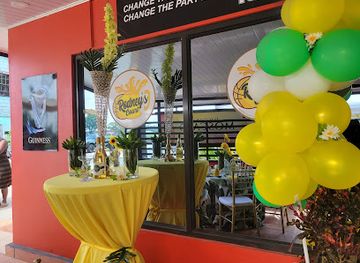
Rodney's Court
Rodney's Court: A lively night club in Linden offering an unforgettable nightlife experience with music, dancing, and vibrant local culture.
-
Bar
Seas N Breeze Bar + Lounge
Discover relaxation at Seas N Breeze Bar + Lounge in Corriverton, Berbice, where refreshing drinks meet stunning coastal views.

Best shops in Upper Demerara-Berbice
Shopping in Upper Demerara-Berbice is practical and locally focused, with Linden providing the widest choice of groceries, clothing, household goods, snacks and travel supplies. Small shops, market stalls and food vendors are more characteristic than large shopping centres, and visitors heading towards Ituni, Rockstone or other interior locations should buy essentials in town. Markets are useful for fresh fruit, vegetables, cooked food and everyday Guyanese ingredients, while local shops may stock cassava products, pepper sauces, preserved foods and other provisions suitable for a journey. Souvenirs are less standardised than in Georgetown, but visitors may find locally made crafts, artwork or small items connected with Guyana's forest and mining culture through community sellers. Ask before photographing or handling handmade work, and carry cash because smaller vendors may not have card facilities. The most meaningful purchases are generally regional foods and locally produced crafts rather than branded retail goods.
-
Shopping mall
Giftland Mall
Discover Giftland Mall, Georgetown's premier shopping destination, featuring diverse shops, delightful dining, and vibrant entertainment for all ages.
-
Resort hotel
Splashmins Resort
Experience luxury and adventure at Splashmins Resort, a serene getaway in Timehri, Guyana, perfect for families and travelers alike.
-
Shopping mall
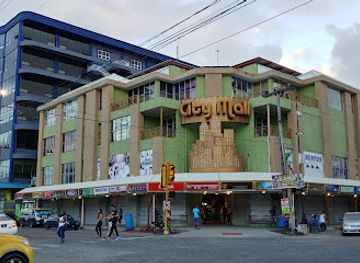
Shopping City Mall
Discover the vibrant Shopping City Mall in Georgetown, where shopping meets entertainment and local culture in an unforgettable experience.
-
Supermarket
Mon Repos Market
Explore Mon Repos Market: Your Gateway to Local Flavors and Everyday Essentials in North Mon Repos.


Get your free copy of our complete guide to Upper Demerara-Berbice, delivered straight to you.
Everything on this page, from attractions and restaurants to essentials and local phrases, in one PDF you can read offline, print or share.
Already have an account? Sign in
Your Upper Demerara-Berbice guide is ready.
We'll send it to · Not you? Sign out

Getting your guide ready…
We are putting together a fresh copy of the Upper Demerara-Berbice guide. This can take up to a minute.
This can take a few moments. If your browser asks, choose Allow so the download can start. You'll find the guide in your Downloads folder.
Nothing happened? Download it again
Sorry, the guide is taking longer than usual. Please try again in a minute, or get it by email instead.
Upper Demerara-Berbice essentials
Currency and Payment
Safety
Emergency Situations
Do's and Don'ts
Local Tips
From Eve
Local phrases worth knowing
You don't need to get them perfect. A few words go a long way, and locals appreciate the effort.
Basics
| English | Local | Say it |
|---|---|---|
| Hello | Wah Gwaan | [Wah Gwaan] |
| Goodbye | Lata | [Lata] |
| Yes | Yea | [Yea] |
| No | Nah | [Nah] |
| Please/You’re welcome | No problem | [No problem] |
| Thank you | Tank yuh | [Tank yuh] |
| Excuse me/Sorry | Sorry | [Sorry] |
| How are you? | How yuh doin? | [How yuh doin?] |
| Fine. And you? | I good. An yuh? | [I good. An yuh?] |
| Do you speak English? | Yuh speak English? | [Yuh speak English?] |
| I don't understand | Me no understand | [Me no understand] |
Eating & Drinking
| English | Local | Say it |
|---|---|---|
| I'd like to see the menu, please | Can I see di menu, please? | [Can I see di menu, please?] |
| I don't eat meat | Me no eat meat | [Me no eat meat] |
| Cheers! | Cheers! | [Cheers!] |
| I would like to pay, please | Me wan pay, please | [Me wan pay, please] |
Emergencies
| English | Local | Say it |
|---|---|---|
| Help! | Help! | [Help!] |
| Go away! | Get away! | [Get away!] |
| Call the Police! | Call di police! | [Call di police!] |
| Call a doctor! | Call a doctor! | [Call a doctor!] |
| I'm lost | Me lost | [Me lost] |
| I'm ill | Me sick | [Me sick] |
Shopping
| English | Local | Say it |
|---|---|---|
| I'd like to buy... | Me wan buy... | [Me wan buy...] |
| I'm just looking | Me just a look | [Me just a look] |
| How much is it? | How much it cost? | [How much it cost?] |
| That's too expensive | Dat too expensive | [Dat too expensive] |
| Can you lower the price? | Yuh can lower di price? | [Yuh can lower di price?] |
Time & Numbers
| English | Local | Say it |
|---|---|---|
| What time is it? | Wah time it? | [Wah time it?] |
| It's one o'clock | It one o'clock | [It one o'clock] |
| Half past (10) | Half past ten | [Half past ten] |
| Morning | Mornin | [Mornin] |
| Afternoon | Afternoon | [Afternoon] |
| Evening | Evenin | [Evenin] |
| Yesterday | Yesterday | [Yesterday] |
| Today | Today | [Today] |
| Tomorrow | Tomorrow | [Tomorrow] |
| 1 | One | [One] |
| 2 | Two | [Two] |
| 3 | Three | [Three] |
| 4 | Four | [Four] |
| 5 | Five | [Five] |
| 6 | Six | [Six] |
| 7 | Seven | [Seven] |
| 8 | Eight | [Eight] |
| 9 | Nine | [Nine] |
| 10 | Ten | [Ten] |
Transport & Directions
| English | Local | Say it |
|---|---|---|
| Where's a/the...? | Whey de...? | [Whey de...?] |
| What's the address? | Wah de address? | [Wah de address?] |
| Can you show me (on the map)? | Yuh can show me (pon di map)? | [Yuh can show me (pon di map)?] |
| When's the next (bus)? | When di next (bus)? | [When di next (bus)?] |
| A ticket (to ....) | A ticket (to....) | [A ticket (to....)] |
History of Upper Demerara-Berbice
Indigenous Landscapes before European Rule
Long before Linden was established, the forests, rivers and waterways of Upper Demerara-Berbice were used and managed by Indigenous peoples, including communities belonging to Guyana's wider Arawakan and Cariban cultural world. Rivers served as routes through the interior, while knowledge of plants, animals and seasonal conditions supported hunting, fishing and cultivation. Archaeological evidence across Guyana points to long-established settlement and movement, although the region's dense forest and limited excavation mean that much of its early history is best understood through Indigenous knowledge and broader regional research.
Dutch and British Expansion along the Demerara
European colonisation first developed around the coastal rivers, where Dutch settlements and plantations established the foundations of Demerara and Essequibo. British control later became dominant, and British Guiana was formally created in the nineteenth century. Upper Demerara remained an inland frontier rather than a densely settled plantation zone, but the Demerara River connected its forests and mineral-bearing interior to the coast. Colonial mapping, timber extraction and river transport gradually increased outside interest in the territory.
Gold, Timber and Interior Exploration
During the nineteenth and early twentieth centuries, colonial authorities and commercial interests intensified exploration of British Guiana's interior in search of gold, timber and other resources. Rivers and rough tracks were essential for movement, and the interior remained difficult to access from the coastal settlements. These activities brought new workers, traders and administrative attention into the Demerara hinterland. They also established patterns of resource extraction that later influenced the development of mining towns and transport routes around modern Linden.
The Rise of Bauxite Mining
The discovery and commercial development of bauxite transformed the Upper Demerara area during the twentieth century. Mining expanded around the settlements that became associated with Mackenzie, Wismar and Christianburg, while processing facilities, railways, workshops and river shipping created a substantial industrial centre. The industry attracted workers from different parts of British Guiana and helped give Linden its distinctive social history. Former pits, industrial sites and the surviving heritage of the mining community remain central to the region's identity.
Wismar and the Transformation of Linden
Wismar, Mackenzie and Christianburg developed as related but distinct communities along the Demerara River. In 1970, after Guyana became a republic, they were brought together as the town of Linden, named after Guyana's first Prime Minister, Linden Forbes Sampson Burnham. The new name reflected a post-colonial national identity, while the separate settlement histories continued to shape local neighbourhoods, institutions and memories. Linden became the principal urban centre and gateway for much of Guyana's central interior.
The 1970s Bauxite Crisis and Economic Change
Bauxite remained vital to the regional economy after independence, but the industry faced major changes during the late twentieth century, including international market pressures, restructuring and periods of disruption. The effects were felt in employment, public services and the wider community, encouraging economic diversification and renewed attention to tourism, forestry, transport and small enterprise. Contemporary Linden still bears the physical and social marks of its industrial past, while its surrounding rivers and forests provide opportunities beyond mining.
Upper Demerara-Berbice in Photos
Browse through our photo collection highlighting the charm and character of the destination.
Neighbouring regions of Upper Demerara-Berbice
The closest regions to Upper Demerara-Berbice, if you have time for more than one.
-

-

-
-

-


Swipe for more regions
Explore more

Explore more of Guyana
Discover Guyana, where the Amazon Rainforest meets Caribbean charm, offering everything from stunning waterfalls to vibrant cities and rich cultural experiences.
Explore Guyana