

Free Bay Islands Travel Guide & Mobile App
Explore Bay Islands with free travel guides. Discover regional history, expert tips, proposed trips, and audio guides on web or mobile app.


Explore Honduras's Bay Islands for world-class reef diving, Caribbean villages, forested hills, Garifuna culture and island-hopping adventures.
Read more about Bay Islands
When is the best time to visit Bay Islands?
Best: January–March · 28–30°C| Month | High (°C) | Rainfall (mm) |
|---|---|---|
| January (best) | 28 | 60 |
| February (best) | 29 | 50 |
| March (best) | 30 | 40 |
| April | 30 | 60 |
| May | 31 | 100 |
| June | 32 | 140 |
| July | 31 | 120 |
| August | 31 | 140 |
| September | 31 | 180 |
| October | 30 | 220 |
| November | 29 | 140 |
| December | 28 | 100 |
Getting to and around Bay Islands
How to get there
Transportation
Top city travel guides in Bay Islands
The cities of Bay Islands, and the easiest places to base yourself.

Swipe for more cities
Best attractions in Bay Islands
The Bay Islands' principal attraction is the sea. Roatán, Utila and Guanaja all provide access to coral reefs, walls, sandy shallows and offshore dive sites, with options ranging from introductory snorkelling to advanced scuba diving and freediving. Marine excursions may encounter turtles, rays, reef fish and, seasonally, whale sharks in the wider waters around Utila, although wildlife sightings are never guaranteed. Roatán combines reef activities with beaches at West Bay, mangrove and coastal excursions around smaller communities, and zip-line or guided nature experiences in its wooded interior. Utila's low-lying landscape suits cycling, kayaking, lagoon trips and relaxed village exploration, while Guanaja offers forested hills, quieter coves and boat-based outings. Garifuna cultural visits, particularly around Punta Gorda on Roatán, add music, food and community history to the outdoor programme. Visitors should choose operators that explain marine conservation and avoid touching wildlife or anchoring on coral.
-
Port
Berth 1 - Port of Roatan
Explore the vibrant Berth 1 at the Port of Roatan, a lively gateway to local culture, cuisine, and breathtaking Caribbean adventures.
-
Beach
Mahogany Beach
Discover the tranquil beauty of Mahogany Beach in Honduras, where sun, sand, and sea create the perfect getaway.
-
Roatán
Experience the breathtaking beauty of Roatán, an island paradise in the Bay Islands of Honduras known for its stunning beaches and vibrant marine life.
-
Tourist attraction
Jungle Top Adventures Zipline
Explore the thrilling heights of Jungle Top Adventures Zipline in Coxen Hole, Bay Islands, for an unforgettable blend of adventure and scenic beauty.


Best landmarks in Bay Islands
The natural reef system is the Bay Islands' defining landmark, forming an underwater counterpart to the mountainous or low-lying landscapes above sea level. On Roatán, the long ridge running through the island creates changing views between the Caribbean-facing coast, busy western settlements and sheltered eastern harbours. West Bay's broad beach and clear shallows are among the island's most recognisable coastal scenes, while the communities around Oak Ridge and French Harbour reflect the importance of working waterways. Punta Gorda is significant as the historic Garifuna settlement founded in 1797 and remains an important cultural landmark. Utila's harbour, lagoon margins and low coastal profile express its close relationship with diving, fishing and small-boat travel. Guanaja's steep green hills and the densely settled Bonacca Cay are particularly distinctive, showing how island communities adapt to limited land and dependence on the sea. These places are living environments as well as photographic subjects, so visitors should respect access, privacy and marine protection rules.
-
Tourist attraction
Daniel Johnson's Monkey and Sloth Hang Out
Explore the enchanting world of sloths and monkeys at Daniel Johnson's Monkey and Sloth Hang Out in Roatan, where adventure and conservation come together.
-
Ferry terminal
Roatán
Discover Roatán: A Caribbean paradise where pristine beaches meet vibrant coral reefs and a rich cultural heritage, offering an unforgettable island escape.
-
Tourist attraction
Little French Key
Discover a private island paradise off the coast of Roatán, Honduras, offering pristine beaches, vibrant coral reefs, and unforgettable Caribbean experiences for discerning travelers.
-
Zoo
Mayan Eden
Discover Roatan's wildlife and Mayan heritage at Mayan Eden: monkeys, sloths, macaws, and replica artifacts await in a lush coconut garden setting, offering an unforgettable eco-adventure.


Explore Bay Islands on the map
Plan your trip on one map. See where the top cities, national parks and sights are, and book hotels and experiences in a few clicks.
Best hotels in Bay Islands
Best restaurants in Bay Islands
Island cooking reflects the Bay Islands' Caribbean setting and maritime economy. Seafood, coconut, plantain, rice and beans appear widely, with preparations varying between households and communities; grilled fish, conch when legally and sustainably available, shrimp and lobster are common seasonal choices. Roatán has the broadest dining range, from waterfront cafés and casual beach restaurants to contemporary kitchens serving Honduran and international food. Utila's compact village offers informal eateries, breakfast cafés, bakeries and places catering to divers, while Guanaja's food scene is smaller and more closely tied to local homes, fishing and accommodation providers. Garifuna cuisine is especially significant, with cassava, coconut, fish and plantain used in distinctive dishes and communal traditions. Ask about catch seasons and sourcing, and look for local coffee, fruit drinks and sweets alongside imported products. Dining away from the main tourist centres may require patience, cash and advance notice.
-
Breakfast
The Pineapple Grill
Experience tropical breakfasts at The Pineapple Grill in French Harbour – where local flavors meet island hospitality.
-
Restaurant
Happy Harry's HideAway
Discover delightful flavors at Happy Harry's HideAway in West End, Bay Islands—where fresh ingredients meet tropical vibes for an unforgettable dining experience.
-
Restaurant
Kristi’s Overlook
Experience exquisite dining at Kristi’s Overlook with stunning views and delicious local cuisine in the heart of the Bay Islands.
-
Restaurant
Snapper's Restaurant
Experience the vibrant flavors of Snapper's Restaurant in Brick Bay—where fresh seafood meets local hospitality in a breathtaking setting.


Best bars in Bay Islands
Nightlife is concentrated rather than island-wide. On Roatán, West End has the largest cluster of casual bars, waterfront venues, live music and late evening restaurants, while West Bay is oriented more towards resort guests and sunset drinks. Coxen Hole and French Harbour provide local eating and drinking options but are not primarily nightlife districts. Utila has a sociable evening scene around its harbour and village, with bars, music, informal gatherings and venues shaped by the international diving community. Guanaja is considerably quieter, with evenings centred on small local bars, restaurants and accommodation rather than clubs. Opening arrangements and atmosphere can change with season, weather and visitor numbers. Drink responsibly, take arranged transport after dark and remember that island culture is also expressed through food, music, community events and time spent by the water rather than alcohol alone.
-
Grill
Booty Bar
Savor Caribbean flavors and vibrant atmosphere at Booty Bar, the premier grill and bar in West End, perfect for tourists seeking a unique dining experience.
-
Restaurant
Sundowners Beach Bar
Discover the perfect blend of relaxation and lively ambiance at Sundowners Beach Bar, where stunning ocean views and delicious drinks await every visitor.
-
Sports bar
Herby's Sports Bar & Grill
Experience the thrill of sports and delicious cuisine at Herby's Sports Bar & Grill in the Bay Islands, where every game feels like a celebration.
-
Brewery
Roatan Island Brewing Co
Experience the vibrant craft beer scene at Roatan Island Brewing Co, where local flavors and community spirit come together.


Best nightclubs in Bay Islands
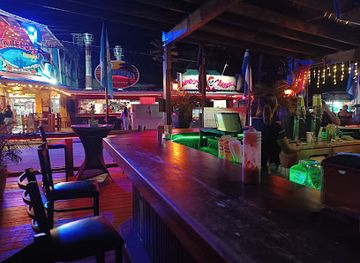
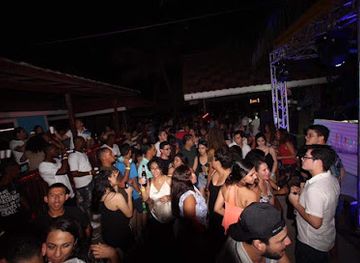
Nightlife is concentrated rather than island-wide. On Roatán, West End has the largest cluster of casual bars, waterfront venues, live music and late evening restaurants, while West Bay is oriented more towards resort guests and sunset drinks. Coxen Hole and French Harbour provide local eating and drinking options but are not primarily nightlife districts. Utila has a sociable evening scene around its harbour and village, with bars, music, informal gatherings and venues shaped by the international diving community. Guanaja is considerably quieter, with evenings centred on small local bars, restaurants and accommodation rather than clubs. Opening arrangements and atmosphere can change with season, weather and visitor numbers. Drink responsibly, take arranged transport after dark and remember that island culture is also expressed through food, music, community events and time spent by the water rather than alcohol alone.
-
Grill
Booty Bar
Experience the vibrant taste of the Caribbean at Booty Bar, a must-visit grill and bar in West End for delicious seafood and cocktails.
-
Bar
Franks BEACH bar
Discover Franks BEACH Bar, where stunning ocean views and vibrant nightlife blend seamlessly in the heart of West End, Bay Islands.
-
Night club
La Cueva
Discover the vibrant nightlife of Utila at La Cueva, where locals and tourists unite for unforgettable nights of dancing and fun.
-
Bar
Paradise Beach Bar
Experience the vibrant atmosphere and stunning views at Paradise Beach Bar in West Bay, your tropical escape in the Bay Islands.


Best shops in Bay Islands
Shopping in the Bay Islands is strongest for practical island goods, artwork, food products and dive-related equipment rather than large-scale retail. Roatán has the broadest selection, including shops in visitor centres and resort areas selling handicrafts, jewellery, clothing, woodwork, paintings, locally themed souvenirs and Honduran coffee or chocolate. West End is suited to browsing independent boutiques and small galleries, while larger commercial areas near Coxen Hole and the airport provide everyday supplies. Utila has compact shops, dive equipment outlets, casual clothing stores and locally made crafts, with a relaxed market-town feel. Guanaja has fewer dedicated retail businesses, so shopping is mainly connected with local provisions, small craft sellers and accommodation providers. Look for Garifuna-inspired drums, textiles and artwork, but ask about provenance and avoid purchasing coral, shells, archaeological objects or products made from protected wildlife. Carry cash when visiting small vendors and outlying communities.
-
Shopping mall
Macaw Container Market
Explore the Macaw Container Market: a vibrant shopping hub in Roatán offering unique souvenirs, local crafts, and delicious food.
-
Shopping mall
West Bay Mall
Experience shopping, dining, and vibrant local culture at West Bay Mall in the Bay Islands of Honduras.
-
Souvenir store
Tucan Gift Shop
Shop authentic souvenirs at Tucan Gift Shop in Dixon Cove, where local culture meets unique craftsmanship for the perfect travel keepsake.
-
Supermarket
Sea Mart
Experience the vibrant local culture and convenience at Sea Mart, the ultimate supermarket in the Bay Islands for all your shopping needs.


Get your free copy of our complete guide to Bay Islands, delivered straight to you.
Everything on this page, from attractions and restaurants to essentials and local phrases, in one PDF you can read offline, print or share.
Already have an account? Sign in
Your Bay Islands guide is ready.
We'll send it to · Not you? Sign out

Getting your guide ready…
We are putting together a fresh copy of the Bay Islands guide. This can take up to a minute.
This can take a few moments. If your browser asks, choose Allow so the download can start. You'll find the guide in your Downloads folder.
Nothing happened? Download it again
Sorry, the guide is taking longer than usual. Please try again in a minute, or get it by email instead.
Bay Islands essentials
Currency and Payment
Safety
Emergency Situations
Do's and Don'ts
Local Tips
From Eve
Local phrases worth knowing
You don't need to get them perfect. A few words go a long way, and locals appreciate the effort.
Basics
| English | Local | Say it |
|---|---|---|
| Hello | Hola | [OH-lah] |
| Goodbye | Adiós | [ah-DYOS] |
| Yes | Sí | [SEE] |
| No | No | [NO] |
| Please/You're welcome | Por favor | [por fah-VOR] |
| Thank you | Gracias | [GRAH-syas] |
| Excuse me/Sorry | Perdón | [per-DON] |
| How are you? | ¿Cómo estás? | [KOH-moh ehs-TAS] |
| Fine. And you? | Bien. ¿Y tú? | [BYEN. ee TOO] |
| Do you speak English? | ¿Hablas inglés? | [AH-blas een-GLES] |
| I don't understand | No entiendo | [NO en-TYEN-doh] |
Eating & Drinking
| English | Local | Say it |
|---|---|---|
| I'd like to see the menu, please | Me gustaría ver el menú, por favor | [meh goos-TAH-ree-ah BEHR el meh-NOO, por fah-VOR] |
| I don't eat meat | No como carne | [NO KOH-mo KAR-neh] |
| Cheers! | ¡Salud! | [sah-LOOD] |
| I would like to pay, please | Me gustaría pagar, por favor | [meh goos-TAH-ree-ah pah-GAR, por fah-VOR] |
Emergencies
| English | Local | Say it |
|---|---|---|
| Help! | ¡Ayuda! | [ah-YOO-dah] |
| Go away! | ¡Vete! | [BEH-teh] |
| Call the Police! | ¡Llama a la policía! | [YAH-ma ah lah poh-lee-SEE-ah] |
| Call a doctor! | ¡Llama a un doctor! | [YAH-ma ah oon dok-TOR] |
| I'm lost | Estoy perdido | [es-TOY per-DID-oh] |
| I'm ill | Estoy enfermo/a | [es-TOY en-FER-mo/a] |
Shopping
| English | Local | Say it |
|---|---|---|
| I'd like to buy... | Me gustaría comprar... | [meh goos-TAH-ree-ah kom-PRAR] |
| I'm just looking | Solo estoy mirando | [SO-lo es-TOY mee-RAN-do] |
| How much is it? | ¿Cuánto cuesta? | [KWAN-to KWES-ta] |
| That's too expensive | Es muy caro | [es MOO-ee KAH-ro] |
| Can you lower the price? | ¿Puedes bajar el precio? | [PWEH-des bah-HAR el PREH-syo] |
Time & Numbers
| English | Local | Say it |
|---|---|---|
| What time is it? | ¿Qué hora es? | [KEH OH-rah es] |
| It's one o'clock | Es la una | [es lah OO-nah] |
| Half past (10) | Y diez y media | [ee DYESS ee MEH-dee-ah] |
| Morning | Mañana | [mah-NYAH-nah] |
| Afternoon | Tarde | [TAR-deh] |
| Evening | Noche | [NO-cheh] |
| Yesterday | Ayer | [ah-YER] |
| Today | Hoy | [OY] |
| Tomorrow | Mañana | [mah-NYAH-nah] |
| 1 | Uno | [OO-no] |
| 2 | Dos | [DOS] |
| 3 | Tres | [TRES] |
| 4 | Cuatro | [KWAH-tro] |
| 5 | Cinco | [SEEN-koh] |
| 6 | Seis | [SAYS] |
| 7 | Siete | [SYEH-teh] |
| 8 | Ocho | [OH-cho] |
| 9 | Nueve | [NWEH-veh] |
| 10 | Diez | [DYESS] |
Transport & Directions
| English | Local | Say it |
|---|---|---|
| Where's a/the...? | ¿Dónde está...? | [DON-de es-TA] |
| What's the address? | ¿Cuál es la dirección? | [KWAL es lah dee-rek-SYON] |
| Can you show me (on the map)? | ¿Puedes mostrarme (en el mapa)? | [PWEH-des mos-TRAR-me (en el MAH-pah)] |
| When's the next (bus)? | ¿Cuándo es el próximo (autobús)? | [KWAN-do es el PROK-see-mo (ow-to-BOOS)] |
| A ticket (to ....) | Un boleto (a....) | [OON bo-LEH-to (ah....)] |
History of Bay Islands
Indigenous Caribbean Settlement
Before European arrival, the islands were inhabited and visited by Indigenous peoples connected to the wider Caribbean and Central American mainland. Archaeological evidence is less extensive than on some mainland sites, but pottery, tools and settlement traces demonstrate long-standing use of the islands and their marine resources. Fishing, shell collecting and coastal exchange were central to island life. The archipelago's position between the Honduran coast and the open Caribbean later made it an important meeting point for different peoples and trading networks.
Spanish Conquest and Colonial Rivalry
Spanish expeditions reached the Bay Islands during the early sixteenth century, after which the islands became part of the contested Caribbean frontier. Spain's influence was strongest through mainland Honduras, but the islands were difficult to control permanently. Their anchorages, reefs and position near shipping routes attracted English privateers, Dutch traders and other seafarers. Colonial rivalry brought periods of conflict, shifting settlement and disruption for Indigenous communities, while the islands acquired a reputation as a strategic maritime outpost.
Pirates, Privateers and the English Caribbean
During the seventeenth and eighteenth centuries, the Bay Islands were associated with privateering, piracy and English-speaking settlement. Roatán in particular provided useful anchorages and shelter, although the islands changed hands and experienced repeated attempts at removal or resettlement. The period helped establish linguistic and cultural links with the English-speaking Caribbean that remain visible in local speech and place names. It also left a maritime historical landscape of harbours, reefs and coastal settlements rather than a large concentration of surviving monumental buildings.
The Garifuna Arrival
The Garifuna, a people formed through the meeting of Indigenous Caribbean and African communities on St Vincent, were dispersed around the Caribbean coast after British expulsions from that island in the late eighteenth century. Garifuna communities became established on the Honduran mainland and in parts of the Bay Islands, including Punta Gorda on Roatán, founded in 1797. Their language, drumming, dance, communal traditions and foods such as cassava-based dishes form an important part of the region's cultural heritage.
Honduran Integration and Maritime Commerce
The Bay Islands became part of the modern Honduran state during the nineteenth century, while their inhabitants continued to maintain strong connections with British Caribbean ports and mainland Honduras. Fishing, seafaring, small-scale agriculture and trade shaped island economies. English remained widely used in many communities and helped distinguish the islands culturally from much of Spanish-speaking Honduras. Settlements developed around sheltered harbours, and boats remained essential for connecting communities scattered across the coast and smaller cays.
Tourism, Diving and Environmental Conservation
From the late twentieth century, diving and international tourism transformed the Bay Islands' economy, especially on Roatán and Utila. Dive schools, hotels, restaurants and transport services expanded around access to the Mesoamerican Barrier Reef. This growth brought employment and improved infrastructure but also pressure on reefs, mangroves, freshwater supplies, waste systems and coastal land. Marine protected areas and conservation organisations now play a significant role in reef monitoring and environmental education, while island communities continue to balance tourism with fishing and local priorities.
Bay Islands in Photos
Browse through our photo collection highlighting the charm and character of the destination.
Neighbouring regions of Bay Islands
The closest regions to Bay Islands, if you have time for more than one.
-

-

-

-

-


Swipe for more regions
Explore more

Explore more of Honduras
Discover Honduras: From ancient Maya ruins and vibrant cities to stunning beaches and lush rainforests, this Central American gem offers something for every traveler.
Explore Honduras