

Free Blonduos Travel Guide & Mobile App
Plan your Blonduos trip with Evendo. Get free guides to top attractions, restaurants, hotels, and bars. Web access or download the mobile app.


Blönduós, Iceland, pairs quiet coastal scenery with riverside walks, textile heritage, birdlife and easy access to North Iceland’s historic landscapes.
A Town Shaped by Water and Wind
Blönduós stands on Iceland’s north-western coast where the Blanda river reaches Húnaflói bay. This small settlement is spread across low ground beside the river mouth, with open views towards the sea and the broad agricultural landscapes of Húnavatnssýsla. Its setting is distinctly Icelandic: treeless horizons, shifting light, black and grey shoreline, and mountains appearing beyond the cultivated valleys.Read more about Blonduos
Textiles, Architecture and Local Life
A Base for Húnavatnssýsla
When is the best time to visit Blonduos?
Best: June–August · 12–14°C| Month | High (°C) | Rainfall (mm) |
|---|---|---|
| January | 0 | 70 |
| February | 1 | 60 |
| March | 1 | 60 |
| April | 3 | 50 |
| May | 7 | 50 |
| June (best) | 12 | 50 |
| July (best) | 14 | 50 |
| August (best) | 13 | 60 |
| September | 9 | 60 |
| October | 5 | 70 |
| November | 3 | 70 |
| December | 1 | 70 |
Getting to and around Blonduos
How to get there
Transportation
Best attractions in Blonduos
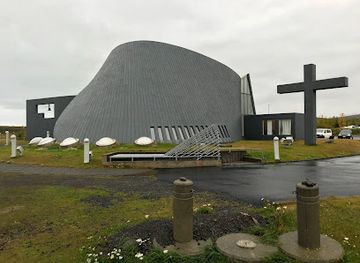
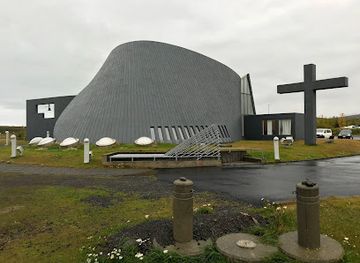
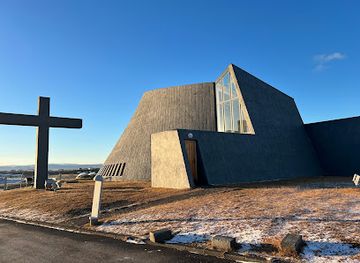
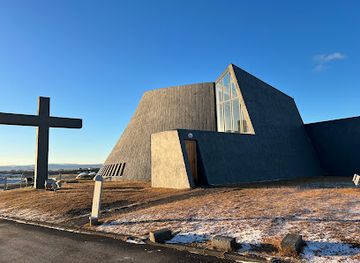
Blönduós’s attractions lie in the meeting of river, coast and rural culture. The Icelandic Textile Museum introduces visitors to Iceland’s long tradition of wool work, weaving and handcraft through an engaging collection rooted in domestic life. Nearby, the Blanda provides an open setting for walking, photography and birdwatching, with paths and viewpoints leading towards Hrútey, a small island in the river. Blönduóskirkja adds an architectural point of interest, its modern form standing prominently above the settlement. The coast around the river mouth offers broad skies and changing views across Húnaflói rather than a developed waterfront. Beyond town, Þingeyrar brings medieval religious and literary history into the landscape, while the surrounding farms, wetlands and mountain roads reveal the working countryside of Húnavatnssýsla. Together, these places make Blönduós a destination for quiet, close observation rather than dense sightseeing.
-
Tourist attraction
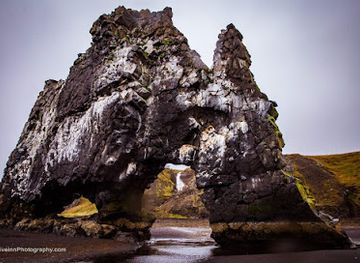
Hvitserkur
Discover the breathtaking Hvitserkur, Iceland's iconic rock formation, where natural beauty meets wildlife wonders along the stunning North Atlantic coast.
37 min drive · 17 km from city centre
-
Tourist attraction
Blönduóskirkja
Discover the stunning Blönduós Church, an architectural gem in Iceland, offering tranquility and unique beauty amidst breathtaking landscapes.
1 min walk · 0.1 km from city centre
-
Scenic spot
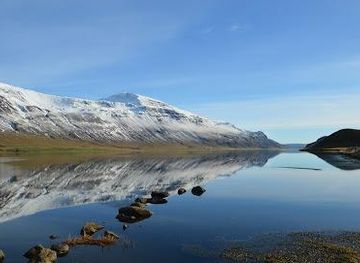
Vatnsdalshólar View Point
Explore Vatnsdalshólar View Point in Iceland, a hidden gem offering stunning landscapes and breathtaking vistas perfect for nature lovers and photographers.
39 min drive · 19 km from city centre
-
Tourist attraction
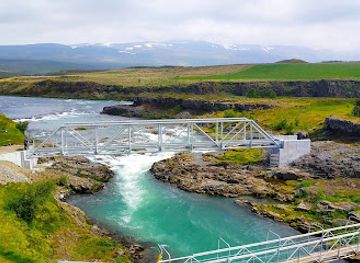
Hrútey Island in Blanda River
Explore the serene beauty of Hrútey Island in the Blanda River, a hidden gem perfect for nature lovers seeking tranquility in Iceland.
6 min walk · 0.5 km from city centre
Best landmarks in Blonduos
Blönduós’s principal landmarks express its religious, civic and regional identity. Blönduóskirkja is the town’s most conspicuous building, rising above the Blanda with a modern design that contrasts with Iceland’s better-known traditional rural churches. The Blanda river mouth is itself a defining natural landmark, shaping the settlement’s geography and its historic role as a trading and service centre. The Icelandic Textile Museum is a cultural landmark rather than a monumental building, preserving skills and objects associated with domestic wool production across Iceland. Outside the town, Þingeyrakirkja marks the site of Þingeyrar monastery, one of medieval Iceland’s important centres of learning and manuscript culture. The surrounding lowlands, wetlands and coastal horizon complete the visual character of Blönduós, where landscape is inseparable from built heritage.
-
Restaurant
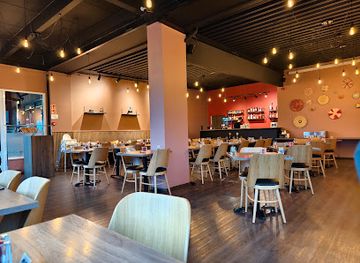
B&S Restaurant
Experience the best of Icelandic cuisine at B&S Restaurant in Blönduós, where hearty meals and welcoming atmosphere await travelers.
2 min walk · 0.2 km from city centre
-
Church
Blönduóskirkja
Discover the tranquil beauty of Blönduós Church, an architectural gem blending spirituality and Icelandic culture amidst stunning landscapes.
1 min walk · 0.1 km from city centre
-
 Lodging
Glaðheimar Cottages
Discover the serene charm of Glaðheimar Cottages in Blönduós, Iceland, where nature meets comfort for an unforgettable getaway.
3 min walk · 0.2 km from city centre
-
Hotel
Brimslóð Atelier Guesthouse & Restaurant
Discover the perfect blend of comfort and culinary excellence at Brimslóð Atelier Guesthouse & Restaurant in Blönduós, Iceland.
13 min walk · 1.0 km from city centre
Explore Blonduos on the map
Plan your Blonduos trip on one map. See where the top attractions, landmarks, restaurants, bars and hotels are, find what's near where you're staying, and book hotels and experiences in a few clicks.
Best hotels in Blonduos
Best restaurants in Blonduos
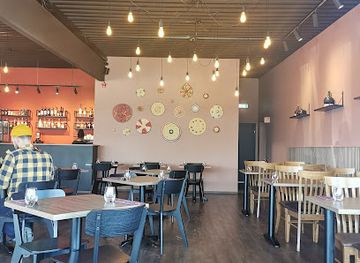
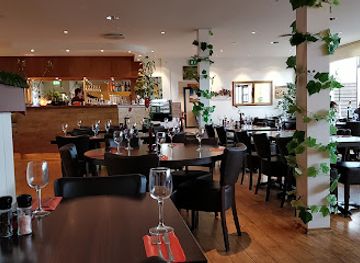
Dining in Blönduós reflects the scale of a northern Icelandic service town, with simple cafés, bakeries and casual eateries generally providing the most characteristic experiences. Visitors can expect familiar Icelandic ingredients such as lamb, dairy produce, fish and locally sourced vegetables, alongside coffee, cakes and practical meals for travellers following Route 1. The surrounding agricultural district gives food a strong connection to farms and seasonal availability, while the coast and nearby rivers reinforce the place of seafood in regional cooking. Options are more limited than in Reykjavík or Akureyri, and opening patterns can be seasonal, so it is sensible to check local arrangements and avoid arriving without provisions late in the day. Food shopping can also be useful for picnics beside the river or for longer drives through Húnavatnssýsla.
-
Restaurant
B&S Restaurant
Discover the flavors of Iceland at B&S Restaurant in Blönduós—where local ingredients meet cozy dining.
2 min walk · 0.2 km from city centre
-
Church
Blönduóskirkja
Discover Blönduóskirkja: A unique blend of modern architecture and tranquil beauty in the heart of Blönduós, Iceland.
1 min walk · 0.1 km from city centre
-
Lodging
Glaðheimar Cottages
Experience comfort and nature at Glaðheimar Cottages in Blönduós - your serene escape in Iceland's breathtaking landscapes.
3 min walk · 0.2 km from city centre
-
Restaurant
Teni
Experience authentic Icelandic cuisine at Teni in Blönduós - a must-visit restaurant for every traveler seeking local flavors.
2 min walk · 0.2 km from city centre


Best bars in Blonduos
Blönduós has a restrained evening scene rather than a dedicated nightlife quarter or collection of nightclubs. Evenings are more likely to centre on cafés, accommodation lounges or informal social spaces than on late-night entertainment. The town’s quiet streets and open surroundings make the fading summer light, riverbank and coastal air part of the evening experience, while winter brings long dark hours and a strong dependence on indoor hospitality. Cultural interest can continue after ordinary sightseeing through local heritage displays and community events when scheduled, but these are not constant attractions. Travellers seeking lively bars, live music or club nights will find a wider choice in larger Icelandic towns, whereas Blönduós suits visitors who prefer a calm base, an early meal and time outdoors when conditions allow.
-
Restaurant
B&S Restaurant
Experience authentic Icelandic cuisine at B&S Restaurant in Blönduós – where local flavors meet warm hospitality and a cozy ambiance.
2 min walk · 0.2 km from city centre
-
Church
Blönduóskirkja
Explore the modern architectural beauty of Blönduóskirkja in Blönduós, Iceland, surrounded by breathtaking natural landscapes.
1 min walk · 0.1 km from city centre
-
Restaurant
Teni
Experience the essence of Icelandic cuisine at Teni in Blönduós, where every meal is a celebration of local flavors and warm hospitality.
2 min walk · 0.2 km from city centre
-
Hotel
Brimslóð Atelier Guesthouse & Restaurant
Experience the best of Icelandic hospitality at Brimslóð Atelier Guesthouse & Restaurant in Blönduós, where local flavors meet cozy accommodations.
13 min walk · 1.0 km from city centre


Best nightclubs in Blonduos
Blönduós has a restrained evening scene rather than a dedicated nightlife quarter or collection of nightclubs. Evenings are more likely to centre on cafés, accommodation lounges or informal social spaces than on late-night entertainment. The town’s quiet streets and open surroundings make the fading summer light, riverbank and coastal air part of the evening experience, while winter brings long dark hours and a strong dependence on indoor hospitality. Cultural interest can continue after ordinary sightseeing through local heritage displays and community events when scheduled, but these are not constant attractions. Travellers seeking lively bars, live music or club nights will find a wider choice in larger Icelandic towns, whereas Blönduós suits visitors who prefer a calm base, an early meal and time outdoors when conditions allow.
-
Restaurant
B&S Restaurant
Discover the flavors of Iceland with a delightful dining experience at B&S Restaurant in Blönduós, perfectly blending local ingredients and warm hospitality.
2 min walk · 0.2 km from city centre
-
Church
Blönduóskirkja
Explore Blönduóskirkja, a stunning church in Blönduós, Iceland, where modern architecture meets natural beauty, perfect for reflection and cultural immersion.
1 min walk · 0.1 km from city centre
-
Restaurant
Teni
Experience the best of Icelandic cuisine at Teni, a beloved restaurant in Blönduós known for its fresh ingredients and inviting atmosphere.
2 min walk · 0.2 km from city centre
-
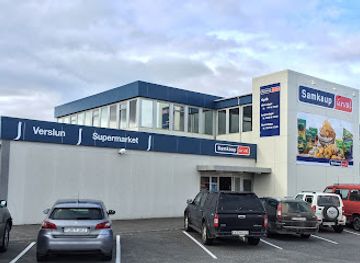
Supermarket
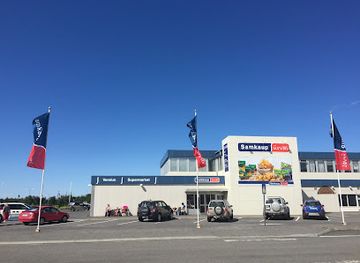
Samkaup Urval
Discover local flavors and essentials at Samkaup Urval, the premier supermarket in Blönduós, Iceland.
2 min walk · 0.2 km from city centre
Best shops in Blonduos
Shopping in Blönduós is practical and locally focused rather than centred on a large retail district. The Icelandic Textile Museum provides an important connection with northern Icelandic craft, and its displays help visitors recognise the value of knitted, woven and woollen goods beyond their role as souvenirs. Small local shops and food retailers serve residents and travellers using Route 1, while regional products may include wool garments, handmade textiles, preserves and other Icelandic provisions when available. The town is not a major destination for designer shopping, antiques or extensive galleries, and stock can vary with season and business hours. For authentic purchases, look for locally made wool work and craft items, ask about their origin, and distinguish hand-produced goods from mass-market imports sold across Iceland.
-
Electric vehicle charging station
N1 Charging Station
Recharge your electric vehicle and refresh your spirit at the N1 Charging Station in scenic Blönduós, Iceland.
4 min walk · 0.3 km from city centre
-
Church
Blönduóskirkja
Explore the architectural beauty and serene atmosphere of Blönduóskirkja, a must-visit church and tourist attraction in the heart of Blönduós, Iceland.
1 min walk · 0.1 km from city centre
-
Hotel
Brimslóð Atelier Guesthouse & Restaurant
Discover the perfect blend of comfort and culinary excellence at Brimslóð Atelier Guesthouse & Restaurant in beautiful Blönduós, Iceland.
13 min walk · 1.0 km from city centre
-
Supermarket
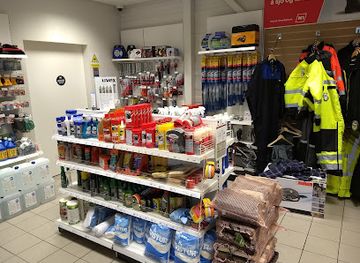
Samkaup Urval
Discover a wide array of local and international groceries at Samkaup Urval in Blönduós, the perfect supermarket for tourists.
2 min walk · 0.2 km from city centre
Get your free copy of our complete guide to Blonduos, delivered straight to you.
Everything on this page, from attractions and restaurants to essentials and local phrases, in one PDF you can read offline, print or share.
Already have an account? Sign in
Your Blonduos guide is ready.
We'll send it to · Not you? Sign out

Getting your guide ready…
We are putting together a fresh copy of the Blonduos guide. This can take up to a minute.
This can take a few moments. If your browser asks, choose Allow so the download can start. You'll find the guide in your Downloads folder.
Nothing happened? Download it again
Sorry, the guide is taking longer than usual. Please try again in a minute, or get it by email instead.
Blonduos essentials
Currency and Payment
Safety
Emergency Situations
Do's and Don'ts
Local Tips
From Eve
Local phrases worth knowing
You don't need to get them perfect. A few words go a long way, and locals appreciate the effort.
Basics
| English | Local | Say it |
|---|---|---|
| Hello | Halló | [HAH-loh] |
| Goodbye | Bless | [bless] |
| Yes | Já | [yow] |
| No | Nei | [nay] |
| Please/You're welcome | Gjörðu svo vel | [GYOHR-thoo svoh vel] |
| Thank you | Takk fyrir | [tahk feer-ir] |
| Excuse me/Sorry | Fyrirgefðu | [FEER-ir-gef-thoo] |
| How are you? | Hvernig hefur þú það? | [KVER-nig HEH-vur thoo thahd] |
| Fine. And you? | Fínt. Og þú? | [feent oh thoo] |
| Do you speak English? | Talar þú ensku? | [TAH-lar thoo EHN-skoo] |
| I don't understand | Ég skil ekki | [yeh skil EH-kee] |
Eating & Drinking
| English | Local | Say it |
|---|---|---|
| I'd like to see the menu, please | Ég ætla að sjá matseðilinn, þakka þér | [yeh EHT-la ath syow maht-seh-thil-inn, THAHK-ka thehr] |
| I don't eat meat | Ég borða ekki kjöt | [yeh BORD-a EH-kee chot] |
| Cheers! | Skál! | [skowl] |
| I would like to pay, please | Ég ætla að greiða, þakka þér | [yeh EHT-la ath gray-tha, THAHK-ka thehr] |
Emergencies
| English | Local | Say it |
|---|---|---|
| Help! | Hjálp! | [HYAULP] |
| Go away! | Farðu í burtu! | [far-thoo ee BUHR-too] |
| Call the Police! | Hringið í lögreglu! | [hring-ith ee LOH-gre-glou] |
| Call a doctor! | Hringið í læknir! | [hring-ith ee LAYK-nir] |
| I'm lost | Ég er týndur | [yeh ehr teenth-ur] |
| I'm ill | Ég er veikur | [yeh ehr vay-kur] |
Shopping
| English | Local | Say it |
|---|---|---|
| I'd like to buy... | Ég ætla að kaupa... | [yeh EHT-la ath KOW-pa] |
| I'm just looking | Ég er bara að skoða | [yeh ehr BAH-ra ath SKOTH-a] |
| How much is it? | Hvað kostar það? | [kvath KOH-star thahd] |
| That's too expensive | Það er of dýrt | [thath ehr ohf DEE-rt] |
| Can you lower the price? | Getur þú lækkat verðið? | [geh-thur thoo LAY-kat vehr-theeth] |
Time & Numbers
| English | Local | Say it |
|---|---|---|
| What time is it? | Hvað er klukkan? | [kvath ehr KLOO-kahn] |
| It's one o'clock | Klukkan er eitt | [KLOO-kahn ehr eht] |
| Half past (10) | Hálf tíu | [howlf tee-oo] |
| Morning | Morgunn | [mohr-gun] |
| Afternoon | Síðdegis | [seed-deh-yes] |
| Evening | Kvöld | [kvohlt] |
| Yesterday | Í gær | [ee gire] |
| Today | Í dag | [ee dahg] |
| Tomorrow | Á morgun | [ow mohr-gun] |
| 1 | Eitt | [eht] |
| 2 | Tveir | [tvayr] |
| 3 | Þrír | [threer] |
| 4 | Fjórir | [fyoh-reer] |
| 5 | Fimm | [feem] |
| 6 | Sex | [sehx] |
| 7 | Sjö | [syoh] |
| 8 | Átta | [ow-tha] |
| 9 | Níu | [nee-oo] |
| 10 | Tíu | [tee-oo] |
Transport & Directions
| English | Local | Say it |
|---|---|---|
| Where's a/the...? | Hvar er...? | [kvar ehr] |
| What's the address? | Hvað er heimilisfangið? | [kvath ehr hey-mil-is-fahn-gith] |
| Can you show me (on the map)? | Getur þú sýnt mér (á kortinu)? | [geh-thur thoo seent mair (ow kohr-thin-oo)] |
| When's the next (bus)? | Hvenær kemur næsti (strætisvagn)? | [kveh-nighr keh-moor nigh-sti (strait-is-vahn)] |
| A ticket (to ....) | Einn miða (til ....) | [ayn meeth-a (teel)] |
History of Blonduos
Settlement in the Blanda Valley
The area around Blönduós formed part of the settlement landscape established across Iceland from the late ninth century. Its river, fertile lowlands and access to Húnaflói supported farming and seasonal use, while the wider Húnvetning region developed its own local assembly and administrative traditions. The Blanda was important not only as a waterway but also as a natural point of orientation between the coast and inland valleys. As elsewhere in Iceland, early communities depended on livestock, fishing, wool and careful use of limited natural resources. The pattern of scattered farms and open grazing land remains central to the character of the countryside surrounding the modern town.
Þingeyrar and Medieval Learning
Þingeyrar, west of Blönduós, became one of Iceland’s most important medieval ecclesiastical sites. A monastery was founded there in 1133, and the institution became associated with manuscript production, learning and the preservation of literary culture. Although the monastery disappeared after the Reformation, Þingeyrar continued as a significant church site. The present Þingeyrakirkja dates from the nineteenth century and reflects the enduring importance of the location within the northern Icelandic landscape. Its history helps explain why Húnavatnssýsla is associated not only with farming and regional administration but also with the intellectual and religious culture recorded in Iceland’s medieval written heritage.
A Trading Settlement at the River Mouth
Blönduós developed as a trading and service settlement around the mouth of the Blanda during the nineteenth century. Commercial activity grew after an official trading post was established in 1876, linking surrounding farms with imported goods and markets for agricultural produce. The river and coastal position gave the settlement practical importance, even though difficult weather and shallow coastal conditions limited the scale of maritime activity. Shops, workshops and public services gradually gathered around the developing community. This transition from a rural landing and trading place to a local centre laid the foundations for the town visible today.
Modern Regional Development
During the twentieth century, improvements in roads, communications and public services strengthened Blönduós’s role as a service centre for the northern Húnvetna districts. Modern Icelandic agriculture, fishing and wool production shaped the local economy, while national road links brought travellers through the settlement rather than leaving it dependent solely on coastal transport. The town’s institutions also helped preserve regional culture, particularly textile knowledge and domestic craft. Blönduóskirkja, completed in the late twentieth century, became a notable expression of modern local architecture and a visible marker of the town’s continuing civic development.
Blönduós in Contemporary Iceland
Today Blönduós remains a small community whose identity is tied to the Blanda, the coast and the farms of north-western Iceland. Tourism has added a seasonal dimension to its economy, but the town retains the practical character of a regional service centre rather than becoming a heavily developed resort. The Icelandic Textile Museum gives local craft a formal cultural presence, while the river mouth and nearby wetlands support recreation and birdwatching. Contemporary Blönduós is therefore best understood through the relationship between settlement, working countryside and accessible heritage: its modern visitor appeal grows from landscapes and traditions that continue to shape everyday life.
Travel experiences inspired by this city


Swipe for more travel diaries
Blonduos in Photos
Browse through our photo collection highlighting the charm and character of the destination.
Cities near Blonduos
The closest cities to Blonduos, if you have time for more than one stop.
-

-

-

-

-


Swipe for more cities
Explore more

Explore more of Iceland
Discover Iceland, where glaciers meet volcanoes, Northern Lights dance in the skies, and natural wonders await at every turn.
Explore Iceland