

Free Stykkisholmur Travel Guide & Mobile App
Plan your Stykkisholmur trip with Evendo. Get free guides to top attractions, restaurants, hotels, and bars. Web access or download the mobile app.


Stykkishólmur, Iceland’s harbour town on Snæfellsnes, pairs colourful wooden buildings, Breiðafjörður views, local seafood, museums and boat trips.
A Historic Harbour Town
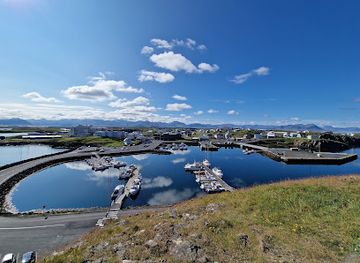
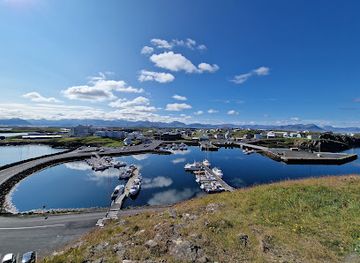
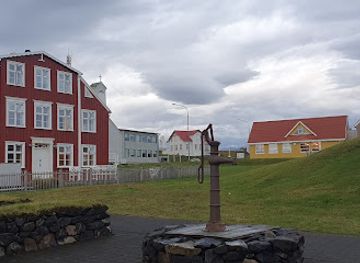
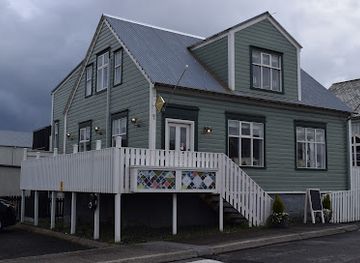
On the northern shore of Iceland’s Snæfellsnes Peninsula, Stykkishólmur faces the island-studded waters of Breiðafjörður. Its sheltered harbour helped the settlement become one of western Iceland’s most important trading centres, and the town still has an unusually coherent collection of colourful timber buildings, weathered warehouses and narrow streets. The harbour is both a working maritime centre and the departure point for the ferry to Flatey and Brjánslækur.Read more about Stykkisholmur
Wooden Houses and Sea Views
Life on the Snæfellsnes Coast
When is the best time to visit Stykkisholmur?
Best: June–August · 11–13°C| Month | High (°C) | Rainfall (mm) |
|---|---|---|
| January | 1 | 70 |
| February | 2 | 60 |
| March | 2 | 60 |
| April | 4 | 50 |
| May | 7 | 40 |
| June (best) | 11 | 40 |
| July (best) | 13 | 40 |
| August (best) | 13 | 50 |
| September | 9 | 60 |
| October | 6 | 70 |
| November | 3 | 70 |
| December | 2 | 70 |
Getting to and around Stykkisholmur
How to get there
Transportation
Best attractions in Stykkisholmur
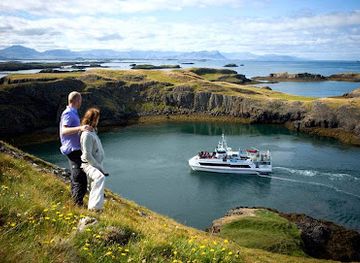
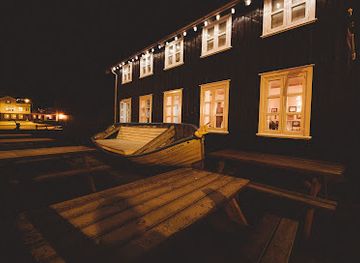
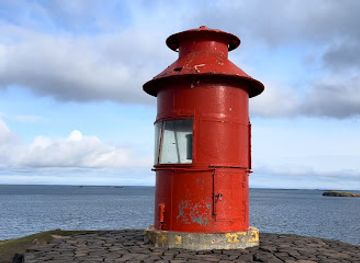
Stykkishólmur’s principal attractions gather around its historic harbour and the waters of Breiðafjörður. The Norwegian House, Iceland’s oldest preserved wooden house, introduces the town’s nineteenth-century mercantile world through regional museum displays, while the old trading quarter rewards a slow walk among painted timber buildings and former warehouses. Súgandisey, reached from the harbour by a short causeway, offers a small lighthouse, sea air and wide views across the island-studded bay. In the centre, the Library of Water by Roni Horn creates a thoughtful encounter with Iceland’s glaciers through columns of collected water, and Stykkishólmskirkja provides an arresting example of modern Icelandic church architecture. Boat excursions reveal the ecology of Breiðafjörður, including seabirds, islands and marine landscapes, while the harbour itself remains a working setting rather than a purely scenic attraction.
-
Tourist attraction
Súgandisey Island Lighthouse
Explore the stunning Sugandisey Island Lighthouse in Stykkishólmur, where breathtaking views and Iceland's maritime history come alive.
7 min walk · 0.6 km from city centre
-
Sightseeing tour agency
Seatours
Discover the breathtaking beauty of Iceland with Seatours, your gateway to unforgettable boat tours, bird watching, and local culinary delights in Stykkishólmur.
4 min walk · 0.3 km from city centre
-
Tourist attraction
Norwegian House
Explore the Norwegian House in Stykkishólmur, a scenic museum revealing Iceland's maritime heritage and cultural connections.
3 min walk · 0.3 km from city centre
-
Tourist attraction
Walter Mitty Bar (Movie Location)
Experience the enchanting Walter Mitty Bar in Stykkishólmur, an iconic film location blending cinematic charm with Iceland's breathtaking scenery.
3 min walk · 0.3 km from city centre
Best landmarks in Stykkisholmur
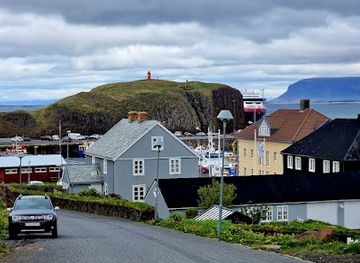
Stykkishólmur’s landmarks express the town’s relationship with commerce, the sea and changing Icelandic architecture. The Norwegian House is the most important historic building, its imported timber construction recalling the nineteenth-century merchant network that connected Iceland with Norway and Denmark. Around it, the old harbour district preserves a group of colourful wooden houses and former trading premises that give the centre its visual coherence. Súgandisey and its lighthouse mark the entrance to the harbour, linking the town’s built history with the navigational demands of Breiðafjörður. On higher ground, Stykkishólmskirkja, consecrated in 1990, has a curved, sculptural form unlike the traditional timber churches found elsewhere in Iceland. The Library of Water adds a quieter cultural landmark, interpreting the country’s glaciers through an installation of water columns and changing natural light.
-
Hotel
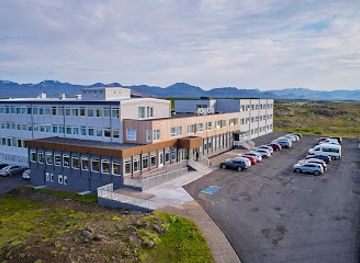
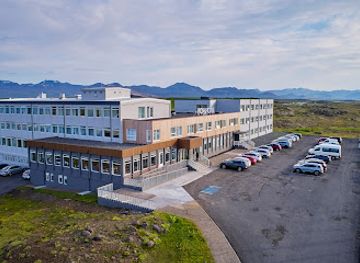
Fosshótel Stykkishólmur
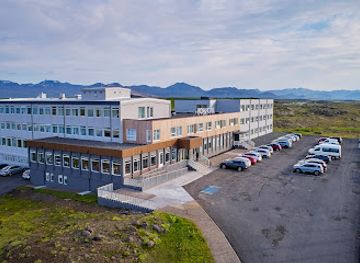
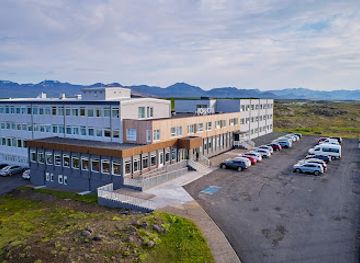
Experience Icelandic hospitality at Fosshótel Stykkishólmur, the perfect base for exploring the stunning Snæfellsnes Peninsula.
4 min walk · 0.3 km from city centre
-
Scenic spot
Súgandisey Island Lighthouse
Experience the breathtaking beauty of Súgandisey Island Lighthouse in Stykkishólmur, Iceland, where stunning views and nature unite.
7 min walk · 0.6 km from city centre
-
Bakery
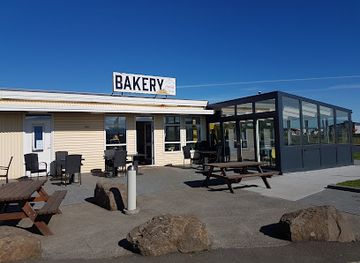
Nesbrauð ehf
Discover the heart of Icelandic baking at Nesbrauð ehf in Stykkishólmur, where every pastry tells a story of tradition and flavor.
6 min walk · 0.5 km from city centre
-
Cafe
Sjávarborg
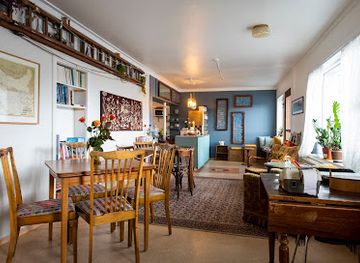
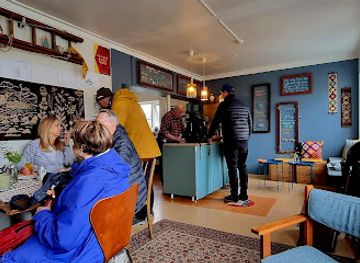
Experience authentic Icelandic flavors and warm hospitality at Sjávarborg, a charming café and guesthouse in Stykkishólmur.
3 min walk · 0.3 km from city centre
Explore Stykkisholmur on the map
Plan your Stykkisholmur trip on one map. See where the top attractions, landmarks, restaurants, bars and hotels are, find what's near where you're staying, and book hotels and experiences in a few clicks.
Best hotels in Stykkisholmur
Best restaurants in Stykkisholmur
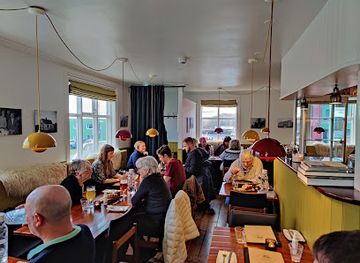
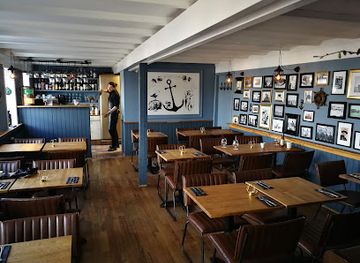
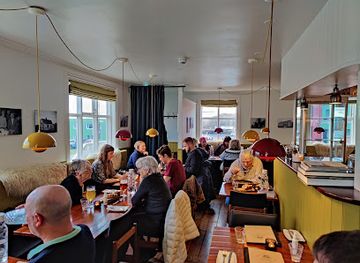
Stykkishólmur’s food scene is closely tied to the fishing harbour and the cold waters of Breiðafjörður. Seafood is central, with fish, shellfish and seasonal local catches appearing in restaurants and casual meals, while Icelandic lamb, dairy products, rye bread and root vegetables broaden the traditional repertoire. The town has a small but varied selection of cafés, bakeries and restaurants, concentrated around the harbour and historic centre, where diners can eat in converted commercial buildings or informal waterfront settings. Local seaweed and other coastal ingredients sometimes feature in contemporary cooking, reflecting the peninsula’s maritime environment. Established restaurants such as Narfeyrastofa and Sjávarpakkhúsið are associated with Stykkishólmur’s dining identity, but menus and opening patterns can change with the season, so visitors should check current arrangements rather than assume every venue operates year-round.
-
Restaurant
Narfeyrarstofa
Discover Narfeyrarstofa in Stykkishólmur: where innovative Icelandic cuisine meets stunning views and warm hospitality.
3 min walk · 0.2 km from city centre
-
Restaurant
Sjávarpakkhúsið
Discover authentic Icelandic seafood at Sjávarpakkhúsið in Stykkishólmur – where fresh ingredients meet stunning views.
4 min walk · 0.3 km from city centre
-
Restaurant
Fosshótel Stykkishólmur
Experience authentic Icelandic hospitality at Fosshótel Stykkishólmur – where local flavors meet stunning coastal views.
4 min walk · 0.3 km from city centre
-
Restaurant
Sjávarborg
Experience authentic Icelandic cuisine at Sjávarborg in Stykkishólmur - where every dish tells a story.
3 min walk · 0.3 km from city centre
Best bars in Stykkisholmur
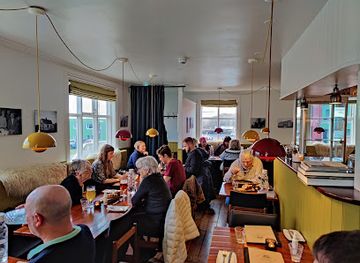
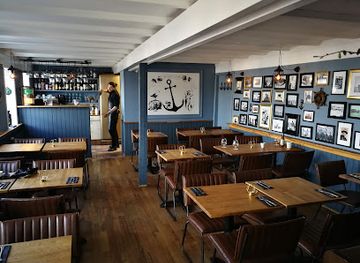
Stykkishólmur has a restrained evening scene shaped by its small population, seasonal tourism and maritime character rather than by nightclubs. After dinner, the main options are relaxed drinks in a restaurant, café or harbour-area bar, with evenings often centred on conversation and views across Breiðafjörður. The town’s historic buildings provide a more distinctive setting than a concentration of late-night venues, and cultural spaces, exhibitions or occasional local events may offer alternatives to drinking. In summer, long daylight changes the rhythm of the evening, while winter nights are quiet and weather can limit outdoor movement. Visitors should not expect Reykjavík-style nightlife; the atmosphere is better suited to a slow meal, a harbour walk when conditions permit, and early starts for coastal excursions or ferry travel.
-
Restaurant
Narfeyrarstofa
Experience the essence of Icelandic cuisine at Narfeyrarstofa, Stykkishólmur's premier dining destination, known for its fresh seafood and warm atmosphere.
3 min walk · 0.2 km from city centre
-
Restaurant
Sjávarpakkhúsið
Discover the flavors of Iceland at Sjávarpakkhúsið in Stykkishólmur, where fresh seafood meets local tradition in a cozy setting.
4 min walk · 0.3 km from city centre
-
Bar
Fosshótel Stykkishólmur
Experience the perfect blend of local hospitality, delicious cuisine, and stunning Icelandic landscapes at Fosshótel Stykkishólmur.
4 min walk · 0.3 km from city centre
-
Bakery
Nesbrauð ehf
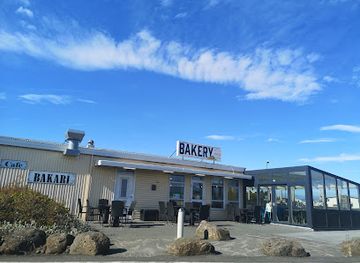
Experience authentic Icelandic flavors at Nesbrauð ehf, a charming bakery in Stykkishólmur, offering fresh pastries and breads.
6 min walk · 0.5 km from city centre
Best nightclubs in Stykkisholmur
Stykkishólmur has a restrained evening scene shaped by its small population, seasonal tourism and maritime character rather than by nightclubs. After dinner, the main options are relaxed drinks in a restaurant, café or harbour-area bar, with evenings often centred on conversation and views across Breiðafjörður. The town’s historic buildings provide a more distinctive setting than a concentration of late-night venues, and cultural spaces, exhibitions or occasional local events may offer alternatives to drinking. In summer, long daylight changes the rhythm of the evening, while winter nights are quiet and weather can limit outdoor movement. Visitors should not expect Reykjavík-style nightlife; the atmosphere is better suited to a slow meal, a harbour walk when conditions permit, and early starts for coastal excursions or ferry travel.
-
Restaurant
Narfeyrarstofa
Experience the authentic flavors of Iceland at Narfeyrarstofa, a charming restaurant in Stykkishólmur, renowned for its local cuisine and inviting atmosphere.
3 min walk · 0.2 km from city centre
-
Restaurant
Sjávarpakkhúsið
Discover fresh seafood and warm hospitality at Sjávarpakkhúsið in Stykkishólmur, Iceland's charming coastal town.
4 min walk · 0.3 km from city centre
-
Bar
Fosshótel Stykkishólmur
Experience comfort and Icelandic charm at Fosshótel Stykkishólmur, your perfect base for exploring the beauty of the Snæfellsnes Peninsula.
4 min walk · 0.3 km from city centre
-
Cafe
Sjávarborg
Experience the charm of Sjávarborg, a cozy café and guesthouse in Stykkishólmur, offering local delicacies and a welcoming atmosphere for every traveler.
3 min walk · 0.3 km from city centre
Best shops in Stykkisholmur
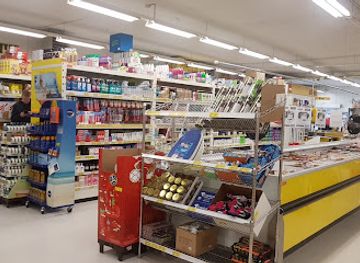
Shopping in Stykkishólmur is modest in scale but closely connected with local life and the wider Snæfellsnes region. The historic centre and harbour area contain small retailers, cafés and craft-oriented businesses rather than large shopping centres. Visitors may find Icelandic wool goods, knitwear, ceramics, artwork, locally made gifts and regional food products, while practical supplies are available from the town’s everyday shops. Sea-related products and locally inspired crafts reflect the surrounding waters, fishing traditions and island landscape, although stock is seasonal and individual businesses vary. The old timber buildings make even a short shopping walk part of the town’s heritage experience. For a broader retail selection, travellers generally need to plan around larger settlements elsewhere in western Iceland rather than expect extensive commercial choice in Stykkishólmur.
-
Restaurant
Narfeyrarstofa
Discover authentic Icelandic cuisine at Narfeyrarstofa in Stykkishólmur, where fresh ingredients meet traditional recipes in a charming setting.
3 min walk · 0.2 km from city centre
-
Scenic spot
Súgandisey Island Lighthouse
Discover the stunning beauty and maritime heritage of Súgandisey Island Lighthouse in Stykkishólmur, Iceland.
7 min walk · 0.6 km from city centre
-
Bakery
Nesbrauð ehf
Explore the authentic flavors of Iceland at Nesbrauð ehf, a charming bakery in Stykkishólmur offering a delightful array of fresh-baked goods.
6 min walk · 0.5 km from city centre
-
Supermarket
Bónus
Discover budget-friendly grocery shopping at Bónus in Stykkishólmur, where local flavors meet unbeatable prices for every traveler.
3 min walk · 0.2 km from city centre

Get your free copy of our complete guide to Stykkisholmur, delivered straight to you.
Everything on this page, from attractions and restaurants to essentials and local phrases, in one PDF you can read offline, print or share.
Already have an account? Sign in
Your Stykkisholmur guide is ready.
We'll send it to · Not you? Sign out

Getting your guide ready…
We are putting together a fresh copy of the Stykkisholmur guide. This can take up to a minute.
This can take a few moments. If your browser asks, choose Allow so the download can start. You'll find the guide in your Downloads folder.
Nothing happened? Download it again
Sorry, the guide is taking longer than usual. Please try again in a minute, or get it by email instead.
Stykkisholmur essentials
Currency and Payment
Safety
Emergency Situations
Do's and Don'ts
Local Tips
From Eve
Local phrases worth knowing
You don't need to get them perfect. A few words go a long way, and locals appreciate the effort.
Basics
| English | Local | Say it |
|---|---|---|
| Hello | Halló | [HAH-loh] |
| Goodbye | Bless | [bless] |
| Yes | Já | [yow] |
| No | Nei | [nay] |
| Please/You're welcome | Gjörðu svo vel | [gyer-thuh svo vel] |
| Thank you | Takk fyrir | [tahk feer-ir] |
| Excuse me/Sorry | Afsakið | [ahf-sah-kith] |
| How are you? | Hvað segirðu? | [kva-th seh-yir-thu] |
| Fine. And you? | Fínt. En þú? | [feent. en thu] |
| Do you speak English? | Talar þú ensku? | [ta-lahr thu ens-koo] |
| I don't understand | Ég skil ekki | [yeg skil ek-ki] |
Eating & Drinking
| English | Local | Say it |
|---|---|---|
| I'd like to see the menu, please | Ég vil sjá matseðilinn, takk | [yeg vil shauh maht-say-dil-inn, tahk] |
| I don't eat meat | Ég borða ekki kjöt | [yeg bor-tha ek-ki chot] |
| Cheers! | Skál! | [skow-l] |
| I would like to pay, please | Ég myndi vilja borga, takk | [yeg min-dee vil-ya bor-ga, tahk] |
Emergencies
| English | Local | Say it |
|---|---|---|
| Help! | Hjálp! | [hyow-lp] |
| Go away! | Farðu í burtu! | [far-thu ee bur-thu] |
| Call the Police! | Hringdu í lögregluna! | [hring-thu ee lur-eh-glu-nah] |
| Call a doctor! | Hringdu í lækninn! | [hring-thu ee lighk-nin] |
| I'm lost | Ég er týndur | [yeg air thin-thur] |
| I'm ill | Ég er veikur | [yeg air vay-kur] |
Shopping
| English | Local | Say it |
|---|---|---|
| I'd like to buy... | Ég vil kaupa... | [yeg vil kow-pa] |
| I'm just looking | Ég er bara að skoða | [yeg air bar-ah ath sko-tha] |
| How much is it? | Hvað kostar það? | [kva-th kost-ar thah] |
| That's too expensive | Það er of dýrt | [thah eth orf deert] |
| Can you lower the price? | Getur þú lækkað verðið? | [ge-tur thu lai-kath ver-thith] |
Time & Numbers
| English | Local | Say it |
|---|---|---|
| What time is it? | Hvað er klukkan? | [kva-th eth kloo-kahn] |
| It's one o'clock | Klukkan er eitt | [kloo-kahn eth ay-th] |
| Half past (10) | Hálf tíu | [howlf tee-oo] |
| Morning | Morgunn | [mor-goon] |
| Afternoon | Síðdegis | [seeth-deh-gees] |
| Evening | Kvöld | [kwowld] |
| Yesterday | Í gær | [ee gire] |
| Today | Í dag | [ee dahg] |
| Tomorrow | Á morgun | [ow mor-goon] |
| 1 | Eitt | [ay-th] |
| 2 | Tvö | [tvo] |
| 3 | Þrjú | [thri-yoo] |
| 4 | Fjögur | [fyoh-gur] |
| 5 | Fimm | [fim] |
| 6 | Sex | [seks] |
| 7 | Sjö | [syow] |
| 8 | Átta | [ow-tha] |
| 9 | Níu | [nee-oo] |
| 10 | Tíu | [tee-oo] |
Transport & Directions
| English | Local | Say it |
|---|---|---|
| Where's a/the...? | Hvar er... | [kvar air] |
| What's the address? | Hvað er heimilisfangið? | [kva-th eth hay-mil-is-fan-gith] |
| Can you show me (on the map)? | Getur þú sýnt mér (á kortinu)? | [ge-tur thu seent meer (ow kort-inn-oo)] |
| When's the next (bus)? | Hvenær kemur næsta (strætisvagn)? | [kven-ai-r kem-ur nai-sta (strai-tis-vagn)] |
| A ticket (to ....) | Miði (til ...) | [mee-thee (til)] |
History of Stykkisholmur
Early Settlement and Coastal Resources
The area around Stykkishólmur formed part of Iceland’s early settlement landscape, when farms and seasonal coastal activities developed around the peninsula’s sheltered inlets and productive waters. Breiðafjörður supported fishing, seal hunting, gathering seabirds and collecting valuable seaweed, while the many offshore islands provided nesting grounds and seasonal resources. Unlike Iceland’s largest towns, Stykkishólmur grew from its maritime position rather than from extensive agriculture. The harbour’s protection and access to the rich fishing grounds of the bay later gave it importance far beyond the size of its local population.
A Trading Centre in Western Iceland
Stykkishólmur became an established trading place during the period when Danish commercial control shaped Icelandic coastal life. Trading rights were granted in the sixteenth century, and merchants used the sheltered harbour to exchange imported goods for fish and agricultural products from the surrounding region. The settlement’s position on the north coast of Snæfellsnes also made it a useful link between inland communities, fishing grounds and maritime routes across Breiðafjörður. The town’s later streets and warehouses reflect this commercial role, which helped Stykkishólmur become one of the peninsula’s principal settlements.
The Norwegian House and Merchant Prosperity
Stykkishólmur’s growing importance in the nineteenth century is represented by the Norwegian House, completed in 1832. Built from prefabricated timber imported from Norway, it was associated with the merchant and district administrator Árni Thorlacius and is regarded as Iceland’s oldest preserved wooden house. Its construction illustrates the international connections behind Icelandic coastal commerce: building materials, trade goods and ideas arrived by sea, while local products moved out through the harbour. Today the building’s museum displays aspects of regional history and domestic life, preserving a tangible link with the town’s merchant era.
Fishing, Administration and Community Life
During the nineteenth and twentieth centuries, Stykkishólmur developed as a centre for fishing, trade and local administration. Its harbour connected the town with remote farms and island communities around Breiðafjörður, while shops, workshops and public institutions served a wide hinterland. Marine resources remained central, but the settlement also became known for education, civic activity and its carefully maintained historic buildings. The traditional timber houses and former commercial structures visible today are not isolated relics; together they record the period when coastal towns were the main gateways for supplies, communication and economic exchange in rural Iceland.
Modern Architecture and Cultural Renewal
Late twentieth-century Stykkishólmur combined the preservation of its historic centre with new cultural and religious architecture. Stykkishólmskirkja, consecrated in 1990, introduced a strongly sculptural church building on the town’s skyline, while the Library of Water, an installation by the American artist Roni Horn, transformed a former library into a work concerned with Iceland’s glaciers and changing landscapes. These projects broadened the town’s cultural identity beyond fishing and trade. Tourism, ferry traffic and interest in Snæfellsnes now complement the older maritime economy, while conservation continues to shape Stykkishólmur’s distinctive appearance.
Travel experiences inspired by this city
-
 10 Day Trip
Exploring the Natural Wonders of Iceland's Snæfellsnes Peninsula
Discover the breathtaking landscapes and cultural heritage of Iceland's Snæfellsnes Peninsula with a family adventure in the heart of nature.
10 Day Trip
Exploring the Natural Wonders of Iceland's Snæfellsnes Peninsula
Discover the breathtaking landscapes and cultural heritage of Iceland's Snæfellsnes Peninsula with a family adventure in the heart of nature.
 10 Jun 2025
By Jennifer Smith -
 7 Day Trip
Exploring Iceland's Snaefellsnes Peninsula: A Journey Through Nature
Discover the diverse landscapes of Iceland's Snaefellsnes Peninsula, from volcanic craters to black sand beaches, on a week-long adventure with my spouse.
7 Day Trip
Exploring Iceland's Snaefellsnes Peninsula: A Journey Through Nature
Discover the diverse landscapes of Iceland's Snaefellsnes Peninsula, from volcanic craters to black sand beaches, on a week-long adventure with my spouse.
 10 Jun 2025
By Jan Kovar -
 7 Day Trip
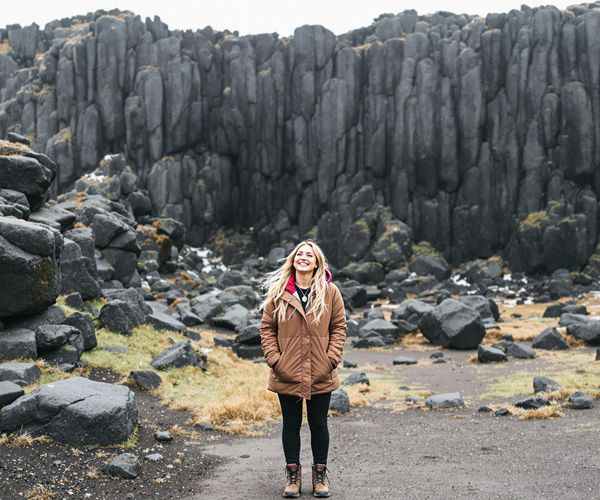
Exploring the Mystical Snæfellsnes Peninsula with Friends
Join Frida Kristiansen on a 7-day adventure through Iceland's Snæfellsnes Peninsula, discovering stunning landscapes and rich cultural experiences.
7 Day Trip
Exploring the Mystical Snæfellsnes Peninsula with Friends
Join Frida Kristiansen on a 7-day adventure through Iceland's Snæfellsnes Peninsula, discovering stunning landscapes and rich cultural experiences.
 15 Apr 2025
By Frida Kristiansen -
 9 Day Trip
Exploring the Wild Beauty of Snaefellsnes Peninsula with Jean-Pierre
Embark on a sustainable journey through Iceland's Snaefellsnes Peninsula, exploring dramatic landscapes and unique culture with eco-friendly insights.
9 Day Trip
Exploring the Wild Beauty of Snaefellsnes Peninsula with Jean-Pierre
Embark on a sustainable journey through Iceland's Snaefellsnes Peninsula, exploring dramatic landscapes and unique culture with eco-friendly insights.
 5 Apr 2025
By Marie Rakotomalala -
 7 Day Trip
Solo Adventure in Iceland: Discovering Snaefellsnes Peninsula
Embark on a solo journey to Iceland's Snaefellsnes Peninsula, exploring glaciers, black sand beaches, and breathtaking landscapes.
7 Day Trip
Solo Adventure in Iceland: Discovering Snaefellsnes Peninsula
Embark on a solo journey to Iceland's Snaefellsnes Peninsula, exploring glaciers, black sand beaches, and breathtaking landscapes.
 5 Jan 2025
By Karen Schmidt -
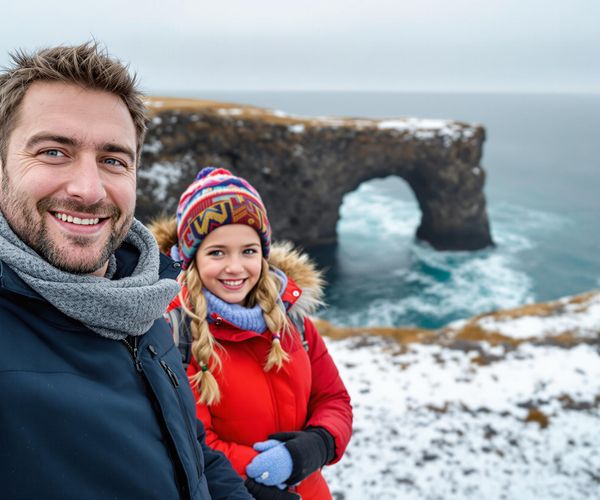 7 Day Trip
Family Adventure on the Snaefellsnes Peninsula
Join us for a family adventure exploring Iceland's Snaefellsnes Peninsula's volcanic landscapes, glaciers, and charming villages.
7 Day Trip
Family Adventure on the Snaefellsnes Peninsula
Join us for a family adventure exploring Iceland's Snaefellsnes Peninsula's volcanic landscapes, glaciers, and charming villages.
 5 Jan 2025
By Marko Novak
Swipe for more travel diaries
Stykkisholmur in Photos
Browse through our photo collection highlighting the charm and character of the destination.
Cities near Stykkisholmur
The closest cities to Stykkisholmur, if you have time for more than one stop.
-

-

-

-

-


Swipe for more cities
Explore more

Explore more of Iceland
Discover Iceland, where glaciers meet volcanoes, Northern Lights dance in the skies, and natural wonders await at every turn.
Explore Iceland