

Free Isafjordur Travel Guide & Mobile App
Plan your Isafjordur trip with Evendo. Get free guides to top attractions, restaurants, hotels, and bars. Web access or download the mobile app.


Ísafjörður reveals Westfjords history, harbour life, dramatic mountains and rich outdoor adventures, from seafood and museums to Hornstrandir boat trips.
Harbour, Mountains and Maritime Heritage
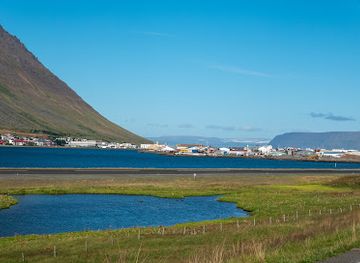
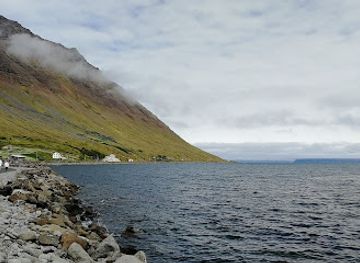
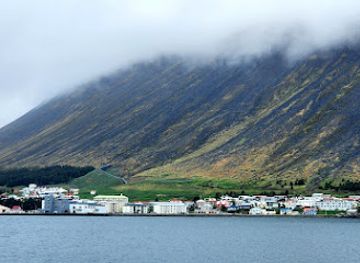
Ísafjörður occupies a narrow spit of land in Skutulsfjörður, where steep, flat-topped mountains rise almost directly from the water. It is the largest settlement in the Westfjords and serves as the region’s principal centre for services, culture, fishing and travel. The town’s historic core contains timber buildings from the 18th and 19th centuries, while the harbour remains an active working landscape of fishing boats, warehouses and ferries.Read more about Isafjordur
A Compact Town with a Wide Horizon
When is the best time to visit Isafjordur?
Best: June–August · 12–14°C| Month | High (°C) | Rainfall (mm) |
|---|---|---|
| January | 2 | 100 |
| February | 2 | 90 |
| March | 2 | 80 |
| April | 5 | 70 |
| May | 9 | 60 |
| June (best) | 12 | 50 |
| July (best) | 14 | 40 |
| August (best) | 13 | 50 |
| September | 10 | 70 |
| October | 7 | 80 |
| November | 4 | 90 |
| December | 2 | 100 |
Getting to and around Isafjordur
How to get there
Transportation
Best attractions in Isafjordur
The Westfjords Heritage Museum at Neðstikaupstaður is Ísafjörður’s principal historical attraction, occupying a group of old trading buildings beside the harbour and interpreting commerce, fishing and everyday life in the region. The town’s compact old quarter rewards slow exploration, with painted timber houses, narrow lanes and working waterfront views. The Culture House, housed in a former hospital building, incorporates the Westfjords Museum’s cultural and artistic collections, while the maritime surroundings provide an ever-changing open-air spectacle of boats, mountains and weather. Outdoor visitors can follow local walking routes around the fjord or use Ísafjörður as a starting point for sea kayaking, skiing and seasonal boat excursions. The nearby village of Bolungarvík and its Ósvör fishing-station reconstruction are regional excursions rather than attractions within Ísafjörður itself, but they help place the town’s maritime history in its wider Westfjords setting.
-
Tourist attraction
Westfjord History Museum
Explore Iceland's rich cultural heritage at the Westfjord History Museum in Ísafjörður, showcasing historical exhibits and artifacts that tell the story of the region.
11 min walk · 0.9 km from city centre
-
Tourist attraction
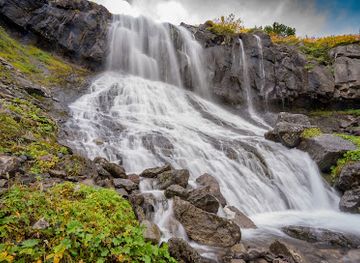
Bunárfoss
Experience the breathtaking beauty of Bunárfoss Waterfall in Ísafjörður, a serene natural wonder that captivates all who visit.
10 min drive · 3.2 km from city centre
-
Hiking area
Naustahvilft - The Troll Seat
Discover the enchanting Naustahvilft, a hiking haven in Iceland's Westfjords, where folklore and breathtaking landscapes await your exploration.
5 min drive · 1.8 km from city centre
-
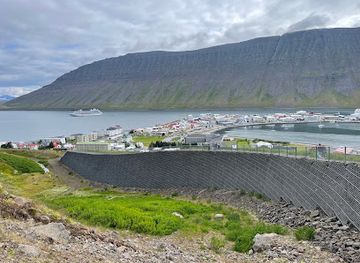
Observation deck
Observation Deck
Experience stunning panoramic views of Iceland's majestic fjords and mountains at the Observation Deck in Ísafjörður, a perfect spot for nature lovers and photographers.
4 min walk · 0.3 km from city centre


Best landmarks in Isafjordur
The most significant historic landmark in Ísafjörður is the Neðstikaupstaður trading area, whose preserved timber buildings evoke the town’s role in Danish-era commerce and nineteenth-century fishing. Among them, Turnhúsið and Krambúðin form part of the architectural story protected and interpreted by the Westfjords Heritage Museum. The old centre around Aðalstræti contains further merchant houses and domestic buildings that reveal how a compact trading settlement expanded into a municipality. Ísafjarðarkirkja, the town church, is another prominent civic and religious presence, while the harbour itself functions as a living landmark: fishing boats, old warehouses and steep fjord walls express the practical geography that shaped the town. Rather than monumental scale, Ísafjörður’s identity rests on the relationship between modest historic buildings, a working waterfront and the immense mountains enclosing Skutulsfjörður.
-
Seafood
Tjöruhúsið
Discover the flavors of Icelandic seafood at Tjöruhúsið, a cozy restaurant in Ísafjörður, offering a delightful menu inspired by the sea.
11 min walk · 0.9 km from city centre
-
Icelandic
Húsið
Experience authentic Icelandic flavors at Húsíð in Ísafjörður, where local ingredients meet culinary tradition in a warm atmosphere.
11 min walk · 0.8 km from city centre
-
Brewery
Dokkan Brugghús
Discover the heart of Icelandic brewing at Dokkan Brugghús, a brewery and restaurant offering local beers and delicious cuisine in Ísafjörður.
13 min walk · 1.0 km from city centre
-
Museum
Westfjord History Museum
Explore the captivating history of Iceland's Westfjords at the Westfjord History Museum in Ísafjörður, where rich heritage comes to life.
11 min walk · 0.9 km from city centre

Explore Isafjordur on the map
Plan your Isafjordur trip on one map. See where the top attractions, landmarks, restaurants, bars and hotels are, find what's near where you're staying, and book hotels and experiences in a few clicks.
Best hotels in Isafjordur
Best restaurants in Isafjordur
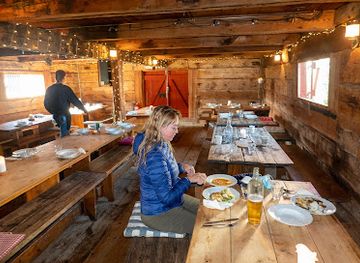
Dining in Ísafjörður is closely connected to the North Atlantic and the town’s fishing economy. Fresh fish, shellfish and locally sourced ingredients feature prominently, with the traditional fish restaurant Tjöruhúsið known for serving changing seafood dishes according to the day’s catch. Other central restaurants and cafés provide familiar Icelandic fare alongside international influences, while bakeries and coffee shops offer simple stops between museum visits and harbour walks. Local cooking often favours cod, haddock, lumpfish and other marine produce, complemented by potatoes, dairy, rye bread and seasonal vegetables rather than elaborate seasoning. Menus can vary with supply, weather and the season, particularly outside summer, so the most characteristic meal is often one that reflects what has arrived through the working harbour. Dining in the centre is generally informal, with a mixture of early meals and relaxed café culture.
-
Seafood
Tjöruhúsið
Discover Tjöruhúsið in Ísafjörður - where fresh seafood meets Icelandic tradition in an unforgettable dining experience.
11 min walk · 0.9 km from city centre
-
Icelandic
Húsið
Discover authentic Icelandic flavors at Húsið in Ísafjörður – where every dish tells a story of tradition and local ingredients.
11 min walk · 0.8 km from city centre
-
Brewery
Dokkan Brugghús
Experience Iceland's finest craft beers and delicious local cuisine at Dokkan Brugghús in Ísafjörður – where every sip tells a story.
13 min walk · 1.0 km from city centre
-
Hotel
Hótel Ísafjörður
Discover comfort at Hótel Ísafjörður – your gateway to Iceland's breathtaking Westfjords with cozy accommodations and local cuisine.
12 min walk · 1.0 km from city centre


Best bars in Isafjordur
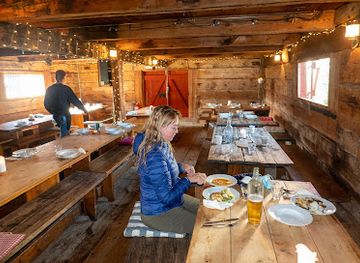
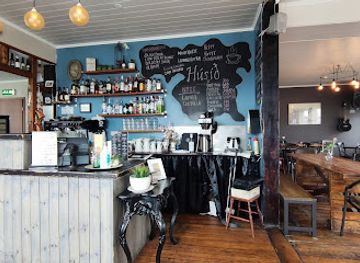
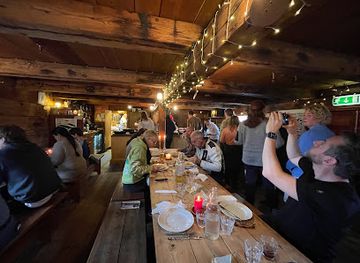
Ísafjörður’s evening life is concentrated around a small number of central bars, cafés and cultural venues rather than a large club district. Dokkan Brugghús, a local brewery, contributes craft beer and a sociable harbour-side atmosphere, while Edinborg Cultural Centre hosts concerts, performances and community events when scheduled. The town is also associated with Aldrei fór ég suður, an annual music festival that brings a lively contemporary note to its maritime setting, although ordinary evenings are considerably quieter. Pubs and bars tend to serve residents, seasonal workers and visitors together, with conversation and live music more central than late-night clubbing. During the brighter summer months, people often extend the evening outdoors or combine a drink with a walk along the waterfront, while winter nightlife is shaped by weather, local events and the town’s small population.
-
Seafood
Tjöruhúsið
Experience the best of Icelandic seafood at Tjöruhúsið, where fresh flavors meet a cozy, inviting atmosphere in the heart of Ísafjörður.
11 min walk · 0.9 km from city centre
-
Icelandic
Húsið
Discover the flavors of Iceland at Húsið, a charming restaurant in Ísafjörður, offering authentic dishes and a warm atmosphere for an unforgettable dining experience.
11 min walk · 0.8 km from city centre
-
Brewery
Dokkan Brugghús
Discover the best of Icelandic craft beer and delicious local cuisine at Dokkan Brugghús in Ísafjörður.
13 min walk · 1.0 km from city centre
-
Hotel
Hótel Ísafjörður
Experience the charm of Ísafjörður at Hótel Ísafjörður, the perfect base for exploring Iceland's stunning Westfjords.
12 min walk · 1.0 km from city centre

Best nightclubs in Isafjordur
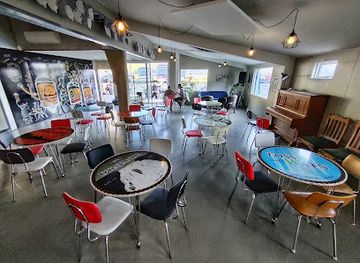
Ísafjörður’s evening life is concentrated around a small number of central bars, cafés and cultural venues rather than a large club district. Dokkan Brugghús, a local brewery, contributes craft beer and a sociable harbour-side atmosphere, while Edinborg Cultural Centre hosts concerts, performances and community events when scheduled. The town is also associated with Aldrei fór ég suður, an annual music festival that brings a lively contemporary note to its maritime setting, although ordinary evenings are considerably quieter. Pubs and bars tend to serve residents, seasonal workers and visitors together, with conversation and live music more central than late-night clubbing. During the brighter summer months, people often extend the evening outdoors or combine a drink with a walk along the waterfront, while winter nightlife is shaped by weather, local events and the town’s small population.
-
Seafood
Tjöruhúsið
Discover the authentic taste of Icelandic seafood at Tjöruhúsið, a must-visit dining destination in Ísafjörður offering fresh, locally sourced maritime dishes.
11 min walk · 0.9 km from city centre
-
Icelandic
Húsið
Discover authentic Icelandic cuisine at Húsið in Ísafjörður, where local flavors meet warm hospitality in a charming atmosphere.
11 min walk · 0.8 km from city centre
-
Brewery
Dokkan Brugghús
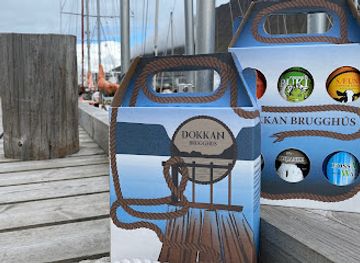
Discover the heart of craft beer in Ísafjörður at Dokkan Brugghús, where local flavors meet exceptional brews in a cozy atmosphere.
13 min walk · 1.0 km from city centre
-
Cafe
Heimabyggð
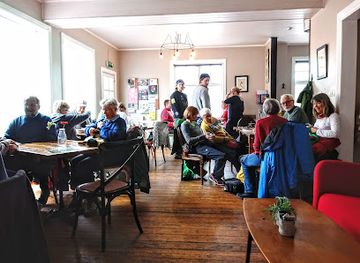
Experience Icelandic charm at Heimabyggð, a cozy cafe in Ísafjörður offering delightful coffee, pastries, and a warm atmosphere.
13 min walk · 1.0 km from city centre
Best shops in Isafjordur
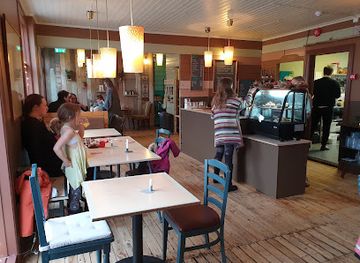
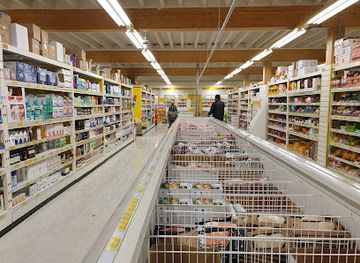
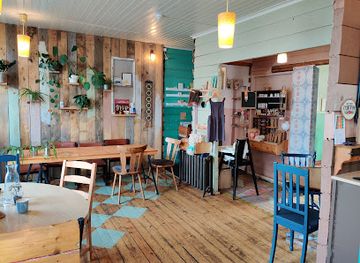
Shopping in Ísafjörður is compact and practical, centred on the town’s main streets and harbour area rather than a large retail quarter. Independent shops and small galleries offer woollen goods, outdoor clothing, locally made crafts, books, design items and souvenirs connected with the Westfjords. Visitors may also find Icelandic food products such as chocolate, liquorice, preserves and dried or smoked fish, though availability changes with the season. The old trading area at Neðstikaupstaður is more important for heritage than conventional shopping, showing how imported goods and fishing supplies once moved through the settlement. Contemporary retail reflects local life as much as tourism, with everyday provisions sitting alongside artisan products and practical equipment for travelling in the region. Opening patterns can be seasonal, particularly outside summer, so independent businesses may keep more limited hours than shops in Reykjavík.
-
Seafood
Tjöruhúsið
Experience the best of Icelandic seafood at Tjöruhúsið in Ísafjörður, where freshness meets tradition in a cozy atmosphere.
11 min walk · 0.9 km from city centre
-
Supermarket
Bónus
Explore Bónus in Ísafjörður for affordable groceries and unique Icelandic products, perfect for tourists seeking local flavors and essentials.
6 min drive · 2.1 km from city centre
-
Cafe
Heimabyggð
Experience the charm of Heimabyggð, a cozy cafe in Ísafjörður, serving delightful pastries and fresh coffee amidst stunning Icelandic scenery.
13 min walk · 1.0 km from city centre
-
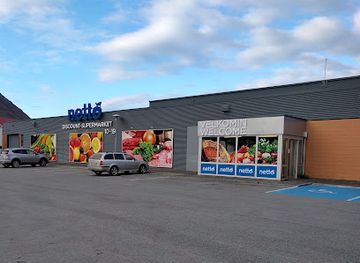
Supermarket
Nettó
Explore Icelandic culture at Nettó, a vibrant supermarket in Ísafjörður offering fresh produce and local delicacies.
12 min walk · 0.9 km from city centre
Get your free copy of our complete guide to Isafjordur, delivered straight to you.
Everything on this page, from attractions and restaurants to essentials and local phrases, in one PDF you can read offline, print or share.
Already have an account? Sign in
Your Isafjordur guide is ready.
We'll send it to · Not you? Sign out

Getting your guide ready…
We are putting together a fresh copy of the Isafjordur guide. This can take up to a minute.
This can take a few moments. If your browser asks, choose Allow so the download can start. You'll find the guide in your Downloads folder.
Nothing happened? Download it again
Sorry, the guide is taking longer than usual. Please try again in a minute, or get it by email instead.
Isafjordur essentials
Currency and Payment
Safety
Emergency Situations
Do's and Don'ts
Local Tips
From Eve
Local phrases worth knowing
You don't need to get them perfect. A few words go a long way, and locals appreciate the effort.
Basics
| English | Local | Say it |
|---|---|---|
| Hello | Halló | [HAH-loh] |
| Goodbye | Bless | [bless] |
| Yes | Já | [yow] |
| No | Nei | [nay] |
| Please/You're welcome | Takk fyrir | [tahk FEER-ir] |
| Thank you | Takk | [tahk] |
| Excuse me/Sorry | Afsakið | [AHV-sah-kith] |
| How are you? | Hvað segir þú? | [kvath SEY-ir thoo] |
| Fine. And you? | Í góðu. Og þú? | [ee GOH-thoo oh thoo] |
| Do you speak English? | Talar þú ensku? | [TAH-lar thoo ENS-koo] |
| I don't understand | Ég skil ekki | [yeh skil EK-ki] |
Eating & Drinking
| English | Local | Say it |
|---|---|---|
| I'd like to see the menu, please | Ég ætla að sjá matseðilinn, takk | [yeh EHT-lah ath shyow MATH-se-thil-inn, tahk] |
| I don't eat meat | Ég borða ekki kjöt | [yeh BOR-tha EK-ki chyot] |
| Cheers! | Skál! | [skowl] |
| I would like to pay, please | Ég vil greiða, takk | [yeh vil gray-tha, tahk] |
Emergencies
| English | Local | Say it |
|---|---|---|
| Help! | Hjálp! | [HYOWLP] |
| Go away! | Farðu í burtu! | [FAR-thoo ee BUR-too] |
| Call the Police! | Hringið í lögregluna! | [HRING-ith ee LUR-eth-luna] |
| Call a doctor! | Hringið í lækninn! | [HRING-ith ee lighk-nin] |
| I'm lost | Ég er týndur | [yeh air teenth-ur] |
| I'm ill | Ég er veikur | [yeh air vay-kur] |
Shopping
| English | Local | Say it |
|---|---|---|
| I'd like to buy... | Ég vil kaupa... | [yeh vil KOW-pa] |
| I'm just looking | Ég er bara að skoða | [yeh air BAH-ra ath skotha] |
| How much is it? | Hvað kostar það? | [kvath KOS-tar thah] |
| That's too expensive | Það er of dyrt | [thath air ov deert] |
| Can you lower the price? | Getur þú lækkað verðið? | [geth-ur thoo LYE-kath VER-thith] |
Time & Numbers
| English | Local | Say it |
|---|---|---|
| What time is it? | Hvað er klukkan? | [kvath air KLOO-kahn] |
| It's one o'clock | Klukkan er eitt | [KLOO-kahn air ayt] |
| Half past (10) | Hálf tíu | [howlf tee-oo] |
| Morning | Morgun | [MOR-gun] |
| Afternoon | Síðdegis | [SEETH-deh-gis] |
| Evening | Kvöld | [kvuthlth] |
| Yesterday | Í gær | [ee gire] |
| Today | Í dag | [ee thahk] |
| Tomorrow | Á morgun | [ow MOR-gun] |
| 1 | Eitt | [ayt] |
| 2 | Tvö | [tvo] |
| 3 | Þrjú | [throw] |
| 4 | Fjögur | [fyoh-gur] |
| 5 | Fimm | [fim] |
| 6 | Sex | [sehx] |
| 7 | Sjö | [syoh] |
| 8 | Átta | [ow-tha] |
| 9 | Níu | [nee-oo] |
| 10 | Tíu | [tee-oo] |
Transport & Directions
| English | Local | Say it |
|---|---|---|
| Where's a/the...? | Hvar er... | [kvar air] |
| What's the address? | Hvað er heimilisfangið? | [kvath air HAY-mil-iss-fan-gith] |
| Can you show me (on the map)? | Getur þú sýnt mér (á kortinu)? | [geth-ur thoo seent mayr (ow KOR-tinu)] |
| When's the next (bus)? | Hvenær kemur næsti (strætisvagn)? | [kven-ayr keh-mur nyst-ee (strait-iss-vagn)] |
| A ticket (to ....) | Einn miða (til ...) | [aythn MEE-tha (til)] |
History of Isafjordur
Settlement in the Westfjords
The Ísafjörður area formed part of Iceland’s early settlement landscape, traditionally dated from the late ninth century, when Norse settlers established farms around the sheltered fjords. The natural harbour at Skutulsfjörður supported fishing and coastal travel, while the surrounding mountains and limited arable land encouraged a close relationship with the sea. Ísafjörður itself developed gradually rather than as a single planned foundation. Its position at the head of a deep fjord made it a useful base for seasonal fishing, trade and communication with other Westfjords settlements, establishing the maritime character that still defines the town.
Trade and the Eyrin Peninsula
From the late medieval period, merchants used the natural harbour and the peninsula known as Eyrin for trade and fishing. Danish commercial influence became particularly important after the Danish Crown strengthened its trading system in Iceland during the seventeenth century. Neðstikaupstaður preserves buildings associated with this era, including timber structures that recall the period when imported goods, salt, fishing equipment and household necessities passed through the settlement. The trading post helped Ísafjörður become an economic focus for the northern Westfjords, linking local fishing communities with wider North Atlantic commerce.
From Trading Post to Town
Ísafjörður received municipal status in 1786, one of Iceland’s earliest towns to do so, reflecting its established role in regional commerce. During the nineteenth century, merchants, boat owners and fishing families expanded the settlement, and timber houses, warehouses and service buildings accumulated around the harbour. Fishing remained central, but the town also became a place of education, administration and cultural activity for the wider region. Many of the older buildings visible today date from this period or embody the commercial traditions it created, giving the centre an architectural character distinct from newer Icelandic suburbs.
Industrial Fishing and Regional Change
The twentieth century brought mechanisation, improved harbour facilities and a shift from small-scale seasonal fishing towards larger boats and more industrial methods. Ísafjörður became an important base for trawling and fish processing, generating employment and strengthening its position as the Westfjords’ principal service town. These changes also tied the community more closely to national markets and transport networks. Like many remote Icelandic settlements, Ísafjörður later faced population pressures as employment in fishing became more concentrated and younger residents moved towards larger urban centres, even as fishing and maritime services remained essential to local identity.
A Cultural and Outdoor Gateway
In recent decades, Ísafjörður has combined its continuing maritime economy with cultural institutions, festivals, education and nature-based tourism. The town’s museums preserve the history of trade and fishing, while events such as Aldrei fór ég suður have given it a notable place in Iceland’s contemporary music scene. Improved roads, air links and seasonal maritime connections have made the town a practical base for discovering the wider Westfjords, including Hornstrandir. This newer role has not replaced the harbour’s working purpose; instead, tourism and outdoor recreation now sit alongside the older economic life of the fjord.
Travel experiences inspired by this city
-
 8 Day Trip
Exploring the Untamed Beauty of Hornstrandir
Discover the untouched wilderness of Hornstrandir Nature Reserve in Iceland, a perfect destination for wildlife photography and outdoor adventure.
8 Day Trip
Exploring the Untamed Beauty of Hornstrandir
Discover the untouched wilderness of Hornstrandir Nature Reserve in Iceland, a perfect destination for wildlife photography and outdoor adventure.
 10 Jun 2025
By Astrid Nilsen -
 11 Day Trip
Family Adventure in Hornstrandir: An Icelandic Wilderness Escape
Explore the pristine beauty of Hornstrandir Nature Reserve with your family, discovering Iceland's untouched landscapes and wildlife.
11 Day Trip
Family Adventure in Hornstrandir: An Icelandic Wilderness Escape
Explore the pristine beauty of Hornstrandir Nature Reserve with your family, discovering Iceland's untouched landscapes and wildlife.
 5 Jun 2025
By Jennifer Smith -
 8 Day Trip
Exploring the Wild Beauty of Hornstrandir with Family
Discover the untouched beauty of Hornstrandir Nature Reserve with family, exploring rugged landscapes and abundant wildlife in Iceland's remote wilderness.
8 Day Trip
Exploring the Wild Beauty of Hornstrandir with Family
Discover the untouched beauty of Hornstrandir Nature Reserve with family, exploring rugged landscapes and abundant wildlife in Iceland's remote wilderness.
 5 Jun 2025
By Juan Diaz -
 11 Day Trip
Solo Wilderness Adventure in Hornstrandir Nature Reserve
Explore the untouched beauty of Hornstrandir Nature Reserve on a solo adventure focused on sustainable travel and nature immersion.
11 Day Trip
Solo Wilderness Adventure in Hornstrandir Nature Reserve
Explore the untouched beauty of Hornstrandir Nature Reserve on a solo adventure focused on sustainable travel and nature immersion.
 5 Jun 2025
By Nuno Ferreira -
 8 Day Trip
Family Adventure in Iceland's Hornstrandir Nature Reserve
Explore the untouched beauty of Hornstrandir Nature Reserve in Iceland with family, enjoying hiking, wildlife, and camping in a pristine environment.
15 May 2025
8 Day Trip
Family Adventure in Iceland's Hornstrandir Nature Reserve
Explore the untouched beauty of Hornstrandir Nature Reserve in Iceland with family, enjoying hiking, wildlife, and camping in a pristine environment.
15 May 2025
By Jennifer Smith -
 13 Day Trip
Solo Expedition to Iceland's Hornstrandir Nature Reserve
Join me on a 13-day solo adventure through Iceland's Hornstrandir Nature Reserve, capturing the wild beauty and solitude of this untouched sanctuary.
10 May 2025
13 Day Trip
Solo Expedition to Iceland's Hornstrandir Nature Reserve
Join me on a 13-day solo adventure through Iceland's Hornstrandir Nature Reserve, capturing the wild beauty and solitude of this untouched sanctuary.
10 May 2025
By Astrid Nilsen
Swipe for more travel diaries
Isafjordur in Photos
Browse through our photo collection highlighting the charm and character of the destination.
Cities near Isafjordur
The closest cities to Isafjordur, if you have time for more than one stop.
-

-

-

-

-


Swipe for more cities
Explore more

Explore more of Iceland
Discover Iceland, where glaciers meet volcanoes, Northern Lights dance in the skies, and natural wonders await at every turn.
Explore Iceland