

Free Borgarnes Travel Guide & Mobile App
Plan your Borgarnes trip with Evendo. Get free guides to top attractions, restaurants, hotels, and bars. Web access or download the mobile app.


Borgarnes, Iceland, pairs Viking history, coastal landscapes, the Settlement Centre and easy access to West Iceland’s fjords, waterfalls and hot pools.
A Coastal Gateway to West Iceland
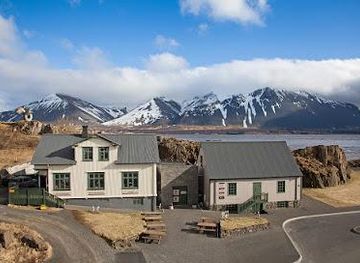
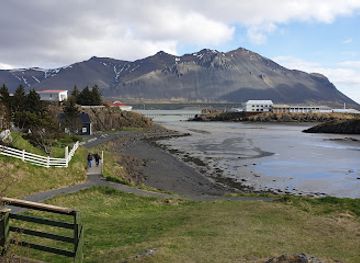
Borgarnes is a small coastal town on a peninsula in Borgarfjörður, about an hour’s drive north-west of Reykjavík along Route 1. Its position makes it both a destination in its own right and a practical base for exploring western Iceland, with the broad waters of the fjord, the mountain Hafnarfjall and open lava-formed landscapes shaping the town’s outlook. The settlement is compact, and much of its character can be absorbed on foot, particularly around the waterfront, old harbour and grassy Skallagrímsgarður park.Read more about Borgarnes
Sagas, Settlement and Local Life
The Wider Borgarfjörður Landscape
When is the best time to visit Borgarnes?
Best: June–August · 13–15°C| Month | High (°C) | Rainfall (mm) |
|---|---|---|
| January | 3 | 70 |
| February | 3 | 55 |
| March | 3 | 55 |
| April | 6 | 40 |
| May | 10 | 40 |
| June (best) | 13 | 35 |
| July (best) | 15 | 35 |
| August (best) | 14 | 40 |
| September | 10 | 50 |
| October | 7 | 60 |
| November | 4 | 70 |
| December | 2 | 70 |
Getting to and around Borgarnes
How to get there
Transportation
Best attractions in Borgarnes
The Settlement Centre is Borgarnes’s principal cultural attraction, combining exhibitions about Iceland’s settlement with the dramatic story of Egill Skallagrímsson from Egils saga. Its historical focus provides context for the landscapes around Borg á Mýrum, the farm site associated with Egill’s family just outside town. Skallagrímsgarður offers a quiet green space with local historical associations and views towards the coast, while the waterfront and old harbour make for an accessible walk beside Borgarfjörður. The town’s swimming pool provides a more contemporary Icelandic experience, with outdoor bathing and the sociable atmosphere characteristic of local pools. From Borgarnes, the wider region opens towards Hraunfossar and Barnafoss, Deildartunguhver and the mountains around Borgarfjörður; these are excursions rather than town attractions, but explain why the settlement works so well as a base for exploring West Iceland.
-
Museum
The Settlement Center
Explore the Viking heritage and early Icelandic settlements at The Settlement Center in Borgarnes, a must-visit museum and gift shop.
12 min walk · 1.0 km from city centre
-
Tourist attraction
Ljómalind Local Market
Explore local flavors and crafts at Ljómalind Local Market in Borgarnes, a vibrant hub for Icelandic culture and cuisine.
1 min walk · 0.1 km from city centre
-
Tourist attraction
Bjössaróló Playground
Explore Bjössarólo Playground in Borgarnes for a delightful family experience amidst Iceland's stunning landscapes and vibrant community.
11 min walk · 0.9 km from city centre
-
Observation deck
Borgarnes Watertower Viewpoint
Experience the breathtaking panoramic views of Borgarnes from the iconic Watertower Viewpoint, a must-visit for every Iceland traveler.
17 min walk · 1.3 km from city centre


Best landmarks in Borgarnes
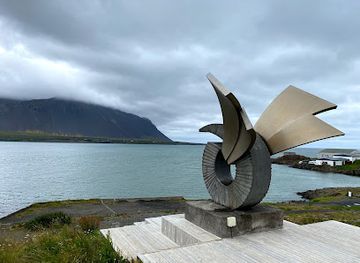
The Settlement Centre occupies a central place in Borgarnes’s cultural landscape, linking a contemporary visitor building with the settlement narratives and literary traditions of Iceland’s early history. Skallagrímsgarður is a significant public landmark associated with Skallagrímur and Egill Skallagrímsson, combining open green space with a strong connection to the town’s saga identity. Borgarnes Church, standing above the settlement, is a prominent modern religious building and a useful point of orientation among the town’s low-rise streets. The old harbour and waterfront reflect the town’s development as a trading and service centre for Borgarfjörður, while Borg á Mýrum Church, a short distance outside Borgarnes, marks the historic farm setting associated with the settlement story. Together these places show how saga memory, Christianity, maritime commerce and modern community life overlap in the local landscape.
-
Museum
The Settlement Center
Explore Iceland's Viking heritage at The Settlement Center in Borgarnes, featuring interactive exhibits and unique souvenirs.
12 min walk · 1.0 km from city centre
-
Cafe
Blómasetrið - Kaffi Kyrrð
Discover the charm of Blómásetriðið in Borgarnes, where delightful coffee meets unique Icelandic gifts in a cozy atmosphere.
11 min walk · 0.9 km from city centre
-
Pizza
La Colina Pizzeria
Experience the authentic taste of Italy at La Colina Pizzeria in Borgarnes, where fresh ingredients and a cozy atmosphere await.
17 min walk · 1.3 km from city centre
-
Bakery
Geirabakarí Kaffihús
Discover the delightful flavors of Iceland at Geirabakarí Kaffihús, a charming bakery in Borgarnes, offering freshly baked goods and a cozy ambiance.
3 min walk · 0.3 km from city centre


Explore Borgarnes on the map
Plan your Borgarnes trip on one map. See where the top attractions, landmarks, restaurants, bars and hotels are, find what's near where you're staying, and book hotels and experiences in a few clicks.
Best hotels in Borgarnes
Best restaurants in Borgarnes
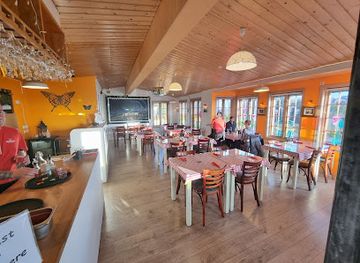
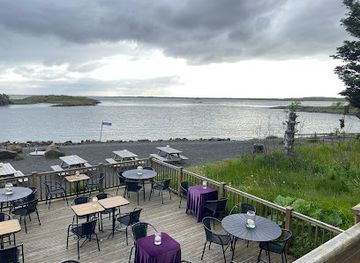
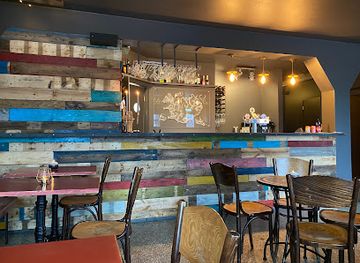
Borgarnes has a modest dining scene shaped by its role as a regional service town and a stopping point on Route 1. Cafés and bakeries are useful for coffee, bread, cakes and uncomplicated meals, while restaurants connected with local accommodation and the Settlement Centre provide more substantial dining. Icelandic staples may include lamb, fish, dairy products and hearty soups, with menus often adapting to seasonal supply rather than following a single Borgarnes speciality. The town’s position beside Borgarfjörður gives seafood a natural place in the regional food culture, while travellers can also find familiar international dishes suited to road journeys. Dining is generally concentrated around the centre and main road, and opening patterns can be seasonal, so an early meal or advance check is sensible when travelling outside the summer peak.
-
Pizza
La Colina Pizzeria
Experience the authentic taste of Italy at La Colina Pizzeria in Borgarnes – where every slice tells a story.
17 min walk · 1.3 km from city centre
-
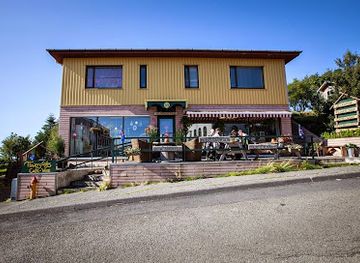
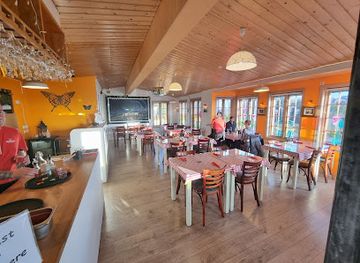
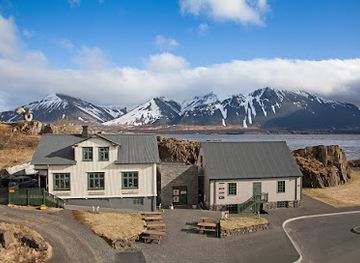
Restaurant
Englendingavík
Discover the taste of Iceland at Englendingavík, where local ingredients meet exceptional culinary artistry in Borgarnes.
11 min walk · 0.9 km from city centre
-
 Restaurant
B59 Hótel
Experience comfort and culinary delight at B59 Hótel in Borgarnes - your perfect base for exploring Iceland's stunning landscapes.
1 min walk · 0.1 km from city centre
-
Diner
Bara Borgarnes
Experience the unique blend of dining and culture at Bara Borgarnes in Iceland - where great food meets local artistry.
10 min walk · 0.8 km from city centre
Best bars in Borgarnes
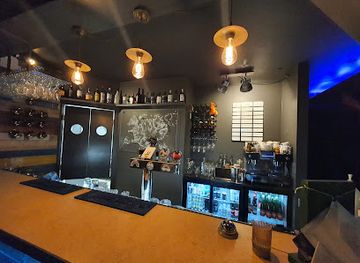
Borgarnes has a quiet evening scene rather than a dedicated club district. Social life is centred on hotel and restaurant bars, cafés and community venues, where evenings tend to be relaxed and shaped by the town’s small population and passing travellers. The Settlement Centre and other cultural spaces may contribute to occasional evening activity, while the swimming pool remains one of the most recognisable places for local social interaction, although it is not a nightlife venue. There are no grounds to expect Reykjavík-style clubbing, extensive late-night entertainment or a concentrated bar quarter. Visitors staying overnight usually spend the evening walking by the harbour, dining locally or using Borgarnes as a calm base before excursions into the surrounding countryside.
-
Museum
The Settlement Center
Explore the Viking Age and Iceland's early history at The Settlement Center, a captivating museum in Borgarnes.
12 min walk · 1.0 km from city centre
-
Cafe
Blómasetrið - Kaffi Kyrrð
Discover the charming Blómasetrið in Borgarnes - a cozy café, gift shop, and hostel, perfect for travelers seeking a unique Icelandic experience.
11 min walk · 0.9 km from city centre
-
Pizza
La Colina Pizzeria
Experience the best of Borgarnes with gourmet pizzas at La Colina Pizzeria, where flavor meets Icelandic charm.
17 min walk · 1.3 km from city centre
-
Bakery
Geirabakarí Kaffihús
Experience the authentic flavors of Iceland at Geirabakarí Kaffihús, a charming bakery in Borgarnes known for its delicious pastries and warm ambiance.
3 min walk · 0.3 km from city centre

Best nightclubs in Borgarnes
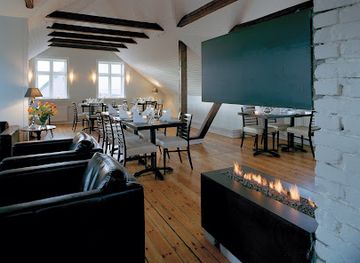
Borgarnes has a quiet evening scene rather than a dedicated club district. Social life is centred on hotel and restaurant bars, cafés and community venues, where evenings tend to be relaxed and shaped by the town’s small population and passing travellers. The Settlement Centre and other cultural spaces may contribute to occasional evening activity, while the swimming pool remains one of the most recognisable places for local social interaction, although it is not a nightlife venue. There are no grounds to expect Reykjavík-style clubbing, extensive late-night entertainment or a concentrated bar quarter. Visitors staying overnight usually spend the evening walking by the harbour, dining locally or using Borgarnes as a calm base before excursions into the surrounding countryside.
-
Museum
The Settlement Center
Explore Viking history and Icelandic culture at The Settlement Center in Borgarnes, a captivating museum experience for all ages.
12 min walk · 1.0 km from city centre
-
Hotel
B59 Hótel
Experience comfort and hospitality at B59 Hótel in Borgarnes, Iceland, your perfect base for exploring the breathtaking landscapes and rich culture.
1 min walk · 0.1 km from city centre
-
Diner
Bara Borgarnes
Discover unique dining and local culture at Bara Borgarnes, the perfect spot for tourists in Borgarnes, Iceland.
10 min walk · 0.8 km from city centre
-
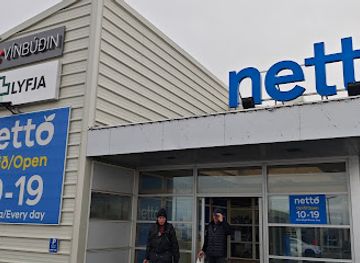
State liquor store
Vínbúðin
Explore the essence of Icelandic beverages at Vínbúðin, the state liquor store in Borgarnes, with a diverse selection of local spirits, wines, and beers.
1 min walk · 0.1 km from city centre
Best shops in Borgarnes
Shopping in Borgarnes is practical and small-scale, reflecting the town’s role as a service centre rather than a major retail destination. Central shops and supermarkets supply everyday provisions for residents and travellers, while bakeries and cafés offer locally made bread, cakes and provisions suited to a road journey. The Settlement Centre and other visitor-oriented outlets may carry books about Icelandic settlement, Egils saga, local history and Icelandic culture, alongside selected gifts and crafts. Visitors may also find woollen goods, handmade items and food products associated with Iceland, though the range varies by season and retailer. There is no extensive designer shopping quarter or large traditional bazaar; the most rewarding purchases are generally practical supplies, literary souvenirs, knitwear and small locally made objects that reflect Borgarnes’s connection with saga history and rural West Iceland.
-
Gift shop
The Settlement Center
Explore the rich history of Iceland at The Settlement Center, where culture meets shopping in the heart of Borgarnes.
12 min walk · 1.0 km from city centre
-
Gift shop
Blómasetrið - Kaffi Kyrrð
Discover Blómasetrið, a unique gift shop and café in Borgarnes, Iceland, offering local crafts, delightful coffee, and cozy accommodations.
11 min walk · 0.9 km from city centre
-
Bakery
Geirabakarí Kaffihús
Experience the best of Icelandic baking at Geirabakarí Kaffihús in Borgarnes, where delicious pastries and artisan coffee await.
3 min walk · 0.3 km from city centre
-
Supermarket
Bónus
Experience Icelandic shopping at Bónus in Borgarnes, where budget-friendly prices meet a wide selection of local and international products.
3 min walk · 0.3 km from city centre


Get your free copy of our complete guide to Borgarnes, delivered straight to you.
Everything on this page, from attractions and restaurants to essentials and local phrases, in one PDF you can read offline, print or share.
Already have an account? Sign in
Your Borgarnes guide is ready.
We'll send it to · Not you? Sign out

Getting your guide ready…
We are putting together a fresh copy of the Borgarnes guide. This can take up to a minute.
This can take a few moments. If your browser asks, choose Allow so the download can start. You'll find the guide in your Downloads folder.
Nothing happened? Download it again
Sorry, the guide is taking longer than usual. Please try again in a minute, or get it by email instead.
Borgarnes essentials
Currency and Payment
Safety
Emergency Situations
Do's and Don'ts
Local Tips
From Eve
Local phrases worth knowing
You don't need to get them perfect. A few words go a long way, and locals appreciate the effort.
Basics
| English | Local | Say it |
|---|---|---|
| Hello | Halló | [HAH-loh] |
| Goodbye | Bless | [bless] |
| Yes | Já | [yow] |
| No | Nei | [nay] |
| Please/You're welcome | Takk fyrir | [tahk-fear-ear] |
| Thank you | Takk | [tahk] |
| Excuse me/Sorry | Afsakið | [av-sah-kith] |
| How are you? | Hvað segir þú? | [kvath-seyir-thoo] |
| Fine. And you? | Í lagi. En þú? | [ee-lah-yee-en-thoo] |
| Do you speak English? | Talar þú ensku? | [tah-lar-thoo-ens-koo] |
| I don't understand | Ég skil ekki | [yeh-skil-eh-kki] |
Eating & Drinking
| English | Local | Say it |
|---|---|---|
| I'd like to see the menu, please | Ég vil sjá matseðilinn, takk | [yeh-vil-syow-maht-seh-thil-inn-tahk] |
| I don't eat meat | Ég borða ekki kjöt | [yeh-bor-tha-eh-kki-kyot] |
| Cheers! | Skál! | [skowl] |
| I would like to pay, please | Ég vil greiða, takk | [yeh-vil-gray-tha-tahk] |
Emergencies
| English | Local | Say it |
|---|---|---|
| Help! | Hjálp! | [hyowlp] |
| Go away! | Farðu í burtu! | [far-thoo-ee-burthoo] |
| Call the Police! | Hringðu í lögregluna! | [hring-thoo-ee-ler-eg-loo-na] |
| Call a doctor! | Hringdu eftir lækninum! | [hring-thoo-ehf-thir-lighk-nee-num] |
| I'm lost | Ég er týndur | [yeh-ehr-tin-thur] |
| I'm ill | Ég er veikur | [yeh-ehr-vey-kur] |
Shopping
| English | Local | Say it |
|---|---|---|
| I'd like to buy... | Ég vil kaupa... | [yeh-vil-koy-pa] |
| I'm just looking | Ég er bara að skoða | [yeh-ehr-bara-ath-skotha] |
| How much is it? | Hvað kostar það? | [kvath-kos-tar-thath] |
| That's too expensive | Það er of dýrt | [thath-ehr-ov-deert] |
| Can you lower the price? | Geturðu lækkat verðið? | [geh-thur-thoo-ligh-kat-vehr-thith] |
Time & Numbers
| English | Local | Say it |
|---|---|---|
| What time is it? | Hvað er klukkan? | [kvath-ehr-kloo-kahn] |
| It's one o'clock | Klukkan er eitt | [kloo-kahn-ehr-eyt] |
| Half past (10) | Hálftíu (10) | [howlf-tee-oo] |
| Morning | Morgun | [mor-gun] |
| Afternoon | Síðdegis | [seed-day-yis] |
| Evening | Kvöld | [kvulth] |
| Yesterday | Í gær | [ee-gyir] |
| Today | Í dag | [ee-dahk] |
| Tomorrow | Á morgun | [ow-mor-gun] |
| 1 | Einn | [eyt-inn] |
| 2 | Tveir | [t-veyr] |
| 3 | Þrír | [threer] |
| 4 | Fjórir | [fyow-reer] |
| 5 | Fimm | [feem] |
| 6 | Sex | [sehx] |
| 7 | Sjö | [syow] |
| 8 | Átta | [ow-tha] |
| 9 | Níu | [nee-oo] |
| 10 | Tíu | [tee-oo] |
Transport & Directions
| English | Local | Say it |
|---|---|---|
| Where's a/the...? | Hvar er... | [kvar-ehr] |
| What's the address? | Hvað er heimilisfangið? | [kvath-ehr-hay-mil-is-fan-yith] |
| Can you show me (on the map)? | Geturðu sýnt mér (á kortinu)? | [geh-thur-thoo-seent-mayr-owr-kor-thinoo] |
| When's the next (bus)? | Hvenær kemur næsta (strætisvagn)? | [kveh-nighr-kay-mur-niy-sta-stra-this-vahn] |
| A ticket (to ....) | Miði (til ....) | [mee-thee-til] |
History of Borgarnes
Settlement at Borg á Mýrum
The history of Borgarnes is rooted in Iceland’s settlement period, traditionally dated to the late ninth century. Skallagrímur Kveldúlfsson, a Norwegian settler and the father of Egill Skallagrímsson, established his farm at Borg á Mýrum on the southern side of the peninsula. The farm’s name, meaning Borg on the Marshes, gave the wider district its historical identity. Although the settlement landscape has changed considerably, Borg á Mýrum remains an important reference point in local history, and the nearby church stands in a setting associated with the early community. The saga tradition connected with Egill preserves details of family, landholding and conflict, though it was written centuries after the events it describes and should be read as medieval literature as well as historical evidence.
Egill Skallagrímsson and the Sagas
Egill Skallagrímsson became one of Iceland’s best-known saga figures: a formidable warrior, landowner and poet whose life is narrated in Egils saga. The story links him to Borg á Mýrum, Borgarfjörður and the political world of Iceland’s early settlers. Egill’s poetry, including verses associated with grief and survival, is among the most celebrated literature from the Old Norse tradition. Centuries later, his legacy remains visible in Borgarnes through local monuments, public spaces and the Settlement Centre’s exhibition about the saga. The town’s identity is therefore shaped not simply by a surviving medieval building, but by a continuing relationship with one of Iceland’s most influential literary characters.
A Harbour Town Takes Shape
Borgarnes developed as a trading and service centre for Borgarfjörður, serving farms and communities spread across the surrounding countryside. Its coastal position made the harbour important for movement of goods before modern roads transformed travel in Iceland. The town’s growth was influenced by changing systems of trade, improved communications and the gradual concentration of public services in accessible regional centres. Unlike Iceland’s oldest settlement sites, modern Borgarnes is not a direct continuation of a large medieval town; its urban character emerged more clearly in the nineteenth and twentieth centuries. The waterfront, older houses and service buildings reflect this later development, when maritime activity and rural commerce supported a permanent community.
Roads, Services and Modernisation
Borgarnes expanded in importance as roads connected Reykjavík with western and northern Iceland and as motor travel reduced the region’s dependence on coastal transport. Route 1 now passes through the town and makes it a convenient stopping point for journeys towards the Snæfellsnes Peninsula, the Westfjords and northern regions. New schools, municipal services, shops and recreation facilities strengthened Borgarnes as a local centre for Borgarfjörður. The town’s location also brought a steady flow of travellers, while its population remained modest enough for the harbour, swimming pool and community spaces to retain an everyday local role.
A Contemporary Base in Borgarfjörður
Today Borgarnes balances its historical associations with the practical life of a small Icelandic town. The Settlement Centre presents settlement history and Egils saga to visitors, while the town’s cafés, accommodation, swimming facilities and waterfront provide services for residents and travellers. Its surroundings remain central to its identity: Borgarfjörður, Hafnarfjall and the inland valleys connect the town with farms, geothermal sites, waterfalls and routes towards the highlands. Modern Borgarnes is therefore best understood as both a historic landscape and a regional gateway, where saga memory coexists with the road network and amenities of contemporary West Iceland.
Travel experiences inspired by this city
-
 10 Day Trip
Exploring the Natural Wonders of Iceland's Snæfellsnes Peninsula
Discover the breathtaking landscapes and cultural heritage of Iceland's Snæfellsnes Peninsula with a family adventure in the heart of nature.
10 Day Trip
Exploring the Natural Wonders of Iceland's Snæfellsnes Peninsula
Discover the breathtaking landscapes and cultural heritage of Iceland's Snæfellsnes Peninsula with a family adventure in the heart of nature.
 10 Jun 2025
By Jennifer Smith -
 7 Day Trip
Exploring Iceland's Snaefellsnes Peninsula: A Journey Through Nature
Discover the diverse landscapes of Iceland's Snaefellsnes Peninsula, from volcanic craters to black sand beaches, on a week-long adventure with my spouse.
7 Day Trip
Exploring Iceland's Snaefellsnes Peninsula: A Journey Through Nature
Discover the diverse landscapes of Iceland's Snaefellsnes Peninsula, from volcanic craters to black sand beaches, on a week-long adventure with my spouse.
 10 Jun 2025
By Jan Kovar -
 7 Day Trip
Exploring the Mystical Snæfellsnes Peninsula with Friends
Join Frida Kristiansen on a 7-day adventure through Iceland's Snæfellsnes Peninsula, discovering stunning landscapes and rich cultural experiences.
7 Day Trip
Exploring the Mystical Snæfellsnes Peninsula with Friends
Join Frida Kristiansen on a 7-day adventure through Iceland's Snæfellsnes Peninsula, discovering stunning landscapes and rich cultural experiences.
 15 Apr 2025
By Frida Kristiansen -
 9 Day Trip
Exploring the Wild Beauty of Snaefellsnes Peninsula with Jean-Pierre
Embark on a sustainable journey through Iceland's Snaefellsnes Peninsula, exploring dramatic landscapes and unique culture with eco-friendly insights.
9 Day Trip
Exploring the Wild Beauty of Snaefellsnes Peninsula with Jean-Pierre
Embark on a sustainable journey through Iceland's Snaefellsnes Peninsula, exploring dramatic landscapes and unique culture with eco-friendly insights.
 5 Apr 2025
By Marie Rakotomalala -
 8 Day Trip
Icelandic Adventure: Exploring Reykjavik with Family
Discover Reykjavik's charm with family: an 8-day journey through stunning landscapes, local culture, and cozy accommodations in Iceland.
8 Day Trip
Icelandic Adventure: Exploring Reykjavik with Family
Discover Reykjavik's charm with family: an 8-day journey through stunning landscapes, local culture, and cozy accommodations in Iceland.
 25 Feb 2025
By Kirsten Nielsen -
 7 Day Trip
Solo Adventure in Iceland: Discovering Snaefellsnes Peninsula
Embark on a solo journey to Iceland's Snaefellsnes Peninsula, exploring glaciers, black sand beaches, and breathtaking landscapes.
7 Day Trip
Solo Adventure in Iceland: Discovering Snaefellsnes Peninsula
Embark on a solo journey to Iceland's Snaefellsnes Peninsula, exploring glaciers, black sand beaches, and breathtaking landscapes.
 5 Jan 2025
By Karen Schmidt
Swipe for more travel diaries
Borgarnes in Photos
Browse through our photo collection highlighting the charm and character of the destination.
Cities near Borgarnes
The closest cities to Borgarnes, if you have time for more than one stop.
-

-

-

-

-


Swipe for more cities
Explore more

Explore more of Iceland
Discover Iceland, where glaciers meet volcanoes, Northern Lights dance in the skies, and natural wonders await at every turn.
Explore Iceland