

Free Hafnarfjordur Travel Guide & Mobile App
Plan your Hafnarfjordur trip with Evendo. Get free guides to top attractions, restaurants, hotels, and bars. Web access or download the mobile app.


Hafnarfjörður, Iceland, blends a historic harbour, lava landscapes, folklore, museums and coastal culture with easy access to Reykjavík and the Reykjanes coast.
A Harbour Shaped by Lava
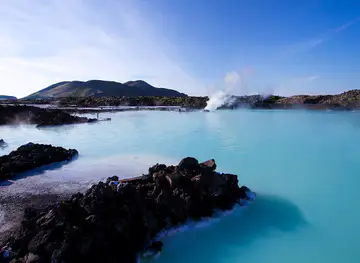
Hafnarfjörður lies on Iceland’s south-western coast, immediately south of Reykjavík, around a natural harbour bordered by dark lava fields. Its name means “harbour fjord”, and the sea remains central to the town’s character: fishing boats, working quays and sheltered waterfront streets sit close to an older centre of brightly painted houses. The surrounding lava, formed by volcanic activity on the Reykjanes Peninsula, gives the landscape an unusually rugged texture, with mossy rocks, low ridges and narrow paths threading through the town’s green spaces.Read more about Hafnarfjordur
Old Streets and Living Folklore
Coastal Culture Near Reykjavík
When is the best time to visit Hafnarfjordur?
Best: June–August · 13–15°C| Month | High (°C) | Rainfall (mm) |
|---|---|---|
| January | 2 | 60 |
| February | 3 | 50 |
| March | 3 | 40 |
| April | 5 | 30 |
| May | 10 | 25 |
| June (best) | 13 | 15 |
| July (best) | 15 | 15 |
| August (best) | 14 | 25 |
| September | 11 | 40 |
| October | 7 | 50 |
| November | 4 | 60 |
| December | 3 | 70 |
Getting to and around Hafnarfjordur
How to get there
Transportation
Best attractions in Hafnarfjordur
Hafnarfjörður’s attractions are close enough to form a satisfying day on foot. The harbour provides the town’s defining setting, with boats, quays and views across Faxaflói Bay, while the old streets around Strandgata reveal a smaller-scale maritime town of painted houses and long-established businesses. Hafnarfjörður Museum introduces local history through several historic buildings and collections, and Hafnarborg presents Icelandic art in a central cultural setting. Hellisgerði is a particularly atmospheric stop, combining gardens with dark lava formations and the folklore of hidden people associated with the landscape. Nearby Víðistaðatún offers open parkland and a more spacious pause from the built-up centre. Visitors interested in local entertainment can also explore the Viking-themed attractions around the harbour, which draw on Iceland’s settlement heritage without replacing the town’s more substantial historical and cultural institutions.
-
Event venue
Harpa Concert Hall and Conference Centre
Experience the beauty and culture of Reykjavik at Harpa Concert Hall, a stunning architectural gem offering music, art, and culinary delights.
28 min drive · 9.2 km from city centre
-
Sculpture
Sun Voyager
Explore the captivating Sun Voyager in Reykjavik, Iceland - a stunning sculpture symbolizing hope, adventure, and the Viking spirit amidst breathtaking coastal views.
27 min drive · 9.0 km from city centre
-
Thermal baths
Sky Lagoon
Discover serenity at Sky Lagoon, Kópavogur's exquisite thermal bath blending geothermal wonders with breathtaking views for a rejuvenating escape.
17 min drive · 5.5 km from city centre
-
Tour operator
Tröll Expeditions HQ
Explore Iceland's stunning landscapes with Tröll Expeditions HQ, your premier tour operator for unforgettable adventures in Reykjavik.
30 min drive · 9.9 km from city centre


Best landmarks in Hafnarfjordur
Hafnarfjörður’s most representative landmarks express its relationship with harbour, lava and community history. Strandgata and the adjoining older streets preserve the scale of the historic port, while the waterfront itself remains a working landscape rather than a purely ornamental promenade. Hafnarfjarðarkirkja, the town’s Lutheran church, is a notable civic and religious presence, and St Joseph’s Church reflects the history of Iceland’s Catholic community. Hamarinn, a rocky rise close to the centre, provides a distinctive natural landmark and a reminder that lava formations are woven directly into the urban fabric. The buildings and sites of Hafnarfjörður Museum add architectural and social context, showing how residents lived and worked. Hellisgerði is significant less for monumental construction than for the way gardens, lava rocks and local folklore combine in a recognisable cultural landscape.
-
Nature preserve
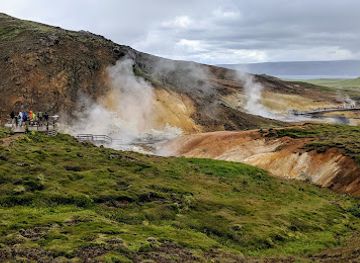
Reykjanesfólkvangur
Discover the breathtaking landscapes and diverse wildlife at Reykjanesfólkvangur, a stunning nature preserve in Iceland.
31 min drive · 11 km from city centre
-
Historical landmark
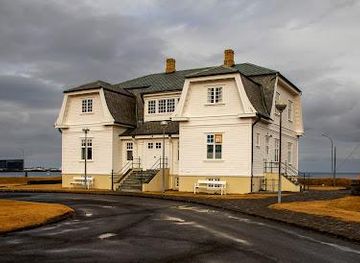
Höfði House
Explore the historical significance of Höfði House in Reykjavik, a key site for diplomacy and a beautiful landmark surrounded by lush gardens.
27 min drive · 9.0 km from city centre
-
Museum
Árbær Open Air Museum
Discover the charm of Icelandic history at Árbær Open Air Museum, where traditional life comes alive amidst stunning landscapes.
25 min drive · 8.2 km from city centre
-
Hotel
Hotel Viking
Discover the charm of Icelandic culture at Hotel Viking in Hafnarfjörður, where comfort meets heritage amidst stunning natural beauty.
11 min walk · 0.9 km from city centre


Explore Hafnarfjordur on the map
Plan your Hafnarfjordur trip on one map. See where the top attractions, landmarks, restaurants, bars and hotels are, find what's near where you're staying, and book hotels and experiences in a few clicks.
Best hotels in Hafnarfjordur
Best restaurants in Hafnarfjordur
Dining in Hafnarfjörður reflects its position as a coastal Icelandic town, with seafood, fish soups, cod, haddock and other North Atlantic ingredients prominent on many menus. Harbour-side restaurants and cafés make the most of the waterfront setting, while the centre has informal places suited to coffee, pastries and a relaxed meal between cultural visits. Icelandic specialities such as lamb, rye bread, skyr and kleinur appear alongside international dishes, reflecting the practical, outward-looking character of contemporary Icelandic cooking. The town’s Viking-themed dining venues add theatrical atmosphere for visitors interested in folklore and medieval imagery, whereas ordinary cafés and local eateries offer a more everyday view of food culture. Produce is often seasonal and menus can change, so expectations are best based on broad culinary traditions rather than fixed dishes or restaurant rankings.
-
Icelandic
Fjörukráin
Discover Fjörukráin: A delightful fusion of traditional Icelandic cuisine and captivating dinner theater in Hafnarfjörður.
11 min walk · 0.9 km from city centre
-
Restaurant
Von mathús
Experience authentic Icelandic cuisine at Von Mathús in Hafnarfjörður - where tradition meets modern culinary artistry.
14 min walk · 1.1 km from city centre
-
Restaurant
Tilveran
Experience authentic Icelandic cuisine at Tilveran, where local flavors meet warm hospitality in the heart of Hafnarfjörður.
13 min walk · 1.0 km from city centre
-
Restaurant
A.Hansen Restaurant & Bar
Experience Icelandic flavors at A.Hansen Restaurant & Bar in Hafnarfjörður - where fresh local ingredients meet modern culinary artistry.
14 min walk · 1.1 km from city centre


Best bars in Hafnarfjordur
Hafnarfjörður has a modest evening scene rather than the concentrated nightlife of central Reykjavík. The harbour and older centre contain places for an unhurried drink, dinner or coffee, with some venues drawing on maritime and Viking imagery. The Fjörukráin area is associated with Viking-themed dining and entertainment, while local cultural programming at Hafnarborg and other town venues can provide an evening alternative to bars. Live music and seasonal events may add activity around the waterfront, but schedules vary and the town generally becomes quiet earlier than Reykjavík’s main entertainment districts. Visitors seeking a wider choice of cocktail bars, clubs, concert venues and late-night activity can reach Reykjavík by road or Strætó, checking the return journey in advance because night services are more limited than daytime connections.
-
Restaurant
Von mathús
Discover the flavors of Icelandic cuisine at Von Mathús in Hafnarfjörður, a must-visit restaurant for every traveling foodie.
14 min walk · 1.1 km from city centre
-
Restaurant
Tilveran
Discover the unique flavors of Icelandic cuisine at Tilveran Restaurant in Hafnarfjörður, offering a cozy atmosphere and exquisite dishes.
13 min walk · 1.0 km from city centre
-
Restaurant
A.Hansen Restaurant & Bar
Experience the best of Icelandic cuisine at A.Hansen Restaurant & Bar in Hafnarfjörður, where local flavors meet modern dining.
14 min walk · 1.1 km from city centre
-
Restaurant
Rif Restaurant
Discover the culinary delights of Icelandic cuisine at Rif Restaurant in Hafnarfjörður, a must-visit destination for food lovers.
12 min walk · 0.9 km from city centre


Best nightclubs in Hafnarfjordur
Hafnarfjörður has a modest evening scene rather than the concentrated nightlife of central Reykjavík. The harbour and older centre contain places for an unhurried drink, dinner or coffee, with some venues drawing on maritime and Viking imagery. The Fjörukráin area is associated with Viking-themed dining and entertainment, while local cultural programming at Hafnarborg and other town venues can provide an evening alternative to bars. Live music and seasonal events may add activity around the waterfront, but schedules vary and the town generally becomes quiet earlier than Reykjavík’s main entertainment districts. Visitors seeking a wider choice of cocktail bars, clubs, concert venues and late-night activity can reach Reykjavík by road or Strætó, checking the return journey in advance because night services are more limited than daytime connections.
-
Grill
Ölhúsið- Ölstofa Hafnarfjarðar
Experience the vibrant atmosphere and delicious grilled dishes at Ölhúsið in Hafnarfjörður, a must-visit culinary destination for tourists.
16 min walk · 1.3 km from city centre
-
Bar
The Icelandic Rockbar
Discover the lively nightlife and local culture at The Icelandic Rockbar in Hafnarfjörður, where great drinks and live music await you.
5 min drive · 1.6 km from city centre
-
Night club
HAX Nightclub
Dive into Reykjavík's electrifying nightlife at HAX Nightclub, where music, dance, and unforgettable moments await every visitor.
27 min drive · 8.9 km from city centre
-
Night club
LÚX Nightclub
Discover the electrifying atmosphere of LÚX Nightclub in Reykjavík, where the night comes alive with music, dance, and unforgettable experiences.
27 min drive · 9.0 km from city centre



Best shops in Hafnarfjordur
Shopping in Hafnarfjörður is concentrated around the town centre, particularly the streets leading towards Strandgata and the harbour, where small businesses, cafés and practical local shops give the area a community-oriented character. Visitors can look for Icelandic woollen goods, knitwear, design objects, books, ceramics and packaged foods, although the selection is more limited and less department-store focused than in central Reykjavík. The town’s cultural venues and seasonal events may provide opportunities to encounter Icelandic art and locally made crafts, while the harbour area offers souvenirs connected with seafaring and Viking imagery. For a broader range of specialist design shops, larger retailers and shopping centres, Reykjavík and neighbouring commercial areas are within easy reach. Market-style activity is often seasonal, so availability should not be assumed outside scheduled events.
-
Shopping mall
Kringlan
Explore Kringlan, Reykjavík's largest shopping mall, offering diverse shops, delightful dining, and vibrant entertainment for every traveler.
22 min drive · 7.3 km from city centre
-
Wool store
The Icelandic Store
Discover the warmth and artistry of Icelandic wool at The Icelandic Store, where tradition meets quality in every stitch.
10 min drive · 3.2 km from city centre
-
Shopping mall
Fjörður
Explore Fjörður Shopping Mall in Hafnarfjörður for a delightful mix of local shopping, culture, and Icelandic charm.
12 min walk · 0.9 km from city centre
-
Grocery store
Iceland
Discover the authentic flavors of Iceland at Hafnarfjörður's local grocery store, where local products meet everyday essentials.
1 min walk · 0.1 km from city centre


Get your free copy of our complete guide to Hafnarfjordur, delivered straight to you.
Everything on this page, from attractions and restaurants to essentials and local phrases, in one PDF you can read offline, print or share.
Already have an account? Sign in
Your Hafnarfjordur guide is ready.
We'll send it to · Not you? Sign out

Getting your guide ready…
We are putting together a fresh copy of the Hafnarfjordur guide. This can take up to a minute.
This can take a few moments. If your browser asks, choose Allow so the download can start. You'll find the guide in your Downloads folder.
Nothing happened? Download it again
Sorry, the guide is taking longer than usual. Please try again in a minute, or get it by email instead.
Hafnarfjordur essentials
Currency and Payment
Safety
Emergency Situations
Do's and Don'ts
Local Tips
From Eve
Local phrases worth knowing
You don't need to get them perfect. A few words go a long way, and locals appreciate the effort.
Basics
| English | Local | Say it |
|---|---|---|
| Hello | Halló | [Hah-loh] |
| Goodbye | Bless | [Bless] |
| Yes | Já | [Yow] |
| No | Nei | [Nay] |
| Please/You're welcome | Gjörðu svo vel | [G-yor-thu svoh vel] |
| Thank you | Takk fyrir | [Tahk fur-ir] |
| Excuse me/Sorry | Afsakið | [Ahf-sah-kith] |
| How are you? | Hvað segirðu? | [Kwath seh-yeer-thu] |
| Fine. And you? | Í lagi. En þú? | [Ee lah-gee. En thoo] |
| Do you speak English? | Talar þú ensku? | [Tah-lar thoo en-skoo] |
| I don't understand | Ég skil ekki | [Yeh-skil eck-ee] |
Eating & Drinking
| English | Local | Say it |
|---|---|---|
| I'd like to see the menu, please | Ég ætla að skoða matseðilinn, væri það svo snilt | [Yeh at-lah ath skoh-thah maht-seh-thil-inn, vay-ree thahd svoh snillt] |
| I don't eat meat | Ég borða ekki kjöt | [Yeh bor-thah eck-ee k-yut] |
| Cheers! | Skál! | [Skowl] |
| I would like to pay, please | Ég væri til í að greiða, væri það svo snilt | [Yeh vay-ree til ee ath gray-tha, vay-ree thahd svoh snillt] |
Emergencies
| English | Local | Say it |
|---|---|---|
| Help! | Hjálp! | [Hyow-lp] |
| Go away! | Farðu í burtu! | [Far-thoo ee bur-too] |
| Call the Police! | Hringdu í lögregluna! | [Hring-doo ee lur-eh-gloo-nah] |
| Call a doctor! | Hringdu í lækninn! | [Hring-doo ee l-akn-inn] |
| I'm lost | Ég er týndur | [Yeh ehr teent-ur] |
| I'm ill | Ég er veikur | [Yeh ehr vay-kur] |
Shopping
| English | Local | Say it |
|---|---|---|
| I'd like to buy... | Ég ætla að kaupa... | [Yeh at-lah ath cow-pah...] |
| I'm just looking | Ég er bara að skoða | [Yeh ehr bah-rah ath skoh-tha] |
| How much is it? | Hvað kostar það? | [Kwath koh-star thahd] |
| That's too expensive | Það er of dýrt | [Thahd ehr ohf deert] |
| Can you lower the price? | Getur þú lækkað verðið? | [Gay-tur thoo layk-ath ver-thith] |
Time & Numbers
| English | Local | Say it |
|---|---|---|
| What time is it? | Hvað er klukkan? | [Kwath ehr kloo-kahn] |
| It's one o'clock | Klukkan er eitt | [Kloo-kahn ehr ayt] |
| Half past (10) | Hálf tíu | [Hau-llf tee-oo] |
| Morning | Morgunn | [Mohr-gunn] |
| Afternoon | Eftirmiðdagur | [Eft-ir-mith-dah-gur] |
| Evening | Kvöld | [Kvoh-ld] |
| Yesterday | Í gær | [Ee g-ire] |
| Today | Í dag | [Ee dahg] |
| Tomorrow | Á morgun | [Ow mohr-gun] |
| 1 | Eitt | [Ayt] |
| 2 | Tvö | [T-vuh] |
| 3 | Þrjú | [Th-ree-yoo] |
| 4 | Fjögur | [F-yoh-gur] |
| 5 | Fimm | [Feemm] |
| 6 | Sex | [S-ehx] |
| 7 | Sjö | [Syoh] |
| 8 | Átta | [Ow-tah] |
| 9 | Níu | [N-yoo] |
| 10 | Tíu | [Tee-oo] |
Transport & Directions
| English | Local | Say it |
|---|---|---|
| Where's a/the...? | Hvar er... | [Kvar ehr] |
| What's the address? | Hvað er heimilisfangið? | [Kwath ehr hey-mil-is-fang-ith] |
| Can you show me (on the map)? | Getur þú sýnt mér (á korti)? | [Gay-tur thoo seent meer (ow kohr-tee)] |
| When's the next (bus)? | Hvenær kemur næsti (strætó)? | [Kveh-nighr keh-mur naisti (str-ai-toh)] |
| A ticket (to ....) | Miða (til ....) | [Mee-thah (til ....)] |
History of Hafnarfjordur
A Natural Harbour in the Settlement Era
Hafnarfjörður developed around one of the best natural harbours on Iceland’s south-west coast. The wider region was settled during the Viking Age, traditionally dated to the late ninth and tenth centuries, when Norse settlers established farms across Iceland. Hafnarfjörður’s sheltered inlet offered access to the sea and later supported fishing, trading and small-scale industry, although the modern town emerged gradually rather than from a single foundation event. The surrounding lava fields, created by volcanic activity on the Reykjanes Peninsula, also shaped where roads, houses and later industrial sites could be built. The relationship between harbour and lava remains one of the town’s defining physical features.
Medieval Trade and the Hafnarfjörður Harbour
By the late medieval period, Hafnarfjörður had become an important trading harbour for south-west Iceland. English and German merchants used Icelandic ports during the fifteenth and sixteenth centuries, exchanging imported goods for fish and other local products. In 1602, the Danish Crown introduced a trading monopoly that restricted commerce to approved Danish merchants. Hafnarfjörður continued as a recognised commercial port, and its harbour helped connect local communities with wider North Atlantic trade. Fishing, dried fish production and maritime exchange became enduring foundations of the settlement, while the compact waterfront preserved the practical geography of a town organised around boats, warehouses and access to the sea.
From Trading Port to Emerging Town
During the eighteenth and nineteenth centuries, Hafnarfjörður grew as a fishing and trading settlement. The end of the Danish trade monopoly in 1787 opened the way for a more varied commercial life, and the town’s harbour supported merchants, fish processing and coastal transport. Houses and businesses gradually clustered around the waterfront, creating the urban fabric represented today by older streets near Strandgata. Industrial development accelerated in the late nineteenth and early twentieth centuries, reflecting Iceland’s expanding fishing economy and improving communications. These changes transformed Hafnarfjörður from a small port community into a more formally organised urban centre with growing civic institutions.
Municipal Development and Modern Industry
Hafnarfjörður received town status in 1908, a significant step in its administrative and urban development. The early twentieth century brought stronger municipal organisation, improved infrastructure and further expansion of fishing-related businesses. The harbour remained the economic centre, but workshops, processing facilities and housing spread beyond the oldest waterfront lanes. As Reykjavík and neighbouring settlements expanded, Hafnarfjörður became part of the increasingly connected urban area of south-west Iceland while retaining a separate civic identity. The town’s later industrial history included metal production and other manufacturing, adding a working character that distinguishes parts of the harbour from the more residential streets and cultural spaces inland.
War, Industry and Changing Shorelines
The Second World War altered daily life across Iceland, including Hafnarfjörður, where the harbour and its strategic position within Faxaflói Bay acquired added importance. Allied forces used Iceland as a base for North Atlantic defence, bringing military activity, foreign personnel and new pressure on local infrastructure. After the war, fishing, port operations and industry continued to shape the town’s economy, while improved roads strengthened links with Reykjavík. Some working waterfront functions have changed over time, but the harbour remains central to local identity. Museums, preserved streets and surviving industrial landscapes help connect contemporary Hafnarfjörður with its maritime and civic past.
Travel experiences inspired by this city
-
 9 Day Trip
Solo Geothermal Escape to Hveragerði, Iceland
Solo eco-adventure in Hveragerði, Iceland, with hot-spring hikes, greenhouse cuisine, waterfall day trips, and cozy self-catering at Matkráin Apartments.
 16 Aug 2026
By Hendrik Smit -
 11 Day Trip
Slow, Sustainable Days in Borgarfjörður: West Iceland’s Hot Springs, Lava Falls, and Farm Stays
Sustainable road trip to Borgarfjörður, West Iceland—hot springs, lava waterfalls, glacier views, hikes, and cozy farm stays for a relaxed nature escape
 20 Jul 2026
By Ursula Weber -
 9 Day Trip
Exploring Reykjavik: A Family Adventure in Iceland
Join us as we explore Reykjavik's rich cultural heritage, taste local Icelandic cuisine, and embark on outdoor adventures with family.
 20 May 2025
By Aigerim Omarova -
 7 Day Trip
Solo Adventure to Þingvellir: Embracing Iceland's Natural Wonders
Join Jessica Tremblay on a solo journey to Þingvellir National Park, exploring Iceland's breathtaking landscapes and sustainable travel practices.
 15 May 2025
By Jessica Tremblay -
 8 Day Trip
Icelandic Adventure: Exploring Reykjavik with Family
Discover Reykjavik's charm with family: an 8-day journey through stunning landscapes, local culture, and cozy accommodations in Iceland.
 25 Feb 2025
By Kirsten Nielsen
Swipe for more travel diaries
Hafnarfjordur in Photos
Browse through our photo collection highlighting the charm and character of the destination.
Cities near Hafnarfjordur
The closest cities to Hafnarfjordur, if you have time for more than one stop.
-

-

-

-
-


Swipe for more cities
Explore more

Explore more of Iceland
Discover Iceland, where glaciers meet volcanoes, Northern Lights dance in the skies, and natural wonders await at every turn.
Explore Iceland