

Free Grand Prairie Travel Guide & Mobile App
Explore Grand Prairie with free travel guides. Discover regional history, expert tips, proposed trips, and audio guides on web or mobile app.


Explore Grand Prairie, Illinois, through Champaign-Urbana culture, restored grasslands, agricultural landscapes, historic towns and open-country drives.
Read more about Grand Prairie
Getting to and around Grand Prairie
How to get there
Transportation
Best attractions in Grand Prairie
Grand Prairie’s attractions are defined by the relationship between a major university centre and an expansive agricultural landscape. Champaign-Urbana offers university museums, galleries, performances, public art, historic campus buildings and sporting events, with programmes that change through the academic year. Outside the twin cities, restored prairie preserves and wetlands provide opportunities for walking, birdwatching and seasonal wildflower viewing, although many are modest conservation sites rather than large national parks. The wider landscape includes river corridors, wooded parkland, county nature areas, farm communities and small museums interpreting local settlement and agricultural history. Allerton Park and Retreat Center near Monticello is notable for its landscaped grounds, woodland walks, sculpture and historic estate setting. The region also suits scenic driving and cycling, particularly for travellers interested in grain elevators, courthouse squares and the changing geometry of cultivated fields. In winter or poor weather, indoor university and community museums become especially useful, while summer brings outdoor concerts, markets and nature visits. The landscape rewards close observation: its appeal lies less in a concentration of headline attractions than in the opportunity to see prairie restoration, scientific research, working farmland and small-town Illinois within one broad geographical setting.
-
Shopping mall
EpicCentral
Discover EpicCentral in Grand Prairie, Texas, where shopping meets adventure with parks, hiking trails, and water fun for everyone.
-
Museum
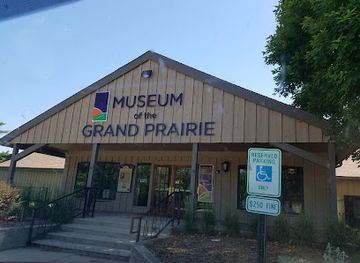
Museum of the Grand Prairie
Discover the cultural and natural history of central Illinois at the Museum of the Grand Prairie, where stories of the past come to life.
-
Museum
Jefferson County Historical Village
Explore the vibrant history of Jefferson County at the Historical Village, where stories from the past come to life in a charming, interactive setting.


Best landmarks in Grand Prairie
The most recognisable built landmarks of Grand Prairie are concentrated in Champaign-Urbana, especially on the University of Illinois Urbana-Champaign campus. Altgeld Hall, with its historic collegiate architecture, and the University’s older campus buildings reflect the institution’s nineteenth-century origins and its long connection with engineering, agriculture and research. The Morrow Plots, established in 1876, are an important scientific and agricultural landmark: the experimental fields illustrate the university’s role in studying long-term soil and crop management. In Urbana, the historic downtown and courthouse area provide a civic counterpoint to the campus, while Champaign’s older commercial streets and railway influence reveal the growth of a nineteenth-century prairie town. Outside the university cities, Allerton Park’s manor house, formal gardens and wooded estate near Monticello form a distinctive cultural landscape rather than a conventional urban monument. The most characteristic natural landmarks are less dramatic but equally central to regional identity: restored tallgrass prairie, wetland margins, wooded creeks and the wide, uninterrupted agricultural horizon. Together these places express the region’s essential themes of science, settlement, cultivation and ecological recovery.
-
Historical landmark
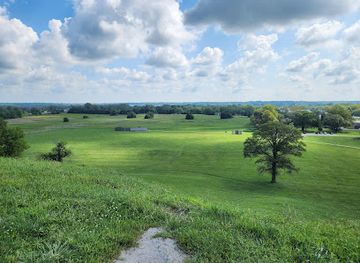
Cahokia Mounds State Historic Site
Explore the monumental earthworks of Cahokia Mounds, a pre-Columbian metropolis and UNESCO World Heritage Site near St. Louis.
-
Historical landmark
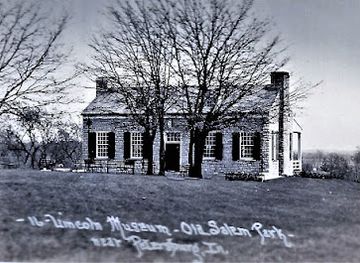
Lincoln's New Salem State Historic Site
Walk the streets of New Salem, where Abraham Lincoln grew into the leader he was destined to be.
-
Historical place
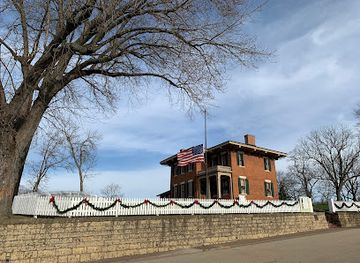
U.S. Grant Home State Historic Site
Step back in time at Ulysses S. Grant's meticulously preserved Galena home, offering a glimpse into the life of a Civil War hero and U.S. President.
-
History museum
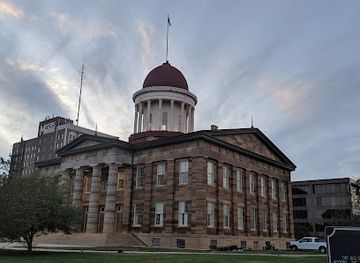
Old State Capitol State Historic Site
Walk in Lincoln's footsteps at Illinois' Old State Capitol, where history and political legacy come alive in downtown Springfield.
Explore Grand Prairie on the map
Plan your trip on one map. See where the top cities, national parks and sights are, and book hotels and experiences in a few clicks.
Best hotels in Grand Prairie
Best restaurants in Grand Prairie
Dining in Grand Prairie centres on Champaign-Urbana, where the University of Illinois community supports a broad mix of American, international and contemporary restaurants, cafés, bakeries and casual food venues. The area’s international population gives the university districts more culinary variety than many similarly sized central Illinois communities. Local menus also reflect the wider agricultural economy through seasonal sweetcorn, pumpkins, apples, tomatoes and other Midwestern produce, while rural towns tend to offer diners’ restaurants, traditional cafés, taverns and family-run eateries. Farmers’ markets and farm stands are useful places to encounter locally grown produce, baked goods and prepared foods, although availability changes with the season. Illinois-style comfort food, burgers, barbecue, sandwiches and regional Midwestern baking are more characteristic than a single dish exclusive to Grand Prairie. Craft beer and locally focused drinks appear in the larger towns, while coffee shops and casual dining are particularly prominent around campus. Reservations may be sensible when university performances, sporting fixtures or graduation periods bring unusually large crowds to Champaign-Urbana.
-
American
Cracker Barrel Old Country Store
Discover the charm of Southern dining at Cracker Barrel Old Country Store - where comfort food meets heartfelt hospitality.
-
Grill
Theo's Grill & Bar
Experience delightful grilling and cozy dining at Theo's Grill & Bar in Grand Prairie - where every meal feels like home.
-
Steak
LongHorn Steakhouse
Experience the rich flavors of expertly grilled steaks at LongHorn Steakhouse in Peoria - a family-friendly dining destination offering traditional American cuisine.
-
Barbecue
Bandana's Bar-B-Q Mt. Vernon IL
Discover mouthwatering barbecue delights at Bandana's Bar-B-Q in Mt. Vernon IL – perfect for families and catering needs!


Best bars in Grand Prairie
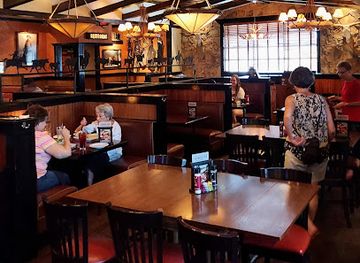
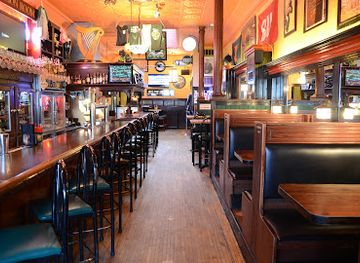
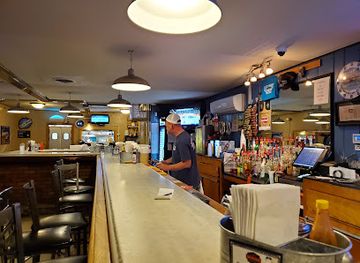
Evening life is concentrated in Champaign-Urbana, where the university population supports traditional pubs, bars, breweries, cocktail venues, live music, comedy, cinema and performance spaces. Campustown and the adjoining commercial districts are the principal places for a denser selection of late-opening venues, while downtown Champaign has a broader mix of restaurants, bars, arts events and independent establishments. Nightlife in the surrounding rural communities is quieter and generally centres on local taverns, restaurants, community events and occasional live performances rather than a large club scene. Sporting fixtures, theatre programmes and university calendars can shape busy evenings, so arrangements vary considerably during academic breaks and summer. Visitors should check current entry, age-identification and transport arrangements, particularly when planning a late return to a rural accommodation. Breweries and drinks-focused venues can be part of the regional scene, but the area’s evening culture is not limited to alcohol: performances, lectures, independent cinemas and campus arts programmes offer important alternatives.
-
Steak
LongHorn Steakhouse
Indulge in mouthwatering steaks and traditional American dishes at LongHorn Steakhouse in Peoria, Illinois, where flavor meets comfort.
-
Irish pub
Ulrich's Rebellion Room
Discover the essence of Irish hospitality at Ulrich's Rebellion Room, Peoria's cozy pub offering delicious food, drinks, and vibrant atmosphere.
-
Grill
Last Chance Bar & Grill
Experience the vibrant atmosphere and delicious grill favorites at Last Chance Bar & Grill, a culinary gem in Peoria, Illinois.
-
Grill
Fox Pub and Cafe
Experience the best of Peoria dining at The Fox Pub and Cafe, where delicious grill dishes meet a vibrant bar atmosphere.
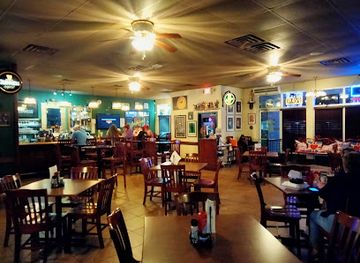
Best nightclubs in Grand Prairie
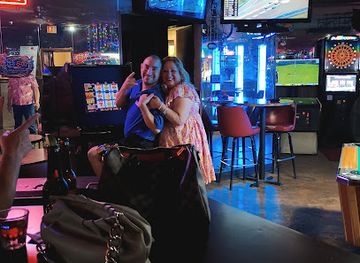
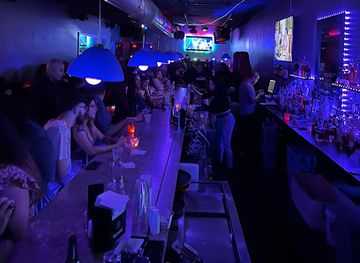
Evening life is concentrated in Champaign-Urbana, where the university population supports traditional pubs, bars, breweries, cocktail venues, live music, comedy, cinema and performance spaces. Campustown and the adjoining commercial districts are the principal places for a denser selection of late-opening venues, while downtown Champaign has a broader mix of restaurants, bars, arts events and independent establishments. Nightlife in the surrounding rural communities is quieter and generally centres on local taverns, restaurants, community events and occasional live performances rather than a large club scene. Sporting fixtures, theatre programmes and university calendars can shape busy evenings, so arrangements vary considerably during academic breaks and summer. Visitors should check current entry, age-identification and transport arrangements, particularly when planning a late return to a rural accommodation. Breweries and drinks-focused venues can be part of the regional scene, but the area’s evening culture is not limited to alcohol: performances, lectures, independent cinemas and campus arts programmes offer important alternatives.
-
Bar
Jack's Pour House
Experience the vibrant nightlife at Jack's Pour House in Grand Prairie, TX, where karaoke, pool, and delicious drinks await you for an unforgettable evening.
-
Lounge
Sensation Lounge
Experience the vibrant nightlife of Grand Prairie at Sensation Lounge, where great drinks and lively music create the perfect evening atmosphere.
-
Bar
TWISTED SISTERS BAR
Discover the charm of Twisted Sisters Bar in Kell, Illinois – the perfect spot for drinks, karaoke, and unforgettable nights.
-
Bar
Studio 63
Discover the vibrant nightlife at Studio 63, where great drinks, music, and a lively atmosphere await you in Summit, Illinois.


Best shops in Grand Prairie
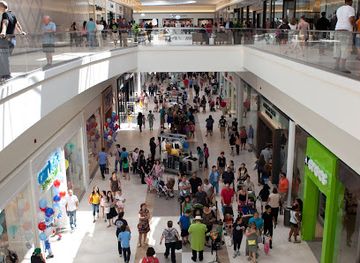
Shopping in Grand Prairie is centred on Champaign-Urbana, where downtown Champaign, Campustown and Urbana’s local commercial streets provide independent shops, bookshops, galleries, cafés, clothing retailers and university-related stores. The student population gives the urban districts a more varied and contemporary retail character than the surrounding rural communities. Farmers’ markets and seasonal markets are useful for Illinois produce, baked goods, preserves, flowers and prepared foods, while farm stands appear at different times of year along rural roads. In smaller towns, shopping is more likely to involve a traditional main street, antiques, practical services, second-hand shops and locally made gifts than a large retail destination. University bookshops and museum shops can provide regional or academic gifts, including prairie, agricultural and Illinois-themed items. Visitors seeking distinctive purchases should look for local art, small-batch food products, books about prairie ecology and central Illinois history, and craft work by regional makers. Retail arrangements and market schedules vary, so confirm current locations and dates before making a special journey into the countryside.
-
Shopping mall
Fashion Outlets of Chicago
Explore top designer brands at unbeatable prices in the heart of Chicago's Fashion Outlets, a shopping experience like no other.
-
Shopping mall
Northwoods Mall
Explore Northwoods Mall in Peoria for an unforgettable shopping experience with diverse stores and delightful dining options.
-
Shopping mall
The Shoppes at Grand Prairie
Discover the vibrant shopping experience at The Shoppes at Grand Prairie, where retail therapy meets dining delights and family fun in Peoria, Illinois.
-
Shopping mall
Westlake Shopping Center
Discover the best shopping and dining experiences at Westlake Shopping Center in Peoria, Illinois, where variety meets convenience.
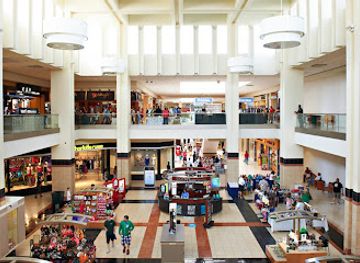


Get your free copy of our complete guide to Grand Prairie, delivered straight to you.
Everything on this page, from attractions and restaurants to essentials and local phrases, in one PDF you can read offline, print or share.
Already have an account? Sign in
Your Grand Prairie guide is ready.
We'll send it to · Not you? Sign out

Getting your guide ready…
We are putting together a fresh copy of the Grand Prairie guide. This can take up to a minute.
This can take a few moments. If your browser asks, choose Allow so the download can start. You'll find the guide in your Downloads folder.
Nothing happened? Download it again
Sorry, the guide is taking longer than usual. Please try again in a minute, or get it by email instead.
Grand Prairie essentials
Currency and Payment
Safety
Emergency Situations
Do's and Don'ts
Local Tips
From Eve
Local phrases worth knowing
You don't need to get them perfect. A few words go a long way, and locals appreciate the effort.
Basics
| English | Local | Say it |
|---|---|---|
| Hello | Hey | [hey] |
| Goodbye | See ya | [see yah] |
| Yes | Yeah | [yeh] |
| No | Nope | [nohp] |
| Please/You're welcome | Sure thing | [shoore thing] |
| Thank you | Thanks | [thangs] |
| Excuse me/Sorry | Sorry 'bout that | [saw-ree 'bout that] |
| How are you? | How ya doin'? | [how yah doin'?] |
| Fine. And you? | I’m good. You? | [I'm good. You?] |
| Do you speak English? | You speakin' English? | [you speakin' English?] |
| I don't understand | I don’t get it | [I don't get it] |
Eating & Drinking
| English | Local | Say it |
|---|---|---|
| I'd like to see the menu, please | Can I see the menu? | [can I see the menu?] |
| I don't eat meat | I'm not eatin' meat | [I'm not eatin' meat] |
| Cheers! | Cheers! | [cheers] |
| I would like to pay, please | Can I get the check? | [can I get the check?] |
Emergencies
| English | Local | Say it |
|---|---|---|
| Help! | Help! | [help] |
| Go away! | Get lost! | [get lost] |
| Call the Police! | Call the cops! | [call the cops] |
| Call a doctor! | Get a doctor! | [get a doctor] |
| I'm lost | I’m lost | [I'm lost] |
| I'm ill | I’m not feelin' good | [I'm not feelin' good] |
Shopping
| English | Local | Say it |
|---|---|---|
| I'd like to buy... | I wanna buy... | [I wanna buy...] |
| I'm just looking | Just lookin' | [just lookin'] |
| How much is it? | What’s the price? | [what's the price?] |
| That's too expensive | That’s way too pricey | [that's way too pricey] |
| Can you lower the price? | Can ya drop the price? | [can yah drop the price?] |
Time & Numbers
| English | Local | Say it |
|---|---|---|
| What time is it? | What time is it? | [what time is it?] |
| It's one o'clock | It’s one o’clock | [it's one o'clock] |
| Half past (10) | Half past ten | [half past ten] |
| Morning | Morning | [morning] |
| Afternoon | Afternoon | [afternoon] |
| Evening | Evening | [evening] |
| Yesterday | Yesterday | [yesterday] |
| Today | Today | [today] |
| Tomorrow | Tomorrow | [tomorrow] |
| 1 | One | [one] |
| 2 | Two | [two] |
| 3 | Three | [three] |
| 4 | Four | [four] |
| 5 | Five | [five] |
| 6 | Six | [six] |
| 7 | Seven | [seven] |
| 8 | Eight | [eight] |
| 9 | Nine | [nine] |
| 10 | Ten | [ten] |
Transport & Directions
| English | Local | Say it |
|---|---|---|
| Where's a/the...? | Where’s the...? | [where's the...?] |
| What's the address? | What’s the address? | [what's the address?] |
| Can you show me (on the map)? | Can you show me on the map? | [can you show me on the map?] |
| When's the next (bus)? | When's the next bus? | [when's the next bus?] |
| A ticket (to ....) | One ticket to... | [one ticket to...] |
History of Grand Prairie
Indigenous Prairie Landscapes Before American Settlement
The Grand Prairie landscape was shaped by Native peoples for thousands of years before the arrival of large-scale American settlement. Indigenous communities, including peoples associated with the Illiniwek confederation and later Kickapoo, Potawatomi and other nations, travelled through the prairie, hunted, farmed and managed resources across the central Illinois interior. The prairie was not an empty wilderness: seasonal movement, fire and established trails influenced its ecology. Much of this history is now interpreted through regional museums, archaeological evidence and surviving waterway and settlement patterns.
Treaties and the Opening of Central Illinois
During the early nineteenth century, treaties and forced removals transferred Indigenous lands to the United States and enabled expanding American settlement in Illinois. Surveyors divided the prairie into regular parcels, while settlers established farms, mills and small communities. The deceptively open landscape was difficult to cultivate before improved ploughs and drainage, but its deep soils soon became a major agricultural asset. This transformation brought lasting economic growth while also causing the displacement of Native communities and the near disappearance of the original tallgrass ecosystem.
Railways, Towns and Agricultural Expansion
Railways were central to the development of the Grand Prairie during the nineteenth century. Lines connected farming districts with grain markets and encouraged the growth of towns such as Champaign, Urbana, Monticello and Decatur in the wider central Illinois landscape. Rail access accelerated the movement of crops, livestock, machinery and people, while grain elevators and commercial streets became familiar features of prairie settlements. The railway network also helped establish Illinois as one of the country’s major agricultural states and remains visible in the region’s town plans and transport corridors.
The University of Illinois and a New Intellectual Economy
The founding of the Illinois Industrial University in 1867, later the University of Illinois Urbana-Champaign, added a major educational and scientific institution to the Grand Prairie landscape. Its work in agriculture, engineering and related sciences was closely connected to the needs of a farming state. Over time, the university became an international research centre and a major employer, drawing students and scholars from around the world. Its campus architecture, laboratories, museums, public performances and sporting traditions give Champaign-Urbana a cultural importance extending well beyond the surrounding rural districts.
Mechanised Farming and Prairie Loss
The nineteenth and twentieth centuries brought drainage, mechanised cultivation, chemical agriculture and increasingly large-scale farming to central Illinois. These changes made the prairie exceptionally productive but reduced native grassland to a small fraction of its former extent. Wetlands and wooded stream margins were also altered, contributing to habitat loss and changes in water management. The modern Grand Prairie is therefore both an agricultural powerhouse and a landscape of ecological restoration, with preserves, reconstructed prairie and conservation projects seeking to recover some of the region’s original biodiversity.
Conservation, Research and Contemporary Regional Identity
In recent decades, conservation groups, public agencies, universities and local communities have placed greater emphasis on restoring native prairie, protecting wetlands and interpreting agricultural history. Research in ecology, crop science and environmental management has made the Grand Prairie an important setting for studying the relationship between productive farming and habitat conservation. Contemporary identity is consequently divided between cultivated openness and renewed appreciation for the ecosystems that preceded it. Museums, university programmes, restored landscapes and community events continue to explain this evolving relationship.
Neighbouring regions of Grand Prairie
The closest regions to Grand Prairie, if you have time for more than one.
-

-

-

-
-


Swipe for more regions
Explore more

Explore more of Illinois
Discover Illinois: From Chicago's iconic skyline to the tranquil beauty of its countryside, experience the diverse allure of the Prairie State.
Explore Illinois