

Little Egypt, Illinois Travel Guide
Explore the natural beauty, historical depth, and cultural richness of Little Egypt in Illinois – a hidden gem in the heart of America.
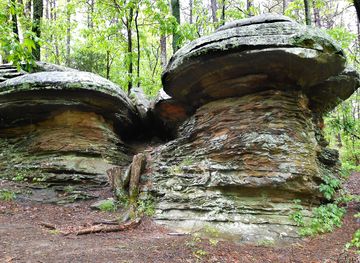
Nestled in the southernmost part of Illinois, Little Egypt offers a unique blend of natural beauty, historical intrigue, and cultural richness. This enchanting region, also known as Southern Illinois, is dotted with charming small towns, lush forests, and scenic rivers, making it a perfect getaway for nature enthusiasts and history buffs alike. One of the key highlights of Little Egypt is the Shawnee National Forest, a sprawling expanse of verdant landscapes, rugged cliffs, and picturesque trails. Here, visitors can explore the Garden of the Gods, a stunning natural rock formation that provides breathtaking views and photo opportunities. The forest is also home to numerous wildlife species, making it a haven for bird watchers and animal lovers. In addition to its natural wonders, Little Egypt is steeped in history. The town of Cairo, situated at the confluence of the Ohio and Mississippi Rivers, boasts a rich historical heritage. Visitors can explore historic sites such as Fort Defiance Park, which played a significant role during the Civil War, and the Cairo Custom House Museum, which offers a glimpse into the past with its fascinating exhibits. Little Egypt's cultural scene is equally vibrant. The region hosts various festivals and events throughout the year, celebrating everything from local music and food to arts and crafts. The annual Southern Illinois Irish Festival and the Shawnee Hills Wine Trail are particularly popular, offering visitors a chance to indulge in local flavors and traditions.

Know before you go
Hi, I'm Eve. Here are a few practical things to know before exploring Little Egypt.
- Visit the Garden of the Gods early in the morning to avoid crowds and capture stunning sunrise photos.
- Check local event calendars for festivals and fairs to experience the region's vibrant culture.
- Pack comfortable hiking shoes for exploring the trails in Shawnee National Forest.
- Stop by the local wineries on the Shawnee Hills Wine Trail for a taste of regional wines.
- Bring binoculars for bird watching in the diverse habitats of Little Egypt.
Destinations in Little Egypt
Resorts, valleys and scenic spots worth a trip of their own.

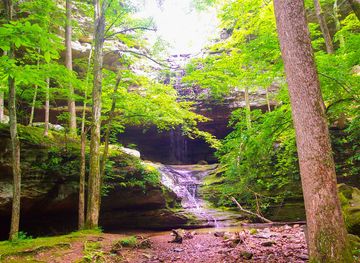


Explore Little Egypt: Things to Do, Places to Eat, Hotels & More
Handpicked recommendations for top attractions, local dining, accommodations, and more

Top Attractions & Sightseeing in Little Egypt
Top-rated picks
Best Attractions

Garden of the Gods
Experience the breathtaking beauty of Garden of the Gods, a stunning hiking area in Illinois filled with unique rock formations and panoramic views.

Giant City State Park
Explore the breathtaking beauty of Giant City State Park in Illinois, where nature lovers can hike, picnic, and enjoy serene landscapes.

Ferne Clyffe State Park
Discover the enchanting landscapes and diverse wildlife of Ferne Clyffe State Park, a tranquil retreat in Illinois perfect for outdoor enthusiasts and nature lovers.

Jeremy "Boo" Rochman Memorial Park
Discover the enchanting Jeremy Boo Rochman Memorial Park, where whimsical sculptures and serene landscapes create the perfect family-friendly destination in Carbondale, Illinois.

Best landmarks in Little Egypt
Top-rated picks
Best Landmarks

The Art Institute of Chicago
Explore masterpieces spanning centuries and cultures at Chicago's iconic Art Institute, home to world-renowned Impressionist and modern art collections.

The Museum Campus
Explore world-class museums, stunning lakefront views, and iconic architecture at Chicago's Museum Campus, a unique cultural and recreational destination.

Field Museum
Discover 40 million specimens & artifacts, from dinosaurs to ancient Egypt, at Chicago's iconic Field Museum. A world of wonder awaits!

Starved Rock State Park
Explore stunning canyons, hike scenic trails, and discover the rich history of Starved Rock State Park along the Illinois River.

Best restaurants in Little Egypt
Top-rated picks
Best Restaurants

Giant City State Park Lodge & Restaurant
Experience the perfect blend of outdoor adventure and American cuisine at Giant City State Park Lodge & Restaurant in Southern Illinois.

Red Lobster
Experience the best seafood dining at Red Lobster Marion - where fresh flavors meet family-friendly service.

O'Charley's Restaurant & Bar
Experience classic American cuisine with a modern twist at O'Charley's Restaurant & Bar in Marion - perfect for families and friends.

Bennie's Italian Foods
Experience authentic Italian flavors at Bennie's Italian Foods in Marion - where every meal is a celebration of culinary tradition.

Best bars in Little Egypt
Top-rated picks
Best Bars

Logan's Roadhouse
Experience the heart of American dining at Logan's Roadhouse in Marion, Illinois, where great food and good times await.

O'Charley's Restaurant & Bar
Discover O'Charley's Restaurant & Bar in Marion, IL, where American comfort food meets a vibrant bar scene, perfect for every traveler.

20's Hideout Steakhouse
Experience premium steaks and fresh seafood at 20's Hideout Steakhouse in Marion, Illinois, where every meal is a celebration of flavor.

Applebee's Grill + Bar
Discover a vibrant dining spot in Marion, Illinois with Applebee's Grill + Bar, serving up classic American cuisine in a family-friendly atmosphere.

Best nightclubs in Little Egypt
Top-rated picks
Best Nightclubs

Logan's Roadhouse
Experience the authentic taste of America at Logan's Roadhouse in Marion, where great food and a friendly atmosphere await.

O'Charley's Restaurant & Bar
Experience the best of American cuisine at O'Charley's Restaurant & Bar, where flavor meets a welcoming atmosphere in Marion, IL.

The Hangar 9
Dive into the vibrant nightlife at The Hangar 9, Carbondale's premier bar and live music venue, where every night is filled with energy and entertainment.

Elks Lodge #800
Discover the warmth of community at Elks Lodge #800 in Marion, Illinois, where camaraderie and local culture come together in a welcoming atmosphere.

Best shops in Little Egypt
Top-rated picks
Best Shops

Garden of the Gods Outpost
Explore the Garden of the Gods Outpost: a unique blend of souvenirs, fast food, and natural beauty in Karbers Ridge, Illinois.

Warehouse Antique Mall Marion IL
Discover unique antiques and vintage treasures at the Warehouse Antique Mall in Marion, IL - a must-visit for every treasure hunter!

Road Ranger
Experience Road Ranger in Marion, Illinois: A 24/7 truck stop offering fuel, snacks, and community for every traveler.

Grassy General Store
Explore Grassy General Store in Carbondale, IL, your go-to destination for local snacks, beverages, and unique souvenirs that celebrate Southern Illinois culture.

Explore Little Egypt on the Map
A handpicked selection of must-see spots in Little Egypt, mapped for you.
Little Egypt Essentials
-
Little Egypt is located in the southernmost region of Illinois, United States. The nearest major airports are Lambert-St. Louis International Airport (STL) in Missouri and Nashville International Airport (BNA) in Tennessee. From these airports, you can rent a car or take a shuttle service to reach Little Egypt, which is approximately a 2 to 3-hour drive. There are also Amtrak train services that stop in Carbondale, a central city in Little Egypt, making it accessible by rail.
-
While Little Egypt is best explored by car due to its vast and spread-out attractions, there are other transportation options available. Car rental services are available at major airports and in larger towns like Carbondale and Marion. Public buses operate within and between towns, though schedules may be limited. Biking is also popular, especially for exploring natural areas like Shawnee National Forest. Taxis and ride-sharing services like Uber and Lyft are available in larger towns.
-
The official currency is the United States Dollar (USD). Credit and debit cards are widely accepted in hotels, restaurants, and shops. ATMs are available in most towns and cities. It is advisable to carry some cash, especially when visiting smaller towns and rural areas where card acceptance may be limited.
-
Little Egypt is generally a safe destination for tourists. However, as with any travel, it’s important to exercise standard precautions. Avoid walking alone at night in unfamiliar areas and keep an eye on your belongings in crowded places. While there are no specific high-crime areas targeting tourists, staying vigilant and aware of your surroundings is always recommended.
-
In case of emergency, dial 911 for immediate assistance. Hospitals and medical facilities are available in larger towns like Carbondale and Marion. It is recommended to have travel insurance that covers medical emergencies. For minor health issues, pharmacies are available in most towns where you can purchase over-the-counter medications.
-
Fashion: Do dress casually and comfortably, especially for outdoor activities. Avoid overly revealing clothing. Religion: Do respect local customs and traditions, especially when visiting religious sites. Public Transport: Do be respectful and courteous to other passengers. Tipping the driver is appreciated but not mandatory. Greetings: Do greet people with a friendly 'hello' or 'hi'. A handshake is common in more formal settings. Eating & Drinking: Do try local specialties like barbecue and southern-style dishes. Don’t be afraid to ask for recommendations from locals.
-
To experience Little Egypt like a local, visit the farmers' markets where you can buy fresh local produce and handmade goods. Engage with locals who are often friendly and willing to share stories about the region's history and culture. Don’t miss visiting Giant City State Park, Shawnee National Forest, and the historic town of Cairo. For a unique experience, take a wine tour along the Shawnee Hills Wine Trail, which offers tastings and beautiful vineyard views.
When is the best time to visit Little Egypt?
Useful Local Phrases for Little Egypt
You don't need to speak the language perfectly. Even learning a few simple words can make conversations warmer—and locals usually appreciate the effort.
— Eve

Here are the phrases I use most often in Little Egypt. Try a few—you'll be surprised how far they go! 😊
❤️
-
- HelloHowdy
[Ha-dee] - GoodbyeSee ya
[See yah] - YesYep
[Yep] - NoNah
[Nah] - Please/You're welcomeNo problem
[No prob-lem] - Thank youThanks a lot
[Thanks a lot] - Excuse me/SorryPardon me
[Par-don me] - How are you?How ya doin'?
[How ya doin'?] - Fine. And you?Good. And you?
[Good. And you?] - Do you speak English?You speakin' English?
[You speakin' English?] - I don't understandI ain't gettin' it
[I ain't gettin' it]
- HelloHowdy
-
- I'd like to see the menu, pleaseCan I see the menu?
[Can I see the menu?] - I don't eat meatI ain't eatin' meat
[I ain't eatin' meat] - Cheers!Cheers!
[Cheers!] - I would like to pay, pleaseCan I get the check?
[Can I get the check?]
- I'd like to see the menu, pleaseCan I see the menu?
-
- Help!Help!
[Help!] - Go away!Get lost!
[Get lost!] - Call the Police!Call the cops!
[Call the cops!] - Call a doctor!Get a doctor!
[Get a doctor!] - I'm lostI'm turned around
[I'm turned around] - I'm illI'm not feelin' well
[I'm not feelin' well]
- Help!Help!
-
- I'd like to buy...I wanna buy...
[I wanna buy...] - I'm just lookingJust browsin'
[Just browsin'] - How much is it?What's the price?
[What's the price?] - That's too expensiveThat costs too much
[That costs too much] - Can you lower the price?Can ya give me a deal?
[Can ya give me a deal?]
- I'd like to buy...I wanna buy...
-
- What time is it?What time ya got?
[What time ya got?] - It's one o'clockIt's one
[It's one] - Half past (10)Half past ten
[Half past ten] - MorningMornin'
[Mornin'] - AfternoonAfternoon
[Afternoon] - EveningEvenin'
[Evenin'] - YesterdayYest'day
[Yest'day] - TodayToday
[Today] - TomorrowTom'row
[Tom'row] - 1One
[One] - 2Two
[Two] - 3Three
[Three] - 4Four
[Four] - 5Five
[Five] - 6Six
[Six] - 7Seven
[Seven] - 8Eight
[Eight] - 9Nine
[Nine] - 10Ten
[Ten]
- What time is it?What time ya got?
-
- Where's a/the...?Where's the...?
[Where's the...?] - What's the address?What's the address?
[What's the address?] - Can you show me (on the map)?Can you show me on the map?
[Can you show me on the map?] - When's the next (bus)?When's the next bus?
[When's the next bus?] - A ticket (to ....)A ticket to...
[A ticket to...]
- Where's a/the...?Where's the...?
History of Little Egypt
-
The nickname 'Little Egypt' for Southern Illinois can be traced back to the early 19th century. The moniker was popularized during the 1830s when poor harvests in northern Illinois led settlers to travel south to purchase grain. The fertile land of Southern Illinois, particularly around the town of Cairo, reminded the settlers of the Nile Delta region of Egypt, hence the name 'Little Egypt'.
-
Cairo, Illinois, located at the confluence of the Ohio and Mississippi Rivers, played a crucial role during the Civil War. It was a strategic supply base and staging area for Union forces under General Ulysses S. Grant. The city’s location made it a vital transportation hub, earning it the nickname 'The Gateway to the South'.
-
On March 18, 1925, Little Egypt was struck by one of the deadliest tornadoes in U.S. history. Known as the Great Tri-State Tornado, it carved a path of destruction through Missouri, Illinois, and Indiana. In Illinois alone, the tornado claimed the lives of 613 people, with the town of Murphysboro being one of the hardest-hit areas.
-
The Egyptian influence in Little Egypt is not just in name but also in architecture. The town of Cairo boasts several examples of Egyptian Revival architecture, such as the Cairo Custom House. Built in the mid-19th century, this architectural style pays homage to ancient Egyptian designs, reflecting the area's cultural ties to its namesake.
-
The Shawnee National Forest, covering much of Southern Illinois, is a significant cultural and natural landmark in Little Egypt. Established in 1939, it offers a glimpse into the region's ecological diversity, featuring unique geological formations such as the Garden of the Gods. The forest has been a gathering place for Native American tribes and later settlers, contributing to the cultural tapestry of the area.
-
Agriculture has always been at the heart of Little Egypt's economy and culture. The region's fertile soil supports a variety of crops, including corn, soybeans, and wheat. Historically, Little Egypt was also known for its orchards, particularly apples and peaches, which still play a role in local festivals and traditions today.
-
In recent decades, efforts have been made to preserve the unique history and culture of Little Egypt. Numerous historical landmarks and museums, such as the General John A. Logan Museum in Murphysboro and the Cairo Historical Association, offer visitors a chance to explore the rich heritage of the region. These preservation efforts have also boosted tourism, making Little Egypt a fascinating destination for history buffs and culture enthusiasts alike.
Neighbouring Regions of Little Egypt
The closest regions to Little Egypt, if you have time for more than one.




Your all‑in‑one travel companion app
Explore expert travel guides, compare and book tours, experiences, hotels, and more—all from the palm of your hand. Download now for seamless trip planning wherever your wanderlust takes you.


Explore More of Illinois

Looking beyond Little Egypt? Discover Illinois for broader travel guides, local hot-spots, and regional highlights.
Explore IllinoisLittle Egypt in Photos
Browse through our photo collection highlighting the charm and character of the destination.


Discover the Enigmatic Little Egypt in Illinois
Nestled in the southernmost part of Illinois, Little Egypt offers a unique blend of natural beauty, historical intrigue, and cultural richness. This enchanting region, also known as Southern Illinois, is dotted with charming small towns, lush forests, and scenic rivers, making it a perfect getaway for nature enthusiasts and history buffs alike. One of the key highlights of Little Egypt is the Shawnee National Forest, a sprawling expanse of verdant landscapes, rugged cliffs, and picturesque trails. Here, visitors can explore the Garden of the Gods, a stunning natural rock formation that provides breathtaking views and photo opportunities. The forest is also home to numerous wildlife species, making it a haven for bird watchers and animal lovers. In addition to its natural wonders, Little Egypt is steeped in history. The town of Cairo, situated at the confluence of the Ohio and Mississippi Rivers, boasts a rich historical heritage. Visitors can explore historic sites such as Fort Defiance Park, which played a significant role during the Civil War, and the Cairo Custom House Museum, which offers a glimpse into the past with its fascinating exhibits. Little Egypt's cultural scene is equally vibrant. The region hosts various festivals and events throughout the year, celebrating everything from local music and food to arts and crafts. The annual Southern Illinois Irish Festival and the Shawnee Hills Wine Trail are particularly popular, offering visitors a chance to indulge in local flavors and traditions.