

Free East Kalimantan Travel Guide & Mobile App
Explore East Kalimantan with free travel guides. Discover regional history, expert tips, proposed trips, and audio guides on web or mobile app.


Explore East Kalimantan for rainforest, Mahakam River heritage, Balikpapan, Derawan’s reefs and the evolving landscape of Nusantara.
Read more about East Kalimantan
When is the best time to visit East Kalimantan?
Best: January–February, August · 30°C| Month | High (°C) | Rainfall (mm) |
|---|---|---|
| January (best) | 30 | 200 |
| February (best) | 30 | 190 |
| March | 30 | 210 |
| April | 30 | 220 |
| May | 30 | 230 |
| June | 30 | 220 |
| July | 30 | 210 |
| August (best) | 30 | 200 |
| September | 30 | 210 |
| October | 30 | 220 |
| November | 30 | 230 |
| December | 30 | 220 |
Getting to and around East Kalimantan
How to get there
Transportation
Top city travel guides in East Kalimantan
The cities of East Kalimantan, and the easiest places to base yourself.

Swipe for more cities
Destinations in East Kalimantan
Resorts, valleys and scenic spots worth a trip of their own.

Swipe for more destinations
Best attractions in East Kalimantan
East Kalimantan’s attractions range from urban heritage and river culture to rainforest, limestone landscapes and coral islands. Balikpapan is a practical base for mangrove excursions, coastal viewpoints and conservation sites, while nearby Bukit Bangkirai offers access to lowland forest and elevated canopy walks where conditions permit. Samarinda and Tenggarong introduce the Mahakam River world through museums, markets, craft traditions and royal history. Further inland, Muara Kaman connects visitors with the province’s earliest known written history. Kutai National Park provides a setting for guided rainforest travel and wildlife observation, although sightings are never guaranteed and access requires planning. In the north-east, the Derawan Islands and neighbouring reefs support snorkelling, diving and sea-turtle conservation experiences. The Sangkulirang-Mangkalihat karst region contains caves and prehistoric rock art, but many sites are remote and should be visited with authorised local guides. Across the province, river journeys, mangrove habitats, birdwatching and village visits offer a slower counterpoint to the industrial and rapidly developing urban corridors.
-
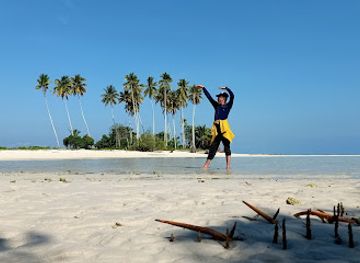
Beach
Takisung Beach
Explore Takisung Beach, a hidden paradise in South Kalimantan with golden sands, clear waters, and amazing sunsets.
-
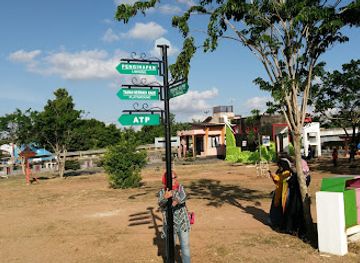
Tourist attraction
Manimbora Beach
Experience the serene beauty of Manimbora Beach, a hidden paradise in East Kalimantan with pristine sands and crystal-clear waters.
Best landmarks in East Kalimantan
The Mahakam River is East Kalimantan’s defining geographical landmark, broadening around Samarinda and continuing through a basin that has supported settlement, trade and political power for centuries. In Tenggarong, the former Kutai Kartanegara royal environment and its museums represent the province’s later courtly history, while Muara Kaman’s yupa inscriptions mark one of the earliest known centres of written state tradition in Indonesia. Balikpapan’s coastline and harbour remain prominent symbols of the city’s petroleum and wartime history, even as modern development changes the waterfront. In the south-west, the forested canopy structures and giant trees of Bukit Bangkirai express the ecological character of the inland landscape. The Derawan archipelago provides a different kind of landmark: low coral islands, reef-fringed waters and beaches associated with sea turtles. Around the new capital area in North Penajam Paser, newly planned civic and infrastructure landscapes are emerging, but Nusantara should be understood as a developing national project rather than a historic landmark city.
-
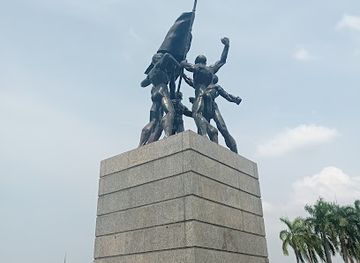
Monument
Monas
Experience the grandeur of Monas, Jakarta's iconic National Monument, a tribute to Indonesia's independence, offering history, culture, and stunning city views.
-
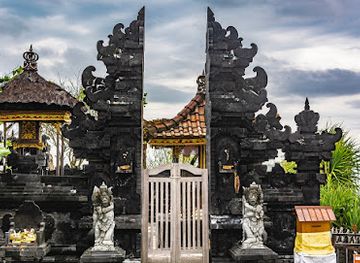
Scenic spot
Tanah Lot
Discover the breathtaking beauty and cultural significance of Tanah Lot, Bali's iconic sea temple, perfect for unforgettable sunset experiences and serene landscapes.
-
Tourist attraction
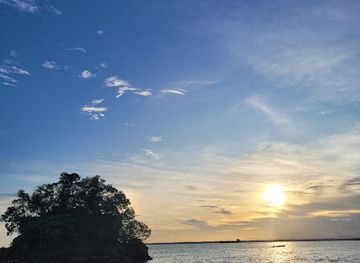
Melawai Beach
Experience the serene beauty of Melawai Beach in Balikpapan, East Kalimantan, where golden sands meet vibrant sunsets and local culture.
-
Recreation center
Khatulistiwa Park
Discover the magic of the equator at Khatulistiwa Park in Pontianak, a unique destination blending nature, culture, and history.
Explore East Kalimantan on the map
Plan your trip on one map. See where the top cities, national parks and sights are, and book hotels and experiences in a few clicks.
Best hotels in East Kalimantan
Best restaurants in East Kalimantan
East Kalimantan’s dining reflects its rivers, coastline, forests and connections with other parts of Indonesia. Balikpapan is the easiest place to find broad regional choice, including seafood, grilled fish, prawns, shellfish and dishes influenced by Bugis, Banjar, Javanese and other communities. Samarinda is associated with local favourites such as nasi kuning, a turmeric-coloured rice dish commonly served with savoury accompaniments, while river fish and freshwater ingredients appear widely in Mahakam communities. Tenggarong and Kutai Kartanegara offer opportunities to encounter Kutai culinary traditions, though recipes and names may vary between households and restaurants. Markets are useful for tropical fruit, snacks, rice cakes and regional ingredients, and coastal settlements often specialise in simply prepared seafood. Urban restaurants range from modest warungs and cafés to contemporary Indonesian dining, while remote islands and forest areas have more limited choice, making it sensible to confirm meals and supplies in advance.
-
Seafood
Rumah Makan Pondok Borneo
Discover authentic Indonesian seafood at Rumah Makan Pondok Borneo in Samarinda – a culinary gem offering fresh flavors and vibrant dining experiences.
-
Seafood
Bondy Bakery & Restaurant
Experience the rich flavors of Indonesia at Bondy Bakery & Restaurant - a culinary haven in Balikpapan featuring seafood delights and delectable pastries.
-
Restaurant
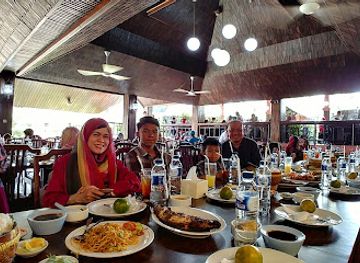
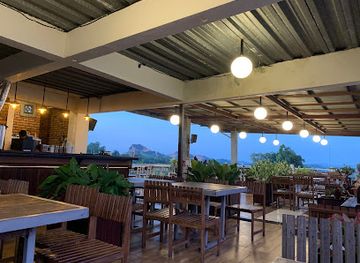
D'puncak Cafe & Resto
Experience exquisite local cuisine with stunning river views at D'puncak Cafe & Resto in Samarinda.
-
Fast Food
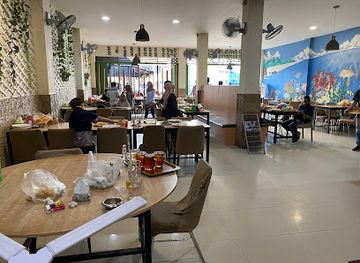
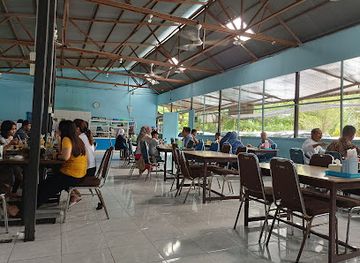
DEPOT KEDIRI SAMARINDA ( VORVO )
Discover Depot Kediri Samarinda: A Fast Food Haven Blending Local Flavors and Cozy Diner Vibes in East Kalimantan.
Best bars in East Kalimantan
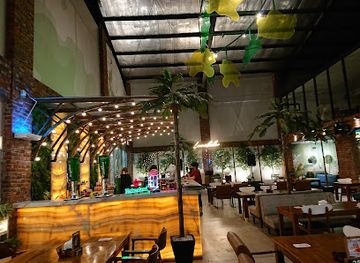
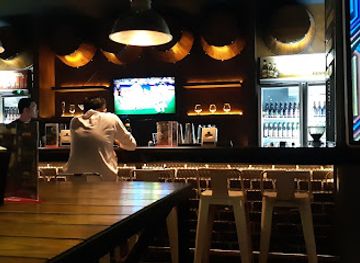
Nightlife in East Kalimantan is concentrated in Balikpapan and Samarinda rather than spread evenly across the province. Balikpapan has the broadest evening selection, including hotel lounges, cafés, restaurants, karaoke venues and bars, with activity generally centred on established commercial areas rather than a single defining nightlife quarter. Samarinda’s evening culture combines cafés, food stalls, casual restaurants and live entertainment, reflecting its large student and working population. In Tenggarong and smaller towns, evenings are quieter and tend to revolve around family restaurants, coffee shops and local gathering places. Resort areas around the Derawan Islands may offer relaxed beachfront evenings, but they are not major club destinations and services can be seasonal. Visitors should respect local regulations and sensitivities around alcohol, especially in smaller communities, and should arrange return transport before travelling to rural or waterfront venues.
-
Lounge
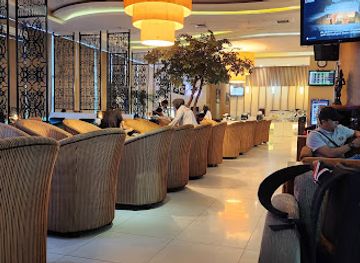
BLUE SKY LOUNGE-SEPINGGAN AIRPORT
Discover comfort and culinary delights at Blue Sky Lounge in Sepinggan Airport, East Kalimantan's premier travel retreat.
-
Bar
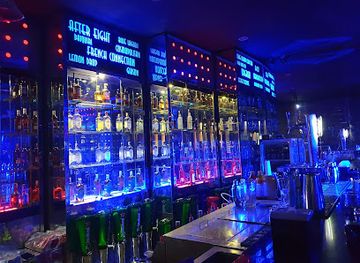
Celcius Club.Lounge & KTV
Discover the vibrant nightlife at Celcius Club.Lounge & KTV, a top bar and karaoke destination in East Kalimantan's Samarinda City.
-
Restaurant
Lanakila
Experience the vibrant flavors and social atmosphere at Lanakila, Samarinda's premier bar and restaurant, where every meal is a celebration.
-
Bar
Heart Of Borneo (HOB)
Discover the vibrant nightlife at Heart of Borneo, Balikpapan's premier bar and restaurant offering delicious cuisine and lively entertainment.
Best nightclubs in East Kalimantan
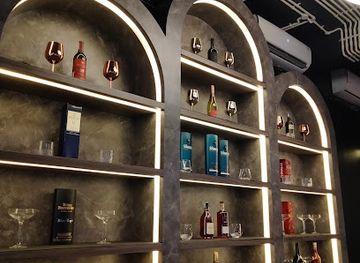
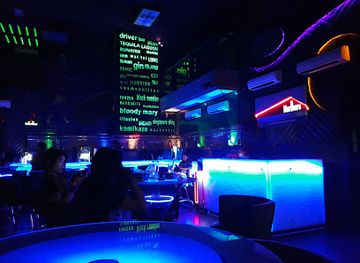
Nightlife in East Kalimantan is concentrated in Balikpapan and Samarinda rather than spread evenly across the province. Balikpapan has the broadest evening selection, including hotel lounges, cafés, restaurants, karaoke venues and bars, with activity generally centred on established commercial areas rather than a single defining nightlife quarter. Samarinda’s evening culture combines cafés, food stalls, casual restaurants and live entertainment, reflecting its large student and working population. In Tenggarong and smaller towns, evenings are quieter and tend to revolve around family restaurants, coffee shops and local gathering places. Resort areas around the Derawan Islands may offer relaxed beachfront evenings, but they are not major club destinations and services can be seasonal. Visitors should respect local regulations and sensitivities around alcohol, especially in smaller communities, and should arrange return transport before travelling to rural or waterfront venues.
-
Night club
Celcius Club.Lounge & KTV
Discover the vibrant nightlife of Samarinda at Celcius Club.Lounge & KTV, where music, dancing, and karaoke come together for an unforgettable experience.
-
Night club
TOWN CLUB BALIKPAPAN
Experience the vibrant nightlife of Balikpapan at Town Club, where live music, karaoke, and delicious cuisine come together for an unforgettable evening.
-
Night club
Dejavu Kitchen, Bar & Ktv Samarinda
Discover the ultimate nightlife experience at Dejavu Kitchen, Bar & Ktv in Samarinda, where delicious food, vibrant drinks, and karaoke await you.
-
Adult entertainment club
CROWNERS PUB & KTV SAMARINDA
Experience the vibrant nightlife of Samarinda at Crowners Pub & KTV, where karaoke and live entertainment create unforgettable evenings.

Best shops in East Kalimantan
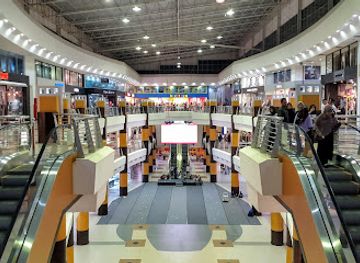
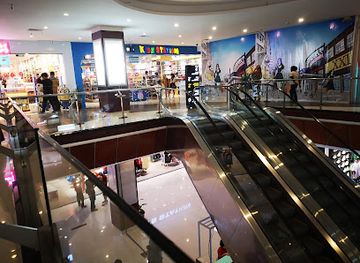
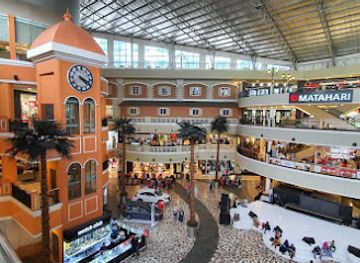
Shopping in East Kalimantan is strongest in Balikpapan and Samarinda, where modern retail centres, supermarkets, traditional markets and independent food shops serve both residents and travellers. Balikpapan is useful for practical supplies before journeys into forests or islands, while Samarinda is associated with regional textiles, craft goods and markets connected to the Mahakam hinterland. In Tenggarong, visitors can look for Kutai-influenced souvenirs and locally made products, although quality and availability vary. Markets across the province sell tropical fruit, dried seafood, snacks, spices and packaged regional foods, making them more useful for edible souvenirs than for standardised tourist merchandise. Craft purchases should be made thoughtfully, with attention to materials and provenance; avoid products made from protected wildlife or questionable timber. On the Derawan islands, locally produced handicrafts and small-scale resort shops may be available, but shopping is limited compared with the mainland.
-
Shopping mall
Duta Mall Banjarmasin
Experience shopping and local culture at Duta Mall Banjarmasin, your ultimate retail destination in South Kalimantan.
-
Shopping mall
Ayani Megamal
Discover Ayani Megamal in Pontianak: A vibrant shopping mall featuring diverse stores, a food court, and entertainment options for an unforgettable experience.
-
Shopping mall
eWalk
Discover eWalk in Balikpapan: a vibrant shopping mall offering diverse retail, dining, and entertainment options for an unforgettable experience.
-
Shopping mall
Big Mall Samarinda
Discover shopping, dining, and entertainment at Big Mall Samarinda, the ultimate destination for tourists in East Kalimantan.
Get your free copy of our complete guide to East Kalimantan, delivered straight to you.
Everything on this page, from attractions and restaurants to essentials and local phrases, in one PDF you can read offline, print or share.
Already have an account? Sign in
Your East Kalimantan guide is ready.
We'll send it to · Not you? Sign out

Getting your guide ready…
We are putting together a fresh copy of the East Kalimantan guide. This can take up to a minute.
This can take a few moments. If your browser asks, choose Allow so the download can start. You'll find the guide in your Downloads folder.
Nothing happened? Download it again
Sorry, the guide is taking longer than usual. Please try again in a minute, or get it by email instead.
East Kalimantan essentials
Currency and Payment
Safety
Emergency Situations
Do's and Don'ts
Local Tips
From Eve
Local phrases worth knowing
You don't need to get them perfect. A few words go a long way, and locals appreciate the effort.
Basics
| English | Local | Say it |
|---|---|---|
| Hello | Halo | [Hah-lo] |
| Goodbye | Selamat tinggal | [Seh-lah-mat ting-gal] |
| Yes | Ya | [Yah] |
| No | Tidak | [Tee-dak] |
| Please/You're welcome | Silakan/Sama-sama | [See-lah-kan/Sah-mah-sah-mah] |
| Thank you | Terima kasih | [Teh-ree-mah kah-see] |
| Excuse me/Sorry | Permisi/Maaf | [Per-mee-see/Mah-af] |
| How are you? | Apa kabar? | [Ah-pah kah-bar] |
| Fine. And you? | Baik. Dan kamu? | [Bye-eek. Dan kah-moo?] |
| Do you speak English? | Apakah kamu bisa berbahasa Inggris? | [Ah-pah-kah kah-moo bee-sah ber-bah-sah Ing-gris] |
| I don't understand | Saya tidak mengerti | [Sah-yah tee-dak meng-er-tee] |
Eating & Drinking
| English | Local | Say it |
|---|---|---|
| I'd like to see the menu, please | Saya ingin melihat menu, silakan | [Sah-yah een-gin me-lihat me-nu, see-lah-kan] |
| I don't eat meat | Saya tidak makan daging | [Sah-yah tee-dak mah-kan dah-ging] |
| Cheers! | Selamat minum! | [Seh-lah-mat mee-noom] |
| I would like to pay, please | Saya ingin membayar, silakan | [Sah-yah een-gin mem-bah-yar, see-lah-kan] |
Emergencies
| English | Local | Say it |
|---|---|---|
| Help! | Tolong! | [Toh-long] |
| Go away! | Pergi! | [Per-gee] |
| Call the Police! | Panggil Polisi! | [Pang-gil Poh-lee-see] |
| Call a doctor! | Panggil dokter! | [Pang-gil dok-ter] |
| I'm lost | Saya tersesat | [Sah-yah ter-seh-sat] |
| I'm ill | Saya sakit | [Sah-yah sah-kit] |
Shopping
| English | Local | Say it |
|---|---|---|
| I'd like to buy... | Saya ingin membeli... | [Sah-yah een-gin mem-beh-lee] |
| I'm just looking | Saya hanya melihat | [Sah-yah han-yah me-lihat] |
| How much is it? | Berapa harganya? | [Beh-rah-pah har-gah-nya] |
| That's too expensive | Itu terlalu mahal | [Ee-too ter-lah-loo mah-hal] |
| Can you lower the price? | Bisakah kamu menurunkan harga? | [Bee-sah-kah kah-moo me-nu-run-kan har-gah] |
Time & Numbers
| English | Local | Say it |
|---|---|---|
| What time is it? | Jam berapa? | [Jam beh-rah-pah] |
| It's one o'clock | Jam satu | [Jam sah-too] |
| Half past (10) | Setengah (10) | [Seh-teng-ah (sepuluh)] |
| Morning | Pagi | [Pah-gee] |
| Afternoon | Siang | [See-ahng] |
| Evening | Sore | [So-reh] |
| Yesterday | Kemarin | [Ke-mah-rin] |
| Today | Hari ini | [Ha-ree ee-nee] |
| Tomorrow | Besok | [Beh-sok] |
| 1 | Satu | [Sah-too] |
| 2 | Dua | [Doo-ah] |
| 3 | Tiga | [Tee-gah] |
| 4 | Empat | [Em-paht] |
| 5 | Lima | [Lee-mah] |
| 6 | Enam | [Eh-nahm] |
| 7 | Tujuh | [Too-joo] |
| 8 | Delapan | [Deh-lah-pahn] |
| 9 | Sembilan | [Sem-bee-lahn] |
| 10 | Sepuluh | [Seh-poo-loh] |
Transport & Directions
| English | Local | Say it |
|---|---|---|
| Where's a/the...? | Di mana ...? | [Dee mah-nah] |
| What's the address? | Apa alamatnya? | [Ah-pah ah-lah-maht-nya] |
| Can you show me (on the map)? | Bisakah kamu menunjukkan (di peta)? | [Bee-sah-kah kah-moo me-nun-juk-an (dee peh-tah)] |
| When's the next (bus)? | Kapan bus selanjutnya? | [Kah-pahn boos se-lan-jut-nya] |
| A ticket (to ....) | Sebuah tiket (ke ....) | [Se-boo-ah tik-et (keh)] |
History of East Kalimantan
The Ancient Kutai Kingdom and Muara Kaman Inscriptions
Around the fourth or fifth century, the upper Mahakam region was home to the kingdom commonly known as Kutai Martadipura. Stone pillars, or yupa, found around Muara Kaman bear Sanskrit inscriptions recording rulers including Mulawarman and indicate the adoption of Hindu political and ritual traditions. They are among the earliest substantial written records from Indonesia. The site’s importance lies not only in its age but also in what it reveals about river-based connections, elite power and cultural exchange on Borneo. Muara Kaman remains a key historical reference point for understanding East Kalimantan’s place in early Indonesian history.
The Kutai Kartanegara Sultanate
A later Kutai political tradition developed along the Mahakam and became associated with the Kutai Kartanegara sultanate, whose court was eventually established at Tenggarong. Islam became influential in the region from the early modern period, while court customs, titles and ceremonial practices continued to shape local identity. Tenggarong’s museums and surviving royal associations offer visitors a way to explore this history, although the sultanate’s story should not be confused with the much earlier Hindu kingdom at Muara Kaman. The Mahakam itself was fundamental, serving as a route for settlement, trade, political authority and cultural exchange.
Coastal Trade and the Mahakam River World
Before modern roads and aviation, East Kalimantan’s waterways connected inland communities with the coast and wider maritime Southeast Asia. River ports and settlements exchanged forest products, rice, fish and manufactured goods, while coastal communities participated in trading networks linking Borneo with other Indonesian islands. The Mahakam’s broad basin encouraged settlements to develop along riverbanks, and water transport remains important in areas where roads are limited. This commercial geography also helps explain the region’s cultural diversity, including long-established river communities, coastal peoples and Indigenous groups whose livelihoods have been connected to forests, rivers and seasonal cycles.
Colonial Expansion and the Oil Industry
Balikpapan became a major centre after petroleum was discovered near the coast in the late nineteenth century and commercial production expanded under Dutch colonial enterprise. Oil infrastructure transformed the settlement, attracting workers, administrators and supporting businesses while linking East Kalimantan more closely to global markets. The industry also altered the coastal landscape and created the foundations of Balikpapan’s modern importance as an industrial and logistics city. Colonial economic development was uneven and extractive, and its legacy is visible in the city’s industrial history as well as in the wider pattern of resource-led development across the province.
The Second World War in Balikpapan
Balikpapan’s oil installations made it strategically important during the Second World War. Japanese forces occupied the city in 1942, and the area later became the scene of intense fighting during the Allied campaign to retake Borneo in 1945. The destruction of industrial facilities and urban infrastructure formed part of the wider wartime upheaval experienced across the island. Although much of contemporary Balikpapan has been rebuilt, the city’s wartime history remains significant because it connects local geography with the Pacific conflict and explains the strategic value of its harbour and petroleum resources.
Resource Development and Social Change after Independence
After Indonesian independence, East Kalimantan’s economy expanded through oil, forestry, coal mining, plantations, construction and port development. New roads and settlements connected previously remote areas, while migration from other parts of Indonesia contributed to rapidly changing urban societies in Balikpapan, Samarinda and industrial districts. These developments generated employment and public infrastructure but also brought environmental pressures, including forest loss, river pollution and land-use conflict. The province’s modern character is therefore shaped by both economic growth and continuing debates about conservation, Indigenous rights, rural livelihoods and the long-term costs of extracting natural resources.
Conservation and the Development of Nusantara
Since the late twentieth century, East Kalimantan has also become important for rainforest and biodiversity conservation. Kutai National Park, forest reserves and marine protected areas in the Berau region reflect efforts to safeguard orangutan habitat, coral reefs, mangroves and sea-turtle nesting sites. In the twenty-first century, North Penajam Paser and adjoining areas gained national prominence through the development of Nusantara, Indonesia’s new capital project. Its construction is reshaping roads, services and land use, while raising questions about environmental management and the relationship between a planned national centre and established communities.
East Kalimantan in Photos
Browse through our photo collection highlighting the charm and character of the destination.
Neighbouring regions of East Kalimantan
The closest regions to East Kalimantan, if you have time for more than one.
-
-

-
-

-


Swipe for more regions
Explore more

Explore more of Indonesia
Explore Indonesia: An archipelago of diverse cultures, stunning landscapes, and endless adventures from bustling cities to serene beaches.
Explore Indonesia