

Free Central Kalimantan Travel Guide & Mobile App
Explore Central Kalimantan with free travel guides. Discover regional history, expert tips, proposed trips, and audio guides on web or mobile app.


Explore Central Kalimantan for orangutan forests, peatland rivers, Dayak culture and immersive journeys through Indonesian Borneo.
Read more about Central Kalimantan
When is the best time to visit Central Kalimantan?
Best: June–August · 30°C| Month | High (°C) | Rainfall (mm) |
|---|---|---|
| January | 30 | 300 |
| February | 30 | 250 |
| March | 30 | 200 |
| April | 30 | 150 |
| May | 30 | 100 |
| June (best) | 30 | 100 |
| July (best) | 30 | 100 |
| August (best) | 30 | 100 |
| September | 30 | 150 |
| October | 30 | 200 |
| November | 30 | 250 |
| December | 29 | 300 |
Getting to and around Central Kalimantan
How to get there
Transportation
Top city travel guides in Central Kalimantan
The cities of Central Kalimantan, and the easiest places to base yourself.

Swipe for more cities
Destinations in Central Kalimantan
Resorts, valleys and scenic spots worth a trip of their own.

Swipe for more destinations
Best attractions in Central Kalimantan
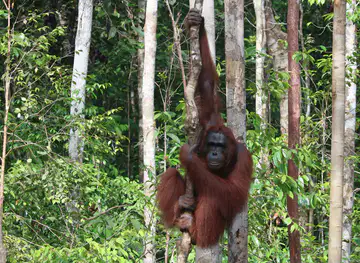
Central Kalimantan's attractions are defined by living ecosystems and river access rather than by a dense circuit of built monuments. Tanjung Puting National Park is the province's best-known experience, combining klotok river journeys with lowland forest, peat swamp and opportunities to observe orangutans and proboscis monkeys. Sebangau National Park offers a different perspective on tropical peatlands, with waterways and forest landscapes reached from the Palangka Raya area. Around the capital, boat trips on the Kahayan River and excursions towards Bukit Batu introduce visitors to wetlands, forest edges and local ways of life. Palangka Raya's cultural venues and public spaces provide context for Dayak heritage, while Sampit, Kasongan and Pangkalan Bun offer access to contrasting river regions. Nature-focused travellers can also seek birdwatching, fishing, canoeing and guided walks, although facilities are uneven and independent access is often impractical. The most rewarding itineraries allow time for transfers, local guides and changing weather rather than treating the province as a collection of quick stops.
-
Tourist attraction
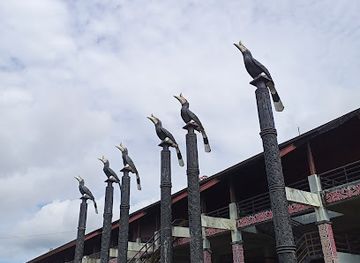
West Kalimantan Radakng House
Explore West Kalimantan's vibrant culture at Radakng House, a living museum showcasing the heritage of the Dayak people through art and tradition.
-
Beach
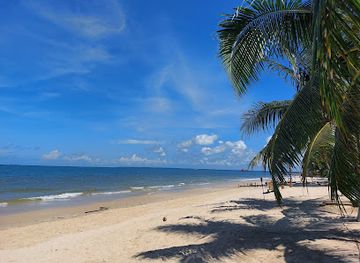
Kemala Beach
Explore the serene Kemala Beach in East Kalimantan, a perfect escape for relaxation, adventure, and stunning sunsets.
-
Tourist attraction
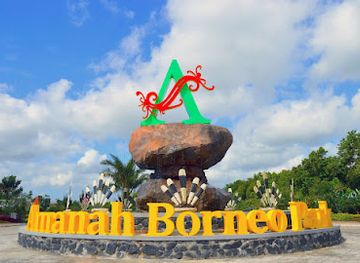
Amanah Borneo Park
Experience the beauty of nature and local culture at Amanah Borneo Park, a must-visit tourist attraction in South Kalimantan, Indonesia.
-
Historical landmark
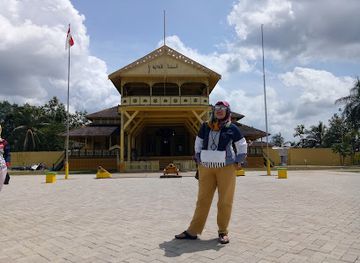
Keraton Kadriyah Pontianak Kalbar
Explore Keraton Kadriyah, a stunning historical landmark in Pontianak showcasing the rich cultural heritage of the Malay Sultanate.
Best landmarks in Central Kalimantan
The Kahayan Bridge is one of Palangka Raya's most recognisable structures, spanning the broad river beside the provincial capital and symbolising the city's relationship with Central Kalimantan's principal waterways. Within Palangka Raya, the large wooden meeting hall known as the Rumah Betang Hapakat presents a modern interpretation of the traditional Dayak longhouse form and is associated with cultural representation and public events. The roundabout monument of Bundaran Besar is another prominent civic marker in the capital's planned urban landscape. Outside the city, betang houses in rural settlements are more than picturesque buildings: they express communal traditions whose forms have changed over time. The rivers themselves are important geographical landmarks, particularly the Kahayan, Katingan, Mentaya and Barito systems, which have shaped movement, settlement and economic life. In Tanjung Puting and Sebangau, forest horizons, peat-swamp waterways and orangutan habitat provide a natural landmarkscape rather than a collection of monumental architecture. Access to rural longhouses and forest areas should be arranged respectfully with local communities or guides.
-
Monument
Monas
Explore Monas, Jakarta's historic National Monument, a symbol of independence offering stunning views and rich cultural insights.
-
Tourist attraction
Melawai Beach
Experience the breathtaking sunsets and vibrant culture of Melawai Beach in Balikpapan, a true gem on Indonesia's East Kalimantan coast.
-
Recreation center
Khatulistiwa Park
Discover Khatulistiwa Park, where the equator meets nature, culture, and culinary delights in the heart of Pontianak, West Kalimantan.
-
Island
Borneo
Discover the breathtaking beauty and rich biodiversity of Borneo, Southeast Asia's adventure paradise teeming with wildlife and vibrant cultures.
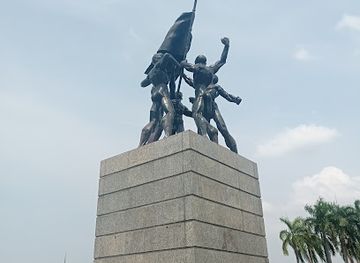
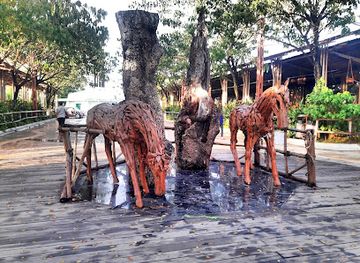
Explore Central Kalimantan on the map
Plan your trip on one map. See where the top cities, national parks and sights are, and book hotels and experiences in a few clicks.
Best hotels in Central Kalimantan
Best restaurants in Central Kalimantan
Dining in Central Kalimantan is centred on Indonesian home cooking, river-town warungs, markets and family-run restaurants rather than a highly formal restaurant scene. Palangka Raya has the broadest choice, with Central Kalimantan dishes alongside Banjar, Javanese, Malay and national Indonesian cooking. Look for local preparations of freshwater fish, chicken, vegetables, rice and noodles, often flavoured with chilli, aromatic herbs and fermented or smoked ingredients. Juhu singkah, a Dayak dish based on young rattan shoots, is a notable regional speciality when available, while traditional snacks and cakes reflect the wider culinary connections of southern Borneo. Pangkalan Bun and Sampit are useful places to try food associated with river and coastal trade, including fish and seafood, while markets offer fruit, drinks and inexpensive breakfasts. In national parks, meals are usually arranged through the boat or lodge, with menus designed around practical river travel. Dietary needs should be explained clearly in Indonesian, especially in remote areas where restaurant choice is limited.
-
Ikan bakar restaurant
Kampung Lauk Restaurant
Discover authentic Indonesian grilled fish at Kampung Lauk Restaurant - where tradition meets flavor in every bite.
-
Javanese restaurant
Warung Makan Rahayu
Experience authentic Javanese cuisine at Warung Makan Rahayu in Central Kalimantan—where every meal is a celebration of flavor.
-
Soto restaurant
RM Soto Banjar H. Munsi
Experience authentic Indonesian cuisine at RM Soto Banjar H. Munsi, the top Soto restaurant in Palangka Raya offering delicious flavors in a cozy setting.
-
Restaurant
Rumah Tjilik Riwut Gallery & Resto
Experience authentic Indonesian cuisine while surrounded by captivating local art at Rumah Tjilik Riwut Gallery & Resto in Palangka Raya.


Best bars in Central Kalimantan
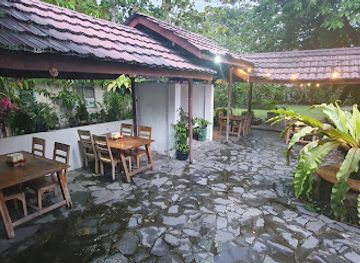
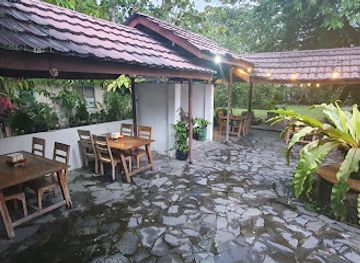
Central Kalimantan's evening culture is modest and town-based. In Palangka Raya, cafés, coffee shops, hotel lounges and restaurants provide the main settings for meeting friends after dark, while a limited selection of venues offers live music or contemporary entertainment. Pangkalan Bun and Sampit have similar small-town nightlife, with evenings focused on food stalls, cafés and conversation rather than a large club circuit. In rural districts and around national parks, darkness comes early and social life is generally centred on guesthouses, family settings and riverside settlements; alcohol-focused venues may be scarce. Visitors should not expect a seafront party scene or extensive late-night transport. Some hotels and restaurants serve beer, but customs and availability vary, and respectful conduct is essential in predominantly Muslim communities. Coffee, tea and local soft drinks are easy alternatives, particularly after returning from a forest or river excursion.
-
Restaurant
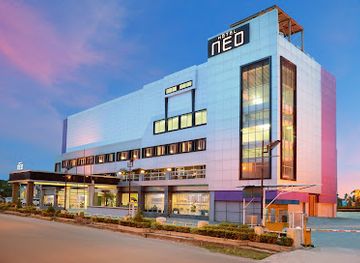
Hotel NEO Palma - Palangkaraya
Experience the perfect blend of culinary delights and comfortable accommodations in the heart of Palangkaraya at Hotel NEO Palma.
-
Restaurant
Rumah Tjilik Riwut Gallery & Resto
Discover the fusion of art and cuisine at Rumah Tjilik Riwut Gallery & Resto in Palangka Raya, where every meal is a masterpiece.
-
Restaurant
Bakoel Mbak Jenk
Experience the authentic taste of Central Kalimantan at Bakoel Mbak Jenk, where local flavors and warm hospitality meet.
-
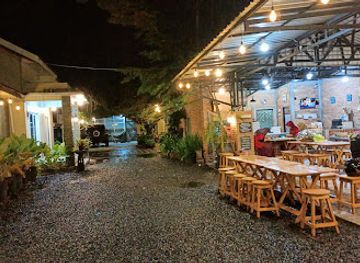
Bar
D'Lavan Resto & Lounge
Experience the vibrant nightlife of Palangka Raya at D'Lavan Resto & Lounge, where delicious cuisine meets lively entertainment.
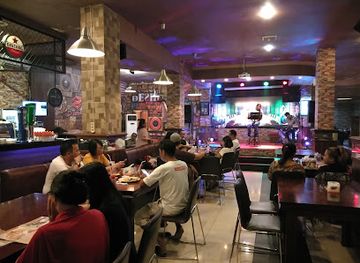
Best nightclubs in Central Kalimantan
Central Kalimantan's evening culture is modest and town-based. In Palangka Raya, cafés, coffee shops, hotel lounges and restaurants provide the main settings for meeting friends after dark, while a limited selection of venues offers live music or contemporary entertainment. Pangkalan Bun and Sampit have similar small-town nightlife, with evenings focused on food stalls, cafés and conversation rather than a large club circuit. In rural districts and around national parks, darkness comes early and social life is generally centred on guesthouses, family settings and riverside settlements; alcohol-focused venues may be scarce. Visitors should not expect a seafront party scene or extensive late-night transport. Some hotels and restaurants serve beer, but customs and availability vary, and respectful conduct is essential in predominantly Muslim communities. Coffee, tea and local soft drinks are easy alternatives, particularly after returning from a forest or river excursion.
-
Bar
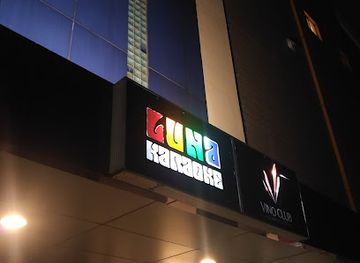
Vino Club Live Music Disco
Dive into the vibrant nightlife at Vino Club Live Music Disco, where music, drinks, and energy come together in Palangka Raya's hottest bar.
-
 Night club
Limun Disco
Experience the vibrant nightlife of Kapuas Regency at Limun Disco, the ultimate destination for music and dancing in Central Kalimantan.
-
Night club
jkt
Unleash your energy at JKT, the ultimate night club in Central Kalimantan for unforgettable nightlife experiences.
-
Night club
Umahe Kecune
Discover the vibrant nightlife at Umahe Kecune, a premier night club in Kapuas Regency, where music, dance, and culture come together for an unforgettable experience.
Best shops in Central Kalimantan
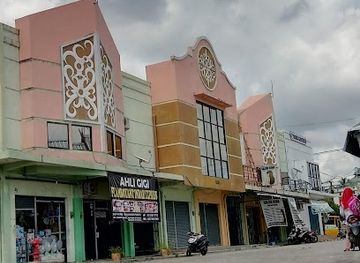
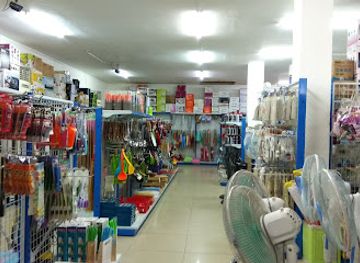
Shopping in Central Kalimantan is strongest in traditional markets, town centres and specialist craft outlets rather than large-scale retail districts. Palangka Raya has the widest selection of shops, supermarkets and stalls, with markets offering fruit, spices, snacks, clothing and everyday goods. Visitors may find Dayak-inspired woodcarving, woven items, beaded accessories, textiles and small handicrafts, although quality and cultural provenance vary; ask sellers about materials and the maker before purchasing. Traditional motifs should be treated as cultural art rather than costume decoration, and wildlife products or unverified antiques should be avoided. Pangkalan Bun, Sampit and other district towns are useful for regional food products, coffee, preserved snacks and practical supplies for river journeys. Markets are generally more rewarding for observing local commerce than for seeking luxury goods. Bring cash in smaller denominations, and pack purchases carefully because heat and humidity can damage textiles, paper and food.
-
Shopping mall
Duta Mall Banjarmasin
Discover a shopping haven at Duta Mall Banjarmasin, where modern retail meets local culture in a vibrant atmosphere.
-
Shopping mall
Ayani Megamal
Discover the vibrant shopping experience at Ayani Megamal, Pontianak’s premier shopping mall with diverse stores, dining, and entertainment options.
-
Shopping mall
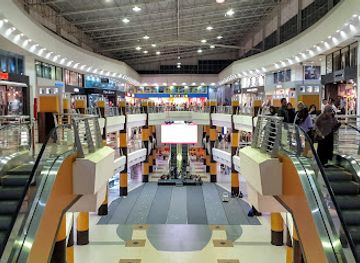
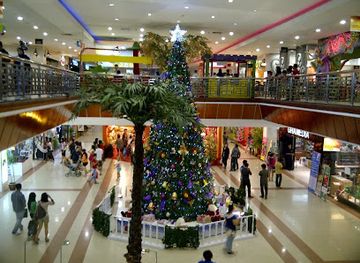
Palangkaraya Mall
Discover a blend of shopping, dining, and entertainment at Palangkaraya Mall, the ultimate retail destination in Central Kalimantan.
-
Supermarket
SENDY'S SWALAYAN A.YANI
Explore the vibrant offerings at Sendy's Swalayan A. Yani in Palangka Raya, a supermarket filled with local flavors and unique finds.
Get your free copy of our complete guide to Central Kalimantan, delivered straight to you.
Everything on this page, from attractions and restaurants to essentials and local phrases, in one PDF you can read offline, print or share.
Already have an account? Sign in
Your Central Kalimantan guide is ready.
We'll send it to · Not you? Sign out

Getting your guide ready…
We are putting together a fresh copy of the Central Kalimantan guide. This can take up to a minute.
This can take a few moments. If your browser asks, choose Allow so the download can start. You'll find the guide in your Downloads folder.
Nothing happened? Download it again
Sorry, the guide is taking longer than usual. Please try again in a minute, or get it by email instead.
Central Kalimantan essentials
Currency and Payment
Safety
Emergency Situations
Do's and Don'ts
Local Tips
From Eve
Local phrases worth knowing
You don't need to get them perfect. A few words go a long way, and locals appreciate the effort.
Basics
| English | Local | Say it |
|---|---|---|
| Hello | Selamat | [səˈla.mat] |
| Goodbye | Selamat tinggal | [səˈla.mat ˈtiŋ.gal] |
| Yes | Iya | [ˈi.ja] |
| No | Tidak | [ˈti.dak] |
| Please/You're welcome | Silakan | [siˈla.kan] |
| Thank you | Terima kasih | [təˈri.ma ˈka.sih] |
| Excuse me/Sorry | Maaf | [maˈaf] |
| How are you? | Apa kabar? | [ˈa.pa ˈka.bar] |
| Fine. And you? | Baik. Dan kamu? | [ˈba.ik. ˈdan ˈka.mu] |
| Do you speak English? | Apakah kamu bisa berbahasa Inggris? | [ˈa.pa.kah ˈka.mu ˈbi.sa bərˈba.ha.sə ˈiŋ.gris] |
| I don't understand | Saya tidak mengerti | [ˈsa.ja ˈti.dak məŋˈər.ti] |
Eating & Drinking
| English | Local | Say it |
|---|---|---|
| I'd like to see the menu, please | Saya ingin melihat menu, silakan | [ˈsa.ja ˈiŋ.gin məˈli.hat məˈnu, siˈla.kan] |
| I don't eat meat | Saya tidak makan daging | [ˈsa.ja ˈti.dak ˈma.kan ˈda.ging] |
| Cheers! | Selamat minum! | [səˈla.mat ˈmi.num] |
| I would like to pay, please | Saya ingin membayar, silakan | [ˈsa.ja ˈiŋ.gin məmˈba.jar, siˈla.kan] |
Emergencies
| English | Local | Say it |
|---|---|---|
| Help! | Tolong! | [ˈto.long] |
| Go away! | Pergi jauh! | [ˈpər.ɡi ˈdʒa.u] |
| Call the Police! | Panggil Polisi! | [ˈpaŋ.ɡil poˈli.si] |
| Call a doctor! | Panggil dokter! | [ˈpaŋ.ɡil ˈdok.tər] |
| I'm lost | Saya tersesat | [ˈsa.ja tər.səˈsat] |
| I'm ill | Saya sakit | [ˈsa.ja ˈsa.kit] |
Shopping
| English | Local | Say it |
|---|---|---|
| I'd like to buy... | Saya ingin membeli... | [ˈsa.ja ˈiŋ.gin məmˈbe.li...] |
| I'm just looking | Saya hanya melihat | [ˈsa.ja ˈha.nja məˈli.hat] |
| How much is it? | Berapa harganya? | [bəˈra.pa hərˈga.nya] |
| That's too expensive | Itu terlalu mahal | [ˈi.tu tərˈla.u ˈma.hal] |
| Can you lower the price? | Bisakah Anda menurunkan harga? | [ˈbi.sa.kah ˈan.da məˈnu.rʊŋ.kan ˈhar.ga] |
Time & Numbers
| English | Local | Say it |
|---|---|---|
| What time is it? | Jam berapa? | [ˈdʒam bəˈra.pa] |
| It's one o'clock | Jam satu | [ˈdʒam ˈsa.tu] |
| Half past (10) | Setengah (10) | [səˈtɛŋ.ah (10)] |
| Morning | Pagi | [ˈpa.ɡi] |
| Afternoon | Siang | [ˈsi.aŋ] |
| Evening | Sore | [ˈso.re] |
| Yesterday | Kemarin | [kəˈma.rin] |
| Today | Hari ini | [ˈha.ri ˈi.ni] |
| Tomorrow | Besok | [ˈbe.sok] |
| 1 | Satu | [ˈsa.tu] |
| 2 | Dua | [ˈdu.a] |
| 3 | Tiga | [ˈti.ɡa] |
| 4 | Empat | [ˈəm.pat] |
| 5 | Lima | [ˈli.ma] |
| 6 | Enam | [əˈnəm] |
| 7 | Tujuh | [ˈtu.dʒuh] |
| 8 | Delapan | [dəˈla.pan] |
| 9 | Sembilan | [səmˈbi.lan] |
| 10 | Sepuluh | [səˈpu.luh] |
Transport & Directions
| English | Local | Say it |
|---|---|---|
| Where's a/the...? | Di mana...? | [di ˈma.na...?] |
| What's the address? | Apa alamatnya? | [ˈa.pa əˈla.mat.nya] |
| Can you show me (on the map)? | Bisakah kamu tunjukkan (di peta)? | [ˈbi.sa.kah ˈka.mu ˈtun.juk.kan (di ˈpɛ.ta)?] |
| When's the next (bus)? | Kapan bus berikutnya? | [ˈka.pan bus bəˈrik.nya] |
| A ticket (to ....) | Sebuah tiket (ke....) | [səˈbu.ah ˈti.ket (kə....)] |
History of Central Kalimantan
Early River Societies and Dayak Heritage
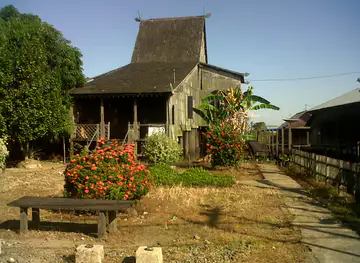
The rivers of Central Kalimantan supported settlement, trade and communication long before modern provincial boundaries were established. Diverse Dayak communities developed distinct languages, social arrangements, artistic traditions and relationships with forest and river environments. Longhouses, or betang, could accommodate extended communities and served as important social spaces. Archaeological and oral histories point to long periods of movement and exchange across the interior, while coastal and river towns connected inland societies with wider networks reaching through Borneo and the Indonesian archipelago.
Islamic and Coastal Trading Networks
From the early modern period, river mouths and coastal settlements became connected to Malay, Banjar and other maritime trading networks. Muslim influence expanded through commerce, migration and political relationships, particularly in the south and along major waterways. Inland Dayak communities retained varied religious and customary traditions, producing a cultural landscape that was never uniform. The continuing presence of Banjar and Malay communities in towns and river settlements reflects these centuries of contact rather than a single historical transformation.
Colonial Expansion and the Kapuas-Mentaya Interior
Dutch colonial authority expanded gradually through southern Borneo, combining administrative control with efforts to regulate trade, taxation and movement along rivers. Control was uneven in the interior, where local leaders and communities retained considerable influence. River ports such as Sampit and Pangkalan Bun grew in importance as links between forest-producing districts, coastal shipping and administrative centres. Colonial-era patterns of mapping, extraction and transport helped shape the province's later economic geography, even where physical traces are now limited.
Japanese Occupation and the Second World War
Central Kalimantan, like the rest of the Netherlands East Indies, was occupied by Japan during the Second World War. The occupation disrupted administration, trade and food supply, while local populations faced forced labour, requisitioning and military controls. The period also intensified political uncertainty and weakened Dutch authority. After Japan's surrender, the wider Indonesian struggle for independence reshaped governance across Borneo, with competing administrations and armed movements affecting the region before sovereignty was consolidated.
The Formation of Central Kalimantan, 1957
Central Kalimantan became a separate province in 1957, following post-independence debates about administration, regional representation and the relationship between inland communities and established coastal centres. Palangka Raya was developed as the provincial capital, giving the new province an administrative focus near the Kahayan River. The capital's planned layout and broad avenues reflect this nation-building period. Provincial formation created an institutional framework for managing a very large territory whose communities remained dispersed across rivers, forests and coastal lowlands.
Transmigration, Timber and Plantation Development
From the late twentieth century, government transmigration programmes brought many families from densely populated parts of Java and other Indonesian islands to settlements in Kalimantan. At the same time, logging, plywood, mining and later oil-palm cultivation expanded, bringing roads, employment and new towns but also major environmental pressures. Forest loss, fires and peatland drainage became defining regional issues. These developments altered land use and demographics while leaving an ongoing debate about economic opportunity, customary rights and ecological protection.
Conservation and the Orangutan Economy
The creation and strengthening of protected areas placed Central Kalimantan at the centre of international efforts to conserve orangutans, peat forests and lowland biodiversity. Tanjung Puting and Sebangau became important settings for research, rehabilitation, habitat protection and carefully managed tourism. Conservation has not erased the tensions surrounding land, fire, plantations and community access, but it has created new forms of employment and global attention. Today, wildlife tourism and environmental research sit alongside older river economies and rapidly changing provincial towns.
Central Kalimantan in Photos
Browse through our photo collection highlighting the charm and character of the destination.
Neighbouring regions of Central Kalimantan
The closest regions to Central Kalimantan, if you have time for more than one.
-
-

-
-

-


Swipe for more regions
Explore more

Explore more of Indonesia
Explore Indonesia: An archipelago of diverse cultures, stunning landscapes, and endless adventures from bustling cities to serene beaches.
Explore Indonesia