

Pulau Derawan Travel Guide - Free Web & App
Your ultimate guide to Pulau Derawan. Discover top landmarks, proposed trips, and local tips. Free on the web or via the Evendo companion app.


Pulau Derawan, Indonesia, pairs coral reefs, sea turtles, island villages and clear waters with diving, snorkelling and boat trips in East Kalimantan.
Island Setting and Marine Life
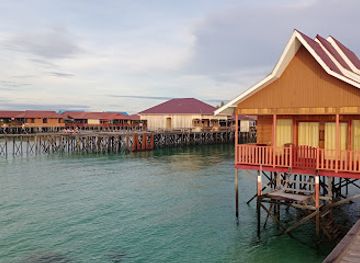
Pulau Derawan lies off the coast of Berau Regency in East Kalimantan, Indonesia, within the wider Derawan Archipelago. The island is a low-lying tropical destination fringed by warm, clear water, coral reefs and sandy beaches, with a compact settlement facing the surrounding sea. Its greatest appeal is marine rather than architectural: snorkelling and diving reveal reef fish, sea turtles and coral gardens, while boat excursions connect visitors with other islands in the archipelago. The waters form part of the biologically important Coral Triangle, although visibility, currents and marine conditions vary with weather and tides.Read more about Pulau Derawan
Village Life and the Wider Archipelago
A Slow Coastal Escape
When is the best time to visit Pulau Derawan?
Best: June–August · 30–31°C| Month | High (°C) | Rainfall (mm) |
|---|---|---|
| January | 31 | 176 |
| February | 31 | 176 |
| March | 31 | 176 |
| April | 31 | 176 |
| May | 31 | 176 |
| June (best) | 31 | 176 |
| July (best) | 30 | 176 |
| August (best) | 30 | 176 |
| September | 31 | 176 |
| October | 31 | 176 |
| November | 31 | 176 |
| December | 31 | 176 |
Getting to and around Pulau Derawan
How to get there
Transportation
Best attractions in Pulau Derawan
Pulau Derawan's main attractions are concentrated in and around the sea. The island's village waterfront and jetties provide easy access to shallow coastal water, coral gardens and snorkelling areas where reef fish and sea turtles may be observed without the urban development found on mainland resorts. Boat trips broaden the experience across the archipelago: Kakaban is famed for its marine lake and jellyfish, Sangalaki is associated with turtle conservation and manta encounters, while Maratua offers a larger island landscape and renowned diving sites. These islands are not part of Pulau Derawan itself, but are commonly visited from it or through connected regional itineraries. On land, the appeal is deliberately modest, with beach walks, village scenes and views across the surrounding channels rather than a long list of monuments or museums. Marine visibility and wildlife sightings vary with season, tides, weather and local conservation rules.
-
National reserve
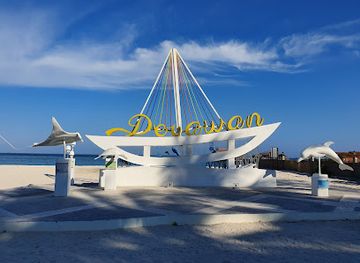
Pantai Derawan
Discover the beauty of Pantai Derawan, a national reserve in East Kalimantan known for its pristine beaches, vibrant marine life, and serene atmosphere.
-
Beach
Pulau Derawan, Kaltim
Explore the breathtaking beaches and vibrant marine life of Pulau Derawan, a hidden gem in East Kalimantan, Indonesia.
-
Tourist attraction
Derawan Island
Explore the enchanting Derawan Island, a tropical paradise rich in marine life, stunning beaches, and local culture in East Kalimantan, Indonesia.
-
Tourist attraction
Spot Snorkeling Derawan Beach Cafe
Explore the vibrant marine life and pristine beaches at Spot Snorkeling Derawan Beach Cafe, your gateway to adventure in East Kalimantan.
Best landmarks in Pulau Derawan
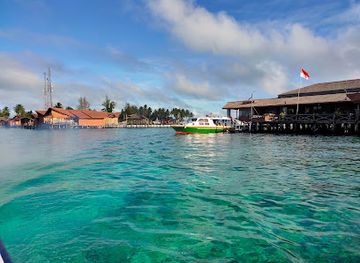
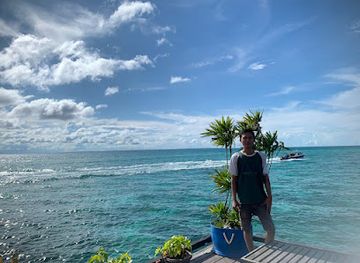
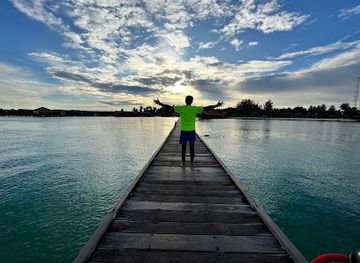
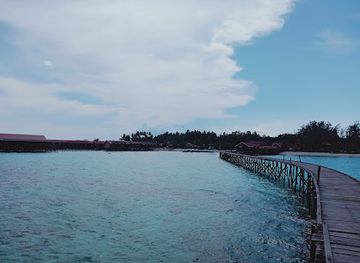
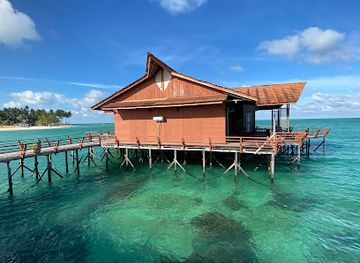
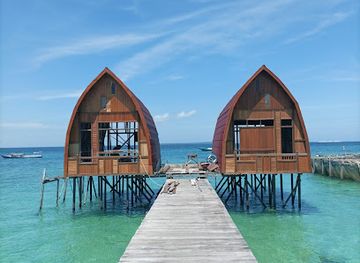
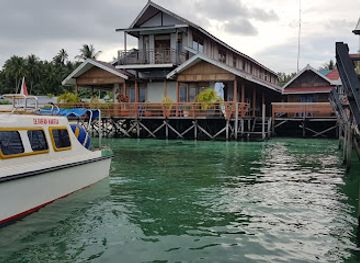
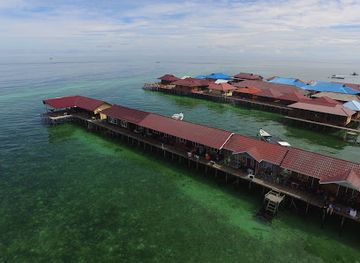
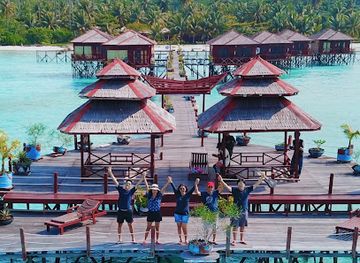
The defining landmarks of Pulau Derawan are marine and coastal rather than monumental. Its village jetty is the practical and visual focus of the island, linking houses and guesthouses with the boats that supply the community and carry visitors across the archipelago. The surrounding coral reefs and shallow turquoise waters form the island's most significant natural feature, supporting fish, sea turtles and other reef life within the wider Coral Triangle. Nearby islands add landmarks to the broader Derawan circuit: Kakaban's marine lake, Sangalaki's turtle-oriented conservation setting and Maratua's extensive island coastline are distinctive, but they lie outside Pulau Derawan and require boat travel. There are few major historic buildings or architectural monuments on the island; its identity is expressed through the relationship between the settlement, jetties, boats, reefs and open sea.
-
 Resort hotel
Derawan Dive Resort
Experience the tranquil beauty of Derawan Dive Resort, where pristine beaches meet vibrant marine life for an unforgettable getaway in East Kalimantan.
-
Hotel
Derawan Fisherises Cottage
Discover the paradise of Derawan Fisheries Cottage, a serene retreat on Derawan Island, East Kalimantan, perfect for nature lovers and adventure seekers.
-
National reserve
Pantai Derawan
Experience the serene beauty of Pantai Derawan, a national reserve in East Kalimantan, where stunning beaches meet vibrant marine life and rich culture.
-
Hotel
Derawan Dive Lodge
Discover the enchanting Derawan Dive Lodge on Derawan Island, where adventure meets serenity amidst breathtaking marine life and stunning landscapes.
Explore Pulau Derawan on the map
Plan your trip on one map. See where the top attractions, landmarks, restaurants and hotels are, and book hotels and experiences in a few clicks.
Best hotels in Pulau Derawan
Best restaurants in Pulau Derawan
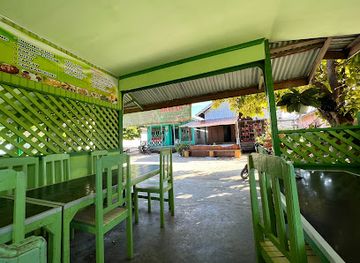
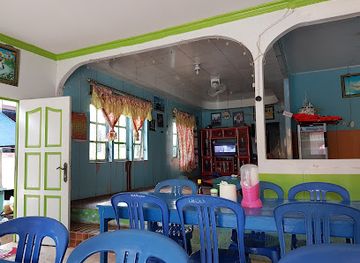
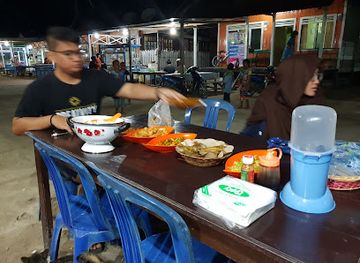
Dining on Pulau Derawan is small-scale and closely tied to the village and accommodation houses rather than a formal restaurant district. Visitors can expect straightforward Indonesian meals based on rice, noodles, vegetables, eggs and locally available fish, with menus and supplies influenced by boat deliveries and the island's remote position. Guesthouses often provide breakfast and may arrange simple lunches or evening meals, while modest local eateries serve familiar regional dishes when operating. Seafood may be available, but responsible travellers should ask about sourcing and avoid protected species or undersized catches. More extensive food shopping and a wider choice of restaurants are found on the mainland around Tanjung Redeb and along the route to Tanjung Batu, so visitors with dietary restrictions should plan supplies before the boat crossing.
-
Restaurant
Derawan Beach CAFE & Cottage
Experience paradise at Derawan Beach CAFE & Cottage, where exquisite cuisine meets stunning coastal views in East Kalimantan.
-
Restaurant
Azwar Restaurant
Experience fresh seafood delights at Azwar Restaurant on Derawan Island – where culinary tradition meets breathtaking ocean views.
-
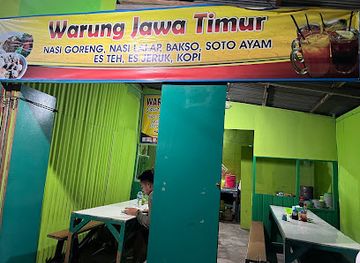
Javanese restaurant
Warung jawa timur
Experience authentic Javanese cuisine at Warung Jawa Timur in Pulau Derawan – where tradition meets flavor in every dish.
-
Padang restaurant
RM Chika
Experience authentic Padang cuisine at RM Chika on Derawan Island – where every dish tells a story of rich Indonesian heritage.
Best bars in Pulau Derawan
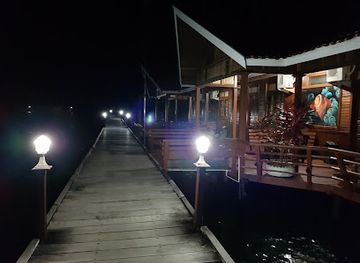
Pulau Derawan does not have a developed nightlife scene, and visitors should not expect nightclubs, late-night entertainment districts or a broad selection of cocktail bars. Evenings are generally quiet and centred on guesthouses, simple eateries, conversation and the waterfront, with the sound of boats and village activity replacing amplified entertainment. Some accommodation areas may serve soft drinks, beer or other beverages, but availability and licensing vary, so visitors should not assume that alcohol is widely offered. Respect local religious and community norms, keep noise low after dark and use care around unlit jetties and shorelines. For a more substantial evening atmosphere, visitors would need to return to mainland settlements, although these are transport gateways rather than part of Pulau Derawan itself.
-
Restaurant
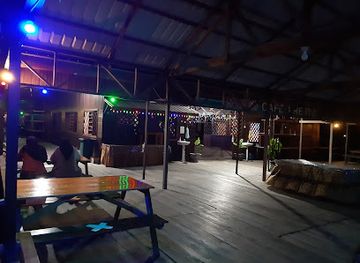
Derawan Beach CAFE & Cottage
Experience the beauty of Derawan Beach Cafe & Cottage, where fresh seafood meets breathtaking views in a serene coastal paradise.
-
Restaurant
RM. Karlina
Experience the authentic flavors of Indonesia at RM. Karlina, a top-rated restaurant on Derawan Island, perfect for food lovers and adventurers alike.
-
Seafood
April Resto
Experience the best of Pulau Derawan with fresh seafood dishes at April Resto, a local gem on this idyllic island paradise.
-
Restaurant
Resto Syagi Cafe and penginapan (WA : 082153763862 *Putri, 082251574651 Yati)
Experience the flavors of Indonesia at Resto Syagi Cafe on Pulau Derawan, where every meal is a celebration of local culture and stunning island views.
Best nightclubs in Pulau Derawan
Pulau Derawan does not have a developed nightlife scene, and visitors should not expect nightclubs, late-night entertainment districts or a broad selection of cocktail bars. Evenings are generally quiet and centred on guesthouses, simple eateries, conversation and the waterfront, with the sound of boats and village activity replacing amplified entertainment. Some accommodation areas may serve soft drinks, beer or other beverages, but availability and licensing vary, so visitors should not assume that alcohol is widely offered. Respect local religious and community norms, keep noise low after dark and use care around unlit jetties and shorelines. For a more substantial evening atmosphere, visitors would need to return to mainland settlements, although these are transport gateways rather than part of Pulau Derawan itself.
-
National reserve
Pantai Derawan
Explore Pantai Derawan: A stunning national reserve offering pristine beaches, vibrant marine life, and a serene escape into nature's embrace.
-
Restaurant
Derawan Beach CAFE & Cottage
Discover the serene beauty of Derawan Beach CAFE & Cottage, where delicious local cuisine meets stunning ocean views for an unforgettable dining experience.
-
Travel agency
HVTRIP Derawan dan Labuan Cermin
Explore the tropical paradise of Derawan and Labuan Cermin, where adventure meets breathtaking beauty in East Kalimantan.
-
Villa
MASAYA COTTAGE PULAU DERAWAN
Discover the serene beauty of Masaya Cottage Pulau Derawan, a tranquil villa retreat surrounded by nature's splendor in East Kalimantan.
Best shops in Pulau Derawan
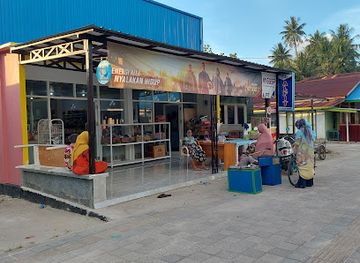
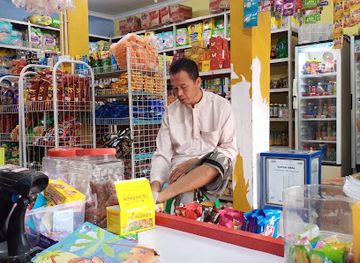
Shopping on Pulau Derawan is limited to practical village supplies, small snacks, drinks, beach necessities and occasional locally made souvenirs rather than a substantial retail scene. Small shops and accommodation outlets may carry basic items, but visitors should buy specialist medicines, reef equipment, cash, toiletries and dietary supplies on the mainland before travelling. The most meaningful local purchases are modest products linked to island life or Indonesian craft traditions, although availability changes and visitors should avoid anything made from coral, turtle shell, protected shells or other marine wildlife. Tanjung Redeb offers a broader range of supermarkets, pharmacies, markets and everyday shops, while mainland settlements near the transport route are useful for last-minute provisions. Bargain respectfully, carry reusable bags and remember that transport to the island can limit product choice.
-
Clothing store
TIDE STORE
Explore TIDE STORE on Pulau Derawan for unique local clothing and a taste of island culture.
-
Convenience store
Toko ALFIT
Discover Toko ALFIT, the 24/7 convenience store in Pulau Derawan offering local snacks, refreshing beverages, and all essentials for your island adventure.
-
Store
Apit Toko
Explore local goods and souvenirs at Apit Toko, a charming store on Derawan Island, offering a taste of local culture amidst stunning natural beauty.
-
Shopping mall
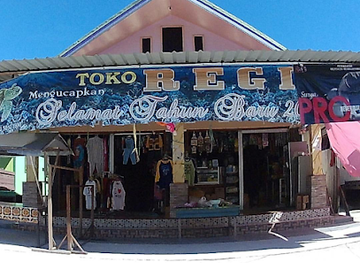
Toko Regi Sembako
Discover local treasures at Toko Regi Sembako, a unique shopping mall in Pulau Derawan, East Kalimantan, blending culture and commerce.
Get your free copy of our complete guide to Pulau Derawan, delivered straight to you.
Everything on this page, from attractions and restaurants to essentials and local phrases, in one PDF you can read offline, print or share.
Already have an account? Sign in
Your Pulau Derawan guide is ready.
We'll send it to · Not you? Sign out

Getting your guide ready…
We are putting together a fresh copy of the Pulau Derawan guide. This can take up to a minute.
This can take a few moments. If your browser asks, choose Allow so the download can start. You'll find the guide in your Downloads folder.
Nothing happened? Download it again
Sorry, the guide is taking longer than usual. Please try again in a minute, or get it by email instead.
Pulau Derawan essentials
Currency and Payment
Safety
Emergency Situations
Do's and Don'ts
Local Tips
From Eve
Local phrases worth knowing
You don't need to get them perfect. A few words go a long way, and locals appreciate the effort.
Basics
| English | Local | Say it |
|---|---|---|
| Hello | Halo | [ha-loh] |
| Goodbye | Selamat tinggal | [seh-lah-maht ting-gahl] |
| Yes | Ya | [yah] |
| No | Tidak | [tee-dahk] |
| Please/You're welcome | Silakan | [see-lah-kahn] |
| Thank you | Terima kasih | [teh-ree-mah kah-see] |
| Excuse me/Sorry | Maaf | [mah-ahf] |
| How are you? | Apa kabar? | [ah-pah kah-bahr] |
| Fine. And you? | Baik. Dan kamu? | [bah-eek. dahn kah-moo] |
| Do you speak English? | Bisa berbicara Bahasa Inggris? | [bee-sah buhr-bee-chah bah-hah-sah eeng-grees] |
| I don't understand | Saya tidak mengerti | [sah-yah tee-dahk muhng-ehr-tee] |
Eating & Drinking
| English | Local | Say it |
|---|---|---|
| I'd like to see the menu, please | Boleh saya lihat menu, silakan | [boh-leh sah-yah lee-haht meh-noo, see-lah-kahn] |
| I don't eat meat | Saya tidak makan daging | [sah-yah tee-dahk mah-kahn dah-yahng] |
| Cheers! | Selamat minum! | [seh-lah-maht mee-noom] |
| I would like to pay, please | Saya ingin membayar, silakan | [sah-yah een-geen mehm-bah-yahr, see-lah-kahn] |
Emergencies
| English | Local | Say it |
|---|---|---|
| Help! | Tolong! | [toh-lohng] |
| Go away! | Pergi! | [pehr-gee] |
| Call the Police! | Panggil polisi! | [pahng-geel poh-lee-see] |
| Call a doctor! | Panggil dokter! | [pahng-geel dohk-tehr] |
| I'm lost | Saya tersesat | [sah-yah tehr-seh-saht] |
| I'm ill | Saya sakit | [sah-yah sah-keet] |
Shopping
| English | Local | Say it |
|---|---|---|
| I'd like to buy... | Saya ingin membeli... | [sah-yah een-geen mehm-beh-lee] |
| I'm just looking | Saya hanya melihat | [sah-yah hahn-yah meh-lee-haht] |
| How much is it? | Berapa harganya? | [buh-rah-pah hahr-gahn-yah] |
| That's too expensive | Itu terlalu mahal | [ee-too teh-rah-lah mah-hahl] |
| Can you lower the price? | Bisakah Anda menurunkan harganya? | [bee-sah-kah ahn-dah muh-noor-kahn hahr-gahn-yah] |
Time & Numbers
| English | Local | Say it |
|---|---|---|
| What time is it? | Jam berapa sekarang? | [jahm buh-rah-pah seh-kah-rahn] |
| It's one o'clock | Sekarang pukul satu | [seh-kah-rahn poo-kool sah-too] |
| Half past (10) | Setengah (sepuluh) | [seh-tehn-gah (suh-poo-loo)] |
| Morning | Pagi | [pah-gee] |
| Afternoon | Sore | [soh-reh] |
| Evening | Malam | [mah-lahm] |
| Yesterday | Kemarin | [keh-mah-reen] |
| Today | Hari ini | [hah-ree ee-nee] |
| Tomorrow | Besok | [beh-sohk] |
| 1 | Satu | [sah-too] |
| 2 | Dua | [doo-ah] |
| 3 | Tiga | [tee-gah] |
| 4 | Empat | [em-paht] |
| 5 | Lima | [lee-mah] |
| 6 | Enam | [eh-nahm] |
| 7 | Tujuh | [too-joo] |
| 8 | Delapan | [deh-lah-pahn] |
| 9 | Sembilan | [sem-bee-lahn] |
| 10 | Sepuluh | [suh-poo-loo] |
Transport & Directions
| English | Local | Say it |
|---|---|---|
| Where's a/the...? | Dimana ada/ada... | [dee-mah-nah ah-dah/ah-dah] |
| What's the address? | Apa alamatnya? | [ah-pah ah-lah-maht-nyah] |
| Can you show me (on the map)? | Bisakah Anda menunjukkan (pada peta)? | [bee-sah-kah ahn-dah muh-noon-jook-kahn (pah-dah peh-tah)] |
| When's the next (bus)? | Kapan bus selanjutnya? | [kah-pahn boos seh-lahn-joot-nyah] |
| A ticket (to ....) | Selembar tiket (ke ....) | [seh-lehm-bahr tee-keht (keh)] |
History of Pulau Derawan
A Coral-Triangle Island Environment
Pulau Derawan is part of an island and reef system shaped by tropical marine processes, coastal sediment and coral growth in the waters of eastern Borneo. Its historical importance is therefore inseparable from the sea: reefs, shallow coastal habitats and offshore islands have supported fishing communities while also creating the marine scenery that attracts contemporary visitors. Geological and ecological timescales should be distinguished from the island's human history, since the reefs developed over long periods whereas the settlement and tourism landscape are comparatively recent.
Sea-Oriented Communities
The inhabited island has long been connected to the maritime world of Berau, with livelihoods and movement shaped by fishing, boat travel and exchange between coastal settlements and offshore islands. The wider region has Malay, Bugis and Bajau cultural connections, although the exact balance of communities varies between villages and islands. Local life remains strongly oriented towards the water, and wooden boats, jetties and small-scale fishing activity continue to form part of Derawan's everyday character.
Berau's Coastal Heritage
Pulau Derawan belongs administratively to Berau Regency, a region whose history includes the influence of the Berau Sultanate and long-standing links between riverine, coastal and island communities. Political authority and trade in eastern Borneo were historically connected to waterways and the sea rather than to a single inland centre. Derawan's position within this maritime geography helps explain its relationship with mainland Berau and with the other islands of the archipelago, even though the island itself has remained a small settlement rather than a major urban centre.
From Fishing Island to Diving Destination
Tourism developed as improved transport and specialist interest in the archipelago's reefs brought divers and snorkellers to the area. Pulau Derawan became one of the most accessible bases for excursions to nearby islands, while guesthouses, boat services and small restaurants expanded around the village. This growth has made marine conservation increasingly important. Turtle protection, careful diving practice, waste management and responsible visitor behaviour are central to maintaining the habitats on which both local livelihoods and tourism depend.
Pulau Derawan in Photos
Browse through our photo collection highlighting the charm and character of the destination.
Neighbouring destination travel guides
The closest destinations to Pulau Derawan, if you have time for more than one.
-

-

-

-

-


Swipe for more destinations
Explore more

Explore more of North Kalimantan
Explore North Kalimantan for rainforest journeys, Bulungan heritage, island coasts, indigenous cultures and Indonesia’s remote Bornean borderlands.
Explore North Kalimantan
Explore more of Indonesia
Explore Indonesia: An archipelago of diverse cultures, stunning landscapes, and endless adventures from bustling cities to serene beaches.
Explore Indonesia