

Free Manado Travel Guide & Mobile App
Plan your Manado trip with Evendo. Get free guides to top attractions, restaurants, hotels, and bars. Web access or download the mobile app.


Manado combines North Sulawesi culture, spicy cuisine and access to Bunaken’s coral reefs, island scenery, historic temples and marine adventures.
Sea, Volcanoes and Minahasan Culture
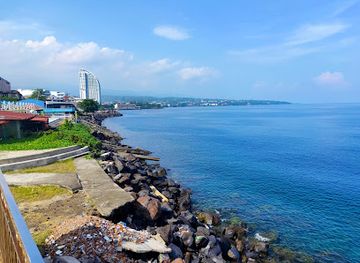
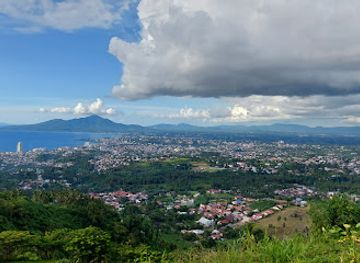
Manado occupies a dramatic corner of North Sulawesi, where the sheltered waters of Manado Bay open towards forested islands and some of Indonesia’s most celebrated coral reefs. The city is the provincial capital and the main urban gateway to Bunaken National Park, whose islands lie offshore rather than within the built-up centre. From Manado’s waterfront, the outline of Manado Tua volcano gives the bay a distinctive profile, while the city itself spreads through a landscape of hills, coastal roads and lively commercial districts.Read more about Manado
A City Shaped by Exchange
Urban Life and Island Horizons
When is the best time to visit Manado?
Best: July–September · 30°C| Month | High (°C) | Rainfall (mm) |
|---|---|---|
| January | 30 | 265 |
| February | 30 | 254 |
| March | 30 | 231 |
| April | 30 | 183 |
| May | 30 | 114 |
| June | 30 | 61 |
| July (best) | 30 | 49 |
| August (best) | 30 | 48 |
| September (best) | 30 | 51 |
| October | 30 | 93 |
| November | 30 | 158 |
| December | 30 | 215 |
Getting to and around Manado
How to get there
Transportation
Best attractions in Manado
Manado’s principal attractions range from urban cultural sites to the marine landscapes of its bay. Bunaken National Park, reached by boat from the Manado area, is the region’s defining excursion, with coral walls, clear water and islands including Bunaken, Siladen and Manado Tua; it is outside the city proper but inseparable from Manado’s visitor identity. In town, the provincial Museum Negeri Sulawesi Utara introduces North Sulawesi’s archaeological, ethnographic and historical heritage, while Ban Hin Kiong Temple offers a glimpse of the city’s long Chinese-Indonesian presence. The Christ Blessing statue in Citraland is a prominent hillside viewpoint and contemporary landmark. Along the waterfront, Boulevard is suited to sunset views and informal dining, while Pasar Bersehati provides a more grounded encounter with daily commerce. Boat trips, snorkelling and diving add an active dimension to sightseeing, with conditions and access best checked locally.
-
Tourist attraction
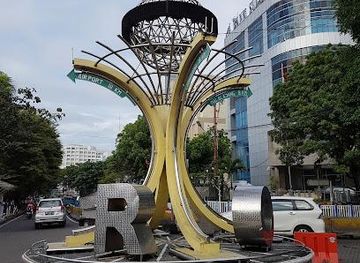
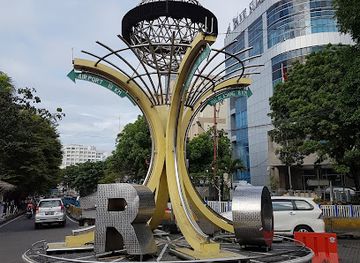
Zero Point
Discover the cultural heart of Manado at Zero Point Monument, an iconic site offering stunning views and rich local heritage.
18 min walk · 1.4 km from city centre
-
Tourist attraction
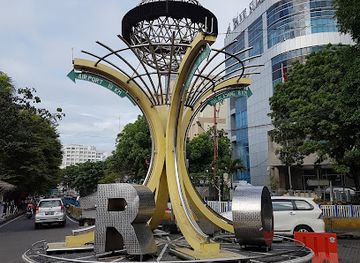
Zero Point
Experience the vibrant heart of Manado at Zero Point, a historic monument and community hub offering stunning views and local culture.
18 min walk · 1.4 km from city centre
-
Tourist attraction
God Bless Park
Discover tranquility at God Bless Park in Manado, where lush landscapes meet vibrant culture in a breathtaking setting.
8 min drive · 2.8 km from city centre
-
Tourist attraction
Makatete Hills
Discover the breathtaking Makatete Hills in North Sulawesi, a serene destination filled with stunning views and vibrant local culture.
19 min drive · 6.5 km from city centre
Best landmarks in Manado
Ban Hin Kiong Temple is one of Manado’s most important historic landmarks, serving the city’s Chinese-Indonesian community and marking the enduring role of Chinese commerce and religious life in the urban centre. The Christ Blessing statue, set on a hillside in the Citraland area, has become a highly visible modern symbol of Manado and looks across the surrounding city. The Manado Cathedral represents the strong Christian heritage of North Sulawesi, while numerous churches help define the city’s streetscape. Along the bay, the outline of volcanic Manado Tua is a geographical landmark rather than an urban monument, linking the city to its offshore marine environment. Older markets, commercial streets and civic buildings around the central districts add another layer, showing how trade, administration, migration and faith shaped Manado’s development.
-
Monument
Zero Point
Discover the cultural heart of Manado at Zero Point, a stunning monument that encapsulates the city's rich heritage and vibrant atmosphere.
18 min walk · 1.4 km from city centre
-
Monument
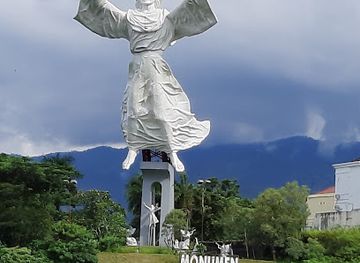
Yesus Memberkati Statue
Discover the majestic Yesus Memberkati Statue in Manado City, a breathtaking monument symbolizing faith and cultural heritage in North Sulawesi.
15 min drive · 4.9 km from city centre
-
National park
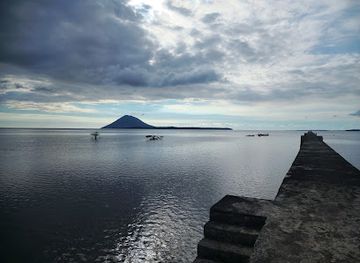
Bunaken National Marine Park
Discover the underwater wonders of Bunaken National Marine Park, a UNESCO World Heritage site in North Sulawesi, home to rich marine biodiversity and stunning coral reefs.
38 min drive · 18 km from city centre
-
Resort hotel
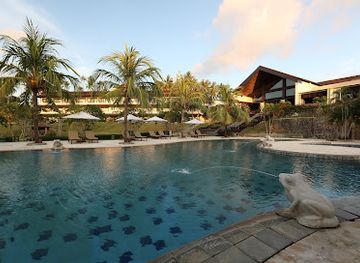
Grand Luley Manado
Experience luxury and natural beauty at Grand Luley Manado, your gateway to the magnificent Bunaken Marine Park.
31 min drive · 11 km from city centre
Explore Manado on the map
Plan your Manado trip on one map. See where the top attractions, landmarks, restaurants, bars and hotels are, find what's near where you're staying, and book hotels and experiences in a few clicks.
Best hotels in Manado
Best restaurants in Manado
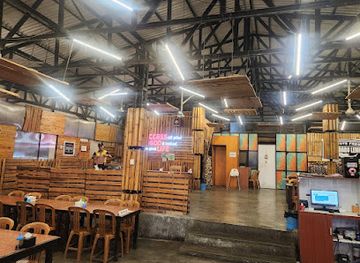
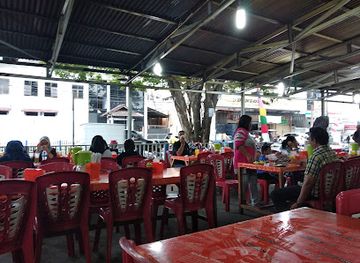
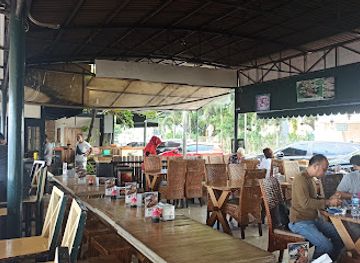
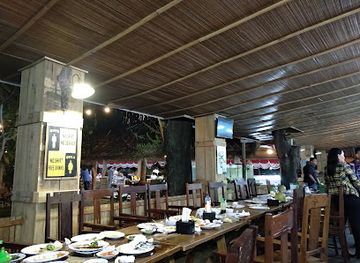
Manado’s food culture is among Indonesia’s most distinctive, defined by Minahasan ingredients, generous herbs and a confident use of chilli. Tinutuan, a soft rice-and-vegetable porridge often eaten in the morning, is closely linked with the city, while cakalang fufu consists of skipjack tuna smoked over wood and commonly served with rice and sambal. Rica-rica, a hot sauce or preparation built around chilli and aromatics, appears with fish, chicken and meat; seafood is naturally prominent along the coast. Visitors will also encounter woku, fragrant with turmeric and herbs, and klappertaart, a creamy coconut-and-custard dessert associated with North Sulawesi’s colonial-era influences. Warungs and market stalls provide the most direct introduction, while Boulevard, the city centre and shopping complexes offer restaurants and cafés serving regional dishes alongside Indonesian and international food.
-
Restaurant
Dabu Dabu Lemong | Ikan Bakar Khas Manado
Experience authentic Manado cuisine at Dabu Dabu Lemong - home of exquisite grilled fish and vibrant local flavors.
9 min drive · 3.0 km from city centre
-
Seafood
RM BAKAR RICA
Experience authentic Indonesian seafood at RM Bakar Rica - where every dish celebrates the vibrant flavors of North Sulawesi.
7 min walk · 0.6 km from city centre
-
Seafood
Tuna House Mega Mas
Discover the best seafood experience at Tuna House Mega Mas in North Sulawesi, where fresh flavors meet traditional Manado cuisine.
5 min drive · 1.8 km from city centre
-
Seafood
Tuna House Bitung Karangria
Discover the culinary delights at Tuna House Bitung Karangria – where fresh seafood meets authentic Manadonese flavors in a vibrant setting.
10 min drive · 3.3 km from city centre
Best bars in Manado
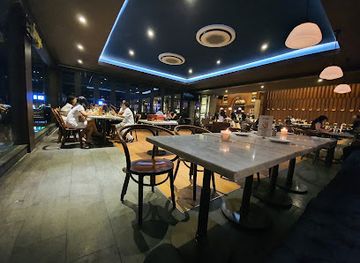
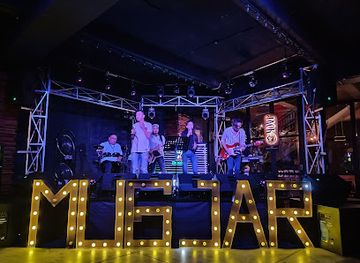
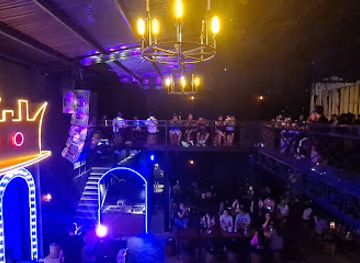
Manado’s nightlife is more social and restaurant-led than club-centred, with evening activity concentrated around Boulevard, central commercial districts and hotel areas. Waterfront restaurants and lounges attract groups for food, conversation and views across Manado Bay, while karaoke venues and hotel bars provide familiar evening entertainment. Some establishments offer live bands or recorded Indonesian pop, and cafés remain useful for a quieter night. The city also has a strong Christian cultural presence, so church events, seasonal celebrations and community gatherings can form part of evening life, though they are not conventional nightlife venues. Entertainment varies considerably by neighbourhood and day, while island settlements around Bunaken are generally quieter, with evenings shaped by guesthouse dining and the sea rather than late-night clubs. Sensible transport arrangements are important after dark, particularly outside central districts.
-
Bar
SE7EN Lounge & Bar Mantos
Discover the vibrant nightlife of North Sulawesi at SE7EN Lounge & Bar Mantos, where exquisite cocktails and a lively atmosphere await.
7 min drive · 2.4 km from city centre
-
Karaoke bar
Liquid Executive Bar & Lounge
Experience the vibrant nightlife at Liquid Executive Bar & Lounge, a premier karaoke bar in Manado, North Sulawesi, where every night is a celebration.
10 min walk · 0.8 km from city centre
-
Bar
BLUE CASTLE (Bar & Lounge)
Discover the vibrant nightlife of Manado at Blue Castle Bar & Lounge, where exquisite drinks and a lively atmosphere await.
5 min drive · 1.8 km from city centre
-
Pub
Millennium Executive Nite Club
Experience the electric nightlife at Millennium Executive Nite Club in Manado, North Sulawesi, where vibrant music and great drinks await.
15 min walk · 1.2 km from city centre
Best nightclubs in Manado
Manado’s nightlife is more social and restaurant-led than club-centred, with evening activity concentrated around Boulevard, central commercial districts and hotel areas. Waterfront restaurants and lounges attract groups for food, conversation and views across Manado Bay, while karaoke venues and hotel bars provide familiar evening entertainment. Some establishments offer live bands or recorded Indonesian pop, and cafés remain useful for a quieter night. The city also has a strong Christian cultural presence, so church events, seasonal celebrations and community gatherings can form part of evening life, though they are not conventional nightlife venues. Entertainment varies considerably by neighbourhood and day, while island settlements around Bunaken are generally quieter, with evenings shaped by guesthouse dining and the sea rather than late-night clubs. Sensible transport arrangements are important after dark, particularly outside central districts.
-
Night club
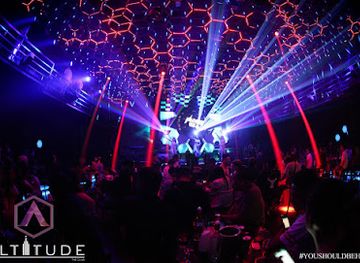
Altitude Nightclub
Discover the energetic atmosphere of Altitude Nightclub, where unforgettable nights of dancing and entertainment await in Manado City.
5 min drive · 1.7 km from city centre
-
Night club
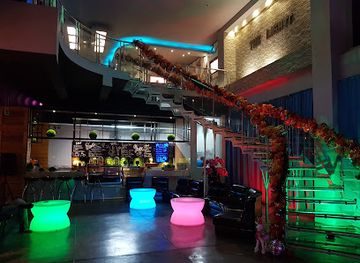
The Ligths Karaoke & Cafe
Experience vibrant nightlife at The Ligths Karaoke & Cafe in Manado City, where music, food, and fun come together for an unforgettable evening.
10 min walk · 0.8 km from city centre
-
Night club
Carons
Experience the vibrant nightlife of Manado at Carons, where music, dancing, and unforgettable memories await.
12 min walk · 0.9 km from city centre
-
Night club
Rike's Kingdom
Discover the vibrant nightlife of Manado at Rike's Kingdom, the ultimate night club experience with music, dancing, and extraordinary cocktails.
7 min drive · 2.4 km from city centre
Best shops in Manado
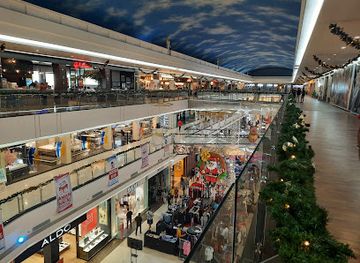
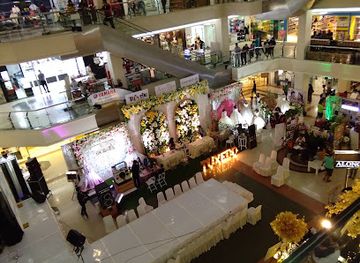
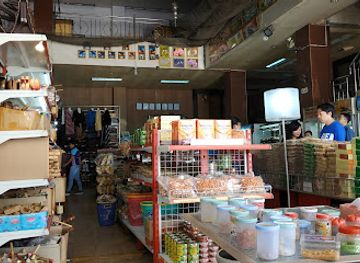
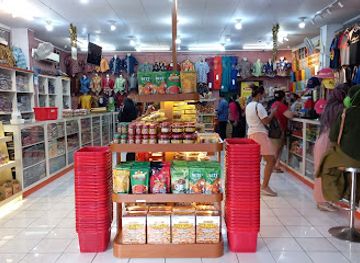
Shopping in Manado combines everyday markets, modern malls and specialist food retail. Pasar 45 and the nearby central commercial streets are useful for observing local trade, clothing, household goods and small retailers, while Pasar Bersehati is associated with fresh produce, seafood and the practical rhythms of a regional market. Modern shopping is concentrated in centres such as Manado Town Square and Mega Mall Manado, where national chains, cafés and supermarkets sit alongside local purchases. Distinctive items to look for include packaged sambal, smoked cakalang, North Sulawesi coffee and regional sweets such as klappertaart, subject to transport and customs rules. Crafts and souvenirs may include woven goods and locally made decorative pieces, but quality varies, so buying directly from known artisan or community outlets is preferable to assuming every market item is locally produced.
-
Shopping mall
Manado Town Square
Explore Manado Town Square – A vibrant shopping mall in Manado City with diverse shopping, dining, and entertainment.
7 min drive · 2.2 km from city centre
-
Shopping mall
Megamall
Explore Megamall, Manado's vibrant shopping hub, featuring a rich array of stores, delightful dining, and exciting entertainment options to enrich your visit.
5 min drive · 1.6 km from city centre
-
Souvenir store
Grand Merciful Building
Explore the Grand Merciful Building in Manado for an unforgettable souvenir shopping experience, showcasing the culture and craftsmanship of North Sulawesi.
7 min drive · 2.2 km from city centre
-
Souvenir store
Toko Manado Souvenir
Explore Toko Manado Souvenir for unique local crafts, snacks, and gifts that embody the spirit of North Sulawesi.
7 min walk · 0.5 km from city centre
Get your free copy of our complete guide to Manado, delivered straight to you.
Everything on this page, from attractions and restaurants to essentials and local phrases, in one PDF you can read offline, print or share.
Already have an account? Sign in
Your Manado guide is ready.
We'll send it to · Not you? Sign out

Getting your guide ready…
We are putting together a fresh copy of the Manado guide. This can take up to a minute.
This can take a few moments. If your browser asks, choose Allow so the download can start. You'll find the guide in your Downloads folder.
Nothing happened? Download it again
Sorry, the guide is taking longer than usual. Please try again in a minute, or get it by email instead.
Manado essentials
Currency and Payment
Safety
Emergency Situations
Do's and Don'ts
Local Tips
From Eve
Local phrases worth knowing
You don't need to get them perfect. A few words go a long way, and locals appreciate the effort.
Basics
| English | Local | Say it |
|---|---|---|
| Hello | Halo | [ha-lo] |
| Goodbye | Selamat tinggal | [se-la-mat ting-gal] |
| Yes | Iya | [i-ya] |
| No | Tidak | [ti-dak] |
| Please/You're welcome | Silakan | [si-la-kan] |
| Thank you | Terima kasih | [te-ri-ma ka-sih] |
| Excuse me/Sorry | Maaf | [ma-af] |
| How are you? | Apa kabar? | [a-pa ka-bar?] |
| Fine. And you? | Baik. Bagaimana denganmu? | [ba-ik. ba-gai-ma-na den-gan-mu?] |
| Do you speak English? | Bisa berbicara bahasa Inggris? | [bi-sa ber-bi-ca-ra ba-ha-sa Ing-gris?] |
| I don't understand | Saya tidak mengerti | [sa-ya ti-dak men-ger-ti] |
Eating & Drinking
| English | Local | Say it |
|---|---|---|
| I'd like to see the menu, please | Saya ingin melihat menu, tolong | [sa-ya in-gin me-li-hat me-nu, to-long] |
| I don't eat meat | Saya tidak makan daging | [sa-ya ti-dak ma-kan da-ging] |
| Cheers! | Selamat minum! | [se-la-mat mi-num!] |
| I would like to pay, please | Saya ingin membayar, tolong | [sa-ya in-gin mem-ba-yar, to-long] |
Emergencies
| English | Local | Say it |
|---|---|---|
| Help! | Tolong! | [to-long!] |
| Go away! | Pergi! | [per-gi!] |
| Call the Police! | Panggil polisi! | [pang-gil po-li-si!] |
| Call a doctor! | Panggil dokter! | [pang-gil dok-ter!] |
| I'm lost | Saya tersesat | [sa-ya ter-se-sat] |
| I'm ill | Saya sakit | [sa-ya sa-kit] |
Shopping
| English | Local | Say it |
|---|---|---|
| I'd like to buy... | Saya ingin membeli... | [sa-ya in-gin mem-be-li...] |
| I'm just looking | Saya hanya melihat-lihat | [sa-ya han-ya me-li-hat-li-hat] |
| How much is it? | Berapa harganya? | [be-ra-pa har-ga-nya?] |
| That's too expensive | Itu terlalu mahal | [i-tu ter-la-lu ma-hal] |
| Can you lower the price? | Bisa kurangi harganya? | [bi-sa ku-ran-gi har-ga-nya?] |
Time & Numbers
| English | Local | Say it |
|---|---|---|
| What time is it? | Sekarang jam berapa? | [se-ka-rang jam be-ra-pa?] |
| It's one o'clock | Jam satu | [jam sa-tu] |
| Half past (10) | Jam setengah sebelas | [jam se-ten-gah se-be-las] |
| Morning | Pagi | [pa-gi] |
| Afternoon | Sore | [so-re] |
| Evening | Malam | [ma-lam] |
| Yesterday | Kemarin | [ke-ma-rin] |
| Today | Hari ini | [ha-ri i-ni] |
| Tomorrow | Besok | [be-sok] |
| 1 | Satu | [sa-tu] |
| 2 | Dua | [du-a] |
| 3 | Tiga | [ti-ga] |
| 4 | Empat | [em-pat] |
| 5 | Lima | [li-ma] |
| 6 | Enam | [e-nam] |
| 7 | Tujuh | [tu-juh] |
| 8 | Delapan | [de-la-pan] |
| 9 | Sembilan | [sem-bi-lan] |
| 10 | Sepuluh | [se-pu-luh] |
Transport & Directions
| English | Local | Say it |
|---|---|---|
| Where's a/the...? | Dimana ada/ada... | [di-ma-na a-da/a-da...] |
| What's the address? | Apa alamatnya? | [a-pa a-la-mat-nya?] |
| Can you show me (on the map)? | Bisa tunjukkan saya (di peta)? | [bi-sa tun-juk-kan sa-ya (di pe-ta)?] |
| When's the next (bus)? | Kapan yang berikutnya (bus)? | [ka-pan yang be-ru-tu-nya (bus)?] |
| A ticket (to ....) | Tiket (ke ....) | [ti-ket (ke ....)] |
History of Manado
Minahasan Beginnings
The Manado area developed within the homeland of the Minahasa peoples, whose communities were organised in settlements and clan-based groups across the northern peninsula. The name Manado is associated with the bay and the settlement that grew beside it, although its precise linguistic history is discussed by scholars. Long before the modern city, coastal exchange connected North Sulawesi with neighbouring islands and wider maritime networks. Agricultural communities cultivated fertile volcanic soils inland, while fishing and seaborne trade supported settlements around the coast. This relationship between highland Minahasa and the sea remains central to the region’s identity, visible in Manado’s food traditions, religious life and connections with the islands of the bay.
European Contact and Colonial Rule
European involvement intensified in the seventeenth century as the Dutch East India Company extended its influence through North Sulawesi. Fort Amsterdam at nearby Amurang and other colonial installations reflected efforts to control trade and political alliances, while Manado became an important Dutch centre in the northern Moluccan sphere. Missionary activity expanded during the nineteenth century, and many Minahasan communities adopted Christianity through schools and churches supported by European missions. Colonial administration altered local authority, agriculture and commerce, bringing Manado more firmly into a regional network governed from the Netherlands East Indies. The city’s Christian majority and several older religious and commercial institutions are legacies of this period.
A Port of Trade and Migration
During the late colonial era and the early decades of Indonesian independence, Manado grew as a port and administrative centre serving North Sulawesi. Chinese-Indonesian merchants played an important role in urban commerce, helping to shape the trading quarter and religious landscape represented by Ban Hin Kiong Temple. Roads, schools, churches and government offices strengthened the city’s role as the peninsula’s principal urban hub. Manado’s population also became more diverse through movement from other parts of the archipelago. The resulting mixture of Minahasan, Chinese-Indonesian, Muslim, Christian and other communities is reflected in neighbourhoods, festivals, foodways and the public life of the modern city.
War in the Pacific
The Japanese occupation of the Netherlands East Indies during the Second World War reached North Sulawesi, bringing military rule, shortages and disruption to civilian life. Manado and the surrounding region were strategically important because of their position between the eastern Indonesian seas and the wider Pacific theatre. Local resistance included the establishment of the Twelfth Night movement in North Sulawesi, which opposed Japanese rule and was suppressed. The occupation ended with Japan’s surrender in 1945, but the war left lasting memories across the region. Post-war political change then placed Manado within the newly independent Republic of Indonesia.
The Permesta Era
In the late 1950s, Manado became closely associated with Permesta, a regional movement that initially called for greater autonomy and a more balanced distribution of national resources but later entered armed conflict with the central government. The rebellion, centred in parts of Sulawesi and supported for a time by foreign interests opposed to President Sukarno, led to fighting and instability before government forces regained control in 1958–1961. Permesta remains a sensitive subject in North Sulawesi, remembered through family histories and regional political discussion. Its aftermath reinforced Manado’s integration into the Indonesian state while contributing to the province’s strong sense of regional identity.
A Contemporary Marine Gateway
From the late twentieth century onwards, Manado expanded as North Sulawesi’s administrative, educational, commercial and transport centre. The creation of Bunaken National Park in 1991 gave international prominence to the bay’s reefs and islands and encouraged marine tourism, conservation work and diving services around Manado. Urban growth brought shopping centres, new housing and improved links with the airport, while the city retained older markets, religious buildings and neighbourhood traditions. Today Manado’s identity rests on several overlapping roles: provincial capital, Minahasan cultural centre, Christian-majority Indonesian city and gateway to the marine ecosystems of Bunaken and the wider northern peninsula.
Manado in Photos
Browse through our photo collection highlighting the charm and character of the destination.
Cities near Manado
The closest cities to Manado, if you have time for more than one stop.
-

-

-

-

-


Swipe for more cities
Explore more

Explore more of Indonesia
Explore Indonesia: An archipelago of diverse cultures, stunning landscapes, and endless adventures from bustling cities to serene beaches.
Explore Indonesia