

West Java, Indonesia Travel Guide
Explore West Java: A harmonious blend of natural wonders, cultural richness, and historical treasures in Indonesia's most captivating region.
West Java, located on the island of Java in Indonesia, is a region that offers an enchanting mix of natural beauty and rich cultural heritage. Home to the bustling city of Bandung, often called the 'Paris of Java,' West Java is a place where modernity meets tradition. The city is known for its cool climate, colonial architecture, and vibrant shopping scene. Don't miss the chance to visit the many tea plantations and enjoy a cup of freshly brewed tea while taking in the stunning views of the rolling hills. For nature enthusiasts, West Java is a paradise. The region boasts an array of natural wonders, from the volcanic craters of Tangkuban Perahu to the serene beauty of Kawah Putih, a strikingly blue volcanic lake. The lush landscapes of the Puncak Pass offer breathtaking vistas and are perfect for trekking and picnics. Additionally, the coastal town of Pelabuhan Ratu is famous for its mystical beauty and attracts surfers and beach lovers alike. The cultural fabric of West Java is equally captivating. The Sundanese people, who are the native inhabitants, have a rich tradition of music, dance, and culinary arts. Experience the local culture by attending a traditional angklung performance or trying Sundanese cuisine, which is known for its fresh ingredients and unique flavors. The region is also dotted with historical sites, such as the ancient Cangkuang Temple and the charming village of Kampung Naga, where time seems to have stood still.

Know before you go
Hi, I'm Eve. Here are a few practical things to know before exploring West Java.
- Visit early in the morning to Tangkuban Perahu to avoid the crowds and enjoy the best views.
- Pack warm clothing for Bandung as temperatures can drop, especially in the evening.
- Hire a local guide for a visit to Kampung Naga to get insightful stories and historical context.
- Try to visit during a local festival to experience the vibrant cultural traditions of the Sundanese people.
- Don't miss the local markets in Bandung for unique souvenirs and traditional crafts.
Top City Travel Guides in West Java
The cities of West Java, and the easiest places to base yourself.


Explore West Java: Things to Do, Places to Eat, Hotels & More
Handpicked recommendations for top attractions, local dining, accommodations, and more

Top Attractions & Sightseeing in West Java
Top-rated picks
Best Attractions

Taman Mini Indonesia Indah
Explore Indonesia's diverse culture at Taman Mini Indonesia Indah, a vibrant park showcasing traditional pavilions, museums, and beautiful gardens in Jakarta.

Monas
Discover the iconic Monas, Jakarta's National Monument, a symbol of independence and a hub of cultural heritage in the heart of Indonesia's capital.

Bogor Botanical Gardens
Immerse yourself in the beauty of nature at Bogor Botanical Gardens, a lush paradise in West Java featuring diverse plant species and serene landscapes.

Borobudur Temple
Explore the grandeur of Borobudur Temple, a UNESCO World Heritage site, showcasing exquisite architecture and rich Buddhist heritage in Central Java.

Best landmarks in West Java
Top-rated picks
Best Landmarks

Taman Mini Indonesia Indah
Explore Indonesia's rich cultural tapestry at Taman Mini Indonesia Indah, a vibrant park featuring museums, traditional houses, and stunning gardens.

Alun-Alun Bandung
Experience the vibrant heart of Bandung at Alun-Alun, a lush city park where culture, nature, and community come together in harmony.
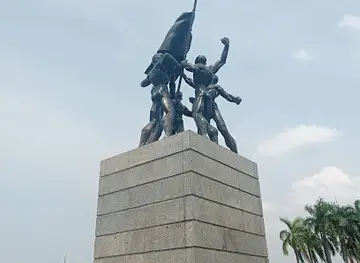
Monas
Discover Jakarta's National Monument: A symbol of independence, history, and breathtaking city views.

Bogor Botanical Gardens
Discover the enchanting Bogor Botanical Gardens, a lush paradise in West Java filled with diverse flora, tranquility, and rich biodiversity.

Best restaurants in West Java
Top-rated picks
Best Restaurants

Miss Bee Providore
Experience the best of Western and Indonesian cuisine at Miss Bee Providore in Bandung - where every meal is a delightful journey.

Plataran Menteng
Discover the essence of Indonesia through exquisite cuisine at Plataran Menteng in Jakarta - a culinary journey like no other.

Kaum Jakarta
Discover the essence of Indonesian cuisine at Kaum Jakarta—where tradition meets modern elegance amidst live music and crafted cocktails.

Lara Djonggrang
Discover the authentic flavors of Indonesia at Lara Djonggrang, where every meal is a cultural experience.

Best bars in West Java
Top-rated picks
Best Bars

Melly's Garden
Experience the vibrant nightlife of Jakarta at Melly's Garden, a lively pub and live music bar offering delicious food and unforgettable entertainment.

Beerpoint
Experience a vibrant nightlife at Beerpoint, Bandung's premier bar and lounge offering an extensive selection of local and international beers.

Shelter Cafe & Bar
Discover the perfect blend of cafe culture and nightlife at Shelter Cafe & Bar in Bandung, where every night is an experience to remember.

Roots Resto & Lounge
Explore the vibrant culinary scene of Roots Resto & Lounge in Bandung, where exceptional grilled dishes meet live music for an unforgettable night out.

Best nightclubs in West Java
Top-rated picks
Best Nightclubs

Colosseum Club
Dive into the electrifying nightlife of Jakarta at Colosseum Club, where music, energy, and unforgettable experiences await.

The H Club SCBD
Discover Jakarta's nightlife at The H Club SCBD, where electrifying music and vibrant atmosphere create unforgettable nights.

W Super Club Bandung Paskal
Dive into the electrifying nightlife at W Super Club Bandung Paskal, where vibrant beats and creative cocktails await every visitor.

Dragonfly
Experience Jakarta's nightlife at Dragonfly, a premier night club offering exceptional music, dazzling lights, and a vibrant atmosphere for unforgettable evenings.

Best shops in West Java
Top-rated picks
Best Shops

Kota Kasablanka
Discover the vibrant shopping experience at Kota Kasablanka, South Jakarta's premier destination for retail, dining, and entertainment.

Ciwalk
Discover Ciwalk, Bandung's premier shopping mall, where fashion, food, and culture come together in a vibrant atmosphere.

Pacific Place Mall
Discover the ultimate shopping experience at Pacific Place Mall in Jakarta, featuring luxury brands, diverse dining, and vibrant cultural events.

Neo Soho Podomoro City
Discover the ultimate shopping and dining experience at Neo Soho Podomoro City, a vibrant hub in Jakarta that caters to all your needs.

Explore West Java on the Map
A handpicked selection of must-see spots in West Java, mapped for you.
West Java Essentials
-
West Java is accessible via several international airports, the most notable being Soekarno-Hatta International Airport (CGK) in Jakarta and Husein Sastranegara International Airport (BDO) in Bandung. From these airports, you can take domestic flights, buses, or trains to various parts of West Java. There are also ferry services from Sumatra and other Indonesian islands for those preferring sea travel.
-
West Java has an extensive network of transportation options. Buses, trains, and minibuses (angkot) are widely available for inter-city travel. Ride-hailing apps like Gojek and Grab are popular for short distances. Renting a car or a motorbike is also an option for exploring more remote areas. For a unique experience, try the traditional 'becak' (pedicab) for short distances in towns and cities.
-
The official currency is the Indonesian Rupiah (IDR). Credit and debit cards are widely accepted in hotels, larger restaurants, and shopping centers, but it’s advisable to carry cash for smaller shops, markets, and rural areas. ATMs are plentiful in cities, but ensure you have enough cash before heading to more remote locations.
-
West Java is generally safe for tourists, but some areas have higher crime rates. Be cautious in crowded places and avoid displaying valuables. Areas like parts of Bandung and Bogor can have higher instances of pickpocketing and scams targeting tourists. Always use registered taxis or ride-hailing apps to avoid being overcharged.
-
In case of emergency, dial 112 for immediate assistance. Hospitals and clinics are available in major cities like Bandung and Bogor. It's advisable to have travel insurance that covers medical emergencies. For minor health issues, pharmacies are widely available. Always carry a copy of your identification and emergency contact numbers.
-
Fashion: Do dress modestly, especially when visiting religious sites. Avoid wearing revealing clothing. Religion: Do respect local customs and traditions. Always remove your shoes and cover your head when entering mosques. Public Transport: Do be respectful and offer your seat to elderly passengers. Don’t eat or drink on public transport. Greetings: Do greet with a smile and a slight bow or a handshake. Using both hands to give and receive items is a sign of respect. Eating & Drinking: Do try local delicacies and accept food offerings graciously. Don’t waste food, as it is considered disrespectful.
-
To experience West Java like a local, visit traditional markets such as Pasar Baru in Bandung and Pasar Bogor in Bogor. Engage with locals, who are often friendly and eager to share their culture. Don’t miss local culinary delights like 'Sate Maranggi' and 'Nasi Timbel'. For a unique cultural experience, attend a traditional Sundanese music performance featuring the angklung instrument.
When is the best time to visit West Java?
Useful Local Phrases for West Java
You don't need to speak the language perfectly. Even learning a few simple words can make conversations warmer—and locals usually appreciate the effort.
— Eve

Here are the phrases I use most often in West Java. Try a few—you'll be surprised how far they go! 😊
❤️
-
- HelloHalo
[ha-lo] - GoodbyeSelamat tinggal
[se-la-mat ting-gal] - YesIya
[ee-ya] - NoTidak
[tee-dak] - Please/You’re welcomeSilakan/Sama-sama
[see-la-kan/sa-ma sa-ma] - Thank youTerima kasih
[te-ri-ma ka-sih] - Excuse me/SorryPermisi/Maaf
[per-mi-si/ma-af] - How are you?Apa kabar?
[a-pa ka-bar] - Fine. And you?Baik. Dan kamu?
[ba-ik dan ka-mu] - Do you speak English?Apakah kamu bisa berbahasa Inggris?
[a-pa-kah ka-mu bi-sa ber-ba-ha-sa ing-gris] - I don’t understandSaya tidak mengerti
[sa-ya tee-dak meng-er-ti]
- HelloHalo
-
- I’d like to see the menu, pleaseSaya ingin melihat menu, tolong
[sa-ya in-gin me-li-hat me-nu to-long] - I don’t eat meatSaya tidak makan daging
[sa-ya tee-dak ma-kan da-ging] - Cheers!Selamat makan!
[se-la-mat ma-kan] - I would like to pay, pleaseSaya ingin membayar, tolong
[sa-ya in-gin mem-ba-yar to-long]
- I’d like to see the menu, pleaseSaya ingin melihat menu, tolong
-
- Help!Tolong!
[to-long] - Go away!Pergi jauh!
[per-gi ja-uh] - Call the Police!Panggil polisi!
[pang-gil po-li-si] - Call a doctor!Panggil dokter!
[pang-gil dok-ter] - I’m lostSaya tersesat
[sa-ya ter-se-sat] - I’m illSaya sakit
[sa-ya sa-kit]
- Help!Tolong!
-
- I’d like to buy...Saya ingin membeli...
[sa-ya in-gin mem-be-li] - I’m just lookingSaya hanya melihat
[sa-ya han-ya me-li-hat] - How much is it?Berapa harganya?
[be-ra-pa har-ga-nya] - That’s too expensiveItu terlalu mahal
[i-tu ter-la-lu ma-hal] - Can you lower the price?Bisakah kamu menurunkan harga?
[bi-sa-kah ka-mu me-nu-run-kan har-ga]
- I’d like to buy...Saya ingin membeli...
-
- What time is it?Jam berapa?
[jam be-ra-pa] - It’s one o'clockJam satu
[jam sa-tu] - Half past (10)Setengah sepuluh
[se-ten-gah se-pu-luh] - MorningPagi
[pa-gi] - AfternoonSiang
[si-ang] - EveningSore
[so-re] - YesterdayKemarin
[ke-ma-rin] - TodayHari ini
[ha-ri i-ni] - TomorrowBesok
[be-sok] - 1Satu
[sa-tu] - 2Dua
[du-a] - 3Tiga
[ti-ga] - 4Empat
[em-pat] - 5Lima
[li-ma] - 6Enam
[e-nam] - 7Tujuh
[tu-juh] - 8Delapan
[de-la-pan] - 9Sembilan
[sem-bi-lan] - 10Sepuluh
[se-pu-luh]
- What time is it?Jam berapa?
-
- Where's a/the...?Di mana ...?
[di ma-na] - What's the address?Apa alamatnya?
[a-pa a-la-mat-nya] - Can you show me (on the map)?Bisakah kamu tunjukkan (di peta)?
[bi-sa-kah ka-mu tun-juk-kan di pe-ta] - When's the next (bus)?Kapan (bis) berikutnya?
[ka-pan bis be-ri-kut-nya] - A ticket (to ....)Sebuah tiket (ke ...)
[se-buah ti-ket ke]
- Where's a/the...?Di mana ...?
History of West Java
-
The Sunda Kingdom flourished in West Java from around the 7th century until the 16th century. Known for its capital, Pakuan Pajajaran, near modern-day Bogor, the kingdom played a significant role in the region's political and cultural development. The Sunda Kingdom was a major center of Hinduism and Buddhism, and its influence extended over much of what is now West Java. Notable remnants from this period include the Batujaya and Cibuaya archaeological sites, which feature ancient temples and artifacts.
-
In the early 16th century, the rise of the Banten Sultanate marked a significant shift in West Java's history. This Islamic kingdom was established by Sunan Gunung Jati and became a powerful trading hub due to its strategic location on the Sunda Strait. The Sultanate's influence extended over much of West Java and even parts of Sumatra. The Great Mosque of Banten and the remnants of the Old Banten city provide fascinating insights into this period of Islamic and maritime history.
-
The Dutch East India Company (VOC) established control over West Java in the 17th century, marking the beginning of a long colonial period. Batavia (now Jakarta) became the center of Dutch administration. The impact of Dutch colonization is still evident in the architecture, infrastructure, and cultural blend of the region. Notable sites from this era include the Old Town of Jakarta (Kota Tua), which features colonial buildings like the Jakarta History Museum and the Maritime Museum.
-
The Java War (1825-1830), led by Prince Diponegoro, had significant ramifications for West Java. Although the primary conflict occurred in Central Java, the war's impact was felt throughout the island, including West Java. The conflict was a major uprising against Dutch colonial rule and led to widespread social and economic changes. The war also resulted in the implementation of the Cultivation System, which forced Javanese farmers to grow cash crops for export, drastically altering the region's agricultural practices.
-
West Java, like the rest of Indonesia, experienced significant changes following the country's declaration of independence in 1945. The struggle for independence was marked by key events such as the Bandung Conference in 1955, which took place in West Java's capital, Bandung. This conference was a pivotal moment in the non-aligned movement and brought together leaders from newly independent Asian and African nations. Post-independence, West Java has continued to develop, balancing modernization with the preservation of its rich cultural heritage.
-
Today, West Java is a vibrant region that boasts a mix of traditional culture and modern development. Cities like Bandung are known for their educational institutions, fashion industry, and tech startups. The province is also a popular tourist destination, offering natural attractions such as the volcanic crater Tangkuban Perahu, the highland tea plantations of Puncak, and the serene beaches of Pelabuhan Ratu. The Sundanese culture, with its unique music, dance, and cuisine, continues to thrive and attract visitors from around the world.
Neighbouring Regions of West Java
The closest regions to West Java, if you have time for more than one.


Your all‑in‑one travel companion app
Explore expert travel guides, compare and book tours, experiences, hotels, and more—all from the palm of your hand. Download now for seamless trip planning wherever your wanderlust takes you.


Explore More of Indonesia

Looking beyond West Java? Discover Indonesia for broader travel guides, local hot-spots, and regional highlights.
Explore IndonesiaWest Java in Photos
Browse through our photo collection highlighting the charm and character of the destination.


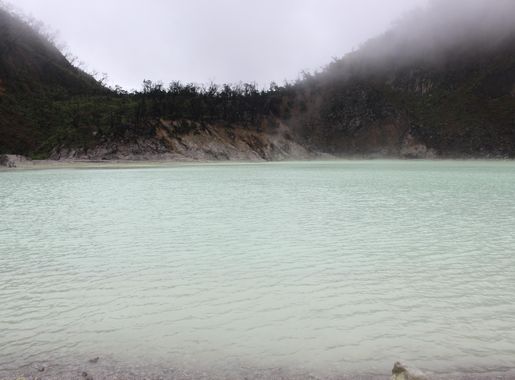
West Java: A Tapestry of Culture and Nature
West Java, located on the island of Java in Indonesia, is a region that offers an enchanting mix of natural beauty and rich cultural heritage. Home to the bustling city of Bandung, often called the 'Paris of Java,' West Java is a place where modernity meets tradition. The city is known for its cool climate, colonial architecture, and vibrant shopping scene. Don't miss the chance to visit the many tea plantations and enjoy a cup of freshly brewed tea while taking in the stunning views of the rolling hills. For nature enthusiasts, West Java is a paradise. The region boasts an array of natural wonders, from the volcanic craters of Tangkuban Perahu to the serene beauty of Kawah Putih, a strikingly blue volcanic lake. The lush landscapes of the Puncak Pass offer breathtaking vistas and are perfect for trekking and picnics. Additionally, the coastal town of Pelabuhan Ratu is famous for its mystical beauty and attracts surfers and beach lovers alike. The cultural fabric of West Java is equally captivating. The Sundanese people, who are the native inhabitants, have a rich tradition of music, dance, and culinary arts. Experience the local culture by attending a traditional angklung performance or trying Sundanese cuisine, which is known for its fresh ingredients and unique flavors. The region is also dotted with historical sites, such as the ancient Cangkuang Temple and the charming village of Kampung Naga, where time seems to have stood still.