

Effigy Mounds National Monument Travel Guide - Free Web & App
Your ultimate guide to Effigy Mounds National Monument. Discover top landmarks, proposed trips, and local tips. Free on the web or via the Evendo companion app.


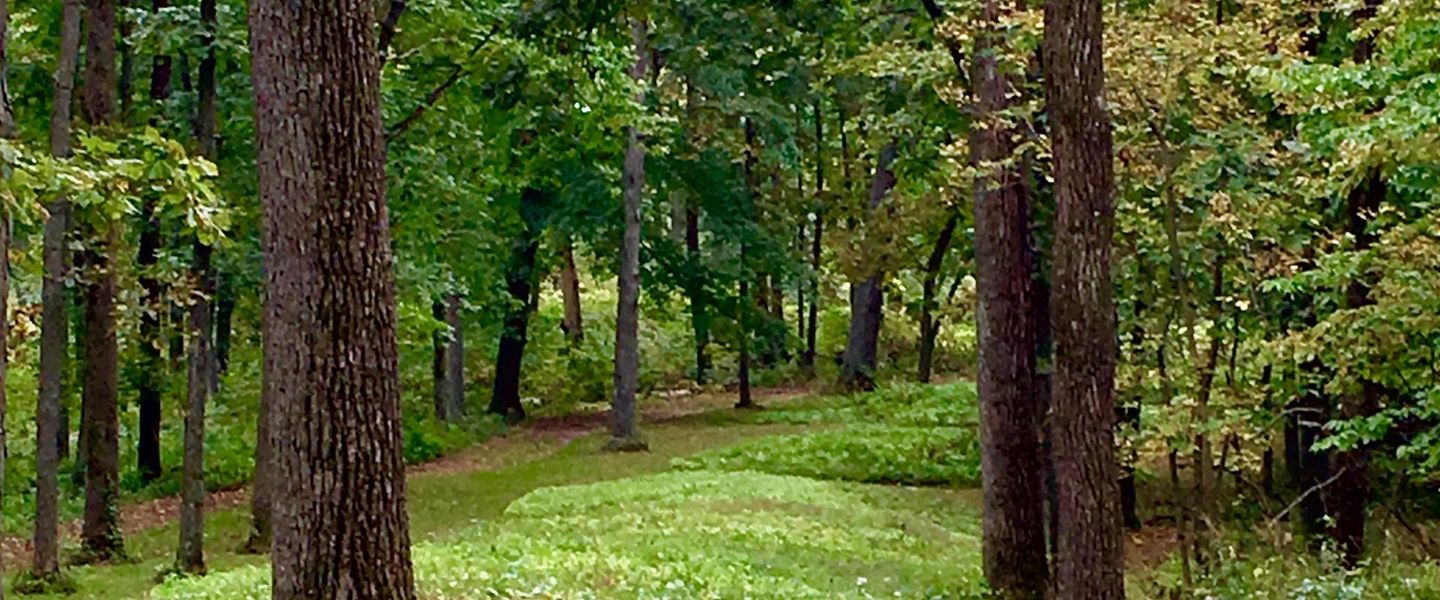


Effigy Mounds National Monument in Iowa preserves ancient earthen mounds, Mississippi River bluffs, woodland trails and living Indigenous heritage.
Earthen Forms and River Bluffs
Effigy Mounds National Monument occupies a wooded stretch of northeastern Iowa overlooking the Mississippi River, where steep bluffs, ravines and upland forests frame one of North America's most important concentrations of Native American mounds. More than 200 ancient mounds are preserved within the monument, including distinctive effigy mounds shaped to represent animals and other forms. Bears and birds are among the figures visitors may encounter, although many mounds are subtle earthworks whose significance becomes clearer through careful observation and interpretation.Read more about Effigy Mounds National Monument
A Landscape of Living Heritage
Walking the Monument
When is the best time to visit Effigy Mounds National Monument?
Best: May, August–September · 23–28°C| Month | High (°C) | Rainfall (mm) |
|---|---|---|
| January | 0 | 31 |
| February | 2 | 32 |
| March | 9 | 53 |
| April | 17 | 76 |
| May (best) | 23 | 108 |
| June | 27 | 115 |
| July | 29 | 109 |
| August (best) | 28 | 102 |
| September (best) | 23 | 95 |
| October | 16 | 72 |
| November | 8 | 52 |
| December | 1 | 37 |
Getting to and around Effigy Mounds National Monument
How to get there
Transportation
Best attractions in Effigy Mounds National Monument
The monument's central attraction is its collection of more than 200 Native American mounds, including animal-shaped effigy mounds preserved among the wooded Mississippi bluffs. Trails near the visitor centre lead to elevated viewpoints such as Fire Point, where the river valley and surrounding ridges provide context for the earthworks rather than merely a scenic backdrop. The Marching Bear Group, in the southern part of the monument, contains a notable concentration of effigy and burial mounds encountered on foot through forested terrain. In the north, the Sny Magill area offers another important mound landscape, while Yellow River routes reveal the relationship between tributary valleys, uplands and the Mississippi corridor. Interpretive displays and ranger-led activities, when scheduled, help explain Indigenous mound-building traditions and the site's continuing cultural significance. Nearby river towns such as Harpers Ferry and Lansing add access to the broader Upper Mississippi landscape but are not part of the monument itself.
-
Tourist attraction
Fire Point
Discover the breathtaking views and rich history at Fire Point, a must-visit tourist attraction in Harpers Ferry, Iowa.
-
Tourist attraction
Twin Views
Experience the stunning beauty of Twin Views in Harpers Ferry, Iowa, a scenic lookout perfect for nature lovers and photography enthusiasts.
-
Tourist attraction
Hanging Rock
Explore the breathtaking beauty and rich history of Hanging Rock in Harpers Ferry, Iowa, a perfect destination for nature lovers and adventure seekers.
-
Tourist attraction
Third Scenic View
Explore the stunning landscapes at Third Scenic View in Harpers Ferry, Iowa, an ideal destination for nature lovers and photographers.


Best landmarks in Effigy Mounds National Monument
The most significant landmarks are the earthworks themselves, particularly the bear- and bird-shaped effigy mounds and the burial mounds preserved in groups across the monument. Their meaning comes from both their forms and their placement on ridges above the Mississippi floodplain, where the surrounding bluffs and valleys form part of the cultural landscape. Fire Point is a notable natural viewpoint, while the Marching Bear Group is an important concentration of mound features in the southern area. The Sny Magill section represents another distinct archaeological landscape in the northern part of the monument. Rather than monumental architecture, Effigy Mounds is defined by the close relationship between human-shaped earthworks, forest, river and bluff geology, with the landscape itself providing the essential context for understanding these protected Indigenous sites.
-
Visitor center
Effigy Mounds National Monument Visitor Center
Discover the ancient Native American mounds and rich cultural heritage at Effigy Mounds National Monument Visitor Center in Iowa.
-
Park
Effigy Mounds South Unit
Explore the ancient mounds and stunning landscapes of Effigy Mounds South Unit, a serene park in Iowa rich in history and natural beauty.


Explore Effigy Mounds National Monument on the map
Plan your trip on one map. See where the top attractions, landmarks, restaurants and hotels are, and book hotels and experiences in a few clicks.
Best hotels in Effigy Mounds National Monument
Best restaurants in Effigy Mounds National Monument
There are no restaurants within the monument, so visitors should plan meals around the surrounding Mississippi River communities. Harpers Ferry is the closest practical base for refreshments near the principal visitor facilities, while Lansing and McGregor provide additional places to eat, including small-town cafés, taverns and casual restaurants when open. Larger choice is available farther inland in regional towns such as Decorah, where visitors can find cafés, bakeries and restaurants drawing on Midwestern produce and the area's agricultural economy. Local dining is generally informal rather than destination fine dining, with menus shaped by American comfort food, seasonal ingredients and the traditions of Iowa's rural communities. Carrying water and a picnic meal is sensible for longer trail days, as food services are not located at every trailhead and opening arrangements may vary.
-
Restaurant
The Barn Restaurant
Experience the rustic charm and culinary delights at The Barn Restaurant in Prairie du Chien - perfect for every occasion.
-
Restaurant
Winneshiek Bar & Grill
Discover flavorful dishes and vibrant drinks at Winneshiek Bar & Grill in Prairie du Chien - your go-to spot for great food and good times.


Best bars in Effigy Mounds National Monument
Effigy Mounds National Monument has no nightlife infrastructure, and evenings are generally quiet once visitors leave the trails. The nearest evening options are found in small Mississippi River communities such as Harpers Ferry, Lansing and McGregor, where traditional bars, taverns and restaurant bars provide a local setting for a drink or an informal meal rather than a club scene. Seasonal community events may add music or social gatherings, but schedules vary and should not be assumed. Visitors staying in the area are more likely to spend the evening along the river, at their accommodation or in a village pub than travelling between entertainment venues. Decorah offers a broader selection of breweries, bars and cultural events, but it lies outside the monument and requires a separate road journey.
-
Bar
The Barn Restaurant
Experience the rustic charm and diverse menu of The Barn Restaurant, a culinary haven in Prairie du Chien offering delicious food and a vibrant bar atmosphere.
-
Restaurant
Winneshiek Bar & Grill
Experience the warmth of Wisconsin at Winneshiek Bar & Grill, where delicious local cuisine meets a vibrant community atmosphere.
-
Bar
The Crooked Oar
Experience the charm of Wisconsin at The Crooked Oar, featuring local brews, delicious food, and a welcoming atmosphere.


Best nightclubs in Effigy Mounds National Monument
Effigy Mounds National Monument has no nightlife infrastructure, and evenings are generally quiet once visitors leave the trails. The nearest evening options are found in small Mississippi River communities such as Harpers Ferry, Lansing and McGregor, where traditional bars, taverns and restaurant bars provide a local setting for a drink or an informal meal rather than a club scene. Seasonal community events may add music or social gatherings, but schedules vary and should not be assumed. Visitors staying in the area are more likely to spend the evening along the river, at their accommodation or in a village pub than travelling between entertainment venues. Decorah offers a broader selection of breweries, bars and cultural events, but it lies outside the monument and requires a separate road journey.
-
Monument
Effigy Mounds National Monument
Discover the ancient wonders of Effigy Mounds National Monument, a sacred site of Native American heritage surrounded by stunning natural beauty.
-
Visitor center
Effigy Mounds National Monument Visitor Center
Explore the rich history and breathtaking landscapes at Effigy Mounds National Monument Visitor Center, where nature and culture intertwine.


Best shops in Effigy Mounds National Monument
Shopping within Effigy Mounds National Monument is limited, and the area is not a retail destination. Visitors should obtain food, fuel, walking supplies and cash in Harpers Ferry, Lansing, McGregor or larger inland towns before spending a full day on the trails. Small independent businesses in the Mississippi River communities may offer local artwork, books, regional food products and practical goods, while Decorah has a wider selection of independent shops and galleries. Iowa-made foodstuffs and craft products can be a useful way to connect with the wider agricultural and artistic character of the region, although stock varies between establishments. There are no large shopping districts at the monument, and visitors should not expect shops or extensive services at individual trailheads.
-
Monument
Effigy Mounds National Monument
Explore the ancient burial mounds and stunning landscapes of Effigy Mounds National Monument, a unique testament to Native American heritage in Iowa.
-
Visitor center
Effigy Mounds National Monument Visitor Center
Explore ancient Native American history at Effigy Mounds National Monument Visitor Center, where culture meets breathtaking natural beauty in Harpers Ferry, Iowa.


Get your free copy of our complete guide to Effigy Mounds National Monument, delivered straight to you.
Everything on this page, from attractions and restaurants to essentials and local phrases, in one PDF you can read offline, print or share.
Already have an account? Sign in
Your Effigy Mounds National Monument guide is ready.
We'll send it to · Not you? Sign out

Getting your guide ready…
We are putting together a fresh copy of the Effigy Mounds National Monument guide. This can take up to a minute.
This can take a few moments. If your browser asks, choose Allow so the download can start. You'll find the guide in your Downloads folder.
Nothing happened? Download it again
Sorry, the guide is taking longer than usual. Please try again in a minute, or get it by email instead.
Effigy Mounds National Monument essentials
Currency and Payment
Safety
Emergency Situations
Do's and Don'ts
Local Tips
From Eve
Local phrases worth knowing
You don't need to get them perfect. A few words go a long way, and locals appreciate the effort.
Basics
| English | Local | Say it |
|---|---|---|
| Hello | Hey | [hey] |
| Goodbye | Bye | [bye] |
| Yes | Yeah | [yeah] |
| No | Nah | [nah] |
| Please/You're welcome | Please/You're welcome | [please/you're welcome] |
| Thank you | Thanks | [thanks] |
| Excuse me/Sorry | Sorry | [sorry] |
| How are you? | Howdy | [howdy] |
| Fine. And you? | Fine. And you? | [fine. and you?] |
| Do you speak English? | Speak English? | [speak english?] |
| I don't understand | I don't get it | [i don't get it] |
Eating & Drinking
| English | Local | Say it |
|---|---|---|
| I'd like to see the menu, please | Menu please | [menu please] |
| I don't eat meat | No meat | [no meat] |
| Cheers! | Cheers! | [cheers!] |
| I would like to pay, please | Pay please | [pay please] |
Emergencies
| English | Local | Say it |
|---|---|---|
| Help! | Help! | [help!] |
| Go away! | Go away! | [go away!] |
| Call the Police! | Call Police! | [call police!] |
| Call a doctor! | Call doctor! | [call doctor!] |
| I'm lost | Lost | [lost] |
| I'm ill | Sick | [sick] |
Shopping
| English | Local | Say it |
|---|---|---|
| I'd like to buy... | Buy... | [buy...] |
| I'm just looking | Just looking | [just looking] |
| How much is it? | Price? | [price?] |
| That's too expensive | Too much | [too much] |
| Can you lower the price? | Lower price? | [lower price?] |
Time & Numbers
| English | Local | Say it |
|---|---|---|
| What time is it? | Time? | [time?] |
| It's one o'clock | One o'clock | [one o'clock] |
| Half past (10) | Half ten | [half ten] |
| Morning | Morning | [morning] |
| Afternoon | Afternoon | [afternoon] |
| Evening | Evening | [evening] |
| Yesterday | Yesterday | [yesterday] |
| Today | Today | [today] |
| Tomorrow | Tomorrow | [tomorrow] |
| 1 | One | [one] |
| 2 | Two | [two] |
| 3 | Three | [three] |
| 4 | Four | [four] |
| 5 | Five | [five] |
| 6 | Six | [six] |
| 7 | Seven | [seven] |
| 8 | Eight | [eight] |
| 9 | Nine | [nine] |
| 10 | Ten | [ten] |
Transport & Directions
| English | Local | Say it |
|---|---|---|
| Where's a/the...? | Where...? | [where...?] |
| What's the address? | Address? | [address?] |
| Can you show me (on the map)? | Show me (on map)? | [show me (on map)?] |
| When's the next (bus)? | Next (bus)? | [next (bus)?] |
| A ticket (to ....) | Ticket (to ...) | [ticket (to ...)] |
History of Effigy Mounds National Monument
A Landscape Shaped by the Mississippi
The monument lies within the Upper Mississippi Valley, a region shaped by river erosion, glacial history and the resistant limestone bluffs that rise above the floodplain. Although the mounds are the central cultural feature, their setting is inseparable from the river landscape: wooded ridges, narrow valleys and fertile lowlands provided routes, resources and varied habitats for successive Indigenous communities. The steep terrain also helped preserve some earthworks from the intensive agricultural alteration that affected many other parts of the Midwest.
Woodland Peoples and Earthen Monuments
The mounds were constructed by Indigenous peoples during several phases of the Woodland period, broadly spanning the centuries before and after the beginning of the Common Era. Some served as burial places, while effigy mounds took the forms of animals or other symbolic figures. Their builders shaped earth with organised labour and detailed knowledge of the landscape, creating monuments that expressed social, spiritual and ancestral relationships. The surviving groups are part of a much wider mound-building tradition found across the Upper Midwest and the Mississippi watershed.
Indigenous Continuity and Displacement
The people who built the mounds were not an isolated prehistoric society without modern descendants. Native nations, including the Ho-Chunk, maintain cultural and historical connections to the region and regard the earthworks as evidence of enduring Indigenous presence. European-American settlement, land surveys and agricultural expansion transformed northeastern Iowa during the nineteenth century, while Indigenous communities faced forced removal and continuing dispossession. Interpreting the monument therefore requires attention both to the antiquity of the mounds and to the living communities whose histories remain connected to them.
Preservation as a National Monument
Effigy Mounds National Monument was established in 1949 to protect the earthworks and their surrounding landscape. Its creation reflected growing recognition that archaeological sites were vulnerable to ploughing, erosion, looting and other forms of damage. National protection brought a conservation framework to the principal mound groups while also making interpretation and careful public access possible. The monument's purpose extends beyond preserving individual shapes in the ground: it protects the relationship between the mounds, the Mississippi bluffs and the wider cultural landscape.
Modern Stewardship and Interpretation
Today the National Park Service manages the monument as both an archaeological landscape and a place of continuing cultural importance. Research, monitoring, interpretation and visitor education support the protection of the earthworks, while trails allow the public to encounter them without treating them as ordinary landscape features. Contemporary interpretation increasingly presents Indigenous perspectives alongside archaeological evidence and acknowledges that mound sites are sacred or culturally sensitive places. Seasonal weather, vegetation growth and erosion remain ongoing management considerations in the river valley and bluff country.
Effigy Mounds National Monument in Photos
Browse through our photo collection highlighting the charm and character of the destination.
Neighbouring destination travel guides
The closest destinations to Effigy Mounds National Monument, if you have time for more than one.
-

-

-
-

-


Swipe for more destinations
Explore more

Explore more of Little Switzerland
Explore Little Switzerland in north-east Iowa for Driftless Area scenery, Mississippi River towns, trout streams, heritage sites and rural culture.
Explore Little Switzerland
Explore more of Iowa
Explore Iowa: The American Heartland with its blend of rural charm, vibrant cities, rich cultural experiences, and natural beauty, perfect for nature lovers and cultural enthusiasts.
Explore Iowa