

Cedar Rapids, Iowa Travel Guide
Discover Cedar Rapids, Iowa - a city rich in culture, history, and natural beauty, offering a perfect blend of small-town charm and big-city amenities.
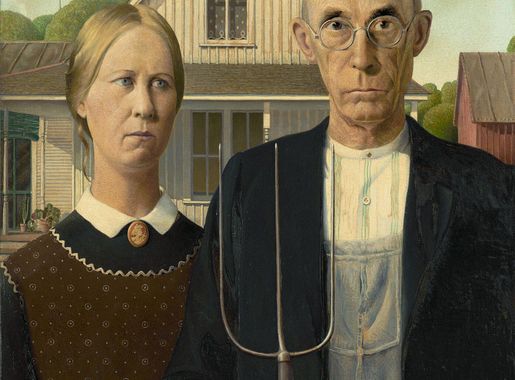
Cedar Rapids, often called the City of Five Seasons, is a charming destination in Eastern Iowa. The fifth season is a metaphor for the time to enjoy the other four, and that's exactly what you'll feel here. This city combines the warmth of a small town with the amenities of a larger urban area, making it ideal for visitors of all ages. The city boasts a rich cultural scene with notable attractions such as the Cedar Rapids Museum of Art, which houses the world's largest collection of works by Grant Wood, the artist behind the famous painting 'American Gothic.' The National Czech & Slovak Museum & Library is another must-visit, offering a deep dive into the heritage and history of these communities. Nature lovers will find plenty to explore. The Indian Creek Nature Center features miles of scenic trails, while the Cedar River provides opportunities for kayaking and fishing. You can also take a stroll through the NewBo City Market, a bustling hub of local food and crafts that epitomizes the community spirit of Cedar Rapids. Foodies will delight in the local dining scene, which ranges from farm-to-table eateries to international cuisine. For a taste of local flavor, try the Cedar Ridge Winery & Distillery, where you can sample award-winning wines and spirits made right in Iowa. Cedar Rapids is a city that celebrates its past while looking forward to the future. Whether you're here for the arts, nature, or just to soak in the friendly atmosphere, you'll find something to love in Cedar Rapids.

Know before you go
Hi, I'm Eve. Here are a few practical things to know before exploring Cedar Rapids.
- Visit the Cedar Rapids Museum of Art on the first Thursday of the month for free admission.
- Head to NewBo City Market on weekends for the best local vendors and live music.
- Take a guided tour at the National Czech & Slovak Museum & Library to fully appreciate its exhibits.
- Check out the seasonal events at the Indian Creek Nature Center for unique outdoor experiences.
- Try the local craft beers at Lion Bridge Brewing Company, a favorite among locals.
Explore Cedar Rapids: Things to Do, Places to Eat, Hotels & More
Handpicked recommendations for top attractions, local dining, accommodations, and more

Best attractions in Cedar Rapids
Top-rated picks
Best Attractions

The District: Czech Village & New Bohemia
Discover the vibrant blend of culture, community, and unique shopping in The District, Cedar Rapids' must-visit attraction for every traveler.

The Fun Station Cedar Rapids
Experience endless fun and excitement at The Fun Station Cedar Rapids, the ultimate amusement center for families and thrill-seekers alike.

Bever Park
Explore Bever Park: A serene escape in Cedar Rapids featuring scenic trails, a delightful petting zoo, and perfect picnic spots for families.

Sky Zone Trampoline Park
Experience exhilarating fun for all ages at Sky Zone Trampoline Park, the ultimate indoor adventure destination in Cedar Rapids.

Best landmarks in Cedar Rapids
Top-rated picks
Best Landmarks

The District: Czech Village & New Bohemia
Explore the vibrant shops and rich heritage of The District: Czech Village & New Bohemia in Cedar Rapids, a cultural gem in the Midwest.

Cedar Rapids Museum of Art
Explore the Cedar Rapids Museum of Art, showcasing American masterpieces and a vibrant array of exhibits in a historic setting.

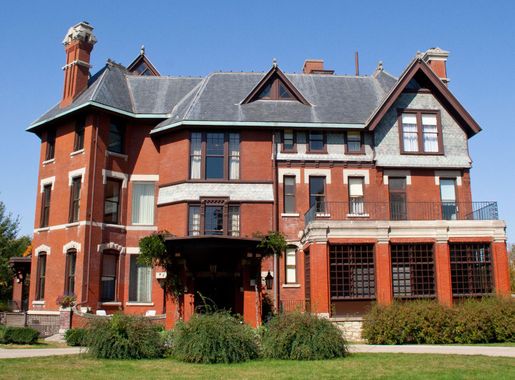
Brucemore
Explore the historic Brucemore estate in Cedar Rapids, Iowa—a captivating journey through time, beauty, and culture.

National Czech & Slovak Museum & Library
Explore the vibrant cultural heritage of Czech and Slovak communities at the National Czech & Slovak Museum & Library in Cedar Rapids, Iowa.

Best restaurants in Cedar Rapids
Top-rated picks
Best Restaurants

Cheddar's Scratch Kitchen
Discover the heartwarming flavors of Cheddar's Scratch Kitchen in Cedar Rapids—where traditional American comfort meets Southern hospitality.

Zeppelins
Experience the vibrant flavors of Cedar Rapids at Zeppelins Grill – where delicious food meets exceptional hospitality.

Perkins Restaurant & Bakery
Discover Perkins Restaurant & Bakery in Cedar Rapids: where delicious American comfort food meets freshly baked delights in a family-friendly atmosphere.

Black Sheep Social Club
Discover culinary creativity at Black Sheep Social Club in Cedar Rapids - where unique flavors meet vibrant nightlife.

Best bars in Cedar Rapids
Top-rated picks
Best Bars

Black Sheep Social Club
Indulge in unique culinary delights and vibrant nightlife at Cedar Rapids' Black Sheep Social Club, a top-rated bar and restaurant.

Irish Democrat
Discover Irish hospitality and American comfort food at the Irish Democrat in Cedar Rapids - where every meal feels like a celebration.

Pub 217
Discover Pub 217 in Cedar Rapids, a grill where delicious food meets a vibrant atmosphere, perfect for food lovers and socializers alike.

Parlor City Pub & Eatery
Discover Cedar Rapids' local flavors at Parlor City Pub & Eatery, where great food and craft beers meet in a vibrant setting.

Best nightclubs in Cedar Rapids
Top-rated picks
Best Nightclubs

Chrome Horse Saloon
Experience the vibrant nightlife and delicious dining at Chrome Horse Saloon in Cedar Rapids, where live music meets mouthwatering cuisine.

Hazzard County American Saloon
Discover the vibrant nightlife at Hazzard County American Saloon, where great drinks and lively entertainment come together in Cedar Rapids.

Playtime Tap
Experience the lively atmosphere of Playtime Tap in Cedar Rapids, where fun meets relaxation with drinks, games, and friendly competition.

Westside Lounge
Discover the lively atmosphere and affordable drinks at Westside Lounge in Cedar Rapids, where great times and new friends await.

Best shops in Cedar Rapids
Top-rated picks
Best Shops

Lindale Mall
Explore the diverse shopping, dining, and entertainment options at Lindale Mall, Cedar Rapids' premier retail destination.

VON MAUR
Experience upscale shopping at Von Maur, Cedar Rapids' premier department store with exceptional service and a variety of high-quality products.

T.J. Maxx
Discover incredible deals on stylish clothing, accessories, and home goods at T.J. Maxx in Cedar Rapids, where quality meets affordability.

Stuff Etc
Explore Cedar Rapids' Stuff Etc for unique second-hand clothing, furniture, and eclectic finds that reflect local charm and style.

Explore Cedar Rapids on the Map
A handpicked selection of must-see spots in Cedar Rapids, mapped for you.
Cedar Rapids Essentials
-
Cedar Rapids is well-connected via Eastern Iowa Airport (CID), located just 10 miles from the city center. Major airlines provide regular flights to and from major U.S. cities. Alternatively, Cedar Rapids is accessible by car via Interstate 380 and U.S. Highways 30 and 151. For those preferring rail travel, Amtrak services are available in nearby cities such as Mount Pleasant and Ottumwa.
-
Cedar Rapids offers several transportation options, including the Cedar Rapids Transit system, which operates bus services throughout the city. Taxis and rideshare services like Uber and Lyft are also available. For greater flexibility, car rentals can be found at the airport and various locations around the city. Biking is another viable option, with numerous bike lanes and trails.
-
The official currency is the U.S. Dollar (USD). Credit and debit cards are widely accepted in most establishments, including hotels, restaurants, and shops. ATMs are plentiful throughout the city, and contactless payment options like Apple Pay and Google Wallet are also commonly used. It is still advisable to carry some cash for small purchases or in case of technical issues.
-
Cedar Rapids is generally a safe city for tourists. However, it's wise to take standard precautions such as avoiding poorly-lit areas at night and keeping an eye on personal belongings in crowded places. Areas like Wellington Heights and parts of the southwest side have higher crime rates, so it's best to exercise caution if visiting these neighborhoods.
-
In case of an emergency, dial 911 for police, fire, or medical assistance. The local hospitals, such as Mercy Medical Center and UnityPoint Health - St. Luke's Hospital, provide comprehensive medical services. Pharmacies are widely available for minor health issues. It is recommended to have travel insurance that covers medical emergencies.
-
Fashion: Do dress comfortably and appropriately for the weather. Casual attire is generally acceptable, but avoid overly revealing clothing. Religion: Do respect religious sites and practices. Cedar Rapids has a diverse religious landscape, including churches, mosques, and temples. Public Transport: Do be courteous to fellow passengers. Offer your seat to the elderly or disabled. Avoid loud conversations. Greetings: Do greet people with a friendly 'hello' or a handshake. Eating & Drinking: Do try the local cuisine. Cedar Rapids is known for its diverse food scene, including traditional American fare and international cuisines. Don't forget to tip; 15-20% is standard in restaurants.
-
To experience Cedar Rapids like a local, visit the NewBo City Market, a hub for local vendors and artisans. Attend a Cedar Rapids Kernels baseball game for a taste of local sports culture. Explore the Cedar River Trail for scenic views and outdoor activities. Don't miss the Czech Village and National Czech & Slovak Museum & Library for a deep dive into the city's rich cultural heritage.
When is the best time to visit Cedar Rapids?
Useful Local Phrases for Cedar Rapids
You don't need to speak the language perfectly. Even learning a few simple words can make conversations warmer—and locals usually appreciate the effort.
— Eve

Here are the phrases I use most often in Cedar Rapids. Try a few—you'll be surprised how far they go! 😊
❤️
-
- HelloHowdy
[haw-dee] - GoodbyeSee ya
[see yah] - YesYep
[yep] - NoNah
[nah] - Please/You're welcomePlease/No problem
[pleez/no prob-lem] - Thank youThanks
[thanks] - Excuse me/SorryPardon me/My bad
[par-dun me/my bad] - How are you?How you doin'?
[how yoo doin] - Fine. And you?Good. You?
[good. yoo] - Do you speak English?Ya speak English?
[yah speak ing-glish] - I don't understandI don't get it
[eye don't get it]
- HelloHowdy
-
- I'd like to see the menu, pleaseCan I see the menu, please?
[can eye see the menu, please?] - I don't eat meatI'm vegetarian
[eye'm ve-juh-tair-ee-un] - Cheers!Cheers!
[cheers] - I would like to pay, pleaseCheck, please
[check, please]
- I'd like to see the menu, pleaseCan I see the menu, please?
-
- Help!Help!
[help] - Go away!Get lost!
[get lost] - Call the Police!Call the cops!
[call the cops] - Call a doctor!Get a doc!
[get a doc] - I'm lostI'm lost
[eye'm lost] - I'm illI'm sick
[eye'm sick]
- Help!Help!
-
- I'd like to buy...I wanna buy...
[eye wanna buy] - I'm just lookingJust browsing
[just bro-zing] - How much is it?How much?
[how much?] - That's too expensiveThat's pricey
[that's pry-see] - Can you lower the price?Can you do better?
[can yoo do bet-ter]
- I'd like to buy...I wanna buy...
-
- What time is it?What's the time?
[what's the time] - It's one o'clockIt's one
[it's one] - Half past (10)Ten-thirty
[ten-thur-tee] - MorningMorning
[mor-ning] - AfternoonAfternoon
[af-ter-noon] - EveningEvening
[ee-ven-ing] - YesterdayYesterday
[yes-ter-day] - TodayToday
[to-day] - TomorrowTomorrow
[to-mor-row] - 1One
[wun] - 2Two
[too] - 3Three
[three] - 4Four
[for] - 5Five
[fiv] - 6Six
[siks] - 7Seven
[sev-en] - 8Eight
[ate] - 9Nine
[nain] - 10Ten
[ten]
- What time is it?What's the time?
-
- Where's a/the...?Where's the...?
[where's the] - What's the address?What's the address?
[what's the address] - Can you show me (on the map)?Can you show me (on the map)?
[can yoo show me (on the map)] - When's the next (bus)?When's the next (bus)?
[when's the next (bus)] - A ticket (to ....)A ticket (to ....)
[a ticket (to)]
- Where's a/the...?Where's the...?
History of Cedar Rapids
-
Cedar Rapids was officially incorporated as a city in 1849. The city's early growth was driven by its strategic location along the Cedar River, which provided ample water power for mills and factories. The city's founders, including Osgood Shepherd, envisioned Cedar Rapids as a bustling hub of commerce and industry.
-
The arrival of the railroad in the 1850s significantly transformed Cedar Rapids. The Chicago, Iowa and Nebraska Railroad, later part of the Chicago and North Western Transportation Company, connected Cedar Rapids to larger markets, spurring economic development and population growth. This connection made Cedar Rapids a vital transportation and commercial hub in the Midwest.
-
In the late 19th and early 20th centuries, Cedar Rapids became a prominent destination for Bohemian and Czech immigrants. This rich cultural heritage is still evident today, particularly in the Czech Village/New Bohemia District, which features museums, shops, and festivals celebrating Czech culture. The National Czech & Slovak Museum & Library, opened in 1974, is a testament to this vibrant community.
-
One of the most significant events in recent history was the Flood of 2008. The Cedar River crested at 31.12 feet, inundating over 10 square miles of the city and causing extensive damage to homes, businesses, and historic buildings. The flood led to a massive rebuilding effort and has since become a defining moment in Cedar Rapids' modern history, showcasing the resilience and community spirit of its residents.
-
The early 20th century saw Cedar Rapids emerge as an industrial powerhouse. Companies like Quaker Oats, which opened its Cedar Rapids plant in 1873, played a crucial role in the city's economic development. The cereal manufacturing giant remains one of the largest employers in the city, contributing to its reputation as a leading center for food production and processing.
-
Cedar Rapids has a rich cultural scene, with numerous institutions dedicated to the arts. The Cedar Rapids Museum of Art, founded in 1905, houses an extensive collection of works by Grant Wood, an Iowa native and famous American painter. The Paramount Theatre, originally opened in 1928, is a beautifully restored venue that hosts a variety of performances, from Broadway shows to concerts, making it a cultural cornerstone of the city.
-
Coe College, founded in 1851, is one of the oldest institutions of higher learning in Iowa. Originally known as the Cedar Rapids Collegiate Institute, it has played an essential role in the educational and cultural development of Cedar Rapids. The college's historic campus and academic programs attract students from across the country, contributing to the city's vibrant intellectual community.
Cities near Cedar Rapids
The closest cities to Cedar Rapids, if you have time for more than one stop.


Your all‑in‑one travel companion app
Explore expert travel guides, compare and book tours, experiences, hotels, and more—all from the palm of your hand. Download now for seamless trip planning wherever your wanderlust takes you.


Cedar Rapids in Photos
Browse through our photo collection highlighting the charm and character of the destination.




Cedar Rapids: The Heart of Eastern Iowa
Cedar Rapids, often called the City of Five Seasons, is a charming destination in Eastern Iowa. The fifth season is a metaphor for the time to enjoy the other four, and that's exactly what you'll feel here. This city combines the warmth of a small town with the amenities of a larger urban area, making it ideal for visitors of all ages. The city boasts a rich cultural scene with notable attractions such as the Cedar Rapids Museum of Art, which houses the world's largest collection of works by Grant Wood, the artist behind the famous painting 'American Gothic.' The National Czech & Slovak Museum & Library is another must-visit, offering a deep dive into the heritage and history of these communities. Nature lovers will find plenty to explore. The Indian Creek Nature Center features miles of scenic trails, while the Cedar River provides opportunities for kayaking and fishing. You can also take a stroll through the NewBo City Market, a bustling hub of local food and crafts that epitomizes the community spirit of Cedar Rapids. Foodies will delight in the local dining scene, which ranges from farm-to-table eateries to international cuisine. For a taste of local flavor, try the Cedar Ridge Winery & Distillery, where you can sample award-winning wines and spirits made right in Iowa. Cedar Rapids is a city that celebrates its past while looking forward to the future. Whether you're here for the arts, nature, or just to soak in the friendly atmosphere, you'll find something to love in Cedar Rapids.
Explore More of Iowa

Looking beyond Cedar Rapids? Discover Iowa for broader travel guides, local hot-spots, and regional highlights.
Explore Iowa