

Babylon Palace Travel Guide
Free Guide: Explore Saddam Hussein's controversial palace amidst the ruins of ancient Babylon, offering a unique glimpse into Iraq's layered history.


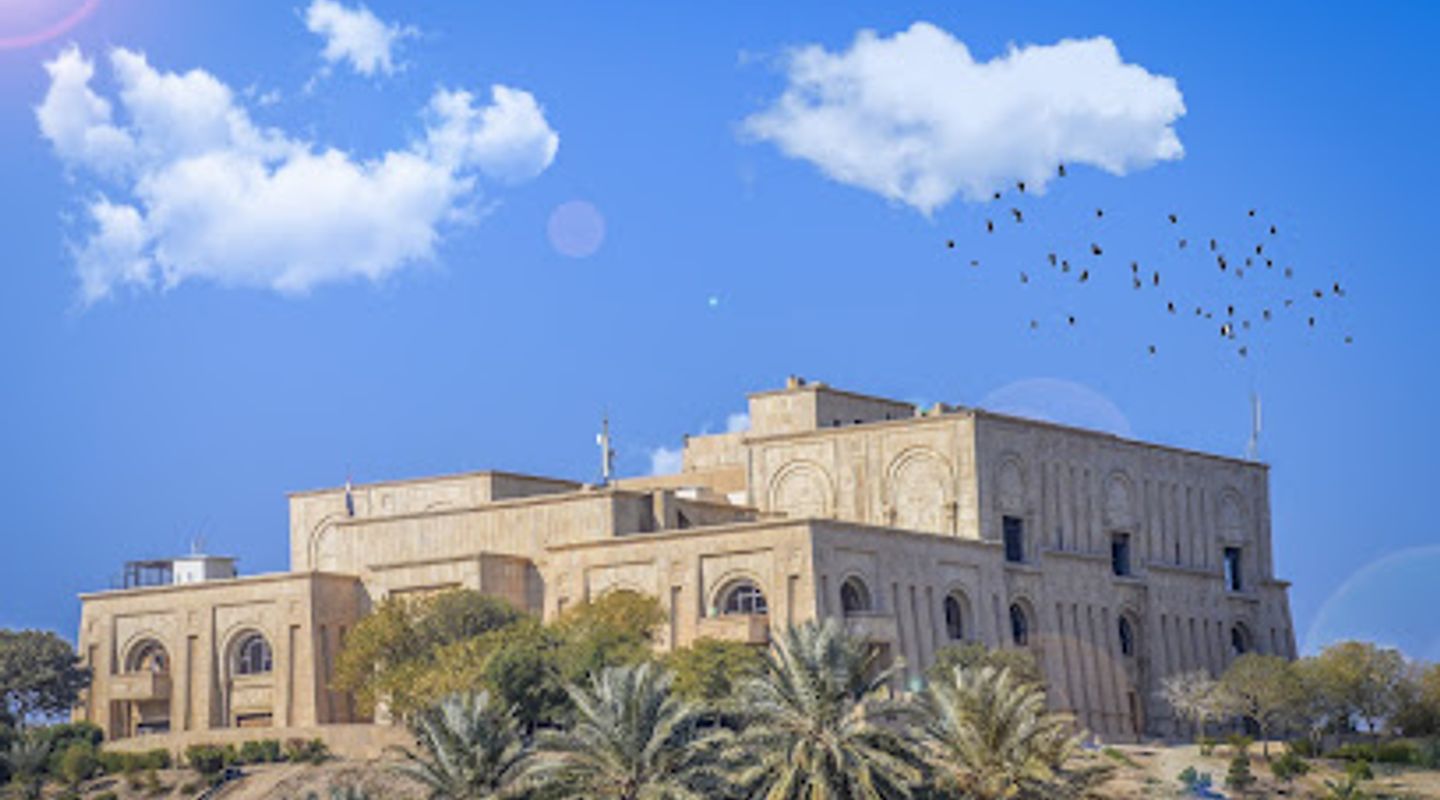
A brief summary of Babylon Palace
Explore Saddam Hussein's controversial palace amidst the ruins of ancient Babylon, offering a unique glimpse into Iraq's layered history.
Babylon Palace, also known as Saddam Hussein's Summer Palace, is a modern structure built atop the ancient city of Babylon. Constructed in the 1980s, it served as a symbol of Saddam Hussein's power and ambition, offering panoramic views of the surrounding historical site. Today, it stands as a controversial reminder of Iraq's recent past, inviting visitors to reflect on the echoes of empires.
- Address
- GCV8+8P7، سنجار, Babylon Governorate
Getting there
Car
Taxi
Discover more about Babylon Palace
Overview
The Babylon Palace, also referred to as Saddam Hussein's Summer Palace, is a striking, modern edifice rising from the heart of the ancient city of Babylon. Built in the 1980s during Saddam Hussein's regime, the palace embodies a blend of neo-Babylonian architectural elements and contemporary design. Intended as a symbol of his power and connection to Nebuchadnezzar II, the palace offers commanding views of the historical ruins, creating a stark contrast between ancient history and recent events.The palace itself features multiple buildings, including guest houses and recreational areas, adorned with ornate decorations and expensive materials. The walls of the palace are carved with Arabic calligraphy that resembles religious iconography, but upon closer inspection it becomes clear that these shapes are actually Saddam's initials. Inside, visitors can wander through vast halls, though many areas remain neglected.After the fall of Saddam Hussein's regime in 2003, the palace was briefly occupied by the U.S. military before being handed back to the Iraqi government. Today, it functions as a tourist attraction, offering a glimpse into the controversial era of Saddam Hussein's rule. While the palace's presence on the ancient site has sparked debate, it remains a significant landmark, drawing thousands of visitors each year. Exploring the palace provides a unique opportunity to contemplate the layers of history that define this region, from the Babylonian Empire to modern Iraq.
Evendo Review Centre
 Google
Guest reviews
Explore Babylon Palace on the map
A handpicked selection of must-see spots near Babylon Palace, mapped for you.
Get your free copy of our complete guide to Babylon Palace, delivered straight to you.
Everything on this page, from opening hours and how to get there to Eve’s tips and the best time to go, in one PDF you can read offline, print or share.
Already have an account? Sign in
Your Babylon Palace guide is ready.
We'll send it to · Not you? Sign out

Getting your guide ready…
We are putting together a fresh copy of the Babylon Palace guide. This can take up to a minute.
This can take a few moments. If your browser asks, choose Allow so the download can start. You'll find the guide in your Downloads folder.
Nothing happened? Download it again
Sorry, the guide is taking longer than usual. Please try again in a minute, or get it by email instead.
Other nearby places you may find interesting
The closest places of the same kind, if this one is not quite what you had in mind.
-
-
-
-
-


Swipe for more places
More to explore near Babylon Palace

 Best experiences near Babylon Palace
 Best hotels near Babylon Palace
 Best landmarks near Babylon Palace
 Best attractions near Babylon Palace
 Best shops near Babylon Palace
 Best restaurants near Babylon Palace
 Best bars near Babylon Palace
Do you manage this location?
Take control to get all the benefits, like improved information, better appearance, and stronger visibility across AI-powered discovery.
Explore more
Explore more of Babel
Explore the ancient wonders and rich history of Babel, Iraq, where the remnants of the Mesopotamian Empire stand as a testament to human civilization's early achievements.
Explore Babel
Explore more of Iraq
Explore the cradle of civilization in Iraq, where ancient history, rich culture, and diverse landscapes create an unforgettable travel experience.
Explore Iraq
