Ur Travel Guide
Free Guide: Explore the ancient Ziggurat of Ur in Dhi Qar, Iraq, a towering testament to Sumerian civilization and a UNESCO World Heritage Site.


A brief summary of Ur
Explore the ancient Ziggurat of Ur in Dhi Qar, Iraq, a towering testament to Sumerian civilization and a UNESCO World Heritage Site.
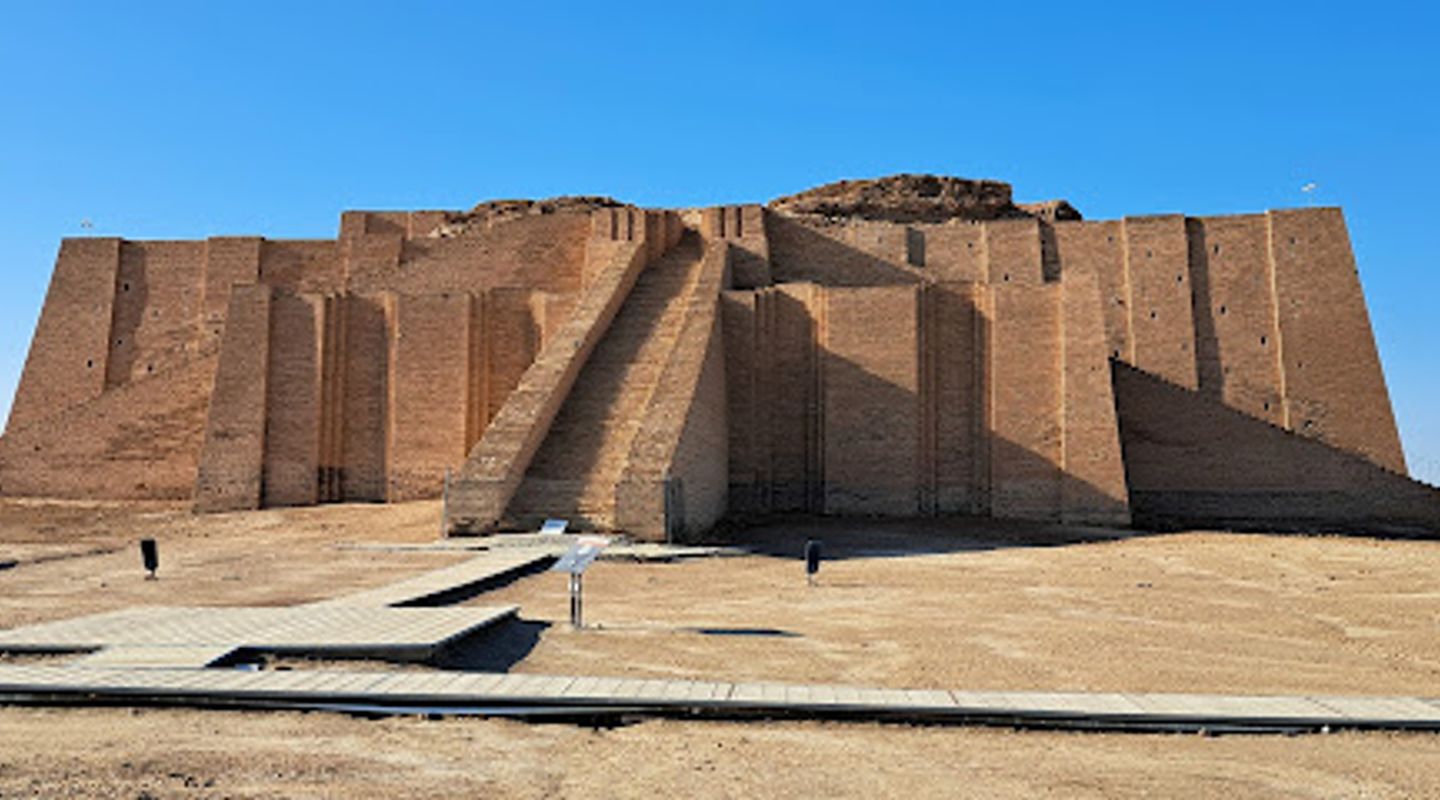
The Ziggurat of Ur, located in present-day Dhi Qar Governorate, Iraq, is a remarkably well-preserved ancient Sumerian temple dating back to around 2100 BCE. Built by King Ur-Nammu in honor of the moon god Nanna, it stands as a testament to the architectural and religious significance of ancient Mesopotamia.
- Address
- Dhi Qar Governorate
Getting there
Driving
Public Transport
Discover more about Ur
Overview
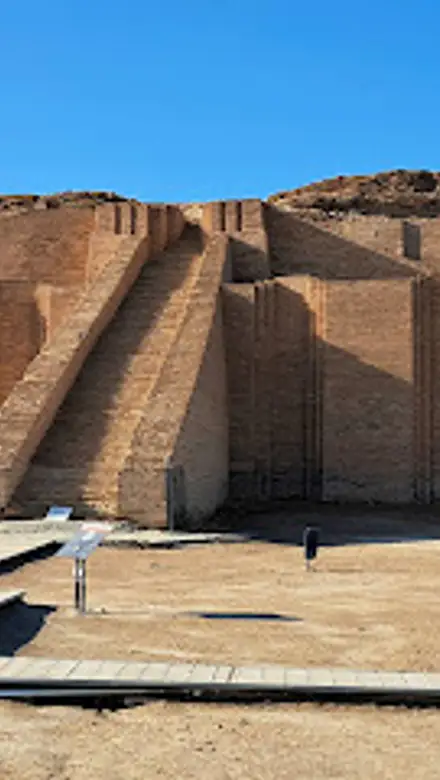
The Ziggurat of Ur, also known as the Great Ziggurat of Ur, is a massive stepped pyramid that once dominated the skyline of the ancient city of Ur. Constructed during the Early Bronze Age, around the 21st century BC, by King Ur-Nammu of the Third Dynasty of Ur, it was dedicated to Nanna/Sîn, the moon god and patron deity of the city. The ziggurat was a central part of a larger temple complex that served as an administrative center for the city.The structure originally measured approximately 64 meters in length, 45 meters in width, and over 30 meters in height. Its core was made of mud brick, covered with baked bricks laid with bitumen, a naturally occurring tar. The baked bricks, each weighing around 33 pounds, were meticulously placed to create a durable and imposing structure. Over time, the ziggurat fell into disrepair but was partially restored in the 6th century BC by King Nabonidus.The remains of the ziggurat were rediscovered in 1850, with significant excavations led by Sir Leonard Woolley between 1922 and 1934. In the 1980s, under Saddam Hussein, the façade and monumental staircase were partially reconstructed. Although the reconstructed ziggurat sustained damage during the Gulf War in 1991, it remains one of the best-preserved ziggurats in Mesopotamia. Today, the Ziggurat of Ur is a UNESCO World Heritage site, recognized as part of the Ahwar of Southern Iraq, a region celebrated for its biodiversity and ancient Mesopotamian cities. Visitors can explore this towering symbol of Sumerian culture and reflect on the rich history of the region.
Evendo Review Centre
 Google
Guest reviews
Explore Ur on the map
A handpicked selection of must-see spots near Ur, mapped for you.
Get your free copy of our complete guide to Ur, delivered straight to you.
Everything on this page, from opening hours and how to get there to Eve’s tips and the best time to go, in one PDF you can read offline, print or share.
Already have an account? Sign in
Your Ur guide is ready.
We'll send it to · Not you? Sign out

Getting your guide ready…
We are putting together a fresh copy of the Ur guide. This can take up to a minute.
This can take a few moments. If your browser asks, choose Allow so the download can start. You'll find the guide in your Downloads folder.
Nothing happened? Download it again
Sorry, the guide is taking longer than usual. Please try again in a minute, or get it by email instead.
Other nearby places you may find interesting
The closest places of the same kind, if this one is not quite what you had in mind.
-
-
-
-

-


Swipe for more places
More to explore near Ur

 Best experiences near Ur
 Best hotels near Ur
 Best landmarks near Ur
 Best attractions near Ur
 Best shops near Ur
 Best restaurants near Ur
 Best bars near Ur
Do you manage this location?
Take control to get all the benefits, like improved information, better appearance, and stronger visibility across AI-powered discovery.
Explore more

Explore more of Mesopotamia
Explore Mesopotamia in Iraq: Journey through ancient ruins, discover the cradle of civilization, and immerse yourself in rich cultural heritage.
Explore Mesopotamia
Explore more of Iraq
Explore the cradle of civilization in Iraq, where ancient history, rich culture, and diverse landscapes create an unforgettable travel experience.
Explore Iraq