

Free County Meath Travel Guide & Mobile App
Explore County Meath with free travel guides. Discover regional history, expert tips, proposed trips, and audio guides on web or mobile app.


County Meath blends prehistoric monuments, medieval towns, Boyne Valley landscapes, coastal walks and Ireland’s enduring archaeological heritage.
Read more about County Meath
When is the best time to visit County Meath?
Best: June–August · 19–20°C| Month | High (°C) | Rainfall (mm) |
|---|---|---|
| January | 8 | 70 |
| February | 8 | 60 |
| March | 11 | 60 |
| April | 13 | 50 |
| May | 16 | 60 |
| June (best) | 19 | 60 |
| July (best) | 20 | 60 |
| August (best) | 20 | 70 |
| September | 17 | 70 |
| October | 14 | 80 |
| November | 10 | 80 |
| December | 8 | 80 |
Getting to and around County Meath
How to get there
Transportation
Top city travel guides in County Meath
The cities of County Meath, and the easiest places to base yourself.
-

-


Swipe for more cities
Best attractions in County Meath
County Meath’s attractions are concentrated around the Boyne Valley’s exceptional archaeological and medieval heritage. Brú na Bóinne is the county’s principal draw, with guided access to Newgrange and Knowth through the visitor centre and a wider landscape that includes Dowth. The Hill of Tara offers a different kind of experience: an open ceremonial landscape whose earthworks and views explain its enduring political and cultural importance. Trim combines a major Anglo-Norman castle with medieval remains and riverside walks, while Kells presents an early Christian heritage of round tower and high crosses. Oldbridge interprets the Battle of the Boyne through exhibitions, gardens and paths beside the river. In the north, the Loughcrew hills contain prehistoric passage tombs in a more rural setting. Slane adds a hilltop castle, village streets and Boyne Valley scenery, while the eastern coast around Bettystown and Laytown provides beaches and walking. Across the county, farms, market towns, gardens, heritage estates and quiet roads create a travel experience based on connected landscapes rather than a single concentrated attraction district.
-
Theme park
Emerald Park
Experience the thrill of Emerald Park, Ireland's premier theme park featuring exciting rides, a captivating zoo, and joyful playgrounds for families.
-
Castle
Trim Castle
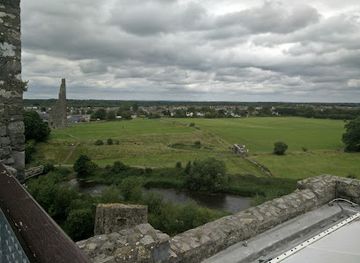
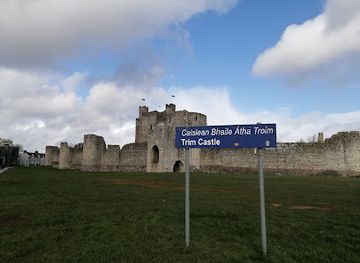
Explore Trim Castle, the largest Anglo-Norman fortress in Ireland, and immerse yourself in a rich tapestry of medieval history and stunning architecture.
-
Garden
Iveagh Gardens
Discover the tranquil beauty of Iveagh Gardens, a hidden oasis in Dublin, featuring stunning landscapes, historic features, and vibrant cultural events.
-
Historical place
Hill of Tara
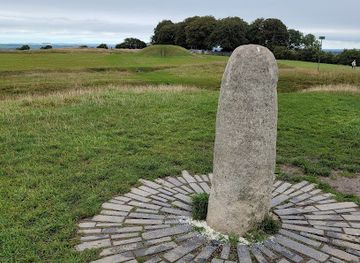
Discover the enchanting Hill of Tara, an ancient site of Ireland's High Kings, rich in history and breathtaking views, perfect for all travelers.


Best landmarks in County Meath
The great passage tomb of Newgrange is County Meath’s most recognisable ancient landmark, with its white quartz façade, monumental entrance stone and carefully engineered solar alignment. Nearby Knowth is distinguished by its large mound and extensive prehistoric artwork. The Hill of Tara, marked by earthworks including the Mound of the Hostages and the Lia Fáil tradition, is important as both an archaeological site and a symbol of early Irish sovereignty. Trim Castle dominates its riverside town with a massive central keep and surviving defensive walls, while the nearby Yellow Steeple provides a striking medieval silhouette. Kells’ round tower and high crosses are distinctive remnants of early Christian Ireland. At Oldbridge, the Boyne battlefield landscape links a major seventeenth-century political event to the river and historic estate. Loughcrew’s hilltop passage tombs give northern Meath a more remote prehistoric character, and Slane Hill forms a prominent landmark above the Boyne, crowned by the castle and associated with the county’s long religious and political history.
-
Castle
Trim Castle
Explore Trim Castle, an iconic medieval fortress in Co. Meath, Ireland, and immerse yourself in the rich history of this remarkable landmark.
-
 Historical place
Hill of Tara
Explore the Hill of Tara, the ancient seat of Irish kings, where history meets breathtaking landscapes, making it a must-visit destination for every traveler.
-
Historical landmark
The Hell Fire Club
Discover the enigmatic Hell Fire Club in the Dublin Mountains, where history meets stunning landscapes and outdoor adventures await.
-
Cemetery
Glasnevin Cemetery
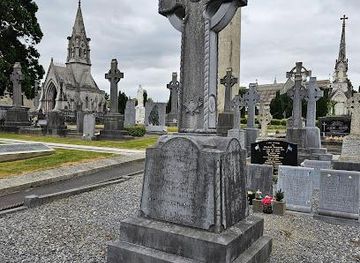
Explore the historic Glasnevin Cemetery in Dublin, a serene landscape filled with rich cultural heritage and remarkable monuments.

Explore County Meath on the map
Plan your trip on one map. See where the top cities, national parks and sights are, and book hotels and experiences in a few clicks.
Best hotels in County Meath
Best restaurants in County Meath
Meath’s dining character reflects its productive agricultural setting and the influence of the Boyne Valley. Local menus commonly draw on Irish beef and lamb, poultry, dairy produce, vegetables, baking and seasonal ingredients, with farm shops and food producers providing a useful introduction to the county’s food economy. Towns such as Navan, Trim, Kells and Ashbourne offer cafés, gastropubs, casual restaurants and contemporary dining, while rural pubs and inns remain important for hearty meals and a social evening. Along the eastern coast, fish and seafood may feature more prominently, although availability depends on the individual establishment. Markets and farm shops are good places to look for cheeses, preserves, breads, meats and other regional products. Visitors should distinguish between foods strongly associated with Ireland as a whole and produce sourced specifically from Meath; the county’s culinary identity lies less in one signature dish than in its farmland, river-valley produce and links between growers, producers and local kitchens.
-
Restaurant
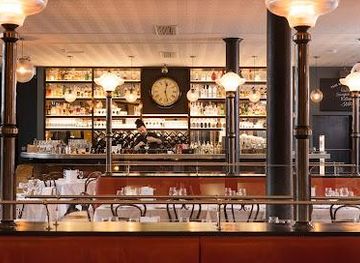
The Dining Room at Fallon & Byrne
Elegant Dublin dining room serving contemporary Irish cuisine with seasonal flair, from house-smoked salmon to dry-aged steaks, in a historic yet buzzing first-floor haven.
-
Restaurant
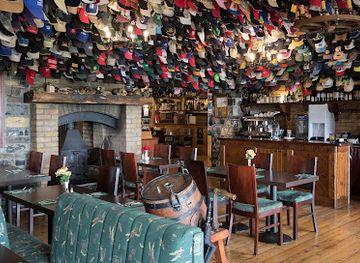
The Snailbox Restaurant, Bar & Accommodation
Experience authentic Irish hospitality at The Snailbox Restaurant – your ultimate dining destination in Co. Meath.
-
Restaurant
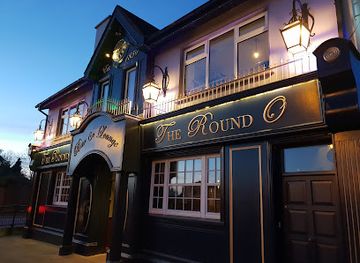
The Round O
Experience authentic Irish cuisine and vibrant nightlife at The Round O in Navan – where tradition meets modern hospitality.
-
Restaurant
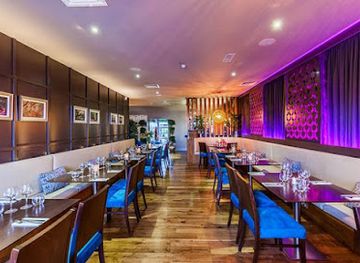
Zucchini's Restaurant Navan
Discover health-conscious dining with traditional Irish flavors at Zucchini's Restaurant in Navan - A culinary gem not to be missed.
Best bars in County Meath
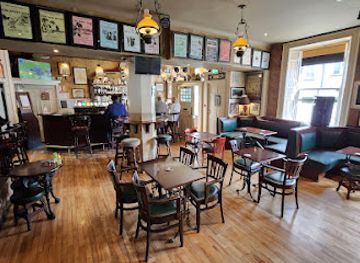
Evening life in County Meath is centred mainly on traditional pubs, restaurants, hotel bars and live music rather than a large, concentrated nightclub scene. Navan and Ashbourne have the broadest choice of late-opening venues, while Trim, Kells, Slane and other market towns offer pubs where conversation, sport and occasional music are more prominent than dancing. Some establishments serve local and Irish craft beers, spirits and non-alcoholic drinks, and rural inns can provide a quieter setting for an evening meal. Nightlife is more dispersed outside the principal towns, so visitors staying in the countryside should plan transport in advance and avoid relying on infrequent late public services. The coastal settlements of east Meath have a modest seasonal evening trade, but they are not major resort nightlife centres. Live music and community events may be available at particular times, though schedules change and should be checked locally.
-
Bar
Brogan's Bar & Hotel
Discover the charm of Brogan's Bar & Hotel, a top-notch gastropub and live music venue in Trim, Co. Meath, offering a true taste of Ireland.
-
Pub
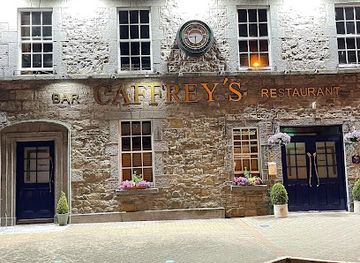
Caffrey's Bar & Restaurant
Discover authentic Irish cuisine and a warm atmosphere at Caffrey's Bar & Restaurant in Oldcastle, Co. Meath.
-
Pub
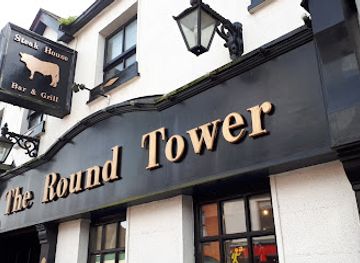
Round Tower Restaurant & Bar
Experience the heart of Irish hospitality at Round Tower Restaurant & Bar in Kells, where traditional cuisine meets a vibrant pub atmosphere.
-
Pub
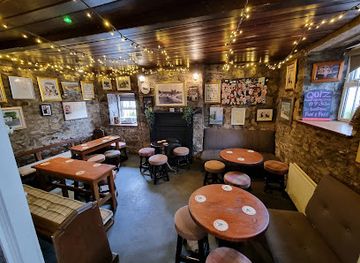
Marcie Regan's Pub
Discover Marcie Regan's Pub, a cozy haven in Newtown, Co. Meath, where authentic Irish charm meets lively atmosphere and delectable cuisine.
Best nightclubs in County Meath
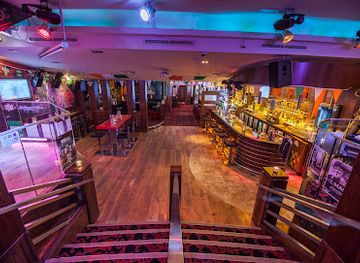
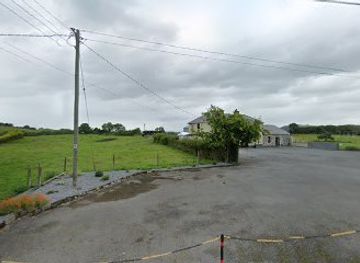
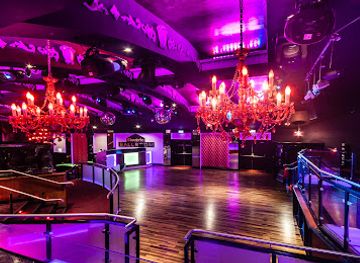
Evening life in County Meath is centred mainly on traditional pubs, restaurants, hotel bars and live music rather than a large, concentrated nightclub scene. Navan and Ashbourne have the broadest choice of late-opening venues, while Trim, Kells, Slane and other market towns offer pubs where conversation, sport and occasional music are more prominent than dancing. Some establishments serve local and Irish craft beers, spirits and non-alcoholic drinks, and rural inns can provide a quieter setting for an evening meal. Nightlife is more dispersed outside the principal towns, so visitors staying in the countryside should plan transport in advance and avoid relying on infrequent late public services. The coastal settlements of east Meath have a modest seasonal evening trade, but they are not major resort nightlife centres. Live music and community events may be available at particular times, though schedules change and should be checked locally.
-
Night club
The Palace Piano Bar
Discover the lively ambiance of The Palace Piano Bar in Navan, where music, drinks, and unforgettable nights come together in perfect harmony.
-
Bar
Teddy's Nightclub (Bar)
Discover the vibrant nightlife at Teddy's Nightclub in Co. Meath, where great drinks and music create unforgettable experiences.
-
Night club
Fusion Venue
Discover the electrifying atmosphere of Fusion Venue, Drogheda's premier night club, where unforgettable nights and vibrant music await.
-
Night club
Earth Nightclub Drogheda
Discover the electrifying nightlife of Drogheda at Earth Nightclub, where vibrant music and an energetic crowd create unforgettable experiences.

Best shops in County Meath
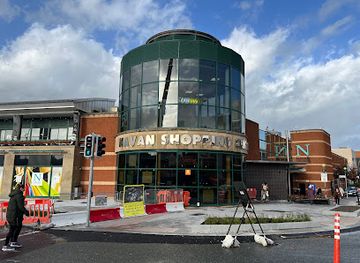
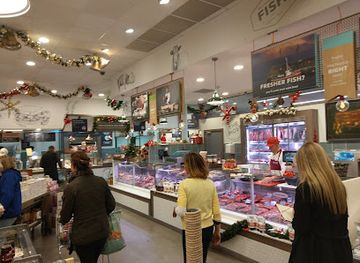
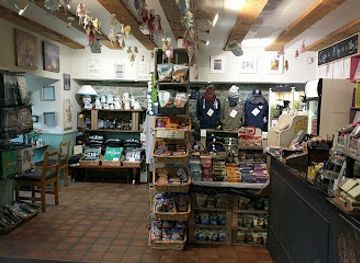
Shopping in County Meath is primarily town-based, with Navan and Ashbourne providing the broadest mix of national retailers, supermarkets, services and independent businesses. Trim and Kells have more compact historic high streets, where cafés, bookshops, galleries, craft outlets, antiques and everyday shops fit into older town settings. Farm shops and food producers are particularly useful for regional gifts, including cheeses, preserves, baked goods, meats and other Boyne Valley produce, subject to availability. Around heritage destinations, visitors may find books on archaeology and Irish history, locally made crafts, prints and practical souvenirs, but the county is not primarily a designer-shopping destination. Markets and seasonal food events vary, so current arrangements should be checked before making a special journey. For a more traditional Irish high-street experience, combine shopping with a visit to a market town rather than expecting large retail districts in rural areas.
-
Shopping mall
Navan Town Centre
Explore Navan Town Centre, a lively shopping mall in Co. Meath, offering a blend of retail, dining, and leisure experiences for every tourist.
-
Shopping mall
Johnstown Shopping Centre
Uncover a world of shopping and dining at Johnstown Shopping Centre – where fashion meets food in Navan, Co. Meath.
-
Gift shop
Maguires Cafe & Gift Shop
Discover the perfect blend of Irish heritage and flavor at Maguires Cafe & Gift Shop in Hill of Tara, Co. Meath, where every visit is a delightful experience.
-
Gift shop
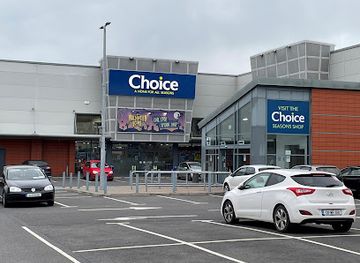
Choice Blackwater
Discover unique gifts, DIY supplies, and home essentials at Choice Blackwater, your ultimate shopping destination in Navan.
Get your free copy of our complete guide to County Meath, delivered straight to you.
Everything on this page, from attractions and restaurants to essentials and local phrases, in one PDF you can read offline, print or share.
Already have an account? Sign in
Your County Meath guide is ready.
We'll send it to · Not you? Sign out

Getting your guide ready…
We are putting together a fresh copy of the County Meath guide. This can take up to a minute.
This can take a few moments. If your browser asks, choose Allow so the download can start. You'll find the guide in your Downloads folder.
Nothing happened? Download it again
Sorry, the guide is taking longer than usual. Please try again in a minute, or get it by email instead.
County Meath essentials
Currency and Payment
Safety
Emergency Situations
Do's and Don'ts
Local Tips
From Eve
Local phrases worth knowing
You don't need to get them perfect. A few words go a long way, and locals appreciate the effort.
Basics
| English | Local | Say it |
|---|---|---|
| Hello | Dia dhuit | [dee-ah gwit] |
| Goodbye | Slán | [slawn] |
| Yes | Tá | [taw] |
| No | Níl | [neel] |
| Please/You're welcome | Le do thoil | [leh duh hull] |
| Thank you | Go raibh maith agat | [guh rev mah agat] |
| Excuse me/Sorry | Gabh mo leithscéal | [guh mo leesh-kayl] |
| How are you? | Conas atá tú? | [kun-as ah-taw too] |
| Fine. And you? | Maith. Agus tusa? | [mah. ah-gus tu-sah] |
| Do you speak English? | An labhraíonn tú Béarla? | [an low-ree-awn too bayr-lah] |
| I don't understand | Ní thuigim | [nee hig-im] |
Eating & Drinking
| English | Local | Say it |
|---|---|---|
| I'd like to see the menu, please | Ba mhaith liom an comhoibriú a fheiceáil, le do thoil | [ba wah lum an koh-ih-bree a heh-kil, leh duh hull] |
| I don't eat meat | Ní ithim feoil | [nee ee-him feyl] |
| Cheers! | Sláinte! | [slawn-cheh] |
| I would like to pay, please | Ba mhaith liom íoc, le do thoil | [ba wah lum eek, leh duh hull] |
Emergencies
| English | Local | Say it |
|---|---|---|
| Help! | Cabhair! | [kaw-ir] |
| Go away! | Imigh uait! | [im-ee oo-it] |
| Call the Police! | Glaoigh ar na Póilíní! | [glwee ar na pole-een-ee] |
| Call a doctor! | Glaoigh ar dochtúir! | [glwee ar dock-toor] |
| I'm lost | Táim caillte | [taw-im kylt-eh] |
| I'm ill | Táim tinn | [taw-im tin] |
Shopping
| English | Local | Say it |
|---|---|---|
| I'd like to buy... | Ba mhaith liom a cheannach... | [ba wah lum a khan-akh] |
| I'm just looking | Táim ag féachaint | [taw-im egg fay-kint] |
| How much is it? | Cén t-airgead atá ann? | [kayn t-arg-id ah-taw ann] |
| That's too expensive | Tá sé ró-chostasach | [taw shay roh-koss-tah] |
| Can you lower the price? | An féidir leat an praghas a laghdú? | [an fay-dhir lat an pra-gas a ligh-doo] |
Time & Numbers
| English | Local | Say it |
|---|---|---|
| What time is it? | Cén t-am é? | [kayn t-awm eh] |
| It's one o'clock | Tá sé a haon a chlog | [taw shay a hain a khlog] |
| Half past (10) | Leath tar éis (10) | [lah tar aysh (10)] |
| Morning | Maidin | [maw-din] |
| Afternoon | Tráthnóna | [trawn-oh-nah] |
| Evening | Tráthnóna | [trawn-oh-nah] |
| Yesterday | Inné | [in-yeh] |
| Today | Inniu | [in-nyoo] |
| Tomorrow | Amárach | [ah-mah-rah] |
| 1 | 1 | [1] |
| 2 | 2 | [2] |
| 3 | 3 | [3] |
| 4 | 4 | [4] |
| 5 | 5 | [5] |
| 6 | 6 | [6] |
| 7 | 7 | [7] |
| 8 | 8 | [8] |
| 9 | 9 | [9] |
| 10 | 10 | [10] |
Transport & Directions
| English | Local | Say it |
|---|---|---|
| Where's a/the...? | Cá bhfuil an...? | [kaw will an...?] |
| What's the address? | Cad é an seoladh? | [kad eh an shol-adh] |
| Can you show me (on the map)? | An féidir leat dom a thaispeáint (ar an mapa)? | [an fay-dhir lat dum a hash-paynt (ar an mah-pah)?] |
| When's the next (bus)? | Cathain atá an chéad (bus)? | [kah-hin ah-taw an chayd (bus)?] |
| A ticket (to ....) | Ticéad (go ....) | [ti-kay-d (guh ....)] |
History of County Meath
Prehistoric Boyne Valley, c. 3300–2900 BC
The passage tombs at Brú na Bóinne, including Newgrange, Knowth and Dowth, were built during the Neolithic period by farming communities with considerable organisational and astronomical knowledge. Their carefully planned chambers, monumental kerbstones and carved motifs demonstrate sophisticated ceremonial practices and long-distance cooperation. Newgrange’s roof box allows sunlight to enter the chamber around the winter solstice, an alignment that remains central to the monument’s significance. The complex is not simply a collection of tombs but a carefully shaped ritual landscape along the Boyne, later reused and reinterpreted by successive communities.
The Hill of Tara and Early Gaelic Kingship
The Hill of Tara developed over many centuries into one of Ireland’s most important ceremonial landscapes. Its earthworks, burial monuments and later medieval associations helped establish it as a traditional centre of high kingship and political authority. Although the historical reality of individual high kings is complex, Tara’s symbolic importance is clear in Irish literature and tradition. The site’s prominence also reflects the importance of central Meath as a meeting ground between major regions of early Ireland. Today, the hill’s surviving banks and monuments remain part of an open pastoral landscape rather than a walled castle complex.
Christian Foundations and the Monastic North
Christian communities reshaped Meath from the early medieval period onwards, establishing centres of learning, worship and manuscript production. Kells became one of the best-known monastic foundations, traditionally linked with the community associated with the Book of Kells. Its round tower and high crosses survive as reminders of the period’s religious art and architecture, even though the manuscript itself is held at Trinity College Dublin. Other early ecclesiastical remains across the county show how religious foundations were connected to settlements, routeways and the agricultural resources of the Boyne basin.
The Anglo-Norman Lordship and Trim Castle
Following the Anglo-Norman invasion of the late twelfth century, Meath became a strategically important lordship on the western edge of the area controlled from Dublin. Hugh de Lacy established Trim as a major centre, and the great stone castle developed there during the medieval period. Its massive keep, curtain walls and position beside the Boyne reflect both military ambition and administrative power. Norman settlement also altered landholding, town planning and church foundations throughout the county. Trim’s surviving medieval fabric provides one of the clearest physical expressions of this transformation.
The Battle of the Boyne, 1690
The Battle of the Boyne took place on 1 July 1690 under the calendar then used in Ireland, near the river crossing at Oldbridge. William III defeated the forces of the former King James II, a victory with lasting consequences for the political and religious balance of Ireland and for the wider European conflict known as the Nine Years’ War. The battlefield landscape is now interpreted at Oldbridge through the restored eighteenth-century house, exhibitions, gardens and walking routes. The event remains historically sensitive, and its meaning differs across Irish and British political traditions.
Rebellion and Rural Society in 1798
County Meath was involved in the upheaval of the 1798 rebellion, including fighting at the Hill of Tara. The rebellion arose from a combination of political exclusion, religious divisions, international revolutionary influences and demands for reform. Tara’s symbolic association with Gaelic sovereignty gave the battle particular resonance, although the rising was defeated and followed by severe reprisals and political change. The episode forms part of the county’s broader history of a predominantly rural society shaped by large estates, tenant farming, religious communities and changing relationships with British administration.
Agriculture, Towns and Modern Meath
In the nineteenth and twentieth centuries, Meath remained strongly agricultural while its market towns expanded as centres for trade, administration and services. Improvements in roads and rail connections linked the county more closely with Dublin and the wider eastern economy, although rail coverage later contracted and Navan no longer has a regular passenger railway service. In recent decades, population growth and commuting have changed parts of the county, especially nearer Dublin, while farming, heritage tourism and food production continue to shape local identity. This combination of working countryside and metropolitan influence defines much of contemporary Meath.
County Meath in Photos
Browse through our photo collection highlighting the charm and character of the destination.
Neighbouring regions of County Meath
The closest regions to County Meath, if you have time for more than one.
-

-

-

-

-


Swipe for more regions
Explore more
Explore more of Ireland
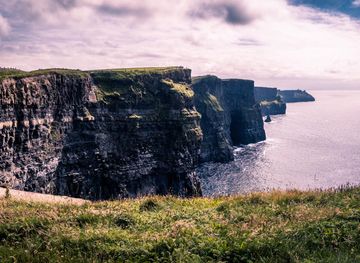
Discover Ireland: A land of enchanting landscapes, rich history, and vibrant culture, where every corner tells a story and every visit feels like coming home.
Explore Ireland