

Free Leinster Travel Guide & Mobile App
Explore Leinster with free travel guides. Discover regional history, expert tips, proposed trips, and audio guides on web or mobile app.


Explore Leinster’s Dublin heritage, Neolithic monuments, medieval towns, Wicklow mountains, fertile countryside and south-eastern coast.
Read more about Leinster
When is the best time to visit Leinster?
Best: June–August · 18–20°C| Month | High (°C) | Rainfall (mm) |
|---|---|---|
| January | 8 | 70 |
| February | 8 | 60 |
| March | 10 | 60 |
| April | 13 | 50 |
| May | 16 | 50 |
| June (best) | 18 | 50 |
| July (best) | 20 | 50 |
| August (best) | 20 | 50 |
| September | 18 | 60 |
| October | 14 | 70 |
| November | 10 | 70 |
| December | 8 | 75 |
Getting to and around Leinster
How to get there
Transportation
Top city travel guides in Leinster
The cities of Leinster, and the easiest places to base yourself.
-

-

-

-

-

-


Swipe for more cities
Destinations in Leinster
Resorts, valleys and scenic spots worth a trip of their own.
-

-

-

-

-


Swipe for more destinations
Best attractions in Leinster
Leinster’s attractions range from Dublin’s museums, galleries, libraries and historic institutions to some of Ireland’s most important prehistoric and medieval sites. In County Meath, Brú na Bóinne offers access to the Neolithic monuments of Newgrange and Knowth through the visitor centre, while the Hill of Tara introduces the ceremonial landscape associated with Ireland’s early high kings. Trim Castle and the remains of Mellifont Abbey add medieval depth to the Boyne Valley. Kilkenny combines a castle, cathedral and historic streets, and County Wicklow provides mountain walks, the monastic valley of Glendalough and landscaped estates such as Powerscourt. The south-east brings beaches, coastal towns and maritime heritage around Wexford, while the Slieve Bloom Mountains offer quieter walking across Laois and Offaly. Museums and heritage centres in towns including Carlow, Kildare, Waterford’s neighbouring region excluded, and Dublin vary in scale, but collectively show Leinster’s links with archaeology, literature, agriculture, industry and political history. Outdoor attractions are strongly seasonal and weather-dependent, particularly in upland and coastal areas.
-
Tour operator
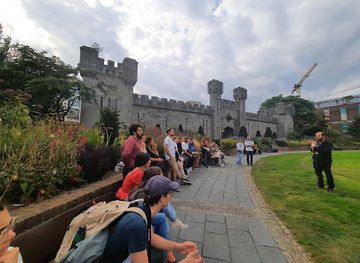
Original Dublin - Walking Tours & Experiences
Discover the heart of Dublin with Original Dublin's immersive walking tours, showcasing history, culture, and hidden gems in the vibrant Temple Bar district.
-
Historical place
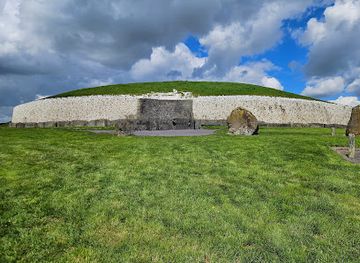
Brú na Bóinne
Explore the ancient wonders of Brú na Bóinne, a UNESCO World Heritage Site with breathtaking prehistoric monuments and stunning natural beauty.
-
Tourist attraction
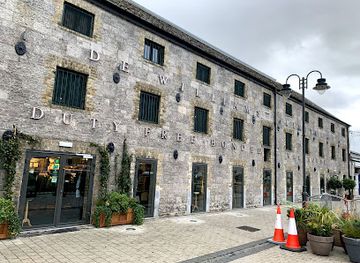
Tullamore D.E.W. Distillery Visitor Experience
Immerse yourself in the rich tapestry of Irish whiskey at Tullamore D.E.W. Distillery, where history, craftsmanship, and taste come together.
-
Park
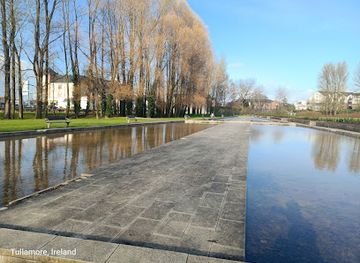
Tullamore Town Park
Experience the natural beauty and vibrant community atmosphere of Tullamore Town Park, your perfect escape in Co. Offaly.
Best landmarks in Leinster
Leinster’s most recognisable landmarks include the prehistoric passage tomb of Newgrange and the wider Brú na Bóinne landscape in County Meath, whose monumental stonework and solar alignment reveal the sophistication of Neolithic society. The Hill of Tara, also in Meath, is a prominent ceremonial and historical site rather than a conventional castle or palace. Trim Castle dominates the Boyne Valley town with its substantial medieval keep, while Kilkenny Castle and St Canice’s Cathedral give Kilkenny a particularly coherent historic profile. Glendalough’s round tower and ruined churches stand in a dramatic Wicklow valley, combining architectural and natural significance. Dublin contributes major civic and cultural landmarks, including the Custom House, the General Post Office and the Georgian squares around Merrion Square and Fitzwilliam Square. Along the coast, Hook Lighthouse in County Wexford is a major maritime landmark, and the Wicklow coastline, with its headlands and beaches, provides geographical landmarks as important to the province’s identity as its built heritage.
-
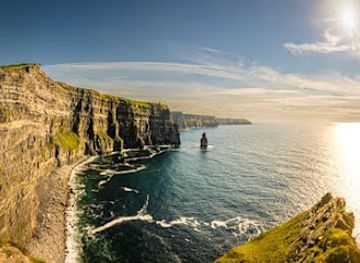
Island
Ireland
Explore the enchanting landscapes, rich history, and vibrant culture of Ireland, a must-visit destination for every traveler.
-
Historical landmark
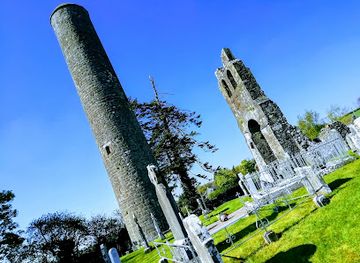
Donaghmore Round Tower
Discover the historical beauty of Donaghmore Round Tower in County Meath, a remarkable gem reflecting Ireland's rich cultural heritage.
-
Historical landmark
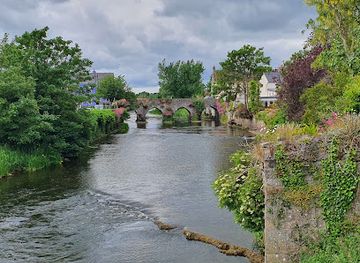
Ireland's Oldest Bridge
Explore the historical significance and stunning beauty of Ireland's Oldest Bridge in Trim — a captivating landmark that showcases medieval architecture.
Explore Leinster on the map
Plan your trip on one map. See where the top cities, national parks and sights are, and book hotels and experiences in a few clicks.
Best hotels in Leinster
Best restaurants in Leinster
Leinster has Ireland’s broadest range of dining, with Dublin providing the greatest concentration of contemporary restaurants, international cuisines, cafés, bakeries and traditional pubs. Outside the capital, food tends to be closely connected to local agriculture and the character of individual towns. County Kilkenny is known for food production and regular market culture, while Wexford’s fertile soils support vegetables, fruit and the county’s well-known strawberry growing tradition. Along the coast, seafood appears in restaurants and pubs, although availability follows catches and seasonality. Rural inns and market-town cafés are useful places to try Irish breakfasts, soups, soda bread, locally produced meats and dairy, while modern kitchens increasingly interpret these ingredients in less traditional ways. Farmers’ markets and food festivals provide opportunities to buy cheeses, preserves, baked goods and other small-producer products. Dining hours can be more limited outside Dublin, and smaller establishments may require advance booking at busy weekends or during festivals.
-
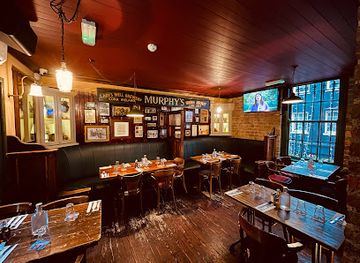
Irish pub
The Old Storehouse Bar and Restaurant
Discover Dublin's cultural heart at The Old Storehouse Bar and Restaurant – where traditional Irish cuisine meets vibrant live music.
-
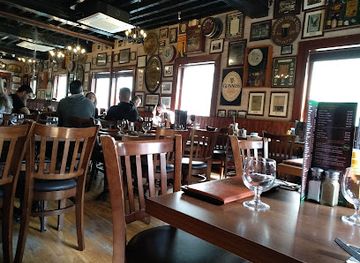
Irish
Old Mill Restaurant
Experience authentic Irish cuisine in Dublin's Temple Bar at Old Mill Restaurant - where tradition meets taste.
-
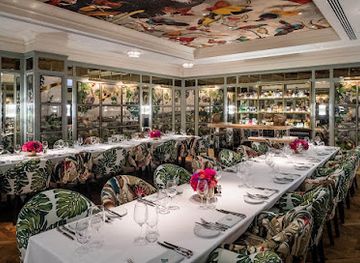
British
The Ivy Dublin
Discover The Ivy Dublin - where British cuisine meets European elegance in an unforgettable dining experience.
-
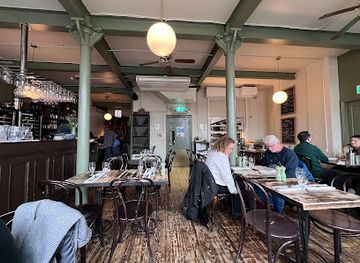
Irish
The Winding Stair
Discover authentic Irish cuisine at The Winding Stair in Dublin – where tradition meets modern flair along the River Liffey.
Best bars in Leinster
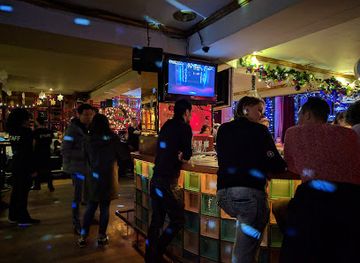
Nightlife in Leinster is concentrated in Dublin, where traditional pubs, live-music venues, cocktail bars, theatres and late-night clubs occupy distinct parts of the city. The capital’s pub culture is varied, from historic interiors and conversational neighbourhood venues to modern bars, but visitors should not assume that every establishment offers live music or remains open late. Kilkenny, Drogheda, Dundalk, Carlow, Wexford and other larger towns have lively evening scenes shaped by pubs, restaurants, cinemas, music venues and student populations, with intensity varying by night and season. In rural Wicklow, Laois, Offaly and the south-east, evening life generally centres on local pubs, dining and occasional live performances rather than a substantial club circuit. Breweries and distilleries can add interest during the day, but tours and tastings should be booked where required. Public transport becomes less frequent at night outside Dublin, so plan the return journey before drinking or travelling to an isolated venue.
-
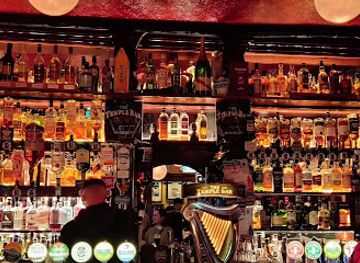
Irish pub
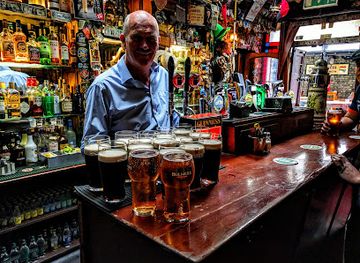
The Temple Bar Pub
Experience the vibrant atmosphere and rich culture of Dublin at The Temple Bar Pub, where traditional music and authentic Irish hospitality await.
-
Irish pub
The Brazen Head
Discover the historical charm of The Brazen Head, Dublin's oldest pub, where tradition meets vibrant culture in a cozy Irish setting.
-
Pub
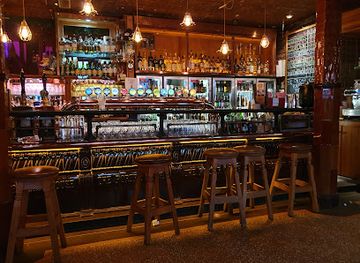
Porterhouse Temple Bar
Discover the lively spirit of Dublin at Porterhouse Temple Bar, where craft beer meets delicious food and live music in a vibrant pub atmosphere.
-
Live music bar
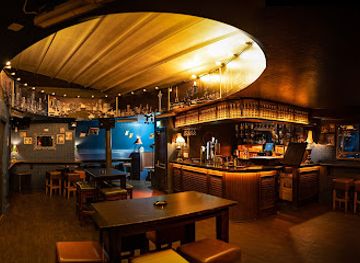
Bad Bobs Temple Bar
Discover the energetic vibe of Bad Bobs Temple Bar, Dublin's go-to spot for live music, delicious food, and unforgettable nights out.
Best nightclubs in Leinster
Nightlife in Leinster is concentrated in Dublin, where traditional pubs, live-music venues, cocktail bars, theatres and late-night clubs occupy distinct parts of the city. The capital’s pub culture is varied, from historic interiors and conversational neighbourhood venues to modern bars, but visitors should not assume that every establishment offers live music or remains open late. Kilkenny, Drogheda, Dundalk, Carlow, Wexford and other larger towns have lively evening scenes shaped by pubs, restaurants, cinemas, music venues and student populations, with intensity varying by night and season. In rural Wicklow, Laois, Offaly and the south-east, evening life generally centres on local pubs, dining and occasional live performances rather than a substantial club circuit. Breweries and distilleries can add interest during the day, but tours and tastings should be booked where required. Public transport becomes less frequent at night outside Dublin, so plan the return journey before drinking or travelling to an isolated venue.
-
Night club
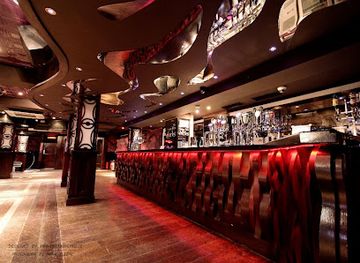
Copper Face Jacks
Copper Face Jacks: An Iconic Dublin Night Club Where Vibrant Nights and Lively Atmosphere Meet.
-
Live Music
The Sugar Club
Discover Dublin's vibrant nightlife at The Sugar Club, a premier venue for live music and unforgettable events in an intimate setting.
-
Gay night club
The George
Experience the vibrant nightlife of Dublin at The George, a premier gay nightclub known for its inclusive atmosphere and electric entertainment.
-
Night club
Twenty Two Night Club
Discover the vibrant nightlife of Dublin at Twenty Two Night Club, where music, dance, and cocktails create unforgettable memories.


Best shops in Leinster
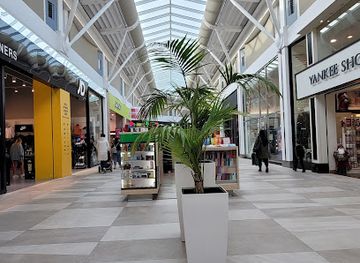
Shopping in Leinster ranges from Dublin’s large retail streets, department stores, galleries and independent design shops to the more compact high streets of provincial towns. Kilkenny is particularly associated with craft, design and food-related shopping, while market towns such as Carlow, Kildare, Wexford, Drogheda and Trim offer independent retailers, cafés, antiques and local services alongside national chains. Farmers’ markets and food shops are good places to look for Irish cheeses, preserves, breads, confectionery and other regional produce, though market days differ between towns and seasons. Craft galleries and studios across Wicklow, Kilkenny and the south-east sell pottery, textiles, jewellery, woodwork and artwork, with quality and provenance worth checking before purchase. Dublin offers the widest choice of Irish design, books, fashion and contemporary art. In rural districts, retail is dispersed rather than concentrated in large shopping centres, so combine shopping with a town visit and check opening arrangements before making a special journey.
-
Shopping mall
Liffey Valley Shopping Centre
Explore Liffey Valley Shopping Centre, Dublin's ultimate shopping destination, featuring top brands, dining options, and entertainment for all ages.
-
Shopping mall
Stillorgan Village
Explore Stillorgan Village: A Dublin shopping haven offering unique boutiques, eateries, and a vibrant local atmosphere for every visitor.
-
Gift shop
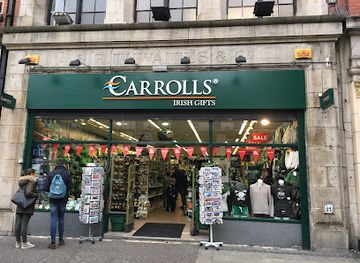
Carrolls Irish Gifts
Explore Carrolls Irish Gifts in Dublin for an unparalleled selection of authentic Irish souvenirs and gifts, capturing the heart of Ireland.
-
Gift shop
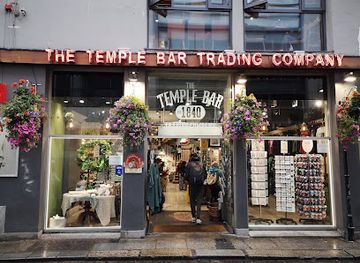
The Temple Bar Trading Company
Discover the charm of Ireland at The Temple Bar Trading Company, your go-to destination for authentic gifts, souvenirs, and Irish craftsmanship.
Get your free copy of our complete guide to Leinster, delivered straight to you.
Everything on this page, from attractions and restaurants to essentials and local phrases, in one PDF you can read offline, print or share.
Already have an account? Sign in
Your Leinster guide is ready.
We'll send it to · Not you? Sign out

Getting your guide ready…
We are putting together a fresh copy of the Leinster guide. This can take up to a minute.
This can take a few moments. If your browser asks, choose Allow so the download can start. You'll find the guide in your Downloads folder.
Nothing happened? Download it again
Sorry, the guide is taking longer than usual. Please try again in a minute, or get it by email instead.
Leinster essentials
Currency and Payment
Safety
Emergency Situations
Do's and Don'ts
Local Tips
From Eve
Local phrases worth knowing
You don't need to get them perfect. A few words go a long way, and locals appreciate the effort.
Basics
| English | Local | Say it |
|---|---|---|
| Hello | Dia dhuit | [dee-ah gwitch] |
| Goodbye | Slán | [slawn] |
| Yes | Tá | [taw] |
| No | Níl | [neel] |
| Please/You're welcome | Le do thoil | [leh duh hull] |
| Thank you | Go raibh maith agat | [guh rev mah agat] |
| Excuse me/Sorry | Gabh mo leithscéal | [gaw mo lesh-kayl] |
| How are you? | Conas atá tú? | [kun-us ah-taw too] |
| Fine. And you? | Go maith. Agus tú? | [guh mah. ah-gus too] |
| Do you speak English? | An labhraíonn tú Béarla? | [un law-ree-un too bayr-la] |
| I don't understand | Ní thuigim | [nee hig-im] |
Eating & Drinking
| English | Local | Say it |
|---|---|---|
| I'd like to see the menu, please | Ba mhaith liom an mhenú a fheiceáil, le do thoil | [ba wah lum an men-oo a yeh-kil, leh duh hull] |
| I don't eat meat | Ní ithim feoil | [nee ee-him fail] |
| Cheers! | Sláinte! | [slawn-cheh] |
| I would like to pay, please | Ba mhaith liom íoc, le do thoil | [ba wah lum eek, leh duh hull] |
Emergencies
| English | Local | Say it |
|---|---|---|
| Help! | Cabhair! | [kaw-ir] |
| Go away! | Imigh uaim! | [ee-mee oo-im] |
| Call the Police! | Glaoigh ar na Póilíní! | [glwee ar na poh-lee-nee] |
| Call a doctor! | Glaoigh ar dochtúir! | [glwee ar dock-too-ir] |
| I'm lost | Táim caillte | [taw-im kylt-eh] |
| I'm ill | Táim tinn | [taw-im tin] |
Shopping
| English | Local | Say it |
|---|---|---|
| I'd like to buy... | Ba mhaith liom a cheannach... | [ba wah lum a khyan-akh] |
| I'm just looking | Táim ag féachaint | [taw-im ag fey-khint] |
| How much is it? | Ce cuánto atá sé? | [kay kwon-toh ah-taw shay] |
| That's too expensive | Tá sé rómhaith | [taw shay row-mah] |
| Can you lower the price? | An féidir leat an praghas a laghdú? | [un fay-dheer lat an prah-gas a luh-oo] |
Time & Numbers
| English | Local | Say it |
|---|---|---|
| What time is it? | Cén t-am é? | [kayn tom ay] |
| It's one o'clock | Tá sé a haon a chlog | [taw shay a hayn a klaw-g] |
| Half past (10) | Leath tar éis (10) | [lah tar ay-sh (10)] |
| Morning | Maidin | [mah-jin] |
| Afternoon | Tráthnóna | [traw-noh-nah] |
| Evening | Tráthnóna | [traw-noh-nah] |
| Yesterday | Inné | [in-yeh] |
| Today | Inniu | [in-yoo] |
| Tomorrow | Amárach | [ah-mah-rah] |
| 1 | 1 | [1] |
| 2 | 2 | [2] |
| 3 | 3 | [3] |
| 4 | 4 | [4] |
| 5 | 5 | [5] |
| 6 | 6 | [6] |
| 7 | 7 | [7] |
| 8 | 8 | [8] |
| 9 | 9 | [9] |
| 10 | 10 | [10] |
Transport & Directions
| English | Local | Say it |
|---|---|---|
| Where's a/the...? | Cá bhfuil an...? | [kaw wil an...?] |
| What's the address? | Cad é an seoladh? | [kad ay an shol-adh?] |
| Can you show me (on the map)? | An féidir leat dom a thaispeáint (ar an mapa)? | [un fay-dheer lat dum a hash-paynt (ar an mah-pah)?] |
| When's the next (bus)? | Cathain a bheidh an (bus) eile? | [kah-hin a vay an (bus) el-eh?] |
| A ticket (to ....) | Ticéad (go ....) | [tick-aid (guh ....)] |
History of Leinster
Neolithic Brú na Bóinne
The Boyne Valley in County Meath contains one of Europe’s most important prehistoric ceremonial landscapes. The passage tombs at Newgrange, Knowth and Dowth were built around 3200 BC, before the pyramids of Egypt, and demonstrate sophisticated knowledge of engineering, astronomy and ritual space. Newgrange is especially noted for the way sunlight enters its chamber around the winter solstice. The monuments were created by farming communities and later became part of the mythic and historical landscape of early Ireland. Their scale, decoration and astronomical alignment make Brú na Bóinne a defining element of Leinster’s archaeological identity.
Early Christian Monasticism
From roughly the fifth century onwards, monastic settlements became centres of worship, learning, craft and political influence across Leinster. Glendalough in County Wicklow, founded by Saint Kevin, is the best-known surviving example, with churches, graveyards and a characteristic round tower set in a mountain valley. Other religious foundations developed at places including Kildare and Clonard, although many survive in fragmentary form. Monasteries connected Irish communities to wider Christian intellectual networks while also shaping settlement and landholding. Their ruins remain among the province’s most evocative historical landscapes.
The Norman Lordship
The Anglo-Norman intervention in Ireland began in 1169 on the south-east coast and rapidly transformed Leinster. Strongholds and walled settlements were established along strategic routes and rivers, while Dublin became the centre of English administration in Ireland. Kilkenny Castle, Carlow Castle and the medieval fabric of towns such as New Ross and Wexford reflect this period, although each has been altered over time. Norman lordships introduced new patterns of landholding, castle-building and urban organisation, creating a political landscape that endured, with major changes, for centuries.
Medieval Kilkenny and the Butler Earls
Kilkenny developed into one of medieval Ireland’s most important towns, with a cathedral, ecclesiastical institutions, a castle and a dense urban core. The Butler family, later associated with the earldom of Ormond, played a major role in the region’s political and architectural history. Kilkenny Castle was remodelled repeatedly, but its strategic position beside the River Nore and its association with the Butlers remain central to the city’s story. In the seventeenth century, Kilkenny also hosted the Confederation of Ireland, reflecting the town’s continuing political importance during the Wars of the Three Kingdoms.
The 1798 Rebellion
The Society of United Irishmen’s rebellion in 1798 had a particularly strong impact in Leinster, especially in Wexford, Wicklow, Kildare and parts of Meath. Fighting, reprisals and sectarian violence caused considerable loss of life, while places such as Vinegar Hill near Enniscorthy became enduring symbols of the uprising. The rebellion was defeated, but it exposed deep political and social tensions and contributed to the Act of Union of 1800, which brought the Irish Parliament into the United Kingdom. Memorials and interpretive sites across the south-east preserve the memory of this turbulent period.
Agriculture, Canals and Industry
Leinster’s fertile central and eastern districts were shaped by large estates, tenant farming and improving agricultural practice, while waterways and railways transformed movement during the eighteenth and nineteenth centuries. The Grand Canal connected Dublin with the midlands, and the Barrow Navigation served inland transport and trade. Coal mining developed around Castlecomer in County Kilkenny, while brewing, milling, wool, engineering and food processing supported towns across the province. These industries linked rural production to Dublin, ports and overseas markets, leaving behind canal landscapes, industrial buildings and distinctive townscapes.
Dublin and the Formation of the Irish State
Dublin was central to the political upheavals that led to Irish independence. The Easter Rising of 1916 focused on key buildings in the capital, including the General Post Office, and the War of Independence and Civil War further reshaped the city and the country. The establishment of the Irish Free State in 1922 made Dublin the political centre of the new state, while Leinster’s towns and counties experienced the wider social and economic consequences. Modern Leinster has since been transformed by suburban growth, migration, higher education and the expansion of Dublin’s metropolitan economy.
Leinster in Photos
Browse through our photo collection highlighting the charm and character of the destination.
Neighbouring regions of Leinster
The closest regions to Leinster, if you have time for more than one.
-

-

-

-

-


Swipe for more regions
Explore more
Explore more of Ireland
Discover Ireland: A land of enchanting landscapes, rich history, and vibrant culture, where every corner tells a story and every visit feels like coming home.
Explore Ireland