

Merrion Square (Dublin) Travel Guide - Free
Explore Merrion Square in Dublin with Evendo's free guide. Find the best shops, historic streets, restaurants, and gems on web or mobile.


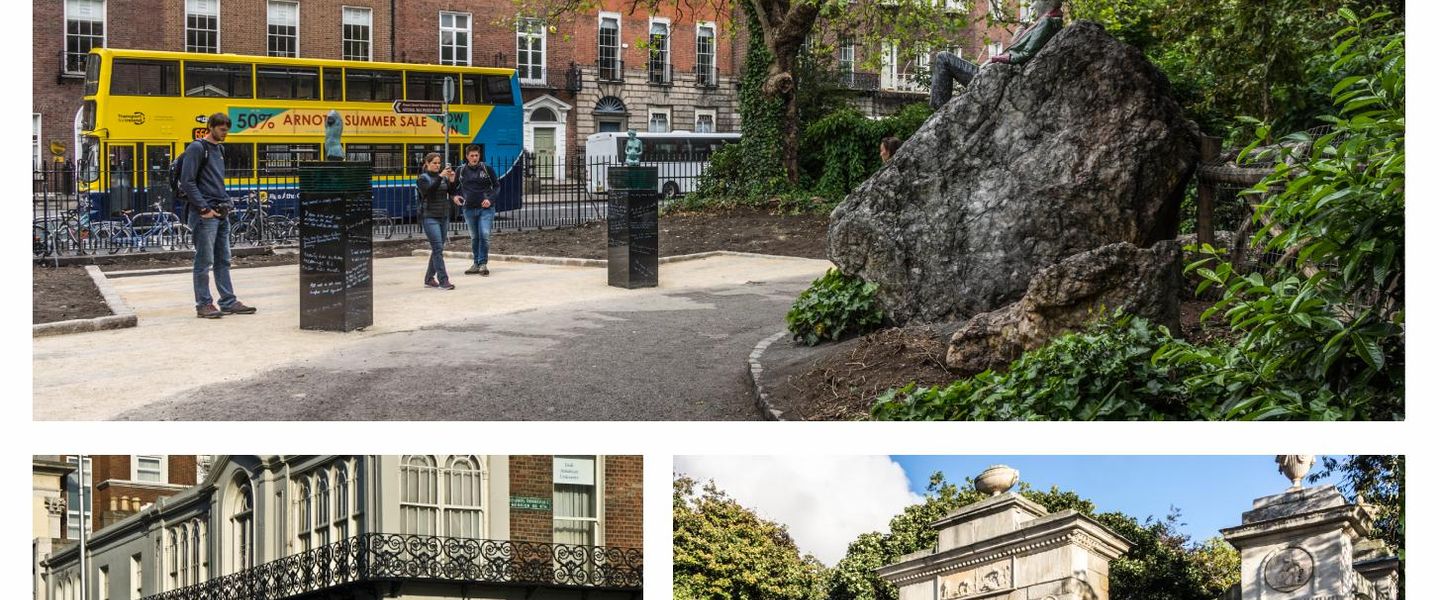


Merrion Square in Dublin pairs Georgian architecture, the National Gallery, Oscar Wilde’s former home and leafy walks with museums and city culture.
Georgian Architecture and Civic Grandeur
Merrion Square occupies a carefully composed pocket of central Dublin, where red-brick Georgian houses enclose a broad private garden and institutional buildings give the surrounding streets a distinctly civic character. The square lies south-east of Trinity College and close to the River Liffey, yet its atmosphere is shaped less by retail bustle than by museums, government offices, embassies, professional practices and quiet residential doorways. Elegant fanlights, iron railings and restrained brick façades create a remarkably coherent streetscape, particularly along the north, south and east sides.Read more about Merrion Square
Art, Literature and Public Memory
A Measured Central-Dublin Walk
Best attractions in Merrion Square
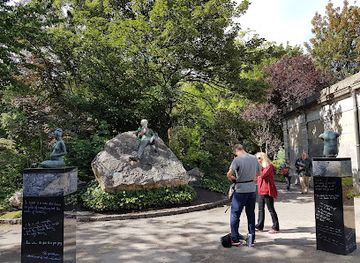
Merrion Square’s principal attraction is the square itself, a formal garden enclosed by some of Dublin’s finest Georgian terraces and reached through entrances in the surrounding railings. The garden contains monuments and memorials, as well as the expressive Oscar Wilde statue on the north-western side, opposite the house where the writer spent his childhood. The National Gallery of Ireland stands on the square’s north-west edge and offers a major collection of Irish and European art, while the National Museum of Ireland – Natural History on nearby Merrion Street Upper provides a very different experience in its historic zoological displays. Visitors can also explore the surrounding Georgian streets, walk towards Kildare Street and view the civic architecture around Government Buildings. These sights work best as a compact cultural circuit, with the garden supplying an open-air pause between museums and institutional buildings.
-
Art gallery
National Gallery of Ireland
Explore the National Gallery of Ireland, a treasure trove of artistic masterpieces and local talent in the heart of Dublin, all with free admission to the permanent collection.
1 min walk · 0.1 km from neighbourhood centre
-
National museum
National Museum of Ireland - Natural History
Explore the National Museum of Ireland - Natural History, a captivating journey through Ireland's rich biodiversity, free admission, and stunning exhibits await.
1 min walk · 0.1 km from neighbourhood centre
Best landmarks in Merrion Square
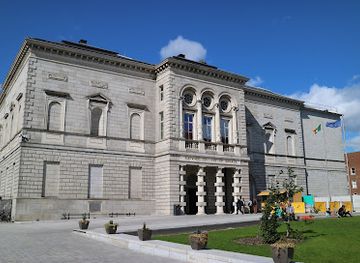
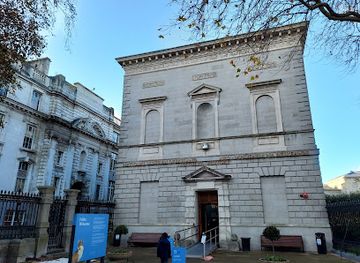
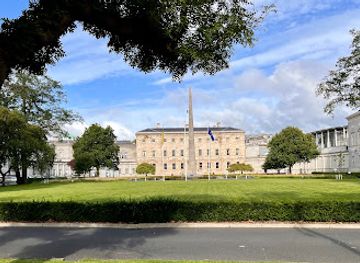
Merrion Square’s most significant landmark is its Georgian enclosure: long red-brick terraces, individually detailed fanlights, polished doorcases, iron railings and a formal garden that together express eighteenth-century Dublin’s southward expansion. No. 1 Merrion Square North, associated with Oscar Wilde’s childhood, gives the architecture a notable literary connection. The National Gallery of Ireland marks the north-west side with a major civic cultural institution, while the National Museum of Ireland – Natural History on Merrion Street Upper preserves a Victorian museum environment and is an important part of the district’s scientific heritage. Government Buildings, formerly the Royal College of Science, contribute an imposing early twentieth-century institutional presence nearby. The square’s memorials and sculptures, including the Oscar Wilde statue, add layers of public memory without overwhelming the original residential design.
-
National museum
National Museum of Ireland - Natural History
Discover the National Museum of Ireland - Natural History, where the wonders of nature come to life through captivating exhibits and fascinating displays.
1 min walk · 0.1 km from neighbourhood centre
-
Sculpture
The Oscar Wilde Monument
Explore the Oscar Wilde Monument in Dublin, a vibrant tribute to the literary genius in the serene setting of Merrion Square Park.
2 min walk · 0.2 km from neighbourhood centre
-
Tourist attraction
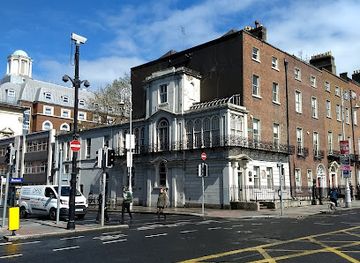
Oscar Wilde House
Explore the Oscar Wilde House in Dublin, a historical landmark that celebrates the life and works of the iconic playwright and poet.
3 min walk · 0.2 km from neighbourhood centre
-
Bus stop
Merrion Sq West
Discover the serene beauty of Merrion Square West, a historic Georgian park in Dublin, perfect for relaxation, culture, and exploration.
1 min walk · 0.1 km from neighbourhood centre
Explore Merrion Square on the map
A handpicked selection of must-see spots in Merrion Square, mapped for you.
Best hotels in Merrion Square
Best restaurants in Merrion Square
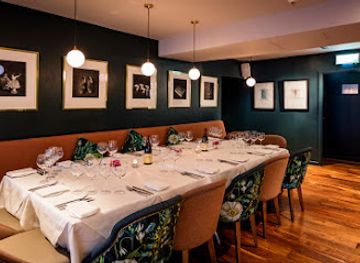
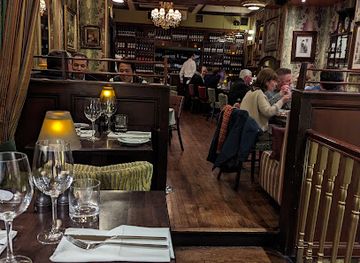
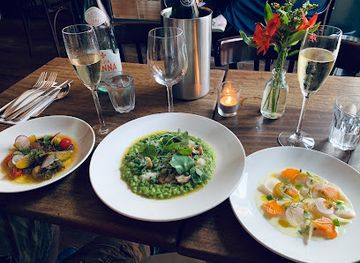
Dining around Merrion Square is shaped by its position between Dublin’s museum quarter, government district and south inner city rather than by a dedicated food market or restaurant strip. The perimeter and nearby streets offer cafés, hotel dining rooms, polished brasseries and established restaurants serving Irish and European cooking, while Lower Baggot Street and Pembroke Street add further choices within a short walk. Lunchtime trade reflects the area’s offices and cultural institutions, whereas evenings are quieter and more reservation-led than in Temple Bar or Camden Street. The neighbourhood is convenient for a meal before or after the National Gallery, but visitors should distinguish venues directly around Merrion Square from the broader dining areas of Leeson Street, Baggot Street and Georgian Dublin. Independent cafés provide simple stops during a museum visit, while nearby restaurants tend towards contemporary menus and traditional Irish ingredients rather than a concentrated street-food scene.
-
Bar
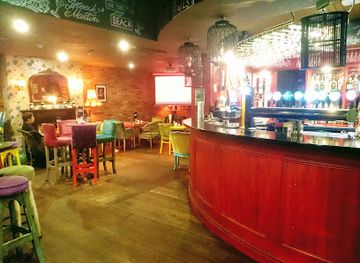
Foley's Bar
Discover Foley's Bar: A vibrant gastropub and live music venue in Dublin offering delicious food and authentic Irish entertainment.
2 min walk · 0.2 km from neighbourhood centre
-
Irish
BANG restaurant & wine bar
Experience fine Irish cuisine with a modern twist at BANG restaurant & wine bar in Dublin - where every meal is a celebration of flavor.
3 min walk · 0.2 km from neighbourhood centre
-
Irish
Hugo's Restaurant
Discover the exquisite fusion of Irish and Modern French cuisine at Hugo's Restaurant in Dublin - where every meal is an unforgettable experience.
2 min walk · 0.2 km from neighbourhood centre
-
Modern European
Etto
Experience modern European cuisine at Etto in Dublin - where seasonal ingredients meet exceptional service in a cozy atmosphere.
3 min walk · 0.2 km from neighbourhood centre
Best bars in Merrion Square
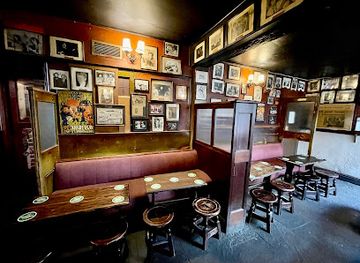
Merrion Square itself is not a major nightlife district, and its evenings are defined by illuminated Georgian façades, quiet garden railings and the movement of residents, office workers and museum visitors rather than clubs. A small number of pubs and dining-led bars can be found around the wider south inner city, particularly towards Baggot Street, Pembroke Street and Leeson Street, all within walking distance but not part of the square’s immediate enclosure. These areas provide traditional pub interiors, relaxed drinking and places for an early evening meal, while larger club scenes are concentrated elsewhere in Dublin. Visitors should be considerate around the square’s homes and institutional buildings, where late-night noise carries easily. Cultural events at nearby galleries and theatres may offer a more characteristic evening than seeking a dedicated club within Merrion Square itself.
-
Irish pub
O'Donoghues Bar
Experience the warmth of Irish hospitality at O'Donoghues Bar, Dublin's iconic pub known for its traditional music and authentic atmosphere.
3 min walk · 0.2 km from neighbourhood centre
-
Pub
Toners
Discover the heart of Dublin's pub culture at Toners, where traditional Irish hospitality meets lively entertainment and delicious cuisine.
3 min walk · 0.2 km from neighbourhood centre
-
Pub
Doheny & Nesbitt
Discover the authentic Irish pub experience at Doheny & Nesbitt, Dublin's iconic bar known for its rich history and vibrant atmosphere.
3 min walk · 0.2 km from neighbourhood centre
-
Grill
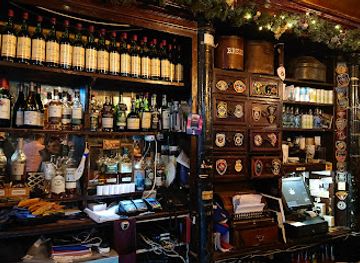
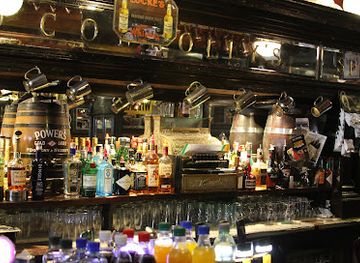
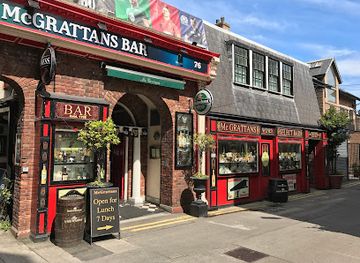
McGrattans Pub
Discover the vibrant atmosphere of McGrattans Pub, a must-visit bar and grill in Dublin for a taste of local culture and cuisine.
2 min walk · 0.2 km from neighbourhood centre
Best shops in Merrion Square
Shopping directly around Merrion Square is limited and largely practical, reflecting the area’s museums, offices, institutions and residences rather than a specialist retail identity. Visitors will find cafés, pharmacies, convenience shops and service businesses on the surrounding streets, while the more substantial retail areas of Grafton Street, Dawson Street and South William Street lie west of the square in the wider city centre. Independent galleries, bookshops and design-led stores can be incorporated into a broader walk towards those streets, but they should not be presented as a continuous Merrion Square shopping quarter. The neighbourhood’s most distinctive form of browsing is cultural: the National Gallery shop and nearby museum retail offer books, reproductions and educational items connected with Irish art, history and natural history. Georgian architecture and institutional doorways, rather than window displays, remain the defining visual experience on the square itself.
-
Gift shop
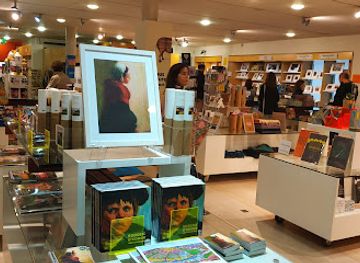
The Gallery Shop
Explore The Gallery Shop in Dublin for unique gifts and art-inspired treasures that reflect Ireland's rich cultural heritage.
2 min walk · 0.2 km from neighbourhood centre
Merrion Square essentials
Getting There
Getting Around
Safety
Emergency Situations
Do's and Don'ts
Local Tips

From Eve
Local phrases worth knowing
You don't need to get them perfect. A few words go a long way, and locals appreciate the effort.
Basics
| English | Local | Say it |
|---|---|---|
| Hello | Dia dhuit | [dee-ah gwit] |
| Goodbye | Slán | [slawn] |
| Yes | Tá | [taw] |
| No | Níl | [neel] |
| Please/You're welcome | Le do thoil/Tá fáilte romhat | [leh duh hull/taw fawl-cheh roh-at] |
| Thank you | Go raibh maith agat | [guh rev mah ag-at] |
| Excuse me/Sorry | Maith thú/Á brón orm | [mah hoo/ah brohn or-um] |
| How are you? | Conas atá tú? | [kun-us ah-taw too?] |
| Fine. And you? | Tá mé go maith. Agus tú? | [taw may guh mah. ah-gus too?] |
| Do you speak English? | An labhraíonn tú Béarla? | [an lawv-ree-un too bayr-lah?] |
| I don't understand | Ní thuigim | [nee hug-im] |
Eating & Drinking
| English | Local | Say it |
|---|---|---|
| I'd like to see the menu, please | Ba mhaith liom an bhialann a fheiceáil, le do thoil | [bah wye lum on vee-lan ah eck-uh-ahl, leh duh hull] |
| I don't eat meat | Ní ithim feoil | [nee ih-him foh-il] |
| Cheers! | Sláinte! | [slawn-cheh] |
| I would like to pay, please | Ba mhaith liom íoc, le do thoil | [bah wye lum ee-uk, leh duh hull] |
Emergencies
| English | Local | Say it |
|---|---|---|
| Help! | Cabhraigh! | [kuv-ray] |
| Go away! | Imigh uaim! | [ih-mee uhm] |
| Call the Police! | Glan an Garda! | [glawn un gar-dah] |
| Call a doctor! | Glan dochtúir! | [glawn duck-too-ir] |
| I'm lost | Tá mé caillte | [taw may kahl-cheh] |
| I'm ill | Táim tinn | [taw-im chin] |
Shopping
| English | Local | Say it |
|---|---|---|
| I'd like to buy... | Ba mhaith liom ceannach... | [bah wye lum ky-uh-nuck] |
| I'm just looking | Níl ach ag breathnú | [neel okh egg brack-noo] |
| How much is it? | Cén chostas é? | [kayn kus-tus ay?] |
| That's too expensive | Tá sé ró-dhaor | [taw shay roh-yur] |
| Can you lower the price? | An féidir leat an praghas a laghdú? | [an fay-dur lat on prug-hus ah lay-goo?] |
Time & Numbers
| English | Local | Say it |
|---|---|---|
| What time is it? | Cén t-am é? | [kayn tahm ay?] |
| It's one o'clock | Tá sé a haon | [taw shay ah hayn] |
| Half past (10) | Leathuair tar éis a deich | [lah-hoo-ir tar aysh ah deh] |
| Morning | Maidin | [mah-jin] |
| Afternoon | Tráthnóna | [traw-noh-nah] |
| Evening | Tráthnóna | [traw-noh-nah] |
| Yesterday | Inné | [in-ay] |
| Today | Inniu | [in-yoo] |
| Tomorrow | Amárach | [ah-maw-rakh] |
| 1 | A haon | [ah hayn] |
| 2 | A dó | [ah doh] |
| 3 | A trí | [ah tree] |
| 4 | A ceathair | [ah kya-hir] |
| 5 | A cúig | [ah koo-ig] |
| 6 | A sé | [ah shay] |
| 7 | A seacht | [ah shakht] |
| 8 | A hocht | [ah hukht] |
| 9 | A naoi | [ah nee] |
| 10 | A deich | [ah deh] |
Transport & Directions
| English | Local | Say it |
|---|---|---|
| Where's a/the...? | Cá bhfuil...? | [kah will...?] |
| What's the address? | Cén seoladh atá air? | [kayn shol-ah ah-taw air?] |
| Can you show me (on the map)? | An féidir leat léarscáil a thaispeáint? | [an fay-dur lat lay-ar-skawl ah hash-paint?] |
| When's the next (bus)? | Cathain atá an bus seo ar fáil? | [kah-hin ah-taw on bus shuh air fawl?] |
| A ticket (to ....) | Ticéad (go ...) | [tick-ayd (guh ...)] |
History of Merrion Square
The Georgian Southward Expansion
Merrion Square emerged during Dublin’s eighteenth-century expansion south of the River Liffey, as planned residential development spread beyond the older medieval and early-modern core. Work on the square began in the 1760s, and its terraces were built over several decades as wealthy families and professionals moved towards the fashionable lands around St Stephen’s Green, Fitzwilliam Square and Mount Street. The formal garden at the centre and the uniform red-brick houses reflected Georgian ideas of order, symmetry and urban status. Although the façades appear consistent, differences in doorcases, fanlights and brickwork reveal the gradual construction of the surrounding terraces.
A Residential and Cultural Quarter
By the late eighteenth and nineteenth centuries, Merrion Square had become an established address for Dublin’s professional and political classes. The square’s houses accommodated families, offices and institutions, while nearby Kildare Street and Leinster Street developed an increasingly important cultural and governmental role. Oscar Wilde spent his childhood at No. 1 Merrion Square North after his family moved there in 1855, linking the neighbourhood with one of Ireland’s most internationally recognised writers. The square’s architectural character survived as Dublin’s urban economy changed, even as many large residences were adapted for institutional and professional use.
Museums and Public Institutions
The neighbourhood’s cultural identity strengthened during the nineteenth and early twentieth centuries. The National Gallery of Ireland opened in 1864 on the edge of Merrion Square, bringing a permanent collection of European and Irish art to the expanding civic quarter. On Merrion Street Upper, the National Museum of Ireland – Natural History developed from the scientific and educational institutions that occupied the area, preserving a Victorian museum interior and collections often known locally as the ‘Dead Zoo’. Government Buildings, constructed between 1904 and 1911 as the Royal College of Science, added a monumental institutional presence to the eastern side of the district.
Preservation and Contemporary Use
During the twentieth century, Merrion Square reflected the wider changes affecting central Dublin, including the conversion of Georgian houses to offices, schools, cultural institutions and diplomatic premises. Concerns about the loss of Georgian streetscapes encouraged stronger conservation attitudes, helping preserve the square’s continuous terraces and garden setting. Today, the area combines public administration, museums, galleries, offices and residences. Its historic buildings remain active parts of Dublin’s civic landscape rather than a preserved enclave detached from everyday life, and the square continues to function as a green urban space in the centre of the capital.
Merrion Square in Photos
Browse through our photo collection highlighting the charm and character of the destination.
Neighbourhoods near Merrion Square
The closest neighbourhoods to Merrion Square, if you have time for more than one stop.
-
-

-

-

-


Swipe for more neighbourhoods
Explore more

Explore more of Dublin
Dublin combines Viking history, Georgian streets, literary culture and lively pubs with museums, coastal walks and warm Irish hospitality year-round.
Explore Dublin