

Free Athlone Travel Guide & Mobile App
Plan your Athlone trip with Evendo. Get free guides to top attractions, restaurants, hotels, and bars. Web access or download the mobile app.


Athlone, Ireland, blends Shannon River scenery, Athlone Castle, lively culture, historic pubs and central access to Ireland’s Hidden Heartlands.
A Town Shaped by the Shannon
Athlone stands near the geographical centre of Ireland, where the River Shannon broadens around a crossing that has influenced the town’s fortunes for more than a thousand years. Its compact centre combines medieval foundations, Georgian streets, nineteenth-century commercial buildings and a modern riverside atmosphere. Athlone Castle rises beside the water, while the bridge links the older western quarter with the busier eastern side of town.Read more about Athlone
Heritage and Culture
Life Along the River
When is the best time to visit Athlone?
Best: June–August · 20–21°C| Month | High (°C) | Rainfall (mm) |
|---|---|---|
| January | 11 | 90 |
| February | 11 | 80 |
| March | 12 | 83 |
| April | 14 | 70 |
| May | 18 | 75 |
| June (best) | 20 | 68 |
| July (best) | 21 | 72 |
| August (best) | 21 | 74 |
| September | 19 | 70 |
| October | 16 | 81 |
| November | 13 | 86 |
| December | 11 | 93 |
Getting to and around Athlone
How to get there
Transportation
Best attractions in Athlone
Athlone Castle is the town’s principal visitor attraction, occupying the strategic river crossing and using immersive displays to explain medieval life, military conflict and the sieges of the seventeenth century. Nearby, the Luan Gallery presents changing exhibitions of Irish and contemporary art in a converted riverside building, adding a modern cultural dimension to the historic centre. St Peter and Paul’s Church, with its prominent position beside the Shannon, is an important point of reference during a town walk, while Sean’s Bar offers a glimpse of Athlone’s long pub tradition. The river itself provides opportunities for leisurely walks, boat excursions and views from the bridge, with Lough Ree opening into a wider landscape of waterways beyond town. The streets around Church Street, the Left Bank and the old centre reward slower exploration through cafés, independent businesses and historic façades, while the nearby Shannon banks provide a quieter change of pace.
-
Irish pub
Sean's Bar
Experience over a millennium of Irish hospitality at Sean's Bar, the heart of Athlone and Ireland's oldest pub.
4 min walk · 0.3 km from city centre
-
Tourist attraction
Athlone Castle Visitor Centre
Discover 800 years of history at Athlone Castle, where interactive exhibits bring Ireland's past to life on the banks of the River Shannon.
5 min walk · 0.4 km from city centre
-
Tourist attraction
Athlone Castle Visitor Centre
Discover centuries of Irish history at Athlone Castle, a Norman fortress on the banks of the River Shannon. Explore interactive exhibits and siege reenactments.
5 min walk · 0.4 km from city centre
-
Tourist attraction
Burgess Park (Páirc Burgess)
Escape to nature in the heart of Athlone at Burgess Park, offering scenic riverside walks, playgrounds, and a tranquil atmosphere for all ages.
4 min walk · 0.3 km from city centre


Best landmarks in Athlone
Athlone Castle is the town’s defining historic landmark, its position beside the Shannon revealing why the crossing mattered to medieval rulers and later armies. The present structure incorporates extensive reconstruction, but its form preserves the central role of a fortress that witnessed the sieges of 1650–51 and 1690–91. Athlone Bridge, linking the western and eastern parts of the town, continues the ancient function of the crossing and frames broad views along the river. St Peter and Paul’s Church is a prominent twentieth-century riverside building, recognisable by its twin towers and large interior, while the Church of Saints Peter and Paul on the western side adds another layer to the town’s religious landscape. Custume Barracks represents Athlone’s enduring military association, and the surviving urban fabric around Church Street and the Left Bank reflects later Georgian, Victorian and commercial development around the strategic core.
-
Irish pub
Sean's Bar
Experience a millennium of Irish hospitality at Sean's Bar, Athlone – Ireland's oldest pub, where history, music, and good times flow.
4 min walk · 0.3 km from city centre
-
Hotel
Sheraton Athlone Hotel
Experience modern luxury in the heart of Athlone, with panoramic views, a state-of-the-art spa, and easy access to local attractions.
2 min walk · 0.2 km from city centre
-
Garden center
Fernhill Garden Centre
Discover a world of plants, home décor, and culinary delights at Fernhill Garden Centre, a leading lifestyle destination in the heart of Ireland.
6 min drive · 1.9 km from city centre
-
Hotel
Shamrock Lodge Hotel
Experience warm Irish hospitality at Athlone's Shamrock Lodge Hotel, a family-run gem with a rich history and beautiful gardens.
11 min walk · 0.9 km from city centre


Explore Athlone on the map
Plan your Athlone trip on one map. See where the top attractions, landmarks, restaurants, bars and hotels are, find what's near where you're staying, and book hotels and experiences in a few clicks.
Best hotels in Athlone
Best restaurants in Athlone
Athlone’s dining scene reflects its position in Ireland’s midlands, bringing together familiar Irish cooking, regional produce and the practical hospitality of a busy market and transport town. Restaurants and gastropubs around the centre commonly draw on beef, lamb, fish, seasonal vegetables and locally sourced dairy, while cafés provide soups, sandwiches, baking and modern brunch-style dishes. Traditional pubs remain important places to eat as well as drink, particularly around the older streets near Church Street and the river. International cuisines are also represented, giving the town more variety than its historic core might suggest. The surrounding countryside and Shannon basin influence menus through freshwater and farm produce, while nearby food producers contribute cheeses, breads and preserves. Visitors seeking a quick meal will find cafés and casual venues around the central shopping streets, whereas evening dining is concentrated in restaurants and pubs close to the river and town centre.
-
Irish pub
Sean's Bar
Discover Sean's Bar in Athlone - where history meets hospitality in one of Ireland's oldest pubs.
4 min walk · 0.3 km from city centre
-
Italian
Il Colosseo
Experience authentic Italian cuisine at Il Colosseo in Athlone, where every meal feels like a celebration of flavor.
5 min walk · 0.4 km from city centre
-
Thai
Kin Khao Thai
Experience authentic Thai cuisine at Kin Khao Thai in Athlone – a vibrant Asian restaurant with flavorful dishes and warm hospitality.
5 min walk · 0.4 km from city centre
-
Brewpub
Dead Centre Brewing
Discover the finest craft beers and delightful dining at Dead Centre Brewing in Athlone - where local flavor meets vibrant atmosphere.
3 min walk · 0.2 km from city centre


Best bars in Athlone
Athlone’s evening life is centred on traditional pubs, hotel bars, restaurants and live entertainment rather than a large club scene. The historic centre around Church Street, Mardyke Street and the riverside has the greatest concentration of places for conversation, Irish music and an unhurried drink, with Sean’s Bar the most internationally recognised name in the town’s pub culture. Music schedules and venues change, but live traditional sessions, contemporary performances and occasional larger events contribute to the town’s social calendar. The Dean Crowe Theatre provides a setting for theatre, concerts and community performances, broadening the evening offer beyond nightlife based on alcohol. Later activity is generally modest compared with Dublin or Galway, and local pubs may be more appropriate for a relaxed evening than for dancing. Taxis and a planned route back to accommodation are sensible after venues close, particularly for visitors staying outside the centre.
-
Irish pub
Sean's Bar
Discover the charm of Sean's Bar, the oldest pub in Ireland, where history and hospitality create an unforgettable experience in Athlone.
4 min walk · 0.3 km from city centre
-
Gastropub
Gertie Brownes Bar & Bistro
Experience the perfect blend of traditional and modern Irish cuisine at Gertie Browne's Bar & Bistro in Athlone.
3 min walk · 0.2 km from city centre
-
Pub
The Dark Horse Bar & Kitchen
Discover the perfect blend of traditional pub charm and modern culinary delights at The Dark Horse Bar & Kitchen in Athlone, Ireland.
2 min walk · 0.2 km from city centre
-
Bar
The Bailey Bar & Lounge, Athlone
Discover the lively ambiance and delicious offerings at The Bailey Bar & Lounge, a perfect blend of pub and cozy lounge in Athlone.
6 min walk · 0.5 km from city centre


Best nightclubs in Athlone
Athlone’s evening life is centred on traditional pubs, hotel bars, restaurants and live entertainment rather than a large club scene. The historic centre around Church Street, Mardyke Street and the riverside has the greatest concentration of places for conversation, Irish music and an unhurried drink, with Sean’s Bar the most internationally recognised name in the town’s pub culture. Music schedules and venues change, but live traditional sessions, contemporary performances and occasional larger events contribute to the town’s social calendar. The Dean Crowe Theatre provides a setting for theatre, concerts and community performances, broadening the evening offer beyond nightlife based on alcohol. Later activity is generally modest compared with Dublin or Galway, and local pubs may be more appropriate for a relaxed evening than for dancing. Taxis and a planned route back to accommodation are sensible after venues close, particularly for visitors staying outside the centre.
-
Irish pub
Sean's Bar
Discover the charm of Sean's Bar, Ireland's oldest pub, where history, culture, and great Irish hospitality come together in Athlone.
4 min walk · 0.3 km from city centre
-
Night club
The Piano Bar
Discover the lively atmosphere of The Piano Bar in Athlone, where live music and cocktails create the ultimate nightlife experience.
1 min walk · 0.1 km from city centre
-
Pub
The Snug Bar
Experience the warmth of Irish hospitality at The Snug Bar in Athlone, where every pint is poured with care and every moment is a celebration.
4 min walk · 0.4 km from city centre
-
Bar
Seery's Bar Athlone
Experience the heart of Irish hospitality at Seery's Bar in Athlone, where great drinks and a welcoming atmosphere await.
6 min walk · 0.5 km from city centre


Best shops in Athlone
Shopping in Athlone combines central independent businesses with larger modern retail areas. The streets around Church Street, Mardyke Street, Custume Place and the Left Bank contain cafés, specialist shops, traditional services and small retailers, making them the most atmospheric places to browse near the historic centre. Athlone Towncentre provides a concentrated selection of national retailers and everyday shopping, while Golden Island Shopping Centre serves the eastern side of town. Local purchases can include Irish food products, confectionery, knitwear, books, crafts and contemporary gifts, though the range varies between individual shops rather than forming a single specialist market. The town’s long role as a regional service centre is visible in its practical retail mix: visitors can combine souvenir shopping with cafés, pubs and riverside walks instead of treating shopping as a separate district. Larger supermarkets and retail parks lie beyond the old core and are more useful for provisions than for heritage browsing.
-
Shopping mall
Athlone Towncentre
Discover Athlone Towncentre, the ultimate shopping destination in Ireland with a wide range of shops, eateries, and entertainment options for everyone.
2 min walk · 0.2 km from city centre
-
Shopping mall
Golden Island Shopping Centre
Explore Athlone’s Golden Island Shopping Centre: a vibrant hub for shopping, dining, and entertainment in Co. Westmeath.
5 min walk · 0.4 km from city centre
-
Clothing store
Penneys
Discover affordable fashion and unique finds at Penneys in Athlone's Golden Island Shopping Centre, a must-visit for every traveler.
5 min walk · 0.4 km from city centre
-
Grocery store
Dunnes Stores
Discover Dunnes Stores in Athlone - your one-stop shop for groceries, clothing, and local favorites in the heart of Ireland.
2 min walk · 0.2 km from city centre


Get your free copy of our complete guide to Athlone, delivered straight to you.
Everything on this page, from attractions and restaurants to essentials and local phrases, in one PDF you can read offline, print or share.
Already have an account? Sign in
Your Athlone guide is ready.
We'll send it to · Not you? Sign out

Getting your guide ready…
We are putting together a fresh copy of the Athlone guide. This can take up to a minute.
This can take a few moments. If your browser asks, choose Allow so the download can start. You'll find the guide in your Downloads folder.
Nothing happened? Download it again
Sorry, the guide is taking longer than usual. Please try again in a minute, or get it by email instead.
Athlone essentials
Currency and Payment
Safety
Emergency Situations
Do's and Don'ts
Local Tips
From Eve
Local phrases worth knowing
You don't need to get them perfect. A few words go a long way, and locals appreciate the effort.
Basics
| English | Local | Say it |
|---|---|---|
| Hello | Dia dhuit | [dee-ah ghwitch] |
| Goodbye | Slán | [slawn] |
| Yes | Tá | [taw] |
| No | Níl | [neel] |
| Please/You're welcome | Le do thoil | [leh duh hull] |
| Thank you | Go raibh maith agat | [goh roh mah ag-ut] |
| Excuse me/Sorry | Gabh mo leithscéal | [gav muh leh-shkayl] |
| How are you? | Conas atá tú? | [kun-us ah-taw too] |
| Fine. And you? | Tá mé go breá. Agus tú? | [taw may goh brah. ah-gus too] |
| Do you speak English? | An bhfuil Béarla agat? | [ahn will bayr-lah ah-gut] |
| I don't understand | Ní thuigim | [nee hug-im] |
Eating & Drinking
| English | Local | Say it |
|---|---|---|
| I'd like to see the menu, please | Ba mhaith liom an mianu a fheiceáil, le do thoil | [bah wyh lum on mee-an-oo ah eck-ah-le, leh duh hull] |
| I don't eat meat | Ní ithim feoil | [nee ih-him foh-il] |
| Cheers! | Sláinte! | [slawn-cheh] |
| I would like to pay, please | Ba mhaith liom íoc, le do thoil | [bah wyh lum eek, leh duh hull] |
Emergencies
| English | Local | Say it |
|---|---|---|
| Help! | Cabhraigh! | [coh-ree] |
| Go away! | Imigh uaithi! | [ee-mee ee-hee] |
| Call the Police! | Glan an Garda! | [glawn ahn gahr-dah] |
| Call a doctor! | Glan dochtúir! | [glawn duch-too-ir] |
| I'm lost | Táim caillte | [taw-im kahl-cheh] |
| I'm ill | Tá tinneas orm | [taw chin-us or-um] |
Shopping
| English | Local | Say it |
|---|---|---|
| I'd like to buy... | Ba mhaith liom ceannach... | [bah wyh lum kyann-ukh] |
| I'm just looking | Níl mé ach ag breathnú | [neel may akh egg brah-noo] |
| How much is it? | Cé mhéad atá air? | [kay vayd ah-taw er] |
| That's too expensive | Tá sé sin ró-dháiríre | [taw shay shin roh-gah-ee-ree] |
| Can you lower the price? | An féidir leat an praghas a ísliú? | [ahn fay-djir lat ahn prah-gus ah eesh-loo] |
Time & Numbers
| English | Local | Say it |
|---|---|---|
| What time is it? | Cén t-am é? | [kayn tahm ay] |
| It's one o'clock | Tá sé a haon a chlog | [taw shay ah hayn ah khlog] |
| Half past (10) | Leathuair tar éis (10) | [lah-hoo-er tah-rehsh (10)] |
| Morning | Maidin | [mah-djin] |
| Afternoon | Tráthnóna | [traw-noh-nah] |
| Evening | Tráthnóna | [traw-noh-nah] |
| Yesterday | Inné | [in-ay] |
| Today | Inniu | [in-yoo] |
| Tomorrow | Amárach | [ah-maw-rahkh] |
| 1 | Aon | [ayn] |
| 2 | Dhá | [gah] |
| 3 | Trí | [tree] |
| 4 | Ceathair | [cah-hir] |
| 5 | Cúig | [koo-ig] |
| 6 | Sé | [shay] |
| 7 | Seacht | [shakht] |
| 8 | Ocht | [ukht] |
| 9 | Naoi | [nee] |
| 10 | Deich | [deh] |
Transport & Directions
| English | Local | Say it |
|---|---|---|
| Where's a/the...? | Cá bhfuil...? | [cah will] |
| What's the address? | Cad é an seoladh? | [kahd ay ahn shoh-lah] |
| Can you show me (on the map)? | An féidir leat mé a thaispeáint (ar an léarscáil)? | [ahn fay-djir lat may ah hash-paynt (ar ahn layr-scah-il)] |
| When's the next (bus)? | Cathain atá an t-áras seo? | [kah-hin ah-taw ahn t-aw-ras shuh] |
| A ticket (to ....) | Ticéad (go dtí ....) | [tick-ayd (goh jee ....)] |
History of Athlone
Origins at the Shannon Crossing
Athlone developed at a natural crossing of the River Shannon, a strategically important point between Ireland’s eastern and western regions. The name derives from Áth Luain, generally understood as the ford of Luan, indicating the importance of the crossing before the modern bridge existed. The river connected inland settlements and routes, while the surrounding midlands supported agriculture, travel and trade. Although the town’s most visible surviving structures are medieval and later, its significance rests on this older geography: whoever controlled the crossing could influence movement across the centre of Ireland. That role continued through successive political periods and explains why Athlone became a military and administrative centre rather than simply a riverside market town.
The Anglo-Norman Stronghold
Following the Anglo-Norman expansion into Ireland, a castle was established at Athlone in the early thirteenth century, strengthening control of the Shannon crossing. The settlement grew around the fortified point, with the river and castle forming the essential framework of the medieval town. Athlone’s position made it a valuable frontier stronghold between territories influenced by the English Crown and Gaelic powers farther west. The medieval bridge and fortifications were repeatedly altered or rebuilt, reflecting both the river’s practical importance and the changing requirements of warfare. Modern Athlone Castle, heavily reconstructed over the centuries, preserves this strategic legacy and presents the town’s medieval story through exhibitions and interpretation.
Confederate and Cromwellian Conflict
Athlone became deeply involved in the Wars of the Three Kingdoms and the subsequent Cromwellian conquest of Ireland during the seventeenth century. In 1650, the town’s defences resisted an assault by parliamentary forces, but Athlone was captured in 1651 after a renewed campaign. The settlement returned to the centre of military affairs during the Williamite War. In 1690, Williamite forces failed to take the western side, while the town eventually fell in 1691 after a major assault led by Baron de Ginkel. These conflicts caused severe destruction and reinforced Athlone’s reputation as a fortified gateway. The remains and reconstructed forms around the castle and river recall this period of contested sovereignty.
Garrison, Trade and Georgian Growth
After the seventeenth-century wars, Athlone developed as a permanent military garrison and an important regional market town. Its position on the Shannon supported commerce, while roads and later canals improved connections with other parts of Ireland. The town’s built environment expanded beyond its medieval core, with Georgian and nineteenth-century streets, civic buildings and commercial premises shaping the centre visible today. The military presence influenced local employment and urban life, while the river continued to support transport and trade. Athlone’s later importance was strengthened by the railway, which connected it to Dublin, Galway and the wider national network and helped establish the town as a central junction in Ireland.
Independence and a Changing Town
Athlone remained a significant military location during the revolutionary period and the Irish War of Independence. Custume Barracks, on the eastern side of the town, continued to reflect the area’s long association with the Irish defence forces after independence. During the twentieth century, road transport and changes in river commerce altered the role of the Shannon, while Athlone expanded as a service, education and employment centre for the surrounding midlands. The town’s historic core survived alongside modern retail and civic development. Today, the castle, barracks, churches, river crossings and older streets provide visible layers of a history shaped by strategic geography, political conflict, transport and regional commerce.
Athlone in Photos
Browse through our photo collection highlighting the charm and character of the destination.
Cities near Athlone
The closest cities to Athlone, if you have time for more than one stop.
-

-

-

-

-


Swipe for more cities
Explore more
Explore more of Ireland
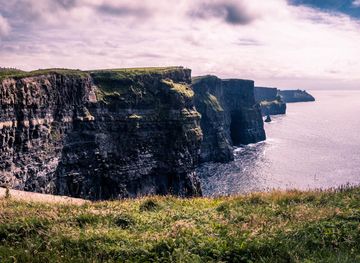
Discover Ireland: A land of enchanting landscapes, rich history, and vibrant culture, where every corner tells a story and every visit feels like coming home.
Explore Ireland