

St. Stephen's Green (Dublin) Travel Guide - Free
Explore St. Stephen's Green in Dublin with Evendo's free guide. Find the best shops, historic streets, restaurants, and gems on web or mobile.


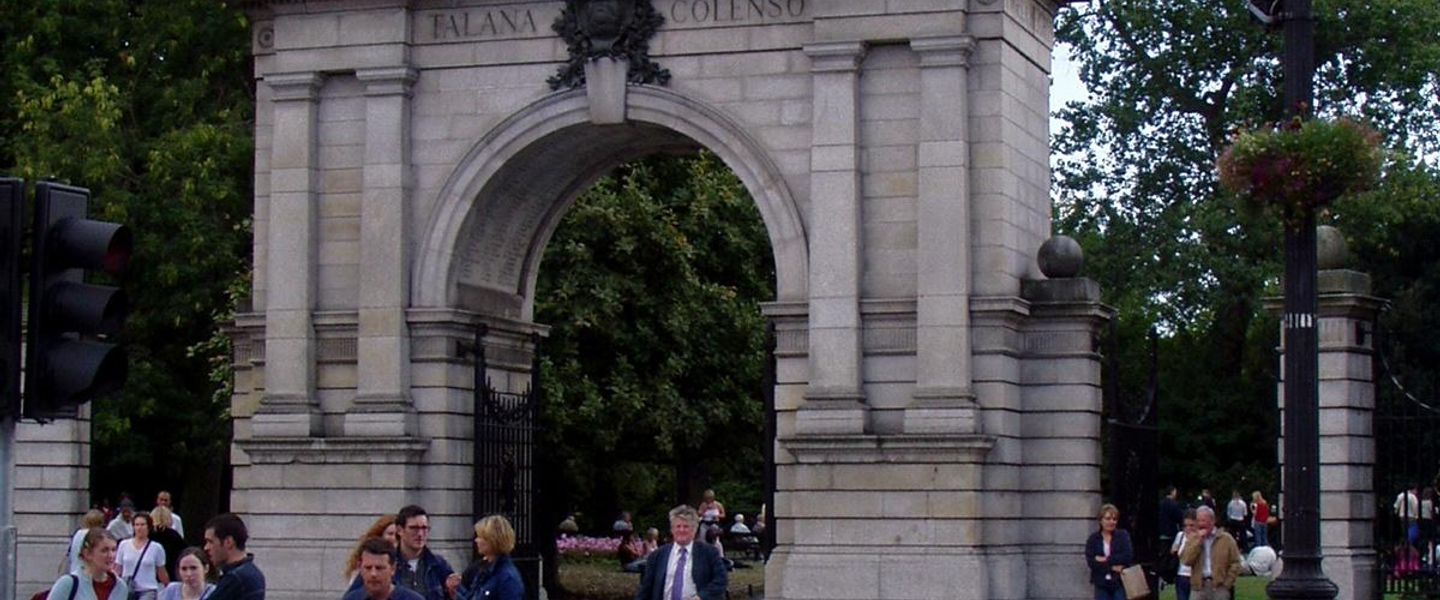


St. Stephen's Green in Dublin pairs a Victorian park, Georgian streets, museums, cafés, Grafton Street shopping and central Irish history for visitors.
The Green at the Centre
St. Stephen's Green is one of central Dublin's most recognisable urban spaces: a landscaped public park enclosed by busy streets, elegant Georgian terraces, cultural institutions and the southern end of Grafton Street. Its lawns, mature trees, ornamental lake and winding paths offer a striking change of pace from the surrounding commercial city, while the surrounding district remains firmly part of Dublin's historic civic and cultural core. The neighbourhood is compact and easy to explore on foot, with the park providing a useful point of orientation between Grafton Street, Dawson Street, Leeson Street and Harcourt Street.Read more about St. Stephen's Green
Architecture, Culture and Memory
City Life Around the Park
Best attractions in St. Stephen's Green
The principal attraction is St. Stephen's Green itself, a landscaped public park with broad lawns, mature planting, sculptures, a lake and paths that offer changing views of the surrounding city. Its northern entrance is marked by Fusiliers' Arch, while the perimeter reveals Georgian terraces and institutional buildings. The Little Museum of Dublin, housed in a Georgian townhouse on the Green, presents Dublin's modern social and political history through a compact collection and guided interpretation. Nearby, Newman House preserves an important historic educational setting on St. Stephen's Green South, and the Royal College of Surgeons in Ireland contributes to the area's institutional character. Grafton Street begins at the Green's north-western side, bringing pedestrian activity, buskers and adjoining cafés into the sightseeing experience. Just beyond the immediate streets, the National Museum of Ireland – Archaeology and the National Library of Ireland on Kildare Street provide closely related cultural visits.
-
Tourist attraction
Viking Splash Tours
Discover Dublin's Viking heritage on an exciting amphibious adventure that combines history, fun, and stunning views of the city.
2 min walk · 0.1 km from neighbourhood centre
-
Museum
Irish Famine Exhibition
Explore the haunting history of the Irish Potato Famine at the immersive Irish Famine Exhibition in Dublin, a must-visit for history enthusiasts.
3 min walk · 0.2 km from neighbourhood centre
-
Monument
Fusiliers' Arch
Explore Dublin's rich history at Fusiliers' Arch, a stunning monument honoring Irish soldiers in the heart of St. Stephen's Green. A must-see for every traveler.
3 min walk · 0.2 km from neighbourhood centre
-
Park
St. Stephen's Green Bandstand
Explore the historic St. Stephen's Green Bandstand in Dublin, a cultural gem surrounded by beautiful gardens and lively performances.
1 min walk · 0.1 km from neighbourhood centre


Best landmarks in St. Stephen's Green
St. Stephen's Green is the neighbourhood's defining landmark, both as a surviving urban park and as a reminder of Dublin's planned Georgian expansion. Fusiliers' Arch at the northern entrance is a prominent memorial structure whose meaning has changed within the city's political history. The park is enclosed by substantial Georgian terraces, particularly along St. Stephen's Green North and South, where brick façades, doorcases and iron railings convey the area's eighteenth-century residential character. Newman House, associated with the early history of University College Dublin, adds an important educational layer, while the Royal College of Surgeons in Ireland represents the district's continuing institutional role. The Mansion House on nearby Dawson Street lies just outside the immediate park enclosure and is relevant to the area as Dublin's civic residence, but should not be confused with a landmark located inside the Green itself.
-
Park
St Stephen's Green
Explore the lush beauty and historical significance of St Stephen's Green, Dublin's iconic park, perfect for relaxation and cultural immersion.
1 min walk · 0.1 km from neighbourhood centre
-
Monument
Fusiliers' Arch
Explore the poignant Fusiliers' Arch, a stunning monument in Dublin's St Stephen's Green honoring the valor of the Royal Dublin Fusiliers.
3 min walk · 0.2 km from neighbourhood centre
-
Park
St. Stephen's Green Bandstand
Discover the serene beauty of St. Stephen's Green Bandstand, a historic park in Dublin, perfect for relaxation, cultural events, and scenic walks.
1 min walk · 0.1 km from neighbourhood centre
-
Historical place museum
UCD Newman House
Explore UCD Newman House, a historical museum that showcases Dublin's rich academic heritage and architectural beauty, perfect for cultural enthusiasts.
2 min walk · 0.2 km from neighbourhood centre


Explore St. Stephen's Green on the map
A handpicked selection of must-see spots in St. Stephen's Green, mapped for you.
Best hotels in St. Stephen's Green
Best restaurants in St. Stephen's Green
Dining around St. Stephen's Green ranges from cafés and hotel dining rooms to established restaurants on Dawson Street, South William Street, Stephen's Green South and the lanes leading towards Grafton Street. The area is particularly convenient for visitors seeking a meal between museum visits, shopping and theatre or concert appointments, with Irish cooking represented alongside European, Asian and contemporary international menus. Cafés and bakeries serve the daytime office and visitor trade, while restaurants become more prominent in the early evening. The district's Georgian buildings often provide the setting, with converted townhouses and ground-floor premises creating a more intimate character than the larger commercial streets nearby. Food shopping is limited compared with Dublin's market districts, so the neighbourhood is better understood as a central dining quarter than as a destination for a single local market tradition.
-
Bar
The Well
Discover The Well: A vibrant bar & grill in Dublin offering delicious pizzas, refreshing drinks, and lively ambiance perfect for every occasion.
3 min walk · 0.2 km from neighbourhood centre
-
Irish
BANG restaurant & wine bar
Discover modern Irish cuisine at BANG Restaurant & Wine Bar in Dublin – where tradition meets contemporary elegance.
4 min walk · 0.3 km from neighbourhood centre
-
European
Peploe's St Stephens Green
Experience modern European cuisine at Peploe's St Stephens Green, where Irish flavors meet culinary artistry in Dublin’s vibrant heart.
2 min walk · 0.2 km from neighbourhood centre
-
Modern European
The Grayson
Experience modern European dining at The Grayson in Dublin—where exquisite cuisine meets stunning views over St. Stephen's Green.
3 min walk · 0.2 km from neighbourhood centre


Best bars in St. Stephen's Green
Evenings around St. Stephen's Green are shaped more by pubs, hotel bars, restaurants and cultural appointments than by a concentrated nightclub scene. Dawson Street and the streets south of the Green provide several established places for a drink, while Grafton Street and its adjoining lanes remain active after shops have closed because of dining, live performance and theatre traffic. The neighbourhood's older public houses sit alongside polished cocktail and hotel settings, reflecting its mix of offices, institutions, visitors and long-established city life. The park itself is not an evening entertainment venue and should be treated as a public green space rather than a shortcut late at night. Visitors seeking larger club venues generally need to continue into other parts of central Dublin, including districts beyond the immediate Green.
-
Irish pub
O'Donoghues Bar
Discover Dublin's vibrant culture at O'Donoghues Bar, an iconic Irish pub offering lively music, delicious food, and a warm atmosphere.
4 min walk · 0.3 km from neighbourhood centre
-
Cocktail bar
Peruke & Periwig
Discover Peruke & Periwig in Dublin, where innovative cocktails meet delicious dining in a vibrant atmosphere, perfect for every occasion.
3 min walk · 0.2 km from neighbourhood centre
-
Bar
The Well
Experience the heart of Dublin's nightlife at The Well, a cozy bar and grill offering delicious tastes and lively atmosphere for all visitors.
3 min walk · 0.2 km from neighbourhood centre
-
Cocktail bar
9 Below
Discover the vibrant nightlife of Dublin at 9 Below, a cocktail bar offering creative drinks and a lively atmosphere in the heart of the city.
3 min walk · 0.2 km from neighbourhood centre


Best nightclubs in St. Stephen's Green
Evenings around St. Stephen's Green are shaped more by pubs, hotel bars, restaurants and cultural appointments than by a concentrated nightclub scene. Dawson Street and the streets south of the Green provide several established places for a drink, while Grafton Street and its adjoining lanes remain active after shops have closed because of dining, live performance and theatre traffic. The neighbourhood's older public houses sit alongside polished cocktail and hotel settings, reflecting its mix of offices, institutions, visitors and long-established city life. The park itself is not an evening entertainment venue and should be treated as a public green space rather than a shortcut late at night. Visitors seeking larger club venues generally need to continue into other parts of central Dublin, including districts beyond the immediate Green.
-
Night club
The Sugar Club
Discover the vibrant nightlife of Dublin at The Sugar Club, where live music and electrifying events create unforgettable experiences.
4 min walk · 0.3 km from neighbourhood centre
-
Night club
Twenty Two Night Club
Dive into Dublin's nightlife at Twenty Two Night Club, a stylish venue offering unforgettable parties, top DJs, and a vibrant atmosphere.
4 min walk · 0.3 km from neighbourhood centre


Best shops in St. Stephen's Green
Shopping is concentrated around Grafton Street, which begins beside St. Stephen's Green and forms one of Dublin's principal pedestrian retail streets. Its larger shops are complemented by cafés, jewellers, fashion retailers and smaller businesses in adjoining lanes and on streets such as South King Street and Wicklow Street, although the precise mix changes over time. Stephen's Green Shopping Centre, close to the park's western side, provides an indoor retail option in a building designed with historic architectural references, while the surrounding Georgian streets contain specialist and independent premises among offices and institutions. This is not primarily a traditional market neighbourhood: visitors should come for central-city fashion, books, gifts, design-led shops and everyday retail rather than a distinctive produce market. Street performers and window displays add to the character of the Grafton Street experience.
-
Shopping mall
Stephen's Green Shopping Centre
Explore Stephen's Green Shopping Centre: Dublin's premier shopping destination offering unique boutiques, eateries, and stunning architecture.
4 min walk · 0.3 km from neighbourhood centre
-
Department store
TK Maxx
Explore TK Maxx in Dublin for unbeatable deals on fashion, homeware, and unique finds that fit your style and budget.
3 min walk · 0.3 km from neighbourhood centre
-
Toy store
Cogs Toys & Games
Discover a world of imagination at Cogs Toys & Games, the ultimate toy store for families in Dublin's vibrant shopping hub.
3 min walk · 0.2 km from neighbourhood centre
-
Irish goods store
Carrolls Irish Gifts
Discover authentic Irish souvenirs at Carrolls Irish Gifts, your gateway to the essence of Ireland in Dublin's vibrant heart.
4 min walk · 0.3 km from neighbourhood centre


St. Stephen's Green essentials
Getting There

From Eve
Local phrases worth knowing
You don't need to get them perfect. A few words go a long way, and locals appreciate the effort.
Basics
| English | Local | Say it |
|---|---|---|
| Hello | Dia duit | [dee-uh gwit] |
| Goodbye | Slán | [slawn] |
| Yes | Tá | [taw] |
| No | Níl | [neel] |
| Please/You're welcome | Le do thoil | [leh duh hull] |
| Thank you | Go raibh maith agat | [guh rev mah ag-ut] |
| Excuse me/Sorry | Maith thú/Ábrú | [mah hoo/aw-broo] |
| How are you? | Conas atá tú? | [kun-us ah-taw too] |
| Fine. And you? | Tá mé go maith. Agus tú? | [taw may guh mah. ah-gus too] |
| Do you speak English? | An bhfuil Béarla agat? | [awn will bayr-luh ah-gut] |
| I don't understand | Ní thuigim | [nee hug-im] |
Eating & Drinking
| English | Local | Say it |
|---|---|---|
| I'd like to see the menu, please | Ba mhaith liom an billeog a fheiceáil, le do thoil | [bah wuh luhm on bil-og uh eck-awl, leh duh hull] |
| I don't eat meat | Ní itheann mé feoil | [nee ih-hawn may foh-il] |
| Cheers! | Sláinte! | [slawn-cheh] |
| I would like to pay, please | Ba mhaith liom íoc, le do thoil | [bah wuh luhm ee-uk, leh duh hull] |
Emergencies
| English | Local | Say it |
|---|---|---|
| Help! | Cabhair! | [cah-wir] |
| Go away! | Imigh uaim! | [ih-mee oom] |
| Call the Police! | Glan an Garda! | [glawn on gar-dah] |
| Call a doctor! | Glaoigh ar dochtúir! | [gwee air duck-too-ir] |
| I'm lost | Tá mé caillte | [taw may kahl-cheh] |
| I'm ill | Tá tinneas orm | [taw chin-iss or-um] |
Shopping
| English | Local | Say it |
|---|---|---|
| I'd like to buy... | Ba mhaith liom ceannach... | [bah wuh luhm can-ukh] |
| I'm just looking | Níl ach ag amharc | [neel ahk eg ow-ark] |
| How much is it? | Cé mhéad atá air? | [kay vayd ah-taw air] |
| That's too expensive | Tá sé sin ró-dháiríre | [taw shay shin row-gaw-ree-ruh] |
| Can you lower the price? | An féidir leat an praghas a laghdú? | [awn fay-dir lat an pruh-uss ah lay-goo] |
Time & Numbers
| English | Local | Say it |
|---|---|---|
| What time is it? | Cén t-am é? | [kayn tahm ay] |
| It's one o'clock | Tá sé a haon | [taw shay a hayn] |
| Half past (10) | Leathuair tar éis a deich | [lah-hoo-ir tar aysh a dek] |
| Morning | Maidin | [mah-jin] |
| Afternoon | Tráthnóna | [traw-noh-nuh] |
| Evening | Tráthnóna | [traw-noh-nuh] |
| Yesterday | Inné | [in-ay] |
| Today | Inniu | [in-yoo] |
| Tomorrow | Amárach | [ah-maw-rahk] |
| 1 | A haon | [a hayn] |
| 2 | A dó | [a doh] |
| 3 | A trí | [a tree] |
| 4 | A ceathair | [a kah-hir] |
| 5 | A cúig | [a koo-ig] |
| 6 | A sé | [a shay] |
| 7 | A seacht | [a shakht] |
| 8 | A hocht | [a hukht] |
| 9 | A naoi | [a nee] |
| 10 | A deich | [a dek] |
Transport & Directions
| English | Local | Say it |
|---|---|---|
| Where's a/the...? | Cá bhfuil a/n... | [kaw will a/n] |
| What's the address? | Cad é an seoladh? | [kad ay on sho-luh] |
| Can you show me (on the map)? | An féidir leat mé a thaispeáint (ar an léarscáil)? | [awn fay-dir lat may uh hash-paint (ar on lay-ur-skawl)] |
| When's the next (bus)? | Cathain an chéad cheann eile (bus)? | [kah-hin on khayd khan el-eh (bus)] |
| A ticket (to ....) | Ticead (go dtí ....) | [tick-ad (guh dee ....)] |
History of St. Stephen's Green
From Common Land to Urban Park
The area now known as St. Stephen's Green began as common land outside the medieval city, used for grazing and other communal purposes. Its name is generally linked to a former chapel or hospital dedicated to St Stephen, although the early history of the site is less clearly documented than its later development. As Dublin expanded southwards, the open ground became increasingly valuable for urban planning. In 1664, the Corporation of Dublin enclosed the Green and divided much of its perimeter for development, helping to create the framework of the streets and residences that still define the neighbourhood.
Georgian Streets Take Shape
During the eighteenth century, the streets around St. Stephen's Green developed as a fashionable residential quarter, with rows of brick-fronted Georgian houses facing the open park. The surrounding district also acquired churches, clubs, educational institutions and private residences associated with Dublin's professional and political life. The Green itself remained enclosed and was not freely accessible to the general public, reflecting the way many urban squares were managed at the time. The architecture established during this period remains central to the neighbourhood's identity, particularly along the park's northern, eastern and western sides.
A Public Green for Dublin
In the nineteenth century, St. Stephen's Green became increasingly associated with public access and civic improvement. In 1880, the park was opened to the public through the efforts and funding of Sir Arthur Guinness, whose intervention helped transform a formerly restricted space into a major urban amenity. The landscaped park, with its paths, trees, water features and monuments, became the social and visual centre of the surrounding district. The same period brought substantial changes to central Dublin, including new transport connections, commercial growth and the adaptation of many Georgian buildings for institutional and business use.
Revolution and Public Memory
St. Stephen's Green and its surrounding streets were directly involved in the Easter Rising of 1916, when Irish Volunteers occupied positions in and around the park during the rebellion. The Green was later associated with the broader political transformation that led to the creation of the Irish Free State. The Fusiliers' Arch, erected in 1907 to commemorate Royal Dublin Fusiliers who served in the Second Boer War, acquired additional layers of meaning as the political context of the city changed. Monuments and named spaces around the park continue to reflect Dublin's contested history.
Modern Cultural and Commercial Quarter
During the twentieth and twenty-first centuries, St. Stephen's Green retained its role as a central meeting place while the surrounding district became increasingly commercial, cultural and institutional. Georgian buildings were adapted for offices, colleges, museums, hotels and professional organisations, and Grafton Street developed into one of Dublin's principal shopping streets. The park remains publicly accessible and heavily used, while nearby museums, the National Library, Newman House and the Royal College of Surgeons preserve the area's educational and civic character. Contemporary visitors therefore encounter a neighbourhood where residential Georgian fabric, national memory and central-city commerce remain closely interwoven.
St. Stephen's Green in Photos
Browse through our photo collection highlighting the charm and character of the destination.
Neighbourhoods near St. Stephen's Green
The closest neighbourhoods to St. Stephen's Green, if you have time for more than one stop.
-

-

-

-

-


Swipe for more neighbourhoods
Explore more

Explore more of Dublin
Dublin combines Viking history, Georgian streets, literary culture and lively pubs with museums, coastal walks and warm Irish hospitality year-round.
Explore Dublin