

Free Abruzzo Travel Guide & Mobile App
Explore Abruzzo with free travel guides. Discover regional history, expert tips, proposed trips, and audio guides on web or mobile app.


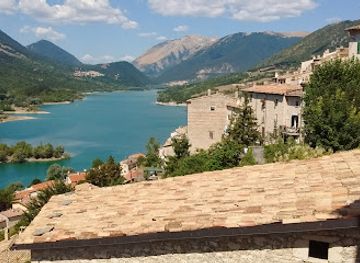
Explore Abruzzo for high Apennine parks, medieval hill towns, Adriatic seafood, Roman heritage and the scenic Costa dei Trabocchi.
Read more about Abruzzo
When is the best time to visit Abruzzo?
Best: May–June, September · 23–28°C| Month | High (°C) | Rainfall (mm) |
|---|---|---|
| January | 8 | 50 |
| February | 9 | 45 |
| March | 13 | 55 |
| April | 18 | 60 |
| May (best) | 23 | 65 |
| June (best) | 28 | 50 |
| July | 31 | 40 |
| August | 30 | 45 |
| September (best) | 26 | 55 |
| October | 19 | 60 |
| November | 13 | 65 |
| December | 8 | 70 |
Getting to and around Abruzzo
How to get there
Transportation
Destinations in Abruzzo
Resorts, valleys and scenic spots worth a trip of their own.
-

-


Swipe for more destinations
Best attractions in Abruzzo
Abruzzo’s attractions range from Roman ruins and medieval churches to high-mountain wilderness and Adriatic recreation. Near L’Aquila, the remains of Amiternum provide a glimpse of the ancient Sabine-Roman city, while Sulmona offers a historic centre shaped by Roman, medieval and Renaissance influences. The medieval churches and mountain villages around the Gran Sasso, including Santo Stefano di Sessanio and Castel del Monte, make the high plateau a rewarding area for slow exploration. The national parks of Abruzzo, Lazio and Molise, Gran Sasso and Monti della Laga, and the Maiella offer walking, wildlife observation and geology rather than conventional theme-park attractions. The Maiella also contains hermitages set in dramatic valleys. On the Adriatic side, beaches, fishing ports and the Costa dei Trabocchi provide a very different experience, with swimming, cycling and seafood. Museums in L’Aquila, Chieti and Pescara add archaeology, art and local history, while Atri, Guardiagrele, Scanno and Vasto combine cultural visits with access to the surrounding hills.
-
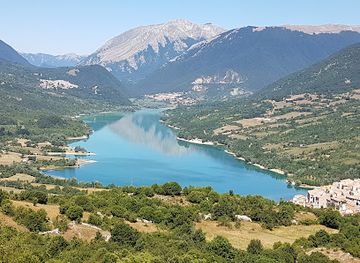
 Park
ParkParco Nazionale del Gran Sasso e Monti della Laga
Explore the stunning landscapes and diverse wildlife of Gran Sasso e Monti della Laga National Park, a breathtaking national treasure in Italy.
-
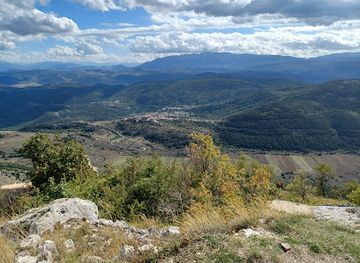
National park
National Park of Abruzzo
Discover the breathtaking landscapes, diverse wildlife, and rich culture of the National Park of Abruzzo, a must-visit destination for nature lovers in Italy.
-
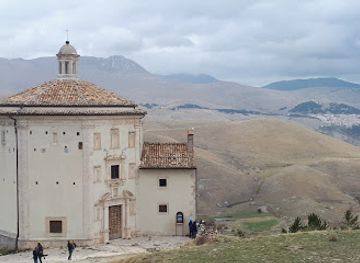
Castle
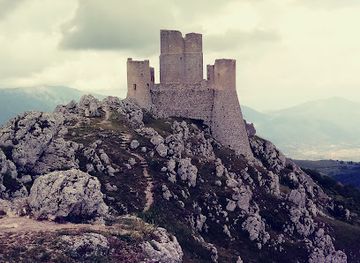
Rocca Calascio
Discover the breathtaking Rocca Calascio, a medieval castle offering panoramic views and a glimpse into Italy's rich history, nestled in the Apennine Mountains.
-
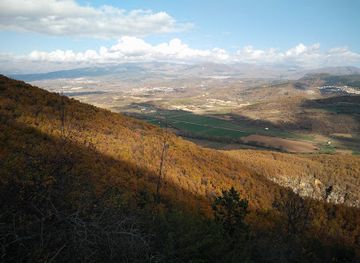
Park
Stiffe Caves
Explore the enchanting Stiffe Caves, a stunning natural attraction in Italy's Province of L'Aquila, filled with breathtaking rock formations and rich adventure.
Best landmarks in Abruzzo
Abruzzo’s most recognisable landmarks express its combination of mountains, fortified settlements and maritime history. L’Aquila’s Basilica of Santa Maria di Collemaggio, with its distinctive pale and rose stone façade, is a defining medieval monument, while the city’s Renaissance Fountain of the 99 Spouts reflects its civic identity. The hilltop fortress of Rocca Calascio overlooks the Gran Sasso landscape and is one of the region’s most memorable defensive structures, while the nearby villages of Santo Stefano di Sessanio and Castel del Monte preserve dense stone-built forms shaped by pastoral life. In the Peligna valley, Sulmona’s medieval aqueduct and cathedral anchor a historic urban setting associated with Ovid. The Roman amphitheatre and theatre at Amiternum record the antiquity of the L’Aquila basin, and the abbey of San Clemente a Casauria shows the architectural importance of medieval religious institutions. On the coast, the trabocchi of the southern Adriatic are functional maritime structures as well as visual symbols of Abruzzo’s fishing heritage.
-
Park
Parco Nazionale del Gran Sasso e Monti della Laga
Discover the breathtaking landscapes and rich biodiversity of Gran Sasso and Monti della Laga National Park, a premier destination for outdoor adventures in Italy.
-
National park
National Park of Abruzzo
Explore the breathtaking landscapes and diverse wildlife of the National Park of Abruzzo, a true Italian natural gem for outdoor enthusiasts.
-
Castle
Rocca Calascio
Discover the historical charm and stunning landscapes of Rocca Calascio, a medieval castle that offers breathtaking views in the heart of Abruzzo, Italy.
-
Park
Stiffe Caves
Explore the stunning Stiffe Caves in Abruzzo, where breathtaking limestone formations await your discovery in a unique underground adventure.
Explore Abruzzo on the map
Plan your trip on one map. See where the top cities, national parks and sights are, and book hotels and experiences in a few clicks.
Best hotels in Abruzzo
Best restaurants in Abruzzo
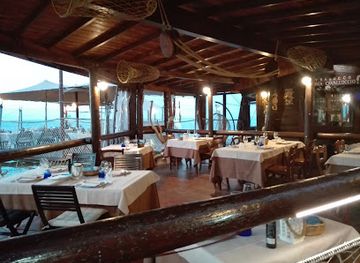
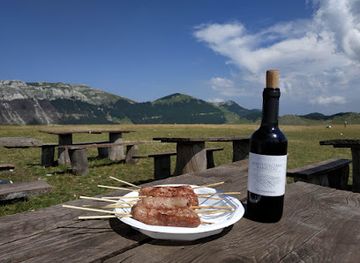
Abruzzese cooking is strongly regional, with recipes changing between the pastoral interior, the hill country and the Adriatic shore. Arrosticini, slender skewers of mutton cooked over charcoal, are associated particularly with inland pastoral culture and are often enjoyed informally with bread and local wine. Handmade pasta, including varieties served with rich sauces or simple seasonal ingredients, appears widely, while lentils from Santo Stefano di Sessanio, saffron from the L’Aquila area, mountain cheeses and cured meats reflect the upland economy. Coastal towns specialise in Adriatic fish, shellfish and brodetto-style stews, with recipes differing from one port to another. Montepulciano d’Abruzzo, Cerasuolo d’Abruzzo and Trebbiano d’Abruzzo are common regional wines; olive oil, pastries and Sulmona’s colourful confetti provide further local flavours. Look to trattorie, family-run restaurants, rural inns, bakeries and market stalls for the clearest sense of place, while Pescara, L’Aquila and larger towns also offer contemporary interpretations of Abruzzese ingredients.
-
Seafood
Trabocco Punta Cavalluccio
Experience exquisite seafood dining at Trabocco Punta Cavalluccio with stunning Adriatic views.
-
Restaurant
Ristoro Mucciante
Experience authentic Abruzzese cuisine at Ristoro Mucciante, where quality meats and local flavors come together in a charming setting.
-
Restaurant
La Taverna Del Conte
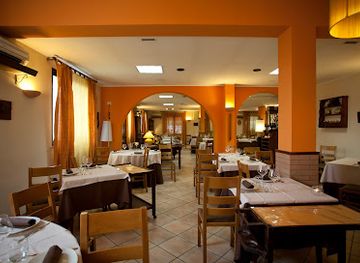
Experience authentic Italian cuisine at La Taverna Del Conte in Montesilvano – where every dish tells a story.
-
Restaurant
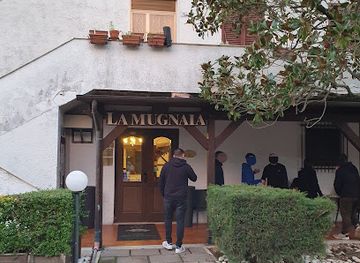
Ristorante La Mugnaia
Experience authentic Italian cuisine at Ristorante La Mugnaia in Città Sant'Angelo, where every dish tells a story of tradition and flavor.
Best bars in Abruzzo
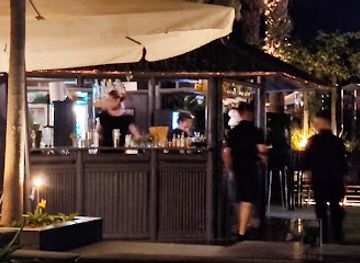
Evening life in Abruzzo varies sharply by location. Pescara has the region’s broadest urban choice, with restaurants, wine bars, cafés and late venues concentrated around the centre and seafront, while nearby Chieti offers a more compact town atmosphere. In L’Aquila, historic squares and student life support cafés, bars and places for an evening meal, although the scene changes with the academic calendar. Along the coast, summer brings more activity around beaches and promenades, but quieter periods are common outside the main resorts. Inland, nightlife generally centres on traditional bars, village festivals, enoteche and restaurants rather than large clubs; Sulmona, Teramo and some university areas provide more evening options. Local wines and craft beers can be sampled without treating drinking as the main cultural activity, and rural visitors should arrange a taxi or designated driver because public transport becomes sparse late at night.
-
Irish pub
Jayson's Irish Pub
Discover the heart of Ireland in Pescara at Jayson's Irish Pub, where great drinks, live music, and a lively atmosphere await.
-
Sushi
Manakara
Experience the best of sushi and nightlife at Manakara in Tortoreto Lido, where exquisite flavors meet vibrant disco vibes.
-
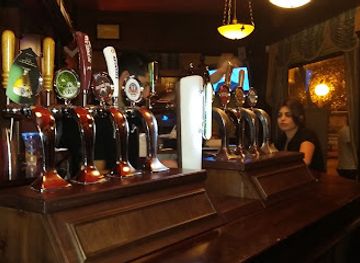
Pub
Temple Bar Irish Pub
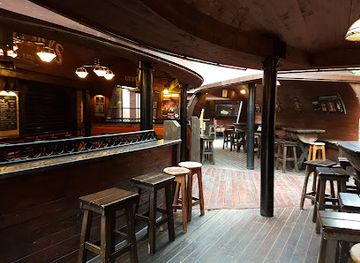
Discover the lively spirit of Ireland at Temple Bar Irish Pub, a must-visit destination in Pescara for food, drinks, and entertainment.
-
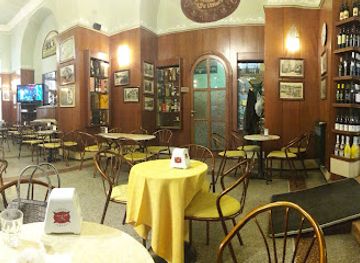
Bar
Gran Caffè Vittoria Chieti
Experience the charm of Italian café culture at Gran Caffè Vittoria in Chieti, where delicious pastries and rich coffee await.
Best nightclubs in Abruzzo
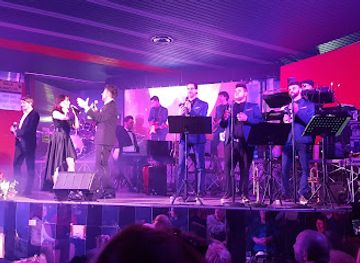
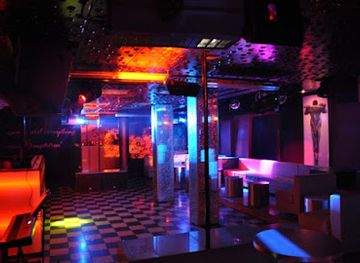
Evening life in Abruzzo varies sharply by location. Pescara has the region’s broadest urban choice, with restaurants, wine bars, cafés and late venues concentrated around the centre and seafront, while nearby Chieti offers a more compact town atmosphere. In L’Aquila, historic squares and student life support cafés, bars and places for an evening meal, although the scene changes with the academic calendar. Along the coast, summer brings more activity around beaches and promenades, but quieter periods are common outside the main resorts. Inland, nightlife generally centres on traditional bars, village festivals, enoteche and restaurants rather than large clubs; Sulmona, Teramo and some university areas provide more evening options. Local wines and craft beers can be sampled without treating drinking as the main cultural activity, and rural visitors should arrange a taxi or designated driver because public transport becomes sparse late at night.
-
Event planner
freKeteve Club Serate a Pescara Eventi Cena Spettacolo Ballo Musica Live Disco in locali Discoteche
Immerse yourself in Pescara's nightlife at freKeteve Club, where dining, dancing, and live music create an unforgettable experience.
-
Disco club
Dancing Discoteca IL DOLLARO
Experience the vibrant nightlife at Dancing Discoteca IL DOLLARO in Villanova, where music, energy, and joy come alive in an unforgettable dance atmosphere.
-
Disco club
Discoteca Athenee | Eventi Pescara Chieti
Discover the energetic nightlife at Discoteca Athenee, Pianella's premier disco club, where unforgettable music and vibrant atmospheres await.
-
Disco club
Oz Disco Club
Experience the electrifying nightlife at Oz Disco Club in Silvi, where the dance floor is always alive and the music never stops.

Best shops in Abruzzo
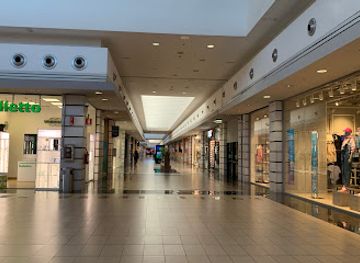
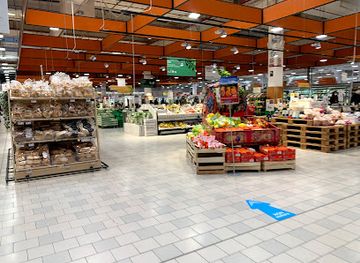
Shopping in Abruzzo is strongest in historic market towns and city centres rather than in large luxury retail districts. L’Aquila, Pescara, Chieti, Teramo and Sulmona provide the widest selection of everyday shops, independent boutiques, bookshops and food retailers. Sulmona is particularly associated with confetti, brightly arranged sugared almonds sold in many forms, while bakeries and specialist food shops across the region offer olive oil, Montepulciano d’Abruzzo, Cerasuolo, saffron, lentils, cheeses, cured meats and mountain honey. Weekly markets are useful for seasonal produce, clothing and household goods, though days and locations should be confirmed locally. In hill towns such as Guardiagrele and Atri, look for ceramics, metalwork, textiles and small craft studios, while the villages of the Gran Sasso and Maiella make suitable places to buy locally produced foods and handmade items. Along the Costa dei Trabocchi, coastal towns combine practical beach shopping with fishmongers, food shops and small independent businesses.
-
Shopping mall
Megalò Centro Commerciale
Explore Megalò Centro Commerciale in Chieti: a premier shopping mall with diverse stores, dining options, and family-friendly amenities, perfect for all visitors.
-
Shopping mall
Centro d'Abruzzo
Discover Centro d'Abruzzo, a premier shopping mall in San Giovanni Teatino, offering a unique blend of shopping, dining, and entertainment experiences.
-
Outlet mall
Città Sant'Angelo Outlet Village
Discover unbeatable deals on designer brands at Città Sant'Angelo Outlet Village, a must-visit shopping haven in picturesque Abruzzo, Italy.
-
Shopping mall
Centro Commerciale Val Vibrata
Discover Centro Commerciale Val Vibrata, Colonnella's vibrant shopping mall featuring diverse stores, delightful dining, and family-friendly entertainment.
Get your free copy of our complete guide to Abruzzo, delivered straight to you.
Everything on this page, from attractions and restaurants to essentials and local phrases, in one PDF you can read offline, print or share.
Already have an account? Sign in
Your Abruzzo guide is ready.
We'll send it to · Not you? Sign out

Getting your guide ready…
We are putting together a fresh copy of the Abruzzo guide. This can take up to a minute.
This can take a few moments. If your browser asks, choose Allow so the download can start. You'll find the guide in your Downloads folder.
Nothing happened? Download it again
Sorry, the guide is taking longer than usual. Please try again in a minute, or get it by email instead.
Abruzzo essentials
Currency and Payment
Safety
Emergency Situations
Do's and Don'ts
Local Tips
From Eve
Local phrases worth knowing
You don't need to get them perfect. A few words go a long way, and locals appreciate the effort.
Basics
| English | Local | Say it |
|---|---|---|
| Hello | Ciao | [chow] |
| Goodbye | Addio | [ah-dee-oh] |
| Yes | Sì | [see] |
| No | No | [noh] |
| Please/You're welcome | Per favore | [pair fah-vo-ray] |
| Thank you | Grazie | [grah-tsee-eh] |
| Excuse me/Sorry | Scusa | [skoo-zah] |
| How are you? | Come stai? | [koh-meh stah-ee] |
| Fine. And you? | Bene. E tu? | [beh-neh. eh too] |
| Do you speak English? | Parli inglese? | [par-lee in-gleh-zeh] |
| I don't understand | Non capisco | [noh-n kah-pees-koh] |
Eating & Drinking
| English | Local | Say it |
|---|---|---|
| I'd like to see the menu, please | Vorrei vedere il menu, per favore | [vor-ray veh-deh-ray eel meh-noo, pair fah-vo-ray] |
| I don't eat meat | Non mangio carne | [noh-n man-jo kar-neh] |
| Cheers! | Salute! | [sah-loo-tay] |
| I would like to pay, please | Vorrei pagare, per favore | [vor-ray pah-gah-ray, pair fah-vo-ray] |
Emergencies
| English | Local | Say it |
|---|---|---|
| Help! | Aiuto! | [ah-yoo-toh] |
| Go away! | Vai via! | [vy vee-ah] |
| Call the Police! | Chiama la polizia! | [kee-ah-mah lah poh-leet-zee-ah] |
| Call a doctor! | Chiama un dottore! | [kee-ah-mah oon doh-tor-eh] |
| I'm lost | Mi sono perso | [mee soh-noh pear-soh] |
| I'm ill | Sono malato | [soh-noh mah-lah-toh] |
Shopping
| English | Local | Say it |
|---|---|---|
| I'd like to buy... | Vorrei comprare... | [vor-ray com-prah-ray] |
| I'm just looking | Sto solo guardando | [sto soh-loh gwar-dahn-do] |
| How much is it? | Quanto costa? | [kwahn-toh koh-stah] |
| That's too expensive | È troppo costoso | [eh troh-poh koh-stoh-soh] |
| Can you lower the price? | Puoi abbassare il prezzo? | [pwoy ah-bah-sah-ray eel pret-soh] |
Time & Numbers
| English | Local | Say it |
|---|---|---|
| What time is it? | Che ore sono? | [keh oh-reh soh-noh] |
| It's one o'clock | È l'una | [eh loo-nah] |
| Half past (10) | Dieci e mezza | [dee-eh-chee eh meh-tsah] |
| Morning | Mattina | [maht-tee-nah] |
| Afternoon | Pomeriggio | [poh-meh-ree-joh] |
| Evening | Sera | [seh-rah] |
| Yesterday | Ieri | [yeh-ree] |
| Today | Oggi | [oh-gee] |
| Tomorrow | Domani | [doh-mah-nee] |
| 1 | Uno | [oo-noh] |
| 2 | Due | [doo-eh] |
| 3 | Tre | [treh] |
| 4 | Quattro | [kwah-troh] |
| 5 | Cinque | [cheen-kweh] |
| 6 | Sei | [say] |
| 7 | Sette | [set-teh] |
| 8 | Otto | [oht-toh] |
| 9 | Nove | [noh-veh] |
| 10 | Dieci | [dee-eh-chee] |
Transport & Directions
| English | Local | Say it |
|---|---|---|
| Where's a/the...? | Dove si trova...? | [doh-veh see troh-vah] |
| What's the address? | Qual è l'indirizzo? | [kwahl eh leen-dee-reet-soh] |
| Can you show me (on the map)? | Puoi mostrarmi (sulla mappa)? | [pwoy mos-trar-mee (soo-lah mahp-pah)] |
| When's the next (bus)? | Quando passa il prossimo (autobus)? | [kwan-doh pah-sah eel proh-ssee-mo (ow-toh-boos)] |
| A ticket (to ....) | Un biglietto (per ....) | [oon bee-lyet-toh (pair ....)] |
History of Abruzzo
Italic Peoples and Roman Foundations
Before Roman expansion, the area now known as Abruzzo was inhabited by several Italic peoples, including the Marsi, Peligni, Vestini, Marrucini and Samnites. Their settlements, sanctuaries and hilltop positions shaped later patterns of occupation. Rome gradually incorporated the region during the republican period, constructing roads and founding or expanding towns such as Alba Fucens in the Marsica and Amiternum near present-day L’Aquila. Roman agriculture, administration and communications left visible remains, while the region’s mountain geography continued to encourage dispersed settlement rather than one dominant urban centre.
Medieval Monasteries and Hill Towns
After the Roman political order weakened, Abruzzo became a landscape of fortified settlements, ecclesiastical estates and shifting powers. Lombard, Frankish, Norman and later imperial influences were expressed through castles, churches and monasteries. Benedictine foundations such as San Clemente a Casauria helped organise landholding, worship and cultural life, while towns including Sulmona and L’Aquila developed as centres of trade and administration. The need for defence on exposed ridges and the movement of people through mountain valleys explain much of the region’s medieval urban form.
The Foundation of L’Aquila and Angevin Rule
L’Aquila was founded in the thirteenth century through the consolidation of settlements in the Aterno basin, encouraged by Frederick II and developed under Angevin rule. Its position connected the interior with routes towards the Kingdom of Naples and the Adriatic. The city’s churches, fountains and urban quarters record the wealth generated by trade, wool and regional administration. Earthquakes, including major events in 1461 and 1703, repeatedly altered the city, but its central role in the mountain Abruzzo remained intact.
Transhumance, Wool and the Tratturi
For centuries, seasonal sheep migration linked Abruzzo’s mountain pastures with the plains of southern Italy. Shepherds travelled along tratturi, broad drove routes that connected areas around the L’Aquila basin, the Pescasseroli region and the Tavoliere of Apulia. This economy supported wool production, grazing rights, rural settlements and a network of markets and customs points. Although modern agriculture and transport reduced the practice, transhumance remains important to the region’s cultural memory and helps explain its pastoral foods, stone shelters and long-distance landscape connections.
From Bourbon Territory to United Italy
Before Italian unification, most of Abruzzo belonged to the Bourbon Kingdom of the Two Sicilies, while local towns were governed through a mixture of provincial institutions, landholding interests and ecclesiastical influence. The nineteenth century brought political upheaval, the creation of the Kingdom of Italy in 1861 and gradual integration into national administrative and transport systems. Emigration became a major feature of rural life, as people left mountain and hill communities for the Americas, northern Europe and Italian industrial centres. Their legacy remains visible in family histories and village architecture.
Earthquakes, War and Modern Transformation
Abruzzo’s modern history has been marked by natural disasters, war and changing patterns of settlement. The 1915 Avezzano earthquake devastated much of the Marsica and caused very heavy loss of life; the 2009 earthquake severely damaged L’Aquila and surrounding communities. During the Second World War, the Gustav Line and the German occupation affected the region, while the Adriatic and Apennine routes carried military activity and displacement. Post-war roads, industry, tourism and coastal urban growth changed the relationship between inland villages and cities, even as restoration and conservation continue to protect historic places.
Abruzzo in Photos
Browse through our photo collection highlighting the charm and character of the destination.
Neighbouring regions of Abruzzo
The closest regions to Abruzzo, if you have time for more than one.
-

-

-

-

-


Swipe for more regions
Explore more

Explore more of Italy
Discover Italy: A land of ancient history, artistic marvels, and culinary delights; where every corner reveals a new story and every meal is a celebration.
Explore Italy