

Free Sannio Travel Guide & Mobile App
Explore Sannio with free travel guides. Discover regional history, expert tips, proposed trips, and audio guides on web or mobile app.


Explore Sannio in inland Campania for Roman monuments, medieval hill towns, Apennine landscapes, distinctive wines and traditional southern Italian food.
Read more about Sannio
When is the best time to visit Sannio?
Best: June–August · 24–27°C| Month | High (°C) | Rainfall (mm) |
|---|---|---|
| January | 9 | 60 |
| February | 10 | 55 |
| March | 13 | 65 |
| April | 16 | 70 |
| May | 20 | 75 |
| June (best) | 24 | 60 |
| July (best) | 27 | 45 |
| August (best) | 27 | 50 |
| September | 23 | 65 |
| October | 18 | 70 |
| November | 13 | 75 |
| December | 10 | 80 |
Getting to and around Sannio
How to get there
Transportation
Top city travel guides in Sannio
The cities of Sannio, and the easiest places to base yourself.
-

-


Swipe for more cities
Best attractions in Sannio
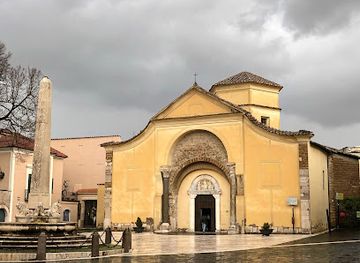
Sannio’s attractions are spread between Benevento’s archaeological and artistic heritage, hill towns, vineyards and Apennine countryside. In Benevento, visitors can explore the Roman Theatre, Trajan’s Arch, the Roman bridge of Ponte Leproso and the early medieval church of Santa Sofia, then move through the historic centre to museums and later civic buildings. The town’s monuments are unusually accessible within a compact urban area. Outside the capital, Sant’Agata de’ Goti offers ravine-edge views and historic streets, while Cerreto Sannita combines an ordered eighteenth-century town plan with a long ceramic tradition. Pietrelcina has religious significance through its association with Saint Pio, and Montesarchio provides access to the foothills of Monte Taburno. The Taburno-Camposauro Regional Park is the principal setting for walking, woodland exploration and panoramic drives, with routes varying in difficulty and seasonal accessibility. Vineyards and small producers form another important attraction, although visits should be arranged rather than treated as spontaneous drop-ins. Sannio is less about a single headline sight than the connection between Roman infrastructure, Longobard art, earthquake-rebuilt towns, working agricultural landscapes and mountain scenery.
-
Museum
Royal Palace of Caserta
Explore the Royal Palace of Caserta, a UNESCO site: opulent palace, stunning gardens, and a glimpse into Bourbon history near Naples.
-
National park
Vesuvius National Park
Explore Vesuvius National Park, where breathtaking views and rich history converge in the heart of Italy's iconic volcanic landscape.
-
Tourist attraction
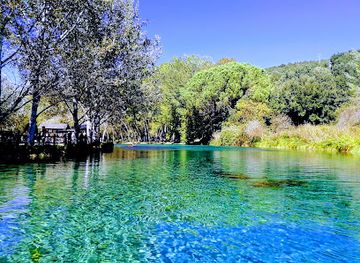
Parco del Grassano
Experience the beauty of nature and fun-filled activities at Parco del Grassano, a premier tourist attraction in San Salvatore Telesino.
-
Sanctuary
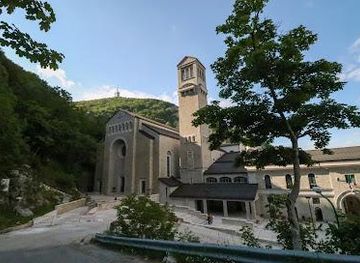
Sanctuary of Montevergine
Discover faith, history, and breathtaking views at the Sanctuary of Montevergine, a spiritual haven in the mountains of Campania.


Best landmarks in Sannio
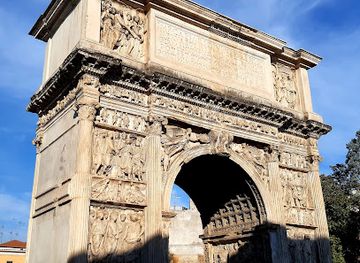
Benevento’s most recognisable landmark is Trajan’s Arch, an exceptionally well-preserved Roman monument whose reliefs celebrate the emperor and the roads, military achievements and civic works associated with his reign. The Roman Theatre remains a major reminder of Beneventum’s importance, while Ponte Leproso preserves part of the city’s ancient approach across the Sabato river. Santa Sofia is the outstanding Longobard landmark, notable for its early medieval architecture and its place within the UNESCO-listed heritage of Longobard Italy. The Rocca dei Rettori, a fortified complex incorporating earlier structures, expresses Benevento’s later strategic and papal history. Beyond the city, Sant’Agata de’ Goti is itself a landmark settlement because of its dramatic position on a tufa plateau between ravines and its concentration of historic buildings. Cerreto Sannita’s regular streets and eighteenth-century architecture represent a different kind of monument: a town deliberately rebuilt after the earthquake of 1688. The limestone mass of Monte Taburno provides Sannio with its defining natural landmark and a high viewpoint over the cultivated valleys.
-
Historical landmark
Arch of Trajan
Discover the Arch of Trajan in Benevento, an iconic historical landmark showcasing ancient Roman architecture and rich cultural heritage.
-
Archaeological site
Domus del Chirurgo
Immerse yourself in the ancient world at Domus del Chirurgo, Rimini's captivating archaeological site revealing Roman life and medical history.
-
Flea market
Via Sannio Flea Market
Explore Via Sannio Flea Market in Rome, a vibrant hub of treasures and local culture offering unique finds and authentic Roman experiences.
-
Catholic church
Church of Saint Sophia
Explore the historic Church of Saint Sophia in Benevento, a UNESCO World Heritage Site showcasing stunning Longobard architecture and rich cultural heritage.

Explore Sannio on the map
Plan your trip on one map. See where the top cities, national parks and sights are, and book hotels and experiences in a few clicks.
Best hotels in Sannio
Best restaurants in Sannio
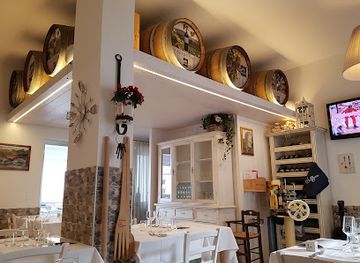
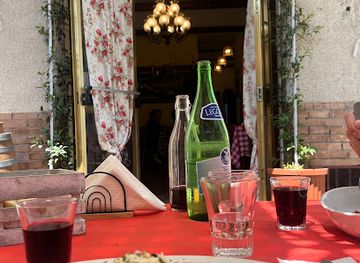
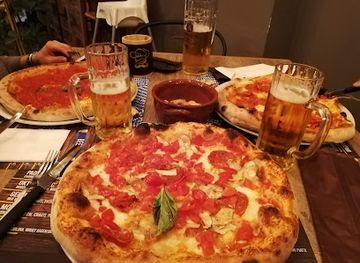
Sannio’s food reflects the inland cooking of Campania, with menus shaped by market vegetables, legumes, pasta, bread, local cheeses and pork or lamb. Handmade pasta and hearty soups are common regional reference points, while seasonal greens, mushrooms and preserved vegetables appear according to the time of year. Benevento and the larger towns offer pizzerias, cafés, trattorias and more contemporary restaurants; in the villages, rural inns and family-run dining rooms are often the best places to encounter traditional cooking, though opening arrangements may be limited outside busy periods. Local wines are central to the table, particularly bottles from the Sannio appellation made with grapes such as Aglianico and Falanghina. Travellers should also look for regional cured meats, farmhouse cheeses, olive oil, baked goods and sweets associated with Campanian confectionery traditions. Markets and food festivals can provide a useful introduction to local produce, but the most distinctive meals usually come from matching seasonal dishes with wines grown in the surrounding hills.
-
Restaurant
Ristorante Osteria Con Gusto
Discover authentic Italian flavors at Ristorante Osteria Con Gusto in Benevento - where every meal is a celebration of local cuisine.
-
Restaurant
Locanda Scialapopolo
Experience authentic Italian cuisine at Locanda Scialapopolo in Benevento—where tradition meets flavor in every dish.
-
Restaurant
Quanto Basta Bistrot-Pizzeria-Ristorante
Savor authentic Italian cuisine at Quanto Basta Bistrot-Pizzeria-Ristorante in San Giorgio del Sannio – where tradition meets flavor.
-
Italian
Ristorante Il Sannio
Experience authentic Italian flavors at Ristorante Il Sannio in Pietrelcina - where tradition meets taste.
Best bars in Sannio
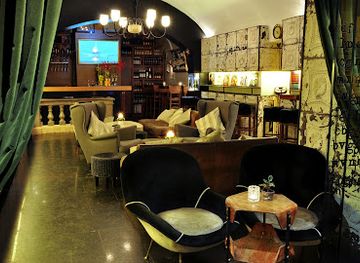
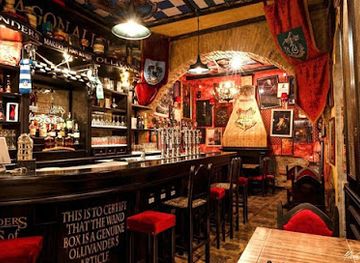
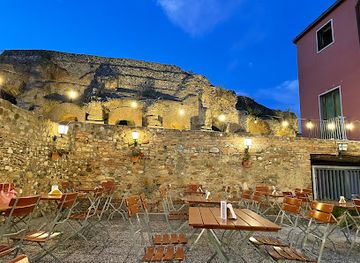
Evening life in Sannio is concentrated in Benevento and the larger towns rather than organised around a large club scene. Benevento’s historic centre has cafés, wine bars, pizzerias and pubs where students, residents and visitors gather, with the busiest atmosphere generally around dinner and later evening socialising. Traditional bars remain important for coffee, aperitivo and informal conversation, while some venues host live music or cultural events without operating as full-time nightclubs. In smaller towns, nightlife usually centres on a bar, gelateria, restaurant or seasonal piazza gathering, and rural evenings are quieter. Wine producers and specialist venues may offer tastings or events at selected times, but these should be booked or checked in advance. The region’s evening culture is best approached through food, conversation, local wine and town-centre walks rather than expectations of a continuous late-night entertainment district.
-
Cocktail bar
Salotto42
Experience the vibrant atmosphere of Salotto42, a premier cocktail bar in Rome, perfect for brunch or late-night enjoyment.
-
Pub
Beneventum Public House
Experience the lively atmosphere and delicious cuisine at Beneventum Public House, a must-visit gastropub in the heart of Benevento, Italy.
-
Pub
Good Fellows Pub
Explore Benevento's vibrant nightlife at Good Fellows Pub, where craft beer meets delicious Italian cuisine next to the historic Roman Theatre.
-
Pub
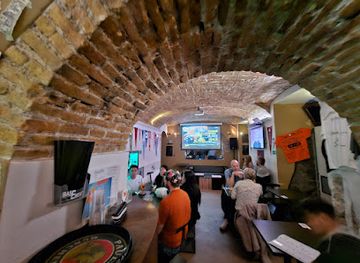
The Basement - Pub. Cocktail Bar. Events
Experience the vibrant nightlife of Rome at The Basement, a popular pub and cocktail bar known for its cozy atmosphere and exciting events.
Best nightclubs in Sannio
Evening life in Sannio is concentrated in Benevento and the larger towns rather than organised around a large club scene. Benevento’s historic centre has cafés, wine bars, pizzerias and pubs where students, residents and visitors gather, with the busiest atmosphere generally around dinner and later evening socialising. Traditional bars remain important for coffee, aperitivo and informal conversation, while some venues host live music or cultural events without operating as full-time nightclubs. In smaller towns, nightlife usually centres on a bar, gelateria, restaurant or seasonal piazza gathering, and rural evenings are quieter. Wine producers and specialist venues may offer tastings or events at selected times, but these should be booked or checked in advance. The region’s evening culture is best approached through food, conversation, local wine and town-centre walks rather than expectations of a continuous late-night entertainment district.
-
Night club
Tropical Night Club
Discover the electrifying atmosphere of Tropical Night Club in San Giorgio del Sannio, where music and dance meet vibrant nightlife.

Best shops in Sannio
Shopping in Sannio is centred on Benevento’s historic streets, everyday high streets and independent food shops rather than large-scale retail tourism. Visitors can look for local wines, olive oil, cured meats, cheeses, preserves, pasta and regional sweets, with specialist producers and enotecas providing better introductions to the area’s agricultural identity than generic souvenir shops. Cerreto Sannita is particularly associated with ceramics, whose patterns and forms reflect a longstanding local craft tradition; individual pieces should be bought from established workshops or galleries where provenance and care advice are clear. Market days in Benevento and other towns can be useful for clothing, household goods and seasonal produce, although exact schedules vary. Small art galleries, bookshops and craft outlets appear in the larger historic centres, while village shops tend to offer practical goods alongside locally made food. Shopping is generally modest and place-based, making a bottle of Sannio wine, a ceramic object or a carefully packaged food product a more representative purchase than an imported souvenir.
-
Outlet mall
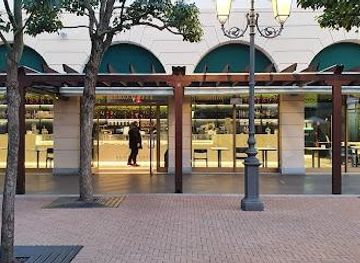
Designer Outlet La Reggia
Shop the latest trends and timeless styles at Designer Outlet La Reggia in Marcianise, where fashion meets affordability in a stunning Italian setting.
-
Market
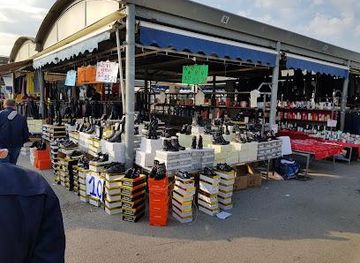
Mercato Caramanico
Explore Mercato Caramanico in Naples, a vibrant market brimming with fresh produce, artisan goods, and the essence of authentic Neapolitan culture.
-
Supermarket
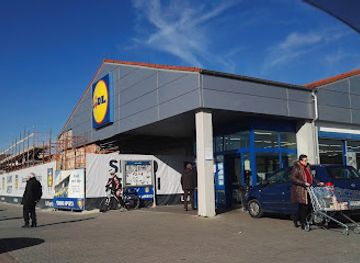
Lidl
Explore Lidl in San Giorgio del Sannio for an affordable shopping experience featuring local and international delicacies.
-
Shopping mall
Iper Universo
Explore the vibrant retail scene at Iper Universo, San Giorgio del Sannio's premier shopping mall, blending local culture with a modern shopping experience.

Get your free copy of our complete guide to Sannio, delivered straight to you.
Everything on this page, from attractions and restaurants to essentials and local phrases, in one PDF you can read offline, print or share.
Already have an account? Sign in
Your Sannio guide is ready.
We'll send it to · Not you? Sign out

Getting your guide ready…
We are putting together a fresh copy of the Sannio guide. This can take up to a minute.
This can take a few moments. If your browser asks, choose Allow so the download can start. You'll find the guide in your Downloads folder.
Nothing happened? Download it again
Sorry, the guide is taking longer than usual. Please try again in a minute, or get it by email instead.
Sannio essentials
Currency and Payment
Safety
Emergency Situations
Do's and Don'ts
Local Tips
From Eve
Local phrases worth knowing
You don't need to get them perfect. A few words go a long way, and locals appreciate the effort.
Basics
| English | Local | Say it |
|---|---|---|
| Hello | Ciao | [chow] |
| Goodbye | Arrivederci | [ah-ree-veh-DER-chee] |
| Yes | Sì | [see] |
| No | No | [noh] |
| Please/You're welcome | Per favore/Prego | [per fah-VOH-reh/PREH-go] |
| Thank you | Grazie | [GRAHT-see-eh] |
| Excuse me/Sorry | Scusa | [SKOO-zah] |
| How are you? | Come stai? | [KOH-meh stah-ee] |
| Fine. And you? | Bene. E tu? | [BEH-neh. eh too] |
| Do you speak English? | Parli inglese? | [PAR-lee een-GLEH-zeh] |
| I don't understand | Non capisco | [non kah-PEE-skoh] |
Eating & Drinking
| English | Local | Say it |
|---|---|---|
| I'd like to see the menu, please | Vorrei vedere il menu, per favore | [vor-RAY veh-DEH-reh eel meh-NOO, per fah-VOH-reh] |
| I don't eat meat | Non mangio carne | [non MAHN-joh KAR-neh] |
| Cheers! | Salute! | [sah-LOO-teh] |
| I would like to pay, please | Vorrei pagare, per favore | [vor-RAY pah-GAH-reh, per fah-VOH-reh] |
Emergencies
| English | Local | Say it |
|---|---|---|
| Help! | Aiuto! | [ah-YOO-toh] |
| Go away! | Vai via! | [vy VEE-ah] |
| Call the Police! | Chiama la polizia! | [KYAH-mah lah poh-lee-TSEE-ah] |
| Call a doctor! | Chiama un dottore! | [KYAH-mah oon doht-TOH-reh] |
| I'm lost | Mi sono perso | [mee SOH-noh PER-soh] |
| I'm ill | Sono malato | [SOH-noh mah-LAH-toh] |
Shopping
| English | Local | Say it |
|---|---|---|
| I'd like to buy... | Vorrei comprare... | [vor-RAY kom-PRAH-reh] |
| I'm just looking | Sto solo guardando | [stoh SOH-loh gwahr-DAHN-doh] |
| How much is it? | Quanto costa? | [KWAN-toh KOH-stah] |
| That's too expensive | È troppo costoso | [eh TROH-poh koh-STOH-soh] |
| Can you lower the price? | Puoi abbassare il prezzo? | [pwoy ahb-BAH-sah-reh eel PRET-tsoh] |
Time & Numbers
| English | Local | Say it |
|---|---|---|
| What time is it? | Che ore sono? | [keh OH-reh SOH-noh] |
| It's one o'clock | È l'una | [eh LOO-nah] |
| Half past (10) | Dieci e mezza | [DEE-eh-chee eh MEH-zah] |
| Morning | Mattina | [maht-TEE-nah] |
| Afternoon | Pomeriggio | [poh-meh-REE-joh] |
| Evening | Sera | [SEH-rah] |
| Yesterday | Ieri | [YAY-ree] |
| Today | Oggi | [OHJ-ee] |
| Tomorrow | Domani | [doh-MAH-nee] |
| 1 | Uno | [OO-noh] |
| 2 | Due | [DOO-eh] |
| 3 | Tre | [TREH] |
| 4 | Quattro | [KWAHT-troh] |
| 5 | Cinque | [CHEEN-kweh] |
| 6 | Sei | [SAY] |
| 7 | Sette | [SET-teh] |
| 8 | Otto | [OHT-toh] |
| 9 | Nove | [NOH-veh] |
| 10 | Dieci | [DEE-eh-chee] |
Transport & Directions
| English | Local | Say it |
|---|---|---|
| Where's a/the...? | Dove c'è...? | [DOH-veh cheh] |
| What's the address? | Qual è l'indirizzo? | [kwahl eh leen-DEE-reet-soh] |
| Can you show me (on the map)? | Puoi mostrarmi (sulla mappa)? | [pwoy mo-STRAHR-mee (SOOL-lah MAHP-pah)] |
| When's the next (bus)? | Quando parte il prossimo (autobus)? | [KWAN-doh PAR-teh eel PROS-simo (OW-toh-boos)] |
| A ticket (to ....) | Un biglietto (per ....) | [oon bee-LYET-toh (per ....)] |
History of Sannio
The Samnite homeland before Rome
Sannio takes its name from the Samnites, a group of Italic peoples who occupied much of the central and southern Apennines before Roman expansion. Their communities were organised around fortified hill settlements and controlled important routes through the interior. The rugged terrain helped them resist Rome in a series of conflicts during the fourth and third centuries BC, although Roman victory eventually brought the area into the Republic’s political and military system. Archaeological remains, ancient road routes and the region’s hilltop geography all preserve traces of this pre-Roman landscape, even though the modern boundaries of Sannio do not correspond exactly to the ancient territory.
Roman Beneventum and the Appian Way
After the Samnite Wars, Rome developed Beneventum as a strategic colony and road junction. The city stood on routes linking Rome with the Adriatic and with the southern peninsula, giving it military and commercial importance. Trajan’s Arch, erected in AD 114, commemorated the emperor’s improvements to the Via Traiana, an easier route towards Brindisi, while the Roman Theatre and Ponte Leproso demonstrate the scale of urban and engineering investment. Roman land division, roads and settlement patterns shaped the agricultural and communications landscape that later communities inherited.
The Lombard duchy of Benevento
Following the decline of Roman imperial authority in Italy, Benevento became the centre of a powerful Lombard duchy founded in the late sixth century. The duchy survived for centuries and developed a distinctive political and artistic culture in southern Italy. The church of Santa Sofia in Benevento, founded in the eighth century, is the most important surviving expression of this period in the city and forms part of the UNESCO serial listing of Longobards in Italy. Lombard rule helped establish Benevento as a regional centre whose influence extended well beyond the immediate urban settlement.
Papal Benevento and medieval border politics
From the eleventh century until Italian unification, Benevento was a papal enclave surrounded by territories controlled at different times by the Normans, the Kingdom of Naples and other southern powers. This unusual political position affected local administration, fortifications and relations with neighbouring towns. The Rocca dei Rettori, incorporating earlier defensive structures, is a visible reminder of Benevento’s strategic role. Medieval churches, castle sites and street plans across the province reflect the competition among ecclesiastical, feudal and royal authorities that shaped inland Campania.
Earthquakes and the rebuilding of Sannio
Sannio has repeatedly been affected by damaging earthquakes, most notably the earthquake of 1688 and another major event in 1702. The destruction prompted extensive rebuilding in Benevento and surrounding settlements, often in the Baroque style and according to more ordered urban plans. Cerreto Sannita was reconstructed on a new site after the 1688 earthquake, producing its characteristic planned layout and encouraging the development of local ceramic production. The region’s architecture therefore combines surviving medieval fragments with eighteenth-century streets, churches and civic buildings created after seismic disasters.
Rural economy, migration and modern change
For much of the modern era, Sannio’s economy depended on small-scale agriculture, vineyards, olive groves, livestock and local craft production. Limited industrialisation and rural poverty contributed to substantial emigration from the late nineteenth century through the twentieth century, as happened across much of southern Italy. Roads and railways improved connections with Naples and the wider national economy, while Benevento grew as an administrative and educational centre. Today, wine production, food businesses, cultural tourism and outdoor recreation complement agriculture, although the region remains markedly less urbanised than Campania’s coastal belt.
The Sannio wine identity
Viticulture has long been part of the agricultural landscape, but the modern Sannio wine identity developed through improved cellar technology, regulated appellations and renewed attention to local grape varieties. Aglianico, Falanghina, Greco and other grapes are cultivated in different parts of the province, with altitude, exposure and soil influencing the style of the wines. Wine remains more than a visitor product: vineyards are woven into the rural economy and seasonal calendar. Harvest celebrations, cellar visits and local food traditions provide a contemporary expression of Sannio’s agricultural history.
Sannio in Photos
Browse through our photo collection highlighting the charm and character of the destination.
Neighbouring regions of Sannio
The closest regions to Sannio, if you have time for more than one.
-

-

-

-
-


Swipe for more regions
Explore more

Explore more of Italy
Discover Italy: A land of ancient history, artistic marvels, and culinary delights; where every corner reveals a new story and every meal is a celebration.
Explore Italy