

Free Shymkent Travel Guide & Mobile App
Plan your Shymkent trip with Evendo. Get free guides to top attractions, restaurants, hotels, and bars. Web access or download the mobile app.


Shymkent, Kazakhstan blends Silk Road history, leafy parks, lively bazaars and southern cuisine with easy access to Turkistan and the nearby steppe.
A Southern Crossroads
Shymkent stands in southern Kazakhstan near the foothills of the Tian Shan, where broad avenues, irrigated greenery and dry steppe landscapes meet the cultural influences of Central Asia. The country's third-largest city has a warmer, more relaxed character than the northern capitals, with outdoor cafés, busy bazaars and tree-lined parks shaping everyday life. Its position close to Uzbekistan has given the city a distinctly southern atmosphere, evident in its food, architecture and multilingual cultural life.Read more about Shymkent
History in the Urban Landscape
Parks, Markets and Southern Flavours
When is the best time to visit Shymkent?
Best: April–May, September · 21–26°C| Month | High (°C) | Rainfall (mm) |
|---|---|---|
| January | 1 | 10 |
| February | 5 | 8 |
| March | 11 | 9 |
| April (best) | 21 | 10 |
| May (best) | 26 | 10 |
| June | 31 | 6 |
| July | 33 | 5 |
| August | 31 | 5 |
| September (best) | 24 | 6 |
| October | 14 | 9 |
| November | 5 | 10 |
| December | 4 | 10 |
Getting to and around Shymkent
How to get there
Transportation
Best attractions in Shymkent
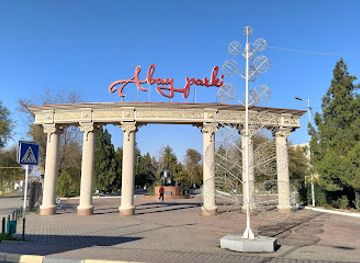
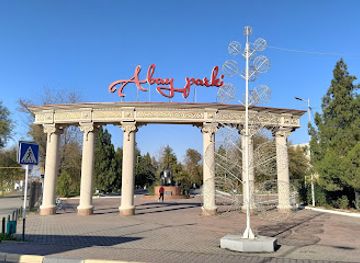
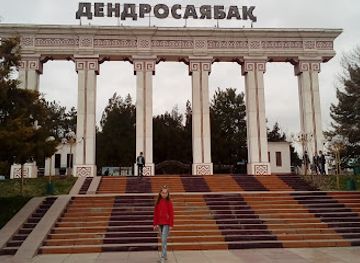
Shymkent's attractions combine open-air recreation with reminders of its long regional history. The old citadel area introduces the city's archaeological past, while the Shymkent History Museum places local development within the wider story of southern Kazakhstan. Dendropark is one of the city's most appealing places for a long walk, with mature trees and broad landscaped spaces, and Abay Park offers a central green setting used by residents throughout the day. The Shymkent Zoo provides a family-oriented outing, while the Koshkar Ata river area gives a more local view of the city's relationship with water and public space. Markets around the centre reveal the produce and food traditions of the southern region, and Ordabasy Square provides a useful point for understanding modern civic Shymkent. The city's appeal lies in the contrast between expansive parks, everyday urban life and archaeological traces rather than in a densely preserved old town.
-
Park
Abay Park
Explore the beauty of Abay Park in Shymkent, a tranquil urban escape filled with lush landscapes, cultural heritage, and family-friendly activities.
6 min drive · 2.1 km from city centre
-
Park
Abay Park
Discover the serene beauty of Abay Park in Shymkent, a perfect blend of nature, art, and relaxation for every traveler.
6 min drive · 2.1 km from city centre
-
Tourist attraction
Shymkent Zoo
Explore the captivating world of wildlife at Shymkent Zoo, a top family-friendly attraction in Kazakhstan, showcasing diverse species and educational experiences.
23 min drive · 7.8 km from city centre
-
Tourist attraction
Арбат Шымкент
Experience the vibrant beauty and cultural richness of Arbat Shymkent, a must-visit park in Kazakhstan for leisurely strolls and family fun.
5 min drive · 1.6 km from city centre

Best landmarks in Shymkent
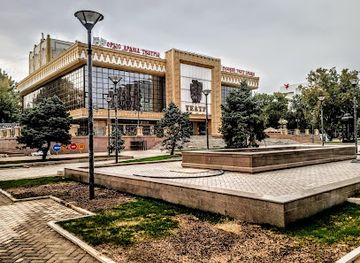
Ordabasy Square is one of Shymkent's principal civic landmarks, associated with the city's modern public identity and the historical memory of southern Kazakhstan. The nearby citadel and archaeological remains point to the settlement's medieval and Silk Road origins, even though the historic core has been altered by later construction. The Koshkar Ata river is a natural and cultural landmark, marking the importance of water to the city's settlement and shaping a series of public spaces through the centre. The Shymkent History Museum provides an institutional landmark for the region's archaeology, imperial period and Soviet transformation. Parks such as Abay Park and Dendropark are also significant elements of the urban landscape: rather than monumental architecture, they express the city's southern character through shade, cultivated greenery and public leisure. Together these places show how Shymkent grew from a trading settlement into a modern regional capital.
-
Shopping mall
Шымкент плаза
Explore Shymkent Plaza, a vibrant shopping destination in Shymkent, offering unique shops, local cuisine, and family-friendly entertainment.
14 min walk · 1.2 km from city centre
-
Park
Abay Park
Explore Abay Park, a lush urban haven in Shymkent offering relaxation, cultural experiences, and stunning landscapes for all visitors.
6 min drive · 2.1 km from city centre
-
Zoo
Shymkent Zoo
Explore Shymkent Zoo, a vibrant wildlife sanctuary offering a captivating experience for all ages amidst lush landscapes and diverse animal species.
23 min drive · 7.8 km from city centre
-
Arboretum
Dendropark
Discover the tranquility of Dendropark, an enchanting arboretum in Shymkent, featuring diverse flora, serene pathways, and family-friendly spaces.
20 min drive · 6.8 km from city centre
Explore Shymkent on the map
Plan your Shymkent trip on one map. See where the top attractions, landmarks, restaurants, bars and hotels are, find what's near where you're staying, and book hotels and experiences in a few clicks.
Best hotels in Shymkent
Best restaurants in Shymkent
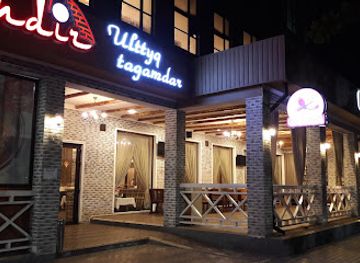
Shymkent's food reflects its position in southern Kazakhstan and its long connections with Uzbek and wider Central Asian culinary traditions. Plov, samsa, shashlik, lagman, manty and varied bread are familiar features of local dining, while Kazakh specialities such as beshbarmak and baursak appear alongside them. Restaurants range from casual teahouses and family dining rooms to contemporary venues serving regional ingredients in more polished settings. Bazaars are useful for tasting fresh fruit, dried fruits, nuts, dairy products and baked goods, with seasonal produce benefiting from the fertile districts around the city. The atmosphere is often informal and social, and meals may be shared across the table rather than served as tightly separated courses. Uzbek-influenced cooking is particularly noticeable in the use of rice, vegetables, herbs and charcoal grilling, while tea remains a common accompaniment to conversation and food.
-
Uzbeki
Jeti Tandir
Experience authentic Uzbek cuisine at Jeti Tandir in Shymkent - where every dish tells a story.
8 min walk · 0.7 km from city centre
-
Restaurant
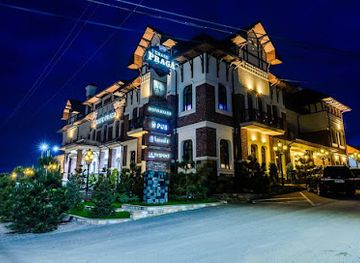
Grand Praga
Discover the flavors of Shymkent at Grand Praga – where tradition meets modern culinary artistry in an unforgettable dining experience.
14 min drive · 4.6 km from city centre
-
Restaurant
Restaurant Afsona
Experience exquisite Kazakh cuisine at Restaurant Afsona in Shymkent - a culinary gem blending tradition with modern flair.
16 min drive · 5.3 km from city centre
-
Restaurant
Calista
Experience the best of Kazakh and international cuisine at Calista in Shymkent – where every meal is a celebration of flavor.
17 min walk · 1.4 km from city centre

Best bars in Shymkent
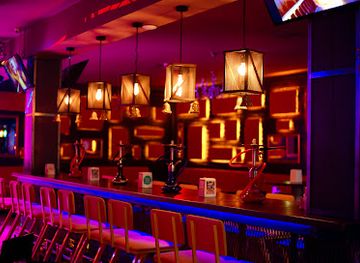
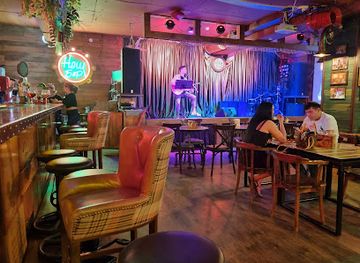
Shymkent's evening life is more social and café-oriented than club-focused, with residents gathering around restaurants, tea houses, dessert cafés and contemporary bars in central districts. Ordabasy Square and the main avenues provide a useful orientation after dark, while larger commercial areas tend to have the broadest choice of modern entertainment. Some venues offer live music, karaoke or dance floors, although the scene changes with seasons and current local demand. Families and mixed-age groups are a visible part of evening public life, and nightlife is generally less concentrated than in Almaty or Astana. Visitors should expect conservative attitudes in some settings, dress neatly and check local policies rather than assuming that every venue operates late. Cultural performances and evening walks through the parks can be as characteristic of Shymkent after dark as bars or nightclubs.
-
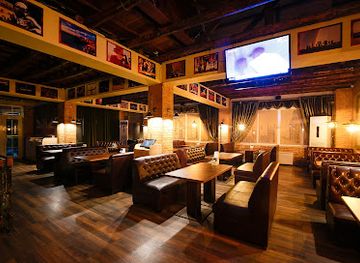
Pub
Pinta Pub
Experience the vibrant nightlife of Shymkent at Pinta Pub, where great drinks and a lively atmosphere come together.
5 min drive · 1.8 km from city centre
-
Karaoke bar
Vivaro
Discover the vibrant nightlife at Vivaro, Shymkent's top karaoke bar, where music, food, and fun come together in a lively atmosphere.
10 min drive · 3.4 km from city centre
-
Pub
Pride pub
Experience the lively atmosphere and diverse menu at Pride Pub, a must-visit destination in the heart of Shymkent for food and drink enthusiasts.
5 min drive · 1.8 km from city centre
-
Bar
Nash Bar
Experience the lively atmosphere and diverse drink selection at Nash Bar, the ultimate nightlife destination in Shymkent.
9 min drive · 3.0 km from city centre
Best nightclubs in Shymkent
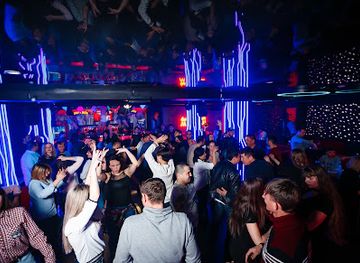
Shymkent's evening life is more social and café-oriented than club-focused, with residents gathering around restaurants, tea houses, dessert cafés and contemporary bars in central districts. Ordabasy Square and the main avenues provide a useful orientation after dark, while larger commercial areas tend to have the broadest choice of modern entertainment. Some venues offer live music, karaoke or dance floors, although the scene changes with seasons and current local demand. Families and mixed-age groups are a visible part of evening public life, and nightlife is generally less concentrated than in Almaty or Astana. Visitors should expect conservative attitudes in some settings, dress neatly and check local policies rather than assuming that every venue operates late. Cultural performances and evening walks through the parks can be as characteristic of Shymkent after dark as bars or nightclubs.
-
Night club
Like Moscow bar
Discover Shymkent's vibrant nightlife at Like Moscow Bar, where great music and a lively atmosphere create unforgettable experiences.
6 min drive · 2.1 km from city centre
-
Night club
Motor
Dive into the vibrant nightlife of Shymkent at Motor Night Club, where music, dancing, and fun come alive.
6 min drive · 1.9 km from city centre
-
 Night club
Beyoglu
Experience the vibrant nightlife of Shymkent at Beyoglu, a dynamic night club offering pulsating music, lively crowds, and unforgettable moments.
6 min drive · 2.1 km from city centre
-
Night club
Royal de lice
Dive into the vibrant nightlife of Shymkent at Royal de Lice, where unforgettable experiences and exhilarating entertainment await.
6 min walk · 0.5 km from city centre
Best shops in Shymkent
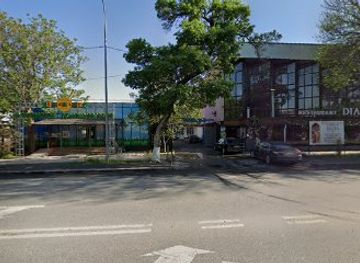
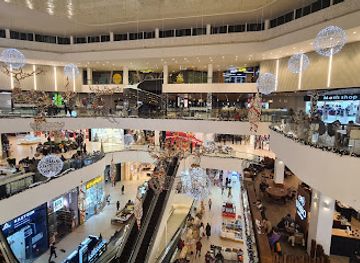
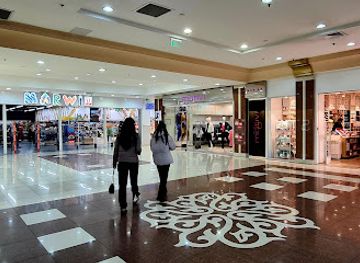
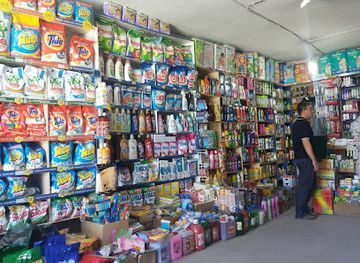
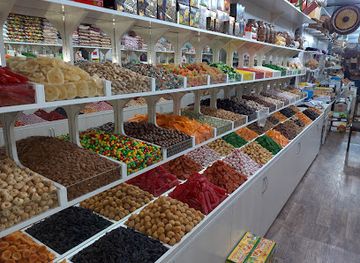
Shopping in Shymkent is rooted in bazaars, food trading and the commercial links of southern Kazakhstan. Central market areas are useful for seeing the everyday economy of the city, with stalls selling fruit, vegetables, spices, dried foods, bread, nuts and regional dairy products. Visitors may also find kurt, honey, sweets and packaged specialities suitable for carrying home, though food customs and airline restrictions should be considered. Modern shopping centres and supermarkets provide international goods, clothing, electronics and everyday necessities, while smaller streets contain independent shops and cafés rather than a concentrated luxury-shopping district. Traditional textiles, leather goods and decorative items may appear in craft and souvenir sections, but quality and provenance vary, so buyers should ask questions before purchasing. Bargaining is more customary in informal market settings than in fixed-price shops.
-
Shopping mall
Шымкент плаза
Discover Shymkent Plaza, the ultimate shopping destination in Shymkent, offering a blend of local charm and international brands.
14 min walk · 1.2 km from city centre
-
Shopping mall
Mega Planet
Discover Mega Planet in Shymkent: A vibrant shopping mall offering diverse brands, entertainment, and delicious dining options for every visitor.
14 min walk · 1.1 km from city centre
-
Variety store
Qyrgy Bazar (Центральный Верхний рынок)
Explore Qyrgy Bazar in Shymkent, a vibrant market offering a unique shopping experience filled with local culture and treasures.
4 min walk · 0.4 km from city centre
-
Bazar
Aina Bazar
Discover the vibrant heart of Shymkent at Aina Bazar, where culture, cuisine, and commerce intertwine in an unforgettable market experience.
10 min drive · 3.2 km from city centre
Get your free copy of our complete guide to Shymkent, delivered straight to you.
Everything on this page, from attractions and restaurants to essentials and local phrases, in one PDF you can read offline, print or share.
Already have an account? Sign in
Your Shymkent guide is ready.
We'll send it to · Not you? Sign out

Getting your guide ready…
We are putting together a fresh copy of the Shymkent guide. This can take up to a minute.
This can take a few moments. If your browser asks, choose Allow so the download can start. You'll find the guide in your Downloads folder.
Nothing happened? Download it again
Sorry, the guide is taking longer than usual. Please try again in a minute, or get it by email instead.
Shymkent essentials
Currency and Payment
Safety
Emergency Situations
Do's and Don'ts
Local Tips
From Eve
Local phrases worth knowing
You don't need to get them perfect. A few words go a long way, and locals appreciate the effort.
Basics
| English | Local | Say it |
|---|---|---|
| Hello | Сәлем | [Salem] |
| Goodbye | Қош келдіңіз | [Qoş keldiniz] |
| Yes | Ия | [Iya] |
| No | Жоқ | [Joq] |
| Please/You're welcome | Рахмет | [Rahmet] |
| Thank you | Рахмет | [Rahmet] |
| Excuse me/Sorry | Кешіріңіз | [Keshiriniz] |
| How are you? | Қалайсыз? | [Qalaisyz?] |
| Fine. And you? | Жақсымын. Сіз кім? | [Jaqsımın. Siz kim?] |
| Do you speak English? | Сіз ағылшынша сөйлейсіз бе? | [Siz ağılşınşa söylesiz be?] |
| I don't understand | Мен түсінбеймін | [Men tüsinbeymin] |
Eating & Drinking
| English | Local | Say it |
|---|---|---|
| I'd like to see the menu, please | Менюмен танысу қаладым, рахмет | [Menyumеn tanısý kaladım, rаhmet] |
| I don't eat meat | Мен домалмаймын | [Men domalmaımın] |
| Cheers! | Тамшысыңдар! | [Tаmshısındаr!] |
| I would like to pay, please | Төлетін келіп тұрыңыз | [Tоletin kelip turınız] |
Emergencies
| English | Local | Say it |
|---|---|---|
| Help! | Көмек! | [Kömek!] |
| Go away! | Барыңыз! | [Barınız!] |
| Call the Police! | Полицияны қарап шақырыңыз! | [Poliyanı qarap shaqırınız!] |
| Call a doctor! | Докторды шақырыңыз! | [Doktordı shaqırınız!] |
| I'm lost | Мен ашықпын | [Men aşıqpin] |
| I'm ill | Мен аурулым | [Men aurulım] |
Shopping
| English | Local | Say it |
|---|---|---|
| I'd like to buy... | Сатып алғым келеді | [Satıp alǵım keledi] |
| I'm just looking | Тек қараушы | [Tek qaraushı] |
| How much is it? | Ол канша? | [Ol qansha?] |
| That's too expensive | Ол тым дорын | [Ol tım dorın] |
| Can you lower the price? | Бағаны төмендете аласыз бе? | [Baganı tоmendete аlasız be?] |
Time & Numbers
| English | Local | Say it |
|---|---|---|
| What time is it? | Қанша уақыт? | [Qаnşа uaqıt?] |
| It's one o'clock | Бірде | [Bіrde] |
| Half past (10) | Он алтының жарымы | [On altınıñ jarımı] |
| Morning | Таң | [Tañ] |
| Afternoon | Кеш | [Keş] |
| Evening | Кеш | [Keş] |
| Yesterday | Кеше | [Keşe] |
| Today | Бүгін | [Bügin] |
| Tomorrow | Ертең | [Erteñ] |
| 1 | Бір | [Bіr] |
| 2 | Екі | [Eki] |
| 3 | Үш | [Üş] |
| 4 | Төрт | [Tört] |
| 5 | Бес | [Bes] |
| 6 | Алты | [Altı] |
| 7 | Жеті | [Jeti] |
| 8 | Сегіз | [Segiz] |
| 9 | Тоғыз | [Toğız] |
| 10 | Он | [On] |
Transport & Directions
| English | Local | Say it |
|---|---|---|
| Where's a/the...? | ... қайда? | [... qayda?] |
| What's the address? | Мекенжай неге? | [Mekenjay nege?] |
| Can you show me (on the map)? | Меніңге көрсете аласыз бе? | [Meniñge körsete аlasız be?] |
| When's the next (bus)? | Келесі (автобус) казір келеді ме? | [Kelesi (avtobus) kazir keledi me?] |
| A ticket (to ....) | Билет (.... ге) | [Bilet (.... ge)] |
History of Shymkent
An Ancient Silk Road Settlement
Shymkent developed as a settlement in the agricultural and trading zone of southern Central Asia, close to routes linking the Syr Darya region with cities farther east and west. Its exact early origins are not fully documented, but archaeological evidence and historical references connect the area with medieval urban life and the wider Silk Road network. The settlement benefited from access to water, cultivated land and regional trade, while its position near the foothills created links with both steppe communities and oasis towns. The old citadel area preserves the memory of this early urban centre, even though later construction has transformed much of the surrounding landscape.
Medieval Regional Powers
During the medieval period, the settlement was shaped by the shifting political influence of Central Asian rulers and the commercial networks that connected cities such as Otrar, Sayram and Tashkent. The town's importance came less from imperial monuments than from its role as a practical centre for movement, agriculture and exchange. Islamic culture, Turkic traditions and Persianate urban influences all contributed to the region's historical character. Raids, dynastic changes and the decline of some overland trade routes altered local fortunes, but settlement continued around water sources and cultivated land. These layers help explain why southern Kazakhstan has cultural connections extending across modern national borders.
Russian Expansion and Chimkent
Russian forces captured the settlement in 1864 during the expansion of the Russian Empire into Central Asia. It became known in Russian as Chimkent and was integrated into new administrative and military structures that changed patterns of governance and trade. Imperial rule brought new roads, institutions and migration, while the existing population retained its languages, religious traditions and commercial practices. The town's position between Tashkent and the steppe increased its importance as a regional centre. This period introduced the foundations of the modern administrative city, although it also formed part of the wider imperial process that displaced earlier political authorities.
Soviet Industrial Transformation
After the Russian Revolution, Chimkent became part of the Soviet reorganisation of Central Asia. The city expanded through planned neighbourhoods, public institutions and industrial development, and its population became more diverse as people moved through the region for work and administration. Soviet urban planning left broad streets, apartment districts and civic buildings alongside older market areas and local communities. During the Second World War, industries and workers were relocated across the Soviet Union, contributing to the city's growth. Agriculture, manufacturing and transport remained central to its economy, while Russian became an important language of public and professional life.
Independence and a New Identity
Following Kazakhstan's independence in 1991, the city adopted the name Shymkent, reflecting the Kazakh form increasingly used in national public life. It remained a major centre of southern Kazakhstan, with close economic and cultural ties to Uzbekistan and neighbouring regions. Since independence, new commercial areas, parks, roads and civic spaces have been developed alongside efforts to present the city's older history through museums, archaeological sites and public monuments. In 2018 Shymkent received the status of a city of republican significance, placing it alongside Astana and Almaty in Kazakhstan's administrative hierarchy. Contemporary Shymkent therefore combines Soviet urban foundations with renewed Kazakh and regional identities.
Shymkent in Photos
Browse through our photo collection highlighting the charm and character of the destination.
Cities near Shymkent
The closest cities to Shymkent, if you have time for more than one stop.
-

-

-
-

-


Swipe for more cities
Explore more

Explore more of Kazakhstan
Explore Kazakhstan's rich culture, modern cities, and stunning natural landscapes. From the Caspian Sea to the Altai Mountains, find adventure and beauty in Central Asia.
Explore Kazakhstan