

Free Eschen Region Travel Guide & Mobile App
Explore Eschen Region with free travel guides. Discover regional history, expert tips, proposed trips, and audio guides on web or mobile app.


Explore Eschen Region in Liechtenstein for prehistoric sites, Rhine Valley wetlands, village heritage, gentle walks and Alpine foothill scenery.
Read more about Eschen Region
When is the best time to visit Eschen Region?
Best: June–August · 24–27°C| Month | High (°C) | Rainfall (mm) |
|---|---|---|
| January | 3 | 50 |
| February | 5 | 45 |
| March | 9 | 55 |
| April | 14 | 60 |
| May | 19 | 70 |
| June (best) | 24 | 80 |
| July (best) | 27 | 75 |
| August (best) | 27 | 70 |
| September | 22 | 65 |
| October | 16 | 60 |
| November | 8 | 55 |
| December | 4 | 50 |
Getting to and around Eschen Region
How to get there
Transportation
Top city travel guides in Eschen Region
The cities of Eschen Region, and the easiest places to base yourself.
-

-

-


Swipe for more cities
Best attractions in Eschen Region
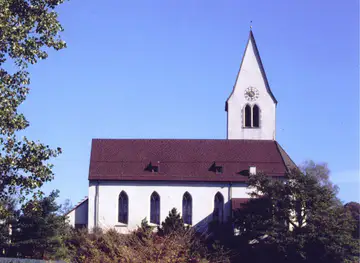
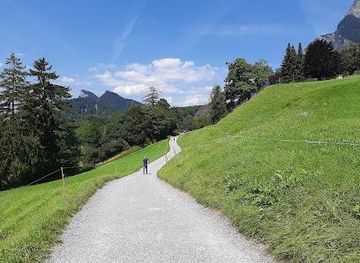
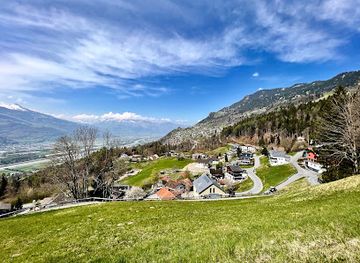
Eschen Region’s attractions are shaped by landscape and settlement rather than by a dense concentration of ticketed sights. Eschen’s parish church and village centre provide an introduction to local history, while Nendeln offers access to the railway corridor, historic craft associations and paths towards the Eschnerberg. Archaeology is a major theme: the prehistoric sites of Lutzengüetle and Borscht help explain why the ridge was settled long before the modern principality existed, even though visitors should expect interpretation and landscape features rather than extensive standing ruins. The Riet wetlands and surrounding fields are the region’s principal natural attraction, offering walking, cycling and opportunities to observe cultivated lowland habitats and birdlife. Woodland routes on the Eschnerberg add gentle elevation and changing views across the Rhine Valley. The area also works well for visitors interested in everyday Liechtenstein, including village churches, farming landscapes and the relationship between historic communities and modern cross-border transport. For larger museum collections and more substantial princely heritage, Vaduz lies outside the region and is best treated as a separate excursion.
-
Tourist attraction
Heididorf
Step into Heidi's world in the Swiss Alps: Explore her village, experience her life, and discover the magic of this timeless tale.
-
Ski resort
Bergbahnen Malbun AG
Experience the thrill of skiing and the beauty of the Alps at Bergbahnen Malbun AG, Liechtenstein's premier ski resort.
-
Farm
Lama- & Alpakahof Triesenberg
Experience the charm of llamas and alpacas in the scenic Liechtenstein Alps. Guided tours, local produce, and unforgettable trekking adventures await.
-
Tourist attraction
Saarfall
Discover Saarfall: A serene Swiss escape with stunning waterfalls, lush trails, and a refreshing natural shower for an unforgettable experience.


Best landmarks in Eschen Region
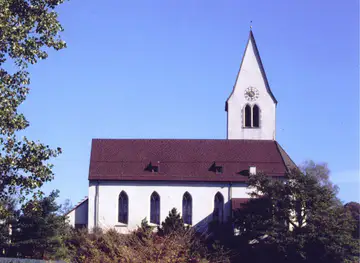
St Martin’s Parish Church in Eschen is the region’s most recognisable architectural landmark, standing above the village and expressing the importance of parish life in a settlement shaped by the Eschnerberg. Nendeln’s church and historic village fabric provide a smaller-scale counterpart, while the railway station reflects the transport links that connected Liechtenstein with Buchs and Feldkirch from the nineteenth century onwards. The prehistoric archaeological sites of Lutzengüetle and Borscht are less visually monumental but highly significant: they mark places where successive communities occupied the elevated ridge above the Rhine floodplain. The Eschnerberg itself is a geographical landmark, its wooded crest and cultivated lower slopes forming the region’s distinctive outline. Below it, the Riet wetlands preserve an important portion of the old lowland environment, contrasting with the built-up valley and providing a visible reminder of the flooding and drainage history that shaped settlement. Together, these places represent Eschen Region through religious architecture, transport heritage, archaeology and landscape rather than through a single grand monument.
-
Castle
Vaduz Castle
Discover the enchanting Vaduz Castle, a historical gem in Liechtenstein offering breathtaking views, rich history, and a glimpse into royal heritage.
-
Castle
Schloss Werdenberg
Discover the charm of Schloss Werdenberg, a breathtaking medieval castle and art museum surrounded by stunning Swiss landscapes and rich history.
-
Live Music
Burg Gutenberg
Explore the historic Burg Gutenberg in Balzers, a cultural gem featuring live music and stunning views amidst rich heritage and scenic beauty.
-
Tourist information center
Liechtenstein Center
Explore Vaduz's hidden gems and rich heritage at the Liechtenstein Center, your gateway to the captivating principality of Liechtenstein.


Explore Eschen Region on the map
Plan your trip on one map. See where the top cities, national parks and sights are, and book hotels and experiences in a few clicks.
Best hotels in Eschen Region
Best restaurants in Eschen Region
Dining in Eschen Region is understated and closely connected to the food culture of Liechtenstein and the wider Alpine Rhine Valley. Village restaurants, traditional inns and cafés typically provide hearty Central European cooking, with seasonal vegetables, soups, meat dishes, potatoes, bread and regional cheeses featuring more often than elaborate culinary specialities. Liechtenstein’s national dish, käsknöpfle, is a useful local introduction: small cheese dumplings are commonly served with onions and reflect the broader Alemannic tradition shared across neighbouring parts of Switzerland and Austria. Bakeries and cafés are practical stops for breakfast, coffee and sweet pastries, while farm shops and local markets, when operating, may offer regional produce and cheese. Eschen has more everyday dining choice than the surrounding rural areas, whereas Nendeln’s food scene is smaller and better suited to a planned meal. Visitors seeking a wider range of international or fine dining styles may find more choice in nearby Schaan or Vaduz, outside the region.
-
Restaurant
Landgasthof Werdenberg
Discover authentic Swiss cuisine and charming accommodations at Landgasthof Werdenberg, where tradition meets comfort in beautiful surroundings.
-
Chinese
TANG
Discover the rich flavors of authentic Chinese cuisine at TANG in Ruggell – where every dish tells a story.
-
Brasserie
Brasserie Burg
Discover the best of Liechtenstein’s culinary scene at Brasserie Burg in Vaduz – where tradition meets flavor.
-
Family-friendly
Sareis
Discover Sareis: Where Delicious Food Meets Stunning Mountain Views in Malbun.


Best bars in Eschen Region
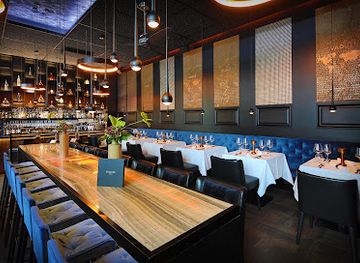
Evenings in Eschen Region are generally centred on traditional pubs, restaurant lounges and community-oriented venues rather than a large nightclub scene. Eschen provides the broadest local choice for an informal drink or meal, while Nendeln is quieter and tends towards early-evening dining and village hospitality. Beer, wine and non-alcoholic drinks are widely available, and the relaxed setting suits conversation more than late-night clubbing. Live music, seasonal community events and occasional cultural programmes may add variety, but schedules change and should be checked locally. Visitors wanting larger bars, concerts or more developed late-night options generally travel to Schaan or Vaduz, both outside Eschen Region, using public transport or a pre-arranged taxi for the return journey. Rural quiet is part of the area’s character, so late-night noise in residential streets is best avoided.
-
Barbecue
PUR - Restaurant & Bar
Experience exquisite barbecue and local wines at PUR - Restaurant & Bar in Schaan, a culinary delight for every tourist.
-
Bar
Esquire Bar.Bistro
Discover the vibrant culinary scene at Esquire Bar.Bistro in Vaduz, where local flavors and a welcoming atmosphere await every visitor.
-
Bar
Black Pearl Bar
Experience the vibrant nightlife of Schaan at the Black Pearl Bar, where expertly crafted cocktails meet a lively atmosphere.
-
Restaurant
Liechtensteiner Braustube
Experience the best of Liechtenstein's culinary heritage at Liechtensteiner Braustube, where tradition meets taste in every dish.



Best nightclubs in Eschen Region
Evenings in Eschen Region are generally centred on traditional pubs, restaurant lounges and community-oriented venues rather than a large nightclub scene. Eschen provides the broadest local choice for an informal drink or meal, while Nendeln is quieter and tends towards early-evening dining and village hospitality. Beer, wine and non-alcoholic drinks are widely available, and the relaxed setting suits conversation more than late-night clubbing. Live music, seasonal community events and occasional cultural programmes may add variety, but schedules change and should be checked locally. Visitors wanting larger bars, concerts or more developed late-night options generally travel to Schaan or Vaduz, both outside Eschen Region, using public transport or a pre-arranged taxi for the return journey. Rural quiet is part of the area’s character, so late-night noise in residential streets is best avoided.
-
Restaurant
Seven Heavens - Skylounge
Discover the elegance of Seven Heavens - Skylounge, where exquisite cuisine meets breathtaking views for an unforgettable dining experience in Eschen.

Best shops in Eschen Region
Shopping in Eschen Region is practical and local in character, with everyday shops, supermarkets, bakeries and small independent businesses concentrated around Eschen rather than a large specialist retail district. Nendeln offers a quieter village selection, while the surrounding countryside provides opportunities to look for regional cheese, bread, preserves and other Alpine food products when farm shops or local sellers are open. The most meaningful purchases are generally edible or craft-based rather than luxury goods: Liechtenstein-made products, regional ceramics, textiles, books and small items connected with local identity can make useful souvenirs. Market availability varies by season and municipality, so visitors should check local notices rather than expect a permanent market in every village. For broader fashion, department-store and specialist shopping, Buchs in Switzerland, Feldkirch in Austria and the larger centres of Liechtenstein are outside the region and require a short journey.
-
Supermarket
Coop Supermarkt Schaan
Experience the best of Liechtenstein's local flavors at Coop Supermarkt Schaan, your go-to destination for quality groceries and fresh produce.
-
Farm
Lama- & Alpakahof Triesenberg
Discover the enchanting Lama- & Alpakahof Triesenberg: A unique farm experience with friendly llamas and alpacas in a breathtaking alpine setting.
-
Coffee shop
American Bagel&Coffee Co.
Experience the delightful flavors of Vaduz at American Bagel & Coffee Co., where every bagel is freshly baked and every cup of coffee is brewed to perfection.
-
Winery
Cellars of the Prince of Liechtenstein
Experience the finest wines and breathtaking views at the Cellars of the Prince of Liechtenstein, a top winery and culinary destination in Vaduz.


Get your free copy of our complete guide to Eschen Region, delivered straight to you.
Everything on this page, from attractions and restaurants to essentials and local phrases, in one PDF you can read offline, print or share.
Already have an account? Sign in
Your Eschen Region guide is ready.
We'll send it to · Not you? Sign out

Getting your guide ready…
We are putting together a fresh copy of the Eschen Region guide. This can take up to a minute.
This can take a few moments. If your browser asks, choose Allow so the download can start. You'll find the guide in your Downloads folder.
Nothing happened? Download it again
Sorry, the guide is taking longer than usual. Please try again in a minute, or get it by email instead.
Eschen Region essentials
Currency and Payment
Safety
Emergency Situations
Do's and Don'ts
Local Tips
From Eve
Local phrases worth knowing
You don't need to get them perfect. A few words go a long way, and locals appreciate the effort.
Basics
| English | Local | Say it |
|---|---|---|
| Hello | Hallo | [Hah-loh] |
| Goodbye | Auf Wiedersehen | [Owf Vee-der-zay-en] |
| Yes | Ja | [Yah] |
| No | Nein | [Nyn] |
| Please/You're welcome | Bitte | [Bi-teh] |
| Thank you | Danke | [Dahn-keh] |
| Excuse me/Sorry | Entschuldigung | [Ent-shool-dee-goong] |
| How are you? | Wie geht's? | [Vee gates?] |
| Fine. And you? | Gut. Und dir? | [Goot. Oond deer?] |
| Do you speak English? | Sprechen Sie Englisch? | [Shpreh-chen Zee Eng-lish?] |
| I don't understand | Ich verstehe nicht | [Eekh fer-shtay-eh nikht] |
Eating & Drinking
| English | Local | Say it |
|---|---|---|
| I'd like to see the menu, please | Ich hätte gerne die Speisekarte, bitte | [Eekh heh-teh gair-neh dee Shpy-zeh-kar-teh, bi-teh] |
| I don't eat meat | Ich esse kein Fleisch | [Eekh eh-seh kyn Flysh] |
| Cheers! | Prost! | [Prohst!] |
| I would like to pay, please | Ich möchte bezahlen, bitte | [Eekh merkh-teh beh-tsah-len, bi-teh] |
Emergencies
| English | Local | Say it |
|---|---|---|
| Help! | Hilfe! | [Hil-feh!] |
| Go away! | Geh weg! | [Gay vek!] |
| Call the Police! | Rufen Sie die Polizei! | [Roo-fen Zee dee Poh-li-tsai!] |
| Call a doctor! | Rufen Sie einen Arzt! | [Roo-fen Zee eye-nen Artst!] |
| I'm lost | Ich bin verloren | [Eekh bin fer-lo-ren] |
| I'm ill | Ich bin krank | [Eekh bin krahng] |
Shopping
| English | Local | Say it |
|---|---|---|
| I'd like to buy... | Ich möchte kaufen... | [Eekh merkh-teh kow-fen...] |
| I'm just looking | Ich schaue nur | [Eekh shau-eh noor] |
| How much is it? | Wie viel kostet es? | [Vee feel kos-tet es?] |
| That's too expensive | Das ist zu teuer | [Das ist tsoo toy-er] |
| Can you lower the price? | Können Sie den Preis senken? | [Kern-en Zee den Pryce sen-ken?] |
Time & Numbers
| English | Local | Say it |
|---|---|---|
| What time is it? | Wie spät ist es? | [Vee shpayt ist es?] |
| It's one o'clock | Es ist ein Uhr | [Es ist ine Oor] |
| Half past (10) | Halb nach (10) | [Halb nahkh (zehn)] |
| Morning | Morgen | [Mor-gen] |
| Afternoon | Nachmittag | [Nahkh-mit-tahg] |
| Evening | Abend | [Ah-bent] |
| Yesterday | Gestern | [Gehs-tern] |
| Today | Heute | [Hoy-teh] |
| Tomorrow | Morgen | [Mor-gen] |
| 1 | Eins | [Eyns] |
| 2 | Zwei | [Tsvy] |
| 3 | Drei | [Dry] |
| 4 | Vier | [Feer] |
| 5 | Fünf | [Foonf] |
| 6 | Sechs | [Zex] |
| 7 | Sieben | [Zee-ben] |
| 8 | Acht | [Akh-t] |
| 9 | Neun | [Noyn] |
| 10 | Zehn | [Tsehn] |
Transport & Directions
| English | Local | Say it |
|---|---|---|
| Where's a/the...? | Wo ist ein/das...? | [Vo ist ine/das...?] |
| What's the address? | Was ist die Adresse? | [Vas ist dee Ah-dres-seh?] |
| Can you show me (on the map)? | Können Sie mir (auf der Karte) zeigen? | [Kern-en Zee meer (owf der Kar-teh) tsai-gen?] |
| When's the next (bus)? | Wann kommt der nächste (Bus)? | [Vahn komt der nay-shtay (Boos)?] |
| A ticket (to ....) | Ein Ticket (nach ....) | [Ine Tee-ket (nahkh ....)] |
History of Eschen Region
Prehistoric Settlement on the Eschnerberg
The low ridge of the Eschnerberg offered dry, defensible ground above the Rhine plain and attracted settlement from prehistoric times. Archaeological sites such as Lutzengüetle and Borscht, within the Eschen area, have produced evidence associated with several prehistoric periods, including the Neolithic and Bronze Age. Their importance lies in demonstrating that the Alpine Rhine corridor was a long-established route for people, goods and ideas. Much of the evidence is archaeological rather than architectural: the original settlements are understood through excavated objects, soil layers and traces of structures rather than through standing ruins visible in the modern landscape.
Roman Rhine Valley Connections
During the Roman period, the territory of present-day Liechtenstein formed part of the wider Alpine Rhine borderland linked to the province of Raetia. The Eschen area was not a major Roman urban centre, but its position between the Rhine crossings, Alpine routes and settlements on both sides of the valley placed it within a connected transport and trading landscape. Roman influence is reflected chiefly through archaeological finds and regional settlement patterns. Later villages developed over a terrain already shaped by centuries of movement, cultivation and changing political control.
Medieval Lordships and Parish Life
In the Middle Ages, the communities around the Eschnerberg were governed through changing local lordships and ecclesiastical institutions associated with the wider Werdenberg and Vaduz region. Eschen’s parish tradition became a central part of community life, with the church serving not only religious functions but also helping organise the village socially and administratively. The surviving church buildings and settlement pattern represent layers of rebuilding rather than a single untouched medieval scene. Medieval land use also established the close relationship between elevated villages, cultivated slopes and the marshy Rhine plain.
From County to Principality
The territories that became Liechtenstein were gradually consolidated under the Counts of Vaduz and Schellenberg before the House of Liechtenstein acquired them in the early eighteenth century. The imperial principality of Liechtenstein was created in 1719, bringing the Eschen communities into the same political framework as Vaduz and the other villages. For residents, this transformation occurred within a landscape still dominated by agriculture, parish institutions and local landholding. The modern principality’s small scale should not obscure the fact that its villages had long-standing links across the Rhine Valley.
Agriculture, Floodplain and Land Reclamation
For centuries, life in Eschen was shaped by the contrast between the more reliable ground of the Eschnerberg and the wet, periodically flooded Rhine plain. Drainage, embankment construction and river regulation, particularly from the nineteenth century onwards, made more lowland agriculture and settlement possible while reducing some of the risks posed by flooding. The remaining Riet wetlands preserve part of the older landscape. Their survival reflects a modern shift from seeing marshland solely as land to be reclaimed towards recognising its ecological and cultural value.
Industrial and Transport Modernisation
The opening of the railway through Liechtenstein in the nineteenth century connected Nendeln and the country’s other stations with the Austrian and Swiss rail networks, encouraging commuting, trade and wider economic integration. During the twentieth century, Eschen changed from a primarily agricultural community into a mixed residential, commercial and industrial municipality. Roads, cross-border employment and improved public services altered everyday life, while village churches, farm buildings and field patterns retained visible links to the older rural economy. Contemporary Eschen reflects this combination of local continuity and regional mobility.
Eschen Region in Photos
Browse through our photo collection highlighting the charm and character of the destination.
Neighbouring regions of Eschen Region
The closest regions to Eschen Region, if you have time for more than one.
-

-

-

-

-


Swipe for more regions
Explore more

Explore more of Liechtenstein
Discover the charm of Liechtenstein, a tiny Alpine principality offering medieval castles, stunning hiking trails, and a rich cultural heritage in the heart of Europe.
Explore Liechtenstein