

Free Gaafu Alif Atoll Travel Guide & Mobile App
Explore Gaafu Alif Atoll with free travel guides. Discover regional history, expert tips, proposed trips, and audio guides on web or mobile app.


Explore Gaafu Alif Atoll in the Maldives for coral reefs, remote island communities, diving, lagoons and unhurried southern-island travel.
Read more about Gaafu Alif Atoll
When is the best time to visit Gaafu Alif Atoll?
Best: January–March · 29–30°C| Month | High (°C) | Rainfall (mm) |
|---|---|---|
| January (best) | 29 | 180 |
| February (best) | 30 | 110 |
| March (best) | 30 | 130 |
| April | 30 | 200 |
| May | 30 | 250 |
| June | 30 | 200 |
| July | 30 | 190 |
| August | 30 | 210 |
| September | 30 | 230 |
| October | 30 | 240 |
| November | 29 | 220 |
| December | 29 | 200 |
Getting to and around Gaafu Alif Atoll
How to get there
Transportation
Best attractions in Gaafu Alif Atoll
Gaafu Alif’s principal attractions are marine and geographical rather than urban. Lagoon excursions reveal the scale of the atoll, while guided snorkelling and diving trips explore coral gardens, reef slopes, channels and outer-reef sites where conditions may suit encounters with turtles, rays and abundant tropical fish. Operators should select sites according to tides, weather and conservation considerations. Kayaking, paddleboarding, swimming and sunset cruises offer less demanding ways to experience the water, and fishing excursions connect visitors with a longstanding local livelihood. Resort islands such as Hadahaa and Maamutaa provide organised access to these activities, while Kooddoo and the inhabited islands offer a more everyday perspective on jetties, harbours and inter-island movement. Guided visits to islands including Villingili, Dhaandhoo, Gemanafushi or Kondey can introduce visitors to mosques, homes, community spaces and small local businesses, provided visits are arranged respectfully. There are no large metropolitan museums or extensive land-based sightseeing circuits; the appeal is the relationship between coral islands, open water and human settlement. Weather, tides and transfer distances should shape the itinerary, with time kept flexible for boating and excursions.
-
Park
Ga. Villingili Love Point
Experience tranquility at Ga. Villingili Love Point, a beautiful park in the Maldives offering stunning ocean views and a peaceful escape.
-
Tourist attraction
Raavehreha
Experience the serene beauty and cultural richness of Raavehreha, a must-visit tourist attraction in Viligili, Maldives, perfect for relaxation and exploration.
-
Tourist attraction
Olhuvaali (Hulhedhdhoo)
Experience the tranquil beauty and vibrant culture of Olhuvaali (Hulhedhdhoo) in the Maldives, a perfect escape for relaxation and adventure.
-
Tourist attraction
TIGER STRIPES (Gadhdhoo Raalhugadu) surfing point
Discover the thrill of surfing at Tiger Stripes in Gadhdhoo, where stunning waves meet serene landscapes for an unforgettable adventure.
Best landmarks in Gaafu Alif Atoll
Gaafu Alif’s most recognisable landmarks are formed by water, reef and the practical architecture of island life. The broad Huvadhu lagoon and its channels define the region’s geography, separating inhabited islands from resort islands and creating the passages used by fishing and transfer boats. Kooddoo Airport is an important modern landmark because it changed access to this remote part of the Maldives and remains the principal gateway for many visitors. Harbours and jetties on islands such as Villingili, Dhaandhoo, Gemanafushi and Kooddoo are equally significant local reference points, linking daily life to the sea. Island mosques, compact residential lanes and community buildings express the Islamic and village character of inhabited Maldives, although their appearance and historical significance vary and should be understood locally rather than treated as a standardised attraction. On resort islands, low-rise villas, boardwalks and carefully managed beaches sit within the natural outline of coral cays and lagoons. The most enduring visual landmarks are therefore not monumental structures but the meeting of settlement, reef edge, channel and open ocean.
-
Resort hotel
Pullman Maldives All-Inclusive Resort
Experience the ultimate luxury at Pullman Maldives All-Inclusive Resort, where pristine beaches and world-class amenities meet endless adventure.
-
 Resort hotel
NH Collection Maldives Havodda Resort
Discover the unrivaled luxury of NH Collection Maldives Havodda Resort, where pristine beaches meet vibrant marine life in a tropical paradise.
-
Hotel
Mercure Maldives Kooddoo Resort
Discover the serene beauty and luxury of Mercure Maldives Kooddoo Resort, where paradise awaits amidst stunning ocean views and vibrant marine life.
-
Resort hotel
The Residence Maldives at Falhumaafushi
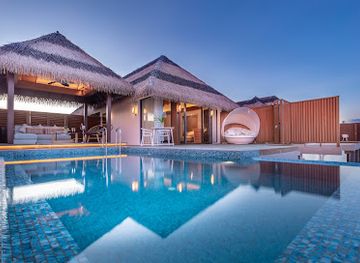
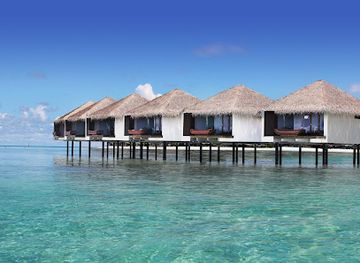
Experience secluded luxury at The Residence Maldives: pristine beaches, overwater villas, world-class diving, and serene spa treatments await.
Explore Gaafu Alif Atoll on the map
Plan your trip on one map. See where the top cities, national parks and sights are, and book hotels and experiences in a few clicks.
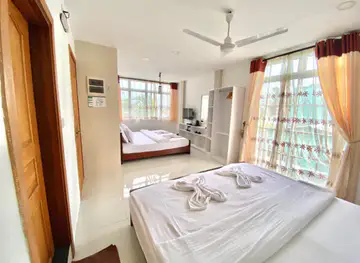
Best hotels in Gaafu Alif Atoll
Best restaurants in Gaafu Alif Atoll
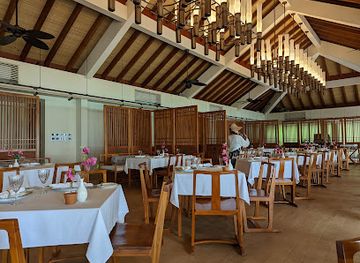
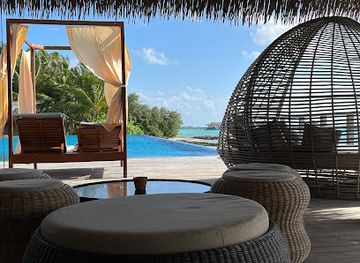
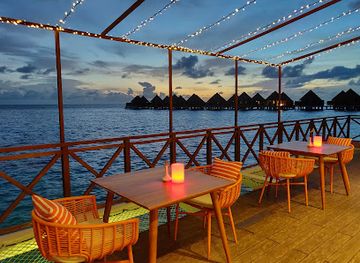
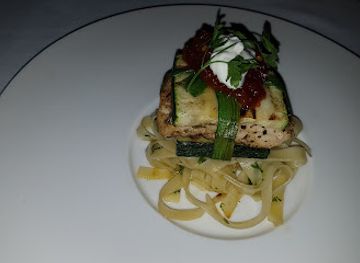
Dining in Gaafu Alif ranges from resort restaurants serving international menus to small cafés and family-run eateries on inhabited islands. Maldivian flavours commonly feature rice, coconut, tuna and aromatic spices, with preparations such as mas huni, fish curries, grilled reef fish and roshi appearing in local settings, though menus vary from island to island. Freshly caught fish is particularly significant in an atoll where fishing remains part of everyday life. Resort kitchens may add seafood, Asian and European dishes, while guesthouses can sometimes arrange home-style meals or cooking experiences with advance notice. Kooddoo and other inhabited islands offer the most direct opportunity to see local food shopping and informal dining, but choice is limited compared with Malé. Alcohol is generally available only at licensed resorts, not on inhabited islands. Visitors should ask about ingredients, drinking water, service charges and dietary requirements before ordering, especially when travelling beyond resort facilities.
-
Restaurant
The Falhumaa
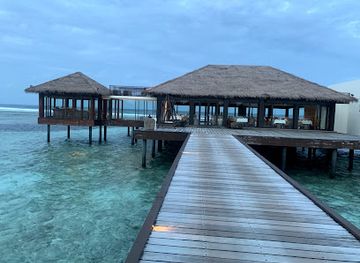
Indulge in exquisite French cuisine at The Falhumaa, an overwater dining gem in the Maldives offering breathtaking views and unforgettable flavors.
-
Restaurant
Li Bai / Long Island
Discover culinary delights at Li Bai / Long Island in Maamendhoo; savor exquisite dishes with stunning views.
-
Restaurant
Café Del Sol
Discover culinary bliss at Café Del Sol in Maamendhoo, where exquisite flavors meet stunning ocean views for an unforgettable dining experience.
-
Restaurant
Vistas
Discover culinary excellence at Vistas in Kooddoo Island - where breathtaking views meet exquisite Maldivian flavors.
Best bars in Gaafu Alif Atoll
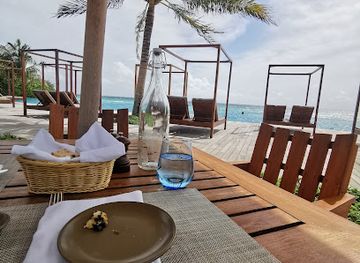
Gaafu Alif has no substantial nightclub circuit, and evening life is shaped by resort programming, quiet island streets and the social rhythm of inhabited communities. Resorts may offer bars, sunset drinks, live music, cultural performances or occasional themed evenings, with arrangements varying by property and season. On inhabited islands, evenings are more likely to centre on family visits, cafés, harbour activity, conversation and community events than on commercial nightlife. Alcohol is restricted to licensed tourist resorts, so it should not be carried onto or expected on local islands. After dark, the atoll’s strongest experiences are often non-commercial: watching the sky over the lagoon, joining a guided night-fishing or marine excursion where offered, or listening to the water around a jetty. Ask accommodation providers about current entertainment rather than relying on fixed assumptions about schedules.
-
Restaurant
Raffles Maldives Meradhoo Resort
Experience unparalleled luxury and tranquility at Raffles Maldives Meradhoo Resort, your ultimate tropical escape in the heart of the Maldives.
-
Restaurant
Café Del Sol
Discover the delightful flavors and serene ambiance of Café Del Sol in Maamendhoo, where every sip and bite is a taste of paradise.
-
Bar
Beach Bar
Experience the lively atmosphere and stunning ocean views at Dhevvadhoo's Beach Bar, the perfect spot for relaxation and local flavors.
-
Restaurant
The Beach Bar
Experience the ultimate dining at The Beach Bar in the Maldives with fresh seafood and stunning ocean views for a memorable culinary journey.
Best nightclubs in Gaafu Alif Atoll
Gaafu Alif has no substantial nightclub circuit, and evening life is shaped by resort programming, quiet island streets and the social rhythm of inhabited communities. Resorts may offer bars, sunset drinks, live music, cultural performances or occasional themed evenings, with arrangements varying by property and season. On inhabited islands, evenings are more likely to centre on family visits, cafés, harbour activity, conversation and community events than on commercial nightlife. Alcohol is restricted to licensed tourist resorts, so it should not be carried onto or expected on local islands. After dark, the atoll’s strongest experiences are often non-commercial: watching the sky over the lagoon, joining a guided night-fishing or marine excursion where offered, or listening to the water around a jetty. Ask accommodation providers about current entertainment rather than relying on fixed assumptions about schedules.
-
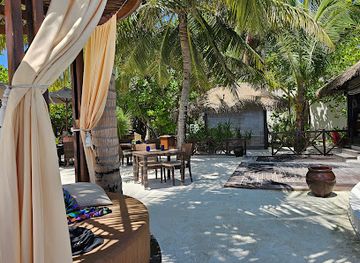
Bar
Beach Bar
Experience the vibrant atmosphere and breathtaking views at the Beach Bar, your go-to destination for relaxation and fun by the ocean.
Best shops in Gaafu Alif Atoll
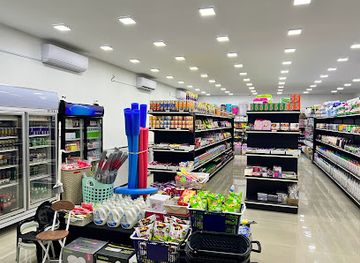
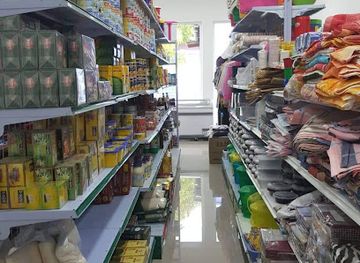
Shopping in Gaafu Alif is modest and practical rather than centred on large retail areas. Inhabited islands have small general shops and local businesses selling everyday goods, snacks, clothing and basic travel supplies, while resort boutiques offer branded clothing, beachwear, crafts, jewellery and marine-themed souvenirs. Visitors may find Maldivian food products such as packaged tuna, coconut-based items or spice blends, although selection and availability vary. Locally made handicrafts, woven items and small carvings can sometimes be found through guesthouses, island shops or resort programmes, but buyers should ask about provenance and avoid products made from protected marine materials. Kooddoo is useful for essential purchases around the airport and harbour, yet it is not a conventional shopping destination. For a broader choice of retail, markets and locally produced goods, Malé is more suitable, but it lies outside Gaafu Alif and requires separate travel planning. Bargaining should be restrained and polite, particularly in small community shops.
-
Farm shop
BakariMv
Experience the flavors of the Maldives at BakariMv, your go-to farm shop for fresh produce and baby essentials in Ga.Maamendhoo.
-
Store
Happy Grocer ހެޕީ ގްރޯސަރ
Experience the best of local flavors and unique souvenirs at Happy Grocer in Ga.vilingili, your go-to store for all essentials.
-
Shopping mall
Urban Square
Discover Urban Square in Viligili: Your ultimate shopping and dining destination in the Maldives with a local touch.
-
Shopping mall
Rayyvilla Store
Discover unique treasures and vibrant local culture at Rayyvilla Store in Viligili – the ultimate shopping destination for every traveler.

Get your free copy of our complete guide to Gaafu Alif Atoll, delivered straight to you.
Everything on this page, from attractions and restaurants to essentials and local phrases, in one PDF you can read offline, print or share.
Already have an account? Sign in
Your Gaafu Alif Atoll guide is ready.
We'll send it to · Not you? Sign out

Getting your guide ready…
We are putting together a fresh copy of the Gaafu Alif Atoll guide. This can take up to a minute.
This can take a few moments. If your browser asks, choose Allow so the download can start. You'll find the guide in your Downloads folder.
Nothing happened? Download it again
Sorry, the guide is taking longer than usual. Please try again in a minute, or get it by email instead.
Gaafu Alif Atoll essentials
Currency and Payment
Safety
Emergency Situations
Do's and Don'ts
Local Tips
History of Gaafu Alif Atoll
Early settlement and Buddhist-era Maldives
The islands of Gaafu Alif belong to the wider Huvadhu Atoll system, whose settlement history reaches back through the long maritime history of the Maldives. Before the islands became Muslim in the twelfth century, Maldivian communities followed Buddhist religious traditions, and archaeological remains elsewhere in the southern atolls demonstrate the earlier cultural world in which Huvadhu developed. Much of the physical evidence is fragmentary because coral islands are exposed to erosion, rebuilding and rising seas, but the period remains important for understanding the deeper history beneath today’s Islamic island society.
Islamisation and the island communities
The conversion of the Maldives to Islam in the twelfth century reshaped political authority, religious practice and architecture across the archipelago. In Gaafu Alif, as elsewhere, mosques and Islamic customs became central to community life, while island settlements continued to depend on fishing, coconut cultivation, boatbuilding and seaborne exchange. The dispersed geography encouraged strong local identities: each inhabited island developed its own administrative routines, harbour life and social networks while remaining connected to broader Maldivian institutions.
Huvadhu Atoll and regional maritime life
Huvadhu has long mattered because of its size, strategic position and extensive passages through the southern Maldives. Mariners used the atoll’s channels in journeys between central Maldivian waters and the farther south, while local communities participated in fishing and inter-island trade. Gaafu Alif’s modern administrative identity reflects the division of Huvadhu into northern and southern atolls rather than a separate historical kingdom. The lagoon, reef passages and harbours remain practical features of life, not simply scenery for visitors.
Portuguese intervention and the Maldivian sultanate
Portuguese forces occupied Malé in the sixteenth century and imposed a short-lived colonial regime over the Maldives before resistance restored the sultanate. The upheaval was centred on the capital, but its effects reached the wider island chain through disrupted authority, maritime insecurity and changing commercial links. Gaafu Alif’s distance from Malé did not remove it from these broader currents: the atoll formed part of the same sultanate whose rulers depended on sea routes, local communities and control of scattered islands.
The British protectorate and modern statehood
The Maldives became a British protectorate in 1887, while the sultanate retained internal authority and Britain concentrated largely on external defence and foreign affairs. The arrangement ended with independence in 1965, followed by the establishment of the modern Maldivian republic. For remote atolls such as Gaafu Alif, the post-independence period brought greater state administration, improved communications and more regular links with the capital, although transport remained shaped by distance, weather and the need to move between islands by sea or air.
Domestic aviation and the rise of tourism
Tourism began developing nationally in the 1970s, initially concentrating near Malé and the more accessible central atolls. Southern atolls entered the tourism economy later as domestic aviation, harbour improvements and resort investment expanded the geographical reach of visitors. Kooddoo Airport helped make Gaafu Alif more practical to access, while resort development on islands including Hadahaa and Maamutaa created employment and new connections with international travel. Tourism now exists alongside, rather than replacing, inhabited-island livelihoods and traditional marine activities.
Gaafu Alif Atoll in Photos
Browse through our photo collection highlighting the charm and character of the destination.
Neighbouring regions of Gaafu Alif Atoll
The closest regions to Gaafu Alif Atoll, if you have time for more than one.
-

-

-

-

-


Swipe for more regions
Explore more

Explore more of Maldives
Experience the unparalleled beauty of the Maldives, where pristine beaches, luxurious resorts, and vibrant marine life create the perfect tropical getaway.
Explore Maldives