

Billy Goat Trail Travel Guide - Free Web & App
Your ultimate guide to Billy Goat Trail. Discover top landmarks, proposed trips, and local tips. Free on the web or via the Evendo companion app.


Billy Goat Trail in Maryland follows the C&O Canal beside the Potomac, combining rock scrambles, river views, Great Falls scenery and historic towpaths.
River, Rock and Towpath
Billy Goat Trail is a compact but richly varied hiking destination within Chesapeake and Ohio Canal National Historical Park in Montgomery County, Maryland. Rather than a single continuous path, it comprises three sections along the Potomac River near Great Falls: Section A is the most demanding, with steep rock scrambling and exposed passages, while Sections B and C offer generally less strenuous walking through the wooded and rocky landscape beside the former C&O Canal. Together, the trails reveal the unusual meeting of canal engineering, Piedmont geology and a powerful river corridor close to Washington, DC.Read more about Billy Goat Trail
The Landscape
Canal Heritage and Access
When is the best time to visit Billy Goat Trail?
Best: April–May, September · 22–28°C| Month | High (°C) | Rainfall (mm) |
|---|---|---|
| January | 8 | 70 |
| February | 9 | 70 |
| March | 16 | 90 |
| April (best) | 22 | 80 |
| May (best) | 27 | 100 |
| June | 31 | 90 |
| July | 33 | 110 |
| August | 32 | 100 |
| September (best) | 28 | 90 |
| October | 21 | 80 |
| November | 14 | 80 |
| December | 9 | 80 |
Getting to and around Billy Goat Trail
How to get there
Transportation
Best attractions in Billy Goat Trail
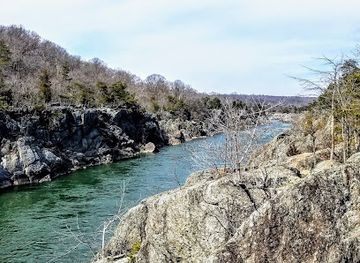
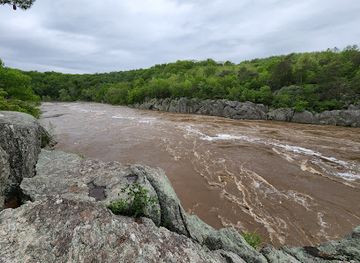
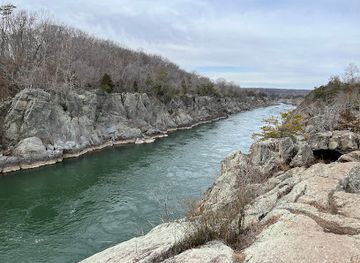
The principal attraction is the trio of Billy Goat Trail sections, each offering a different relationship with the Potomac and the C&O Canal. Section A is the adventurous route, crossing boulder-strewn terrain and rocky ledges above Mather Gorge, with memorable river views and demanding scrambling. Sections B and C provide quieter woodland walking near the canal and river, with their own rocky passages and changing perspectives on the gorge. At Great Falls, the Potomac compresses into a turbulent channel and drops through a dramatic series of rapids, while Great Falls Tavern and the canal towpath introduce the area's industrial history. The wider park contains preserved locks, canal structures and towpath scenery that can be explored at a gentler pace. The Anglers access area, near Sections B and C, is another useful starting point for experiencing the river corridor. These are primarily landscape and heritage attractions rather than a collection of indoor facilities, and conditions can influence which routes are accessible.
-
Hiking area
Cow Hoof Rock
Explore Cow Hoof Rock, a stunning hiking area in McLean, VA, known for its unique rock formations and serene natural beauty.
-
Hiking area
Billy Goat Trail Section A East End Trailhead
Discover the breathtaking landscapes and diverse wildlife of Billy Goat Trail Section A East End, a premier hiking destination in Potomac Falls, Maryland.
-
Hiking area
Angler's Footbridge
Explore the scenic Angler's Footbridge in Potomac, MD, where nature meets adventure amidst stunning views of the Potomac River.
-
Nature preserve
Bear Island Potomac Gorge
Explore the breathtaking landscapes and wildlife of Bear Island Potomac Gorge, a serene nature preserve perfect for outdoor enthusiasts.
Best landmarks in Billy Goat Trail
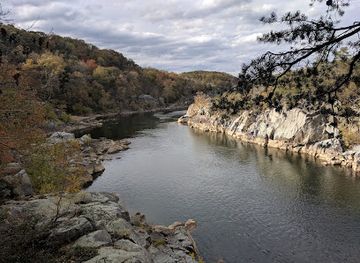
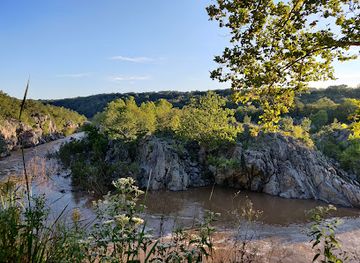
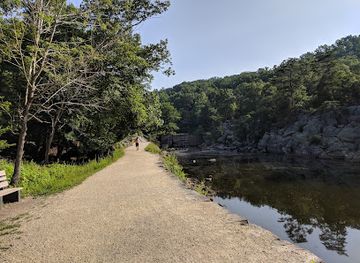
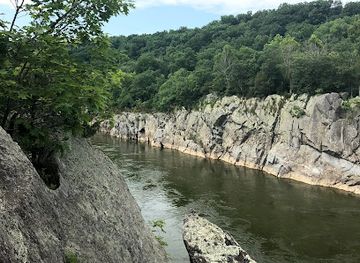
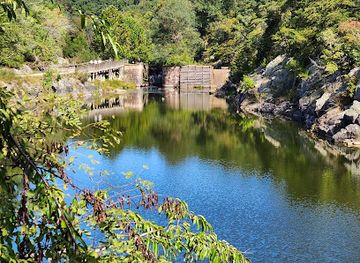
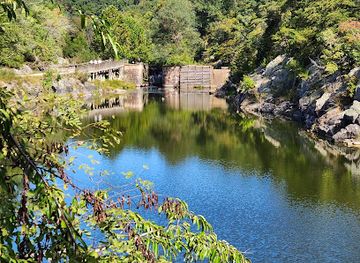
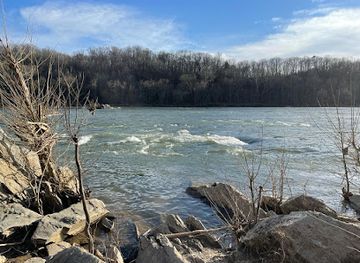
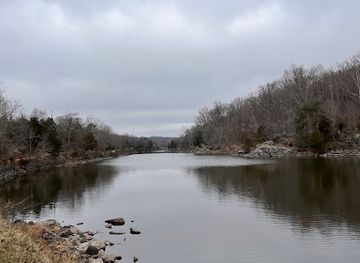
The defining natural landmark is the Potomac Gorge at Great Falls, where the river forces its way through hard rock in a turbulent sequence of drops, rapids and narrow channels. Mather Gorge, visible from parts of the trail and nearby viewing areas, gives the landscape its strongest sense of scale and explains the area's demanding terrain. The C&O Canal towpath is the principal historic landmark, accompanied by surviving locks, the canal prism and associated engineering works that reveal how nineteenth-century transport was fitted around the river's obstacles. Great Falls Tavern is an important surviving canal building and visitor focus, while the rocky ledges and boulder fields of Billy Goat Trail are themselves characteristic physical markers of the Potomac corridor. Together, river, gorge and canal form a landscape in which geology and industrial history are inseparable.
-
Hiking area
Billy Goat Trail Section A East End Trailhead
Discover the breathtaking beauty of Billy Goat Trail Section A, a premier hiking destination in Potomac Falls, Maryland, perfect for nature lovers and adventurers.
-
Nature preserve
Bear Island Potomac Gorge
Experience the natural beauty and tranquility of Bear Island Potomac Gorge, a premier destination for outdoor enthusiasts and nature lovers alike.
-
Parking lot
Great Falls Parking(BillyGoat)
Discover breathtaking views and outdoor adventures at Great Falls Park with convenient access from Great Falls Parking in Potomac, MD.
-
Hiking area
Billy Goat Trail Section B West End Trailhead
Experience the breathtaking views and adventurous trails at Billy Goat Trail Section B, a premier hiking destination in Maryland's scenic landscape.


Explore Billy Goat Trail on the map
Plan your trip on one map. See where the top attractions, landmarks, restaurants and hotels are, and book hotels and experiences in a few clicks.
Best hotels in Billy Goat Trail
Best restaurants in Billy Goat Trail
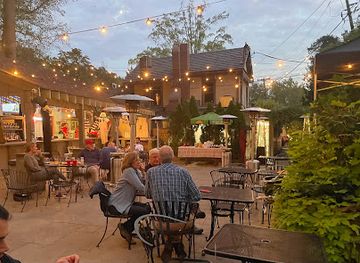
There are no restaurants on Billy Goat Trail, so walkers should organise food and water before entering the park. Dining is concentrated in nearby Montgomery County communities, including Potomac, Cabin John and the wider Bethesda area, where visitors can find everyday cafés, restaurants, takeaway options and supermarkets rather than a self-contained trail village. The surrounding region reflects the broader Mid-Atlantic food culture, with American casual dining, international cuisines, bakery fare and farm-influenced produce available across the suburban communities. Great Falls Tavern and the canal access points are places to begin a walk, not reliable meal stops. A packed lunch is the practical choice for a full day combining Billy Goat Trail, the towpath and Great Falls, with all waste carried out in accordance with park expectations.
-
Restaurant
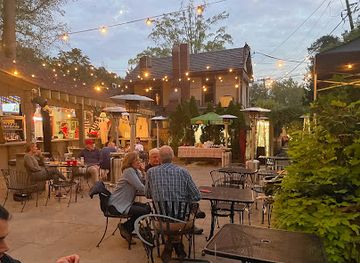
Old Anglers Inn
Experience exquisite American cuisine at Old Anglers Inn, where fine dining meets scenic beauty along the Potomac River.
Best bars in Billy Goat Trail
Billy Goat Trail has no nightlife, bars or evening entertainment, and the park becomes a quiet natural environment outside daylight recreation hours. Visitors staying nearby will find the broadest choice of pubs, bars, restaurants and evening venues in Bethesda, Rockville and other communities in the Washington metropolitan area, while Potomac and Cabin John offer a more suburban, low-key atmosphere. Evening plans are generally centred on dining or returning to accommodation rather than socialising beside the trail. The historic canal corridor and river should be treated as outdoor destinations requiring suitable daylight, weather and access planning, not as places with a built-up after-dark visitor scene.
-
Restaurant
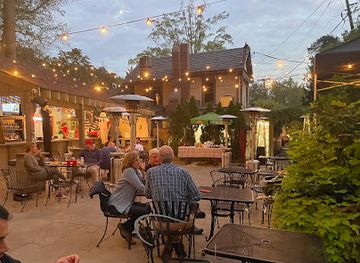
Old Anglers Inn
Experience the perfect blend of history and gastronomy at Old Anglers Inn, where fine dining meets scenic beauty along the Potomac River.
-
Park
Billy Goat Trail
Immerse yourself in nature's beauty at Billy Goat Trail, a breathtaking hiking area near Potomac, Maryland, offering stunning views and challenging paths.
-
Hiking area
Billy Goat Trail Section A East End Trailhead
Discover the breathtaking views and rugged beauty of Billy Goat Trail, a premier hiking destination along the Potomac River, perfect for outdoor enthusiasts.
-
Hiking area
The Rooftop at the Potomac River
Explore the breathtaking beauty of The Rooftop at the Potomac River, where scenic trails and stunning views await every adventurer.
Best shops in Billy Goat Trail
Shopping is limited at Billy Goat Trail itself, where there is no commercial trail village or substantial retail area. Practical supplies, packed food, water and outdoor necessities are best obtained before arrival in Potomac, Cabin John, Bethesda or other nearby Montgomery County communities. The wider area offers supermarkets, pharmacies, cafés, general retailers and outdoor equipment shops, while local shopping centres provide a broader range of everyday goods than the park access points. Visitors interested in regional food can look for Maryland and Mid-Atlantic produce through farmers' markets, farm shops or independent food retailers when operating, but availability is seasonal and location-specific. Souvenirs and interpretive material associated with the canal and national park may be available through official park facilities when open, rather than from a permanent shopping district on the trail.
-
Restaurant
Old Anglers Inn
Discover Old Anglers Inn, a historic dining destination offering exquisite American cuisine and stunning Potomac River views for an unforgettable experience.
-
Hiking area
Billy Goat Trail Section A East End Trailhead
Discover the breathtaking views and unique terrains of Billy Goat Trail Section A East End, a top hiking destination along the Potomac River.
-
Nature preserve
Bear Island Potomac Gorge
Explore the breathtaking landscapes of Bear Island Potomac Gorge, a nature lover's paradise with stunning trails and rich biodiversity.
-
Hiking area
Billy Goat Trail
Discover the breathtaking beauty of Billy Goat Trail, a premier hiking destination along the Potomac River, perfect for all adventure seekers.
Get your free copy of our complete guide to Billy Goat Trail, delivered straight to you.
Everything on this page, from attractions and restaurants to essentials and local phrases, in one PDF you can read offline, print or share.
Already have an account? Sign in
Your Billy Goat Trail guide is ready.
We'll send it to · Not you? Sign out

Getting your guide ready…
We are putting together a fresh copy of the Billy Goat Trail guide. This can take up to a minute.
This can take a few moments. If your browser asks, choose Allow so the download can start. You'll find the guide in your Downloads folder.
Nothing happened? Download it again
Sorry, the guide is taking longer than usual. Please try again in a minute, or get it by email instead.
Billy Goat Trail essentials
Currency and Payment
Safety
Emergency Situations
Do's and Don'ts
Local Tips
From Eve
Local phrases worth knowing
You don't need to get them perfect. A few words go a long way, and locals appreciate the effort.
Basics
| English | Local | Say it |
|---|---|---|
| Hello | Howdy | [hah-dee] |
| Goodbye | See ya | [see yah] |
| Yes | Yep | [yep] |
| No | Nah | [nah] |
| Please/You're welcome | Please/No worries | [pleez/no wurr-eez] |
| Thank you | Thanks a bunch | [thanks uh bunch] |
| Excuse me/Sorry | Pardon me/My bad | [par-dun me/my bad] |
| How are you? | How ya doin'? | [how yuh doo-in] |
| Fine. And you? | I'm good. How 'bout you? | [I'm good. How 'bout yuh] |
| Do you speak English? | You speak English? | [yuh speak ing-glish] |
| I don't understand | I ain't gettin' it | [I aint get-tin it] |
Eating & Drinking
| English | Local | Say it |
|---|---|---|
| I'd like to see the menu, please | Mind showin' me the menu? | [mind show-in me the menu?] |
| I don't eat meat | I don't do meat | [I don't do meat] |
| Cheers! | Cheers! | [cheers] |
| I would like to pay, please | I'll settle the bill, thanks | [I'll settle the bill, thanks] |
Emergencies
| English | Local | Say it |
|---|---|---|
| Help! | Need a hand! | [need a hand!] |
| Go away! | Git! | [git!] |
| Call the Police! | Get the cops! | [get the cops!] |
| Call a doctor! | Fetch a doc! | [fetch a doc!] |
| I'm lost | I'm turned around | [I'm turned around] |
| I'm ill | I'm feelin' poorly | [I'm feelin' poorly] |
Shopping
| English | Local | Say it |
|---|---|---|
| I'd like to buy... | I'm fixin' to buy... | [I'm fix-in to buy...] |
| I'm just looking | Just browsin' | [just brow-zin] |
| How much is it? | What's the damage? | [whats the dam-age?] |
| That's too expensive | That's a steep price | [That's a steep price] |
| Can you lower the price? | Can you do me a deal? | [can you do me a deal?] |
Time & Numbers
| English | Local | Say it |
|---|---|---|
| What time is it? | What's the time? | [whats the time?] |
| It's one o'clock | It's one | [It's one] |
| Half past (10) | Ten-thirty | [ten-thur-tee] |
| Morning | Mornin' | [morn-in] |
| Afternoon | Afternoon | [after-noon] |
| Evening | Evenin' | [even-in] |
| Yesterday | Yest'day | [yest-day] |
| Today | Today | [today] |
| Tomorrow | Tomorrer | [tom-or-rer] |
| 1 | One | [wun] |
| 2 | Two | [too] |
| 3 | Three | [three] |
| 4 | Four | [four] |
| 5 | Five | [five] |
| 6 | Six | [six] |
| 7 | Seven | [seven] |
| 8 | Eight | [eight] |
| 9 | Nine | [nine] |
| 10 | Ten | [ten] |
Transport & Directions
| English | Local | Say it |
|---|---|---|
| Where's a/the...? | Where's the...? | [wheres the] |
| What's the address? | What's the addy? | [whats the addy] |
| Can you show me (on the map)? | Can you guide me (on the map)? | [can you guide me (on the map)] |
| When's the next (bus)? | When's the next (bus)? | [whens the next bus] |
| A ticket (to ....) | One ticket (to ....) | [one ticket (to ....)] |
History of Billy Goat Trail
A River Shaped by Deep Geology
The Potomac Gorge is the product of long geological change rather than a single historical event. In this part of Maryland, the river crosses hard Piedmont rocks and has cut a narrow, irregular gorge near Great Falls. Resistant rock ledges, boulders and uneven shelves help explain the distinctive terrain encountered on Billy Goat Trail, while the river's falls and rapids created both an obstruction to navigation and a source of mechanical power. The landscape therefore shaped the region's later engineering history as much as it shaped its scenery.
The C&O Canal Era
Construction of the Chesapeake and Ohio Canal began in 1828, with the ambitious aim of linking Washington, DC, to the Ohio River. The canal route followed the Maryland side of the Potomac and eventually reached Cumberland, although the full proposed connection was never completed. Around Great Falls, canal builders created a route past difficult rapids, including locks and other engineered structures, while the towpath allowed animals to haul boats. Coal, agricultural produce, timber and other goods travelled along the canal, making the corridor an important nineteenth-century transport route.
Industry, Communities and the River
The Potomac corridor supported more than canal traffic. Water power, mills, farming and small-scale industry developed around the river's falls and access routes, while canal workers, boat crews and nearby communities formed a practical social landscape. Great Falls remained a significant obstacle and working environment, demanding locks, dams and careful navigation. The surviving canal prism, towpath, locks and associated structures provide tangible evidence of this period, even though commercial canal operations eventually disappeared as railways and improved roads offered faster alternatives.
From Working Canal to National Park
The C&O Canal operated until 1924, after which the canal corridor faced the possibility of major modern redevelopment. Preservation efforts helped secure its future as a historic landscape, and the route became Chesapeake and Ohio Canal National Historical Park in 1971. The park protects the towpath, canal structures and river setting as a connected cultural resource. Billy Goat Trail developed within this protected landscape as a way of experiencing the Potomac's rocky margins, while continued National Park Service management balances recreation with the conservation of sensitive river, woodland and cliff habitats.
Billy Goat Trail in Photos
Browse through our photo collection highlighting the charm and character of the destination.
Neighbouring destination travel guides
The closest destinations to Billy Goat Trail, if you have time for more than one.
-
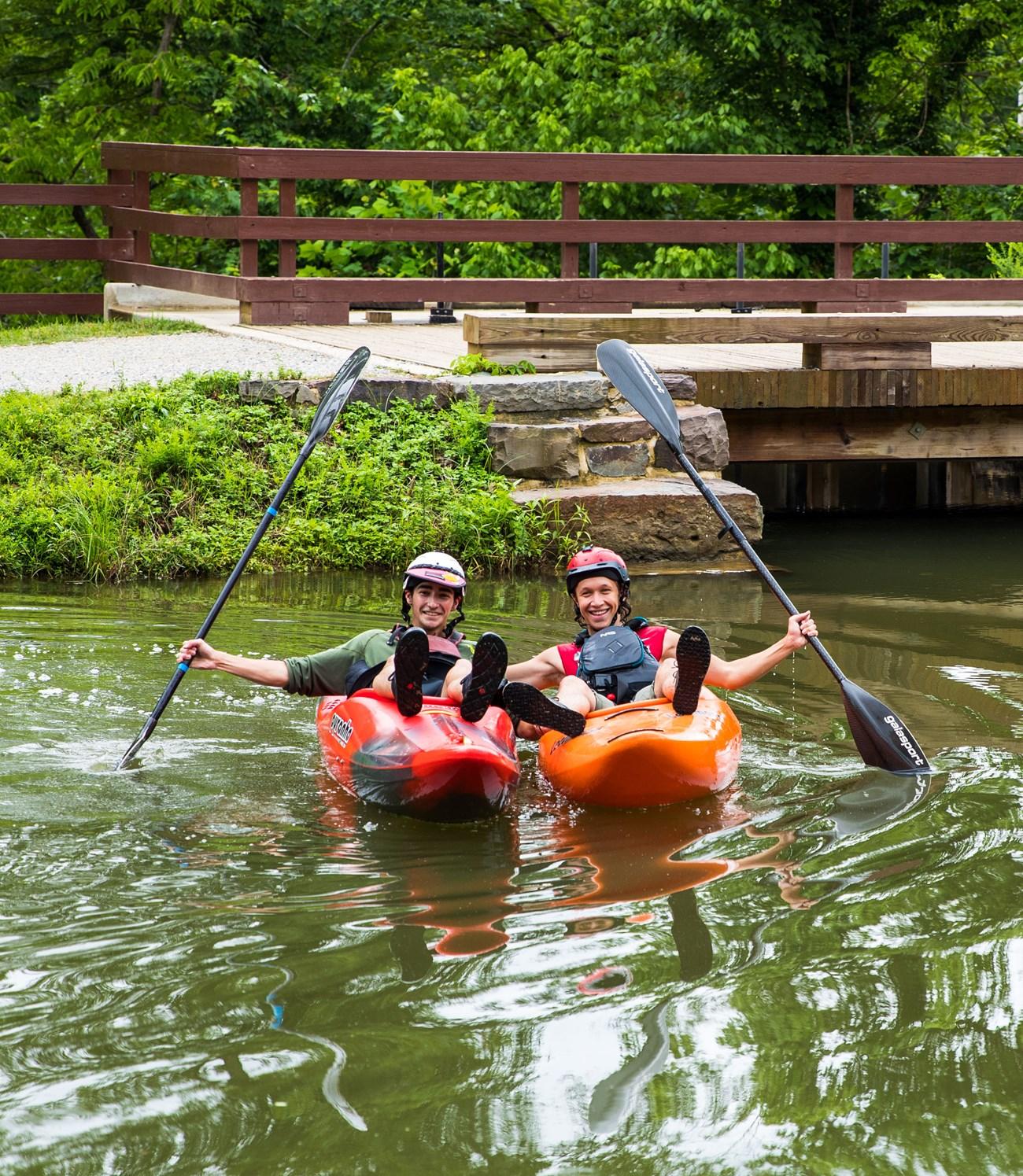 C&O Canal National Historical Park
Discover the blend of history and nature at C&O Canal National Historical Park, where miles of scenic towpath and historical landmarks await your exploration.
C&O Canal National Historical Park
Discover the blend of history and nature at C&O Canal National Historical Park, where miles of scenic towpath and historical landmarks await your exploration.
-

-

-

-


Swipe for more destinations
Explore more
Explore more of Capital Region
Explore Maryland’s Capital Region for diverse communities, contemporary arts, historic sites, wooded parks and easy access to Washington, DC.
Explore Capital Region
Explore more of Maryland
Discover Maryland, where coastal charm meets rich history and outdoor adventure. Experience the best of the East Coast in this small but diverse state.
Explore Maryland