

Annapolis Waterfront Travel Guide - Free Web & App
Your ultimate guide to Annapolis Waterfront. Discover top landmarks, proposed trips, and local tips. Free on the web or via the Evendo companion app.


Annapolis Waterfront in Maryland blends Chesapeake sailing, colonial landmarks, harbour walks, seafood dining and maritime history at historic City Dock.
Harbour, River and Historic Streets
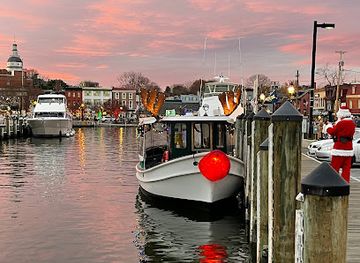
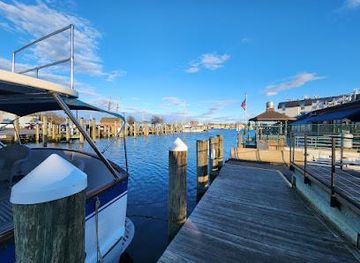
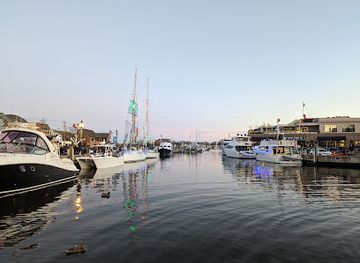
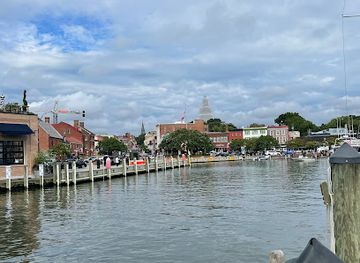
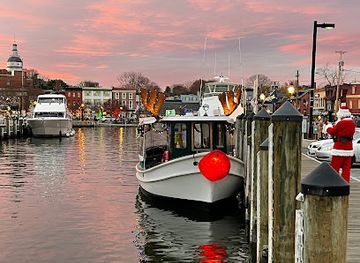
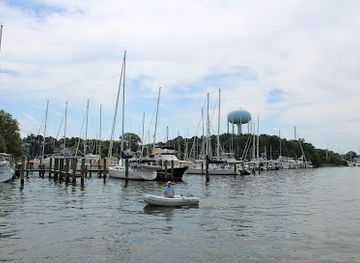
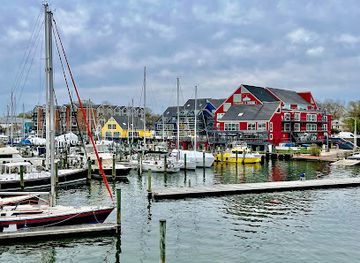
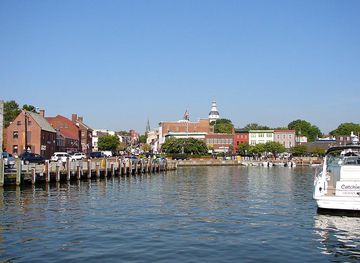
Annapolis Waterfront centres on City Dock, where the Maryland capital meets the tidal waters of the Severn River and Annapolis Harbor. The district is compact but layered: boats pass through the narrow inlet known as Ego Alley, historic buildings line Main Street, and waterfront promenades open towards Spa Creek and the wider Chesapeake Bay. The harbour remains a working setting as well as a leisure destination, with sailing vessels, powerboats, water taxis and visiting yachts sharing the water with paddleboarders and fishing boats.Read more about Annapolis Waterfront
Colonial Capital and Maritime Character
Exploring the Waterfront
When is the best time to visit Annapolis Waterfront?
Best: May–June, September · 23–28°C| Month | High (°C) | Rainfall (mm) |
|---|---|---|
| January | 8 | 79 |
| February | 9 | 70 |
| March | 13 | 87 |
| April | 18 | 84 |
| May (best) | 23 | 92 |
| June (best) | 28 | 89 |
| July | 31 | 105 |
| August | 30 | 109 |
| September (best) | 26 | 97 |
| October | 19 | 86 |
| November | 14 | 85 |
| December | 9 | 86 |
Getting to and around Annapolis Waterfront
How to get there
Transportation
Best attractions in Annapolis Waterfront
The principal attraction is City Dock, the harbour-facing centre where visitors can watch boats enter Ego Alley, explore public waterfront spaces and follow the shoreline towards the Kunta Kinte–Alex Haley Memorial. Above the dock, the Maryland State House and the compact historic district provide some of the country's most important colonial-era urban sights, while the William Paca House and Garden offers a carefully preserved glimpse of eighteenth-century Annapolis life. The United States Naval Academy adds a prominent working maritime and architectural presence on the harbour, with access subject to its own security arrangements. Across Spa Creek, Eastport combines residential streets, boatyards and waterfront views back towards the capital. The Annapolis Maritime Museum, located in Eastport rather than at City Dock, interprets the area's oyster, boatbuilding and Chesapeake heritage. Harbour cruises, sailing trips and seasonal water taxis reveal the relationship between the Severn River, Spa Creek and the city more clearly than a walk alone.
-
Boat tour agency
Watermark Tours, Charters, Cruises
Discover the beauty of Annapolis with Watermark Tours, where scenic boat cruises meet rich maritime history and vibrant local culture.
-
Marina
Ego Alley
Explore Ego Alley in Annapolis, a vibrant marina brimming with history, dining, and breathtaking views of the Chesapeake Bay.
-
Marina
Ego Alley
Explore Ego Alley in Annapolis: a vibrant marina offering stunning views, delicious dining, and a lively atmosphere for all to enjoy.
-
Waterfront Warehouse
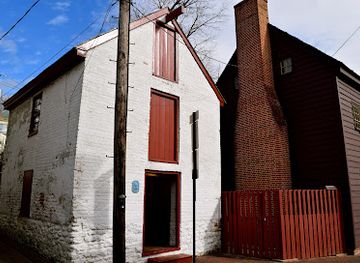
Explore the rich maritime history of Annapolis at the Waterfront Warehouse, a captivating historical museum by the harbor.
Best landmarks in Annapolis Waterfront
Annapolis Waterfront's defining natural landmark is the tidal meeting of Annapolis Harbor, Spa Creek and the Severn River, a water landscape that explains the city's maritime location and continuing sailing culture. City Dock and the narrow inlet known as Ego Alley form the visual centre of the harbour. The Maryland State House, crowned by its wooden dome, is the most important historic building in the district and is closely associated with the Revolutionary and early national history of the United States. St Anne's Church and the historic houses surrounding Church Circle and State Circle extend the architectural story inland. The Kunta Kinte–Alex Haley Memorial at City Dock gives the waterfront a significant African-American historical landmark, while the United States Naval Academy represents its continuing military and maritime role. Across Spa Creek, Eastport's working boats and boatyards provide a contrasting landmark landscape of contemporary Chesapeake life.
-
Park
Annapolis City Dock
Experience the historical charm and vibrant atmosphere of Annapolis City Dock, the perfect waterfront getaway for tourists exploring Maryland.
-
 Hotel
HotelAnnapolis Waterfront Hotel, Autograph Collection
Discover the elegance of Annapolis Waterfront Hotel, where luxury meets the charm of Maryland's historic capital, perfect for leisure and business travelers alike.
-
Boat tour agency
Watermark Tours, Charters, Cruises
Discover the beauty of Chesapeake Bay with Watermark Tours, offering scenic boat trips, live music, and unforgettable views in Annapolis.
-
Tourist attraction
Schooner Woodwind Sailing Cruises
Discover the beauty of the Chesapeake Bay with Schooner Woodwind Sailing Cruises, where adventure meets tranquility on the open water.
Explore Annapolis Waterfront on the map
Plan your trip on one map. See where the top attractions, landmarks, restaurants and hotels are, and book hotels and experiences in a few clicks.
Best hotels in Annapolis Waterfront
Best restaurants in Annapolis Waterfront
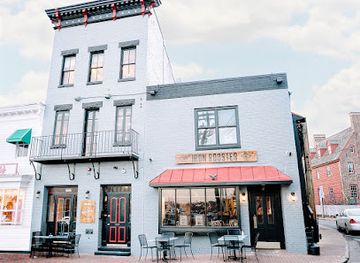
Dining around Annapolis Waterfront is shaped by the Chesapeake, with menus commonly featuring blue crab, oysters, fish, shrimp and other regional seafood alongside Maryland crab cakes and familiar American dishes. Restaurants, taverns and cafés are concentrated around City Dock, Market Space, Main Street and the streets leading uphill into the historic centre; further choices can be found in Eastport across Spa Creek. Establishments range from informal waterfront counters and traditional pubs to more polished dining rooms, while outdoor seating is particularly characteristic in warmer months. Local food shops and markets may provide crab seasoning, regional seafood products and Chesapeake-inspired specialities for picnics or self-catering. Seafood availability and menus are seasonal, and visitors should not assume that every harbour-facing business serves locally caught produce. Reservations can be useful during summer weekends and major sailing or cultural events.
-
Traditional American
Iron Rooster- Annapolis
Experience traditional American comfort food at Iron Rooster in Annapolis - where every meal feels like home.
-
Seafood
Chart House Prime
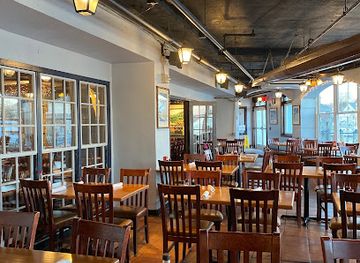
Experience fine dining at Chart House Prime in Annapolis, where fresh seafood meets breathtaking waterfront views.
-
Grill
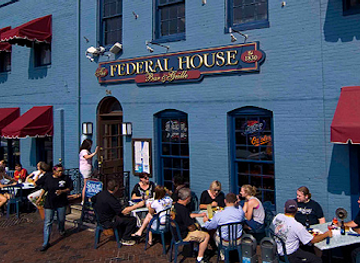
Federal House Bar & Grille
Discover delightful American cuisine at Federal House Bar & Grille in Annapolis – where great food meets vibrant atmosphere.
-
Restaurant
Pusser's Caribbean Grille
Discover tropical flavors at Pusser's Caribbean Grille in Annapolis – where every meal feels like a getaway!
Best bars in Annapolis Waterfront
Evenings around Annapolis Waterfront are generally sociable rather than club-focused. City Dock, Main Street and the neighbouring historic streets contain established pubs, taverns, wine bars and restaurant bars where visitors can enjoy Maryland beer, cocktails and live or recorded music when offered. Eastport has its own relaxed maritime drinking and dining scene, reached from the central area by road or by crossing the Spa Creek Bridge rather than by a continuous waterfront promenade. The city also hosts cultural performances and seasonal events, but programmes vary and should be checked locally. Late-night options are more limited than in Baltimore or Washington, and the atmosphere can become quiet once restaurants and harbour activities wind down. Water edges, piers and naval property are not nightlife spaces, so visitors should remain in authorised public areas after dark.
-
Grill
Federal House Bar & Grille
Discover the vibrant flavors of American cuisine at the Federal House Bar & Grille, where seafood and hospitality meet in the heart of Annapolis.
-
Restaurant
Pusser's Caribbean Grille
Experience the vibrant flavors of the Caribbean at Pusser's Caribbean Grille, Annapolis' waterfront dining destination offering a delightful fusion of cuisines.
-
Seafood
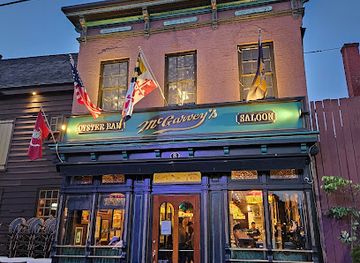
McGarvey's
Experience the essence of Chesapeake Bay dining at McGarvey's, where fresh seafood meets vibrant atmosphere in historic Annapolis.
-
Seafood
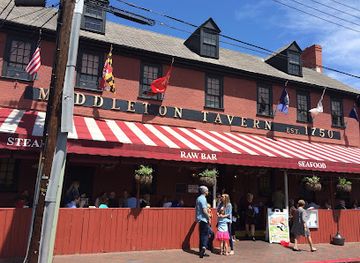
Middleton Tavern
Discover over 200 years of history with fresh seafood and classic American dishes at Middleton Tavern, Annapolis's iconic waterfront restaurant.

Best nightclubs in Annapolis Waterfront
Evenings around Annapolis Waterfront are generally sociable rather than club-focused. City Dock, Main Street and the neighbouring historic streets contain established pubs, taverns, wine bars and restaurant bars where visitors can enjoy Maryland beer, cocktails and live or recorded music when offered. Eastport has its own relaxed maritime drinking and dining scene, reached from the central area by road or by crossing the Spa Creek Bridge rather than by a continuous waterfront promenade. The city also hosts cultural performances and seasonal events, but programmes vary and should be checked locally. Late-night options are more limited than in Baltimore or Washington, and the atmosphere can become quiet once restaurants and harbour activities wind down. Water edges, piers and naval property are not nightlife spaces, so visitors should remain in authorised public areas after dark.
-
Grill
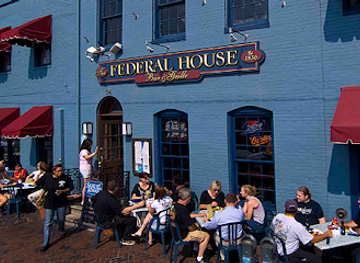
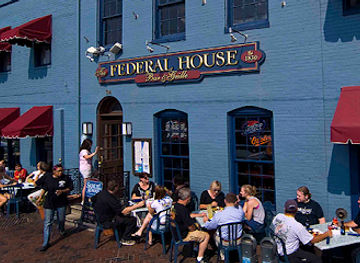
Federal House Bar & Grille
Experience the essence of American dining at Federal House Bar & Grille in Annapolis, where vibrant flavors and a lively atmosphere await you.
-
Grill
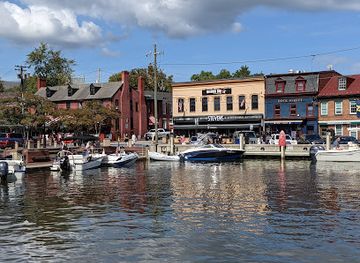
Dock Street Bar & Grill
Experience the best of Annapolis at Dock Street Bar & Grill, where vibrant flavors meet historic charm in a perfect waterfront setting.
Best shops in Annapolis Waterfront
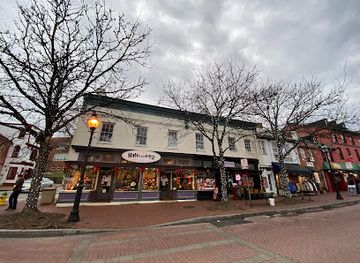
Shopping is concentrated around Main Street, Maryland Avenue, Market Space and the historic streets above City Dock rather than along a single modern waterfront mall. Independent shops offer clothing, jewellery, gifts, books, artwork, nautical items and locally themed products, while galleries and specialist retailers reflect Annapolis's links with sailing, the Chesapeake and colonial history. Visitors may also find Maryland food products, crab-related specialities and regional beverages in food shops and markets. Eastport provides additional small businesses and maritime-oriented retail, although its character is more residential and dispersed. Outdoor equipment and sailing supplies are available in the wider city, not necessarily beside the central dock. Retail choices can change over time, and the busiest areas are pedestrian-friendly but compact, with limited space for browsing during festivals and peak summer periods.
-
Hat shop
Hats In the Belfry
Explore Hats In the Belfry in Annapolis for a unique selection of stylish hats perfect for every occasion, crafted with quality and care.
-
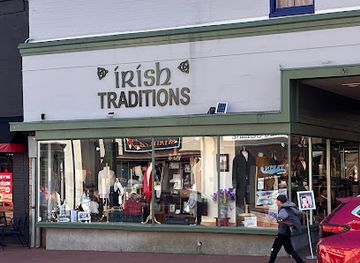
Irish goods store
Irish Traditions
Explore a delightful selection of authentic Irish goods at Irish Traditions in Annapolis, where culture and craftsmanship come together.
-
Boutique
Brightside Boutique- Annapolis
Explore Brightside Boutique in Annapolis for unique fashion, accessories, and local artisan treasures that embody the spirit of Maryland.
-
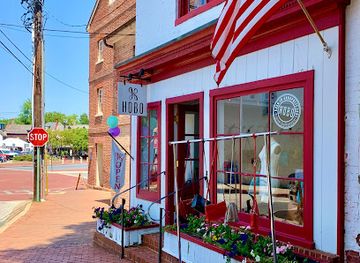
Leather goods store
Hobo Flagship Store - Handbags, Wallets & Accessories
Explore the Hobo Flagship Store in Annapolis for premium leather handbags, wallets, and accessories crafted with care and style.

Get your free copy of our complete guide to Annapolis Waterfront, delivered straight to you.
Everything on this page, from attractions and restaurants to essentials and local phrases, in one PDF you can read offline, print or share.
Already have an account? Sign in
Your Annapolis Waterfront guide is ready.
We'll send it to · Not you? Sign out

Getting your guide ready…
We are putting together a fresh copy of the Annapolis Waterfront guide. This can take up to a minute.
This can take a few moments. If your browser asks, choose Allow so the download can start. You'll find the guide in your Downloads folder.
Nothing happened? Download it again
Sorry, the guide is taking longer than usual. Please try again in a minute, or get it by email instead.
Annapolis Waterfront essentials
Currency and Payment
Safety
Emergency Situations
Do's and Don'ts
Local Tips
From Eve
Local phrases worth knowing
You don't need to get them perfect. A few words go a long way, and locals appreciate the effort.
Basics
| English | Local | Say it |
|---|---|---|
| Hello | Ahoy | [uh-hoi] |
| Goodbye | Fair winds | [fair windz] |
| Yes | Aye | [ai] |
| No | Nay | [nei] |
| Please/You're welcome | Please/You're welcome | [Please/You're welcome] |
| Thank you | Thank ye | [thank yee] |
| Excuse me/Sorry | Beg pardon | [beg pahrd-n] |
| How are you? | How be ye? | [how bee yee?] |
| Fine. And you? | Fair winds. And ye? | [fair windz. and yee?] |
| Do you speak English? | Speak ye English? | [speek yee ing-glish?] |
| I don't understand | I don't savvy | [ai don't sav-ee] |
Eating & Drinking
| English | Local | Say it |
|---|---|---|
| I'd like to see the menu, please | I'd like to see the bill of fare, please | [ai'd like to see the bil uv fair, please] |
| I don't eat meat | I don't eat flesh | [ai don't eat flesh] |
| Cheers! | Cheers! | [cheers] |
| I would like to pay, please | I would like to settle, please | [ai wood like to set-ul, please] |
Emergencies
| English | Local | Say it |
|---|---|---|
| Help! | SOS! | [ess-oh-ess!] |
| Go away! | Avast! | [ah-vast!] |
| Call the Police! | Call the Constabulary! | [call the kon-stab-yu-lar-ee!] |
| Call a doctor! | Call the sawbones! | [call the saw-bonz!] |
| I'm lost | I'm adrift | [ai'm adrift] |
| I'm ill | I'm ailing | [ai'm ay-ling] |
Shopping
| English | Local | Say it |
|---|---|---|
| I'd like to buy... | I'd like to buy... | [ai'd like to buy...] |
| I'm just looking | I'm just browsing | [ai'm just brow-zing] |
| How much is it? | What's the reckon? | [whats the rek-kun?] |
| That's too expensive | That's too dear | [thats too deer] |
| Can you lower the price? | Can ye trim the cost? | [can yee trim the cost?] |
Time & Numbers
| English | Local | Say it |
|---|---|---|
| What time is it? | What hour be it? | [what hour bee it?] |
| It's one o'clock | It be one bell | [it bee wun bell] |
| Half past (10) | Half past (10) | [half past (10)] |
| Morning | Forenoon | [for-noon] |
| Afternoon | Afternoon | [after-noon] |
| Evening | Evening | [ee-ven-ing] |
| Yesterday | Yestermorn | [yester-morn] |
| Today | This day | [this day] |
| Tomorrow | Morrow | [morrow] |
| 1 | One | [wun] |
| 2 | Two | [too] |
| 3 | Three | [three] |
| 4 | Four | [for] |
| 5 | Five | [fiv] |
| 6 | Six | [siks] |
| 7 | Seven | [sev-en] |
| 8 | Eight | [ate] |
| 9 | Nine | [nine] |
| 10 | Ten | [ten] |
Transport & Directions
| English | Local | Say it |
|---|---|---|
| Where's a/the...? | Where be a/the...? | [where bee a/the...?] |
| What's the address? | What's the bearings? | [whats the bear-ings?] |
| Can you show me (on the map)? | Can ye give me the lay of the land? | [can yee giv mee the lay uv the land?] |
| When's the next (bus)? | When be the next (bus)? | [when bee the next (bus)?] |
| A ticket (to ....) | A passage (to ....) | [a pass-ij (to ....)] |
History of Annapolis Waterfront
From Indigenous Shore to Colonial Settlement
The Annapolis waterfront occupies shores that were part of the wider Chesapeake world of Indigenous peoples before English colonisation. In 1649, Puritan settlers from Virginia established Providence on the Severn River, laying the foundation for the later city. The harbour's protected creeks and access to the Chesapeake supported settlement, farming, trade and movement by water. Colonial Annapolis developed around these maritime connections rather than apart from them, and the shape of the shoreline, inlets and older streets still reflects the importance of waterborne access.
A Provincial Capital Takes Shape
The settlement was renamed Annapolis in 1695 in honour of Queen Anne, and it became Maryland's capital in the same period. City Dock and the streets rising towards the State House formed the civic and commercial centre of a port town. Merchant activity, shipping and the movement of agricultural goods connected Annapolis with the Chesapeake and the wider Atlantic economy. Many of the buildings and street patterns associated with the historic waterfront date from the eighteenth century, when the capital's political role and maritime trade helped define its urban character.
Revolutionary and Early National Annapolis
Annapolis played a significant role during the American Revolution and the early years of the United States. The Maryland State House, begun in 1772 and completed during the revolutionary period, served briefly as the meeting place of the Continental Congress. In 1784, Congress met there when the Treaty of Paris was ratified, formally ending the Revolutionary War. These events gave the harbour town national importance beyond its commercial life, while the waterfront continued to depend on coastal shipping and Chesapeake trade.
Maritime Traditions and Naval Annapolis
Annapolis's relationship with the water evolved through the nineteenth and twentieth centuries as commercial shipping, fishing, boatbuilding and passenger travel changed. The establishment of the United States Naval Academy in 1845 reinforced the city's national maritime identity and brought a major institutional presence to the harbour. Across Spa Creek, Eastport retained a strong association with working waterfront activities and boating. In later decades, preservation, heritage tourism and sailing culture became increasingly important, allowing historic architecture and maritime traditions to remain central to the character of City Dock.
Memory, Preservation and the Modern Waterfront
Modern Annapolis has balanced waterfront tourism with the realities of a tidal harbour exposed to storms, flooding and long-term environmental pressures. Historic preservation protects the colonial and early national streetscape, while museums, memorials and public spaces interpret the city's maritime and African-American heritage. The Kunta Kinte–Alex Haley Memorial at City Dock acknowledges the arrival of Kunta Kinte in Annapolis and the continuing cultural significance of Alex Haley's family history. Today, working boats, naval traditions, recreation and heritage interpretation share a densely used waterfront.
Annapolis Waterfront in Photos
Browse through our photo collection highlighting the charm and character of the destination.
Neighbouring destination travel guides
The closest destinations to Annapolis Waterfront, if you have time for more than one.
-

-

-

-

-


Swipe for more destinations
Explore more
Explore more of Chesapeake Bay Area
Explore Maryland’s Chesapeake Bay Area for historic ports, sailing towns, tidal marshes, seafood traditions and distinctive waterfront landscapes.
Explore Chesapeake Bay Area
Explore more of Maryland
Discover Maryland, where coastal charm meets rich history and outdoor adventure. Experience the best of the East Coast in this small but diverse state.
Explore Maryland