

Patapsco Valley State Park Travel Guide - Free Web & App
Your ultimate guide to Patapsco Valley State Park. Discover top landmarks, proposed trips, and local tips. Free on the web or via the Evendo companion app.


Patapsco Valley State Park in Maryland offers wooded trails, river scenery, historic mill ruins, railway heritage and outdoor escapes near Baltimore.
A River Valley of Many Landscapes
Patapsco Valley State Park follows the Patapsco River through a broad, wooded corridor west of Baltimore, extending across parts of Howard and Baltimore counties. Its roughly 16,000 acres encompass steep ravines, exposed rock, stream crossings, historic mill sites, railway remains and quiet stretches of forest. Rather than forming one compact recreational site, the park is divided into several areas, including Avalon, Glen Artney, Hilton, Hollofield, McKeldin and Daniels, each offering a different way into the valley.Read more about Patapsco Valley State Park
Trails, Water and History
Industry in a Forested Valley
When is the best time to visit Patapsco Valley State Park?
Best: May–June, September · 23–28°C| Month | High (°C) | Rainfall (mm) |
|---|---|---|
| January | 5 | 80 |
| February | 6 | 75 |
| March | 12 | 85 |
| April | 18 | 90 |
| May (best) | 23 | 95 |
| June (best) | 28 | 100 |
| July | 30 | 105 |
| August | 30 | 100 |
| September (best) | 25 | 95 |
| October | 18 | 90 |
| November | 12 | 85 |
| December | 6 | 80 |
Getting to and around Patapsco Valley State Park
How to get there
Transportation
Best attractions in Patapsco Valley State Park
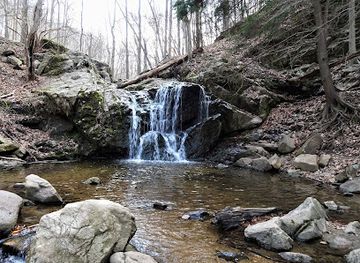
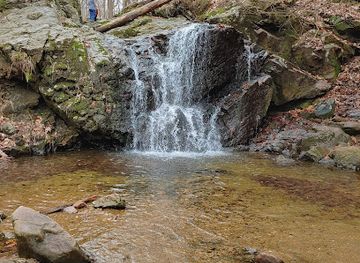
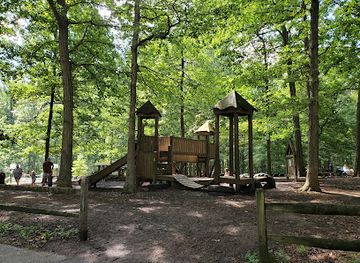
Patapsco Valley State Park's main attractions are spread across its river corridor. The Grist Mill Trail follows a relatively accessible section of the valley and links visitors with historic industrial scenery, while the Cascade Falls area is known for a forested stream and waterfall reached by trail. At Daniels, the remains and landscape of a former mill community reveal how settlement grew around the river and railway. Avalon and Hilton offer established recreation areas, picnic settings and access to wooded trails, whereas McKeldin provides a broader upper-valley landscape with paths through forest and beside the river. Hollofield and Glen Artney open further sections of the park to hiking and riverside exploration. Bridges, stream crossings, rock outcrops and old transport alignments provide interest between the named sites, but conditions vary considerably after storms. The park is best understood as a collection of distinct trail and recreation areas rather than a single attraction with one central route.
-
State park
Patapsco Valley State Park - Hollofield Area
Explore the scenic beauty and diverse activities of Patapsco Valley State Park – Hollofield Area, a natural retreat for adventure seekers and families.
-
State park
Patapsco Valley State Park - Avalon Area
Discover the scenic trails, fishing spots, and family-friendly picnic areas at Patapsco Valley State Park's Avalon Area in Maryland, a perfect outdoor getaway.
-
Tourist attraction
Cascade Falls
Discover the enchanting beauty of Cascade Falls in Elkridge, Maryland, a serene destination for hiking, picnicking, and appreciating nature's wonders.
-
State park
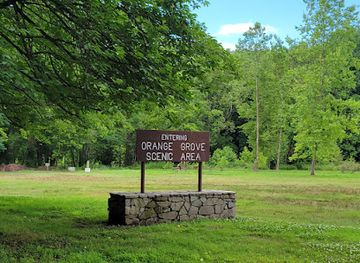
Swinging Bridge at Orange Grove
Explore the breathtaking Swinging Bridge at Orange Grove, a serene state park in Maryland perfect for outdoor adventures and picturesque views.
Best landmarks in Patapsco Valley State Park
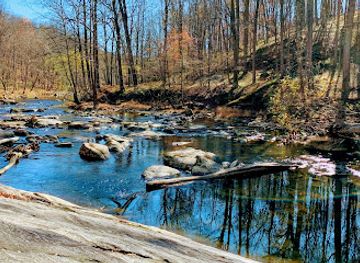
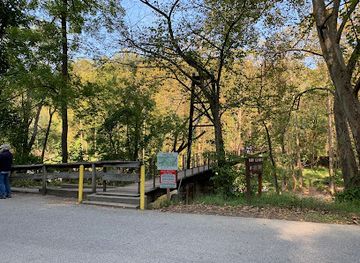
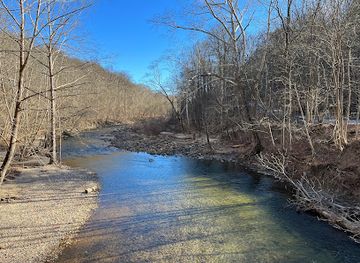
The Patapsco River is the park's defining natural landmark, a winding watercourse enclosed by steep, forested slopes and crossed by a succession of bridges and trails. Cascade Falls is a recognised scenic feature within the park, where a stream descends through woodland, while the valley's rocky ravines and floodplain show how water has shaped the terrain. Historic landmarks include the industrial remains at Daniels and the structures associated with former mills and transport routes at several recreation areas. The Baltimore and Ohio Railroad's historic alignment is central to the valley's identity, and the Thomas Viaduct at nearby Relay is one of the region's most important surviving railway monuments, though it is outside the park's core recreational landscape. Together, these natural and built landmarks explain why the valley is significant as both a protected landscape and a record of Maryland's early industrial development.
-
State park
Patapsco Valley State Park - Avalon Area
Explore the breathtaking Patapsco Valley State Park - Avalon Area, where nature, adventure, and tranquility await every visitor.
-
State park
Patapsco Valley State Park - Hilton Area
Explore the beauty of Patapsco Valley State Park - Hilton Area, where adventure meets nature in the heart of Maryland.
-
Hiking area
Patapsco Valley State Park - Daniels Road Trailhead
Discover breathtaking trails and scenic views at Patapsco Valley State Park - Daniels Road Trailhead, your gateway to Maryland's nature.
-
State park
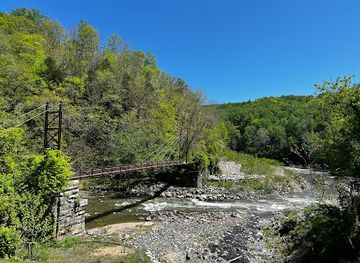
Grist Mill Walking Bridge
Explore the scenic Grist Mill Walking Bridge in Patapsco Valley State Park, a perfect blend of nature and history for an unforgettable outdoor experience.

Explore Patapsco Valley State Park on the map
Plan your trip on one map. See where the top attractions, landmarks, restaurants and hotels are, and book hotels and experiences in a few clicks.
Best hotels in Patapsco Valley State Park
Best restaurants in Patapsco Valley State Park
Patapsco Valley State Park has no single restaurant centre, and visitors normally eat before or after exploring at businesses in nearby communities such as Ellicott City, Catonsville, Elkridge, Elkridge's neighbouring commercial areas and greater Baltimore County. The surrounding region offers the broad dining range typical of central Maryland, including seafood, American cooking, cafés, takeaway food and the state's well-known Chesapeake crab tradition. In the park itself, picnic areas make self-catering the most dependable option for a day outdoors, so visitors should bring food and water rather than expect refreshments at a trailhead. Farm shops and small local businesses may be found in the wider countryside, while larger commercial clusters around Baltimore and Ellicott City provide the greatest choice. Distances between recreation areas and nearby dining can be inconvenient, making it sensible to identify the intended park entrance before choosing where to eat.
-
Breakfast
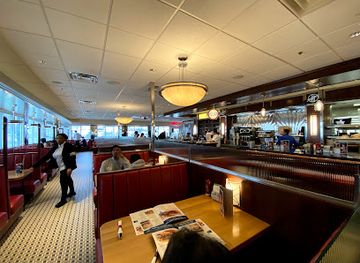
Silver Diner
Experience the best of American breakfast cuisine at Silver Diner in Elkridge - perfect for families and food lovers alike.
-
Italian
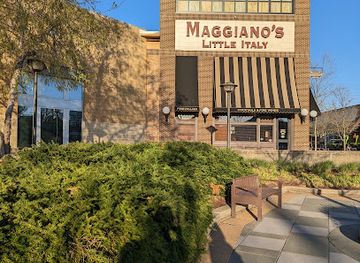
Maggiano's Little Italy
Experience authentic Italian cuisine at Maggiano's Little Italy in Columbia—where family traditions meet culinary excellence.
-
Mediterranean
CAVA
Experience the vibrant tastes of Mediterranean cuisine at CAVA in Columbia - where fresh ingredients meet flavorful dishes.
-
New American
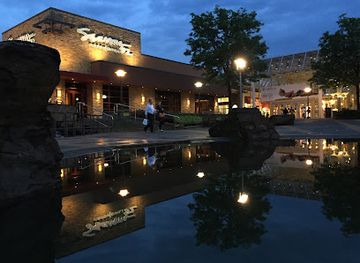
Seasons 52
Experience seasonal New American cuisine at Seasons 52 in Columbia—where health-conscious dining meets fine culinary artistry.

Best bars in Patapsco Valley State Park
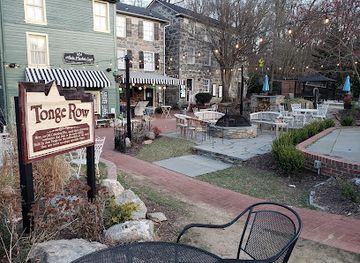
Evening entertainment is limited within Patapsco Valley State Park itself, which closes into a quiet woodland landscape after daytime recreation and has no nightlife district or concentration of clubs. Visitors staying in nearby Ellicott City, Catonsville, Elkridge or Baltimore can find a wider range of bars, breweries, restaurants and live entertainment, although these are outside the park and vary by neighbourhood. Historic Ellicott City provides an atmospheric setting for an evening meal and drinks in a compact old-town environment, while Baltimore offers the region's broadest choice of music venues, theatres and late-evening establishments. Around the park, the more characteristic experience is an early dinner followed by a return to a guesthouse or hotel rather than nightlife on site. Check current venue information separately, as opening patterns and programmes change.
-
American
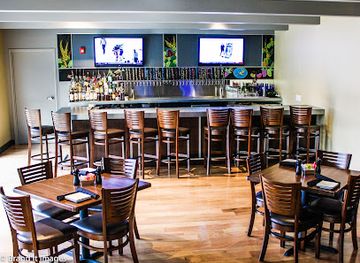
The Ale House Columbia
Experience the best of American cuisine and live music at The Ale House Columbia, where flavor meets vibrant entertainment in a welcoming atmosphere.
-
Grill
Manor Hill Tavern
Discover Manor Hill Tavern: A culinary haven in Ellicott City, offering a unique blend of grill favorites, craft cocktails, and a vibrant dining atmosphere.
-
Restaurant
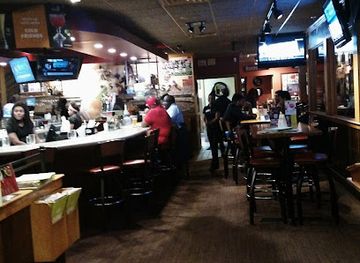
Applebee's Grill + Bar
Experience the flavors of classic American dining at Applebee's Grill + Bar in Catonsville, MD, perfect for families and friends alike.
-
Grill
City View Bar & Grill
Discover a vibrant dining experience at City View Bar & Grill, where delicious flavors meet stunning views in Gwynn Oak, Maryland.
Best nightclubs in Patapsco Valley State Park
Evening entertainment is limited within Patapsco Valley State Park itself, which closes into a quiet woodland landscape after daytime recreation and has no nightlife district or concentration of clubs. Visitors staying in nearby Ellicott City, Catonsville, Elkridge or Baltimore can find a wider range of bars, breweries, restaurants and live entertainment, although these are outside the park and vary by neighbourhood. Historic Ellicott City provides an atmospheric setting for an evening meal and drinks in a compact old-town environment, while Baltimore offers the region's broadest choice of music venues, theatres and late-evening establishments. Around the park, the more characteristic experience is an early dinner followed by a return to a guesthouse or hotel rather than nightlife on site. Check current venue information separately, as opening patterns and programmes change.
-
Night club
Tabu Social Club
Discover the vibrant nightlife at Tabu Social Club in Catonsville, MD, where themed rooms and energetic vibes create unforgettable evenings.

Best shops in Patapsco Valley State Park
Shopping within Patapsco Valley State Park is limited to the practical facilities associated with recreation rather than a dedicated retail district. Visitors should purchase hiking supplies, food and drinks in nearby communities before entering the valley, particularly when planning to spend several hours on the trails. Ellicott City provides the most characterful nearby browsing, with independent businesses, galleries, antiques and local gift shops concentrated in and around its historic Main Street area, while larger commercial centres around Elkridge, Catonsville and Baltimore offer outdoor equipment and everyday provisions. Regional food products, Chesapeake-related gifts and Maryland-themed crafts are more likely to be found in surrounding towns than at park entrances. The valley's most distinctive items are cultural rather than commercial: photographs, books and locally made goods connected with Maryland's railway, mill and river history may appear in nearby heritage and visitor-oriented shops, but availability is not uniform.
-
State park
Patapsco Valley State Park - Hollofield Area
Explore the breathtaking landscapes and outdoor adventures at Patapsco Valley State Park - Hollofield Area in Maryland.
-
Shopping mall
Security Square
Experience the vibrant shopping and dining scene at Security Square, Baltimore's premier shopping destination with diverse options for everyone.
-
Department store
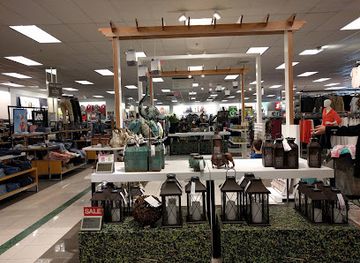
Kohl's
Discover unbeatable deals at Kohl's in Ellicott City, your one-stop shop for fashion, home goods, and more, all at budget-friendly prices.
-
Bakery
Tous Les Jours Bakery Cafe Ellicott City
Discover the delightful fusion of French and Korean baked goods at Tous Les Jours Bakery Cafe in Ellicott City, a must-visit for dessert lovers.

Get your free copy of our complete guide to Patapsco Valley State Park, delivered straight to you.
Everything on this page, from attractions and restaurants to essentials and local phrases, in one PDF you can read offline, print or share.
Already have an account? Sign in
Your Patapsco Valley State Park guide is ready.
We'll send it to · Not you? Sign out

Getting your guide ready…
We are putting together a fresh copy of the Patapsco Valley State Park guide. This can take up to a minute.
This can take a few moments. If your browser asks, choose Allow so the download can start. You'll find the guide in your Downloads folder.
Nothing happened? Download it again
Sorry, the guide is taking longer than usual. Please try again in a minute, or get it by email instead.
Patapsco Valley State Park essentials
Currency and Payment
Safety
Emergency Situations
Do's and Don'ts
Local Tips
From Eve
Local phrases worth knowing
You don't need to get them perfect. A few words go a long way, and locals appreciate the effort.
Basics
| English | Local | Say it |
|---|---|---|
| Hello | Hey | [hey] |
| Goodbye | Later | [lay-ter] |
| Yes | Yeah | [yeh] |
| No | Nah | [nah] |
| Please/You're welcome | Please/No problem | [pleez/no prob-lem] |
| Thank you | Thanks | [thanks] |
| Excuse me/Sorry | Pardon me/Sorry | [par-d'n me/sor-ry] |
| How are you? | How you doin'? | [how yuh doin'] |
| Fine. And you? | Good. How 'bout you? | [good. how 'bout yuh] |
| Do you speak English? | You speak English? | [yuh speak ing-lish?] |
| I don't understand | I don't get it | [i don't get it] |
Eating & Drinking
| English | Local | Say it |
|---|---|---|
| I'd like to see the menu, please | Let me see the menu, please | [let me see the menu, please] |
| I don't eat meat | I don't eat meat | [i don't eat meat] |
| Cheers! | Cheers! | [cheers] |
| I would like to pay, please | I'll pay now, please | [i'll pay now, please] |
Emergencies
| English | Local | Say it |
|---|---|---|
| Help! | Help! | [help!] |
| Go away! | Leave me alone! | [leave me alone!] |
| Call the Police! | Call the cops! | [call the cops!] |
| Call a doctor! | Get a doctor! | [get a doctor!] |
| I'm lost | I'm lost | [i'm lost] |
| I'm ill | I'm sick | [i'm sick] |
Shopping
| English | Local | Say it |
|---|---|---|
| I'd like to buy... | I wanna buy... | [i wanna buy...] |
| I'm just looking | Just browsing | [just browse-ing] |
| How much is it? | How much does it cost? | [how much does it cost?] |
| That's too expensive | That's too pricey | [that's too pry-see] |
| Can you lower the price? | Can you drop the price? | [can you drop the price?] |
Time & Numbers
| English | Local | Say it |
|---|---|---|
| What time is it? | What time is it? | [what time is it?] |
| It's one o'clock | It's one | [it's one] |
| Half past (10) | Ten thirty | [ten thur-tee] |
| Morning | Morning | [morning] |
| Afternoon | Afternoon | [after-noon] |
| Evening | Evening | [even-ing] |
| Yesterday | Yesterday | [yes-ter-day] |
| Today | Today | [to-day] |
| Tomorrow | Tomorrow | [to-mor-row] |
| 1 | One | [wun] |
| 2 | Two | [too] |
| 3 | Three | [three] |
| 4 | Four | [four] |
| 5 | Five | [five] |
| 6 | Six | [six] |
| 7 | Seven | [sev-en] |
| 8 | Eight | [ate] |
| 9 | Nine | [nine] |
| 10 | Ten | [ten] |
Transport & Directions
| English | Local | Say it |
|---|---|---|
| Where's a/the...? | Where's the...? | [where's the...?] |
| What's the address? | What's the address? | [what's the address?] |
| Can you show me (on the map)? | Can you show me? | [can you show me?] |
| When's the next (bus)? | When's the next bus? | [whens the next bus?] |
| A ticket (to ....) | A ticket (to ....) | [a ticket (to ....)] |
History of Patapsco Valley State Park
A Valley Shaped by Water
The Patapsco River cut a winding valley through the Piedmont landscape west of Baltimore, creating the steep wooded slopes, exposed rock and narrow floodplain that characterise the park today. Long before the area became a recreational landscape, the river supplied water power and provided a natural corridor for movement, settlement and industry. Its geography determined where roads, mills and later railways could be built, while periodic floods repeatedly altered the valley floor and its communities.
Indigenous Homelands and Colonial Settlement
The Patapsco Valley lies within the historic homeland of Indigenous peoples of the Chesapeake region, including the Susquehannock and Piscataway peoples, whose presence predates European settlement by thousands of years. During the colonial period, land along the river was increasingly claimed, farmed and developed by European settlers. Mills and small communities emerged where the river offered dependable power, beginning a long transformation from a largely forested valley into a working industrial landscape.
Mills and the Baltimore Trade
Water-powered industry became central to the valley's development. Grist mills processed grain from surrounding farms, while other mills produced textiles, paper and iron-related goods at different points in the region's history. The river connected these enterprises to Baltimore's expanding commercial economy. Many industrial buildings have disappeared, but foundations, stonework, mill ruins and altered landscapes remain visible at several park areas, particularly around the former community of Daniels and the Elkridge and Avalon sections.
Railways Through the Valley
The Baltimore and Ohio Railroad, chartered in 1827 and developed during the nineteenth century, followed the Patapsco corridor westward from Baltimore. Its route connected the port city with the interior and helped make the valley an important passage for passengers, freight and industry. Railway engineering left a lasting mark on the landscape through bridges, grades and associated settlements. The Thomas Viaduct at nearby Relay, completed in 1835, is a major surviving monument to this history, although it stands outside the park's main recreational areas.
From Industrial Corridor to State Park
Industrial activity and settlement declined as transport networks and manufacturing patterns changed, while floods periodically damaged communities and infrastructure. Maryland's early state forest reservations included land in the Patapsco Valley, and the area gradually developed into a protected public landscape combining conservation with recreation. The modern park preserves both forest habitat and evidence of earlier industry. Today, trail management, flood recovery, habitat protection and interpretation shape how visitors encounter a valley once dominated by mills, railways and working settlements.
Patapsco Valley State Park in Photos
Browse through our photo collection highlighting the charm and character of the destination.
Cities in Patapsco Valley State Park
The towns and cities of Patapsco Valley State Park, and the easiest places to base yourself.

Swipe for more cities
Neighbouring destination travel guides
The closest destinations to Patapsco Valley State Park, if you have time for more than one.
-

-

-

-

-
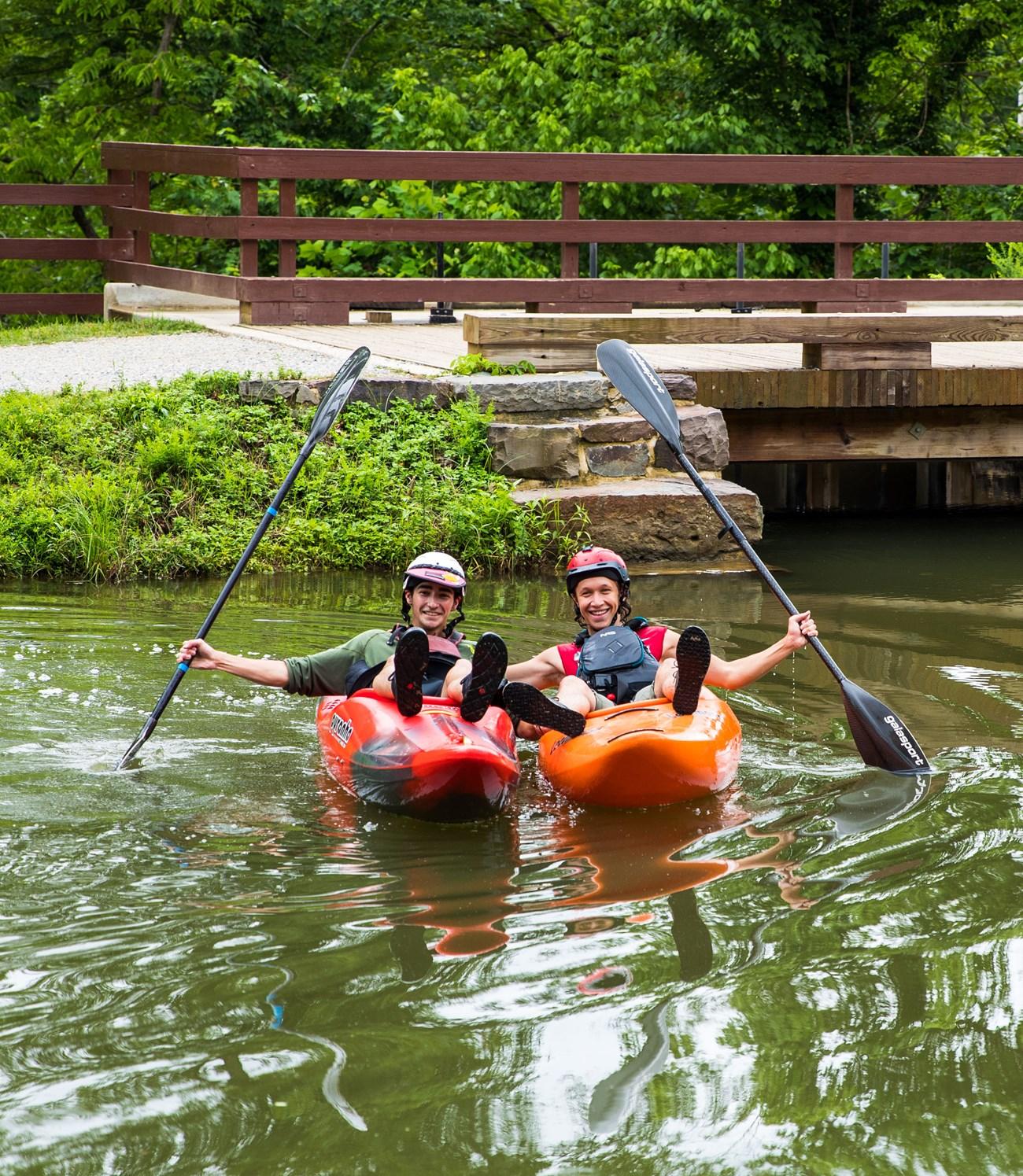 C&O Canal National Historical Park
Discover the blend of history and nature at C&O Canal National Historical Park, where miles of scenic towpath and historical landmarks await your exploration.
C&O Canal National Historical Park
Discover the blend of history and nature at C&O Canal National Historical Park, where miles of scenic towpath and historical landmarks await your exploration.


Swipe for more destinations
Explore more

Explore more of Central Maryland
Central Maryland combines Baltimore museums, Annapolis heritage, Chesapeake Bay scenery, historic towns, local seafood and accessible countryside.
Explore Central Maryland
Explore more of Maryland
Discover Maryland, where coastal charm meets rich history and outdoor adventure. Experience the best of the East Coast in this small but diverse state.
Explore Maryland