

Sandy Point State Park Travel Guide - Free Web & App
Your ultimate guide to Sandy Point State Park. Discover top landmarks, proposed trips, and local tips. Free on the web or via the Evendo companion app.


Sandy Point State Park in Maryland offers Chesapeake Bay beaches, swimming, boating, fishing, picnics and bay views beside historic Annapolis.
Bay Beaches and Coastal Landscapes
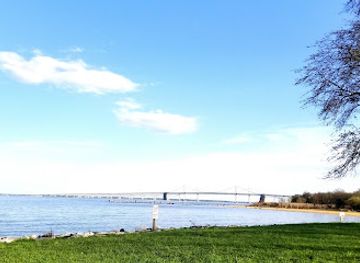
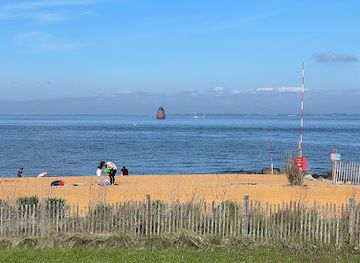
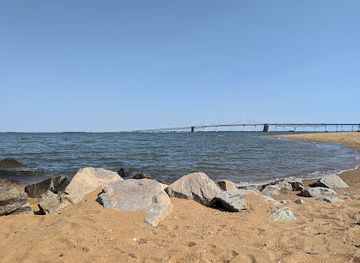
Sandy Point State Park occupies approximately 786 acres on a peninsula at the western end of the Chesapeake Bay Bridge, just east of Annapolis in Maryland. Its setting combines broad sandy beaches, tidal shoreline, wooded areas, marshy habitats and open views across the upper Chesapeake Bay. South Beach is the park's best-known recreational shore, while East Beach offers another stretch of waterfront where conditions and facilities vary by season. The park is shaped as much by the water as by the land: tides, wind, boat traffic and changing light give the shoreline a shifting character throughout the day.Read more about Sandy Point State Park
Recreation and Wildlife
A Gateway Beside Annapolis
When is the best time to visit Sandy Point State Park?
Best: May, September–October · 21–27°C| Month | High (°C) | Rainfall (mm) |
|---|---|---|
| January | 6 | 80 |
| February | 8 | 80 |
| March | 13 | 90 |
| April | 19 | 90 |
| May (best) | 24 | 100 |
| June | 29 | 100 |
| July | 32 | 110 |
| August | 31 | 110 |
| September (best) | 27 | 100 |
| October (best) | 21 | 90 |
| November | 14 | 90 |
| December | 8 | 90 |
Getting to and around Sandy Point State Park
How to get there
Transportation
Best attractions in Sandy Point State Park
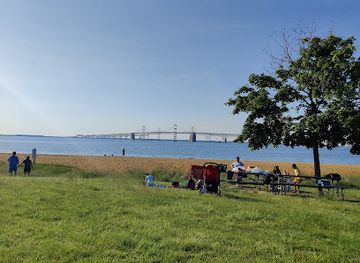
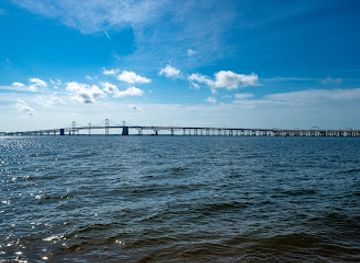
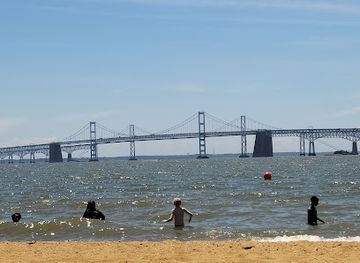
Sandy Point State Park's principal attraction is its Chesapeake Bay waterfront, with South Beach providing the best-known setting for swimming, sunbathing and family picnics and East Beach offering another shore-facing area within the park. The peninsula's mixture of sandy shoreline, tidal marsh, wooded ground and open water supports relaxed walking and seasonal bird observation, while the marina and boat-launch facilities bring the working character of recreational boating into the landscape. Fishing is another established use of the park, subject to Maryland regulations and local restrictions. Views towards the Chesapeake Bay Bridge give the waterfront a strong sense of place, particularly from open beach and bay-facing areas. The park also provides a convenient base for combining outdoor recreation with a visit to nearby Annapolis, whose historic district, waterfront and maritime heritage lie outside the park. Offshore features such as Sandy Point Shoal Lighthouse belong to the wider bay setting rather than the park itself.
-
Park
Flounder Pavilion Beach Front - Sandy Point State Park
Experience the beauty of Flounder Pavilion Beach Front at Sandy Point State Park, a perfect blend of nature, relaxation, and outdoor adventure in Maryland.
-
Campground
Sandy Point State Park Youth Group Camp Ground
Discover the beauty of Sandy Point State Park Youth Group Camp Ground, a haven for nature lovers and adventure seekers alike.
-
Historical landmark
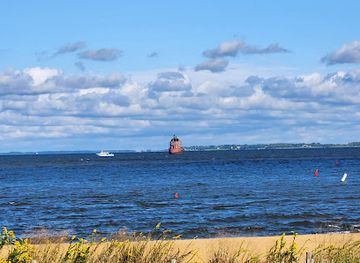
Sandy Point Shoal Light
Explore Sandy Point Shoal Light, a historic lighthouse in the Chesapeake Bay, showcasing maritime heritage and stunning bay views.
-
Park
Sandy Point Park Maintenance
Experience the natural beauty and recreational offerings of Sandy Point Park, a serene escape on the Chesapeake Bay in Annapolis, Maryland.
Best landmarks in Sandy Point State Park
The Chesapeake Bay shoreline is Sandy Point State Park's defining natural landmark, combining sandy beaches, tidal edges, marsh habitat and broad water views within a single peninsula. The Chesapeake Bay Bridge is the dominant built feature in the surrounding landscape, running east from the park across the bay and embodying the transport connection that helped make Sandy Point a major public recreation site. Sandy Point Shoal Lighthouse, an offshore navigational structure associated with the bay's shoals and shipping routes, is part of the wider maritime setting rather than an onshore park monument. The marina, boat ramps and open beach areas express the park's continuing relationship with recreational boating and water access. Together these features distinguish Sandy Point from inland parks and connect its modern recreational identity with the Chesapeake's working, navigational and ecological history.
-
Historical landmark
Sandy Point Shoal Light
Explore Sandy Point Shoal Light, a historical landmark in the Chesapeake Bay, and immerse yourself in maritime history and scenic views.
Explore Sandy Point State Park on the map
Plan your trip on one map. See where the top attractions, landmarks, restaurants and hotels are, and book hotels and experiences in a few clicks.
Best hotels in Sandy Point State Park
Best restaurants in Sandy Point State Park
Dining inside Sandy Point State Park is centred on the practical needs of a day-use recreation area rather than a substantial restaurant scene, so visitors commonly bring a picnic or arrange food before entering. Picnic tables and waterfront settings make informal meals part of the park experience, but visitors should check current information for any seasonal concessions or changes in facilities. Annapolis, immediately to the west, is the nearest major dining centre and offers a much broader range of restaurants, cafés, bakeries, pubs and seafood-oriented menus. The city's food culture reflects Maryland's Chesapeake setting through regional seafood traditions, including crab-based dishes, oysters and locally familiar Old Bay seasoning, although menus vary by establishment. Smaller communities and roadside businesses around Anne Arundel County may provide additional options, but the park itself should not be approached as a restaurant district.
-
Restaurant
The Bayside Grill
Experience coastal charm and culinary excellence at The Bayside Grill in Annapolis – where local flavors meet breathtaking views.
Best shops in Sandy Point State Park
Shopping within Sandy Point State Park is limited and geared towards practical visitor needs rather than souvenirs or retail browsing. Visitors should obtain food, drinks, sun protection, beach supplies and other essentials before arrival or in nearby Annapolis, where the historic centre, waterfront and surrounding commercial areas provide the broadest choice of independent shops, galleries, food retailers and everyday services. Annapolis is also a useful place to look for Chesapeake-themed gifts, maritime goods, regional food products and locally made art, although individual stock and opening arrangements change. Larger shopping areas are available farther afield in Anne Arundel County. The park's own appeal lies in its shoreline and recreation grounds, so it is best treated as a destination for outdoor time rather than a place with a dedicated shopping district or permanent craft market.
-
State park
Sandy Point State Park
Explore Sandy Point State Park, a stunning Maryland destination with sandy beaches, scenic trails, and endless outdoor adventures along the Chesapeake Bay.
-
Park
Flounder Pavilion Beach Front - Sandy Point State Park
Experience the natural beauty and recreational activities at Flounder Pavilion Beach Front in Sandy Point State Park, a serene escape in Maryland.
Get your free copy of our complete guide to Sandy Point State Park, delivered straight to you.
Everything on this page, from attractions and restaurants to essentials and local phrases, in one PDF you can read offline, print or share.
Already have an account? Sign in
Your Sandy Point State Park guide is ready.
We'll send it to · Not you? Sign out

Getting your guide ready…
We are putting together a fresh copy of the Sandy Point State Park guide. This can take up to a minute.
This can take a few moments. If your browser asks, choose Allow so the download can start. You'll find the guide in your Downloads folder.
Nothing happened? Download it again
Sorry, the guide is taking longer than usual. Please try again in a minute, or get it by email instead.
Sandy Point State Park essentials
Currency and Payment
Safety
Emergency Situations
Do's and Don'ts
Local Tips
From Eve
Local phrases worth knowing
You don't need to get them perfect. A few words go a long way, and locals appreciate the effort.
Basics
| English | Local | Say it |
|---|---|---|
| Hello | Howdy | [haw-dee] |
| Goodbye | See ya | [see yah] |
| Yes | Yup | [yuhp] |
| No | Nah | [nuh] |
| Please/You're welcome | Please/No problem | [pleez / no problem] |
| Thank you | Thanks | [thanks] |
| Excuse me/Sorry | Pardon me/My bad | [par-dun me / my bad] |
| How are you? | How ya doin'? | [how yuh doin] |
| Fine. And you? | Good. You? | [good. yuh?] |
| Do you speak English? | Ya speak English? | [yah speak english?] |
| I don't understand | I don't get it | [I don't get it] |
Eating & Drinking
| English | Local | Say it |
|---|---|---|
| I'd like to see the menu, please | Menu, please | [menu, please] |
| I don't eat meat | No meat for me | [no meat for me] |
| Cheers! | Cheers! | [cheers!] |
| I would like to pay, please | Check, please | [check, please] |
Emergencies
| English | Local | Say it |
|---|---|---|
| Help! | Help! | [help!] |
| Go away! | Get lost! | [get lost!] |
| Call the Police! | Police! | [police!] |
| Call a doctor! | Doctor! | [doctor!] |
| I'm lost | Lost | [lost] |
| I'm ill | Sick | [sick] |
Shopping
| English | Local | Say it |
|---|---|---|
| I'd like to buy... | I wanna buy... | [I wanna buy...] |
| I'm just looking | Just browsing | [just browsing] |
| How much is it? | How much? | [how much?] |
| That's too expensive | Too pricey | [too pricey] |
| Can you lower the price? | Can you do better? | [can you do better?] |
Time & Numbers
| English | Local | Say it |
|---|---|---|
| What time is it? | What's the time? | [whats the time?] |
| It's one o'clock | It's one | [its one] |
| Half past (10) | Ten thirty | [ten thirty] |
| Morning | Morning | [morning] |
| Afternoon | Afternoon | [afternoon] |
| Evening | Evening | [evening] |
| Yesterday | Yesterday | [yesterday] |
| Today | Today | [today] |
| Tomorrow | Tomorrow | [tomorrow] |
| 1 | One | [one] |
| 2 | Two | [two] |
| 3 | Three | [three] |
| 4 | Four | [four] |
| 5 | Five | [five] |
| 6 | Six | [six] |
| 7 | Seven | [seven] |
| 8 | Eight | [eight] |
| 9 | Nine | [nine] |
| 10 | Ten | [ten] |
Transport & Directions
| English | Local | Say it |
|---|---|---|
| Where's a/the...? | Where's the...? | [wheres the...?] |
| What's the address? | Address? | [address?] |
| Can you show me (on the map)? | Show me (on map)? | [show me (on map)?] |
| When's the next (bus)? | Next (bus)? | [next (bus)?] |
| A ticket (to ....) | Ticket (to ...) | [ticket (to ...)] |
History of Sandy Point State Park
A Chesapeake Bay Peninsula
Sandy Point forms part of the long human and environmental history of the Chesapeake Bay, an estuary shaped by tidal exchange between rivers and the Atlantic Ocean. Long before the modern park existed, the shore was part of a wider landscape used by Indigenous communities and later transformed by European settlement, farming, fishing and maritime travel. The peninsula's value has always been linked to its position at the meeting point of land and water, where sheltered shorelines provided access to the bay while wetlands and wooded ground supported a varied natural environment.
The Maritime Landscape
During the colonial and early modern periods, the Chesapeake was an important region for agriculture, trade, fishing and waterborne transport. Sandy Point did not develop into a major town, but its waterfront belonged to this broader maritime network. The bay around the park was navigated by commercial and working vessels, while nearby settlements, including Annapolis, became centres of government, trade and seafaring. Offshore navigational structures such as Sandy Point Shoal Lighthouse reflect the hazards of the bay and the efforts made to guide vessels through its shoals and channels.
The Park and the Bay Bridge
Sandy Point State Park was established in 1952, the same year that the original Chesapeake Bay Bridge opened and transformed travel between Maryland's western and eastern shores. The bridge made the peninsula more accessible to visitors from the Baltimore-Washington region and helped establish Sandy Point as a significant public recreation area. Its beaches and picnic grounds offered urban and suburban residents a readily reachable experience of the Chesapeake, while its marina and boat ramps connected the state park to the continuing recreational use of the bay.
Public Recreation and Stewardship
Since its establishment, Sandy Point has developed as a managed public landscape rather than an untouched shoreline. Facilities for swimming, picnicking, boating, fishing and organised recreation have been balanced with the need to protect tidal waters, beach habitats, marsh edges and woodland. Modern management by Maryland's state park system reflects the pressures faced by heavily visited Chesapeake Bay sites, including seasonal crowding, water-quality concerns, shoreline change and the protection of wildlife. The park's continuing importance lies in keeping accessible waterfront recreation within a landscape that remains ecologically connected to the bay.
Sandy Point State Park in Photos
Browse through our photo collection highlighting the charm and character of the destination.
Neighbouring destination travel guides
The closest destinations to Sandy Point State Park, if you have time for more than one.
-

-

-

-

-


Swipe for more destinations
Explore more
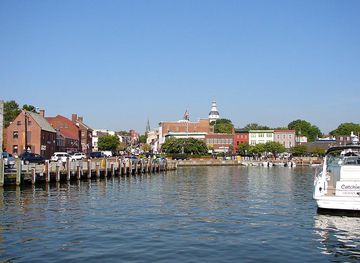
Explore more of Chesapeake Bay Area
Explore Maryland’s Chesapeake Bay Area for historic ports, sailing towns, tidal marshes, seafood traditions and distinctive waterfront landscapes.
Explore Chesapeake Bay Area
Explore more of Maryland
Discover Maryland, where coastal charm meets rich history and outdoor adventure. Experience the best of the East Coast in this small but diverse state.
Explore Maryland