

Free The Pine Belt Travel Guide & Mobile App
Explore The Pine Belt with free travel guides. Discover regional history, expert tips, proposed trips, and audio guides on web or mobile app.


Explore Mississippi's Pine Belt for longleaf forests, rail-town heritage, Hattiesburg culture, Laurel design and cycling on the Longleaf Trace.
Read more about The Pine Belt
Getting to and around The Pine Belt
How to get there
Transportation
Top city travel guides in The Pine Belt
The cities of The Pine Belt, and the easiest places to base yourself.
-

-

-


Swipe for more cities
Destinations in The Pine Belt
Resorts, valleys and scenic spots worth a trip of their own.
-

-


Swipe for more destinations
Best attractions in The Pine Belt
The Pine Belt's attractions combine forest recreation with the history of timber towns and the cultural life of Hattiesburg and Laurel. The Longleaf Trace, a multi-use trail following a former railway line, is the defining outdoor route, with opportunities for walking, cycling and observing the changing pine landscape. Paul B. Johnson State Park provides a lake, wooded surroundings, camping and water-based recreation south of Hattiesburg, while sections of De Soto National Forest offer a more remote experience of south-eastern Mississippi's public woodland. In Hattiesburg, the African American Military History Museum and the Mississippi Armed Forces Museum interpret different dimensions of military service and national history. Downtown Hattiesburg contributes galleries, performances, historic commercial buildings and university-linked cultural activity. Laurel's Lauren Rogers Museum of Art and its restored central district provide a complementary experience focused on art, architecture and local heritage. Smaller communities and rural roads reveal churches, cemeteries, timber landscapes and working agricultural areas, although many are best appreciated with respect for private property and without expecting extensive visitor facilities.
-
Historical place museum
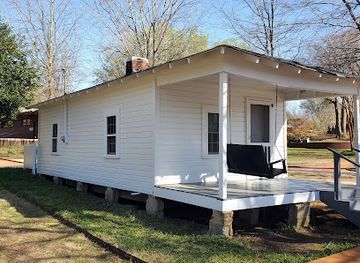
Elvis Presley Birthplace
Visit the Elvis Presley Birthplace in Tupelo, Mississippi – a historical museum celebrating the life of the King of Rock and Roll.
-
Zoo
Hattiesburg Zoo
Discover Hattiesburg Zoo: A family-friendly oasis showcasing incredible wildlife and dedicated to animal education and conservation.
-
History museum
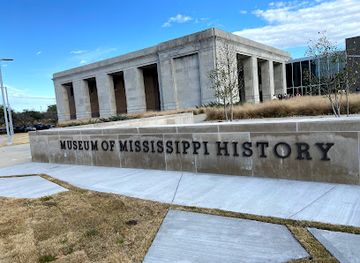
Mississippi Civil Rights Museum
Discover the profound history of the Civil Rights Movement at the Mississippi Civil Rights Museum, a vital tourist attraction in Jackson, Mississippi.
-
National forest
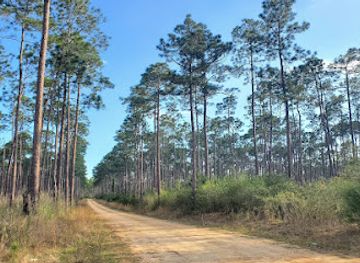
De Soto National Forest
Discover the breathtaking beauty and diverse wildlife of De Soto National Forest in Mississippi, a perfect escape for nature lovers and adventure seekers.

Best landmarks in The Pine Belt
-
Casino
Beau Rivage Resort & Casino
Discover luxury and excitement at Beau Rivage Resort & Casino in Biloxi, Mississippi—your ultimate destination for gaming, dining, and entertainment.
-
Casino
Hard Rock Hotel & Casino Biloxi
Experience the energy of rock 'n' roll with gaming, dining, and live entertainment on the Mississippi Gulf Coast.
-
Casino
Island View Casino Resort
Experience beachfront gaming, luxurious accommodations, and diverse dining at Gulfport's premier casino resort on the Mississippi Gulf Coast.
-
Casino
Golden Nugget Biloxi Hotel & Casino
Discover unparalleled luxury and excitement at Golden Nugget Biloxi, your ultimate Gulf Coast destination for gaming, dining, and entertainment.


Explore The Pine Belt on the map
Plan your trip on one map. See where the top cities, national parks and sights are, and book hotels and experiences in a few clicks.
Best hotels in The Pine Belt
Best restaurants in The Pine Belt
Pine Belt dining draws on the wider culinary traditions of Mississippi while reflecting the region's own mix of timber-town heritage, college-town demand and rural foodways. Hattiesburg and Laurel offer restaurants, cafés, bakeries and casual eateries ranging from familiar Southern cooking to contemporary menus, while smaller communities tend to centre on family-run establishments, cafés and longstanding local restaurants. Catfish, barbecue, fried chicken, biscuits, greens, cornbread and pies are among the flavours visitors may encounter, with seafood and Gulf-influenced dishes more common than the inland setting might suggest. Sweet tea is a routine accompaniment, and pecans, peaches and other Southern ingredients appear in desserts and seasonal produce. Farmers' markets and farm stands can provide locally grown fruit, vegetables, preserves and baked goods when operating, but hours and availability vary. Dining is generally informal, with dress becoming smarter in selected Hattiesburg and Laurel restaurants; tipping remains customary in full-service establishments.
-
American
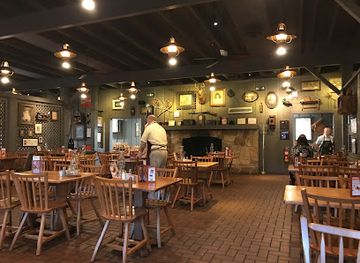
Cracker Barrel Old Country Store
Experience authentic Southern cuisine at Cracker Barrel Old Country Store in Hattiesburg – where comfort food meets charming country hospitality.
-
Hamburger
Ed's Burger Joint
Discover the best burgers in Hattiesburg at Ed's Burger Joint - where flavor meets Southern hospitality in every bite!
-
Buffet
Golden Corral Buffet & Grill
Savor the ultimate all-you-can-eat buffet experience at Golden Corral in Hattiesburg – where American cuisine meets family-friendly dining.
-
American
Crescent City Grill
Experience authentic Southern cuisine at Crescent City Grill in Hattiesburg - where Cajun flavors meet American classics.


Best bars in The Pine Belt
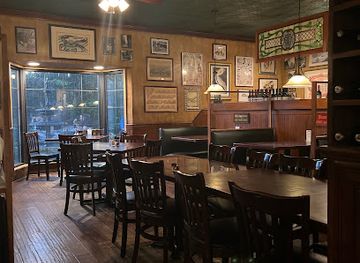
Evening life in the Pine Belt is concentrated in Hattiesburg and Laurel rather than spread evenly across the countryside. Hattiesburg's university population supports the region's broadest choice of casual bars, restaurants with evening service, live music and occasional cultural events, while downtown venues provide a more walkable setting than rural districts. Laurel's revitalised centre has restaurants, coffee shops, bars and community-oriented events, though its evening scene remains modest rather than resembling a large metropolitan nightlife district. Traditional pubs and Southern-style bars are more common than dedicated nightclubs, and local breweries or taprooms may offer another option where operating. In smaller Pine Belt towns, evenings generally centre on restaurants, community gatherings and informal social venues, with little late-night transport. Check current arrangements before travelling, especially for live music and seasonal events, and plan a safe return journey if staying outside the main towns.
-
Family-friendly
Mugshots Grill and Bar - Hattiesburg, MS
Experience family-friendly dining at Mugshots Grill and Bar in Hattiesburg, MS, where delicious American cuisine meets a lively sports atmosphere.
-
Grill
Chesterfield's
Experience the best of grilling at Chesterfield's in Hattiesburg, where flavor meets comfort in a vibrant dining atmosphere.
-
Steak
Sully's Hattiesburg
Savor the flavors of Sully's Hattiesburg, where delicious steaks, fresh seafood, and gourmet burgers meet a warm, inviting atmosphere.
-
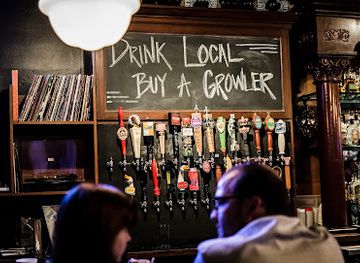
Brewpub
Keg & Barrel
Discover Keg & Barrel in Hattiesburg: A lively brewpub with an extensive beer selection and delicious pub fare for a memorable dining experience.

Best nightclubs in The Pine Belt
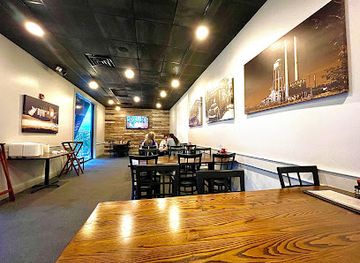
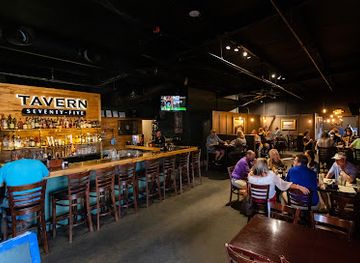
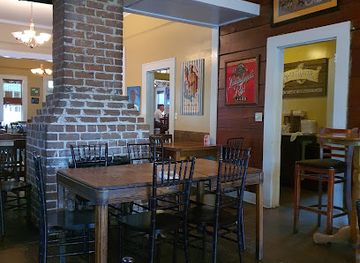
Evening life in the Pine Belt is concentrated in Hattiesburg and Laurel rather than spread evenly across the countryside. Hattiesburg's university population supports the region's broadest choice of casual bars, restaurants with evening service, live music and occasional cultural events, while downtown venues provide a more walkable setting than rural districts. Laurel's revitalised centre has restaurants, coffee shops, bars and community-oriented events, though its evening scene remains modest rather than resembling a large metropolitan nightlife district. Traditional pubs and Southern-style bars are more common than dedicated nightclubs, and local breweries or taprooms may offer another option where operating. In smaller Pine Belt towns, evenings generally centre on restaurants, community gatherings and informal social venues, with little late-night transport. Check current arrangements before travelling, especially for live music and seasonal events, and plan a safe return journey if staying outside the main towns.
-
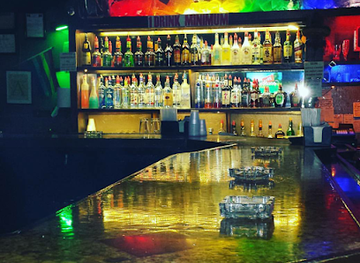
Bar
Just Us Lounge
Discover the vibrant nightlife at Just Us Lounge, the premier bar and dance club in Biloxi, offering live music and a welcoming atmosphere.
-
Bar
Mahogany Bar
Experience the vibrant flavors of Cajun and Creole cuisine at Mahogany Bar, where every bite is a celebration of southern culture.
-
Grill
Camp Shelby All Ranks Club
Experience the delightful flavors and vibrant atmosphere of Camp Shelby All Ranks Club, where good food meets community spirit in Hattiesburg.
-
Live Music
Brewsky's
Experience the rhythm of Hattiesburg at Brewsky's, where great live music meets delicious food in an unforgettable atmosphere.


Best shops in The Pine Belt
Shopping in the Pine Belt is centred on the historic downtowns of Hattiesburg and Laurel, supplemented by suburban retail and practical shopping in larger commercial areas. Hattiesburg offers independent boutiques, galleries, books, clothing, home goods and locally made items, with the downtown districts often providing the most distinctive atmosphere. Laurel is particularly associated with restored historic streets, design-focused shops, antiques, art, furniture and small businesses housed in older commercial buildings. Markets and farm stands, when operating, are useful for pecans, preserves, baked goods, seasonal produce and other Mississippi food products. Visitors interested in regional character should look for crafts, paintings, pottery, textiles and books about local timber, military and civil-rights history rather than generic souvenirs. Retail choice becomes considerably thinner outside the two principal towns, where shopping is primarily practical and community-based. Business days and market schedules can change, so rural stops are best planned rather than assumed.
-
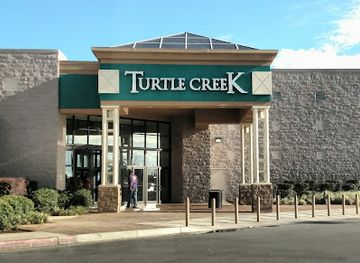
Shopping mall
Turtle Creek Mall
Explore Turtle Creek Mall in Hattiesburg, where shopping meets dining and entertainment in a vibrant community hub.
-
Shopping mall
Turtle Creek Crossing
Explore Turtle Creek Crossing: Hattiesburg's shopping gem with diverse stores and delightful dining options, perfect for tourists seeking local flair.
-
General store
Scotsman General Store & Woodshop
Experience the charm of Southern hospitality at Scotsman General Store & Woodshop, where local crafts and tasty treats await every visitor.
-
Gift shop
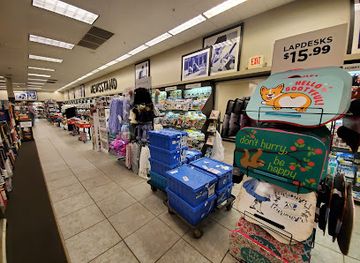
Books-A-Million
Discover endless stories and unique gifts at Books-A-Million, your ultimate destination for books, collectibles, and more in Hattiesburg.

Get your free copy of our complete guide to The Pine Belt, delivered straight to you.
Everything on this page, from attractions and restaurants to essentials and local phrases, in one PDF you can read offline, print or share.
Already have an account? Sign in
Your The Pine Belt guide is ready.
We'll send it to · Not you? Sign out

Getting your guide ready…
We are putting together a fresh copy of the The Pine Belt guide. This can take up to a minute.
This can take a few moments. If your browser asks, choose Allow so the download can start. You'll find the guide in your Downloads folder.
Nothing happened? Download it again
Sorry, the guide is taking longer than usual. Please try again in a minute, or get it by email instead.
The Pine Belt essentials
Currency and Payment
Safety
Emergency Situations
Do's and Don'ts
Local Tips
From Eve
Local phrases worth knowing
You don't need to get them perfect. A few words go a long way, and locals appreciate the effort.
Basics
| English | Local | Say it |
|---|---|---|
| Hello | Hey | [Hay] |
| Goodbye | See ya | [See yah] |
| Yes | Yep | [Yep] |
| No | Nope | [Nope] |
| Please/You're welcome | Thank ya | [Thang yah] |
| Thank you | Thank ya | [Thang yah] |
| Excuse me/Sorry | Excuse me | [Excuse me] |
| How are you? | How ya doin'? | [How yah doin'?] |
| Fine. And you? | I’m good. And you? | [I'm good. An' you?] |
| Do you speak English? | You speakin' English? | [Yoo speakin' English?] |
| I don't understand | I don’t get it | [I don't git it] |
Eating & Drinking
| English | Local | Say it |
|---|---|---|
| I'd like to see the menu, please | Can I see the menu? | [Can I see thuh menu?] |
| I don't eat meat | I don't eat meat | [I don’t eat meat] |
| Cheers! | Cheers! | [Cheers!] |
| I would like to pay, please | Can I get the check? | [Can I git thuh check?] |
Emergencies
| English | Local | Say it |
|---|---|---|
| Help! | Help! | [Help!] |
| Go away! | Leave me alone! | [Leave me alone!] |
| Call the Police! | Call the cops! | [Call thuh cops!] |
| Call a doctor! | Call a doc! | [Call a doc!] |
| I'm lost | I’m lost | [I'm lost] |
| I'm ill | I ain't feelin' good | [I ain't feelin' good] |
Shopping
| English | Local | Say it |
|---|---|---|
| I'd like to buy... | I wanna buy... | [I wanna buy...] |
| I'm just looking | Just lookin' | [Just lookin'] |
| How much is it? | How much is that? | [How much is that?] |
| That's too expensive | That’s too pricey | [That’s too pricey] |
| Can you lower the price? | Can ya lower the price? | [Can ya lower thuh price?] |
Time & Numbers
| English | Local | Say it |
|---|---|---|
| What time is it? | What time is it? | [What time is it?] |
| It's one o'clock | It's one o'clock | [It's one o'clock] |
| Half past (10) | Half past ten | [Half past ten] |
| Morning | Mornin' | [Mornin'] |
| Afternoon | Afternoon | [Afternoon] |
| Evening | Evenin' | [Evenin'] |
| Yesterday | Yesterday | [Yesterday] |
| Today | Today | [Today] |
| Tomorrow | Tomorrow | [Tomorrow] |
| 1 | One | [One] |
| 2 | Two | [Two] |
| 3 | Three | [Three] |
| 4 | Four | [Four] |
| 5 | Five | [Five] |
| 6 | Six | [Six] |
| 7 | Seven | [Seven] |
| 8 | Eight | [Eight] |
| 9 | Nine | [Nine] |
| 10 | Ten | [Ten] |
Transport & Directions
| English | Local | Say it |
|---|---|---|
| Where's a/the...? | Where's the...? | [Where's thuh...?] |
| What's the address? | What’s the address? | [What’s thuh address?] |
| Can you show me (on the map)? | Can ya show me on the map? | [Can ya show me on thuh map?] |
| When's the next (bus)? | When’s the next bus? | [When’s thuh next bus?] |
| A ticket (to ....) | A ticket to ... | [A ticket to ...] |
History of The Pine Belt
Choctaw Homelands and Indigenous Continuity
The Pine Belt lies within the wider homeland of the Choctaw, whose communities used the forests, streams and open landscapes of what is now south-eastern Mississippi long before European-American settlement. Hunting, agriculture, trade and detailed knowledge of native plants shaped life in the region. The forced removal of many Choctaw people during the 1830s transformed Mississippi, but Choctaw history did not end with removal; the Mississippi Band of Choctaw Indians remains a federally recognised community in the state. Visitors should understand the Pine Belt's later timber towns within this much longer indigenous history.
Longleaf Pine and the Early Timber Economy
For centuries, longleaf pine forests dominated large areas of south-eastern Mississippi. Their resin, timber and open, fire-adapted ecology supported local economies and shaped settlement patterns. In the nineteenth century, sawmills and turpentine operations expanded as roads, waterways and eventually railways made it easier to move timber to market. Much of the original forest was cut during the great timber boom, leaving altered landscapes and new towns but also a continuing regional interest in restoring longleaf pine and the habitats associated with it.
Railways and the Rise of Hattiesburg and Laurel
Railway construction in the late nineteenth century accelerated the development of the Pine Belt. Hattiesburg grew at the meeting of important rail routes and became a centre for timber, trade and transport, while Laurel developed around sawmilling and railway connections in Jones County. The railways brought workers, merchants and industrial investment, and their routes remain visible in the region's historic town centres and in recreational infrastructure such as the Longleaf Trace, which follows a former railway corridor.
The Sawmill Era and Industrial Expansion
By the early twentieth century, large sawmills had made the Pine Belt one of the most important timber-producing areas in Mississippi. Laurel's industrial growth was particularly associated with lumber and later wood products, while Hattiesburg served as a commercial and transport hub. The industry provided employment and stimulated schools, churches, housing and civic buildings, but it also brought difficult working conditions and rapid depletion of the original forest. Present-day museums, historic buildings and restored downtowns preserve aspects of this industrial inheritance.
Camp Shelby and Twentieth-Century Military History
Camp Shelby, near Hattiesburg, was established in 1917 for training during the First World War and became an important military installation in the Pine Belt. It has supported training for generations of Mississippi National Guard and other service personnel, including during major conflicts of the twentieth and twenty-first centuries. The Mississippi Armed Forces Museum at the camp interprets this history through uniforms, vehicles, personal accounts and exhibitions. Military activity has been a continuing influence on the region's economy, population and public life.
Civil Rights Organising in Hattiesburg
Hattiesburg was an important site of civil-rights organising during the 1960s. Local activists and organisations challenged racial discrimination, voter suppression and the exclusion of African Americans from political participation. The 1964 Freedom Summer campaign brought voter-registration efforts, educational initiatives and national attention to Mississippi communities, including Hattiesburg. The African American Military History Museum, housed in a former USO building, and other local interpretation help connect military service, education, citizenship and the long struggle for equal rights in the Pine Belt.
Forest Conservation and Regional Renewal
After the most intensive phases of logging, the Pine Belt's economic identity gradually broadened. Forestry remains important, but conservation, education, healthcare, higher education, tourism and small business now sit alongside the traditional timber economy. Restoration of longleaf pine habitat, protection of public forest and the conversion of disused railway corridors into trails reflect a modern effort to value both ecological heritage and industrial history. Hattiesburg's cultural growth and Laurel's downtown restoration show different forms of renewal within the same forest-based region.
The Pine Belt in Photos
Browse through our photo collection highlighting the charm and character of the destination.
Neighbouring regions of The Pine Belt
The closest regions to The Pine Belt, if you have time for more than one.
-

-

-

-

-


Swipe for more regions
Explore more

Explore more of Mississippi
Discover Mississippi: A treasure trove of Southern culture, blues music heritage, and stunning natural landscapes perfect for every kind of traveler.
Explore Mississippi