

Free The Cabinet Mountains Travel Guide & Mobile App
Explore The Cabinet Mountains with free travel guides. Discover regional history, expert tips, proposed trips, and audio guides on web or mobile app.


The Cabinet Mountains offer Montana wilderness, alpine lakes, cedar forests, wildlife and mountain communities around Libby, Troy and the Clark Fork.
Read more about The Cabinet Mountains
Getting to and around The Cabinet Mountains
How to get there
Transportation
Top city travel guides in The Cabinet Mountains
The cities of The Cabinet Mountains, and the easiest places to base yourself.

Swipe for more cities
Best attractions in The Cabinet Mountains
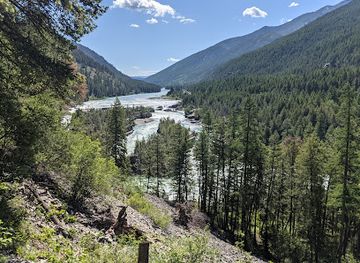
The Cabinet Mountains’ attractions are primarily natural and outdoor-based. The Cabinet Mountains Wilderness offers demanding hiking, alpine lakes, high ridges and opportunities for solitude, while surrounding Kootenai National Forest lands contain campgrounds, fishing waters, scenic forest roads and trails with a range of difficulty. The Ross Creek Cedars Scenic Area, near the western side of the range, protects a remarkable stand of old western red cedars reached by a short walking route. Lake Koocanusa, north-east of the main range, provides boating, fishing and lakeside recreation. The Kootenai River valley around Libby and Troy adds wildlife viewing, river scenery and local history, while the Clark Fork valley near Thompson Falls offers a different, more open approach to the southern mountains. Visitors interested in geology and environmental history can learn about Libby’s mining legacy through local interpretation. These attractions are best combined selectively, since trailheads and scenic areas are separated by winding roads and services are limited outside the principal communities.
-
National park
Glacier National Park
Discover the breathtaking landscapes and rich wildlife of Glacier National Park, a stunning national park in Montana perfect for outdoor adventures.
-
Bridge
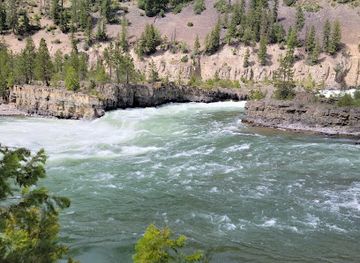
Kootenai Falls Suspension Bridge
Discover the breathtaking Kootenai Falls Suspension Bridge in Libby, Montana – a scenic marvel perfect for nature lovers and adventure seekers.
-
Scenic spot
Ross Creek Cedars Scenic Area
Explore the ancient cedars and serene beauty of Ross Creek Cedars Scenic Area, a must-visit destination for nature lovers in Montana.
-
State park
Sluice Boxes State Park
Experience the breathtaking landscapes and diverse wildlife of Sluice Boxes State Park, Montana's hidden gem for outdoor adventure and natural beauty.
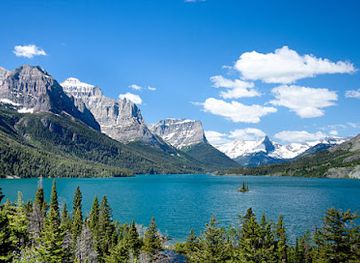
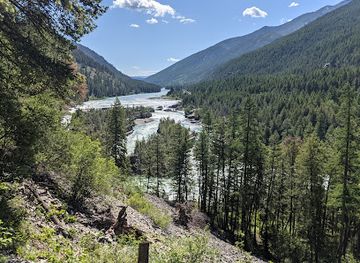
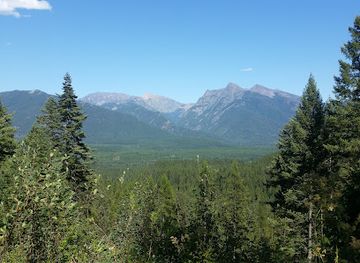
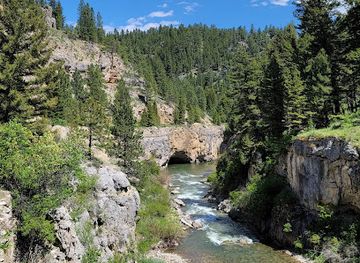
Best landmarks in The Cabinet Mountains
Snowshoe Peak is the Cabinet Mountains’ most prominent natural landmark, rising above the central wilderness with steep alpine slopes and rugged summit terrain. The Ross Creek Cedars Scenic Area is another defining place: its giant western red cedars express the moist forest character of the western Cabinets and are protected for their age and ecological importance. The Kootenai River forms a major northern geographical boundary and gives Libby and Troy their valley setting, while the Clark Fork marks the southern approach around Thompson Falls. Lake Koocanusa, a long reservoir east of the northern mountains, is a conspicuous water landmark framed by forested ridges. Within the broader mountain landscape, alpine lakes such as Leigh Lake provide striking focal points for strenuous hikes. Libby’s historic mining landscape and public interpretation of the vermiculite legacy are important cultural landmarks, reminding visitors that these mountains are also places shaped by industry, work and environmental consequence.
-
Bridge
Kootenai Falls Suspension Bridge
Discover the exhilarating Kootenai Falls Suspension Bridge in Libby, Montana, where breathtaking views and scenic adventures await nature lovers and thrill-seekers.
-
National forest
Kootenai National Forest
Discover the stunning landscapes and outdoor adventures at Kootenai National Forest, Montana's breathtaking national treasure.
-
Hamburger
Burger Express
Discover delicious hamburgers and classic American comfort food at Burger Express in Libby, Montana, where every bite tells a tasty story.
-
Monument
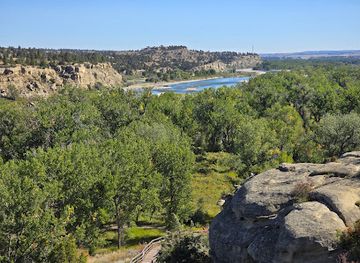
Pompeys Pillar National Monument
Explore the historical significance and natural beauty of Pompeys Pillar National Monument, where history meets stunning Montana landscapes.
Explore The Cabinet Mountains on the map
Plan your trip on one map. See where the top cities, national parks and sights are, and book hotels and experiences in a few clicks.
Best hotels in The Cabinet Mountains
Best restaurants in The Cabinet Mountains
Dining in the Cabinet Mountains is centred on the small communities of Libby, Troy and Thompson Falls rather than on a distinct restaurant district. Visitors will find practical cafés, family-run eateries, bakeries, bars serving meals and casual restaurants suited to travellers heading into the forest. Menus generally reflect the wider food culture of Montana, including burgers, steaks, sandwiches, trout and other familiar American dishes, with seasonal game or locally sourced ingredients appearing in some establishments. Grocery shops and smaller food markets are important for assembling picnic supplies before reaching remote trailheads. In summer, roadside stands and local producers may offer fruit, preserves or baked goods, while camp cooking is a central part of many wilderness trips. Craft beer and coffee are available in the larger communities, but opening patterns can be seasonal and services close earlier than visitors from major cities may expect. Booking or checking ahead is sensible when travelling outside peak town hours.
-
 Motel
Motel50,000 Silver Dollar Inn
Experience comfort and charm at 50,000 Silver Dollar Inn – your perfect getaway along I-90 in Haugan, MT.
-
Restaurant
The Buffalo Bar
Discover The Buffalo Bar in West Yellowstone - where delicious American cuisine meets vibrant nightlife in a cozy setting.
-
American
Shellie's Country Cafe
Experience the warmth of American comfort food at Shellie's Country Cafe in Helena – where every meal feels like home.
-
Pancake
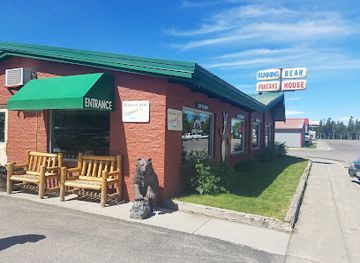
Running Bear Pancake House
Savor delicious pancakes and hearty breakfasts at Running Bear Pancake House in West Yellowstone - a must-visit for every traveler.

Best bars in The Cabinet Mountains
Evening life in the Cabinet Mountains is low-key and community-based. Libby, Troy and Thompson Falls have traditional bars, casual restaurants and occasional live-music or community events, while rural evenings generally revolve around lodging, campfires where permitted and the quiet of the forest rather than nightclubs. Local bars may serve as social venues for residents and visitors, but the scene is not designed around late-night entertainment, and options become sparse outside the main settlements. Breweries, cocktail programmes and organised music are more likely to be found intermittently than as a continuous nightlife offering. Check current local arrangements rather than assuming late opening, especially in smaller communities and during the shoulder seasons. The region’s most characteristic evening experience is often watching the light fade over the valleys, stargazing away from town lights and preparing for an early start on the trail.
-
Bar
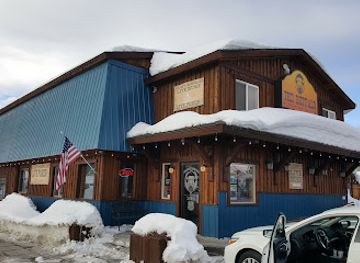
The Old Saloon
Experience the heart of Montana at The Old Saloon, where American cuisine meets lively bar culture in a rustic setting.
-
Hamburger
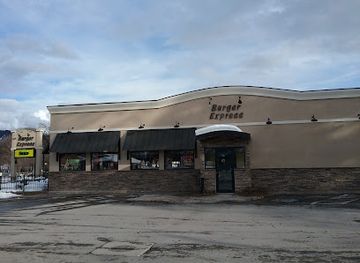
Burger Express
Savor delicious burgers in a welcoming atmosphere at Burger Express, the best burger spot in Libby, Montana.
-
Grill
Switchback Bar & Grill
Discover delicious dining at Switchback Bar & Grill in Libby, MT, where rustic charm meets mouthwatering flavors and a welcoming atmosphere.
-
Hotel
Venture Inn and Restaurant
Experience the charm of Montana at Venture Inn and Restaurant, offering cozy accommodations and delicious American cuisine in Libby.


Best nightclubs in The Cabinet Mountains
Evening life in the Cabinet Mountains is low-key and community-based. Libby, Troy and Thompson Falls have traditional bars, casual restaurants and occasional live-music or community events, while rural evenings generally revolve around lodging, campfires where permitted and the quiet of the forest rather than nightclubs. Local bars may serve as social venues for residents and visitors, but the scene is not designed around late-night entertainment, and options become sparse outside the main settlements. Breweries, cocktail programmes and organised music are more likely to be found intermittently than as a continuous nightlife offering. Check current local arrangements rather than assuming late opening, especially in smaller communities and during the shoulder seasons. The region’s most characteristic evening experience is often watching the light fade over the valleys, stargazing away from town lights and preparing for an early start on the trail.
-
Grill
Switchback Bar & Grill
Experience the best of American cuisine at Switchback Bar & Grill in Libby, Montana, where great food meets a warm, welcoming atmosphere.
-
Brewpub
Cabinet Mountain Brewing Company
Discover the heart of Montana brewing at Cabinet Mountain Brewing Company, where craft beer meets local flavor in a cozy atmosphere.
-
Bar
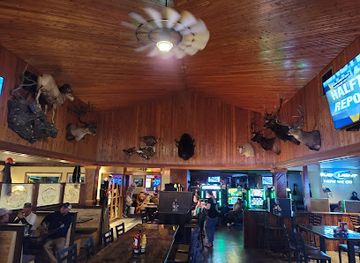
The Badlander
Discover the vibrant nightlife of Missoula at The Badlander, a lively bar and live music venue offering unforgettable entertainment and a welcoming atmosphere.
-
Bar
Happy's Inn
Discover the delightful atmosphere of Happy's Inn, a local bar in Libby, Montana, offering refreshing drinks and a cozy gathering space.

Best shops in The Cabinet Mountains
Shopping in the Cabinet Mountains is practical and locally oriented. Libby is the principal northern centre for groceries, fuel, outdoor supplies, gifts and everyday services, while Troy and Thompson Falls offer smaller selections. Independent shops, galleries, craft outlets and local markets may carry Montana-made artwork, photography, wood products, clothing, books and souvenirs connected with the surrounding mountains. Food shoppers can look for regional honey, preserves, baked goods, coffee and other products from north-western Montana, although availability varies by season. Outdoor equipment and bear-aware storage should be purchased before remote excursions rather than assumed to be available near every trailhead. There are no large luxury shopping districts in the mountain communities; the appeal lies in useful supplies, locally made objects and conversations with small business owners. Visitors should also remember that some rural businesses have limited opening days or payment connectivity, making advance planning and a little cash worthwhile.
-
Gift shop
Gallatin Valley Mall
Explore Gallatin Valley Mall: Bozeman's premier shopping and dining destination with diverse retail options and vibrant local culture.
-
Bakery
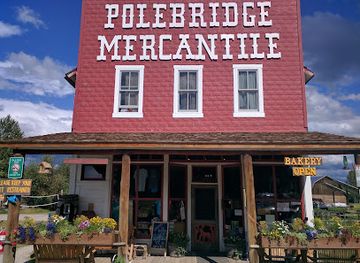
Polebridge Mercantile & Bakery
Experience the rustic charm of Polebridge Mercantile & Bakery, a unique bakery and general store nestled in the heart of Montana's breathtaking wilderness.
-
Grocery store
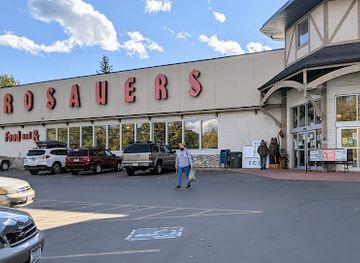
Rosauers
Discover the charm of Rosauers in Libby, MT, your go-to grocery store for fresh produce, deli delights, and pharmacy necessities.
-
Hardware store
Ace Home and Garden Center
Explore Ace Home and Garden Center in Libby, MT—your ultimate destination for quality hardware, tools, and home improvement supplies.
Get your free copy of our complete guide to The Cabinet Mountains, delivered straight to you.
Everything on this page, from attractions and restaurants to essentials and local phrases, in one PDF you can read offline, print or share.
Already have an account? Sign in
Your The Cabinet Mountains guide is ready.
We'll send it to · Not you? Sign out

Getting your guide ready…
We are putting together a fresh copy of the The Cabinet Mountains guide. This can take up to a minute.
This can take a few moments. If your browser asks, choose Allow so the download can start. You'll find the guide in your Downloads folder.
Nothing happened? Download it again
Sorry, the guide is taking longer than usual. Please try again in a minute, or get it by email instead.
The Cabinet Mountains essentials
Currency and Payment
Safety
Emergency Situations
Do's and Don'ts
Local Tips
From Eve
Local phrases worth knowing
You don't need to get them perfect. A few words go a long way, and locals appreciate the effort.
Basics
| English | Local | Say it |
|---|---|---|
| Hello | Howdy | [How-dee] |
| Goodbye | See ya | [See ya] |
| Yes | Yep | [Yep] |
| No | Nah | [Nah] |
| Please/You're welcome | Sure thing | [Shur thing] |
| Thank you | Thanks a lot | [Thangs a lot] |
| Excuse me/Sorry | Pardon me | [Pardon me] |
| How are you? | How's it going? | [How's it goin'?] |
| Fine. And you? | Good. You? | [Good. You?] |
| Do you speak English? | You speakin' English? | [You speakin' English?] |
| I don't understand | I ain't following | [I ain't followin'] |
Eating & Drinking
| English | Local | Say it |
|---|---|---|
| I'd like to see the menu, please | Can I see the menu? | [Can I see the menu?] |
| I don't eat meat | I'm not into meat | [I'm not into meat] |
| Cheers! | Bottoms up! | [Bottoms up!] |
| I would like to pay, please | Can I get the check? | [Can I get the check?] |
Emergencies
| English | Local | Say it |
|---|---|---|
| Help! | Help! | [Help!] |
| Go away! | Leave me be! | [Leave me be!] |
| Call the Police! | Call the cops! | [Call the cops!] |
| Call a doctor! | Get a doctor! | [Get a doctor!] |
| I'm lost | I can’t find my way | [I can’t find my way] |
| I'm ill | I’m not feelin' good | [I’m not feelin' good] |
Shopping
| English | Local | Say it |
|---|---|---|
| I'd like to buy... | I wanna buy... | [I wanna buy...] |
| I'm just looking | Just browsing | [Just browsing] |
| How much is it? | What’s the price? | [What’s the price?] |
| That's too expensive | That costs too much | [That costs too much] |
| Can you lower the price? | Can you cut me a deal? | [Can you cut me a deal?] |
Time & Numbers
| English | Local | Say it |
|---|---|---|
| What time is it? | What time ya got? | [What time ya got?] |
| It's one o'clock | It’s one | [It’s one] |
| Half past (10) | Half past ten | [Half past ten] |
| Morning | Mornin' | [Mornin'] |
| Afternoon | Afternoon | [Afternoon] |
| Evening | Evenin' | [Evenin'] |
| Yesterday | Yesterday | [Yesterday] |
| Today | Today | [Today] |
| Tomorrow | Tomorrow | [Tomorrow] |
| 1 | One | [One] |
| 2 | Two | [Two] |
| 3 | Three | [Three] |
| 4 | Four | [Four] |
| 5 | Five | [Five] |
| 6 | Six | [Six] |
| 7 | Seven | [Seven] |
| 8 | Eight | [Eight] |
| 9 | Nine | [Nine] |
| 10 | Ten | [Ten] |
Transport & Directions
| English | Local | Say it |
|---|---|---|
| Where's a/the...? | Where's the ...? | [Where's the ...?] |
| What's the address? | What’s the address? | [What’s the address?] |
| Can you show me (on the map)? | Can you point it out? | [Can you point it out?] |
| When's the next (bus)? | When's the next bus? | [When's the next bus?] |
| A ticket (to ....) | A ticket to ... | [A ticket to ...] |
History of The Cabinet Mountains
Kootenai and Salish Homelands
The Cabinet Mountains and surrounding valleys are part of the traditional homelands of the Kootenai and Salish peoples. Indigenous communities developed detailed knowledge of the rivers, mountain passes, forests and seasonal resources long before the creation of the United States or Montana. The Kootenai River and Clark Fork remain central geographical features, while contemporary tribal communities continue to maintain cultural, political and environmental connections with the region. Visitors should understand the mountains as lived cultural landscapes, not empty wilderness.
Fur Trade and Early American Exploration
During the nineteenth century, fur traders, missionaries, surveyors and prospectors entered the northern Rocky Mountain valleys through routes connected with the Kootenai River and the Clark Fork. The mountains were difficult country for travel, and settlement remained scattered. Trading networks depended on Indigenous knowledge and established travel corridors. The era introduced new commercial and political pressures while laying foundations for later American claims, transport routes and permanent communities in north-western Montana.
Mining and the Growth of Libby
Mining became a major influence on the Kootenai valley and the community of Libby during the late nineteenth and twentieth centuries. Timber, minerals and transport supported employment and helped shape the local economy. The Libby vermiculite mine, operated for much of the twentieth century, later became infamous because asbestos contamination associated with the ore caused extensive illness among workers and residents. The mine closed in 1990, and the area’s environmental and public-health response became one of the most significant chapters in modern Montana history.
Timber, Railways and Mountain Communities
Commercial forestry expanded as railways and improved roads connected north-western Montana with larger markets. Sawmills, logging camps and associated services transformed valleys around Libby, Troy and other communities, although steep terrain always constrained development. Timber remains part of the region’s economic history and landscape, visible in working forest roads, mills and patterns of managed woodland. These industries also generated debates about access, employment, watershed protection and the limits of resource extraction.
The Kootenai National Forest
The establishment and development of Kootenai National Forest brought large areas of the Cabinet Mountains under federal forest management. The forest supported timber production, grazing, recreation, wildlife management and watershed protection, often balancing competing national and local priorities. Roads made parts of the range more accessible, but much of the high country remained remote. Today, national-forest lands provide the setting for campgrounds, scenic drives, lakes, trailheads and dispersed recreation across the mountain valleys.
Cabinet Mountains Wilderness Protection
The Cabinet Mountains Wilderness was designated under the Wilderness Act of 1964, protecting a substantial portion of the range from road building and mechanised development. Its rugged interior preserves alpine basins, old-growth forests, mountain lakes and important wildlife habitat. Wilderness designation does not mean the landscape is untouched: Indigenous history, fire, wildlife movement and earlier human use remain part of its story. The area’s protected status now shapes how visitors hike, camp and travel through the central Cabinets.
The Cabinet Mountains in Photos
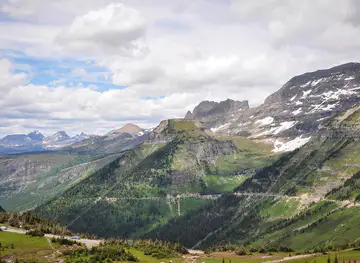
Browse through our photo collection highlighting the charm and character of the destination.
Neighbouring regions of The Cabinet Mountains
The closest regions to The Cabinet Mountains, if you have time for more than one.
-
-

-

-

-


Swipe for more regions
Explore more
Explore more of Montana
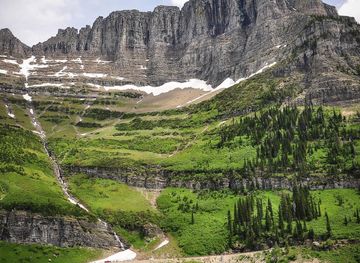
Discover Montana: A Treasure State of majestic landscapes, outdoor adventures, and rich cultural heritage. Explore Glacier and Yellowstone, charming towns, and historic sites.
Explore Montana