

Free Sheyenne River Valley Travel Guide & Mobile App
Explore Sheyenne River Valley with free travel guides. Discover regional history, expert tips, proposed trips, and audio guides on web or mobile app.


Explore North Dakota's Sheyenne River Valley for wooded river country, prairie drives, historic bridges, small towns and outdoor recreation.
Read more about Sheyenne River Valley
When is the best time to visit Sheyenne River Valley?
Best: June–August · 23–26°C| Month | High (°C) | Rainfall (mm) |
|---|---|---|
| January | -7 | 18 |
| February | -3 | 15 |
| March | 5 | 26 |
| April | 13 | 41 |
| May | 20 | 65 |
| June (best) | 23 | 90 |
| July (best) | 26 | 85 |
| August (best) | 25 | 75 |
| September | 20 | 58 |
| October | 13 | 45 |
| November | 3 | 29 |
| December | -5 | 22 |
Getting to and around Sheyenne River Valley
How to get there
Transportation
Best attractions in Sheyenne River Valley
The Sheyenne River Valley's attractions are primarily landscape-based, with heritage and small-town experiences woven through the countryside. Fort Ransom State Park is the principal outdoor base, offering trails, camping, river scenery and access to the wooded valley that distinguishes the Sheyenne from the surrounding open prairie. The Sheyenne National Grassland, in the south-eastern part of the region, presents a different environment of native grassland, sandhills, wildlife habitat and quiet roads suited to hiking, birdwatching and nature study. Valley City's parks, museums and bridges add urban history, while Lisbon and Fort Ransom provide smaller-scale views of rural community life. The Sheyenne River Valley National Scenic Byway links river bends, farmland and historic settlements, rewarding slow travel rather than rapid transit. Depending on the season, visitors can also find opportunities for canoeing or kayaking, fishing, cross-country skiing, snowshoeing and wildlife observation. Conditions and facilities vary, so outdoor plans should be checked locally, particularly after heavy rain or during winter.
-
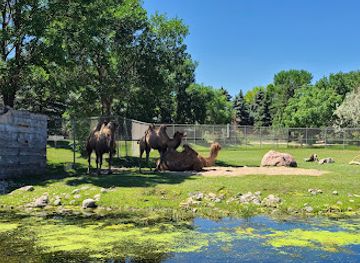
Zoo
Red River Zoo
Discover diverse wildlife and engaging exhibits at Red River Zoo, Fargo's premier family-friendly attraction for animal lovers and conservation enthusiasts.
-
Pumpkin patch
Lost In The Valley - Corn Maze & Pumpkin Patch
Experience the joy of autumn at Lost In The Valley - a family-friendly corn maze and pumpkin patch in West Fargo, North Dakota, perfect for creating lasting memories.

Best landmarks in Sheyenne River Valley
Valley City's Highline Bridge is the Sheyenne Valley's most recognisable man-made landmark. Built for the Northern Pacific Railway in the late nineteenth century, the elevated structure reflects the need to carry trains across the river's deep, winding valley and remains central to the city's identity as a place of bridges. The Sheyenne River itself is the region's defining natural landmark, its wooded banks and steep valley walls creating a strong contrast with the surrounding cultivated prairie. Fort Ransom's historic military associations and preserved valley setting give the community and nearby state park an important place in the region's story. In the south, the rolling native grasslands and sandhills of the Sheyenne National Grassland form a landscape landmark rather than a single monument, showing how the river region changes from wooded corridor to open prairie. Historic town centres, churches, farm buildings and railway remnants across Valley City, Lisbon and Fort Ransom add smaller but meaningful markers of settlement, immigration and agricultural development.
-
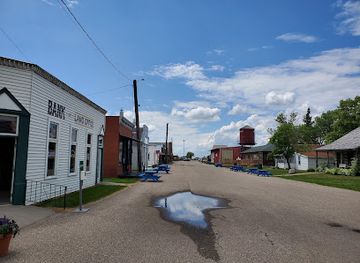
Local history museum
Bonanzaville USA
Explore Bonanzaville USA, a local history museum in West Fargo, ND, showcasing a vast collection of historical buildings and artifacts.
Explore Sheyenne River Valley on the map
Plan your trip on one map. See where the top cities, national parks and sights are, and book hotels and experiences in a few clicks.
Best hotels in Sheyenne River Valley
Best restaurants in Sheyenne River Valley
Dining in the Sheyenne River Valley reflects the practical, community-centred character of eastern North Dakota. Valley City, Lisbon and Fort Ransom have the widest choice of cafés, diners, bakeries, casual restaurants and traditional small-town eating places, while rural communities may offer fewer services and more limited opening patterns. Menus commonly draw on the broader Northern Plains tradition of beef, pork, potatoes, grains, soups, sandwiches and baked goods, alongside everyday American fare. Norwegian and other European immigrant influences remain visible in regional home cooking and community baking, although recipes and traditions vary between families. Farmers' markets, seasonal community events and local shops can provide opportunities to find produce, preserves and baked items when available. Visitors travelling the byway should not assume that food stops are frequent, particularly between towns, and should plan meals and supplies around their route.
-
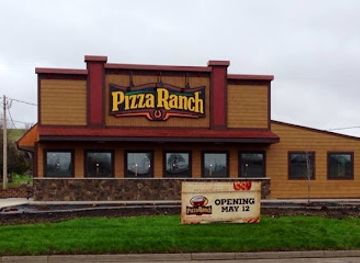
Buffet
Pizza Ranch
Experience the best of Midwestern dining at Pizza Ranch in Valley City - where delicious pizza meets comforting homestyle dishes.
Best bars in Sheyenne River Valley
Evening life in the Sheyenne River Valley is centred on traditional bars, taverns, restaurants, community events and small-town social spaces rather than a major nightclub scene. Valley City has the broadest range of evening options, with Lisbon and other communities providing more localised venues where residents gather for food, conversation, sport or occasional live entertainment. Fort Ransom and the rural areas are quieter after dark, and visitors staying outdoors may spend the evening around a permitted campsite rather than in a commercial nightlife district. Seasonal festivals, civic events and live music can add variety, but dates and venues change and should be checked locally. Alcohol service follows North Dakota law, and responsible drinking is particularly important when roads, distances and limited taxi availability are involved.
-
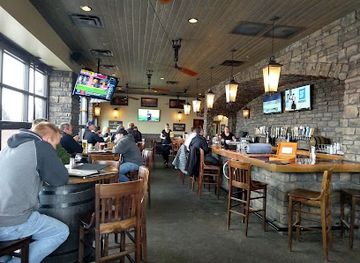
Pub
Blarney Stone Pub - West Fargo
Discover the authentic Irish pub experience at Blarney Stone Pub, where great food and drinks meet a vibrant atmosphere in West Fargo.
Best nightclubs in Sheyenne River Valley
Evening life in the Sheyenne River Valley is centred on traditional bars, taverns, restaurants, community events and small-town social spaces rather than a major nightclub scene. Valley City has the broadest range of evening options, with Lisbon and other communities providing more localised venues where residents gather for food, conversation, sport or occasional live entertainment. Fort Ransom and the rural areas are quieter after dark, and visitors staying outdoors may spend the evening around a permitted campsite rather than in a commercial nightlife district. Seasonal festivals, civic events and live music can add variety, but dates and venues change and should be checked locally. Alcohol service follows North Dakota law, and responsible drinking is particularly important when roads, distances and limited taxi availability are involved.
-
River
Sheyenne River
Discover the beauty of the Sheyenne River in North Dakota, a perfect destination for outdoor activities, relaxation, and nature exploration.

Best shops in Sheyenne River Valley
Shopping in the Sheyenne River Valley is concentrated in the main streets and service districts of Valley City, Lisbon and Fort Ransom rather than in large retail complexes. Valley City offers the broadest selection of everyday shops, independent businesses, antiques, books, gifts and locally oriented products, while Lisbon and smaller communities provide a more compact small-town shopping experience. Seasonal farmers' markets and community events may offer vegetables, preserves, baked goods, handmade crafts and other products from the surrounding area, although availability varies by season. Visitors interested in regional heritage can look for locally produced art, prairie-themed gifts, Scandinavian-influenced crafts and books about North Dakota history. Groceries, fuel and outdoor supplies are easier to find in the larger towns, so stock up before heading into the more remote grassland and river areas. Retail hours can be limited outside normal business periods, especially in small communities.
-
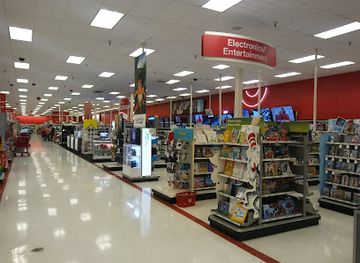
Department store
Target
Discover a wide range of products at Target Fargo, from clothing and electronics to home goods and toys, all in one convenient location.
Get your free copy of our complete guide to Sheyenne River Valley, delivered straight to you.
Everything on this page, from attractions and restaurants to essentials and local phrases, in one PDF you can read offline, print or share.
Already have an account? Sign in
Your Sheyenne River Valley guide is ready.
We'll send it to · Not you? Sign out

Getting your guide ready…
We are putting together a fresh copy of the Sheyenne River Valley guide. This can take up to a minute.
This can take a few moments. If your browser asks, choose Allow so the download can start. You'll find the guide in your Downloads folder.
Nothing happened? Download it again
Sorry, the guide is taking longer than usual. Please try again in a minute, or get it by email instead.
Sheyenne River Valley essentials
Currency and Payment
Safety
Emergency Situations
Do's and Don'ts
Local Tips
From Eve
Local phrases worth knowing
You don't need to get them perfect. A few words go a long way, and locals appreciate the effort.
Basics
| English | Local | Say it |
|---|---|---|
| Hello | Howdy | [Hau-dee] |
| Goodbye | See ya | [See yah] |
| Yes | Yep | [Yep] |
| No | Nah | [Nah] |
| Please/You're welcome | Please | [Pleez] |
| Thank you | Thanks | [Thangs] |
| Excuse me/Sorry | Sorry | [Sore-ee] |
| How are you? | How ya doin'? | [How yah doin'?] |
| Fine. And you? | Good. And you? | [Good. And you?] |
| Do you speak English? | Do ya speak English? | [Doo yah speak English?] |
| I don't understand | I don't get it | [I don't git it] |
Eating & Drinking
| English | Local | Say it |
|---|---|---|
| I'd like to see the menu, please | Can I see the menu, please? | [Kan I see the menu, pleez?] |
| I don't eat meat | I don't eat meat | [I don't eet meet] |
| Cheers! | Cheers! | [Cheers!] |
| I would like to pay, please | I'd like to pay, please | [I'd like to pay, pleez] |
Emergencies
| English | Local | Say it |
|---|---|---|
| Help! | Help! | [Help!] |
| Go away! | Go away! | [Go away!] |
| Call the Police! | Call the cops! | [Call the cops!] |
| Call a doctor! | Get a doctor! | [Get a doctor!] |
| I'm lost | I'm lost | [I'm lost] |
| I'm ill | I'm not feelin' well | [I'm not feelin' wel] |
Shopping
| English | Local | Say it |
|---|---|---|
| I'd like to buy... | I want to buy... | [I want to bye...] |
| I'm just looking | Just browsing | [Just browse-ing] |
| How much is it? | How much? | [How much?] |
| That's too expensive | That's way too pricey | [That's way too pry-see] |
| Can you lower the price? | Can ya lower the price? | [Kan yah lower the pryce?] |
Time & Numbers
| English | Local | Say it |
|---|---|---|
| What time is it? | What time is it? | [What time is it?] |
| It's one o'clock | It's one o'clock | [It's one o'clock] |
| Half past (10) | Half past ten | [Half past ten] |
| Morning | Morning | [Mornin'] |
| Afternoon | Afternoon | [Afternoon] |
| Evening | Evenin' | [Evenin'] |
| Yesterday | Yesterday | [Yesterday] |
| Today | Today | [Today] |
| Tomorrow | Tomorrow | [Tomorrow] |
| 1 | One | [Wun] |
| 2 | Two | [Too] |
| 3 | Three | [Three] |
| 4 | Four | [For] |
| 5 | Five | [Five] |
| 6 | Six | [Six] |
| 7 | Seven | [Seven] |
| 8 | Eight | [Eight] |
| 9 | Nine | [Nine] |
| 10 | Ten | [Ten] |
Transport & Directions
| English | Local | Say it |
|---|---|---|
| Where's a/the...? | Where's the...? | [Where's the...?] |
| What's the address? | What's the address? | [What's the address?] |
| Can you show me (on the map)? | Can you show me on the map? | [Can you show me on the map?] |
| When's the next (bus)? | When's the next bus? | [When's the next bus?] |
| A ticket (to ....) | A ticket to ... | [A ticket to ...] |
History of Sheyenne River Valley
Indigenous Homelands and the River Landscape
The Sheyenne River Valley lies within the historic homelands and travelling routes of Indigenous peoples, including Dakota communities and other Plains nations whose lives were connected to the river, prairie, wildlife and seasonal movement. The river's name is generally associated with the Cheyenne, although the relationship between Indigenous place names, later translations and European mapping is complex. Hunting, gathering, trade and cultural connections long predated American settlement. Visitors should understand the valley's agricultural and town landscapes as a more recent layer over a much older human geography.
Fort Ransom and the Era of Military Expansion
The United States Army established Fort Ransom in the Sheyenne Valley in 1867, during a period when federal authorities sought to secure travel and communication routes across the northern Plains. The post was short-lived and was abandoned in 1872, but its presence forms an important part of the region's transition from Indigenous-controlled country to intensified American military, commercial and agricultural settlement. Fort Ransom State Park preserves and interprets aspects of the valley landscape associated with this history, while the wider region still reveals the strategic importance of river corridors.
Railways and the Founding of Valley City
Railway construction transformed the Sheyenne Valley in the late nineteenth century. The Northern Pacific Railway reached the Valley City area in the 1870s, encouraging settlement, trade and the movement of farm products to wider markets. Valley City developed as a regional centre, while bridges and rail infrastructure helped overcome the river's steep valley and winding course. The city's historic bridge landscape is a particularly visible reminder of the engineering challenges and economic opportunities created by the railway era.
Norwegian and European-American Settlement
From the late nineteenth century, immigrants from Norway and other parts of Europe settled across the valley, joining an expanding farming society. They established farms, churches, schools and community organisations, contributing languages, religious traditions, building practices and foodways that remain part of local heritage. The settlement story was not uniform: it also involved earlier Indigenous displacement, American migration from other regions and the growth of multi-generational rural communities. Local museums, cemeteries, historic buildings and festivals provide ways to explore these overlapping histories.
Agriculture and Small-Town Development
The valley's fertile soils, river access and surrounding prairie supported the development of grain farming, livestock raising and related services. Towns such as Lisbon, Fort Ransom and Valley City became centres for commerce, education, storage and public life, while rural schools and farmsteads structured the countryside. Mechanisation and changing agricultural markets altered settlement patterns during the twentieth century, contributing to population decline in some smaller communities while leaving agriculture as a central influence on the region's economy, landscape and identity.
Conservation of Prairie and River Country
Modern conservation has protected important examples of the environments that shaped earlier life in the valley. Fort Ransom State Park safeguards a wooded river corridor, valley slopes and recreational landscapes, while the Sheyenne National Grassland protects extensive native prairie and sandhills in south-eastern North Dakota. State forest and wildlife areas add further habitat along the river. These protected places reflect a growing recognition that the Sheyenne is not only an agricultural waterway but also a significant ecological corridor through a predominantly cultivated region.
Sheyenne River Valley in Photos
Browse through our photo collection highlighting the charm and character of the destination.
Neighbouring regions of Sheyenne River Valley
The closest regions to Sheyenne River Valley, if you have time for more than one.
-

-

-

-

-


Swipe for more regions
Explore more
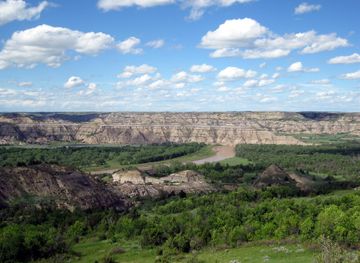
Explore more of North Dakota
Discover the rugged beauty, rich history, and warm hospitality of North Dakota, the untamed frontier of the United States.
Explore North Dakota