

Suicide Cliff Travel Guide - Free Web & App
Your ultimate guide to Suicide Cliff. Discover top landmarks, proposed trips, and local tips. Free on the web or via the Evendo companion app.


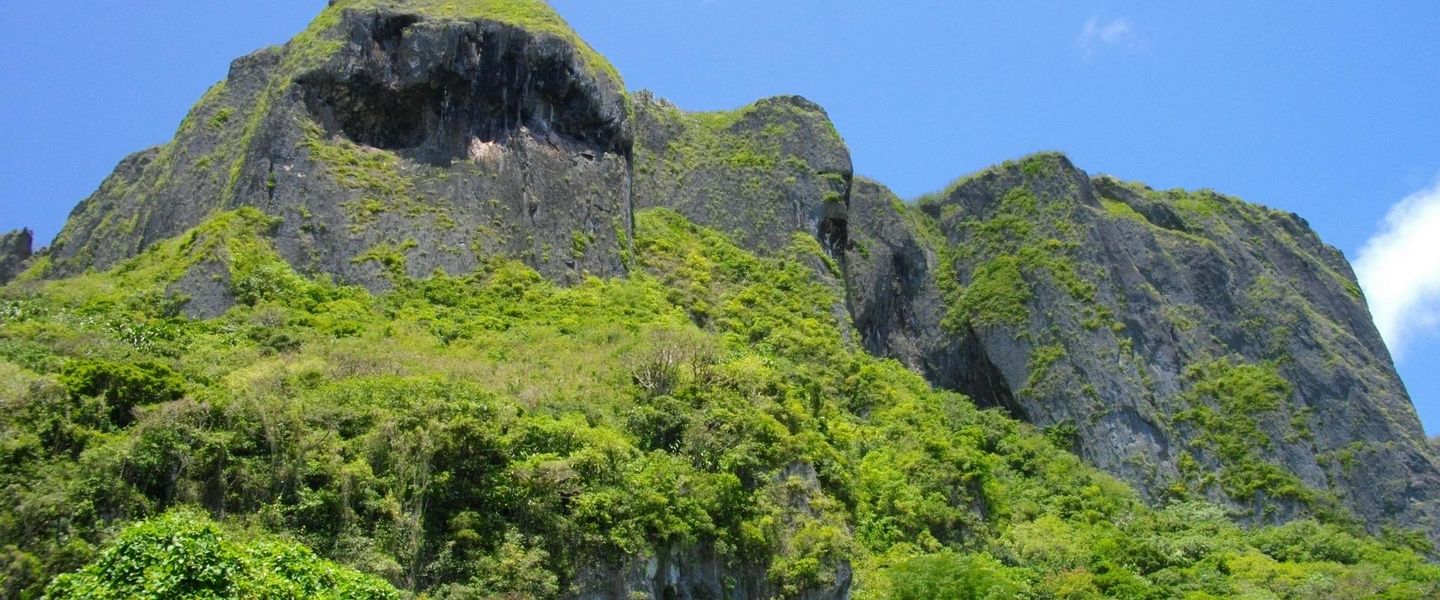


Suicide Cliff in the Northern Mariana Islands combines Saipan’s wartime history, Pacific views and nearby memorials with thoughtful WWII heritage travel.
A Clifftop Landscape on Saipan
Suicide Cliff occupies a high limestone escarpment in the Marpi area of northern Saipan, part of the Northern Mariana Islands in the western Pacific. The site looks across a broad sweep of sea and rugged coastline, but its significance is inseparable from the final fighting of the Second World War. The cliff is not simply a scenic viewpoint: in 1944, Japanese soldiers and civilians died here after American forces captured Saipan.Read more about Suicide Cliff
Memory, Mourning and Wider Saipan
When is the best time to visit Suicide Cliff?
Best: May–June, September · 30–31°C| Month | High (°C) | Rainfall (mm) |
|---|---|---|
| January | 29 | 100 |
| February | 30 | 75 |
| March | 30 | 50 |
| April | 30 | 25 |
| May (best) | 30 | 10 |
| June (best) | 31 | 10 |
| July | 31 | 10 |
| August | 31 | 10 |
| September (best) | 31 | 10 |
| October | 30 | 25 |
| November | 30 | 50 |
| December | 29 | 75 |
Getting to and around Suicide Cliff
How to get there
Transportation
Explore Suicide Cliff on the map
Plan your trip on one map. See where the top attractions, landmarks, restaurants and hotels are, and book hotels and experiences in a few clicks.
Best hotels in Suicide Cliff
Get your free copy of our complete guide to Suicide Cliff, delivered straight to you.
Everything on this page, from attractions and restaurants to essentials and local phrases, in one PDF you can read offline, print or share.
Already have an account? Sign in
Your Suicide Cliff guide is ready.
We'll send it to · Not you? Sign out

Getting your guide ready…
We are putting together a fresh copy of the Suicide Cliff guide. This can take up to a minute.
This can take a few moments. If your browser asks, choose Allow so the download can start. You'll find the guide in your Downloads folder.
Nothing happened? Download it again
Sorry, the guide is taking longer than usual. Please try again in a minute, or get it by email instead.
Suicide Cliff essentials
Currency and Payment
Safety
Emergency Situations
Do's and Don'ts
Local Tips
From Eve
Local phrases worth knowing
You don't need to get them perfect. A few words go a long way, and locals appreciate the effort.
Basics
| English | Local | Say it |
|---|---|---|
| Hello | Håfa Adai | [HA-fa a-DYE] |
| Goodbye | Adios | [a-DYOS] |
| Yes | Hao | [HA-oh] |
| No | Ti | [TEE] |
| Please/You're welcome | Fa'åmalek | [fa-AH-ma-lek] |
| Thank you | Si Yu'us ma'åse | [SEE YOO-oos ma-AH-seh] |
| Excuse me/Sorry | Kulu' | [KOO-loo] |
| How are you? | åt sångan munga? | [aht SANG-gan MOON-gah?] |
| Fine. And you? | Må'åse. Yan yu? | [ma-AH-seh. yahn yoo?] |
| Do you speak English? | Ha na'ån-mu i Inglis? | [HA NA-an-moo ee ING-lees?] |
| I don't understand | Ti hu hao | [TEE hoo hao] |
Eating & Drinking
| English | Local | Say it |
|---|---|---|
| I'd like to see the menu, please | Yan hao mohon i menyu, si Yu'us ma'åse | [yahn hao MO-hon ee MEN-yoo, see YOO-oos ma-AH-seh] |
| I don't eat meat | Ti hu kumuentus | [TEE hoo koo-men-TOOS] |
| Cheers! | Biba! | [BEE-bah] |
| I would like to pay, please | Yan hao mohon i che'lu, si Yu'us ma'åse | [yahn hao MO-hon ee CHE-loo, see YOO-oos ma-AH-seh] |
Emergencies
| English | Local | Say it |
|---|---|---|
| Help! | Ayuda! | [ah-YOOD-ah] |
| Go away! | Tåya! | [TAH-yah] |
| Call the Police! | Tåya i Pulis! | [TAH-yah ee POO-lees] |
| Call a doctor! | Tåya un doktå! | [TAH-yah oon dohk-TAH] |
| I'm lost | Kumuentus hu hånao | [koo-men-TOOS hoo HAH-now] |
| I'm ill | Hu manåko' | [hoo mah-NAH-koh] |
Shopping
| English | Local | Say it |
|---|---|---|
| I'd like to buy... | Yan hao mohon... | [yahn hao MO-hon...] |
| I'm just looking | Yan mohon hu kumuentus | [yahn MO-hon hoo koo-men-TOOS] |
| How much is it? | Kåmånu båba? | [KAH-mah-noo BAH-bah?] |
| That's too expensive | Nå'nå ginnen kumånu | [NAH-naah gin-NEN kah-MAH-noo] |
| Can you lower the price? | Må'åse hao debi kumånu? | [ma-AH-seh hao DEH-bee kah-MAH-noo?] |
Time & Numbers
| English | Local | Say it |
|---|---|---|
| What time is it? | Gaige na manåmko? | [GAI-geh nah mah-NAHM-koh?] |
| It's one o'clock | Mås uno | [mahs OO-noh] |
| Half past (10) | Katu na unu | [KAH-too nah OO-noo] |
| Morning | Manana | [mah-NAH-nah] |
| Afternoon | Gågåge | [gah-GAH-geh] |
| Evening | Gåni | [GAH-nee] |
| Yesterday | Gåbå | [GAH-bah] |
| Today | Hånom | [HAH-nom] |
| Tomorrow | Må'gas | [mah-GAHS] |
| 1 | Uno | [OO-noh] |
| 2 | Dos | [dohs] |
| 3 | Tres | [trehs] |
| 4 | Kwåtro | [KWAH-troh] |
| 5 | Sinko | [SIN-koh] |
| 6 | Sais | [sah-EESS] |
| 7 | Siete | [SYEH-teh] |
| 8 | Ocho | [OH-choh] |
| 9 | Nueve | [NWEH-veh] |
| 10 | Dies | [dyehss] |
Transport & Directions
| English | Local | Say it |
|---|---|---|
| Where's a/the...? | Ginnen litton...? | [gin-NEN LEE-ton...?] |
| What's the address? | Anu na direksion? | [ah-NOO nah dee-rek-SYON?] |
| Can you show me (on the map)? | Må'åse hao put i mapå? | [ma-AH-seh hao poot ee mah-PAH?] |
| When's the next (bus)? | Kåno na sigiente (bus)? | [KAH-no nah see-GYEN-teh (boos)?] |
| A ticket (to ....) | Un tiket (para...) | [oon tee-KET (PAH-rah...)] |
History of Suicide Cliff
Saipan’s Limestone Island
Suicide Cliff stands on Saipan’s northern limestone plateau, an island landscape shaped by uplifted coral formations, tropical weathering and long exposure to the Pacific. Before the Second World War, northern Saipan was part of a wider island environment used by Chamorro and Carolinian communities, with later settlement and agricultural activity transforming parts of the island. The cliff’s present historical meaning is therefore layered onto an older cultural landscape rather than representing an isolated wartime feature.
Japanese Rule and Sugar Production
Saipan became part of the Japanese Mandate issued by the League of Nations after Germany’s defeat in the First World War. Japanese administration encouraged migration, commercial development and sugar production, and the island became an important centre in the region. Japanese companies developed plantations, processing facilities and transport infrastructure, while Chamorro, Carolinian, Japanese, Okinawan and Korean communities contributed to the island’s changing social character. The northern areas later acquired strategic importance as Japan fortified the Marianas during the Second World War.
The Battle of Saipan
American forces landed on Saipan in June 1944, beginning a major campaign that lasted until July. The battle was strategically important because control of the Marianas allowed the United States to establish air bases within range of the Japanese home islands. Fighting spread across the island and caused extensive military and civilian deaths. As Japanese resistance collapsed in the north, soldiers and civilians gathered near the cliffs at Marpi Point and Suicide Cliff, where many died by jumping or were killed during the final days of the battle.
A Landscape of Remembrance
After the war, northern Saipan became a place of memorialisation for Japanese military personnel and civilians, as well as for the many other people affected by the battle. Memorials, monuments and offerings around Suicide Cliff and nearby Banzai Cliff express grief, religious remembrance and continuing links between Saipan and Japan. The Last Command Post, a fortified wartime position farther north, adds military context to the memorial landscape. These sites are now visited as part of Saipan’s historical heritage, although the terrain remains an open and exposed coastal environment rather than a fully developed museum complex.
Suicide Cliff in Photos
Browse through our photo collection highlighting the charm and character of the destination.
Neighbouring destination travel guides
The closest destinations to Suicide Cliff, if you have time for more than one.
-

-

-

-
-


Swipe for more destinations
Explore more

Explore more of Northern Mariana Islands
Uncover the beauty of Northern Mariana Islands, a tropical paradise with stunning beaches, rich history, and diverse cultures, perfect for a serene and adventurous getaway.
Explore Northern Mariana Islands