

Free Troms Travel Guide & Mobile App
Explore Troms with free travel guides. Discover regional history, expert tips, proposed trips, and audio guides on web or mobile app.


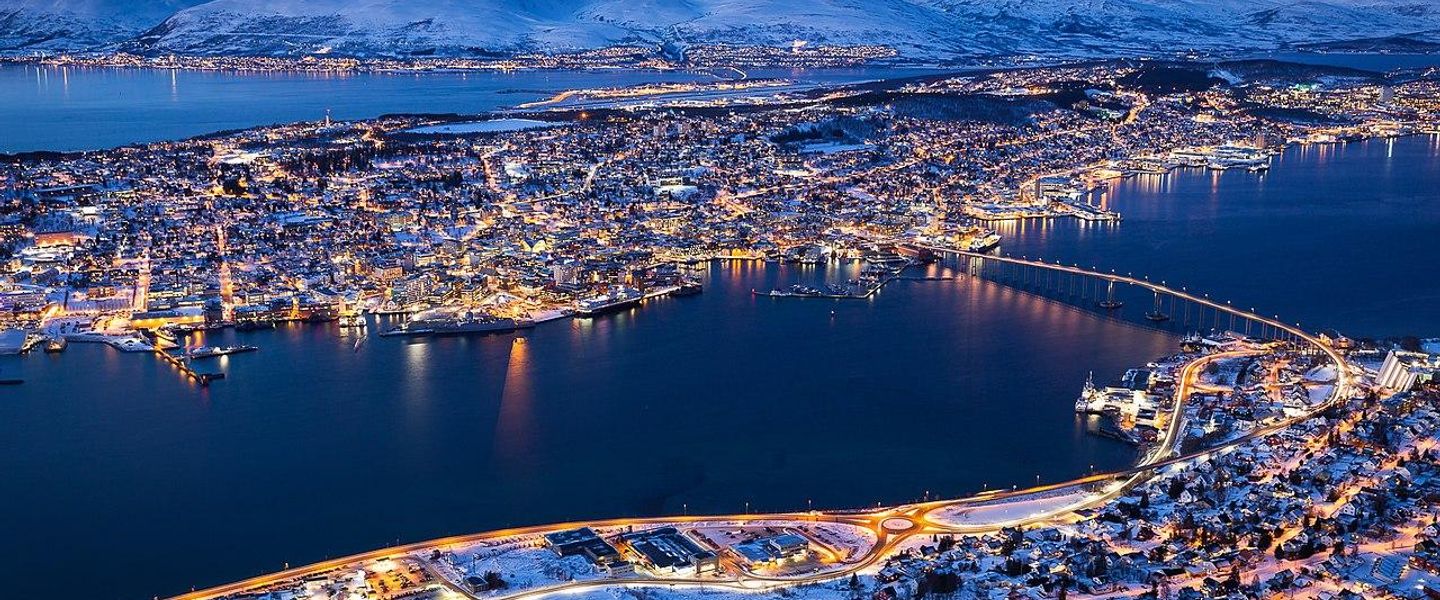


Explore Troms for Arctic fjords, Sámi culture, Senja landscapes, Tromsø city life and winter aurora beneath the midnight sun.
Read more about Troms
When is the best time to visit Troms?
Best: June–August · 13–15°C| Month | High (°C) | Rainfall (mm) |
|---|---|---|
| January | -2 | 75 |
| February | -2 | 60 |
| March | 0 | 60 |
| April | 4 | 50 |
| May | 9 | 50 |
| June (best) | 13 | 60 |
| July (best) | 15 | 75 |
| August (best) | 15 | 85 |
| September | 11 | 90 |
| October | 7 | 100 |
| November | 1 | 90 |
| December | -2 | 80 |
Getting to and around Troms
How to get there
Transportation
Top city travel guides in Troms
The cities of Troms, and the easiest places to base yourself.

Swipe for more cities
Destinations in Troms
Resorts, valleys and scenic spots worth a trip of their own.

Swipe for more destinations
Best attractions in Troms
Troms offers a varied combination of Arctic nature, cultural institutions and historic sites. Tromsø provides the county’s densest concentration of museums, galleries and science-focused attractions, including the Polar Museum and the University Museum, while the Arctic Cathedral is an important modern architectural sight. Around the city, Kvaløya, Sommarøy and other nearby islands provide opportunities for hiking, kayaking and winter aurora excursions. Senja is known for coastal roads, marked viewpoints, fishing settlements and mountain-fringed bays, with outdoor activities ranging from gentle walks to demanding hikes. Harstad and the Trondenes peninsula add medieval, military and maritime history, including Trondenes Church and nearby heritage collections. Inland Troms has river valleys, forests and open uplands suited to walking, cycling, fishing and winter sports, while the Lyngen Alps attract experienced skiers, climbers and hikers. Wildlife watching, boat trips and visits to local food producers are possible in several parts of the county, but the most rewarding experiences depend on weather, daylight and responsible access to sensitive environments.
-
Aquarium
Polaria aquarium
Explore the Arctic's underwater marvels at Polaria Aquarium, a unique blend of adventure and education in Tromsø, Norway.
-
History museum
The Polar Museum
Discover the Arctic's intriguing past at The Polar Museum in Tromsø, where history and culture come alive through engaging exhibits and artifacts.
-
Museum
The Arctic University Museum of Norway
Explore the Arctic University Museum of Norway in Tromsø for an unforgettable journey through Arctic history and culture, perfect for curious travelers.
-
Botanical garden
Arctic–Alpine Botanic Garden
Explore the Arctic–Alpine Botanic Garden in Tromsø, where diverse plant species thrive in a breathtaking natural setting, showcasing the beauty of the Arctic flora.


Best landmarks in Troms
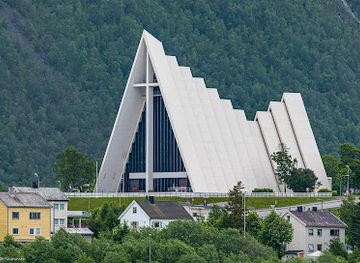
Tromsø’s Arctic Cathedral, formally Tromsdalen Church, is one of the county’s most recognisable buildings, its pointed form and large glass mosaic reflecting the region’s modern Arctic identity. The Tromsø Bridge, linking the city island with the mainland, is both a practical transport structure and a defining element of the urban skyline. In Harstad, the medieval stone church at Trondenes is among the most significant historic buildings in northern Norway, standing in a landscape shaped by medieval trade, farming and maritime routes. Senja’s Segla mountain above Mefjordvær is a striking natural landmark, while the island’s jagged coastline and viewpoints express the meeting of open sea and steep terrain. The Lyngen Alps form another major geographical landmark, with glaciated peaks rising sharply between fjords. Inland, Målselvfossen is a notable waterfall and river landmark. These places are visually powerful but not interchangeable: some are accessible cultural monuments, while others require proper outdoor planning and respect for changing Arctic conditions.
-
Cathedral
Arctic Cathedral
Explore the breathtaking Arctic Cathedral, a stunning architectural masterpiece in Tromsdalen, Norway, combining spirituality, art, and stunning views.
-
Aquarium
Polaria aquarium
Explore the Arctic marine life and sustainable practices at Polaria Aquarium in Tromsø, a must-visit destination for every nature lover.
-
History museum
The Polar Museum
Delve into the captivating history of Arctic exploration at The Polar Museum in Tromsø, Norway, showcasing the legacy of brave adventurers and indigenous culture.
-
Museum
The Arctic University Museum of Norway
Explore the Arctic University Museum of Norway for a deep dive into the cultural and natural history of the Arctic, right in the heart of Tromsø.


Explore Troms on the map
Plan your trip on one map. See where the top cities, national parks and sights are, and book hotels and experiences in a few clicks.
Best hotels in Troms
Best restaurants in Troms
Troms’s food culture draws on the sea, mountain pastures, forest and tundra. Cod, halibut, Arctic char, prawns and other seafood feature prominently, while reindeer and locally sourced lamb appear in traditional and contemporary dishes. Berries such as cloudberries and bilberries, along with mushrooms and herbs, contribute seasonal flavours, and dried or preserved fish reflects the practical history of northern households. Tromsø has the broadest choice of restaurants, from cafés and bakeries to modern kitchens focused on northern ingredients; Harstad and the larger coastal settlements also offer places to eat with strong maritime connections. Rural inns, farm shops and small cafés provide a more local-scale experience, though opening patterns can be seasonal. Food markets and independent producers are useful places to look for cheeses, smoked fish, preserves and baked goods. Pairing meals with Norwegian beer, cider or aquavit is common, but non-alcoholic drinks are equally well established.
-
Restaurant
Egon
Discover Egon in Tromsø: A delightful restaurant offering local flavors and international cuisine amidst breathtaking Arctic scenery.
-
Traditional Norwegian restaurant
Bardus Bistro
Discover authentic Norwegian cuisine at Bardus Bistro in Tromsø, where tradition meets modern flavor in a cozy setting.
-
Hamburger
Burgr
Experience gourmet burgers with local flair at Burgr in Tromsø – where every bite tells a story.
-
Seafood
Fiskekompaniet
Experience exquisite seafood dining in Tromsø at Fiskekompaniet – where freshness meets creativity amidst stunning views.


Best bars in Troms
Evening life in Troms is concentrated in Tromsø, where a sizeable student and research community supports pubs, cafés, cocktail bars, live music, cultural venues and a modest club scene. The city’s nightlife ranges from informal places serving local beer to restaurants and bars that remain active later in the evening, especially at weekends and during festival periods. Harstad has a smaller but established selection of pubs, restaurants and cultural venues, while other coastal towns generally offer a quieter evening based around local bars, cafés and community events. In rural districts, a traditional pub, hotel bar or seasonal gathering is more typical than a nightclub. Winter visitors should remember that aurora excursions often begin late or involve early starts, and summer daylight can make the concept of evening feel indistinct. Drinking is not necessary to participate in Troms’s social life, and cultural performances, food and outdoor activities remain important alternatives.
-
Brewpub
Ølhallen
Experience the historic Ølhallen brewpub in Tromsø, where local craft beers meet a welcoming atmosphere and vibrant community spirit.
-
Traditional Norwegian restaurant
Bardus Bistro
Experience the best of traditional Norwegian cuisine and cocktails at Bardus Bistro in Tromsø, where local flavors meet inviting ambiance.
-
Gastropub
Rorbua Pub
Experience the heart of Tromsø at Rorbua Pub, a cozy gastropub offering local flavors and live music in a charming setting.
-
Bar
Blårock Cafe
Blårock Cafe: Your go-to spot for delicious food, live music, and a unique vibe in the heart of Tromsø.


Best nightclubs in Troms
Evening life in Troms is concentrated in Tromsø, where a sizeable student and research community supports pubs, cafés, cocktail bars, live music, cultural venues and a modest club scene. The city’s nightlife ranges from informal places serving local beer to restaurants and bars that remain active later in the evening, especially at weekends and during festival periods. Harstad has a smaller but established selection of pubs, restaurants and cultural venues, while other coastal towns generally offer a quieter evening based around local bars, cafés and community events. In rural districts, a traditional pub, hotel bar or seasonal gathering is more typical than a nightclub. Winter visitors should remember that aurora excursions often begin late or involve early starts, and summer daylight can make the concept of evening feel indistinct. Drinking is not necessary to participate in Troms’s social life, and cultural performances, food and outdoor activities remain important alternatives.
-
Gastropub
Rorbua Pub
Experience the heart of Tromsø at Rorbua Pub, where local flavors meet a cozy atmosphere in a charming gastropub.
-
Bar
Magic Ice Bar Tromsø
Discover the magical blend of art and ice at Magic Ice Bar Tromsø, where unforgettable experiences await every visitor.
-
Pub
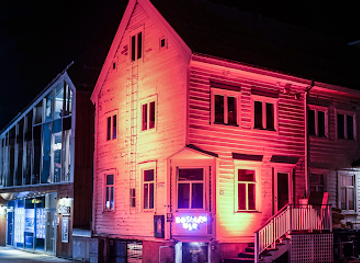
Bastard Bar
Experience the vibrant nightlife of Tromsø at Bastard Bar, a top pub for cocktails, live music, and sports in the heart of the Arctic city.
-
Pub
No. 24
Discover the lively atmosphere of No. 24, a beloved pub in Tromsø, offering local brews, tasty bites, and unforgettable nightlife.



Best shops in Troms
Shopping in Troms is centred on the high streets and shopping areas of Tromsø and Harstad, where visitors find outdoor equipment, books, design goods, food shops and independent retailers alongside national chains. Tromsø is the best place to browse museums’ cultural shops, contemporary crafts and products connected with northern life, while Harstad serves as a practical retail centre for southern Troms. In smaller coastal and inland communities, shopping is more limited but may include farm shops, galleries, craft studios and seasonal food sales. Useful regional purchases include locally made woollen goods, knitted clothing, knives, ceramics, jewellery and Sámi-inspired or Sámi-made handicrafts; buyers should check provenance and support authentic makers rather than treating Sámi symbols as generic souvenirs. Smoked fish, dried fish, preserves, chocolate and berry products travel well, subject to customs rules for the visitor’s destination. Markets and opening arrangements vary by town and season, so rural shopping usually requires more planning than a visit to Tromsø’s established retail areas.
-
Gift shop
The Arctic Circle Centre
Discover unique souvenirs and local flavors at The Arctic Circle Centre, your gateway to Arctic culture and adventure.
-
Shopping mall
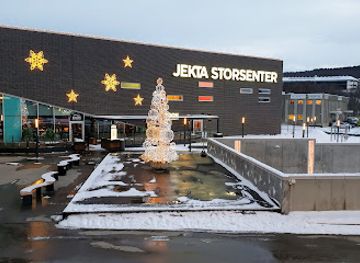
Jekta Storsenter
Experience the best shopping and dining in Tromsø at Jekta Storsenter, the city's largest and most vibrant shopping center.
-
Shopping mall
K1 Storhandel
Discover the vibrant shopping experience at K1 Storhandel, Tromsø's premier mall, offering a mix of local culture, dining, and retail excitement.
-
Shopping mall
Alti Nerstranda
Alti Nerstranda in Tromsø offers a unique shopping experience with diverse stores and delicious dining, perfect for all visitors exploring the Arctic region.


Get your free copy of our complete guide to Troms, delivered straight to you.
Everything on this page, from attractions and restaurants to essentials and local phrases, in one PDF you can read offline, print or share.
Already have an account? Sign in
Your Troms guide is ready.
We'll send it to · Not you? Sign out

Getting your guide ready…
We are putting together a fresh copy of the Troms guide. This can take up to a minute.
This can take a few moments. If your browser asks, choose Allow so the download can start. You'll find the guide in your Downloads folder.
Nothing happened? Download it again
Sorry, the guide is taking longer than usual. Please try again in a minute, or get it by email instead.
Troms essentials
Currency and Payment
Safety
Emergency Situations
Do's and Don'ts
Local Tips
From Eve
Local phrases worth knowing
You don't need to get them perfect. A few words go a long way, and locals appreciate the effort.
Basics
| English | Local | Say it |
|---|---|---|
| Hello | Hei | [Hay] |
| Goodbye | Ha det | [Hah deh] |
| Yes | Ja | [Yah] |
| No | Nei | [Nay] |
| Please/You're welcome | Vær så snill/Ingen årsak | [Vair so snill/In-yen or-sahk] |
| Thank you | Takk | [Tahk] |
| Excuse me/Sorry | Unnskyld | [Oon-shild] |
| How are you? | Hvordan har du det? | [Vor-dahn har du deh] |
| Fine. And you? | Bra. Og du? | [Brah. Oh du?] |
| Do you speak English? | Snakker du engelsk? | [Snah-kker du eng-gelsk?] |
| I don't understand | Jeg forstår ikke | [Yay for-stor ee-keh] |
Eating & Drinking
| English | Local | Say it |
|---|---|---|
| I'd like to see the menu, please | Jeg vil gjerne se menyen, vær så snill | [Yay vil yair-neh seh meh-nyeen, vair so snill] |
| I don't eat meat | Jeg spiser ikke kjøtt | [Yay spee-ser ee-keh kyet] |
| Cheers! | Skål! | [Skawl!] |
| I would like to pay, please | Jeg vil gjerne betale, vær så snill | [Yay vil yair-neh be-tah-leh, vair so snill] |
Emergencies
| English | Local | Say it |
|---|---|---|
| Help! | Hjelp! | [Yelp!] |
| Go away! | Gå bort! | [Gaw bort!] |
| Call the Police! | Ring politiet! | [Ring po-li-teet!] |
| Call a doctor! | Ring en lege! | [Ring en leh-geh!] |
| I'm lost | Jeg er tapt | [Yay air tahpt] |
| I'm ill | Jeg er syk | [Yay air seek] |
Shopping
| English | Local | Say it |
|---|---|---|
| I'd like to buy... | Jeg vil kjøpe... | [Yay vil shoo-peh...] |
| I'm just looking | Jeg bare ser | [Yay bar-eh seh] |
| How much is it? | Hvor mye koster det? | [Vor mee-eh koster deh?] |
| That's too expensive | Det er for dyrt | [Deh air for deert] |
| Can you lower the price? | Kan du senke prisen? | [Kan du sen-keh pree-sen?] |
Time & Numbers
| English | Local | Say it |
|---|---|---|
| What time is it? | Hva er klokka? | [Vah air klok-kah?] |
| It's one o'clock | Det er ett | [Deh air ett] |
| Half past (10) | Halv (10) | [Halv (10)] |
| Morning | Morgen | [Morgen] |
| Afternoon | Ettermiddag | [Et-ter-mid-dahg] |
| Evening | Kveld | [Kveld] |
| Yesterday | I går | [Ee gor] |
| Today | I dag | [Ee dahg] |
| Tomorrow | I morgen | [Ee mor-gen] |
| 1 | 1 | [1] |
| 2 | 2 | [2] |
| 3 | 3 | [3] |
| 4 | 4 | [4] |
| 5 | 5 | [5] |
| 6 | 6 | [6] |
| 7 | 7 | [7] |
| 8 | 8 | [8] |
| 9 | 9 | [9] |
| 10 | 10 | [10] |
Transport & Directions
| English | Local | Say it |
|---|---|---|
| Where's a/the...? | Hvor er en/det...? | [Vor air en/deht...?] |
| What's the address? | Hva er adressen? | [Vah air a-dres-sen?] |
| Can you show me (on the map)? | Kan du vise meg (på kartet)? | [Kan du vee-seh mai (poh kar-teht)?] |
| When's the next (bus)? | Når går neste (buss)? | [Norr gorr nes-teh (boos)?] |
| A ticket (to ....) | En billett (til ...) | [En bee-lett (til ...)] |
History of Troms
Early Settlement and Sámi Continuity
People have used the coast, islands and inland valleys of Troms since the retreat of the last ice sheet. Archaeological evidence records fishing, hunting, trapping and trade, while rock art and settlement remains reveal long relationships with the sea and seasonal landscapes. Sámi communities developed extensive cultural and economic networks across northern Scandinavia, including areas that are now Troms. Reindeer husbandry became important in some districts, alongside fishing, hunting and small-scale farming. Sámi languages, place names, material culture and contemporary community life remain part of the region’s identity, although historic assimilation policies caused substantial cultural and linguistic loss.
Norse Settlement and Medieval Hålogaland
During the Viking Age and Middle Ages, coastal northern Norway was linked to the wider Hålogaland region, whose communities traded fish, skins and other northern products. Norse settlement expanded along favourable shores and interacted with established Sámi societies through exchange and sometimes conflict. Christianity brought new institutions and church building, with Trondenes Church near Harstad becoming one of the most important medieval churches in northern Norway. Its scale reflects the wealth generated by coastal trade and the strategic importance of the Vågsfjord area.
Fishing, Trade and Church Communities
From the late medieval period into the early modern era, Troms’s coastal economy centred on fishing and the movement of dried fish, grain, timber and imported goods. Small harbours and church communities connected remote settlements to Bergen and other parts of Norway. Seasonal fishing shaped population patterns, household work and local architecture, while farms in sheltered valleys supplemented maritime livelihoods. Churches, boathouses, trading sites and historic farm landscapes still show how communities adapted to a scattered coastline where sea transport was often more practical than overland travel.
Tromsø and the Rise of an Arctic Town
Tromsø was founded as a town in the eighteenth century and gradually became a centre for trade, administration and church activity in northern Norway. Its location made it a useful base for commerce with coastal settlements and for expeditions into the Arctic. By the nineteenth century, the town had gained an international reputation as a departure point for polar exploration and hunting voyages. The wooden buildings, museums and maritime collections of central Tromsø reflect this mixture of local trade, scientific ambition and the practical demands of life in a northern port.
Modernisation, Roads and Coastal Connections
The nineteenth and twentieth centuries brought stronger state administration, improved schooling, mechanised fishing and gradually better roads and communications. Harstad developed as an important maritime and commercial centre, while Tromsø expanded through education, research, healthcare and public administration. Ferries, bridges, tunnels and later air connections changed how island and mainland communities related to one another. These developments did not erase older livelihoods: fishing, farming, shipping and seasonal use of mountain and coastal resources continued alongside a more diversified service economy.
War and Occupation, 1940–1945
Troms was occupied by Germany during the Second World War, and the county became strategically important because of its ports, airfields, roads and position within the northern theatre. Military installations and prisoner-of-war camps formed part of the occupation landscape, while local communities faced restrictions, requisitions and uncertainty. The region also experienced the effects of the German retreat and destruction policy farther north in 1944–45, as refugees and displaced people moved through northern Norway. War memorials, fortifications and museums preserve aspects of this difficult period.
Post-war Reconstruction and Contemporary Arctic Identity
After 1945, Troms underwent extensive reconstruction and expanded its public services, transport links and educational institutions. Tromsø became an important centre for Arctic research and higher education, while Harstad strengthened its role in culture, maritime activity and regional administration. From the late twentieth century, renewed recognition of Sámi rights and cultural expression became an important part of northern Norway’s public life. Tourism has since grown around the aurora, midnight sun, outdoor recreation and coastal scenery, creating new opportunities while requiring careful management of fragile environments and local communities.
Troms in Photos
Browse through our photo collection highlighting the charm and character of the destination.
Neighbouring regions of Troms
The closest regions to Troms, if you have time for more than one.
-

-

-

-

-


Swipe for more regions
Explore more

Explore more of Norway
Explore Norway's spectacular fjords, vibrant cities, and natural wonders. Experience the Northern Lights, Midnight Sun, and rich cultural heritage in this Scandinavian gem.
Explore Norway