

Free Tromsø Travel Guide & Mobile App
Plan your Tromsø trip with Evendo. Get free guides to top attractions, restaurants, hotels, and bars. Web access or download the mobile app.


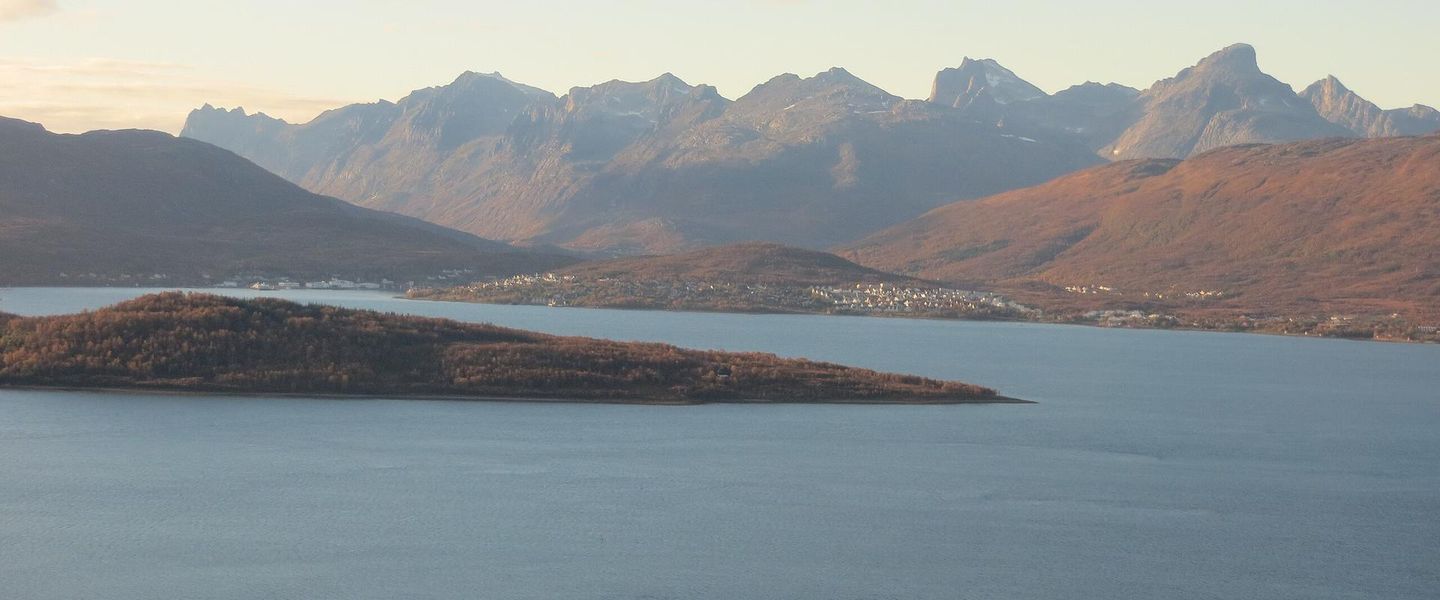


Tromsø combines Arctic history, Sámi culture, northern lights, midnight sun, fjord scenery and outdoor adventures in Norway's far north.
An Arctic Island City
Tromsø stands well above the Arctic Circle in northern Norway, spread across Tromsøya and neighbouring mainland districts amid fjords, sharp mountains and open sea. Its compact centre is easy to explore on foot, while bridges and tunnels connect the urban area with a wider landscape of islands, valleys and coastal settlements. In winter, the city becomes a base for experiencing the northern lights and polar darkness; in summer, the midnight sun keeps the streets and surrounding trails illuminated through the night.Read more about Tromsø
Polar Heritage and Modern Culture
Mountains, Fjords and Seasonal Light
When is the best time to visit Tromsø?
Best: June–August · 16–18°C| Month | High (°C) | Rainfall (mm) |
|---|---|---|
| January | -1 | 50 |
| February | 0 | 40 |
| March | 3 | 40 |
| April | 6 | 25 |
| May | 12 | 30 |
| June (best) | 16 | 50 |
| July (best) | 18 | 60 |
| August (best) | 16 | 60 |
| September | 10 | 50 |
| October | 8 | 40 |
| November | 2 | 40 |
| December | 2 | 50 |
Getting to and around Tromsø
How to get there
Transportation
Best attractions in Tromsø
Tromsø's compact centre brings together Arctic history, art and everyday northern life. The Polar Museum occupies a historic waterfront warehouse and explores sealing, trapping and polar expeditions, while Perspektivet Museum presents changing perspectives on local society and culture. At the harbour, the Polarmuseet area and historic wooden buildings provide a sense of the city's maritime past. Across Tromsøysundet, the Arctic Cathedral is both a working church and a striking piece of modern architecture, with an interior known for its large glass mosaic. The Fjellheisen cable car carries visitors towards Storsteinen for expansive views over the city, islands and mountains when conditions are clear. The Tromsø Arctic-Alpine Botanic Garden offers a seasonal encounter with high-latitude plants, and the city's galleries, cafés and waterfront paths add quieter ways to explore between organised excursions and outdoor adventures.
-
Cathedral
Arctic Cathedral
Discover the Arctic Cathedral: an architectural wonder in Tromsdalen, Norway, blending modern design with stunning natural beauty.
12 min drive · 4.0 km from city centre
-
Aquarium
Polaria aquarium
Explore the Arctic marine life at Polaria Aquarium, Tromsø's unique destination for family-friendly education and entertainment.
11 min drive · 3.8 km from city centre
-
History museum
The Polar Museum
Explore the rich history of Arctic exploration at The Polar Museum in Tromsø - a captivating destination for culture and history enthusiasts.
9 min drive · 3.1 km from city centre
-
Mountain cable car
Fjellheisen
Experience the stunning panoramic views of Tromsø from Fjellheisen, your gateway to the Arctic landscape and breathtaking adventures.
14 min drive · 4.6 km from city centre


Best landmarks in Tromsø
Tromsø Cathedral, completed in 1861, is a prominent wooden Gothic Revival church in the centre and one of the city's clearest links with its nineteenth-century growth. On the opposite side of Tromsøysundet, the Arctic Cathedral, officially Tromsdalen Church, was consecrated in 1965 and is distinguished by its white, triangular form and large glass mosaic. The old town's wooden houses and waterfront warehouses recall the trading and maritime economy that established Tromsø as an Arctic port. The Tromsø Bridge, opened in 1960, transformed movement between Tromsøya and the mainland and remains a defining element of the urban view. The Roald Amundsen Monument near the harbour honours the polar explorer, while the modern university and polar research institutions represent the city's continuing role in northern science and public life.
-
Cathedral
Arctic Cathedral
Discover the stunning Arctic Cathedral in Tromsø, Norway – a masterpiece of modern architecture surrounded by breathtaking landscapes.
12 min drive · 4.0 km from city centre
-
Aquarium
Polaria
Explore Polaria in Tromsø, Norway - where the Arctic comes alive through captivating exhibits and unique marine experiences.
11 min drive · 3.8 km from city centre
-
History museum
The Polar Museum
Explore the Polar Museum in Tromsø, a captivating journey through Arctic exploration and rich Norwegian heritage.
9 min drive · 3.1 km from city centre
-
Mountain cable car
Fjellheisen
Experience breathtaking views and adventure at Fjellheisen, Tromsø's premier mountain cable car, perfect for all nature lovers and thrill-seekers.
14 min drive · 4.6 km from city centre


Explore Tromsø on the map
Plan your Tromsø trip on one map. See where the top attractions, landmarks, restaurants, bars and hotels are, find what's near where you're staying, and book hotels and experiences in a few clicks.
Neighbourhoods in Tromsø
-

-


Swipe for more neighbourhoods
Best hotels in Tromsø
Best restaurants in Tromsø
Tromsø's dining scene reflects its position between fishing grounds, mountain pastures and Arctic waters. Menus commonly draw on cod, halibut, Arctic char, prawns and other seafood, while local specialities may include reindeer and lamb prepared in contemporary or traditional styles. Cloudberries, beetroot, mushrooms and other northern ingredients appear in desserts and seasonal cooking, and stockfish connects modern restaurants with the wider coastal heritage of northern Norway. The centre around Storgata and the harbour contains restaurants, cafés, bakeries and informal places for a warm meal, while Mathallen Tromsø provides a setting associated with regional produce and food-focused browsing. International cuisines are also part of the city's student and research-community character. Dining patterns can be early or reservation-led during busy winter periods, and menus often change with the season and available catch.
-
Brewpub
Ølhallen
Discover the charm of Tromsø at Ølhallen - a historic brewpub serving local craft beers and delicious cuisine in an inviting atmosphere.
11 min drive · 3.5 km from city centre
-
Restaurant
Egon Tromsø
Experience local flavors and international cuisine at Egon Tromsø - where Arctic charm meets culinary excellence.
10 min drive · 3.3 km from city centre
-
Traditional Norwegian restaurant
Bardus Bistro
Experience authentic Norwegian flavors at Bardus Bistro in Tromsø - where tradition meets modern culinary excellence.
9 min drive · 3.1 km from city centre
-
Restaurant
Yonas Pizzeria
Discover authentic Italian flavors at Yonas Pizzeria in Tromsø - where every slice tells a story amidst breathtaking Arctic scenery.
10 min drive · 3.4 km from city centre


Best bars in Tromsø
Tromsø has a sociable evening scene shaped by its university population, expeditionary identity and long seasonal contrasts. Central Storgata and the surrounding streets contain traditional pubs, cocktail bars, cafés that stay active after dark and venues with live music, while the waterfront supplies a more relaxed setting for an evening drink. Student-oriented venues and local bars create more activity at weekends, but the city is not a large clubbing destination and nightlife remains concentrated rather than sprawling. Concerts, cultural programmes and festivals can be as important as nightclubs, with music ranging from contemporary performances to northern folk influences. In winter, guided northern-lights outings often form part of an evening programme, while summer's persistent daylight changes the sense of time rather than eliminating the city's social life.
-
Brewpub
Ølhallen
Discover Ølhallen, Tromsø's historic brewpub, where local craft beers and traditional Norwegian cuisine come together in a cozy atmosphere.
11 min drive · 3.5 km from city centre
-
Restaurant
Egon Tromsø
Discover the flavors of Norway at Egon Tromsø, a vibrant restaurant offering locals and tourists a delightful culinary experience in the Arctic.
10 min drive · 3.3 km from city centre
-
Traditional Norwegian restaurant
Bardus Bistro
Experience the essence of Norway at Bardus Bistro, where traditional cuisine meets a lively cocktail bar in the heart of Tromsø.
9 min drive · 3.1 km from city centre
-
Gastropub
Rorbua Pub
Experience the warmth of Norwegian hospitality at Rorbua Pub, Tromsø's charming gastropub offering local flavors and vibrant atmosphere.
10 min drive · 3.4 km from city centre


Best nightclubs in Tromsø
Tromsø has a sociable evening scene shaped by its university population, expeditionary identity and long seasonal contrasts. Central Storgata and the surrounding streets contain traditional pubs, cocktail bars, cafés that stay active after dark and venues with live music, while the waterfront supplies a more relaxed setting for an evening drink. Student-oriented venues and local bars create more activity at weekends, but the city is not a large clubbing destination and nightlife remains concentrated rather than sprawling. Concerts, cultural programmes and festivals can be as important as nightclubs, with music ranging from contemporary performances to northern folk influences. In winter, guided northern-lights outings often form part of an evening programme, while summer's persistent daylight changes the sense of time rather than eliminating the city's social life.
-
Bar
Magic Ice Bar Tromsø
Experience the enchanting atmosphere of Magic Ice Bar Tromsø, where artistry meets nightlife in a mesmerizing icy wonderland.
10 min drive · 3.5 km from city centre
-
Pub
Bastard Bar
Experience the vibrant nightlife of Tromsø at Bastard Bar, where cocktails, live music, and a friendly atmosphere unite for an unforgettable night.
10 min drive · 3.4 km from city centre
-
Pub
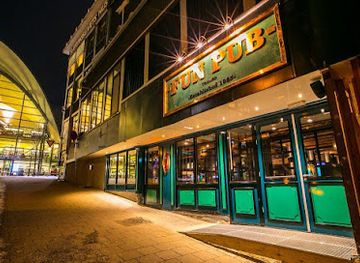
Fun Pub Tromso As
Experience the lively nightlife of Tromsø at Fun Pub, where great drinks and music come together for an unforgettable evening.
9 min drive · 3.1 km from city centre
-
Night club
Storgata Camping
Discover the vibrant nightlife at Storgata Camping, Tromsø's top night club, with live music, dancing, and an electric atmosphere.
11 min drive · 3.5 km from city centre


Best shops in Tromsø
Shopping in Tromsø centres on the pedestrian-friendly streets and covered retail areas around Storgata, with a mix of practical Norwegian brands, independent shops, cafés and specialist retailers. Nerstranda shopping centre provides a more conventional indoor option near the harbour, while the centre's smaller galleries and craft shops offer items connected with northern landscapes and design. Visitors will encounter woollen knitwear, outdoor clothing, locally produced food, jewellery and Sámi-inspired products, but genuine Sámi handicraft, or duodji, is best identified through reputable makers and clear provenance rather than assumed from decorative labelling. Supermarkets and food shops are useful for regional ingredients such as brown cheese, cloudberry products and seafood. Tromsø is not primarily a luxury-shopping destination; its retail character is practical, seasonal and closely related to life in a cold coastal environment.
-
Shopping mall
Jekta Storsenter
Explore Jekta Storsenter, Tromsø's largest shopping mall, featuring diverse stores, dining options, and entertainment for the whole family.
4 min walk · 0.3 km from city centre
-
Shopping mall
K1 Storhandel
Explore K1 Storhandel in Tromsø, Norway, a vibrant shopping mall filled with diverse stores, dining options, and local charm.
4 min walk · 0.3 km from city centre
-
Shopping mall
Alti Nerstranda
Discover Alti Nerstranda in Tromsø - a vibrant shopping mall offering a mix of local and global brands, dining options, and a lively atmosphere for all visitors.
11 min drive · 3.5 km from city centre
-
Shopping mall
Veita Shopping
Explore Veita Shopping in Tromsø for a unique blend of shopping, art galleries, and outdoor adventures in the heart of the Arctic.
9 min drive · 3.0 km from city centre


Get your free copy of our complete guide to Tromsø, delivered straight to you.
Everything on this page, from attractions and restaurants to essentials and local phrases, in one PDF you can read offline, print or share.
Already have an account? Sign in
Your Tromsø guide is ready.
We'll send it to · Not you? Sign out

Getting your guide ready…
We are putting together a fresh copy of the Tromsø guide. This can take up to a minute.
This can take a few moments. If your browser asks, choose Allow so the download can start. You'll find the guide in your Downloads folder.
Nothing happened? Download it again
Sorry, the guide is taking longer than usual. Please try again in a minute, or get it by email instead.
Tromsø essentials
Currency and Payment
Safety
Emergency Situations
Do's and Don'ts
Local Tips
From Eve
Local phrases worth knowing
You don't need to get them perfect. A few words go a long way, and locals appreciate the effort.
Basics
| English | Local | Say it |
|---|---|---|
| Hello | Hei | [hay] |
| Goodbye | Ha det bra | [hah deh bra] |
| Yes | Ja | [yah] |
| No | Nei | [nay] |
| Please/You're welcome | Vær så god | [vair soh goh] |
| Thank you | Takk | [tahk] |
| Excuse me/Sorry | Unnskyld | [oon-skyld] |
| How are you? | Hvordan har du det? | [vor-dan har doo deh] |
| Fine. And you? | Bra. Og du? | [bra oh doo] |
| Do you speak English? | Snakker du engelsk? | [snah-ker doo eng-elsk] |
| I don't understand | Jeg forstår ikke | [yay for-stor ee-neh] |
Eating & Drinking
| English | Local | Say it |
|---|---|---|
| I'd like to see the menu, please | Jeg vil gjerne se menyen, takk | [yay veal yern-eh seh meh-nyen tahk] |
| I don't eat meat | Jeg spiser ikke kjøtt | [yay spee-ser ee-neh shøt] |
| Cheers! | Skål! | [skohl] |
| I would like to pay, please | Jeg vil gjerne betale, takk | [yay veal yern-eh beh-tah-leh tahk] |
Emergencies
| English | Local | Say it |
|---|---|---|
| Help! | Hjelp! | [yelp] |
| Go away! | Gå vekk! | [goh vek] |
| Call the Police! | Ring politiet! | [ring po-lee-tee-et] |
| Call a doctor! | Ring en lege! | [ring en lay-geh] |
| I'm lost | Jeg er borte | [yay air bor-teh] |
| I'm ill | Jeg er syk | [yay air sook] |
Shopping
| English | Local | Say it |
|---|---|---|
| I'd like to buy... | Jeg vil kjøpe... | [yay veal shø-peh] |
| I'm just looking | Jeg bare ser | [yay bah-reh sair] |
| How much is it? | Hvor mye koster det? | [vor mew-eh kost-er deh] |
| That's too expensive | Det er for dyrt | [deh air for deert] |
| Can you lower the price? | Kan du senke prisen? | [kan doo sen-keh pree-sen] |
Time & Numbers
| English | Local | Say it |
|---|---|---|
| What time is it? | Hva er klokka? | [vah air klok-kah] |
| It's one o'clock | Klokka er ett | [klok-kah air et] |
| Half past (10) | Halv ti | [halv tee] |
| Morning | Morgen | [mor-gen] |
| Afternoon | Ettermiddag | [et-ter-meed-dahg] |
| Evening | Kveld | [kvel] |
| Yesterday | I går | [ee gor] |
| Today | I dag | [ee dahg] |
| Tomorrow | I morgen | [ee mor-gen] |
| 1 | En | [en] |
| 2 | To | [too] |
| 3 | Tre | [treh] |
| 4 | Fire | [fee-reh] |
| 5 | Fem | [fem] |
| 6 | Seks | [seks] |
| 7 | Syv | [siv] |
| 8 | Åtte | [oh-teh] |
| 9 | Ni | [nee] |
| 10 | Ti | [tee] |
Transport & Directions
| English | Local | Say it |
|---|---|---|
| Where's a/the...? | Hvor er...? | [vor air] |
| What's the address? | Hva er adressen? | [vah air ah-dres-sen] |
| Can you show me (on the map)? | Kan du vise meg (på kartet)? | [kan doo vee-seh mayg (poh kar-teh)] |
| When's the next (bus)? | Når går neste (buss)? | [nor gor nest-eh (boos)] |
| A ticket (to ....) | En billett (til ....) | [en bee-let (teel)] |
History of Tromsø
Sámi Homelands and Early Settlement
The Tromsø region lies within the traditional homeland of Sámi communities, whose livelihoods have long included fishing, hunting, reindeer herding and seasonal movement across northern landscapes. Norse settlement and coastal trade also developed around the sound and surrounding islands, creating contact between different communities and economic traditions. Christian influence reached the area during the medieval period, although the modern town emerged much later. This layered history remains visible in the region's continuing Sámi cultural presence and in the broader importance of coastal exchange across northern Norway.
The Founding of Tromsø
Tromsø received town privileges in 1795, formalising its role as a centre for trade and administration in the far north. Its position beside Tromsøysundet offered access to fishing grounds, maritime routes and inland connections, while the sheltered harbour supported the movement of goods along the coast. The settlement grew around commerce, shipping and public institutions rather than heavy industry. As Tromsø expanded, it became an important meeting point between northern communities, merchants and travellers moving through Norway's Arctic regions.
A Gateway to Polar Exploration
During the nineteenth century, Tromsø gained international prominence as a departure point for sealing, hunting and Arctic expeditions. Ships sailed from its harbour towards Svalbard, the Barents Sea and other northern waters, bringing wealth as well as danger to the town's maritime economy. Merchants, sailors and explorers gave Tromsø a reputation as an Arctic gateway, a role later reinforced by scientific work. The Polar Museum preserves this era through accounts of vessels, equipment and the demanding lives associated with northern maritime activity.
Churches, Trade and Urban Growth
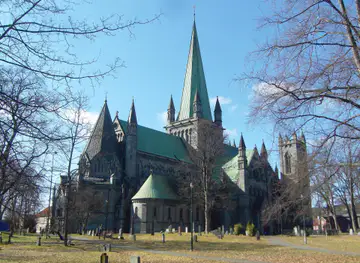
Tromsø's nineteenth-century development left an architectural imprint on the centre. Tromsø Cathedral, completed in 1861, became a major landmark in the growing town and remains Norway's only wooden cathedral. Commercial activity, shipping and public administration encouraged the construction of wooden houses and civic buildings around the central streets. The town's prosperity was closely linked to fisheries and coastal trade, while its institutions served a wide northern hinterland. These buildings and urban patterns give the centre a more settled character than its remote latitude might suggest.
War and the Northern Front
The Second World War brought Tromsø into the strategic landscape of occupied Norway. The city functioned as an important northern administrative and military centre, and the battles and evacuations of the wider Finnmark and northern Norwegian region affected its population and connections. In April 1940, the Norwegian government and royal family travelled north during the German invasion before leaving Norway from Tromsø. The war changed transport, governance and daily life across the region, leaving memories preserved in local museums and historical interpretation.
A Modern Centre for Arctic Research
After the war, Tromsø developed from a coastal trading town into a regional centre for education, medicine, culture and Arctic research. The University of Tromsø opened in 1968, later becoming UiT The Arctic University of Norway, and strengthened the city's role in northern science and public life. The Norwegian Polar Institute is also based in Tromsø, linking contemporary research with the expeditionary tradition of earlier centuries. The Arctic Cathedral, opened in 1965, expressed the city's post-war confidence through a bold modern design and became a defining symbol of its northern setting.
Travel experiences inspired by this city
-
 8 Day Trip
Chasing the Midnight Sun in Tromsø
Explore Tromsø under the Midnight Sun with Georgios and Lena, experiencing endless daylight, local culture, and stunning natural beauty.
 5 May 2026
By Georgios Sideropoulos -
 8 Day Trip
Family Adventure in Tromsø: Chasing the Northern Lights
Join us on a family adventure to Tromsø, Norway, experiencing the Northern Lights, arctic landscapes, and rich winter culture.
 1 Dec 2025
By Ursula Steiner -
 9 Day Trip
Exploring the Arctic Wonders of Tromsø with Olivia
Join us as we explore Tromsø's Arctic charm, from the Northern Lights to cultural experiences, all in the cozy company of my spouse.
 20 Nov 2025
By James Dlamini -
 9 Day Trip
Arctic Adventures in Tromsø: A Photographer's Dream
Explore Tromsø's Arctic wonders with friends, capturing breathtaking landscapes and Northern Lights, and enjoying cultural experiences in Norway.
 1 Sep 2025
By Mette Thomsen -
 9 Day Trip
Family Adventure in Tromsø: Chasing the Northern Lights
Explore Tromsø's stunning winter landscapes and cultural attractions with your family, while staying comfortable at the Enter City Apartment Hotel.
 10 Jan 2025
By Guðrún Halldórsdóttir
Swipe for more travel diaries
Tromsø in Photos
Browse through our photo collection highlighting the charm and character of the destination.
Cities near Tromsø
The closest cities to Tromsø, if you have time for more than one stop.
-

-
-

-

-


Swipe for more cities
Explore more

Explore more of Norway
Explore Norway's spectacular fjords, vibrant cities, and natural wonders. Experience the Northern Lights, Midnight Sun, and rich cultural heritage in this Scandinavian gem.
Explore Norway