

Southern Lagoon, Palau Travel Guide
Discover the Southern Lagoon in Palau: A UNESCO World Heritage Site brimming with marine biodiversity, stunning Rock Islands, and rich cultural history.
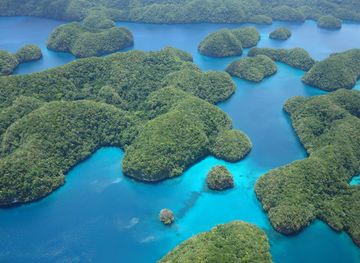
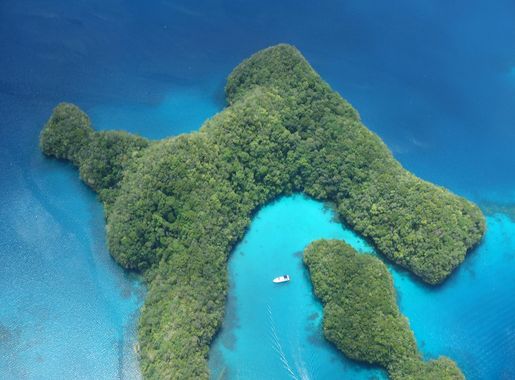
The Southern Lagoon in Palau is a breathtaking aquatic haven that offers an unparalleled experience for nature lovers and adventurers alike. This UNESCO World Heritage Site is a spectacular blend of crystal-clear waters, vibrant coral reefs, and lush mangrove forests. The lagoon is home to an incredible diversity of marine life, making it a top destination for snorkeling, scuba diving, and kayaking. Visitors can explore the famous Rock Islands, a collection of over 200 limestone formations that rise majestically from the turquoise waters. These islands are covered in dense vegetation and surrounded by stunning coral reefs teeming with colorful fish and other marine creatures. The Southern Lagoon also boasts several hidden lagoons and secluded beaches, perfect for a tranquil escape. The area is rich in cultural history, with ancient stone monoliths and ceremonial sites scattered throughout the islands. Local guides often share fascinating stories and traditions, giving visitors a deeper understanding of Palau's heritage. Whether you're seeking adventure or relaxation, the Southern Lagoon offers a unique and unforgettable experience in one of the world's most beautiful natural settings.

Know before you go
Hi, I'm Eve. Here are a few practical things to know before exploring Southern Lagoon.
- Best Time to Visit: November to April for the best weather and visibility.
- Book Tours in Advance: Popular activities like snorkeling and diving can fill up quickly.
- Local Guides: Hire a local guide to learn more about the cultural and natural history of the area.
- Eco-friendly Practices: Follow local guidelines to protect the delicate marine environment.
- Bring Reef-Safe Sunscreen: Help preserve the coral reefs by using environmentally friendly sunscreen.
Top City Travel Guides in Southern Lagoon
The cities of Southern Lagoon, and the easiest places to base yourself.


Destinations in Southern Lagoon
Resorts, valleys and scenic spots worth a trip of their own.


Explore Southern Lagoon: Things to Do, Places to Eat, Hotels & More
Handpicked recommendations for top attractions, local dining, accommodations, and more

Top Attractions & Sightseeing in Southern Lagoon
Top-rated picks
Best Attractions

Jellyfish Lake
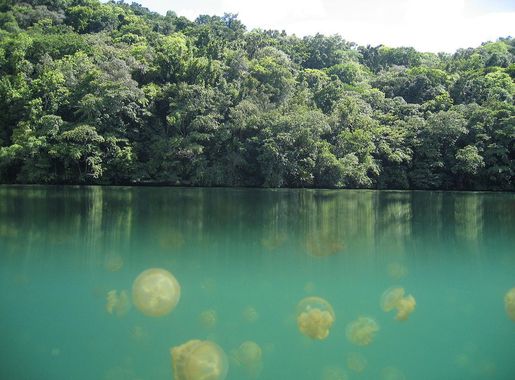
Experience the unique aquatic wonder of Jellyfish Lake in Palau, where stunning golden jellyfish and vibrant marine life await in a tranquil paradise.

German Channel
Explore the stunning German Channel in Palau, a diver's paradise teeming with manta rays and vibrant marine life.

Ngermeaus Island Park
Explore Ngermeaus Island Park in Palau, a tropical paradise with stunning landscapes, vibrant marine life, and unforgettable adventures.
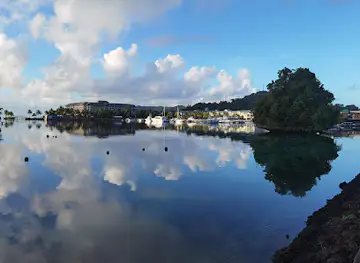
Malakal Island
Experience the natural beauty and vibrant marine life of Malakal Island in Palau, an ideal destination for adventure and relaxation.

Best landmarks in Southern Lagoon
Top-rated picks
Best Landmarks
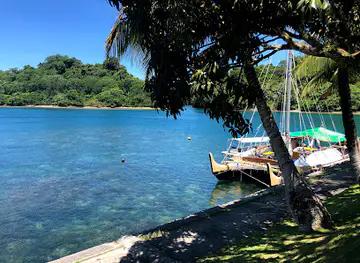
Palau Aquarium
Explore the rich marine biodiversity of Palau at the stunning Palau Aquarium, a must-visit for nature lovers and families alike.

Shipwreck
Discover the historic Shipwreck in Koror, Palau, a stunning underwater relic of WWII surrounded by vibrant marine life.

Chandelier Cave
Discover the enchanting Chandelier Cave in Palau, where stunning limestone formations and rich cultural history create a truly magical experience.

Ngermeskang Bird Sanctuary
Explore the pristine beauty of Ngermeskang Bird Sanctuary, a haven for bird watchers and nature lovers in Palau, rich in avian diversity and lush landscapes.

Best restaurants in Southern Lagoon
Top-rated picks
Best Restaurants

Palau Pacific Resort
Discover luxury and tranquility at Palau Pacific Resort, where breathtaking views meet exceptional service in paradise.

Drop Off Bar and Grill
Experience the best of Palauan cuisine at Drop Off Bar and Grill – where great food meets stunning views in Koror.

Palau Hotel
Discover comfort at Palau Hotel in Koror—your gateway to exploring the stunning beauty and culture of Palau.

The Taj
Experience authentic Indian cuisine at The Taj in Koror - where rich flavors meet warm hospitality for an unforgettable dining experience.

Best bars in Southern Lagoon
Top-rated picks
Best Bars
Palau Royal Resort
Experience luxury and natural beauty at the Palau Royal Resort, your perfect getaway in the heart of the Pacific.
Palau Pacific Resort
Experience the ultimate luxury getaway at Palau Pacific Resort, where stunning views and exceptional hospitality meet.

Drop Off Bar and Grill
Experience the vibrant flavors of Palauan cuisine at Drop Off Bar and Grill, a culinary gem in Koror, perfect for tourists seeking delightful meals and stunning views.

Palau Hotel
Experience comfort and convenience at Palau Hotel, your gateway to the breathtaking beauty of Koror, Palau.

Best nightclubs in Southern Lagoon
Top-rated picks
Best Nightclubs
Palau Royal Resort
Experience luxury and natural beauty at Palau Royal Resort, your perfect tropical getaway in the heart of Palau.
Palau Pacific Resort
Experience luxury and adventure at Palau Pacific Resort, where breathtaking views and world-class amenities meet the beauty of nature.

Drop Off Bar and Grill
Experience the best of local and international flavors at Drop Off Bar and Grill in Palau, where every meal is a celebration of culinary excellence.

COVE Resort Palau
Discover luxury and tranquility at COVE Resort Palau, your perfect getaway in the heart of the Pacific.

Best shops in Southern Lagoon
Top-rated picks
Best Shops
Palau Pacific Resort
Discover luxury and adventure at Palau Pacific Resort, your gateway to the stunning beauty of Palau's pristine beaches and vibrant marine life.

Milky Way
Witness the breathtaking beauty of the Milky Way in Koror, Palau, where stargazing meets stunning natural landscapes for an unforgettable experience.

Sam's Tours Palau
Explore vibrant marine life and enjoy local cuisine at Sam's Tours Palau, your ultimate dive shop and bar in the heart of Palau.

Fish 'n Fins Palau
Discover the vibrant underwater world of Palau with Fish 'n Fins, your gateway to thrilling SCUBA adventures and unforgettable marine experiences.

Explore Southern Lagoon on the Map
A handpicked selection of must-see spots in Southern Lagoon, mapped for you.
Southern Lagoon Essentials
-
Southern Lagoon in Palau is accessible primarily by air. The nearest international gateway is Roman Tmetuchl International Airport (ROR) in Koror, the capital of Palau. From there, you can take a domestic flight to Peleliu or Angaur islands, which are close to the Southern Lagoon. Alternatively, you can arrange a boat transfer from Koror to the Southern Lagoon. Many tour operators offer this service, providing a scenic route through Palau's stunning waters.
-
Within the Southern Lagoon, transportation options include boat rentals, guided tours, and local taxis. Boats are the most common and practical way to navigate the lagoon, allowing for easy access to remote islands and snorkeling spots. Some resorts and hotels offer complimentary shuttle services to popular sites. Renting a bicycle is another option for exploring the islands on land.
-
The official currency in Palau is the United States Dollar (USD). Credit cards are widely accepted in hotels, restaurants, and larger shops, but it is advisable to carry cash for smaller establishments and local markets. ATMs are available in Koror, but may be limited in the Southern Lagoon area, so ensure you withdraw sufficient cash before departing Koror.
-
Southern Lagoon is generally a safe destination for tourists, with low crime rates. However, it is recommended to take standard precautions such as not leaving valuables unattended and avoiding poorly lit areas at night. There are no specific high-crime areas targeting tourists, but always remain vigilant and aware of your surroundings.
-
In case of emergency, dial 911 for immediate assistance. Medical facilities are available in Koror, and some islands in the Southern Lagoon have basic health clinics. It is recommended to have comprehensive travel insurance that includes medical evacuation coverage. For minor health issues, there are pharmacies in Koror where you can purchase over-the-counter medications.
-
Fashion: Do wear comfortable, lightweight clothing suitable for a tropical climate. Avoid overly revealing attire, especially when visiting local villages. Religion: Do respect local customs and traditions. When visiting religious sites, dress modestly and remove your shoes. Public Transport: Do be courteous and respectful to locals when using public transport. Don't play loud music or engage in disruptive behavior. Greetings: Do greet people with a smile and a slight bow. A simple 'hello' or 'Alii' (local greeting) is appreciated. Eating & Drinking: Do try local dishes and accept food offerings graciously. Don't waste food, as it is considered disrespectful.
-
To experience Southern Lagoon like a local, participate in traditional Palauan activities such as fishing, weaving, and canoeing. Visit local markets to buy fresh seafood and handicrafts. Engage with locals, as they are often friendly and willing to share stories about their culture and history. Don't miss exploring the Rock Islands and snorkeling in Jellyfish Lake, a unique and unforgettable experience.
When is the best time to visit Southern Lagoon?
Useful Local Phrases for Southern Lagoon
You don't need to speak the language perfectly. Even learning a few simple words can make conversations warmer—and locals usually appreciate the effort.
— Eve

Here are the phrases I use most often in Southern Lagoon. Try a few—you'll be surprised how far they go! 😊
❤️
-
- HelloAlii
[ah-lee-ee] - GoodbyeA mek ngii
[ah mek ngee] - YesO
[oh] - NoNgii
[ngeee] - Please/You're welcomeMechull
[meh-chull] - Thank youNahngii
[nahn-gee] - Excuse me/SorryOngii
[ong-ee] - How are you?Mechull e kirel?
[meh-chull eh kee-rel] - Fine. And you?Ongii, e ngii?
[ong-ee, eh ngee?] - Do you speak English?Ongii e kirel English?
[ong-ee eh kee-rel Eng-lish?] - I don't understandA ngeruul
[ah nge-roo]
- HelloAlii
-
- I'd like to see the menu, pleaseOngii a kirel menu, mechull
[ong-ee ah kee-rel meh-nu, meh-chull] - I don't eat meatA ngeruul a ngii a chel
[ah nge-roo ah ngee ah chel] - Cheers!Choke!
[cho-ke] - I would like to pay, pleaseOngii a kirel a ngii, mechull
[ong-ee ah kee-rel ah ngee, meh-chull]
- I'd like to see the menu, pleaseOngii a kirel menu, mechull
-
- Help!Chad a!
[chad ah!] - Go away!Ongii a bad?
[ong-ee ah bahd?] - Call the Police!A kirel a Police!
[ah kee-rel ah po-leese!] - Call a doctor!A kirel a doctor!
[ah kee-rel ah doc-tor!] - I'm lostA ngel a dirrek
[ah nge-l ah dee-rek] - I'm illA ngii a kirel
[ah ngee ah kee-rel]
- Help!Chad a!
-
- I'd like to buy...Ongii a kirel a reng...
[ong-ee ah kee-rel ah reng] - I'm just lookingOngii a ngalek
[ong-ee ah ngah-lek] - How much is it?Ngei a ngii?
[ngei ah ngee?] - That's too expensiveA reng a kirel ngii
[ah reng ah kee-rel ngee] - Can you lower the price?Ongii a kirel a ngii a kirel?
[ong-ee ah kee-rel ah ngee ah kee-rel?]
- I'd like to buy...Ongii a kirel a reng...
-
- What time is it?Ngei a kirel?
[ngei ah kee-rel?] - It's one o'clockA kirel a chad
[ah kee-rel ah chad] - Half past (10)A kirel a chad a ngii
[ah kee-rel ah chad ah ngee] - MorningTia
[tee-ah] - AfternoonChad a ngii
[chad ah ngee] - EveningMekai
[meh-kai] - YesterdayNgbesong
[ng-be-so-ng] - TodayNgei a kirel
[ngei ah kee-rel] - TomorrowNgei a kirel a ngii
[ngei ah kee-rel ah ngee] - 1Chad
[chad] - 2Mekai
[meh-kai] - 3Mekai a chad
[meh-kai ah chad] - 4Mekai a chad a ngii
[meh-kai ah chad ah ngee] - 5Mekai a ngii
[meh-kai ah ngee] - 6Mekai a dirrek
[meh-kai ah dee-rek] - 7Mekai a kirel
[meh-kai ah kee-rel] - 8Mekai a chad a kirel
[meh-kai ah chad ah kee-rel] - 9Mekai a kirel a ngii
[meh-kai ah kee-rel ah ngee] - 10Mekai a chad a dirrek
[meh-kai ah chad ah dee-rek]
- What time is it?Ngei a kirel?
-
- Where's a/the...?Ngei a kirel a ...?
[ngei ah kee-rel ah ...?] - What's the address?Ngei a kirel a address?
[ngei ah kee-rel ah ad-dress?] - Can you show me (on the map)?Ongii a kirel a ngii (a map)?
[ong-ee ah kee-rel ah ngee (ah map)?] - When's the next (bus)?Ngei a kirel a ngii (bus)?
[ngei ah kee-rel ah ngee (bus)?] - A ticket (to ....)A kirel a ticket (a ...)
[ah kee-rel ah tick-et (ah ...)]
- Where's a/the...?Ngei a kirel a ...?
History of Southern Lagoon
-
The Southern Lagoon in Palau has been inhabited for thousands of years. Archaeological evidence suggests that early settlers arrived in the area around 1000 BCE. These ancient communities were adept at fishing, farming, and navigating the intricate waterways of the lagoon. The remnants of their stone structures, pottery, and tools provide a glimpse into their daily lives and advanced knowledge of their environment.
-
By the first millennium CE, the Southern Lagoon had become a significant center of political and social organization in Palau. The rise of powerful chiefdoms in the region was marked by the construction of impressive stone platforms (bai) and meeting houses, which served as central hubs for ceremonial and political activities. These structures, some of which still stand today, are a testament to the region's advanced societal structures and cultural heritage.
-
The first recorded European contact with Palau occurred in the 16th century when Spanish explorers arrived in the region. However, it wasn't until the late 18th century that sustained interactions began. Captain Henry Wilson of the British East India Company ship Antelope famously shipwrecked on Ulong Island in the Southern Lagoon in 1783. His crew's interactions with the Palauans, particularly with Chief Ibedul, were instrumental in opening up further European exploration and eventual colonization.
-
In the early 20th century, Palau came under Japanese administration following World War I, as part of the League of Nations mandate. The Southern Lagoon saw significant development during this period, with the establishment of infrastructure and the introduction of new agricultural practices. The Japanese influence is still visible today in certain cultural and architectural elements in the region.
-
During World War II, Palau, including the Southern Lagoon, became a strategic location for both Japanese and Allied forces. The Battle of Peleliu, fought between September and November 1944, was one of the fiercest battles in the Pacific theater. The Southern Lagoon's waters were the site of numerous naval engagements, and remnants of this period, such as sunken ships and aircraft, can still be found, making it a significant historical and diving site.
-
After World War II, Palau became a United Nations Trust Territory administered by the United States. During this period, the Southern Lagoon continued to develop, with efforts to preserve its natural beauty and cultural heritage gaining momentum. Palau eventually gained full independence in 1994, and the Southern Lagoon was designated as a UNESCO World Heritage Site in 2012, recognizing its outstanding universal value and historical significance.
Neighbouring Regions of Southern Lagoon
The closest regions to Southern Lagoon, if you have time for more than one.



Your all‑in‑one travel companion app
Explore expert travel guides, compare and book tours, experiences, hotels, and more—all from the palm of your hand. Download now for seamless trip planning wherever your wanderlust takes you.


Explore More of Palau

Looking beyond Southern Lagoon? Discover Palau for broader travel guides, local hot-spots, and regional highlights.
Explore PalauSouthern Lagoon in Photos
Browse through our photo collection highlighting the charm and character of the destination.





Southern Lagoon: Palau's Aquatic Paradise
The Southern Lagoon in Palau is a breathtaking aquatic haven that offers an unparalleled experience for nature lovers and adventurers alike. This UNESCO World Heritage Site is a spectacular blend of crystal-clear waters, vibrant coral reefs, and lush mangrove forests. The lagoon is home to an incredible diversity of marine life, making it a top destination for snorkeling, scuba diving, and kayaking. Visitors can explore the famous Rock Islands, a collection of over 200 limestone formations that rise majestically from the turquoise waters. These islands are covered in dense vegetation and surrounded by stunning coral reefs teeming with colorful fish and other marine creatures. The Southern Lagoon also boasts several hidden lagoons and secluded beaches, perfect for a tranquil escape. The area is rich in cultural history, with ancient stone monoliths and ceremonial sites scattered throughout the islands. Local guides often share fascinating stories and traditions, giving visitors a deeper understanding of Palau's heritage. Whether you're seeking adventure or relaxation, the Southern Lagoon offers a unique and unforgettable experience in one of the world's most beautiful natural settings.