
Fly River Basin, Papua New Guinea Travel Guide
Discover the lush rainforests, diverse wildlife, and rich cultural heritage of the Fly River Basin in Papua New Guinea – a hidden gem for nature and culture enthusiasts.
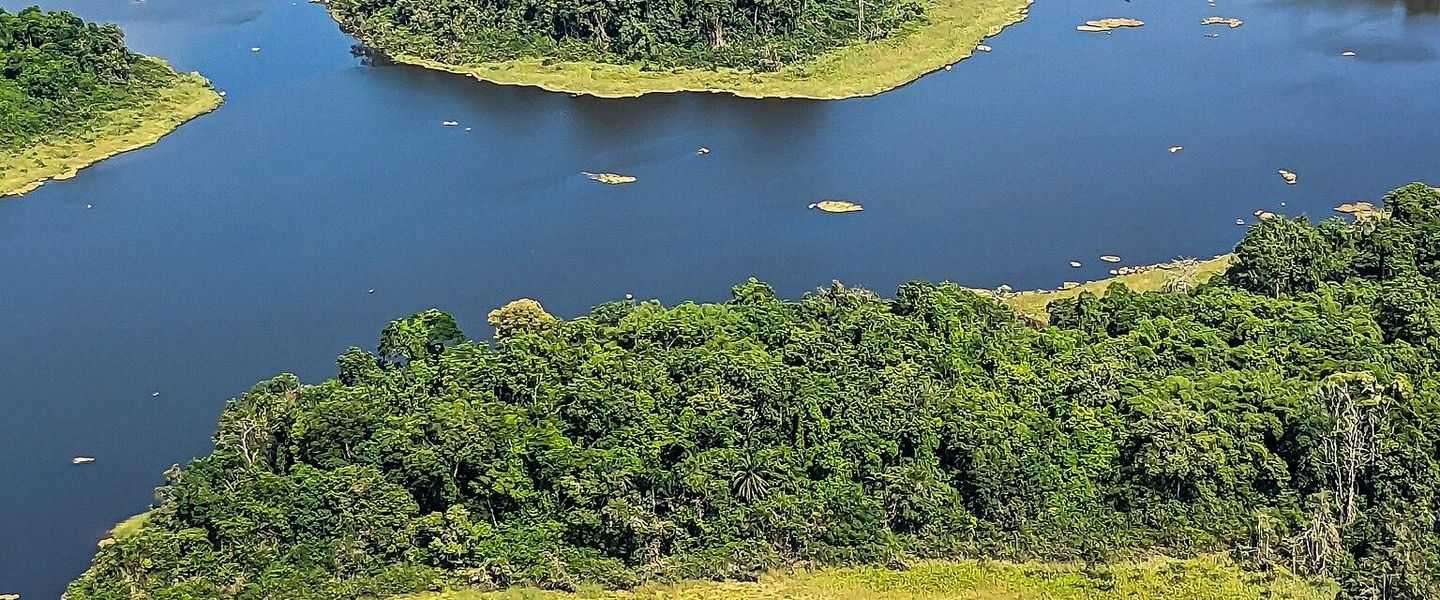
Nestled in the heart of Papua New Guinea, the Fly River Basin is a vast and fascinating area waiting to be explored. This region, named after the Fly River, offers lush rainforests, diverse wildlife, and a rich cultural heritage. It is one of the most significant river systems in the country, providing a lifeline to the communities that live along its banks. The Fly River Basin is a paradise for nature lovers. Its dense jungles are home to an array of flora and fauna, including species that are unique to the region. Bird watchers will be delighted by the colorful birds that flit through the trees, while those interested in marine life can explore the river's aquatic ecosystems. The landscape is a blend of thick forests, winding waterways, and serene wetlands, offering a tranquil escape from the hustle and bustle of modern life. Cultural enthusiasts will find much to admire in the Fly River Basin. The local communities maintain traditional ways of life, and visitors have the opportunity to learn about their customs and practices. From vibrant festivals to intricate handicrafts, the region's cultural heritage is both vibrant and deeply rooted in history. A visit to the Fly River Basin is not just a journey through nature, but also a journey through time, offering insights into the lives of the people who call this incredible place home.

Know before you go
Hi, I'm Eve. Here are a few practical things to know before exploring Fly River Basin.
- Bring insect repellent to protect against mosquitoes and other insects.
- Hire a local guide to navigate the river and surrounding areas safely.
- Respect local customs and traditions when visiting villages.
- Carry enough cash, as ATMs are scarce in remote areas.
- Pack lightweight, breathable clothing suitable for a tropical climate.
Explore Fly River Basin: Things to Do, Places to Eat, Hotels & More
Handpicked recommendations for top attractions, local dining, accommodations, and more

Top Attractions & Sightseeing in Fly River Basin


Best bars in Fly River Basin
Top-rated picks
Best Bars

The Stanley Hotel & Suites
Discover luxury and comfort at The Stanley Hotel & Suites in Port Moresby, where stunning views and exceptional service await.

Hilton Port Moresby Hotel & Residences
Experience luxury and exceptional service at Hilton Port Moresby Hotel & Residences, your gateway to the beauty of Papua New Guinea.

Lamana Hotel
Discover luxury and comfort at Lamana Hotel, your premier destination in Port Moresby for relaxation and exploration.

Airways Hotel
Experience luxury and comfort at Airways Hotel, the premier hotel near Jackson International Airport in Port Moresby, Papua New Guinea.

Best nightclubs in Fly River Basin
Top-rated picks
Best Nightclubs

Fly River
Experience the breathtaking landscapes and rich cultural heritage along the majestic Fly River in Papua New Guinea.

Club Illusion PNG
Discover the lively nightlife of Port Moresby at Club Illusion PNG, where music and dance come alive in an unforgettable atmosphere.

Club Regal
Discover the lively nightlife of Port Moresby at Club Regal, where music and culture collide for an unforgettable experience.

BlackOut Night Club
Discover the pulsating nightlife at BlackOut Night Club in Port Moresby, where unforgettable evenings await amidst vibrant music and lively crowds.


Explore Fly River Basin on the Map
A handpicked selection of must-see spots in Fly River Basin, mapped for you.
Fly River Basin Essentials
-
Traveling to the Fly River Basin in Papua New Guinea typically begins with a flight to Port Moresby, the capital city. From Port Moresby, you can take a domestic flight to Kiunga, which serves as the primary gateway to the Fly River Basin. Airlines such as Air Niugini and PNG Air operate flights between Port Moresby and Kiunga. Upon arrival in Kiunga, you can arrange for river transport to various destinations within the Fly River Basin.
-
Transportation within the Fly River Basin primarily involves river travel via motorized canoes, dinghies, or larger boats. Local guides and tour operators can be hired to navigate the river safely. There are also some unpaved roads connecting villages, but these are often in poor condition and require a 4x4 vehicle. It is recommended to coordinate transportation through local tour operators who are familiar with the terrain and river conditions.
-
The official currency in Papua New Guinea is the Papua New Guinean Kina (PGK). Credit cards are accepted in larger towns like Kiunga, but cash is essential for transactions in remote areas. ATMs are available in Kiunga, but it is advisable to withdraw sufficient cash before heading deeper into the Fly River Basin. Ensure you have small denominations for easier transactions in villages.
-
While the Fly River Basin is generally safe for tourists, it is important to exercise caution. Some areas may have higher crime rates, particularly in more isolated regions. Avoid traveling alone, especially at night, and always stay with a group or a local guide. Be mindful of your belongings and avoid displaying valuable items. It is advisable to check current travel advisories and consult with local authorities or tour operators regarding safe travel routes.
-
In case of an emergency, the emergency contact number in Papua New Guinea is 111. Medical facilities in the Fly River Basin are limited, so it is crucial to have comprehensive travel insurance that includes medical evacuation. Kiunga has a hospital that can handle basic medical emergencies. For serious medical issues, evacuation to Port Moresby or another major city may be necessary. Always carry a basic first aid kit and necessary medications.
-
Fashion: Do dress modestly, especially in villages. Lightweight, long-sleeved clothing is recommended to protect against insects and sun exposure. Religion: Do respect local customs and traditions. Always ask for permission before entering sacred sites. Public Transport: Do be polite and greet the boat operators and fellow passengers. Don't be disruptive or loud. Greetings: Do greet locals with a friendly 'moning' (good morning) or 'apinun' (good afternoon). A handshake is also common. Eating & Drinking: Do try local foods and accept food offerings graciously. Don't refuse hospitality, as it is considered impolite.
-
To experience the Fly River Basin like a local, engage with the local communities and participate in their daily activities. Visit local markets to purchase fresh produce and handmade crafts. Fishing and bird-watching are popular activities that provide insight into the local way of life. Hiring a local guide can enhance your experience by offering cultural insights and navigating the river safely. Always show respect for local customs and traditions.
When is the best time to visit Fly River Basin?
Useful Local Phrases for Fly River Basin
You don't need to speak the language perfectly. Even learning a few simple words can make conversations warmer—and locals usually appreciate the effort.
— Eve

Here are the phrases I use most often in Fly River Basin. Try a few—you'll be surprised how far they go! 😊
❤️
-
- HelloAlo
[ah-loh] - GoodbyeAro
[ah-roh] - YesIai
[ee-ai] - NoNai
[nai] - Please/You're welcomePalem
[pah-lem] - Thank youTenkyu
[ten-kyoo] - Excuse me/SorrySori
[soh-ree] - How are you?Yu orait?
[yoo oh-rait] - Fine. And you?Orait. Na yu?
[oh-rait nah yoo] - Do you speak English?Yu tokim Inglis?
[yoo toh-keem ing-lis] - I don't understandMi no save
[mee noh sah-veh]
- HelloAlo
-
- I'd like to see the menu, pleaseMi laik lukim menu, palem
[mee lai-ik loo-keem meh-noo pah-lem] - I don't eat meatMi no kaikai mit
[mee noh kai-kai meet] - Cheers!Aroa!
[ah-roh-ah] - I would like to pay, pleaseMi laik pai, palem
[mee lai-ik pie pah-lem]
- I'd like to see the menu, pleaseMi laik lukim menu, palem
-
- Help!Help!
[help] - Go away!Go we!
[goh weh] - Call the Police!Kolim polis!
[koh-leem poh-lis] - Call a doctor!Kolim dokta!
[koh-leem dohk-tah] - I'm lostMi lus
[mee loos] - I'm illMi sik
[mee seek]
- Help!Help!
-
- I'd like to buy...Mi laik buy...
[mee lai-ik bye] - I'm just lookingMi lukim tasol
[mee loo-keem tah-sohl] - How much is it?Olsem hamas?
[ohl-sem hah-mas] - That's too expensiveDat i tu muya
[daht ee too moo-yah] - Can you lower the price?Yu inap daunim pris?
[yoo ee-nahp dah-oo-neem prees]
- I'd like to buy...Mi laik buy...
-
- What time is it?Hamas taim?
[hah-mas tah-im] - It's one o'clockI gat wan o'klok
[ee gaht wahn oh-kloh-k] - Half past (10)Haf pas (10)
[haf pahs] - MorningMoning
[moh-ning] - AfternoonAftanoon
[ahf-tah-noon] - EveningIvening
[ee-ven-ing] - YesterdayYestede
[yeh-steh-deh] - TodayTude
[too-deh] - TomorrowTumoro
[too-moh-roh] - 1Wan
[wahn] - 2Tu
[too] - 3Tri
[tree] - 4Foa
[foh-ah] - 5Faiv
[fah-eev] - 6Siks
[siks] - 7Seven
[seh-ven] - 8Eit
[eight] - 9Nain
[nine] - 10Ten
[ten]
- What time is it?Hamas taim?
-
- Where's a/the...?Wea samting...?
[weh-ah sahm-ting] - What's the address?Olsem wanem adres?
[ohl-sem wah-nem ah-dres] - Can you show me (on the map)?Yu inap showim mi (long map)?
[yoo ee-nahp show-im mee long mahp] - When's the next (bus)?Ven naxt (bas)?
[ven nahx-t bas] - A ticket (to ....)Wan tiket (go....)
[wahn tee-ket goh]
- Where's a/the...?Wea samting...?
History of Fly River Basin
-
The Fly River Basin has been home to various indigenous groups for thousands of years. The region's earliest inhabitants relied on the river for sustenance, engaging in fishing, hunting, and small-scale agriculture. The diverse cultures of the Fly River Basin are characterized by intricate social structures, traditional rituals, and rich oral histories passed down through generations.
-
The first European contact with the Fly River Basin occurred in the 19th century. In 1845, British explorer Francis Blackwood led an expedition to the river, naming it after his ship, the HMS Fly. This marked the beginning of European interest in the region, which would eventually lead to further exploration and colonization efforts.
-
During the late 19th and early 20th centuries, the Fly River Basin came under the influence of various colonial powers. The British and Germans both established presences in the area, exploiting its natural resources and attempting to impose their rule on the indigenous populations. This period saw significant changes in the local way of life, as traditional practices were disrupted by new economic and political systems.
-
The Fly River Basin played a strategic role during World War II, as both Allied and Japanese forces sought to control the region. The dense jungles and challenging terrain made it a difficult battleground, but the river's navigability provided crucial supply routes. The war left a lasting impact on the local communities, many of whom were displaced or affected by the conflict.
-
Papua New Guinea gained independence from Australia in 1975, leading to significant political and social changes in the Fly River Basin. The new nation sought to balance economic development with the preservation of its rich cultural heritage. Efforts to improve infrastructure and education in the region have been ongoing, although challenges remain.
-
The Fly River Basin is rich in natural resources, including gold and copper. Large-scale mining operations, such as the Ok Tedi Mine, have had profound environmental and social impacts on the region. Pollution from mining activities has affected the river's ecosystem and the livelihoods of local communities, leading to ongoing debates about sustainable development and environmental protection.
-
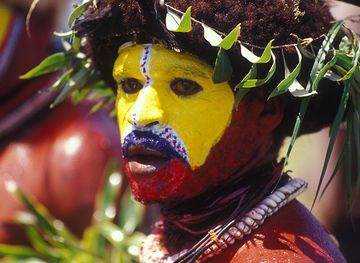
Despite the challenges posed by modernization and external influences, the indigenous cultures of the Fly River Basin remain vibrant and resilient. Efforts to preserve traditional practices, languages, and art forms are supported by both local communities and international organizations. Festivals, ceremonies, and cultural centers play a crucial role in maintaining the region's rich cultural heritage.
Neighbouring Regions of Fly River Basin
The closest regions to Fly River Basin, if you have time for more than one.




Your all‑in‑one travel companion app
Explore expert travel guides, compare and book tours, experiences, hotels, and more—all from the palm of your hand. Download now for seamless trip planning wherever your wanderlust takes you.


Explore More of Papua New Guinea

Looking beyond Fly River Basin? Discover Papua New Guinea for broader travel guides, local hot-spots, and regional highlights.
Explore Papua New GuineaFly River Basin in Photos
Browse through our photo collection highlighting the charm and character of the destination.


The Enchanting Fly River Basin of Papua New Guinea
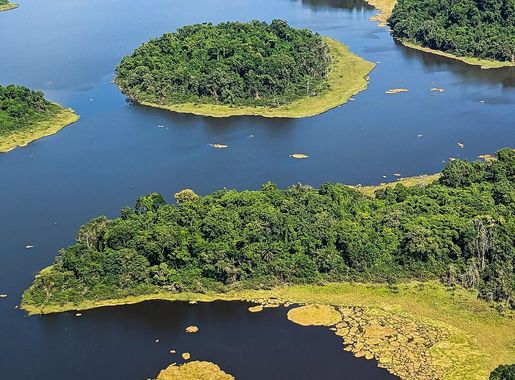
Nestled in the heart of Papua New Guinea, the Fly River Basin is a vast and fascinating area waiting to be explored. This region, named after the Fly River, offers lush rainforests, diverse wildlife, and a rich cultural heritage. It is one of the most significant river systems in the country, providing a lifeline to the communities that live along its banks. The Fly River Basin is a paradise for nature lovers. Its dense jungles are home to an array of flora and fauna, including species that are unique to the region. Bird watchers will be delighted by the colorful birds that flit through the trees, while those interested in marine life can explore the river's aquatic ecosystems. The landscape is a blend of thick forests, winding waterways, and serene wetlands, offering a tranquil escape from the hustle and bustle of modern life. Cultural enthusiasts will find much to admire in the Fly River Basin. The local communities maintain traditional ways of life, and visitors have the opportunity to learn about their customs and practices. From vibrant festivals to intricate handicrafts, the region's cultural heritage is both vibrant and deeply rooted in history. A visit to the Fly River Basin is not just a journey through nature, but also a journey through time, offering insights into the lives of the people who call this incredible place home.