

Free Bragança Travel Guide & Mobile App
Plan your Bragança trip with Evendo. Get free guides to top attractions, restaurants, hotels, and bars. Web access or download the mobile app.


Bragança, Portugal, pairs a medieval citadel and Domus Municipalis with Trás-os-Montes culture, mountain scenery, museums and regional cuisine.
A Walled City in Trás-os-Montes
Bragança stands in Portugal’s north-eastern corner, close to the Spanish border and surrounded by the high landscapes of Trás-os-Montes. Its historic centre rises above the modern city inside a remarkably well-preserved medieval citadel, where stone walls, narrow lanes and tiled houses gather around the castle. This is a place shaped by distance, border history and a strong regional identity rather than by mass tourism.Read more about Bragança
The Citadel and Its Stories
Landscape and Local Character
When is the best time to visit Bragança?
Best: June–July, September · 26–30°C| Month | High (°C) | Rainfall (mm) |
|---|---|---|
| January | 12 | 96 |
| February | 14 | 89 |
| March | 16 | 80 |
| April | 19 | 71 |
| May | 22 | 63 |
| June (best) | 26 | 52 |
| July (best) | 30 | 33 |
| August | 30 | 35 |
| September (best) | 27 | 52 |
| October | 21 | 71 |
| November | 17 | 91 |
| December | 14 | 94 |
Getting to and around Bragança
How to get there
Transportation
Explore Bragança on the map
Plan your Bragança trip on one map. See where the top attractions, landmarks, restaurants, bars and hotels are, find what's near where you're staying, and book hotels and experiences in a few clicks.
Best hotels in Bragança
Get your free copy of our complete guide to Bragança, delivered straight to you.
Everything on this page, from attractions and restaurants to essentials and local phrases, in one PDF you can read offline, print or share.
Already have an account? Sign in
Your Bragança guide is ready.
We'll send it to · Not you? Sign out

Getting your guide ready…
We are putting together a fresh copy of the Bragança guide. This can take up to a minute.
This can take a few moments. If your browser asks, choose Allow so the download can start. You'll find the guide in your Downloads folder.
Nothing happened? Download it again
Sorry, the guide is taking longer than usual. Please try again in a minute, or get it by email instead.
Bragança essentials
Currency and Payment
Safety
Emergency Situations
Do's and Don'ts
Local Tips
From Eve
Local phrases worth knowing
You don't need to get them perfect. A few words go a long way, and locals appreciate the effort.
Basics
| English | Local | Say it |
|---|---|---|
| Hello | Olá | [oh-lah] |
| Goodbye | Adeus | [ah-deh-oos] |
| Yes | Sim | [seem] |
| No | Não | [now] |
| Please/You're welcome | Por favor/De nada | [por fah-vohr/deh nah-dah] |
| Thank you | Obrigado | [oh-bree-gah-doo] |
| Excuse me/Sorry | Com licença/Desculpe | [kohm leh-sen-sah/deh-skool-peh] |
| How are you? | Como estás? | [koh-moo ehs-tahsh] |
| Fine. And you? | Estou bem. E tu? | [eh-stoh beyn/eh too] |
| Do you speak English? | Falas inglês? | [fah-lahsh een-glehsh] |
| I don't understand | Não entendo | [now ehn-tehn-doo] |
Eating & Drinking
| English | Local | Say it |
|---|---|---|
| I'd like to see the menu, please | Gostaria de ver o menu, por favor | [goh-stah-ree-ah deh vehr oo meh-noo/por fah-vohr] |
| I don't eat meat | Não como carne | [now koh-moo kahr-neh] |
| Cheers! | Saúde! | [sow-deh] |
| I would like to pay, please | Gostaria de pagar, por favor | [goh-stah-ree-ah deh pah-gahr/por fah-vohr] |
Emergencies
| English | Local | Say it |
|---|---|---|
| Help! | Socorro! | [soh-koh-roh] |
| Go away! | Vai embora! | [vah-ee ehn-boh-rah] |
| Call the Police! | Chama a polícia! | [shah-mah ah poh-lee-see-ah] |
| Call a doctor! | Chama um médico! | [shah-mah oom meh-dee-koo] |
| I'm lost | Estou perdido | [eh-stoh pehr-dee-doo] |
| I'm ill | Estou doente | [eh-stoh doo-ehn-teh] |
Shopping
| English | Local | Say it |
|---|---|---|
| I'd like to buy... | Gostaria de comprar... | [goh-stah-ree-ah deh kohm-prahr] |
| I'm just looking | Estou só a ver | [eh-stoh soh ah vehr] |
| How much is it? | Quanto custa? | [kwahn-toh koos-tah] |
| That's too expensive | Isso é muito caro | [ee-soo eh mwee-toh kahr-oo] |
| Can you lower the price? | Pode baixar o preço? | [poh-deh bahy-shahr oo preh-soo] |
Time & Numbers
| English | Local | Say it |
|---|---|---|
| What time is it? | Que horas são? | [keh oh-rahsh sahoh] |
| It's one o'clock | É uma hora | [eh oo-mah oh-rah] |
| Half past (10) | Meia (10) | [meh-yah/deh-zeh] |
| Morning | Manhã | [mah-nyah] |
| Afternoon | Tarde | [tahr-deh] |
| Evening | Noite | [noy-teh] |
| Yesterday | Ontem | [ohn-tehm] |
| Today | Hoje | [oh-zheh] |
| Tomorrow | Amanhã | [ah-mah-nyah] |
| 1 | Um | [oom] |
| 2 | Dois | [doh-eesh] |
| 3 | Três | [trehsh] |
| 4 | Quatro | [kwah-troh] |
| 5 | Cinco | [seen-koh] |
| 6 | Seis | [saysh] |
| 7 | Sete | [seh-teh] |
| 8 | Oito | [oy-toh] |
| 9 | Nove | [noh-veh] |
| 10 | Dez | [dehsh] |
Transport & Directions
| English | Local | Say it |
|---|---|---|
| Where's a/the...? | Onde fica o/a...? | [ohn-deh fee-kah oo/ah] |
| What's the address? | Qual é a morada? | [kwahl eh ah moh-rah-dah] |
| Can you show me (on the map)? | Pode mostrar-me (no mapa)? | [poh-deh moh-shtr-meh/noo mah-pah] |
| When's the next (bus)? | Quando é o próximo (autocarro)? | [kwahn-doo eh oo proh-ksee-moh/ow-toh-kah-roo] |
| A ticket (to ....) | Um bilhete (para ....) | [oom bee-lyeh-teh/pah-rah] |
History of Bragança
Early Settlements and Roman Brigantia
The Bragança region was occupied before Roman rule by communities associated with the wider Celtic and pre-Roman cultures of the north-western Iberian Peninsula. Roman administration brought roads, agriculture and new patterns of settlement, and the ancient name Brigantia is generally connected with the origins of the modern city’s name. The area’s position on routes across the north-east made it significant as a frontier zone, although the present medieval citadel did not yet exist. After the Roman period, control of the region shifted among Suebi, Visigothic and Muslim powers, leaving Bragança within a politically changing landscape where upland settlements and defensive positions remained important.
Medieval Reorganisation and the Castle
Bragança emerged as a more clearly defined medieval settlement during the Christian consolidation of northern Portugal. A town charter was granted by King Sancho I in 1187, helping establish Bragança as a royal stronghold and centre of regional administration. The castle and surrounding walls developed over subsequent centuries, reflecting the city’s strategic role near the frontier with León and later Castile. Within the fortified town, the Domus Municipalis served a civic purpose and is one of the country’s rare surviving medieval municipal buildings. The citadel’s compact arrangement of military, religious and domestic structures still conveys the character of a medieval border town.
The Braganza Dynasty Emerges
Bragança gained lasting national importance through the House of Braganza, one of Portugal’s most influential noble dynasties. The family’s rise was linked to the dukedom of Braganza, created in the fifteenth century for Afonso, an illegitimate son of King João I. The dynasty accumulated land, wealth and political influence, although its principal ducal residence was at Vila Viçosa rather than in Bragança itself. In 1640, João, 8th Duke of Braganza, became King João IV after the restoration of Portuguese independence from the Iberian Union. The dynasty then occupied the Portuguese throne until the establishment of the republic in 1910.
Border Society and Regional Commerce
For centuries, Bragança’s economy and social life were shaped by its frontier position, agricultural hinterland and links with neighbouring Spanish territories. Livestock, grain, chestnuts, wool, wine and preserved foods supported local trade, while seasonal fairs and routes through the mountains connected villages to the city. The population included Christian, Jewish and converted Jewish communities, and the former Jewish quarter remains a reminder of this layered history. Bragança’s relative distance from Portugal’s Atlantic centres encouraged a strong regional culture, expressed in vernacular building, agricultural customs, winter festivities and a cuisine based on preservation, wood fires and locally available produce.
Modernisation and Cultural Preservation
The nineteenth and twentieth centuries brought administrative change, improved roads and gradual modernisation, but Bragança retained a close relationship with its rural surroundings. In the twentieth century, migration and economic change altered the population of the city and nearby villages, as happened across much of Portugal’s interior. Cultural institutions helped preserve and interpret the area’s heritage, including the Museu Municipal Abade de Baçal, named after the historian, archaeologist and bishop who documented Trás-os-Montes. The development of the Polytechnic Institute of Bragança also gave the city an important educational role. Today, the castle, museums and surrounding protected landscapes connect contemporary Bragança with its medieval and regional past.
Travel experiences inspired by this city
-
 10 Day Trip
Bragança Bound: A 10-Day Friends’ Escape through Castles, Cuisine, and Montesinho
Discover Braganca with friends: 10 days of castle climbs, Montesinho hikes, and Tras-os-Montes flavors, based at Hotel Estalagem Turismo with poolside downtime.
10 Day Trip
Bragança Bound: A 10-Day Friends’ Escape through Castles, Cuisine, and Montesinho
Discover Braganca with friends: 10 days of castle climbs, Montesinho hikes, and Tras-os-Montes flavors, based at Hotel Estalagem Turismo with poolside downtime.
 10 Aug 2026
By Aino Nieminen -
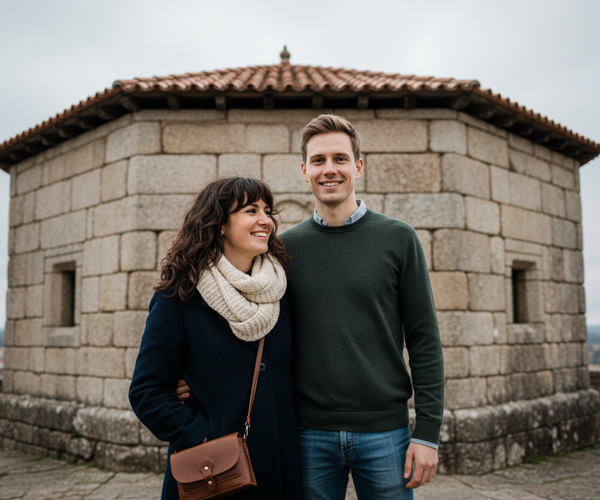 9 Day Trip
Exploring the Historic Charm of Bragança with Friends
Discover Bragança's rich history and stunning landscapes with friends. Explore medieval sites, enjoy local cuisine, and relax in comfort.
9 Day Trip
Exploring the Historic Charm of Bragança with Friends
Discover Bragança's rich history and stunning landscapes with friends. Explore medieval sites, enjoy local cuisine, and relax in comfort.
 10 Feb 2026
By Erzsébet Szabó
Swipe for more travel diaries
Bragança in Photos
Browse through our photo collection highlighting the charm and character of the destination.
Cities near Bragança
The closest cities to Bragança, if you have time for more than one stop.
-

-

-

-

-


Swipe for more cities
Explore more
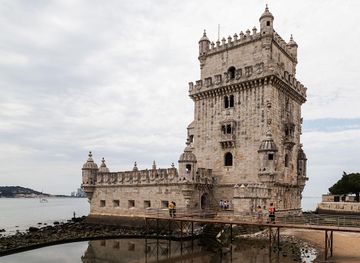
Explore more of Portugal
Discover Portugal: A blend of historic charm, stunning coastlines, and delightful cuisine awaits in this captivating European gem.
Explore Portugal