

Tet Paul Scenic Trail, Saint Lucia Travel Guide
Discover the Tet Paul Scenic Trail in Saint Lucia, where breathtaking views, rich cultural history, and lush landscapes await in a hike that's perfect for all ages.
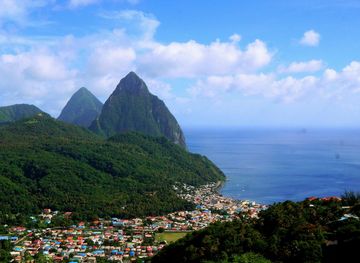
Nestled in the heart of Saint Lucia, the Tet Paul Scenic Trail offers an unparalleled hiking experience. This trail is a haven for nature lovers, providing breathtaking views of the iconic Pitons, lush rainforests, and the sparkling Caribbean Sea. The hike is moderately easy, making it accessible to most visitors, including families. Along the way, you will encounter a variety of plant species and learn about traditional agricultural practices from knowledgeable local guides. The trail is rich in cultural history. As you walk, you will pass through traditional medicinal gardens that showcase the healing herbs used by the island's ancestors. You will also get a glimpse into the daily lives of the local community with stops at a traditional Amerindian hut and a working organic farm. The guides are passionate and offer fascinating insights into the island's heritage and natural beauty. The highlight of the trail is the 'Stairway to Heaven,' a set of steps that lead to the most stunning views of the Pitons. From this vantage point, you can capture panoramic photos that will be the envy of your friends back home. Whether you are a seasoned hiker or a casual walker, the Tet Paul Scenic Trail offers a unique and enriching experience that showcases the best of Saint Lucia's natural and cultural treasures.

Know before you go
Hi, I'm Eve. Here are a few practical things to know before exploring Tet Paul Scenic Trail.
- Wear comfortable hiking shoes; the trail can be uneven in places.
- Bring water and sun protection; there are few shaded areas.
- Hire a local guide to enhance your experience with historical and botanical insights.
- Visit early in the morning to avoid the midday heat and crowds.
- Don't forget your camera; the views from the 'Stairway to Heaven' are spectacular.
Explore Tet Paul Scenic Trail: Things to Do, Places to Eat, Hotels & More
Handpicked recommendations for top attractions, local dining, accommodations, and more

Best attractions in Tet Paul Scenic Trail
Top-rated picks
Best Attractions

Unrulytoastquotesglobal/Tour Guide
Explore the vibrant charm of Gros Islet, St. Lucia - a cultural gem known for its lively markets, stunning beaches, and unforgettable local experiences.

Superman Waterfall
Experience the breathtaking beauty of Superman Waterfall in Diamond, St. Lucia—a perfect blend of adventure and tranquility in nature.

Donkey Beach
Experience the serene beauty and vibrant marine life at Donkey Beach in Gros Islet, St. Lucia – the perfect spot for relaxation and adventure.

Sabwisha Beach

Best landmarks in Tet Paul Scenic Trail
Top-rated picks
Best Landmarks

Tet Paul Nature Trail
Experience the breathtaking views and lush landscapes along the Tet Paul Nature Trail in St. Lucia – a must-visit for every nature lover.

Morne Coubaril Historical Adventure Park
Discover the captivating blend of history, adventure, and natural beauty at Morne Coubaril Historical Adventure Park in St. Lucia.

Piton Falls
Discover the tranquil beauty of Piton Falls in St. Lucia, where cascading waters and lush greenery create a serene escape into nature's embrace.

Têt Paul Nature Hike, Stairway To Heaven
Explore the stunning Tet Paul Nature Hike in St. Lucia, a scenic trail offering breathtaking views, rich biodiversity, and immersive nature experiences.

Best restaurants in Tet Paul Scenic Trail
Top-rated picks
Best Restaurants

The Coal Pot Restaurant
Experience exquisite seafood dining at The Coal Pot Restaurant in Castries, St. Lucia - where fresh flavors meet stunning views.

Big Chef Steakhouse
Experience the finest steaks and seafood in St. Lucia at Big Chef Steakhouse, where culinary excellence meets Caribbean hospitality.

The Beacon Restaurant
Discover exquisite local flavors and breathtaking views at The Beacon Restaurant in beautiful St. Lucia.

Matthew's Rooftop Restaurant
Experience breathtaking views and exquisite local flavors at Matthew's Rooftop Restaurant in Rodney Bay, St. Lucia.

Best bars in Tet Paul Scenic Trail
Top-rated picks
Best Bars

Tet Paul Nature Trail
Explore the Tet Paul Nature Trail in St. Lucia for stunning views, rich biodiversity, and a unique glimpse into the island's natural beauty and cultural heritage.

Spinnakers Beach Bar And Carvery
Experience the vibrant flavors and stunning views at Spinnakers Beach Bar and Carvery in beautiful Gros Islet, St. Lucia.

The Coal Pot Restaurant
Experience the best of St. Lucia's seafood at The Coal Pot, where fresh ingredients meet stunning seaside views for an unforgettable dining experience.

Naked Fisherman Restaurant
Experience the best of St. Lucia's cuisine at Naked Fisherman Restaurant, where fresh seafood meets breathtaking ocean views.

Best nightclubs in Tet Paul Scenic Trail
Top-rated picks
Best Nightclubs

Riverstone Country Club
Discover the electrifying nightlife at Riverstone Country Club, a premier disco club in St. Lucia where music and dance come alive.

GSport Lounge
Discover the vibrant nightlife at GSport Lounge in Mon Repos, St. Lucia, where delicious cocktails and lively entertainment await.

Lulu's Sip & Chill
Discover the vibrant nightlife at Lulu's Sip & Chill in Blanchard, St. Lucia, where music, dance, and tropical vibes create unforgettable moments.

Jump Up Street Party
Join the Jump Up Street Party for an unforgettable night of music, dance, and St. Lucian culture in the heart of Rodney Bay.

Best shops in Tet Paul Scenic Trail
Top-rated picks
Best Shops

Baywalk Shopping Mall
Discover the vibrant shopping and dining experience at Baywalk Shopping Mall in Rodney Bay, a must-visit for every tourist in St. Lucia.

Tet Paul Nature Trail
Explore the stunning Tet Paul Nature Trail in St. Lucia, a picturesque hike offering breathtaking views of the Pitons and vibrant local wildlife.

La Place Carénage
Experience shopping and local culture at La Place Carénage, the vibrant shopping mall in Castries, St. Lucia, offering unique finds and delicious dining.

Gablewoods Shopping Mall
Explore Gablewoods Shopping Mall in St. Lucia for a unique shopping experience blending local charm with international brands.

Explore Tet Paul Scenic Trail on the Map
A handpicked selection of must-see spots in Tet Paul Scenic Trail, mapped for you.
Tet Paul Scenic Trail Essentials
-
Tet Paul Scenic Trail is located in the southwestern part of Saint Lucia, near the town of Soufrière. The nearest airport is Hewanorra International Airport (UVF) in Vieux Fort, approximately 27 kilometers (17 miles) away. From the airport, you can hire a taxi or rent a car to reach Soufrière. The journey typically takes about 45 minutes by road. Alternatively, you can arrange for a shuttle service through your hotel or a local tour operator.
-
While in Soufrière, you can use taxis or rent a car to reach Tet Paul Scenic Trail. Taxis are readily available but can be more expensive. Renting a car offers more flexibility and allows you to explore the surrounding areas at your own pace. Public buses are an option but may not be as reliable or timely. The trail itself is best explored on foot, so be prepared for a bit of hiking.
-
The official currency of Saint Lucia is the Eastern Caribbean Dollar (XCD). US Dollars are also widely accepted. Credit cards are accepted in most hotels, restaurants, and larger shops in Soufrière, but it's advisable to carry some cash for smaller establishments and local vendors. ATMs are available in Soufrière for cash withdrawals.
-
Tet Paul Scenic Trail and the Soufrière area are generally safe for tourists. However, it is wise to take standard precautions. Avoid walking alone at night in unfamiliar areas and keep an eye on your belongings, especially in crowded places. While violent crime is rare, petty theft can occur. Be vigilant and stay aware of your surroundings.
-
In case of emergency, dial 911 for immediate assistance. There are local police stations and medical facilities available in Soufrière. It is advisable to have travel insurance that covers medical emergencies. For minor health issues, pharmacies are available in the town where you can purchase over-the-counter medications.
-
Fashion: Do wear comfortable, breathable clothing suitable for hiking. Avoid overly revealing outfits. Religion: Do respect local customs and traditions, particularly if visiting religious sites. Public Transport: Do be polite and respectful. Greet the driver and thank them when you exit. Don't expect punctuality as schedules can be flexible. Greetings: Do greet locals with a friendly 'hello' or 'good day'. A handshake is also acceptable. Eating & Drinking: Do try local dishes and accept food offerings graciously. Don't refuse hospitality as it is considered impolite.
-
To experience Tet Paul Scenic Trail like a local, consider hiring a local guide. They can provide valuable insights into the flora, fauna, and history of the area. Visit during the early morning or late afternoon to avoid the midday heat and enjoy the best lighting for photographs. Don't miss the 'Stairway to Heaven' for breathtaking views of the Pitons and the surrounding landscape. Engage with locals, who are often friendly and willing to share stories about the region.
When is the best time to visit Tet Paul Scenic Trail?
Useful Local Phrases for Tet Paul Scenic Trail
You don't need to speak the language perfectly. Even learning a few simple words can make conversations warmer—and locals usually appreciate the effort.
— Eve

Here are the phrases I use most often in Tet Paul Scenic Trail. Try a few—you'll be surprised how far they go! 😊
❤️
-
- HelloBonjour
[bon-zhoor] - GoodbyeAu revoir
[oh reh-vwah] - YesWi
[wee] - NoNon
[nohn] - Please/You're welcomeS'il vous plaît/De rien
[seel voo pleh / duh ryan] - Thank youMerci
[mehr-see] - Excuse me/SorryExcusez-moi/Désolé
[ehk-skew-zay mwah / day-zoh-lay] - How are you?Comment ça va?
[koh-mohn sah vah] - Fine. And you?Bien. Et vous?
[byen. eh voo] - Do you speak English?Parlez-vous anglais?
[par-lay voo ahn-glay] - I don't understandJe ne comprends pas
[zhuh nuh kohm-prahnd pah]
- HelloBonjour
-
- I'd like to see the menu, pleaseJe voudrais voir le menu, s'il vous plaît
[zhuh voo-dray vwahr luh meh-noo, seel voo pleh] - I don't eat meatJe ne mange pas de viande
[zhuh nuh mahnj pah duh vee-and] - Cheers!Santé!
[sahn-tay] - I would like to pay, pleaseJe voudrais payer, s'il vous plaît
[zhuh voo-dray pay-ay, seel voo pleh]
- I'd like to see the menu, pleaseJe voudrais voir le menu, s'il vous plaît
-
- Help!Au secours!
[oh seh-koor] - Go away!Allez-vous en!
[al-lay vooz ahn] - Call the Police!Appelez la police!
[ah-pay-lay lah po-lees] - Call a doctor!Appelez un médecin!
[ah-pay-lay uh mayd-sahn] - I'm lostJe suis perdu
[zhuh swee pair-doo] - I'm illJe suis malade
[zhuh swee mah-lahd]
- Help!Au secours!
-
- I'd like to buy...Je voudrais acheter...
[zhuh voo-dray ah-shet-ay] - I'm just lookingJe regarde juste
[zhuh ruh-gard zhuhst] - How much is it?Combien ça coûte?
[kohm-byen sah koot] - That's too expensiveC'est trop cher
[say troh shair] - Can you lower the price?Pouvez-vous baisser le prix?
[poo-vez voo bay-say luh pree]
- I'd like to buy...Je voudrais acheter...
-
- What time is it?Quelle heure est-il?
[kel uhr eh-teel] - It's one o'clockIl est une heure
[eel eh oon uhr] - Half past (10)Dix heures et demie
[dees uhr ay duh-mee] - MorningMatin
[mah-tahn] - AfternoonAprès-midi
[ah-preh-mee-dee] - EveningSoir
[swahr] - YesterdayHier
[yehr] - TodayAujourd'hui
[oh-zhoor-dwee] - TomorrowDemain
[duh-mahn] - 1Un
[uhn] - 2Deux
[duh] - 3Trois
[twah] - 4Quatre
[kat] - 5Cinq
[sank] - 6Six
[sees] - 7Sept
[set] - 8Huit
[wheat] - 9Neuf
[nuff] - 10Dix
[dees]
- What time is it?Quelle heure est-il?
-
- Where's a/the...?Où est...?
[oo eh] - What's the address?Quelle est l'adresse?
[kel eh lah-dress] - Can you show me (on the map)?Pouvez-vous me montrer (sur la carte)?
[poo-vez voo meh mohn-tray (soor lah kart)] - When's the next (bus)?Quand est le prochain (bus)?
[kahn eh luh proh-shahn (bus)] - A ticket (to ....)Un billet (pour ....)
[uhn bee-yay (poor)]
- Where's a/the...?Où est...?
History of Tet Paul Scenic Trail
-
Before European contact, the island of Saint Lucia was inhabited by the Arawaks and later the Caribs. These indigenous groups thrived in the lush landscapes, including areas now part of the Tet Paul Scenic Trail. Their presence is evidenced by archaeological findings such as pottery and tools, which reflect their sophisticated craftsmanship and deep connection to the land.
-
The history of Tet Paul Scenic Trail is interwoven with the broader colonial history of Saint Lucia. The island changed hands between the French and the British multiple times between the 17th and 19th centuries. This tug-of-war left an indelible mark on the region, as both colonial powers sought to exploit the island's fertile land and strategic location.
-
During the colonial period, the fertile lands around Tet Paul were used for agricultural purposes, particularly sugar cane and later bananas. The remnants of these agricultural activities can still be seen today, with terraced farming methods that were introduced by colonial settlers and adapted by local farmers.
-
Tet Paul Scenic Trail offers breathtaking views of the Pitons, two volcanic spires that are a UNESCO World Heritage Site. These natural wonders have not only shaped the island's geography but also its cultural and spiritual life. The Pitons are considered sacred by many locals, and their significance has been preserved through storytelling and traditional practices.
-
The Tet Paul Scenic Trail was developed as a community-based project to promote sustainable tourism and preserve the natural and cultural heritage of the area. Local residents played a crucial role in creating the trail, offering their knowledge of the land and its history to provide an authentic experience for visitors.
-
The trail is a living museum of Saint Lucian culture. Along the path, visitors can observe traditional practices such as cassava bread making, herbal medicine, and local crafts. These activities offer a glimpse into the daily lives of the island's inhabitants and their enduring connection to the land.
-
The biodiversity of Tet Paul is a testament to the island's rich natural heritage. The trail is home to a variety of endemic plant species and wildlife, some of which are rare and endangered. This biodiversity has been an integral part of the local culture, influencing everything from cuisine to folklore.
Neighbouring destination travel guides
Browse our curated selection of top destinations, scenic points, and must-visit spots in the area.


Your all‑in‑one travel companion app
Explore expert travel guides, compare and book tours, experiences, hotels, and more—all from the palm of your hand. Download now for seamless trip planning wherever your wanderlust takes you.


Explore More of Choiseul Quarter
Looking beyond Tet Paul Scenic Trail? Discover Choiseul Quarter for broader travel guides, local hot-spots, and regional highlights.
Explore Choiseul QuarterExplore More of Saint Lucia

Looking beyond Tet Paul Scenic Trail? Discover Saint Lucia for broader travel guides, local hot-spots, and regional highlights.
Explore Saint LuciaTet Paul Scenic Trail in Photos
Browse through our photo collection highlighting the charm and character of the destination.





Exploring the Tet Paul Scenic Trail: A Jewel of Saint Lucia
Nestled in the heart of Saint Lucia, the Tet Paul Scenic Trail offers an unparalleled hiking experience. This trail is a haven for nature lovers, providing breathtaking views of the iconic Pitons, lush rainforests, and the sparkling Caribbean Sea. The hike is moderately easy, making it accessible to most visitors, including families. Along the way, you will encounter a variety of plant species and learn about traditional agricultural practices from knowledgeable local guides. The trail is rich in cultural history. As you walk, you will pass through traditional medicinal gardens that showcase the healing herbs used by the island's ancestors. You will also get a glimpse into the daily lives of the local community with stops at a traditional Amerindian hut and a working organic farm. The guides are passionate and offer fascinating insights into the island's heritage and natural beauty. The highlight of the trail is the 'Stairway to Heaven,' a set of steps that lead to the most stunning views of the Pitons. From this vantage point, you can capture panoramic photos that will be the envy of your friends back home. Whether you are a seasoned hiker or a casual walker, the Tet Paul Scenic Trail offers a unique and enriching experience that showcases the best of Saint Lucia's natural and cultural treasures.