

Monte Caio Travel Guide - Free Web & App
Your ultimate guide to Monte Caio. Discover top landmarks, proposed trips, and local tips. Free on the web or via the Evendo companion app.


Monte Caio is not in San Marino; verify the destination before travelling, as San Marino’s principal mountain landmark is Monte Titano and its historic capital.
Geographical Identification
Monte Caio is not a recognised mountain or visitor destination within the Republic of San Marino. The name generally refers to Monte Caio in the Northern Apennines of Italy, in the Province of Parma, Emilia-Romagna, rather than to a feature in San Marino. It should therefore not be presented as a San Marino attraction.Read more about Monte Caio
San Marino’s Mountain Landscape
Planning Around the Name
When is the best time to visit Monte Caio?
Best: May–June, September · 23–27°C| Month | High (°C) | Rainfall (mm) |
|---|---|---|
| January | 10 | 76 |
| February | 11 | 66 |
| March | 14 | 66 |
| April | 19 | 66 |
| May (best) | 23 | 76 |
| June (best) | 27 | 93 |
| July | 29 | 93 |
| August | 29 | 93 |
| September (best) | 25 | 76 |
| October | 20 | 76 |
| November | 16 | 76 |
| December | 11 | 76 |
Getting to and around Monte Caio
How to get there
Transportation
Best attractions in Monte Caio
Monte Caio cannot be described as an attraction within San Marino because its geographical identity in the supplied country is unverified. San Marino’s corresponding mountain attraction is Monte Titano, where the historic centre of Città di San Marino occupies the summit ridge and the Three Towers—Guaita, Cesta and Montale—provide the country’s best-known historic setting. The surrounding streets contain museums, churches, viewpoints and civic buildings associated with the republic’s long history, while lower settlements such as Borgo Maggiore provide a different perspective on the compact territory. Visitors seeking the Italian Monte Caio should instead research the Northern Apennines of Parma Province, using the correct mountain location and nearby communities before arranging transport or walks. These are separate geographical subjects, with different landscapes, access conditions and heritage contexts.
-
History museum
Museo di criminologia medioevale e della tortura
Discover the chilling past of medieval torture and criminology at the Museo di Criminologia Medioevale e della Tortura in San Marino.
-
Tourist attraction
Giardino dei Liburni
Experience the tranquil beauty and historical charm of Giardino dei Liburni, a serene park in San Marino offering breathtaking views and lush landscapes.
-
Historical landmark
Valloni Palace
Explore the historical significance and architectural beauty of Valloni Palace in San Marino, a must-visit landmark for every traveler.
Best landmarks in Monte Caio
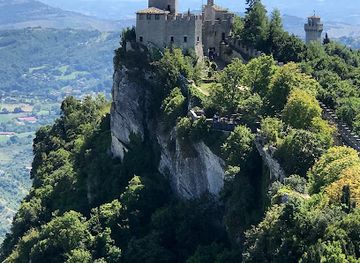
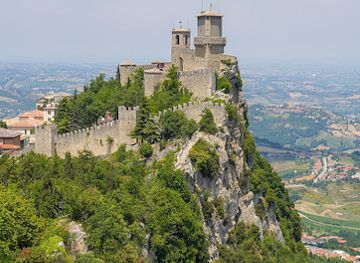
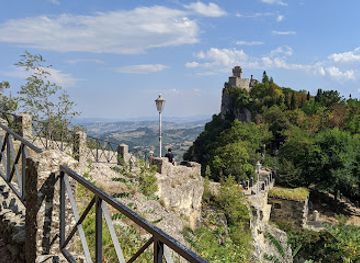
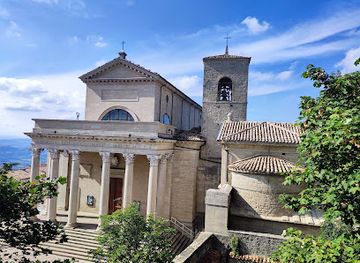
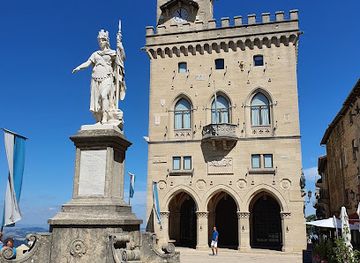
The defining San Marino landmark is Monte Titano, not Monte Caio. Its summit ridge supports the historic centre of Città di San Marino and the Three Towers: Guaita, the oldest and most prominent; Cesta, which houses the Museum of Ancient Arms; and Montale, the smallest of the three. The Basilica of San Marino and the Palazzo Pubblico are further landmarks within the historic capital, while the mountain’s elevated position gives the settlement its distinctive defensive setting. Monte Caio, by contrast, is associated with the Italian Northern Apennines and should be treated as a separate natural landmark with its own geography and access arrangements. The two names must not be used interchangeably.
-
Castle
Guaita Tower
Discover the historic Guaita Tower in San Marino, a medieval fortress offering stunning views and a glimpse into the rich heritage of this enchanting city-state.
-
Historical landmark
Falesia Second Tower
Experience the enchanting blend of history and stunning views at Falesia Second Tower in San Marino, a must-visit historical landmark for every traveler.
-
Basilica
Basilica of Saint Marinus
Discover the Basilica of Saint Marinus, a stunning architectural masterpiece and a key cultural landmark in the heart of San Marino.
-
Historical landmark
Liberty Square
Explore Liberty Square, the historic heart of San Marino, where stunning architecture meets vibrant local culture, perfect for every traveler.
Explore Monte Caio on the map
Plan your trip on one map. See where the top attractions, landmarks, restaurants and hotels are, and book hotels and experiences in a few clicks.
Best hotels in Monte Caio
Best restaurants in Monte Caio
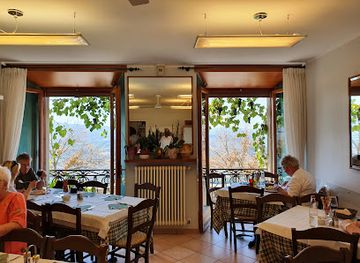
No restaurant guide can accurately be assigned to Monte Caio in San Marino because the destination-country combination does not identify a verified place. San Marino’s dining scene is concentrated in settlements including Città di San Marino, Borgo Maggiore, Serravalle and other communities across the republic, where visitors encounter Italian-influenced cooking, pasta, filled flatbreads, cured meats, cheeses, seasonal produce and local wines. Dining becomes more limited away from established settlements, so a mountain excursion should not be planned on the assumption of facilities at the summit or on rural paths. If the intended destination is Monte Caio in Italy, the relevant food traditions and establishments belong to Emilia-Romagna and its Apennine villages, not to San Marino, and should be researched separately using the correct local map.
-
Restaurant
Ristorante Bolognese
Experience authentic Italian cuisine at Ristorante Bolognese in San Marino—where every dish tells a story of flavor and tradition.
-
Restaurant
La Terrazza
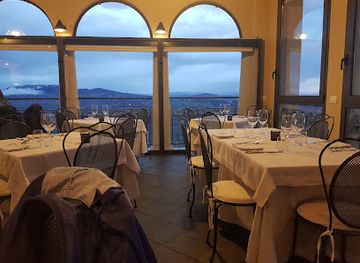
Experience exquisite Italian cuisine with breathtaking views at La Terrazza in San Marino.
-
Restaurant
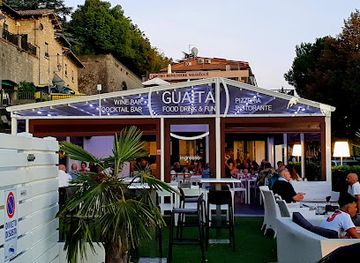
GUAITA food, drink & fun
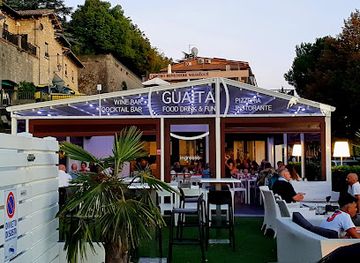
Experience authentic Italian flavors at GUAITA in San Marino - where culinary excellence meets vibrant nightlife.
-
Restaurant
Ristorante Il Beccafico
Experience authentic Italian cuisine at Ristorante Il Beccafico in Città di San Marino – where every meal is a celebration of flavor.
Best bars in Monte Caio
Monte Caio in San Marino has no verified evening entertainment scene. San Marino offers a generally restrained evening atmosphere centred on restaurants, cafés, wine bars and hospitality venues in Città di San Marino, Borgo Maggiore and larger settlements such as Serravalle rather than on a dedicated mountain nightlife district. Historic hilltop streets tend to be suited to quiet evening visits and dining, while entertainment availability varies by season and venue. The Italian Monte Caio is a separate rural mountain destination where evening options are likely to depend on nearby villages and accommodation providers; information about San Marino’s bars or events should not be transferred across the border.
-
Restaurant
La Terrazza
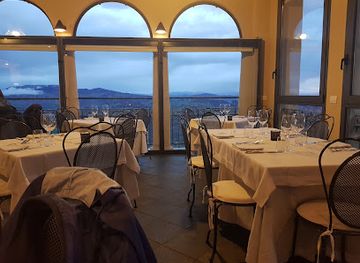
Experience exquisite Italian dining with stunning views at La Terrazza in San Marino, where every meal is a celebration of local flavors.
-
Restaurant
GUAITA food, drink & fun
Experience the essence of Italian cuisine at GUAITA in San Marino, where delicious dishes meet a vibrant atmosphere for an unforgettable dining experience.
-
Restaurant
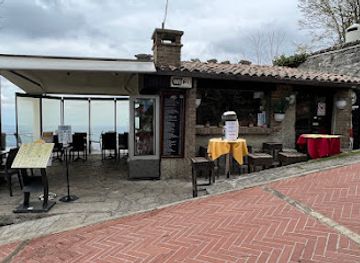
Bar Piadineria La Capanna
Experience authentic Italian piadine in the heart of San Marino at Bar Piadineria La Capanna, a cozy spot for delicious food and stunning views.
-
Hamburger
Giulietti Km0
Experience the best of San Marino's culinary delights at Giulietti Km0, where gourmet hamburgers meet craft beers in a vibrant atmosphere.
Best nightclubs in Monte Caio
Monte Caio in San Marino has no verified evening entertainment scene. San Marino offers a generally restrained evening atmosphere centred on restaurants, cafés, wine bars and hospitality venues in Città di San Marino, Borgo Maggiore and larger settlements such as Serravalle rather than on a dedicated mountain nightlife district. Historic hilltop streets tend to be suited to quiet evening visits and dining, while entertainment availability varies by season and venue. The Italian Monte Caio is a separate rural mountain destination where evening options are likely to depend on nearby villages and accommodation providers; information about San Marino’s bars or events should not be transferred across the border.
-
Bar
GUAITA food, drink & fun
Discover the vibrant atmosphere and exquisite flavors of GUAITA, a premier bar and restaurant in San Marino offering Italian cuisine and lively nightlife.
-
Pub
London Pub
Discover the charm of London Pub in San Marino, where lively nights, delicious food, and a welcoming atmosphere await every visitor.
-
Bar
Bar Casa Rossa
Discover the vibrant atmosphere of Bar Casa Rossa in Murata, where locals and tourists converge for delightful drinks and a cozy ambiance.
-
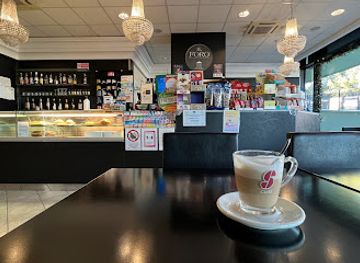
Bar
Il Foro Srl
Discover the vibrant atmosphere of Il Foro Srl, a charming bar in San Marino offering a delightful selection of drinks and local culture.


Best shops in Monte Caio
There is no verified shopping area at Monte Caio in San Marino. Visitors to San Marino generally find shops concentrated in Città di San Marino, Borgo Maggiore and Serravalle, with retail ranging from souvenirs and locally themed crafts to food products, clothing, leather goods and other goods associated with the republic’s visitor economy. The historic capital has the greatest concentration of tourist-oriented retail, while larger commercial services are found in the lower settlements. Visitors intending to travel to Monte Caio in Italy should research shops and regional products in the relevant Apennine communities instead, since San Marino’s retail offer is not geographically connected to that mountain.
-
Shopping mall
Atlante Shopping Center
Explore the Atlante Shopping Center in San Marino for a delightful shopping experience, diverse dining options, and exciting entertainment.
-
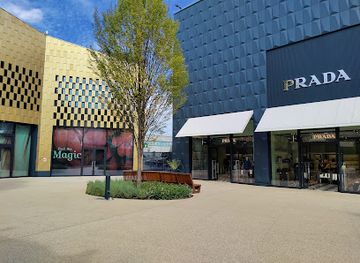
Outlet store
San Marino Outlet Experience
San Marino Outlet Experience: Your ultimate shopping destination for designer brands at unbeatable prices in a beautiful setting.
-
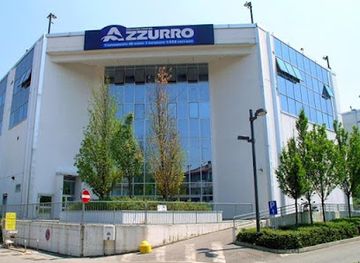
Shopping mall
Azzurro centro commerciale
Discover Azzurro Centro Commerciale, a vibrant shopping mall in San Marino offering a variety of shops, dining, and entertainment options for all visitors.
-
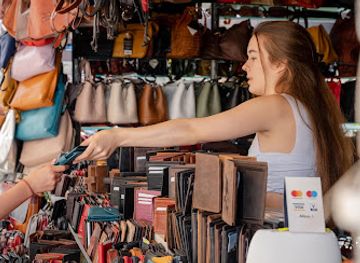
Leather goods store
Fantini Pelletteria
Explore Fantini Pelletteria in San Marino for exquisite leather goods that blend tradition with modern elegance, perfect for souvenirs or gifts.

Get your free copy of our complete guide to Monte Caio, delivered straight to you.
Everything on this page, from attractions and restaurants to essentials and local phrases, in one PDF you can read offline, print or share.
Already have an account? Sign in
Your Monte Caio guide is ready.
We'll send it to · Not you? Sign out

Getting your guide ready…
We are putting together a fresh copy of the Monte Caio guide. This can take up to a minute.
This can take a few moments. If your browser asks, choose Allow so the download can start. You'll find the guide in your Downloads folder.
Nothing happened? Download it again
Sorry, the guide is taking longer than usual. Please try again in a minute, or get it by email instead.
Monte Caio essentials
Currency and Payment
Safety
Emergency Situations
Do's and Don'ts
Local Tips
From Eve
Local phrases worth knowing
You don't need to get them perfect. A few words go a long way, and locals appreciate the effort.
Basics
| English | Local | Say it |
|---|---|---|
| Hello | Ciao | [chow] |
| Goodbye | Arrivederci | [ah-ree-veh-dehr-chee] |
| Yes | Si | [see] |
| No | No | [noh] |
| Please/You're welcome | Per favore/Prego | [pehr fah-vo-reh/preh-goh] |
| Thank you | Grazie | [grah-tsyeh] |
| Excuse me/Sorry | Scusi/Mi dispiace | [skoo-zee/mee dees-pyah-che] |
| How are you? | Come stai? | [koh-meh stai] |
| Fine. And you? | Bene. E tu? | [beh-neh/eh too] |
| Do you speak English? | Parli inglese? | [pahr-lee een-gleh-zeh] |
| I don't understand | Non capisco | [nohn kah-pee-skoh] |
Eating & Drinking
| English | Local | Say it |
|---|---|---|
| I'd like to see the menu, please | Vorrei vedere il menu, per favore | [vohr-reh-ee veh-deh-reh eel meh-noo, pehr fah-vo-reh] |
| I don't eat meat | Non mangio carne | [nohn mahn-joh kahr-neh] |
| Cheers! | Salute! | [sah-loo-teh] |
| I would like to pay, please | Vorrei pagare, per favore | [vohr-reh-ee pah-gah-reh, pehr fah-vo-reh] |
Emergencies
| English | Local | Say it |
|---|---|---|
| Help! | Aiuto! | [ai-oo-toh] |
| Go away! | Vai via! | [vah-ee vee-ah] |
| Call the Police! | Chiamate la polizia! | [kyah-mah-teh lah poh-lee-tsya] |
| Call a doctor! | Chiamate un medico! | [kyah-mah-teh oon meh-dee-koh] |
| I'm lost | Mi sono perso | [mee soh-noh pehr-soh] |
| I'm ill | Mi sento male | [mee sehn-toh mah-leh] |
Shopping
| English | Local | Say it |
|---|---|---|
| I'd like to buy... | Vorrei comprare... | [vohr-reh-ee kohm-prah-reh] |
| I'm just looking | Sto solo guardando | [stoh soh-loh gwahr-dahn-doh] |
| How much is it? | Quanto costa? | [kwahn-toh koh-stah] |
| That's too expensive | È troppo caro | [eh troh-poh kah-roh] |
| Can you lower the price? | Puoi abbassare il prezzo? | [pwah-ee ahb-bah-sah-reh eel preh-tso] |
Time & Numbers
| English | Local | Say it |
|---|---|---|
| What time is it? | Che ora è? | [keh oh-rah eh] |
| It's one o'clock | È l'una | [eh loo-nah] |
| Half past (10) | Sono le dieci e mezza | [soh-noh leh dyeh-chee eh meh-tzah] |
| Morning | Mattina | [maht-tee-nah] |
| Afternoon | Pomeriggio | [poh-meh-ree-joh] |
| Evening | Sera | [seh-rah] |
| Yesterday | Ieri | [yeh-ree] |
| Today | Oggi | [oh-jee] |
| Tomorrow | Domani | [doh-mah-nee] |
| 1 | Uno | [oo-noh] |
| 2 | Due | [doo-eh] |
| 3 | Tre | [treh] |
| 4 | Quattro | [kwah-troh] |
| 5 | Cinque | [cheen-kweh] |
| 6 | Sei | [seh-ee] |
| 7 | Sette | [seh-teh] |
| 8 | Otto | [oht-toh] |
| 9 | Nove | [noh-veh] |
| 10 | Dieci | [dyeh-chee] |
Transport & Directions
| English | Local | Say it |
|---|---|---|
| Where's a/the...? | Dov'è il... | [doh-veh eel] |
| What's the address? | Qual è l'indirizzo? | [kwahl eh leen-dee-reet-soh] |
| Can you show me (on the map)? | Puoi mostrarmi (sulla mappa)? | [pwah-ee mohs-trahr-mee (sool-lah mahp-pah)] |
| When's the next (bus)? | Quando passa il prossimo (autobus)? | [kwahn-doh pahs-sah eel prohs-see-moh (ow-toh-boos)] |
| A ticket (to ....) | Un biglietto (per ....) | [oon beel-lyet-toh (pehr)] |
History of Monte Caio
The Geographic Name Requires Verification
Monte Caio is not identified as a recognised geographical feature of San Marino. The name is associated with a mountain in the Northern Apennines of Italy, while San Marino’s characteristic summit is Monte Titano. Confusing the two can lead to incorrect assumptions about national borders, transport routes, walking areas and nearby settlements. A reliable destination guide must therefore distinguish the Italian Monte Caio from San Marino’s mountain landscape rather than merge their histories.
Monte Titano and San Marino
San Marino developed around Monte Titano, whose elevated position influenced the republic’s defensive character and settlement history. The historic centre of Città di San Marino occupies the mountain’s summit ridge, while the Three Towers—Guaita, Cesta and Montale—express the strategic importance of the site. San Marino’s historic centre and Monte Titano were inscribed together on the UNESCO World Heritage List in 2008. These landmarks belong to San Marino and should not be attributed to Monte Caio.
Monte Caio in Photos
Browse through our photo collection highlighting the charm and character of the destination.
Cities in Monte Caio
The towns and cities of Monte Caio, and the easiest places to base yourself.
-

-

-

-

-

-


Swipe for more cities
Neighbouring destination travel guides
The closest destinations to Monte Caio, if you have time for more than one.
-

-

-

-

-


Swipe for more destinations
Explore more

Explore more of San Marino
Discover San Marino: A charming microstate with medieval towers, scenic vistas, rich history, and delightful cuisine. Perfect for a unique cultural escape.
Explore San Marino